Review · SIEM REAP
Siem Reap: 2-Day Temple Highlights Sunrise and Sunset Option
The best part of this two-day Siem Reap tour is its range. You see Angkor Wat at sunrise, then move beyond the famous postcard view to Banteay Srei, Neak Pean, Preah Khan, Ta Prohm, Ta Nei, Bayon, and the terraces of Angkor Thom. Sak, Pi, Chhay, Pal, and Bun are among the guides assigned to departures, and the strongest guides add useful stories about Hinduism, Buddhism, Khmer kings, and modern Cambodia.
I like the small-group format, which keeps the van comfortable and gives the guide room to answer questions. I also like the practical care: air-conditioning, cold water, and a cool towel after hot temple walks. The drawback is simple: this is an active two-day schedule, and sunrise means leaving before dawn. Anyone with limited mobility, small children, or a dislike of early starts should think twice.
Key points to know before booking
- Banteay Srei is the artistic highlight, with finely cut sandstone carvings unlike the larger temple complexes.
- Angkor Wat sunrise requires a pre-dawn departure, a torch, and comfortable walking shoes.
- The air-conditioned van matters, especially in Cambodia’s heat and humidity.
- Guides such as Sak, Pi, Chhay, and Pal explain more than dates, including religious symbols and Khmer culture.
- The $46 tour price excludes the $62 Angkor pass, so budget $108 before meals.
- Sunset arrangements differ by booking type, with a rice-field drink for the private option and Bakheng Temple for the small-group option.
Why two days works better than one
Angkor is too large for a calm, thoughtful visit in a single day. You can rush through the main temples, but you will spend much of that day in a vehicle or trying to keep up with a packed schedule.
This tour spreads the major sights over two days. The first day reaches the outlying temples and ends with sunset. The second begins with Angkor Wat at dawn, then returns to the central temple zone for Ta Prohm, Ta Nei, and Angkor Thom.
That order also helps with energy. Day one has long drives, especially to Banteay Srei, but the temples are generally quieter and smaller. Day two brings the most famous sites, along with the early start. You get the big names without squeezing every stop into one exhausting circuit.
The $46 tour fee is good value for transport, a licensed English-speaking guide, hotel pickup and drop-off, and two full days of touring. Add the required $62 pass for two or three days, plus meals, and your basic cost is $108 per person. That is not the cheapest possible way to see Angkor, but it is a fair price if you want explanations, reliable transport, and help with the huge temple area.
More Temple Sunrise Tours in Siem Reap
- Angkor Wat Sunrise or Sunset Tour with Guide from Siem Reap
★ 5.0 · 12,109 reviews - Siem Reap: Angkor Wat: Small-Group Sunrise or Sunset Tour
★ 5.0 · 9,444 reviews - Siem Reap: Angkor Wat 2-Day Tour with Sunrise and Sunset
★ 4.9 · 4,429 reviews
Day one: Pre Rup and the road to Banteay Srei
The first temple is Pre Rup, a Hindu temple mountain built under King Rajendravarman in 961 or early 962. Its brick, laterite, and sandstone construction gives it a different look from the later sandstone temples.
Pre Rup is a useful first lesson in Angkor design. Its stepped form makes the temple feel like a symbolic mountain, a common idea in Khmer Hindu architecture. Your guide can point out the materials, the layout, and the connection between royal power and religious building.
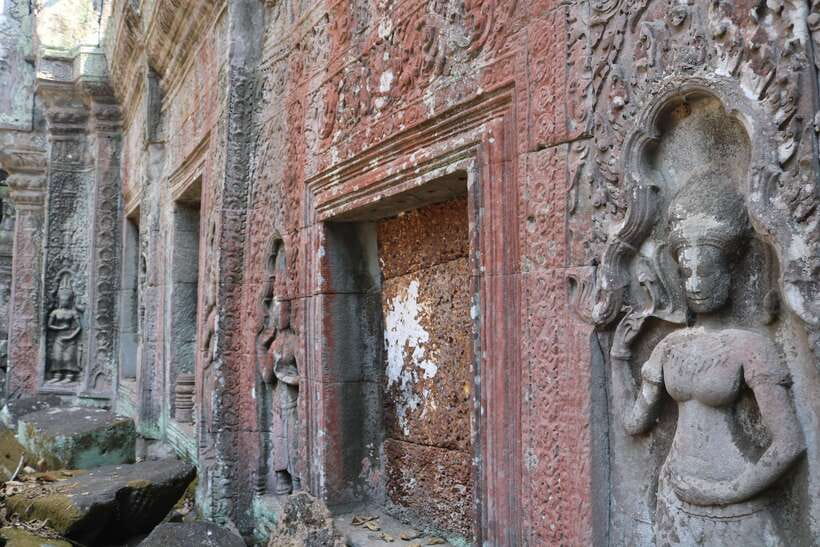
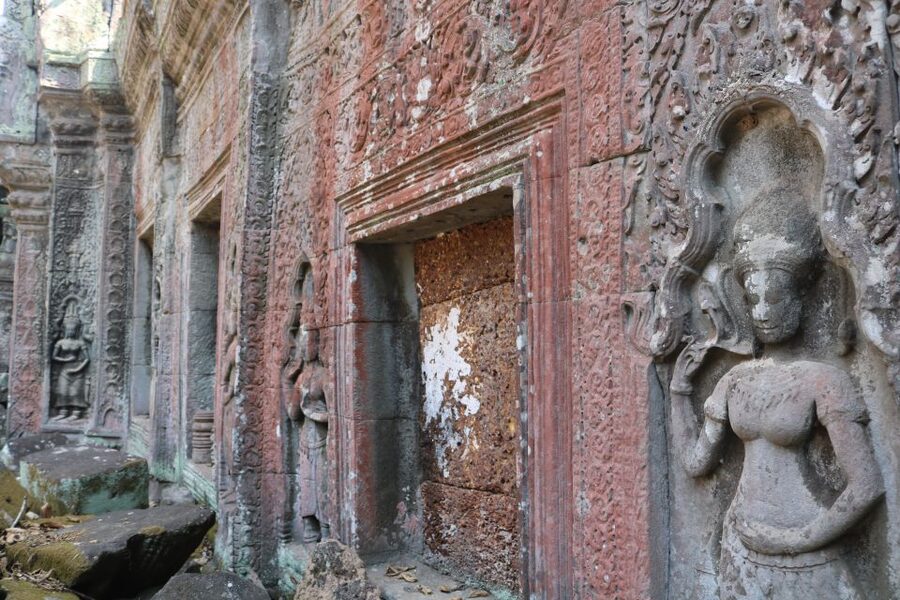
The long drive to Banteay Srei is part of the day’s rhythm. This temple is smaller than Angkor Wat, but its sandstone carvings are among the finest in Cambodia. The details are unusually crisp, with carefully cut figures and decorative patterns covering the walls and doorways.
Banteay Srei has a more intimate scale. You are not looking across enormous courtyards or climbing vast galleries. Instead, you examine close-up carvings, which makes this stop especially valuable if you enjoy sculpture and architectural detail.
The temple became accessible to visitors only in the late 1990s, after the Khmer Rouge left the area. That recent past adds weight to the visit, though the day does not treat Banteay Srei as a stand-alone museum. You see it as one part of a wider story about Cambodia’s ancient achievements and difficult modern history.
Bring water, insect repellent, and shoes with a firm sole. The tour provides bottled water, but you will be outdoors for much of the day.
Neak Pean and Preah Khan: water, trees, and ruins
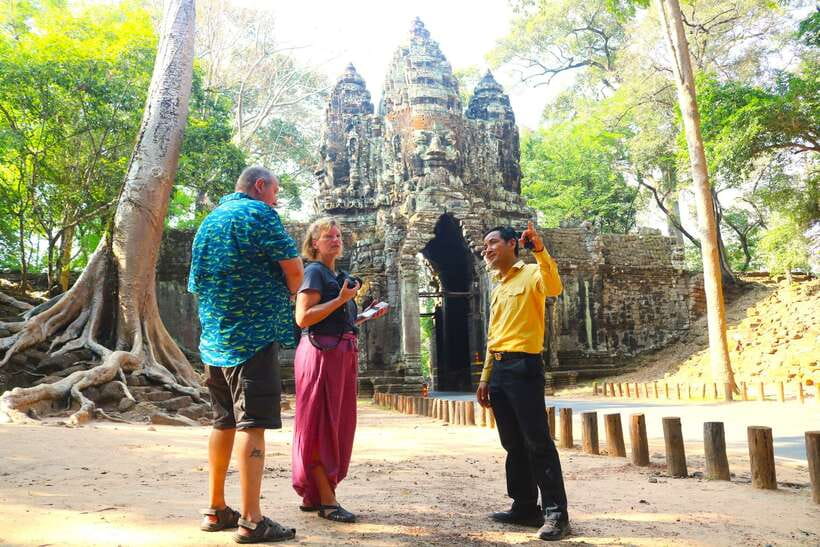
After Banteay Srei, the route returns toward the main Angkor zone and stops at Neak Pean. This unusual site sits on an artificial island in Jayatataka Baray, with a Buddhist temple arranged around a circular island.
Neak Pean is less about massive stonework and more about setting and design. Its water-centered layout gives you a break from the grand temple mountains. The site also shows how religious architecture, water management, and symbolism worked together in the Angkor period.
Preah Khan offers a sharper contrast. Built by King Jayavarman VII in honor of his father, it is a large, atmospheric ruin with corridors, courtyards, and tree roots pressing into old stone. Some parts are crumbling, while other sections are in remarkably good condition.
I like Preah Khan because it feels less formal than Angkor Wat. The monument has a sense of discovery, even though it is a well-known stop. The World Monuments Fund is restoring parts of the site, and you can see the difference between carefully preserved areas and sections still shaped by age and vegetation.
The guide matters here. A good explanation helps you understand that this is not simply a pretty ruin. It was a major religious and institutional center, and its design reflects the ambitions of Jayavarman VII. Guides such as Chhay, Sak, and Pal are often praised for making these connections clear without rushing the group.
Choosing your first sunset
The first day ends with a sunset option, but the exact setting depends on the type of departure you book.
The private option includes a rice-field sunset drink. This is a quieter way to finish the day, away from the stone corridors and temple crowds. The small-group option includes sunset at Bakheng Temple, a hilltop temple known for its views.
Bakheng can be a strong finale because it gives you a wide view over the surrounding area. It can also be a busy and tiring finish after a full day of sightseeing. Ask at booking which sunset arrangement applies to your choice.
The sunset stop is not just decoration added to the itinerary. It gives you a slower ending after several temples and a chance to see rural Cambodia beyond the monuments. Still, do not expect a completely private scene, especially with the small-group Bakheng option.
More Temple Sunset Tours in Siem Reap
- Siem Reap: Full-Day Angkor Wat Guided Tour with Sunset
★ 4.9 · 3,803 reviews - Angkor Wat Sunset Small Group Tour with Lunch Included
★ 5.0 · 3,059 reviews - Siem Reap: Angkor Wat Sunrise or Sunset Guided Tour
★ 4.9 · 2,123 reviews - Full-Day Guided Sunset Tour of Angkor Wat
★ 5.0 · 1,507 reviews
Day two begins before dawn at Angkor Wat
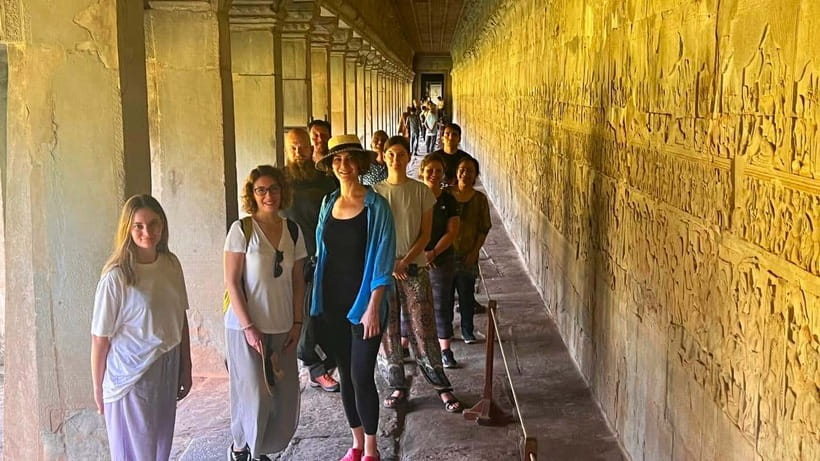
The second morning starts before sunrise. You enter Angkor Wat in darkness from the less-used eastern side, so bring a torch or phone light.
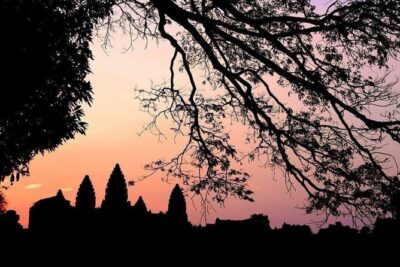
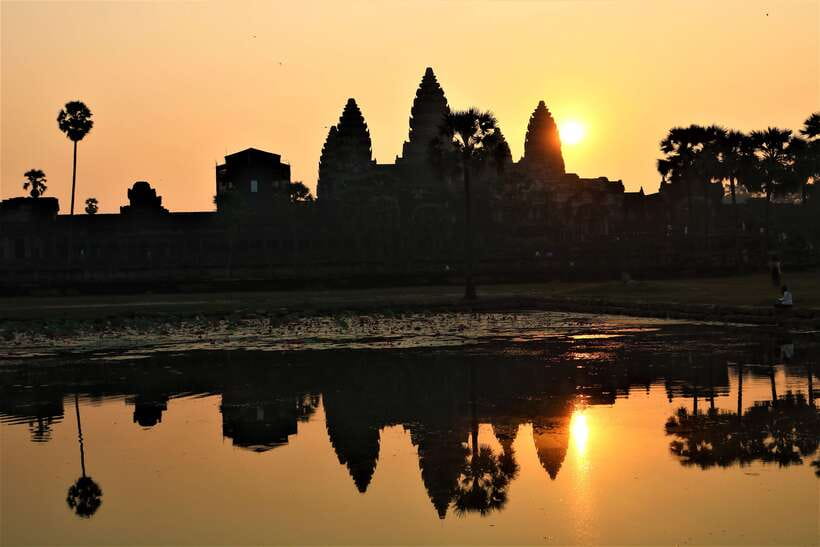
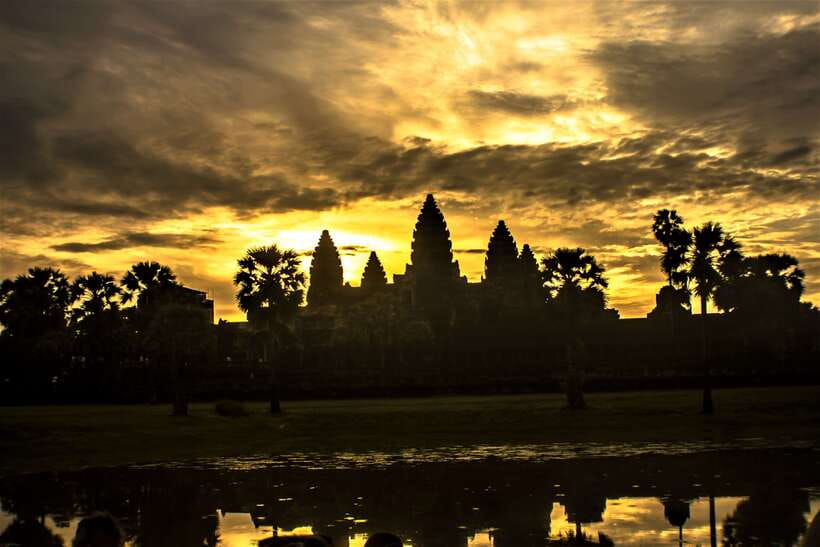
The pre-dawn walk takes you through cloistered corridors and toward the temple’s famous western view. Sunrise depends on clouds and timing, but the changing light over the towers can be striking. Your guide helps position the group and keeps the early start organized.
This is the most demanding part of the tour. You will be sleepy, and the ground may be uneven. Wear comfortable shoes, carry only what you need, and avoid assuming that the van will take you right to every viewpoint.
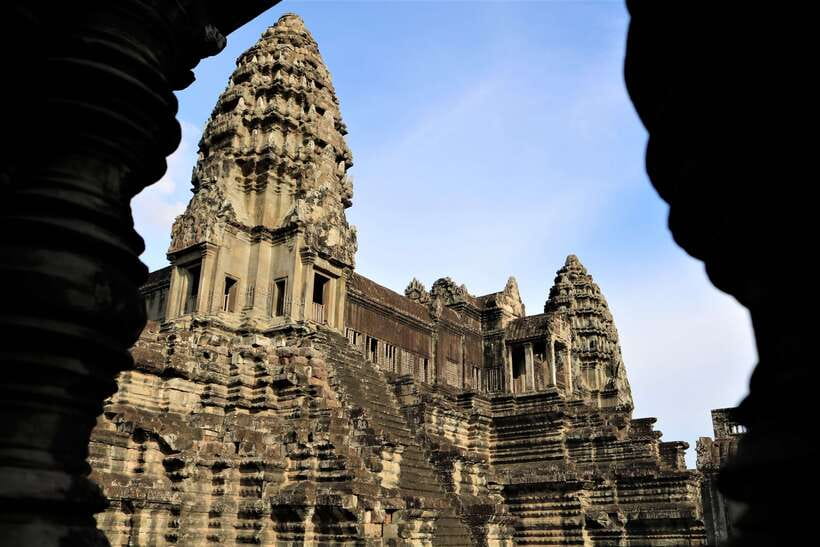
After sunrise, you explore Angkor Wat itself. The temple was built as a Hindu monument and later used as a Buddhist site, so its carvings and layout offer plenty to discuss. The bas-reliefs are a major feature, including one of the world’s longest stretches of narrative carving.
A guide adds real value here. On your own, you can admire the scale and symmetry. With a guide such as Pi or Sak, you can also learn how the scenes relate to Khmer beliefs, royal authority, and temple design. Several guides use maps, photographs, or other visual aids during transfers, which helps you understand what you are seeing before entering a complex area.
Breakfast is taken outside the temple. Meals are not included, so bring money and expect to pay separately.
Ta Prohm and Ta Nei after breakfast
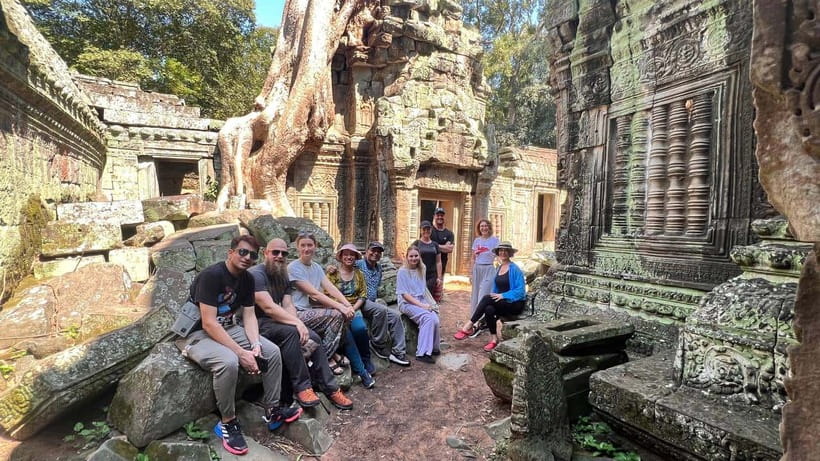
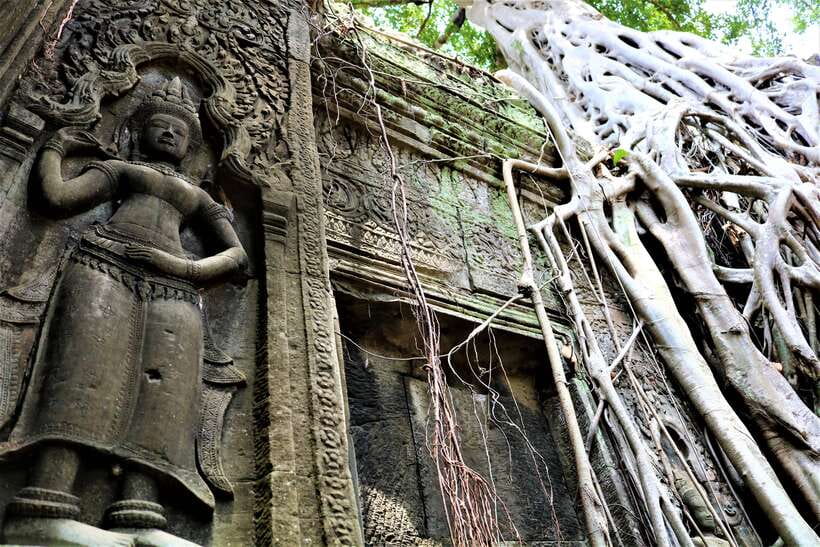
Ta Prohm is the temple most associated with jungle-covered Angkor. Tree roots press against walls and doorways, while broken galleries create a dramatic route through the site.
The atmosphere is the main attraction, but do not reduce Ta Prohm to a film location. It was once home to 2,740 monks and formed part of a much larger religious and community system. Today, it looks much as it did when Henri Mouhot described the site in the mid-19th century, though conservation work continues.
The famous sections can be crowded. Your guide may take you to less congested corners, where you can see carvings and stonework without standing in a constant stream of people. You still need patience, especially at the best-known tree-root views.
Ta Nei is a smaller late 12th-century stone temple in the Angkor area. It does not have Ta Prohm’s fame, but that is part of its appeal. The quieter scale gives you time to look at the structure without feeling that you must hurry through for the next photo.
This pairing works well. Ta Prohm gives you the dramatic setting, while Ta Nei gives you a more restrained temple experience. Together, they show that Angkor is not just one famous monument surrounded by empty space. It is a broad network of sites with different purposes and moods.
Angkor Thom and the many faces of Bayon
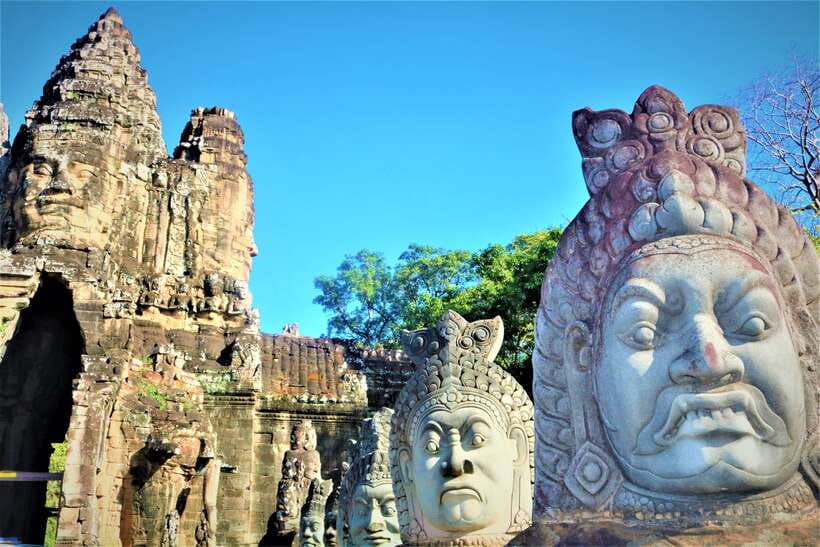
The route continues to the southern gate of Angkor Thom. The entrance is flanked by 54 stone figures on each side, gods to the left and demons to the right. The figures pull a serpent in a scene linked to the Hindu story of the Churning of the Ocean of Milk.
This is an important moment for understanding Khmer religious imagery. The gate is not merely a grand entrance. It announces the ideas and powers associated with the fortified city.
Inside Angkor Thom, the Bayon is the main stop. More than 200 enormous faces cover its central towers, creating one of the most memorable sights in the Angkor complex. From different angles, the faces seem to watch over the galleries and courtyards.
The Bayon can be confusing without help. Its towers rise close together, and the routes through the temple are not always obvious. A guide can point out the faces, bas-reliefs, and changes in the temple’s design, then explain how Buddhism shaped the monument under Jayavarman VII.
You also visit the Terrace of the Leper King and the Terrace of Elephants. These long stone platforms help show the ceremonial scale of Angkor Thom. They are less enclosed than the Bayon, so you get a clearer sense of the city’s public spaces and royal setting.
Transport, group size, and the hot-weather factor
The air-conditioned vehicle is one of the tour’s most useful features. Angkor sightseeing means repeated walks in open heat, followed by short drives. Returning to a cool van with bottled water and a cold towel can make the difference between enjoying the next temple and simply enduring it.
Drivers such as Vichet, Keal, Mao, Naroo, and Seyha are repeatedly praised for being on time, driving safely, and keeping water and towels ready. Some guides also take photographs, help with steps, and adjust the pace when someone needs a break.
Group size varies. Small-group departures may have around six to fifteen people, based on the departure, while a private option gives you more control. A smaller group usually means easier communication and less waiting when the guide explains a carving or organizes a photo.
The tour is not wheelchair accessible and is not suitable for people with mobility impairments. It is also not designed for children under eight. Covered shoulders and knees are required, and shorts are not allowed, so dress for both temple rules and the weather.
The guides make the difference
The itinerary is strong, but the guide shapes the experience. The most consistently praised qualities are clear English, warmth, patience, historical context, and an ability to explain religion without making the visit feel like a lecture.
Sak is noted for linking temple architecture with Hindu and Buddhist beliefs. Pi is often valued for explaining what comes next, answering questions, and finding good photo locations. Chhay and Pal are known for humor, culture, and careful pacing, while Bun is praised for turning a mixed group into something more relaxed and friendly.
You cannot normally choose a particular guide in advance, so consider the guide quality a strength of the operator rather than a guaranteed personal assignment. One useful expectation is that the best guides will give you time for photos and solo looking, not just move you from one stop to the next.
There is one fair limitation. One departure may suit people who want more historical detail than the standard commentary provides. If you have a strong interest in architecture, symbolism, or Khmer religion, ask questions. The guides are prepared to go further when the group shows interest.
Should you book this two-day Angkor tour?
Book it if you want to see the main Angkor sights plus smaller and more atmospheric temples without arranging several tuk-tuk rides or researching the route yourself. It is particularly suitable for first-time visitors who value explanations, air-conditioning, and a well-managed sunrise.
The tour also suits couples, families with older children, and solo visitors who prefer a small group. The cold towels, bottled water, photo help, and flexible pacing add real comfort in the heat.
Skip it if you want complete independence, dislike pre-dawn starts, or plan to spend long quiet hours at just one temple. Also check the sunset arrangement before paying, since the private rice-field drink and small-group Bakheng visit are different experiences.
For most visitors with two days in Siem Reap, this is a sensible way to cover Angkor. Just budget for the $62 temple pass and meals, pack a torch and repellent, and save some energy for the second morning.
FAQ
How much does the two-day temple tour cost?
The tour costs $46 per person. The Angkor temple pass is separate and costs $62 per person for a two or three-day pass. Meals are also not included.
What temples are included?
The route includes Pre Rup, Banteay Srei, Neak Pean, Preah Khan, Bakheng Temple or a rice-field sunset option, Angkor Wat, Ta Prohm, Ta Nei, Angkor Thom, Bayon, the Terrace of the Leper King, and the Terrace of Elephants.
Is sunrise at Angkor Wat included?
Yes. Day two begins with a pre-dawn departure for sunrise at Angkor Wat. You should bring a torch or another small light.
What sunset option do I get?
The private option includes a rice-field sunset drink. The small-group option includes sunset at Bakheng Temple. Check the specific option when booking.
Is hotel pickup included?
Yes. Pickup and drop-off are available from hotels in Siem Reap City.
Is transportation air-conditioned?
Yes. Transportation is provided in an air-conditioned vehicle. Bottled water and cool towels are also provided.
Is a guide included?
Yes. A licensed, experienced English-speaking guide is included. Guide assignments can include Sak, Pi, Chhay, Pal, Bun, and others.
What should I wear?
You need clothing that covers your shoulders and knees. Shorts are not allowed. Comfortable walking shoes are recommended.
Is the tour suitable for people with limited mobility?
No. The activity is not wheelchair accessible and is not suitable for people with mobility impairments. Children under eight are also not suitable for this tour.
More two-day temple trips in Siem Reap
- 2 Days Exclusive Temple Highlights with Sunset and Sunrise Tour
★ 5.0 · 1,157 reviews - Siem Reap: Angkor Sunrise 1- or 2-Day Guided Temples Tour
★ 4.9 · 1,132 reviews - 2-Day Angkor Wat With Small, Big Circuit and Banteay Srei Tour
★ 5.0 · 545 reviews - Angkor Wat 2-Day complex Sun rise & Sun set with Guided Tour
★ 4.9 · 439 reviews
Temple visits we reviewed lately in Siem Reap
- Angkor Wat Tour by Tuk-Tuk with English Speaking Driver★ 4.5 · 65 reviews
- Private Sunrise Angkor Wat Tour★ 4.6 · 16 reviews
- Private One Day Tour with Sunrise at Angkor Wat★ 5.0 · 3 reviews
- Siem Reap Tour Guide: Angkor Wat Sunrise Tour & Beng Mealea★ 5.0 · 4 reviews
- Siem Reap Private Tour: Angkor Wat Sunrise And Banteay Srei★ 5.0 · 3 reviews
- Private Angkor Wat Sunset Tour with Lunch and Snack Included★ 5.0 · 3 reviews
- Private Angkor Wat Sunrise Tours And Sunset Floating Village★ 5.0 · 3 reviews
- Private Angkor Wat Temple Tour★ 5.0 · 35 reviews
Siem Reap Temple Tours, compared.
Angkor Wat Sunrise or Sunset Tour with Guide from Siem Reap
Read our review →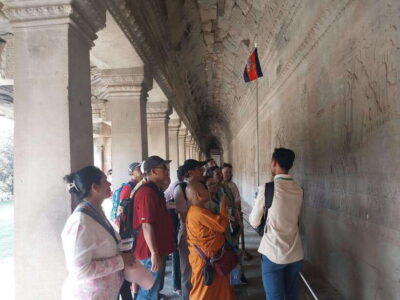
Siem Reap: Angkor Wat: Small-Group Sunrise or Sunset Tour
Read our review →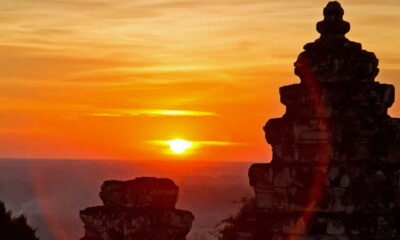
Siem Reap: Full-Day Angkor Wat Guided Tour with Sunset
Read our review →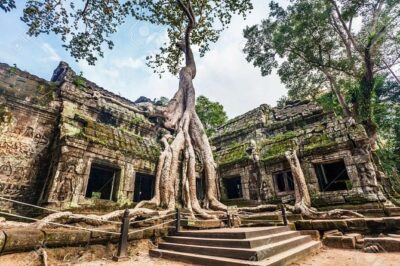
Angkor Wat Sunrise tour with Small – Group and Guide tours
Read our review →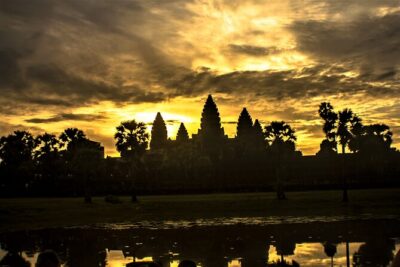
Angkor Wat Highlights and Sunrise Guided Tour from Siem Reap
Read our review →
Angkor Wat Sunset Small Group Tour with Lunch Included
Read our review →
Full-Day Angkor Wat Sunrise Private Tour with Guide from Siem Reap
Read our review →