
Review · SIEM REAP
Angkor Wat 2-Day complex Sun rise & Sun set with Guided Tour
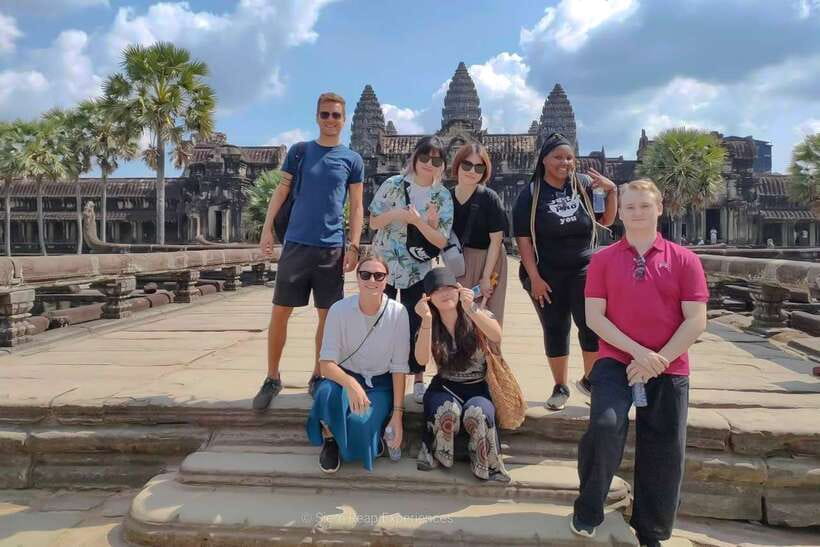
Angkor Wat is most striking at the edges of the day. This tour gets you there before dawn for the temple’s famous sunrise, then returns on a second day for a sunset from Phnom Bakheng. Between those two bookends, you visit 11 temples and get the stories that turn piles of stone into a vanished royal world.
I like the practical shape of the tour: two different temple circuits spread the sightseeing over separate days, and the air-conditioned minibus gives you a needed break from Cambodia’s heat. I also like the guides’ personal touch. Sam, Sayon, John, Nick, Vone, and others are repeatedly praised for clear explanations, good humor, crowd awareness, and taking photos. The main drawback is the first morning’s very early pickup. At 4:00 to 4:20 a.m., you may wait in darkness for quite a while before sunrise.
Key points at a glance
- Sunrise at Angkor Wat: Reach the main temple before dawn and watch the sky brighten behind its towers.
- Sunset at Phnom Bakheng: Finish the second day at a hilltop temple with 33 towers representing the heavens.
- 11 temples in two circuits: Day one covers the smaller circuit, while day two follows the larger circuit.
- Small-group transport: Ride in an air-conditioned minibus with a maximum group size of 13.
- Strong guiding: Guides including Sam, Sayon, John, Nick, Vone, and Sary are praised for history, humor, photos, and group care.
- Extra cost to plan for: The $30 tour price does not include the Angkor Archaeological Park ticket, which costs $37 for one day or $62 for two to three days.
Why two days works better than one
Angkor is not one temple. It is a vast archaeological park filled with monuments, reservoirs, gates, courtyards, carvings, and tree-covered ruins. Trying to see the main sites in one rushed day can leave you with a camera full of pictures but little sense of how the pieces fit together.
This tour splits the experience sensibly. Day one focuses on Angkor Wat and the central temples. Day two moves farther around the larger circuit and ends with a sunset. You get a clear change of mood between the days: the first morning is about dawn, grand gateways, and famous carvings; the second is about quieter ruins, waterworks, eastern temples, and a hilltop finish.
The tour price is $30 per person, which is good value for two full outings with hotel transport, an English-speaking guide, bottled water, refreshing towels, and local tax included. You must add the Angkor Archaeological Park ticket. For this schedule, the two to three day pass at $62 is the practical choice, bringing the basic total to $92 per person.
That remains reasonable for two days of transport and guiding, especially if you are traveling alone or as a couple and do not want to arrange a tuk-tuk, driver, route, and temple explanations separately. Food is not included, so keep cash ready for breakfast or lunch near the monuments.
More Angkor Wat Tours in Siem Reap:
- Angkor Wat Sunrise or Sunset Tour with Guide from Siem Reap
★ 5.0 · 12,109 reviews - Siem Reap: Angkor Wat: Small-Group Sunrise or Sunset Tour
★ 5.0 · 9,444 reviews - Siem Reap: Angkor Wat 2-Day Tour with Sunrise and Sunset
★ 4.9 · 4,429 reviews
Day one begins before dawn at Angkor Wat
Pickup is scheduled between 4:00 and 4:20 a.m. from your Siem Reap accommodation. You should wait in the hotel lobby 30 minutes before the stated time. The driver carries a sign with your last name and waits no more than five minutes after the scheduled pickup, so this is not a morning to stroll down casually after finishing your coffee.
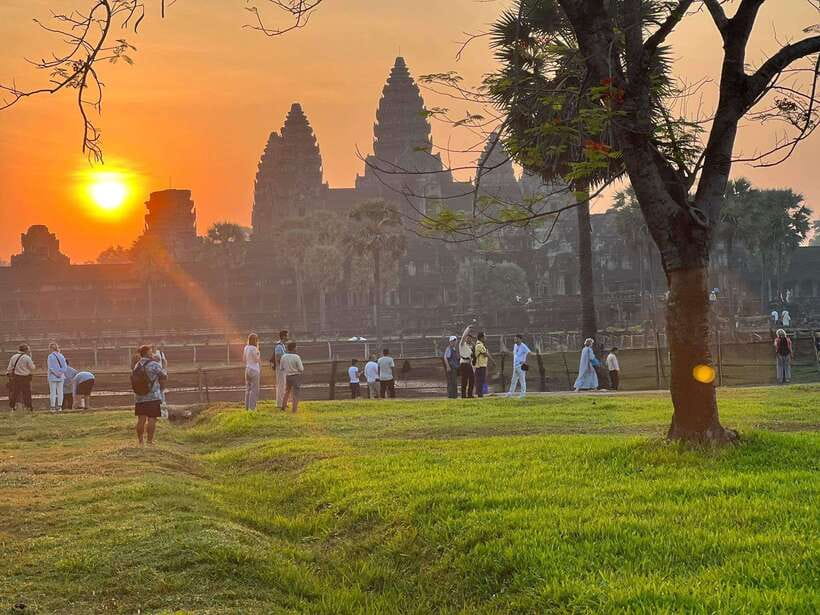
The minibus takes you to Angkor Wat, where you wait for the sky to lighten. Sunrise is a beautiful idea, but the timing deserves an honest warning. Several departures have been described as earlier than needed, with long waits in darkness before the sun appears. In winter, the scheduled pickup can feel especially early. During the rainy season, cloud cover can also make a 3:00 or 4:00 a.m. start less rewarding.
Bring a small flashlight or use your phone carefully while walking in the dark. The paths and surfaces around ancient temples are uneven, and good shoes matter more than stylish footwear. Once daylight arrives, the early start begins to pay off. You have cooler temperatures, softer light, and a better chance of taking photos before the day becomes hot.
Angkor Wat is Cambodia’s best-known monument and the natural anchor for the tour. Take time to look beyond the familiar reflection-pool photograph. The scale of the galleries, towers, courtyards, and carved walls is easier to appreciate when your guide explains how the temple fitted into the Khmer royal world.
The guide will also help you make sense of the carvings and religious imagery. Pheap, Sam, Sayon, John, Nick, Vone, Sary, and other guides have been singled out for making the history easier to follow, and some add humor, local stories, or even demonstrations of traditional sounds while explaining the artwork.
Angkor Thom, Bayon, and the faces in stone
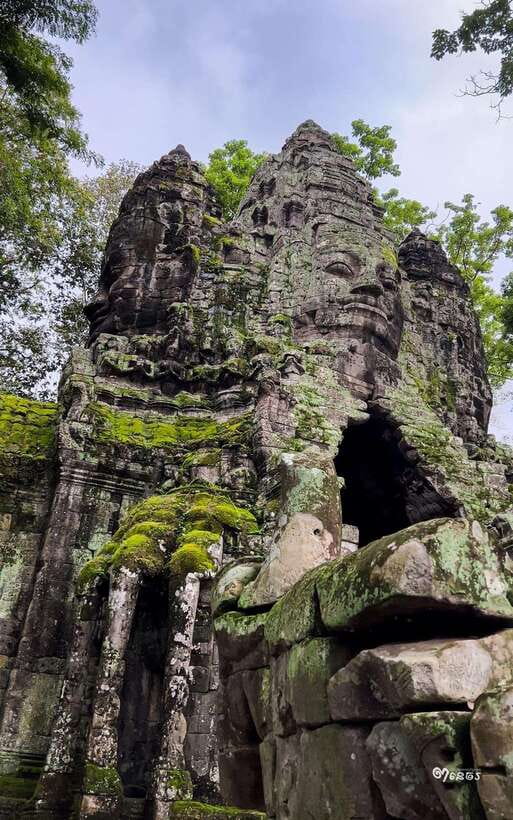
After Angkor Wat, the route moves through Angkor Thom, described in the tour plan as a jungle temple area with a famous connection to the film Tomb Raider. This part of the morning gives you a change from Angkor Wat’s formal symmetry. You move through gates, walls, and temple ruins where roots, stone, and shade create a more enclosed setting.
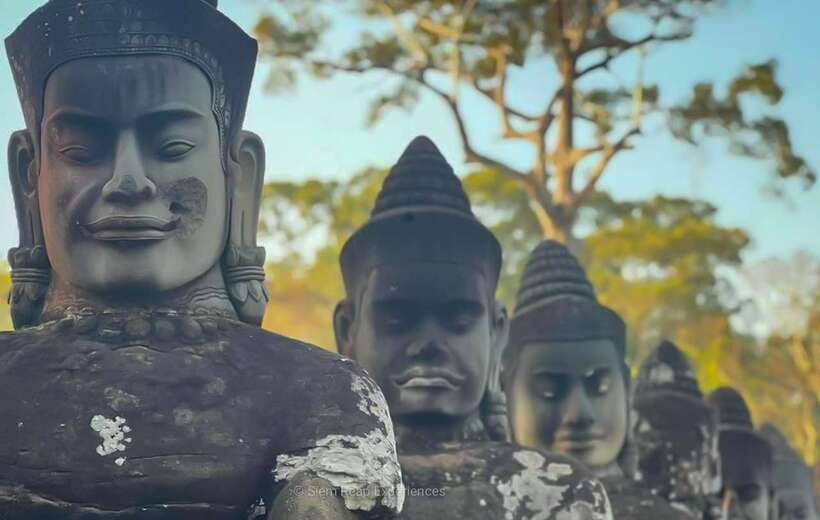
Bayon is the visual star here. Its towers carry the large, calm smiling faces that have become one of Angkor’s most memorable images. Your guide can point out how the faces appear from different angles and explain the religious and royal ideas behind the design.
Bayon can feel crowded because it is one of the park’s best-known stops. A good guide matters. Sayon, Nick, and several other guides are praised for knowing useful photo locations and moving groups away from the thickest crowds when possible. That does not mean you will have the temple to yourself, but good timing can give you a few quiet minutes in the right place.
You will also visit Banteay Kdei, a Buddhist temple used by monks, and Ta Keo, a tenth-century mountain temple. Banteay Kdei offers a more modest, less polished setting than Angkor Wat, while Ta Keo gives the route a strong vertical element with its pyramid form.
The day is not just a procession from one famous monument to the next. You get some time to wander and take pictures on your own, with the guide regrouping everyone for the next explanation. That balance is important. A guide who talks nonstop can make a temple feel like a classroom, while a guide who says too little leaves you staring at stone without context.
The first day ends with hotel return between about 1:00 and 1:30 p.m. That early finish is welcome after the pre-dawn start. You can eat, rest, and recover before the second temple day.
Day two follows the larger circuit
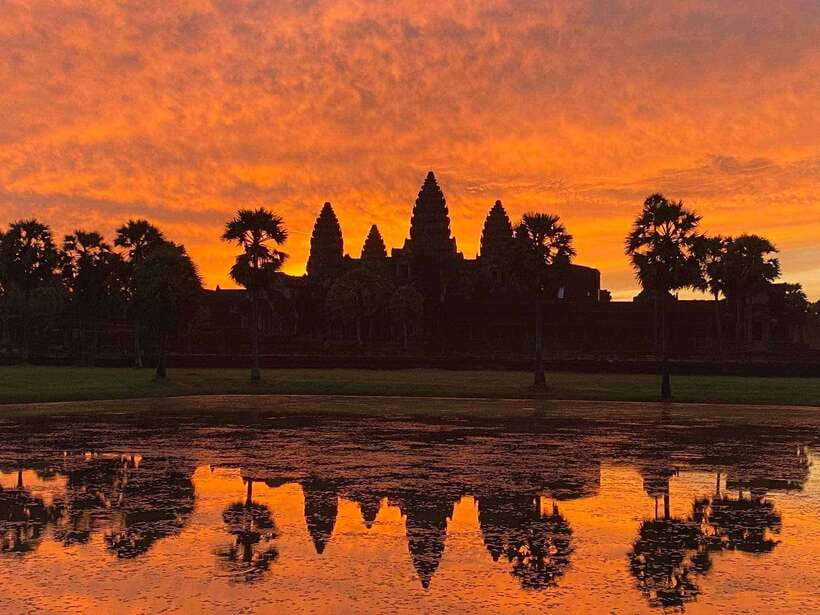
Pickup on day two is between 10:00 and 10:20 a.m., again from your hotel lobby. This later start is much easier on your sleep schedule and gives you time to eat before leaving. The tour runs until about 7:00 p.m., finishing with the sunset at Phnom Bakheng.
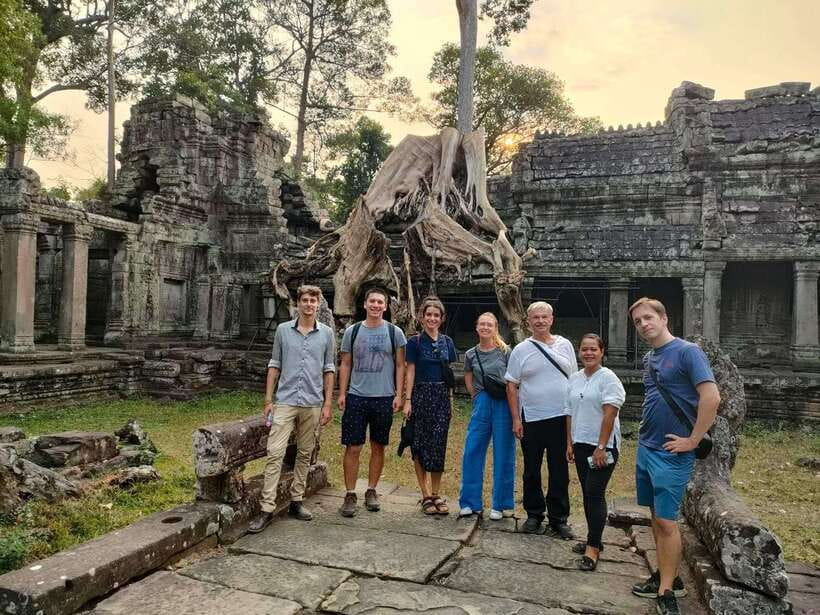
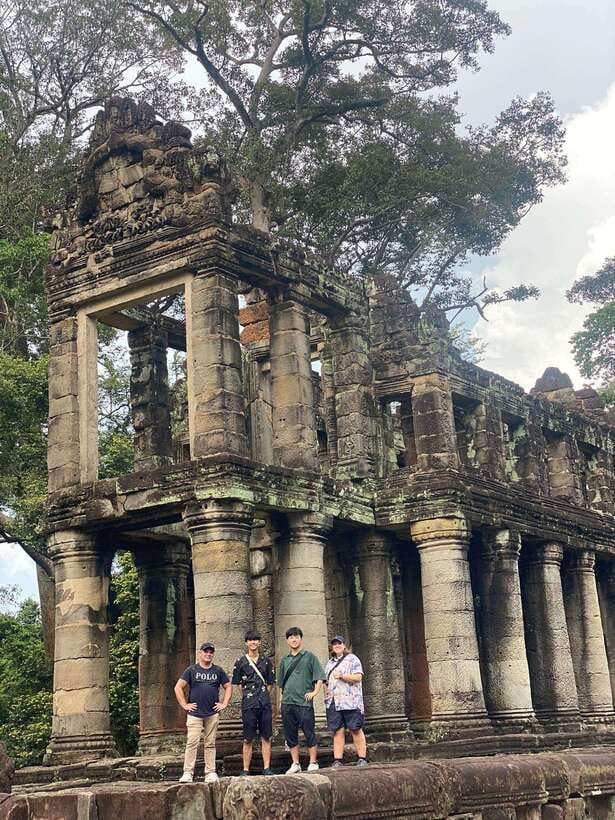
The first stop is Preah Khan, described as the largest temple on this circuit. It was built by King Bayon for his father. Compared with Angkor Wat, Preah Khan feels more like a long, unfolding passage through courtyards and galleries. You will want to listen for the way your guide explains the temple’s purpose, the king who commissioned it, and the details carved into the stone.
Next comes Neak Pean, an island temple surrounded by water. The water around it was used for bathing during the Angkor period. The setting gives you a different view of Khmer engineering, since the temple is tied to a larger system of pools and reservoirs rather than simply sitting on dry ground.
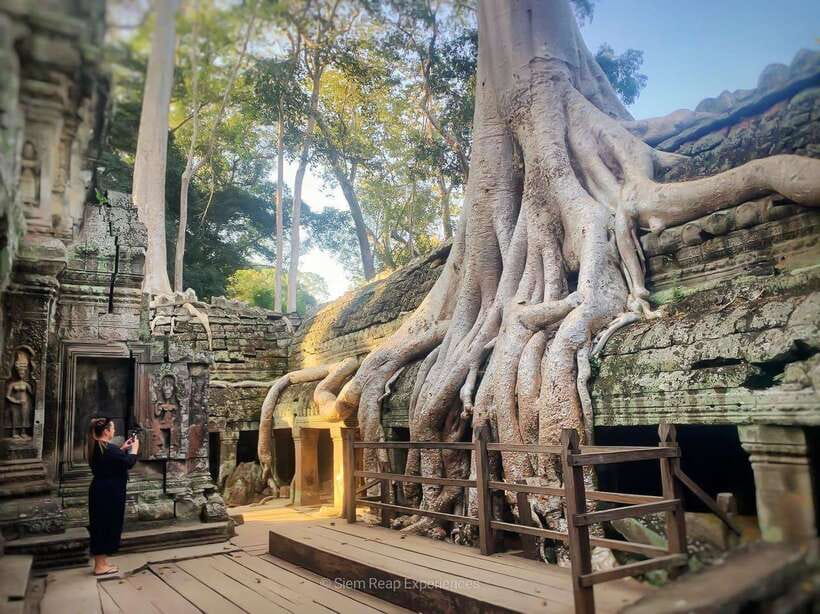
Ta Som is one of the most photogenic stops on the route. A tree has grown over the East Gate, making the relationship between the old stonework and the forest impossible to miss. It is a good place for a picture, but also a useful reminder that Angkor is not a collection of untouched buildings. Nature, weather, restoration, and time all shape what you see.
More two-day temple trips in Siem Reap:
- 2 Days Exclusive Temple Highlights with Sunset and Sunrise Tour
★ 5.0 · 1,157 reviews - Siem Reap: Angkor Sunrise 1- or 2-Day Guided Temples Tour
★ 4.9 · 1,132 reviews - 2-Day Angkor Wat With Small, Big Circuit and Banteay Srei Tour
★ 5.0 · 545 reviews - Siem Reap: 2-Day Temple Highlights Sunrise and Sunset Option
★ 4.9 · 445 reviews
East Mebon and Pre Rup add scale and ceremony
East Mebon once stood on an artificial island in a reservoir. The reservoir is now dry, so the temple’s original setting is hard to imagine without a guide explaining it. This is one of the moments when the tour’s historical context earns its keep. Without that explanation, you see a stone monument on land. With it, you begin to understand the water systems that supported the Angkorian capital.
Pre Rup is a stone structure associated with Hindu meditation on the full moon. Its stepped form and high position make it feel more severe than the softer, tree-covered temples earlier in the day. You will likely notice the heat here, especially in the afternoon, so use the supplied water and take the climb at your own pace.
The tour includes chilled bottled water and a refreshing towel. Those may sound like small extras, but they matter after hours outside. Guides also build in bathroom stops, and the temple complex has clean, usable facilities at the stated stops.
Food and soft drinks are not included. Restaurants near the temples offer breakfast or lunch, and the group has a break during the day. Allow for the fact that restaurant service may be slow or orders may be mixed up, so carry a snack if you need food at a precise time. You pay for meals yourself, and cash is useful.
Sunset from Phnom Bakheng
The second day ends at Phnom Bakheng, a hilltop temple with 33 towers representing the heavens. It is a fitting final stop because the climb and high position give the sunset a sense of occasion after two days among the ruins.
The sunset is not guaranteed to be dramatic. Clouds, haze, or rain can change the view, just as they can affect the sunrise. Still, the setting gives you a final wide look at the temple zone and a chance to slow down after a busy day.
You should expect some walking, steps, uneven surfaces, heat, and long periods on your feet. The tour is not suitable for wheelchair users, babies under one year, or people over 95. Wear long pants or another garment that covers your knees, and cover your shoulders. Short skirts, sleeveless shirts, and shorts are not allowed at the temples. A sarong can be useful if your clothing needs extra coverage.
Bring a hat, sunscreen, camera, cash, and water-friendly patience. Alcohol and drugs are not allowed. Comfortable shoes are more useful than sandals with poor grip, especially in the dark on day one.
The guides are a major part of the value
The temples are remarkable on their own, but the guide shapes how much you take away. This tour uses different guides on the two days, so you may meet one person for sunrise and another for the larger circuit.
Sam Vone is repeatedly praised for explaining the temples clearly while keeping the mood light. Sam, who was once a monk according to one account, is also noted for his calm manner and strong knowledge of religious details. Sayon is often praised for organization, photo help, and keeping the group together. John brings a lively personality and plenty of stories about Cambodian culture and life.
Nick is described as good at keeping the day moving without rushing people. He also points out local wildlife, helps with photos, and explains when the next toilet stop will be. Vone, Sary, Pheap, Rith, Chon, Heang, and others are also praised for their patience and clear explanations.
You cannot usually choose a particular guide in advance, so treat those names as examples of the guiding style available rather than a guarantee. The strongest pattern is clear: the guides do more than recite dates. They explain carvings, answer questions, find useful photo spots, help with group timing, and make sure people get back to the minibus.
Transport also earns its place in the price. The air-conditioned minibus is not a luxury in Siem Reap’s heat. It gives you a cool, quiet place between temples, and you do not have to negotiate separate transport after every stop. The group is limited to 13, though the exact feel depends on the day’s turnout.
Who should book this Angkor Wat tour?
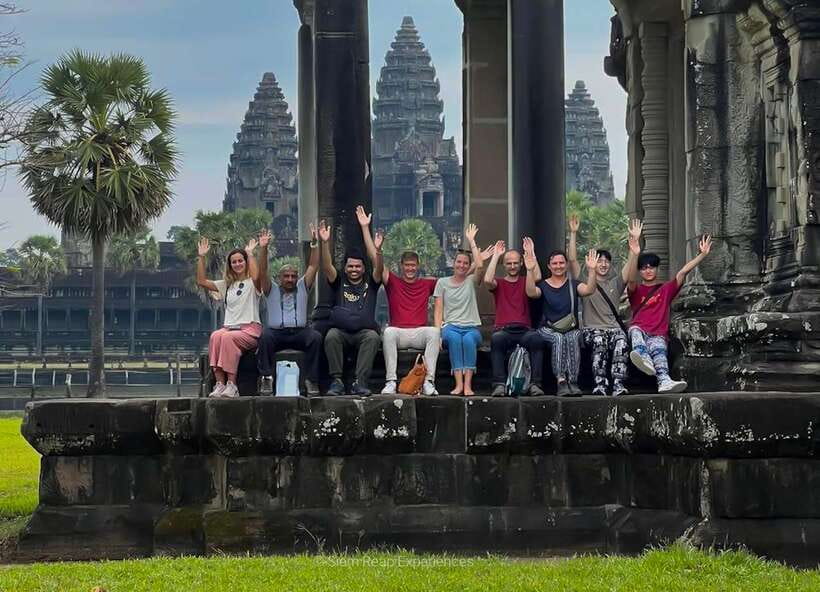
I would choose this tour if you want the major temples explained but do not want to spend time planning routes, hiring transport, and arranging sunrise and sunset on your own. It suits first-time visitors to Siem Reap, couples, solo visitors, and anyone who values a guide who can take photos and keep the day organized.
It is also a good fit if you want to see more than Angkor Wat itself. The route includes the famous sites, but also Neak Pean, Ta Som, East Mebon, and Banteay Kdei, which show different sides of the Angkor complex.
I would think twice if you dislike early mornings, long walks, scheduled group movement, or waiting for sunset with other people. The sunrise pickup is the clearest weakness, especially when the sky is cloudy or the sunrise time does not require such a long wait.
Book your temple pass online through the Angkor Enterprise website one day ahead or earlier. The tour does not require a passport, and free cancellation is available up to 24 hours before the activity. Reserve and pay later is also offered, which helps if your Siem Reap plans are still shifting.
FAQ
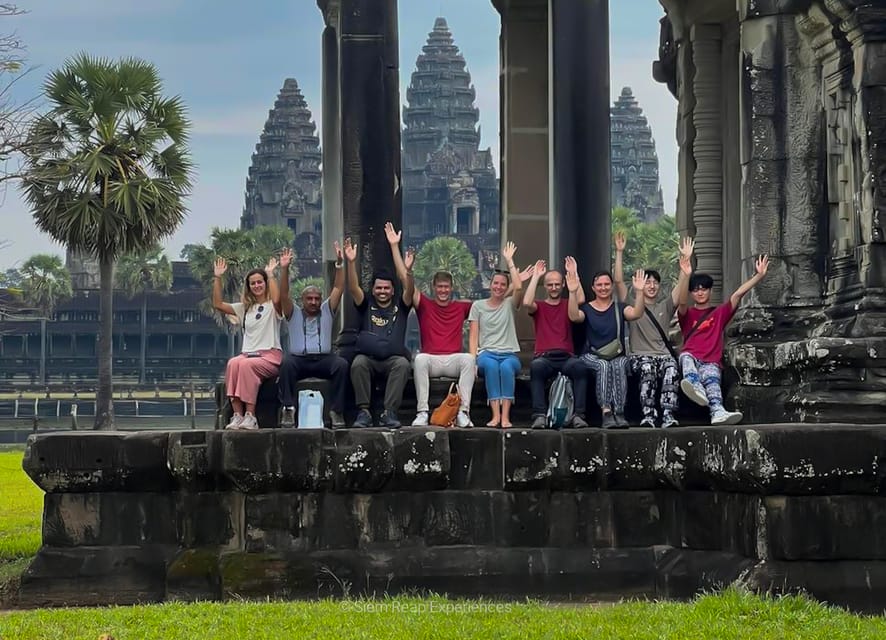
How much does the two-day Angkor tour cost?
The tour costs $30 per person. The Angkor Archaeological Park ticket is separate and costs $37 for one day or $62 for two to three days.
Does the tour include hotel pickup and drop-off?
Yes. Pickup and return transportation from accommodation in Siem Reap are included. Wait in your hotel lobby 30 minutes before pickup, and make sure the accommodation address is correct.
What time does the sunrise day begin?
Day one pickup is scheduled between 4:00 and 4:20 a.m. The tour returns to your hotel between about 1:00 and 1:30 p.m.
What time does the sunset day begin and end?
Day two pickup is scheduled between 10:00 and 10:20 a.m. Arrival back at the hotel is expected at about 7:00 p.m.
How many temples does the tour visit?
The two-day route visits 11 temples, including Angkor Wat, Angkor Thom, Bayon, Banteay Kdei, Ta Keo, Preah Khan, Neak Pean, Ta Som, East Mebon, Pre Rup, and Phnom Bakheng.
Is food included?
No. Breakfast, lunch, and soft drinks are not included. Food is available at local restaurants near the temples, and you should bring cash.
What should I wear to the temples?
Wear clothing that covers your knees and shoulders. Shorts, short skirts, and sleeveless shirts are not allowed. Bring a sarong if you need an extra layer for temple visits.
Temple visits we reviewed lately in Siem Reap
- Angkor Wat Tour by Tuk-Tuk with English Speaking Driver★ 4.5 · 65 reviews
- Private Sunrise Angkor Wat Tour★ 4.6 · 16 reviews
- Private One Day Tour with Sunrise at Angkor Wat★ 5.0 · 3 reviews
- Siem Reap Tour Guide: Angkor Wat Sunrise Tour & Beng Mealea★ 5.0 · 4 reviews
- Siem Reap Private Tour: Angkor Wat Sunrise And Banteay Srei★ 5.0 · 3 reviews
- Private Angkor Wat Sunset Tour with Lunch and Snack Included★ 5.0 · 3 reviews
- Private Angkor Wat Sunrise Tours And Sunset Floating Village★ 5.0 · 3 reviews
- Private Angkor Wat Temple Tour★ 5.0 · 35 reviews
Siem Reap Temple Tours, compared.
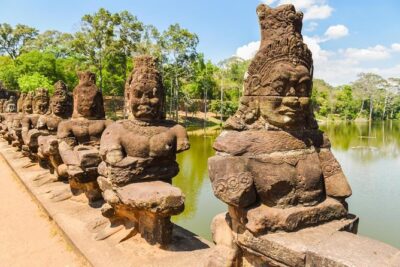
Angkor Wat Sunrise or Sunset Tour with Guide from Siem Reap
Read our review →
Siem Reap: Angkor Wat: Small-Group Sunrise or Sunset Tour
Read our review →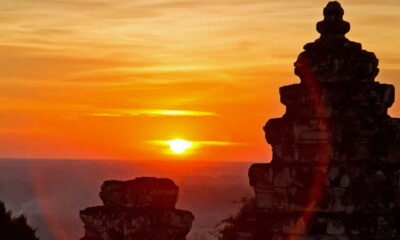
Siem Reap: Full-Day Angkor Wat Guided Tour with Sunset
Read our review →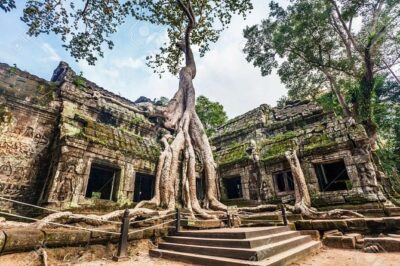
Angkor Wat Sunrise tour with Small – Group and Guide tours
Read our review →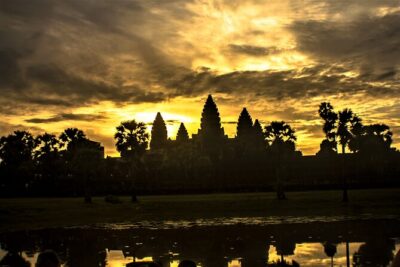
Angkor Wat Highlights and Sunrise Guided Tour from Siem Reap
Read our review →
Angkor Wat Sunset Small Group Tour with Lunch Included
Read our review →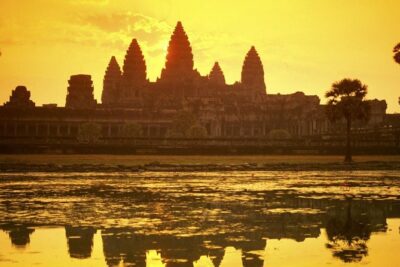
Full-Day Angkor Wat Sunrise Private Tour with Guide from Siem Reap
Read our review →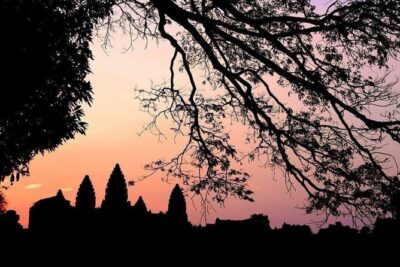
Angkor Wat Sunrise & 3 Main Temples with Breakfast – Small Group
Read our review →This tour also ranks in