
Review · KATHMANDU
Bhaktapur Durbar Square and Boudhanath Stupa
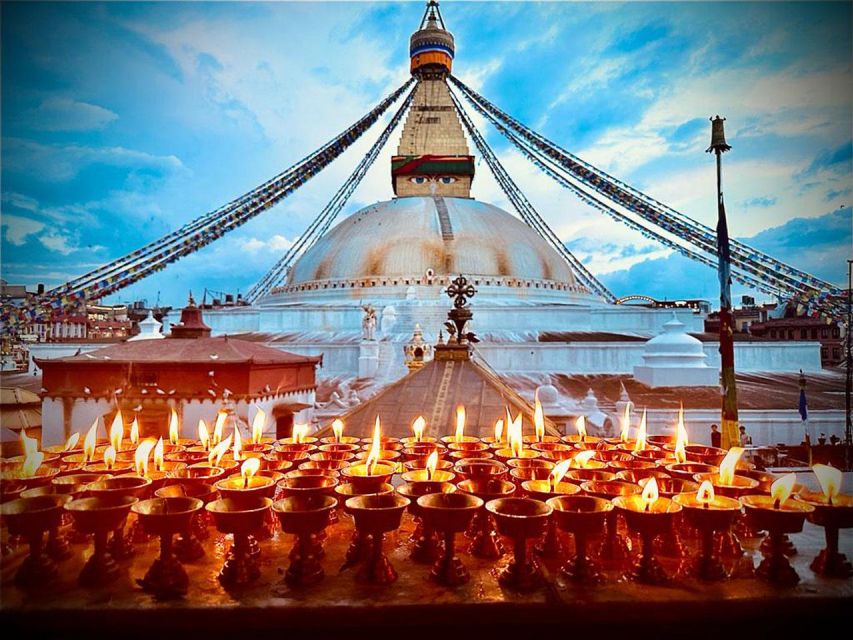
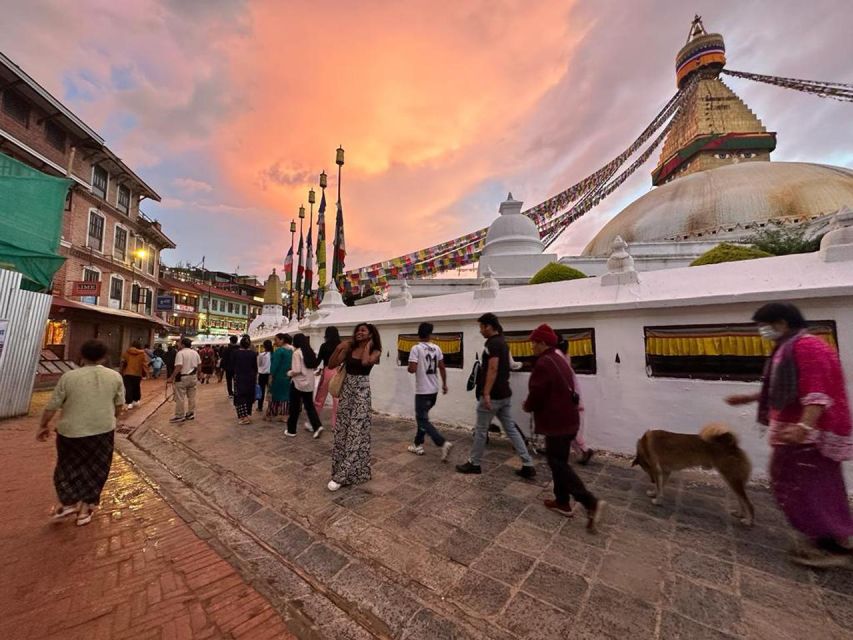
Boudhanath’s prayer wheels and Bhaktapur’s old brick lanes give you two very different views of Kathmandu Valley in one half-day. At Boudha, you follow pilgrims around one of Nepal’s most important Buddhist sites. In Bhaktapur, you move through courtyards, pagoda temples, palace squares, and working craft shops.
I like the private car and guide, especially when Kathmandu traffic makes independent sightseeing slow and confusing. I also like the human scale of the visit: guides such as Prakriti and Bijay have helped visitors find good photo spots, local workshops, and small food treats such as Bhaktapur’s famous yogurt.
The main caution is time. Five hours is enough for a useful introduction, not a full study of either place. Heritage entrance tickets, food, and personal purchases cost extra, and the tour’s two main stops may feel rushed if you want long shopping or museum visits.
Key points at a glance
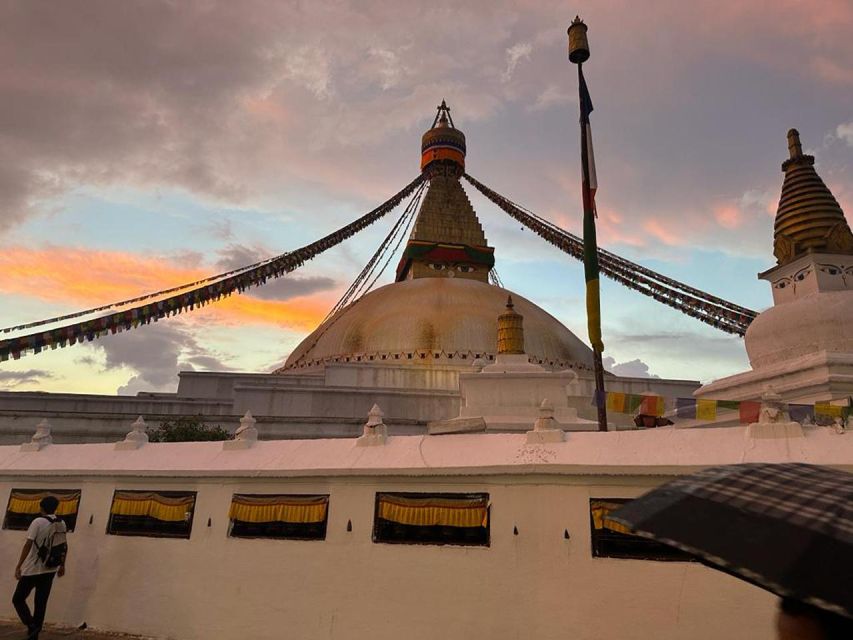
- Boudhanath for about 80 minutes: Watch pilgrims perform kora, spin prayer wheels, and move around the white dome.
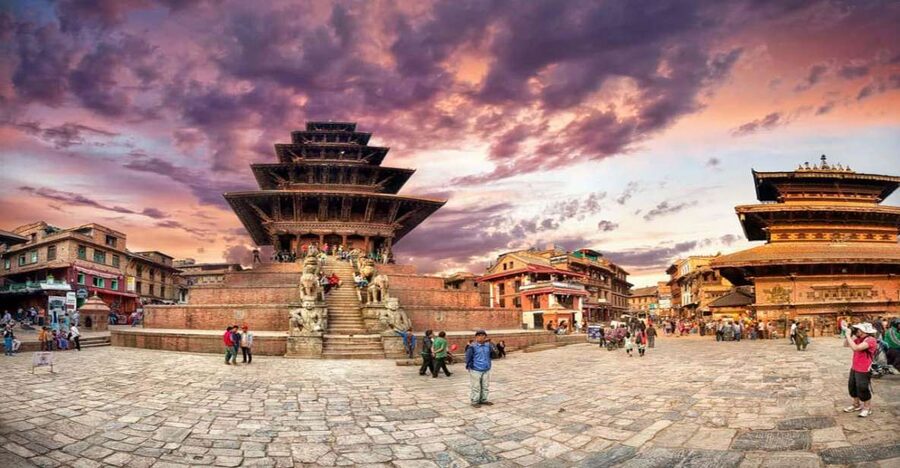
- Bhaktapur for about 90 minutes: Walk through old Newari streets, temple squares, palace buildings, and craft workshops.
- Private touring: You travel by car with your own English-speaking guide rather than joining a large group.
- Useful local help: Guides including Prakriti and Bijay can explain symbols, suggest photo angles, and help you notice workshops and side streets.
- Five-hour format: This suits an afternoon after a morning arrival or a compact day of cultural sightseeing.
- Extra costs to plan for: Heritage tickets, food, and personal expenses are not included in the $60 price.
Two sides of Kathmandu Valley in one outing
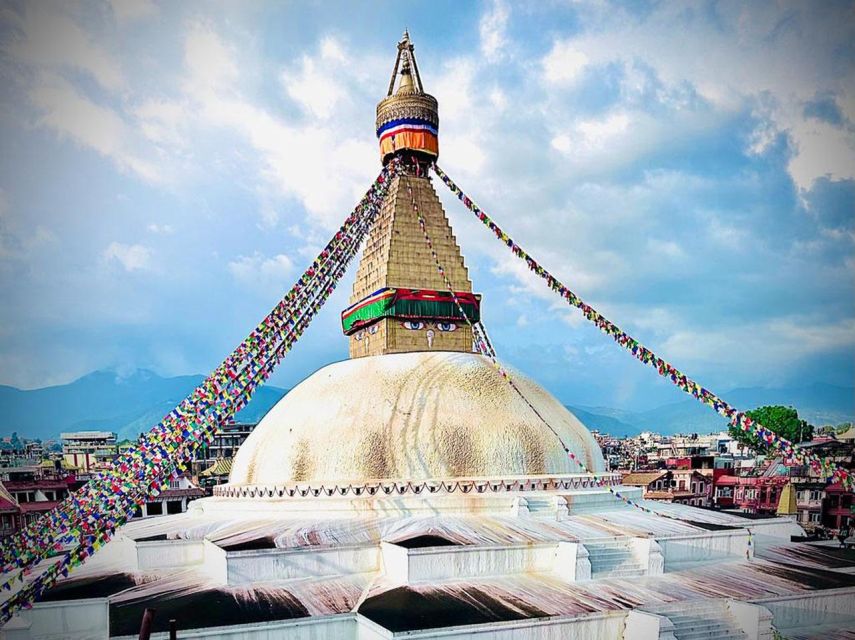
This tour pairs two major cultural stops that feel quite different from one another. Boudhanath is centered on a Buddhist stupa and the daily rhythm of prayer. Bhaktapur is an old Newari city where temples, palace squares, homes, and workshops sit close together.
That contrast is the real strength of the route. You do not spend five hours looking at similar monuments. Instead, you move from Tibetan Buddhist practice to the architecture and crafts of the Kathmandu Valley’s Newari communities.
The tour costs $60 per person and includes a private vehicle, hotel pickup and drop-off, and a licensed English-speaking guide. That is reasonable if you value door-to-door transport and clear explanations, particularly in a city where traffic can eat up a large part of your day.
It is less of a bargain if you already have transport, prefer to explore alone, or plan only a quick look at the sites. Entrance fees are not included, so ask for the current prices when you book or before setting out. The price also does not cover lunch, snacks, drinks, or shopping.
More Temple Tours around Kathmandu:
- Kathmandu Spiritual Sites: Bodhnath & Pashupatinath Tour
★ 5.0 · 185 reviews - Kathmandu: Chandragiri Cable Car and Monkey Temple Tour
★ 4.8 · 139 reviews - From Kathmandu: 2 Stupas and Kopan Monastery Spiritual Tour
★ 4.8 · 115 reviews
Starting in Boudhanath’s circle of prayer
The tour visits Boudhanath Stupa first, with about 80 minutes for a guided visit, photos, and walking. Pickup begins in Kathmandu, and the driver or guide is expected to call and confirm the meeting point.
Boudhanath is best understood by walking around it, not simply by photographing the dome. The circular route is known as kora. As you walk, you can watch people turn prayer wheels, recite mantras, and move with a quiet purpose around the stupa. Your guide can explain the meaning of the eyes painted above the dome and point out details you might miss on your own.
The setting also gives you a direct look at the Tibetan community in Boudha. Monasteries, prayer flags, religious shops, incense, and thangka paintings surround the stupa. The area has a strong devotional feel, but it is also a living neighborhood with shops and cafés. Treat it as a place of worship first and a photo stop second.
The 80-minute visit is enough for a walk around the stupa and a short look at nearby shops. It may not be enough for a long monastery visit, extended shopping, or a slow café break. If you want to buy Tibetan artifacts, incense, or a thangka, tell your guide early so the shopping does not swallow the walking time.
I would pay attention to the rhythm of the place. Prayer wheels may be small or large, and pilgrims often move around the stupa in a clockwise direction. Follow your guide’s advice about where to walk and when to take photographs. A respectful pace will make the visit more rewarding than rushing from one picture to the next.
Bhaktapur’s brick lanes and carved wood
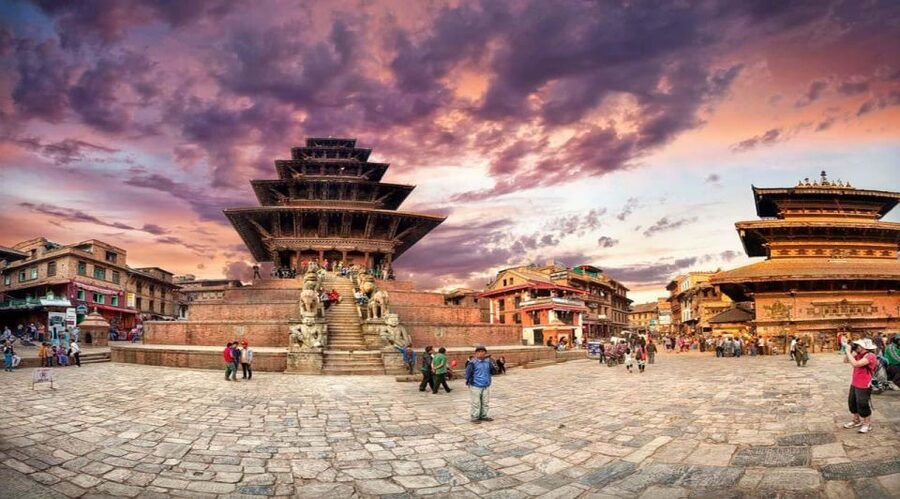
After Boudhanath, the route continues to Bhaktapur Durbar Square for around 90 minutes. This is the longer walking portion of the tour, though the time remains short for a city with several important squares and a large number of temples.
Bhaktapur’s appeal comes from its street-level detail. You are not only looking at grand buildings. You are also passing traditional homes, carved windows, small courtyards, and workshops where craftspeople work with pottery, wood, and paper. The old city is a place to watch daily work continue beside historic buildings.
The tour focuses on the city’s role during the Malla period, when Bhaktapur was an important center for art, architecture, and trade. A good guide can make the carved struts, pagoda roofs, palace courtyards, and temple layouts easier to read. Without that help, the details can blur together, especially if you are seeing several sites in one day.
The supplied route allows time for sightseeing, photographs, free exploration, and shopping. In practice, you will need to choose. You can use the 90 minutes for a brisk guided walk, or pause at a workshop and cut short some of the formal sightseeing. Ask your guide to set expectations at the beginning.
One especially useful aspect is access to local craft areas. You may pass pottery, woodworking, and paper-making workshops. These are not just decorative stops. They show how Bhaktapur’s old artistic traditions connect with present-day work. If you are interested in buying something, compare prices and quality before committing, and remember that purchases are separate from the tour price.
The small details that make Bhaktapur memorable
Bhaktapur is often remembered through its broad squares, but its narrow lanes may be the best part of the visit. You might see a quieter street with local residents, an old doorway, or a workshop that does not appear in a standard photograph.
A guide can also help you find the right angle for pictures. Bijay, one of the guides associated with this experience, has been praised for taking group photos and knowing good spots around the squares and streets. That is a small service, but it matters when you are traveling alone or want everyone in the picture.
Food is another local touch. Bhaktapur is known for yogurt, and Bijay has bought visitors yogurt treats during the tour. Food is not included, so consider this an optional purchase rather than a promised part of the package. Still, sampling a local specialty can give the walking portion a pleasant break.
You may also hear about private homes or see interiors connected with older Newari objects, but access is not guaranteed. Treat such moments as possible extras rather than fixed itinerary stops. The confirmed attractions are Boudhanath and Bhaktapur Durbar Square.
Same sacred ground, another way to see it:
- Lunch with Nuns – Monastery
★ 5.0 · 75 reviews - Kathmandu: Pashupatinath Temple Evening Aarati Tour
★ 5.0 · 36 reviews - Chandragiri Cable Car & Monkey Temple Tour- Private/Group
★ 5.0 · 32 reviews - Kathmandu: Pashupatinath Temple Aarti Night Tour
★ 4.8 · 29 reviews
What your guide adds to the visit
The guide is central to the value of this tour. Boudhanath and Bhaktapur are easy enough to photograph without help, but their symbols, rituals, and building details are much harder to understand by simply walking around.
Prakriti has been specifically praised for kindness and broad knowledge of the area and Nepal. Bijay has been praised for his warm manner, historical explanations, photo help, and ability to connect the formal sights with local streets and workshops. Another guide named Karma appears in one account as a friend who joined an evening in Kathmandu, but that nightlife extension is not part of the stated tour and should not be assumed.
The service is offered in English, and the tour is private. That gives you room to ask questions, slow down for photographs, or spend less time in a shop. It also means the quality of the outing depends more heavily on the individual guide than it would on a fixed audio guide.
You should tell the guide what matters most to you. Ask for architecture if you like buildings, ritual details if Boudhanath interests you, or workshops if you want a closer look at local crafts. A private tour works best when you use that flexibility.
Timing, transport, and practical comfort
The stated duration is five hours, including pickup and return to Kathmandu. The listed visits total roughly 170 minutes, leaving time for driving, traffic, parking, and transitions between the two sites. Kathmandu traffic can be unpredictable, so do not schedule a tight flight, bus, or appointment immediately after the tour.
Hotel pickup and drop-off are included, with the option to return to your hotel or another central location in Kathmandu. The private car is useful because you do not need to arrange separate transport between Boudhanath and Bhaktapur.
The tour is listed as wheelchair accessible, but the experience also includes walking through old streets and heritage areas. If you use a wheelchair or have limited mobility, confirm the exact vehicle and route conditions before booking. The information provided does not explain the surface conditions at every part of the walk.
Wear comfortable shoes and bring water. Food and personal expenses are not included. Dress and behave respectfully at Boudhanath, where people are praying and religious activity is part of the setting.
The tour can work well as an afternoon plan after a morning arrival in Nepal. One visitor used it in exactly that way, finding the driver and guide punctual and the company responsive with confirmation and updates. Even so, allow some breathing room after landing, since airport delays and city traffic can affect a fixed start time.
Is $60 good value?
For a private five-hour outing, $60 per person is a fair price if you are traveling with family or friends and want a car, guide, and hotel service in one booking. You are paying for convenience as much as for sightseeing. The guide can handle the route while you focus on the sites.
The value is stronger when you are new to Kathmandu, short on time, or interested in context rather than just photographs. It is also useful for solo visitors who want help with pictures and prefer not to navigate between two major sites alone.
The value is weaker for independent visitors who already have a car and local knowledge. You must also add heritage entrance tickets, food, and anything you buy in the markets. Ask whether the $60 price changes by group size, since the experience is private but the published price is per person.
Free cancellation up to 24 hours before departure and reserve-now, pay-later booking make it easier to fit the tour around changing plans. Those policies are helpful, but they do not change the basic calculation: the tour is most useful when you want structure and transport, not simply admission to two sites.
Who should book this tour?
I would recommend it to a first-time visitor with one open half-day in Kathmandu. It gives you two major cultural settings, a private car, and a guide who can explain what you are seeing without requiring you to organize every detail.
It is also a good fit for couples, families, and small private groups. The route offers enough variety to keep a mixed group interested, with religious practice at Boudha, architecture in Bhaktapur, craft work, shopping, and local food options.
Photographers may appreciate the guide’s help with viewpoints and group pictures. Culture-focused visitors will value the explanations of Newari design, Malla-era city life, Tibetan traditions, and Buddhist ritual.
I would hesitate to book it if you want a slow day. Ninety minutes in Bhaktapur is not enough for every square, museum, workshop, and shop. If you want extensive shopping or long time inside monasteries, seek a longer custom itinerary. Also check the pickup details if your hotel is outside central Kathmandu, since the stated pickup area is Kathmandu.
Final call: a smart half-day introduction
Book this tour if you want a well-organized private introduction to two of the Kathmandu Valley’s most important cultural sites. The combination is strong: Boudhanath gives you ritual and Tibetan Buddhist life, while Bhaktapur gives you Newari architecture, craft work, and old city streets.
Go in with realistic expectations. You are getting a focused five-hour visit, not a full exploration of Bhaktapur or Boudhanath. Budget extra for tickets and food, tell your guide what interests you, and keep your schedule loose after the tour.
For a first visit, the combination of transport, personal guidance, and flexible drop-off makes the $60 price sensible. If you already know Kathmandu well and prefer to set your own pace, you may want more time and fewer fixed stops.
FAQ
How long does the Bhaktapur and Boudhanath tour last?
The tour lasts five hours, including transportation between Kathmandu, Boudhanath, Bhaktapur, and the return point in Kathmandu.
What places does the tour visit?
It visits Boudhanath Stupa in Kathmandu and Bhaktapur Durbar Square.
How much time is spent at Boudhanath Stupa?
The scheduled visit at Boudhanath lasts about 80 minutes and includes walking, sightseeing, photos, and a guided visit.
How much time is spent at Bhaktapur Durbar Square?
The scheduled visit at Bhaktapur lasts about 1.5 hours and includes sightseeing, walking, free time, photos, and shopping.
Is transportation included?
Yes. Hotel pickup and drop-off and a private car are included.
Are entrance tickets included in the price?
No. Tickets to the heritage sites are not included. Food and personal expenses are also separate.
Is the tour private and what language is offered?
Yes. It is a private group tour with a live English-speaking guide.
Can I cancel the booking?
You can cancel up to 24 hours in advance for a full refund. The booking also offers a reserve-now, pay-later option.
Temple visits we reviewed lately in Kathmandu
- Sacred Pashupatinath: Aarati,Cremation Rites & Boudha Stupa★ 5.0 · 18 reviews
- Pashupatinath: Evening tour of temple and Aarati ceremony★ 5.0 · 3 reviews
- Kathmandu: Pashupatinath Temple Evening Aarati Tour★ 4.7 · 11 reviews
- Kathmandu: Pashupatinath Temple Aarti Night Tour★ 4.8 · 29 reviews
- Kathmandu: Pashupatinath Temple Evening Aarati Tour★ 5.0 · 36 reviews
- Kathmandu: Guided Walking Tour with Monkey Temple★ 5.0 · 18 reviews
- Kathmandu: Chandragiri Cable Car and Monkey Temple Tour★ 5.0 · 9 reviews
- Pokhara: Pagoda, Waterfall & Cave – Private Short Trip★ 3.9 · 3 reviews
Kathmandu Temple Tours, compared.
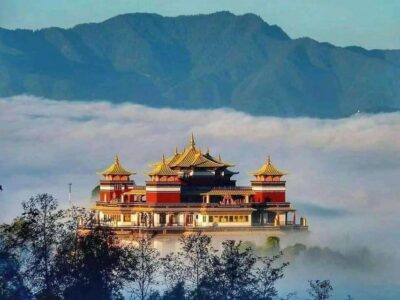
Kathmandu Spiritual Sites: Bodhnath & Pashupatinath Tour
Read our review →
From Kathmandu: 2 Stupas and Kopan Monastery Spiritual Tour
Read our review →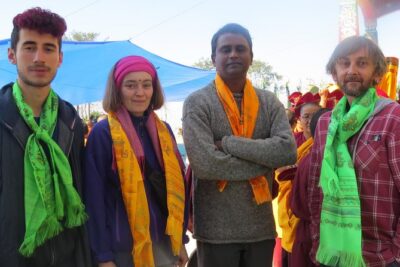
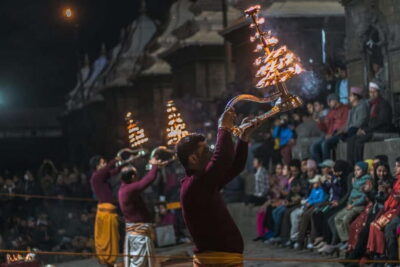
Kathmandu: Pashupatinath Temple Evening Aarati Tour
Read our review →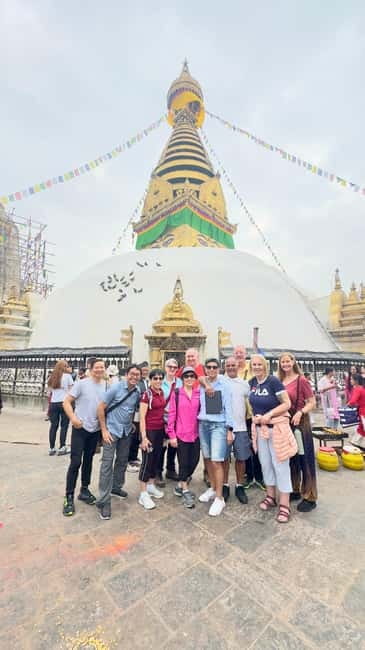
Chandragiri Cable Car & Monkey Temple Tour- Private/Group
Read our review →
Kathmandu: Pashupatinath Temple Aarti Night Tour
Read our review →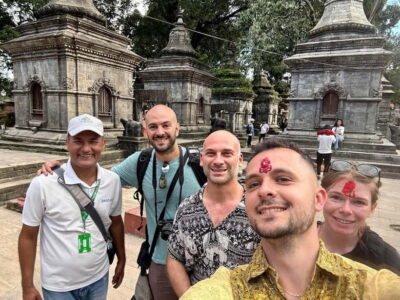
Kathmandu: Guided Walking Tour with Monkey Temple
Read our review →This tour also ranks in