
Review · KATHMANDU
Pashupatinath: Evening tour of temple and Aarati ceremony
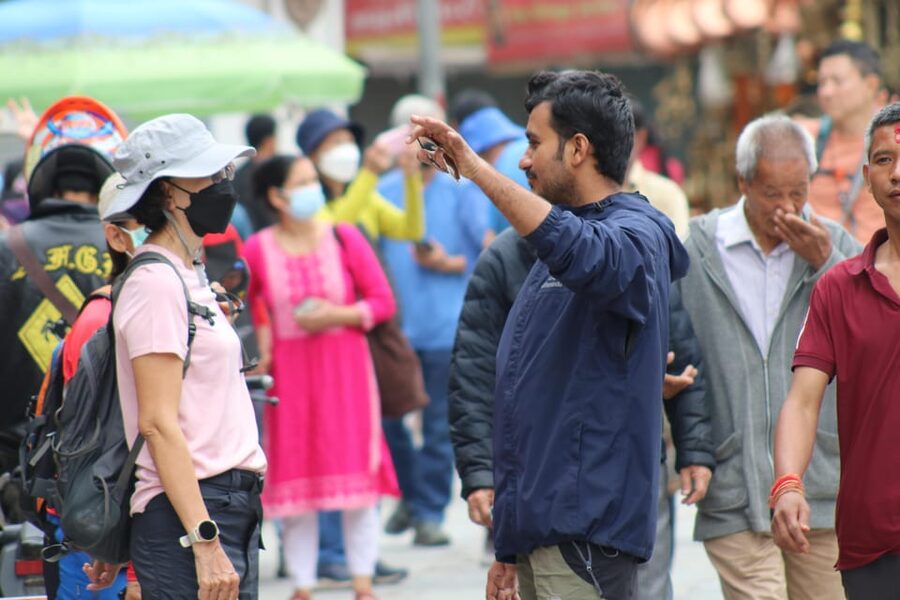
The most powerful part of this evening tour is the shift from ordinary temple visit to living ritual. At Pashupatinath, you see shrines, hear bells, walk beside the Bagmati River, and watch the Aarati ceremony turn sunset into a shared act of prayer. Nearby cremation ghats add a serious, human note.
I like the private format, which gives you room to ask about Hindu customs and the temple’s pagoda architecture. I also like that transportation, entry fees, and an English-speaking guide are included, so you can focus on the place rather than sorting out the evening yourself.
The main consideration is emotional and practical: cremation rituals are visible at the river ghats, and the setting can be solemn. The three-hour visit also moves through a busy religious complex, with walking and uneven access that make it unsuitable for wheelchair users.
Key points to know before you go
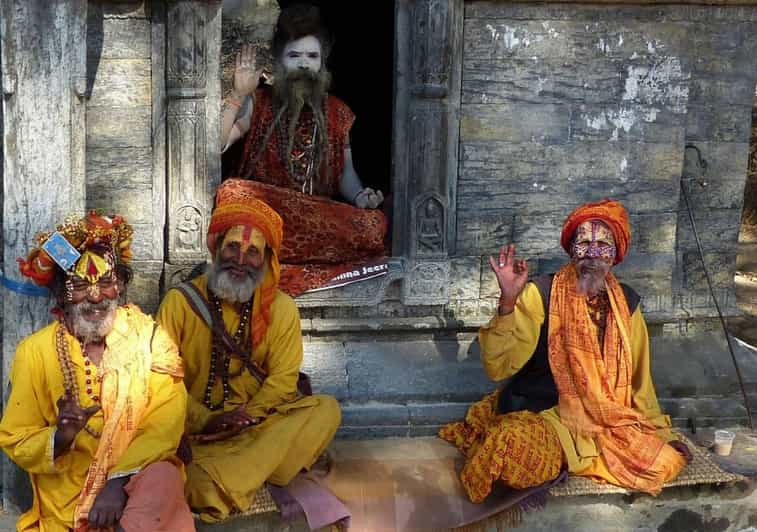
- Sunset changes the mood: The evening ends with oil lamps, mantras, drums, and collective prayer during the Pashupati Aarati.
- The Bagmati ghats are part of the visit: You may see cremation rituals, an important but serious part of Nepalese religious life.
- You get a private group: Your English-speaking guide can shape explanations around your questions and interests.
- The price covers the essentials: At $57 per person, transportation, entry fees, and skip-the-line access are included.
- The temple is a living place of worship: Expect devotees, pilgrims, bells, incense, shrines, and active religious practice rather than a quiet museum.
- Accessibility is limited: The experience is not suitable for wheelchair users.
Why Pashupatinath feels different at sunset
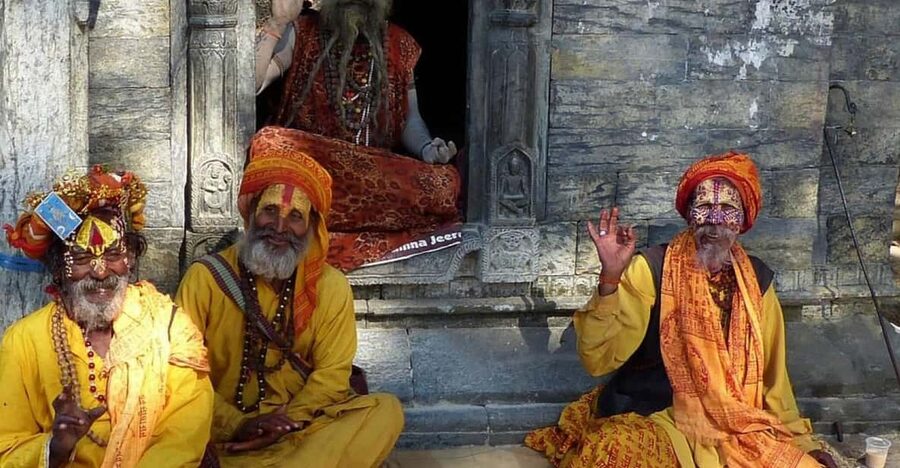
Pashupatinath is not simply an old building with an interesting façade. It is a working religious complex, and the evening tour places you close to the rituals that give the site its meaning.
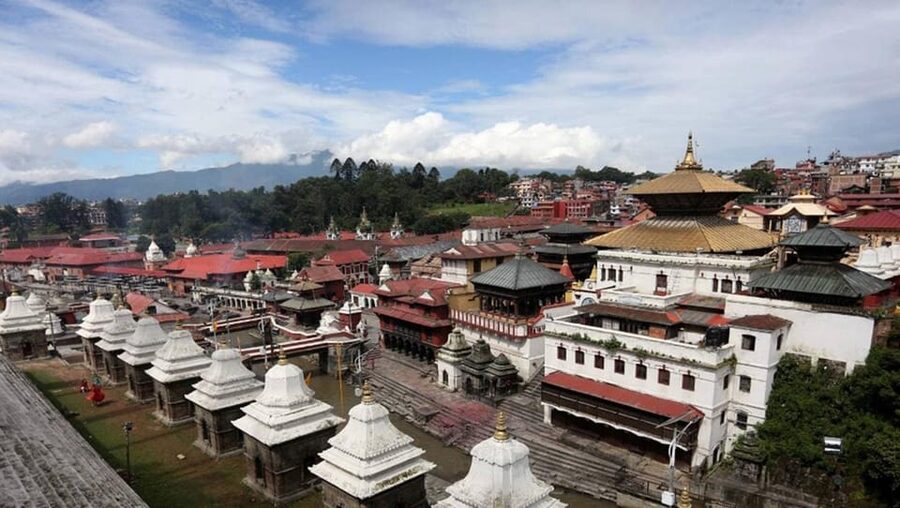
The main temple is known for its pagoda-style design and golden spire. Inside is the sacred lingam of Lord Pashupatinath, a form of Lord Shiva revered by Hindus. Around it, the complex contains smaller shrines and murtis, or sacred statues, each connected to religious stories and artistic traditions.
I like this setting because you are not asked to admire architecture in isolation. The sound of bells, the smell of incense, and the movement of people toward prayer make the buildings easier to understand. You see how art, worship, and daily life meet in one place.
The visit takes place in the evening, when the light softens and the temple atmosphere changes. That timing matters. You begin with exploration and explanation, then move toward the more focused ritual of the Aarati. The tour has a clear rhythm rather than feeling like a quick stop at a landmark.
More Temple Tours around Kathmandu:
- Kathmandu Spiritual Sites: Bodhnath & Pashupatinath Tour
★ 5.0 · 185 reviews - Kathmandu: Chandragiri Cable Car and Monkey Temple Tour
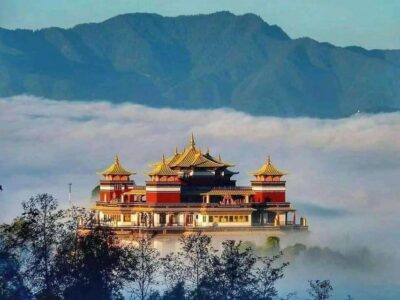
★ 4.8 · 139 reviews - From Kathmandu: 2 Stupas and Kopan Monastery Spiritual Tour
★ 4.8 · 115 reviews
Arriving with a private English-speaking guide
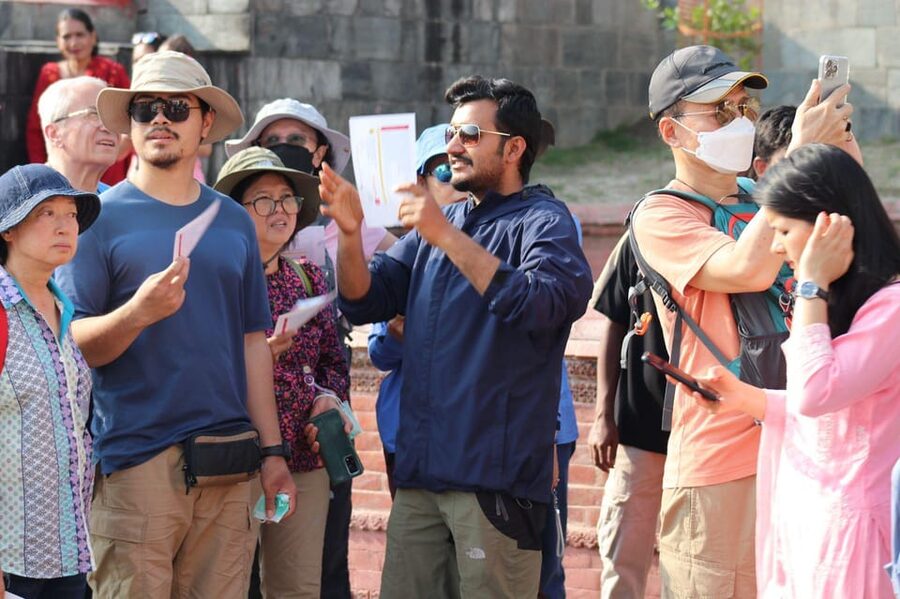
The tour lasts three hours and is arranged for a private group. That is useful at a site with several shrines, river ghats, and religious customs that can be difficult to interpret on your own.
A guide can explain what you are seeing as you move through the grounds: the purpose of the shrines, the importance of the lingam, and the role of the Bagmati River in local religious practice. You can also ask questions at the moment they arise, rather than trying to remember them for a large group explanation.
The available information does not provide the guide’s name, so you should not expect to book a particular named guide. What is clear is that the guiding is in English and that the group is private.
Transportation is included, as are the entry fees. This improves the value for a short evening visit because you are not paying separately for several basic parts of the outing. Skip-the-line access is also included, though the precise effect can depend on conditions at the temple.
The tour begins at a time selected from the available options. Since the Aarati takes place around sunset, check the starting time when you book. You want enough time to see the complex before the ceremony rather than arriving only for the final prayers.
Exploring the shrines and pagoda architecture
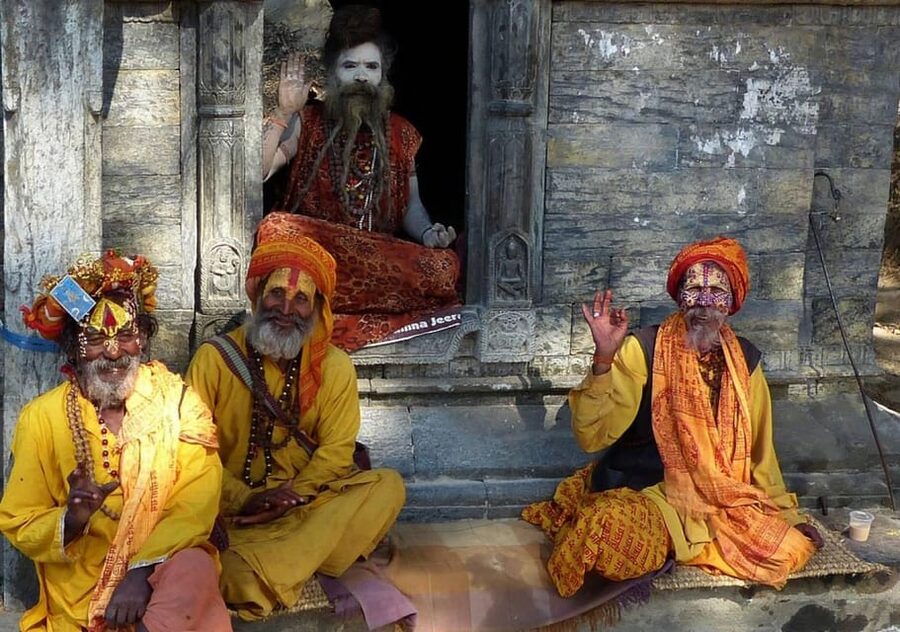
The first part of the visit introduces Pashupatinath as both a historic site and an active center of faith. You see the temple’s traditional pagoda form, decorative details, golden spire, and the many smaller shrines spread across the complex.
The architecture rewards a slower look. Instead of rushing directly to the ceremony area, use this portion to notice how the site is organized. The main temple commands attention, but the smaller murtis and shrines help show the range of religious practice connected with Pashupatinath.
This is where a private guide adds real value. Without context, a courtyard full of statues can become a blur of unfamiliar forms. With explanations, each shrine can become part of a larger story about Lord Shiva, devotion, and Nepalese artistic traditions.
You should also expect an active public setting. Devotees and pilgrims come here for worship, not simply for sightseeing. That means the pace and atmosphere may change around you. Give people space and treat the temple as a sacred place first and a tourist attraction second.
The main temple houses the sacred lingam, but the supplied details do not specify visitor access rules for every part of the building. Your guide can tell you what is permitted during the visit. The important point is that the experience is built around seeing the wider complex and its rituals, not just entering one interior room.
Walking beside the Bagmati River ghats
The route continues toward the Bagmati River, where the religious meaning of the site becomes more personal. The riverbank ghats are used for cremation ceremonies, and families gather there to say farewell to loved ones.
This can be difficult to watch, but it is an important part of what makes the visit unlike a standard temple tour. You are seeing a cultural practice connected with death, mourning, and beliefs about the cycle of life and rebirth. The ceremonies are solemn, with priests, chanting, and a strong sense of dignity.
I would approach this part with care. Do not treat the ghats as a stage. Keep your voice low, follow your guide’s instructions, and remember that families may be carrying out one of the most important rituals of their lives. The supplied information does not set out photography rules, so ask your guide before taking any pictures.
The river setting also gives the tour a visual change. The temple complex, shrines, and golden details give way to open views along the Bagmati. The area is tranquil in some moments, but the cremation ghats make it emotionally weighty rather than purely scenic.
This section may be the reason some people book the tour, and the reason others decide it is not for them. If you want only architecture and light ceremony, Pashupatinath may feel more serious than expected. If you want to understand how spiritual practice shapes everyday life, this is one of the most meaningful parts of the evening.
Same sacred ground, another way to see it:
- Lunch with Nuns – Monastery
★ 5.0 · 75 reviews - Kathmandu: Pashupatinath Temple Evening Aarati Tour
★ 5.0 · 36 reviews - Chandragiri Cable Car & Monkey Temple Tour- Private/Group
★ 5.0 · 32 reviews - Kathmandu: Pashupatinath Temple Aarti Night Tour
★ 4.8 · 29 reviews
The Pashupati Aarati ceremony after sunset
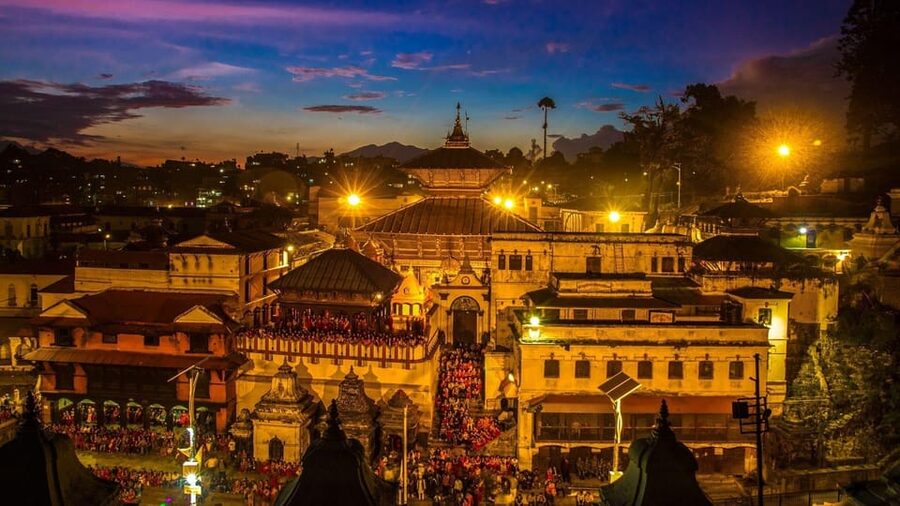
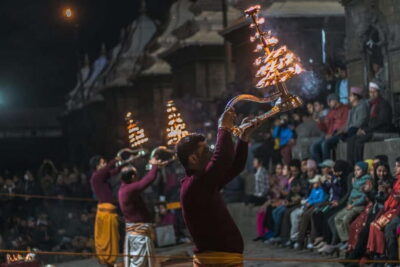
As evening arrives, attention turns to the Pashupati Aarati. This is the tour’s main event, a ceremony of light offered in devotion to Lord Pashupatinath.
Priests in traditional clothing perform set movements with oil lamps, known as diyas. Chants and ancient mantras rise around the riverbank, joined by the steady beat of drums. The combination of fire, sound, movement, and gathering darkness creates a strong sense of occasion without requiring a long explanation.
You do not need to be Hindu to appreciate the ceremony, but you should approach it respectfully. You are watching an act of worship, not a staged performance. The appeal comes from seeing a tradition still practiced in its religious setting.
The ceremony also gives the three-hour schedule a satisfying finish. Earlier, you are learning about architecture and shrines. At the river, you encounter the rituals of death and farewell. At sunset, the lamps and prayers bring the visit toward a shared moment of reverence.
One practical point: the ceremony may draw a crowd, and the available information does not promise a particular viewing position. A private group gives you a guide to help with the flow of the visit, but it does not turn the riverbank into a private viewing area.
What the $57 price includes
At $57 per person, this is not the cheapest way to see a Kathmandu temple from the outside. The price makes more sense when you count what is included: transportation, entry fees, an English-speaking guide, private-group service, and skip-the-line access.
For a three-hour evening activity, that package can be good value if you want interpretation and a planned route. You are paying for more than admission. You are also paying for help making sense of the shrines, temple traditions, cremation ghats, and Aarati ceremony in the right order.
The private format is particularly important. If you are traveling with family or friends, you can ask questions that match your group’s interests. Someone focused on architecture may want more detail about the pagoda design, while someone else may want to understand the ceremony or the river rituals.
The price is less compelling if you prefer to wander independently or have already arranged transport and entry. In that case, the guide and private format are the main reasons to choose this option. For a first visit, however, the included services remove several small hassles from a short evening in Kathmandu.
You can reserve now and pay later, and cancellation is free up to 24 hours in advance for a full refund. Those terms help if your Kathmandu schedule may change.
Who should book this evening visit
I would recommend this tour to you if you want cultural context rather than a quick photograph. It suits people interested in Hindu worship, Nepalese architecture, sacred ceremonies, and the way religious customs connect with ordinary life.
It is also a good fit if you prefer a private group and want transportation handled for you. The English-speaking guide can help you understand unfamiliar practices, and the evening schedule combines several different parts of the temple complex in one outing.
The tour may suit spiritually curious visitors who want to see the Aarati in person. The ceremony is visual and musical, but its meaning matters as much as its appearance. Go with patience and respect, and you are more likely to appreciate it.
You should think carefully before booking if you are uncomfortable seeing cremation rituals. The ghats are not a minor detail that can be ignored. They are part of the experience and may be one of the most affecting things you see.
The activity is also not suitable for wheelchair users. The supplied details do not give a full mobility assessment for other access needs, so ask before booking if walking or uneven access is a concern.
Small details that improve the evening
Check the starting time carefully so the tour allows time at the temple before Aarati begins. The available schedule changes, and the ceremony is the fixed point around which the evening is built.
Wear something that lets you walk comfortably for several hours. The tour includes the temple grounds, shrines, and riverbank, and the supplied information does not describe a fully accessible route.
Keep your attention on the setting rather than trying to document every moment. Bells, incense, chanting, lamps, and the river create a sensory experience that can be lost if you spend the whole visit looking at a screen.
Your guide is also the best person to ask about conduct near the cremation ghats and during prayers. The right approach is quiet observation, not close inspection or casual conversation.
One small comfort noted in the experience feedback is a tasty cup of cha. It is a simple detail, but welcome during an evening built around walking, waiting, and watching the ceremony.
Should you book Pashupatinath at night?
Book it if you want an honest look at Nepalese religious life, not just a beautiful temple exterior. The combination of pagoda architecture, sacred shrines, Bagmati River cremation rituals, and the Aarati ceremony gives you a fuller picture of Pashupatinath than a short daytime visit would.
The strongest reasons to choose it are the private guide, included transportation and entry, and the sunset timing. The main cautions are the emotional weight of the cremation ghats, limited wheelchair suitability, and the fact that this is a working place of worship.
At $57, the tour is worthwhile for first-time visitors who value explanation and convenience. If you want to explore independently and avoid guided structure, you may prefer another plan. For a respectful, three-hour introduction to one of Nepal’s most important sacred places, this is a thoughtful choice.
FAQ
How long does the Pashupatinath evening tour last?
The tour lasts three hours.
What time does the tour begin?
Starting times vary. You need to check availability when booking.
Is transportation included?
Yes. All transportation is included in the activity price.
Are temple entry fees included?
Yes. Entry fees are included.
Is the tour private?
Yes. The activity is arranged for a private group.
Is the tour conducted in English?
Yes. An English-speaking live guide leads the tour.
Will I see cremation rituals?
The tour includes the Bagmati River ghats, where cremation ceremonies take place. These rituals are part of the visit.
Is the activity suitable for wheelchair users?
No. The activity is listed as not suitable for wheelchair users.
Temple visits we reviewed lately in Kathmandu
- Sacred Pashupatinath: Aarati,Cremation Rites & Boudha Stupa★ 5.0 · 18 reviews
- Kathmandu: Pashupatinath Temple Evening Aarati Tour★ 4.7 · 11 reviews
- Kathmandu: Pashupatinath Temple Aarti Night Tour★ 4.8 · 29 reviews
- Kathmandu: Pashupatinath Temple Evening Aarati Tour★ 5.0 · 36 reviews
- Kathmandu: Guided Walking Tour with Monkey Temple★ 5.0 · 18 reviews
- Kathmandu: Chandragiri Cable Car and Monkey Temple Tour★ 5.0 · 9 reviews
- Pokhara: Pagoda, Waterfall & Cave – Private Short Trip★ 3.9 · 3 reviews
- Chandragiri Cable Car & Monkey Temple Tour- Private/Group★ 5.0 · 32 reviews
Kathmandu Temple Tours, compared.
Kathmandu Spiritual Sites: Bodhnath & Pashupatinath Tour
Read our review →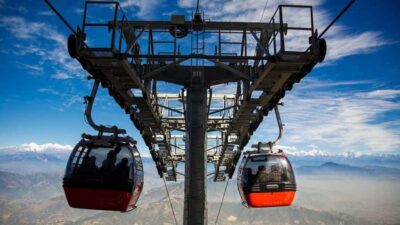
From Kathmandu: 2 Stupas and Kopan Monastery Spiritual Tour
Read our review →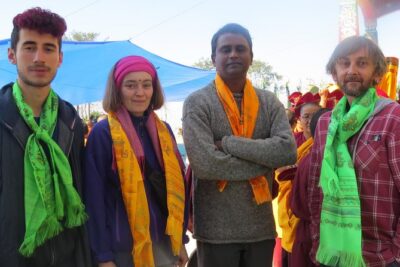
Kathmandu: Pashupatinath Temple Evening Aarati Tour
Read our review →
Chandragiri Cable Car & Monkey Temple Tour- Private/Group
Read our review →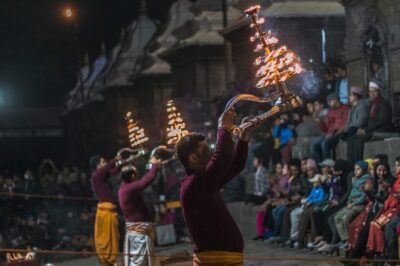
Kathmandu: Pashupatinath Temple Aarti Night Tour
Read our review →
Kathmandu: Guided Walking Tour with Monkey Temple
Read our review →This tour also ranks in