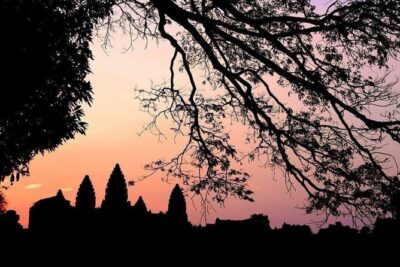
Review · SIEM REAP
Angkor Wat: Tuk Tuk and Walking Tour
Angkor is at its best when you leave the main road and walk. This tour takes you through Angkor Thom on foot, across old walls and gates, then into Ta Prohm, where tree roots push through the stone. The private tuk tuk keeps the long distances between sites comfortable.
I like the mix of history and ordinary Cambodian life, especially with guides such as Monirom, Poleak, Bun, or Sam explaining more than temple dates and royal names. I also like the supply of bottled water and soft drinks, plus hotel pickup and return. The catch is the walking: one guest estimated about nine miles, and the advertised seven hours may stretch to nine or ten.
Key points to know before booking
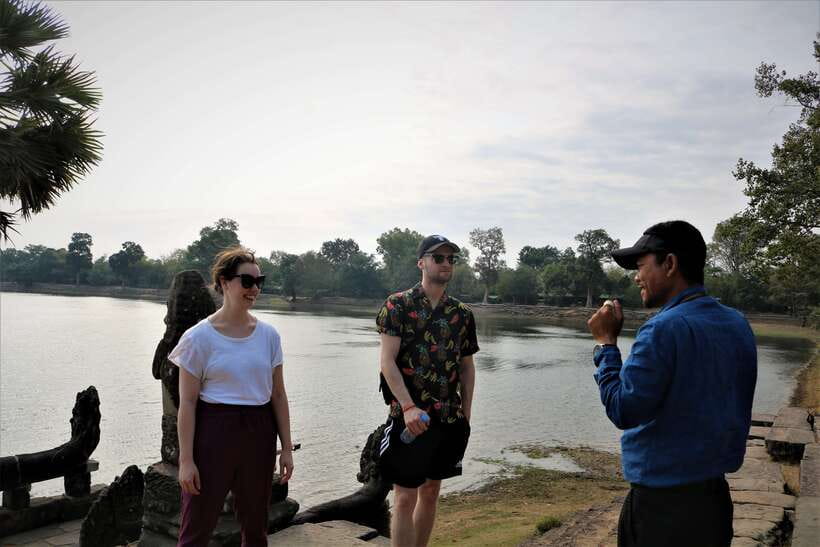
- Angkor Thom comes first: You explore the old royal city on foot, including the Dead Gate, city walls, and Victory Gate.
- Bayon is the visual star: Its towers carry the famous giant stone faces associated with the Khmer Empire.
- Ta Prohm feels wild: Narrow passages, ruined galleries, and tree roots make this the most atmospheric stop.
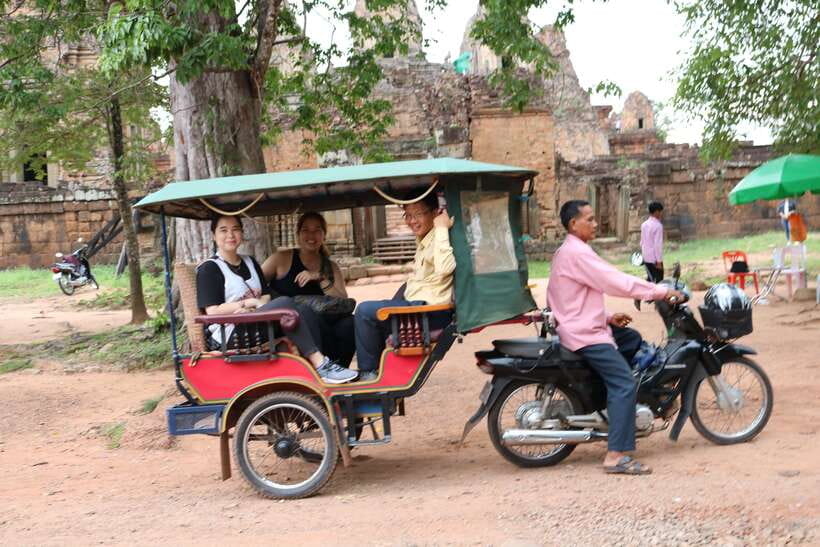
- A private tuk tuk is included: You travel between the sites with hotel pickup, hotel drop-off, water, and soft drinks.
- The temple pass costs extra: Add $37 per person for a one-day Angkor pass, plus lunch.
- Plan for serious walking: Comfortable shoes and insect repellent are practical essentials, and the tour is not suited to people with mobility impairments.
Why this Angkor tour feels different
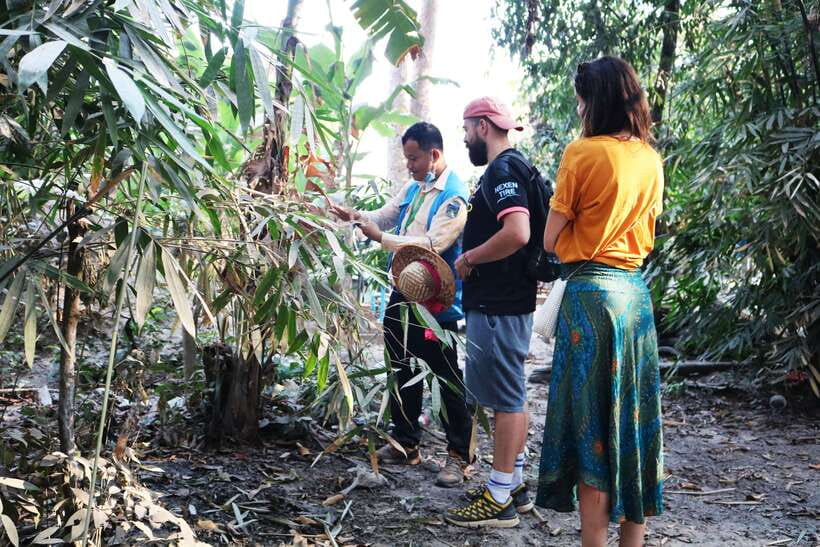
Many Angkor outings focus on quick stops at the best-known temples. This one gives more weight to walking and old routes. You do not simply step out of a vehicle, take a photo, and move on. You cross parts of Angkor Thom, examine its gates, and follow the old city walls with a guide explaining how the Khmer capital worked.
That approach matters because Angkor is not just a collection of separate ruins. Angkor Thom was a huge fortified city, and its walls, gates, roads, and temples make more sense when you see how they fit together. A walking route also gives you a better chance to notice small carvings, changes in stonework, and forest tracks that disappear from view when you stay on the main vehicle route.
The private tuk tuk is another plus. It is not a luxury vehicle, but it suits Siem Reap well. You get open-air views, a local driver, and easy transfers between sites without sharing a larger coach. The vehicle also gives you somewhere to return for a drink and a short rest.
The main caution is the pace. Seven hours sounds manageable, but the walking can be extensive. One account put the total at roughly nine miles, while another described a nine to ten-hour day. That may depend on the guide, route, weather, and time spent at each temple, but you should not book this as a light sightseeing ride.
More Temple Tuk-Tuk Tours in Siem Reap
- Siem Reap: Angkor Wat Private Tuk-Tuk Tour
★ 4.9 · 2,222 reviews - Angkor Wat Private Tuk-Tuk Tour (sunrise Option) & more
★ 5.0 · 439 reviews - Angkor Wat Private Tour by Tuk-Tuk with English Speaking Driver
★ 5.0 · 142 reviews
Starting at Angkor’s eastern gate
Your day begins with pickup at your hotel in Siem Reap. From there, the tuk tuk takes you toward Angkor’s eastern gate, which helps you reach the historic area without first joining a large group vehicle.
The eastern approach suits this tour because the day is built around Angkor Thom rather than a simple main-temple photo stop. You begin with a sense of entering an old city, not just arriving at a monument.
Your English-speaking guide provides the context as you walk. The listed guides have included Sam, Monirom, Poleak, Bun, and Bob on different dates, so you will not know the name of your guide until your booking is confirmed. What you can expect is a local guide who explains the Khmer Empire, the temples, and aspects of modern Cambodian life.
That broader focus is useful. Monirom, for example, was praised for explaining everyday life as well as temple details. Poleak was noted for clear English, friendliness, and strong command of the subject. Bun was also credited with good timing and careful handling of a change in plans during heavy rain.
Walking through Angkor Thom
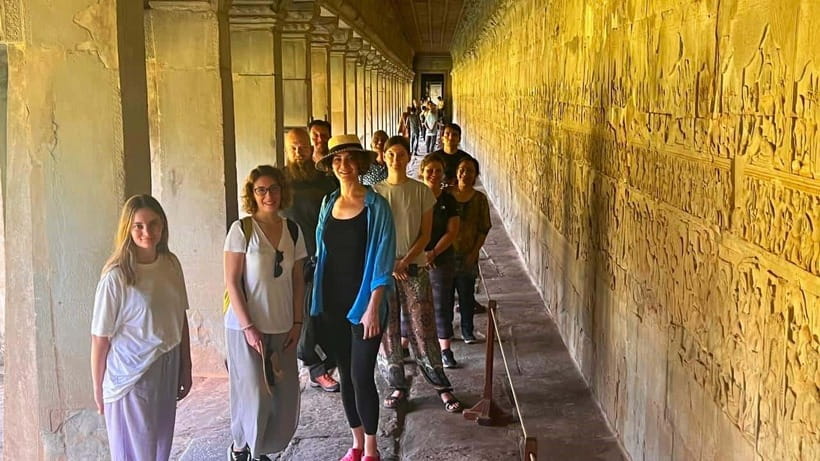
Angkor Thom is the heart of the walking portion. The name means Great City, and the scale becomes clearer when you move through it slowly rather than treating it as a backdrop between stops.
Your guide describes the ancient Khmer capital as you pass through its remains. The tour is designed to show you more than a single temple, including sections of the old defenses and routes linked with royal power.
The walking also gives you a break from the tuk tuk. You can look up at the trees, study the stone, and hear stories without engine noise around you. For me, this is where the tour earns its place beside more standard Angkor circuits.
Do not expect a flat, easy stroll. The route includes uneven ground, temple steps, old walls, and forest paths. Comfortable shoes are essential. Insect repellent is also a sensible item to bring, especially during the more shaded parts of the route.
Bayon and its stone faces
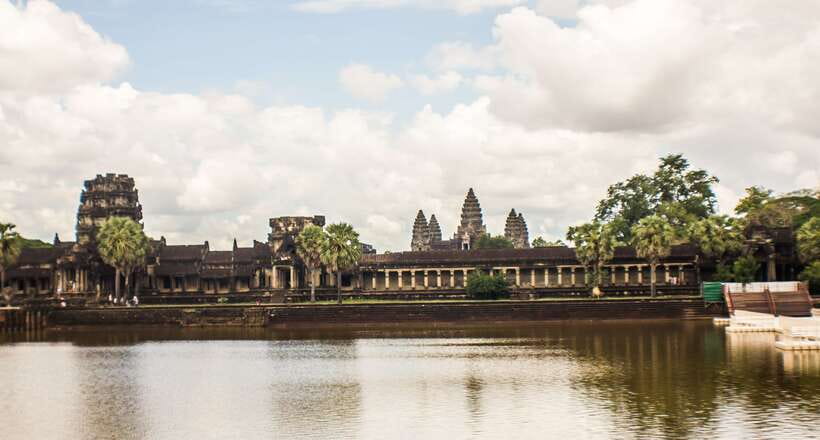
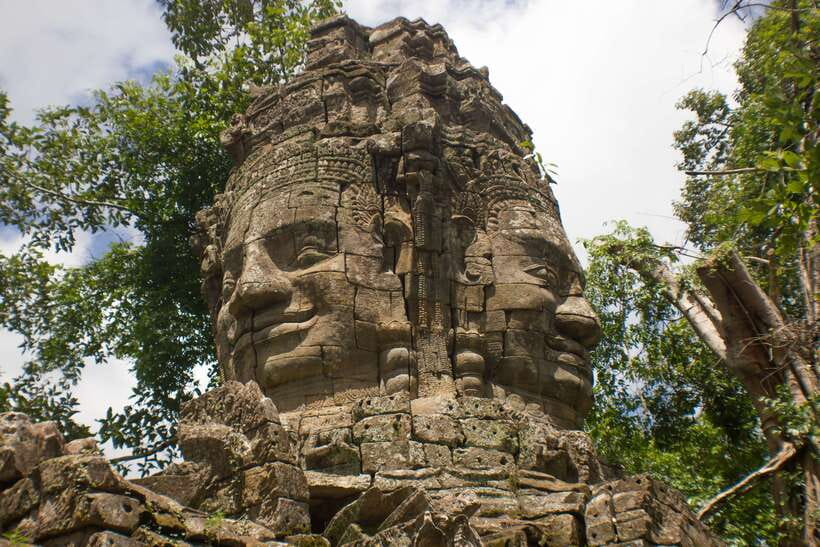
Bayon is the stop most likely to fix itself in your memory. Its towers carry enormous carved faces, giving the temple a watchful, almost mysterious look from different angles.
The pleasure of Bayon comes from moving around it. A single view does not explain the building. As you enter and turn through its passages, faces appear between towers, then vanish as the structure closes around you. The maze-like arrangement rewards a guide who can point out what you might otherwise miss.
The interior can feel tight, and the stone surfaces are uneven. Take your time and watch your footing. This is not a place to rush through with a camera held at eye level the whole way.
Bayon also helps explain why a guided visit is valuable. The carvings are not only decoration. Your guide can connect the faces and temple design with Khmer rule, religious ideas, and the way the city was organized. The exact amount of detail depends on your guide and the questions you ask, so speak up if you want more explanation.
More Angkor Wat Tours in Siem Reap:
- Angkor Wat Sunrise or Sunset Tour with Guide from Siem Reap
★ 5.0 · 12,109 reviews - Siem Reap: Angkor Wat: Small-Group Sunrise or Sunset Tour
★ 5.0 · 9,444 reviews - Siem Reap: Angkor Wat 2-Day Tour with Sunrise and Sunset
★ 4.9 · 4,429 reviews - Siem Reap: Full-Day Angkor Wat Guided Tour with Sunset
★ 4.9 · 3,803 reviews
Climbing the Dead Gate and following the old walls
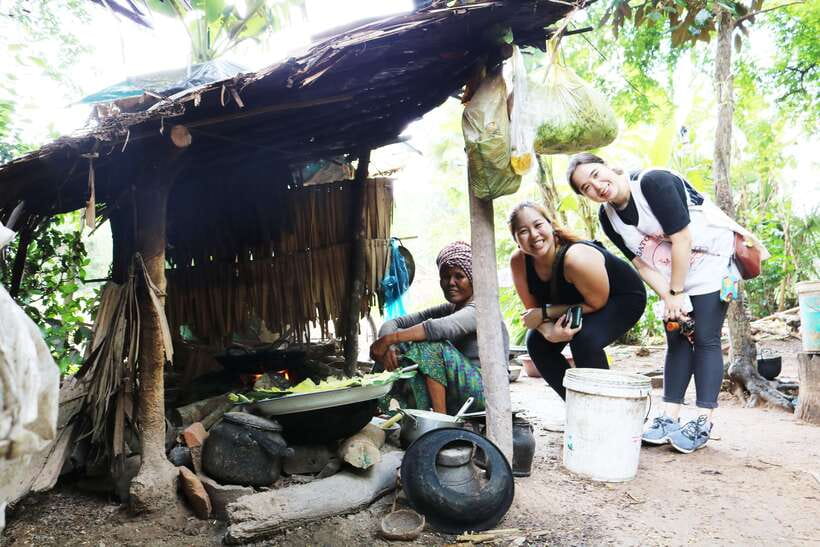
The Dead Gate adds a more unusual element to the day. Rather than seeing only the most famous entrance, you approach a quieter part of Angkor Thom and climb the gate area before continuing along the old city walls.
This section feels more like exploration than a standard monument visit. You can look across the trees and ruins and get a stronger sense of the city’s defenses. The walls also make clear that Angkor Thom was built as a large planned settlement, not as a lone temple in the forest.
The route then takes you toward the Victory Gate, linked with royal movement and military processions. The contrast between the Dead Gate and Victory Gate gives your guide a useful way to explain how different entrances served different purposes.
This is also where the walking can become tiring. Surfaces may be rough, and wall paths are not suited to anyone with limited mobility. The activity is specifically not recommended for people with mobility impairments, and that warning deserves attention rather than a quick glance.
Lunch and the limits of the $49 price
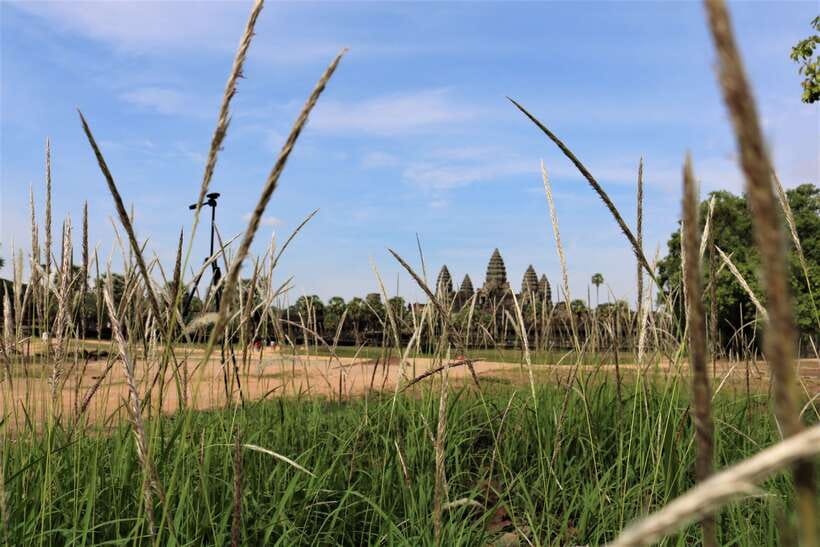
Lunch is not included, so you should budget for it separately. The tour description allows a lunch break, and one past itinerary included a tasty meal at a local restaurant, but the meal choice and cost are not specified.
The tour itself costs $49 per person. Add the one-day temple pass at $37 per person, and your known cost becomes $86 before lunch. That is a fair price if you value a private tuk tuk, a hotel transfer, a live English-speaking guide, water, soft drinks, and a route that includes substantial walking.
It is less attractive if you already have transport and only want a short guide visit at one or two temples. In that case, the tour’s main value is not simple entry. You are paying for the route, local explanation, transport between scattered sites, and the effort of organizing a full day.
A lunch break is important here because the day is active. I would treat it as recovery time rather than a chance to squeeze in another attraction. You will enjoy the afternoon more if you eat, drink water, and give your feet a rest.
Ta Prohm and the forest-covered ruins
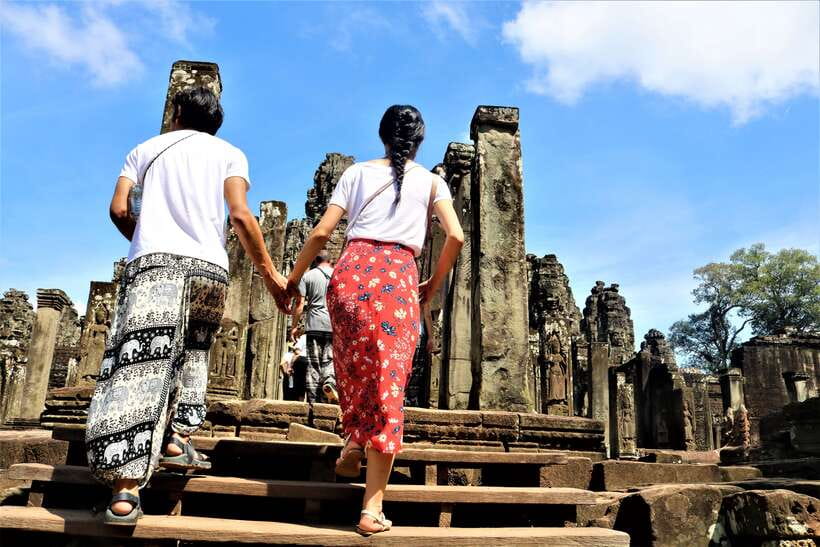
Ta Prohm is the final major temple stop, and it offers a different mood from Bayon. Here, trees grow through and over the ruins, while roots press against walls and galleries.
The temple’s appeal is its combination of architecture and forest. You move through narrow, maze-like sections where broken stone, dark doorways, and tree roots compete for attention. The setting makes the temple feel less controlled than Angkor Thom or Bayon, even though it was carefully built and planned.
The tour aims to reach sections away from the busiest paths, including forest tracks around the ruins. That can help you see more of Ta Prohm without spending the whole visit in a tight cluster of people. Still, crowd levels change with the day and season, so the promise is a better chance to escape crowds, not a guarantee of solitude.
Ta Prohm is also where your footwear matters most. Roots and ruined stone create uneven footing, and narrow passages may require patience. Keep your hands free when possible and watch the ground as carefully as the walls.
One practical point is worth making: despite the tour title, the detailed route provided for this experience emphasizes Angkor Thom, Bayon, the Dead Gate, the Victory Gate, and Ta Prohm. It does not clearly list a stop inside the main Angkor Wat temple. If the central Angkor Wat galleries are your top priority, confirm the exact route before paying.
Guides who add more than dates and names
The guide can shape the entire day. Sam was singled out for excellent guiding, while Monirom was praised for discussing Khmer culture and daily life as well as the temples. Poleak was noted for very good English, warmth, and strong temple knowledge. Bun received credit for good timing and for adjusting plans during bad weather.
Those details suggest the best use of this tour is an active conversation. Ask about the Khmer Empire, the purpose of the gates, the meaning of the carvings, or life in Cambodia today. You are likely to get more from the day than if you simply follow along in silence.
The language offered is English. The tour is private in transport, which gives you more room to ask questions and adjust the pace, although the information provided does not specify the exact group size or whether the guiding is exclusive to your party.
Weather, rain, and changing the route
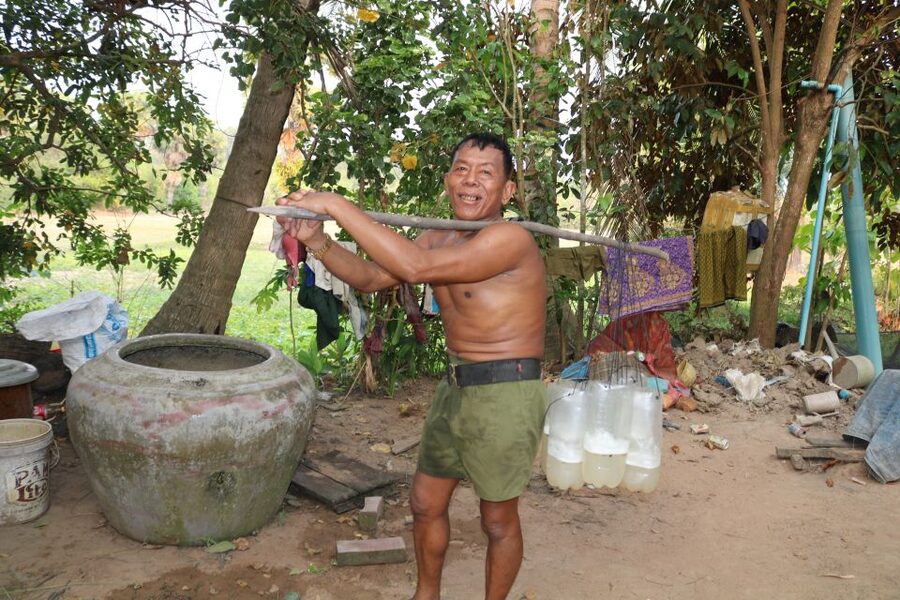
Siem Reap weather can affect a walking tour. One previous day included heavy rain and muddy conditions near a village area, so the guide changed the plan and arranged a faster return to the tuk tuk.
That is a good sign for practical judgment, but you should still prepare for heat, rain, and mud. Bring comfortable shoes that can handle uneven paths, insect repellent, and a willingness to alter a minor part of the route if conditions turn poor.
The tour information specifically says not to feed animals. Follow that rule, even if monkeys or other animals come close. It protects both you and the animals and keeps the visit focused on the ruins.
Hotel pickup and drop-off remove one common worry. You do not need to arrange your own ride to the temple area, and the tuk tuk returns you to your Siem Reap hotel at the end of the day.
Who should book this seven-hour outing
I would choose this tour if you want a private open-air ride, a local English-speaking guide, and a day with real walking rather than a string of quick stops. It suits first-time visitors who want help making sense of Angkor Thom and Ta Prohm, especially if they enjoy history, ruins, and forest paths.
It is also a good fit if you prefer a smaller, more flexible setup than a coach excursion. Bottled water and soft drinks are included, and the private tuk tuk makes the long transfers easier.
I would hesitate if you dislike uneven ground, long walks, temple steps, heat, or flexible timing. The nine-mile estimate is the key warning. People with mobility impairments should choose another format.
The price also needs an honest calculation. At $49, the tour is not the full cost of the day because you must add the $37 temple pass and lunch. Even so, the combined price can make sense for a private tuk tuk, hotel transfers, and a guide who can explain both ancient sites and present-day Cambodia.
Should you book it?
Book this tour if you want to understand Angkor by walking through its old city, walls, gates, and forest temples, not just photographing the famous towers. The strongest parts are the private tuk tuk, the guide-led route through Angkor Thom, and the atmospheric visit to Ta Prohm.
Before booking, confirm whether the current route includes the main Angkor Wat temple, since the supplied details focus on other Angkor sites. Also plan for a long day, add the temple pass and lunch to your budget, and wear shoes you can trust.
FAQ
What is included in the $49 price?
The price includes bottled water, soft drinks, a professional local English-speaking guide, hotel pickup and drop-off, and private tuk tuk transportation.
Is the Angkor temple pass included?
No. The one-day temple pass costs $37 per person and must be paid separately.
Is lunch included?
No. Lunch is not included. A lunch break is part of the day, and one previous itinerary included a meal at a local restaurant, but the price and exact restaurant are not specified.
How long does the tour last?
The advertised duration is seven hours. One past visit lasted about nine to ten hours, and another estimated around nine miles of walking, so you should allow extra time.
Which temples and sites are visited?
The route includes Angkor Thom, Bayon, the Dead Gate, sections of the old city walls, the Victory Gate, and Ta Prohm. The detailed information does not clearly confirm a stop inside the main Angkor Wat temple.
What should I bring, and is the tour suitable for everyone?
Bring comfortable shoes and insect repellent. The tour is not suitable for people with mobility impairments, and feeding animals is not allowed.
More Temple Walking Tours in Siem Reap
- Bangkok: City Highlights Temple and Market Walking Tour
★ 4.5 · 3,990 reviews - Bangkok: Grand Palace and Wat Phra Kaew Guided Walking Tour
★ 4.4 · 2,417 reviews - Bangkok: Wat Pho and Wat Arun Guided Walking Tour
★ 4.6 · 1,720 reviews - Tokyo: Asakusa Walking Tour with Sensoji Temple Visit
★ 4.8 · 1,583 reviews
Temple visits we reviewed lately in Siem Reap
- Angkor Wat Tour by Tuk-Tuk with English Speaking Driver★ 4.5 · 65 reviews
- Private Sunrise Angkor Wat Tour★ 4.6 · 16 reviews
- Private One Day Tour with Sunrise at Angkor Wat★ 5.0 · 3 reviews
- Siem Reap Tour Guide: Angkor Wat Sunrise Tour & Beng Mealea★ 5.0 · 4 reviews
- Siem Reap Private Tour: Angkor Wat Sunrise And Banteay Srei★ 5.0 · 3 reviews
- Private Angkor Wat Sunset Tour with Lunch and Snack Included★ 5.0 · 3 reviews
- Private Angkor Wat Temple Tour★ 5.0 · 35 reviews
- Private Angkor Wat Sunrise Tours And Sunset Floating Village★ 5.0 · 3 reviews
Siem Reap Temple Tours, compared.
Angkor Wat Sunrise or Sunset Tour with Guide from Siem Reap
Read our review →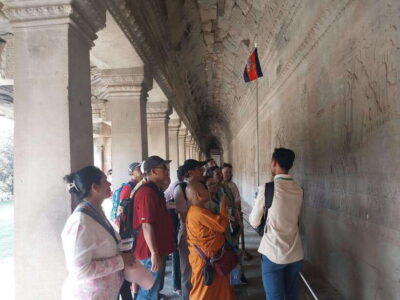
Siem Reap: Angkor Wat: Small-Group Sunrise or Sunset Tour
Read our review →
Siem Reap: Full-Day Angkor Wat Guided Tour with Sunset
Read our review →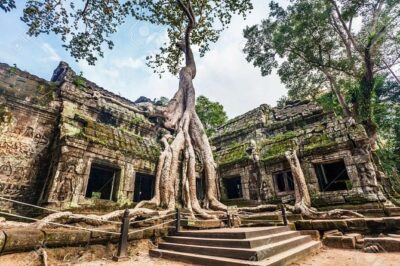
Angkor Wat Sunrise tour with Small – Group and Guide tours
Read our review →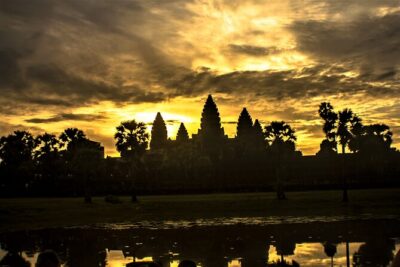
Angkor Wat Highlights and Sunrise Guided Tour from Siem Reap
Read our review →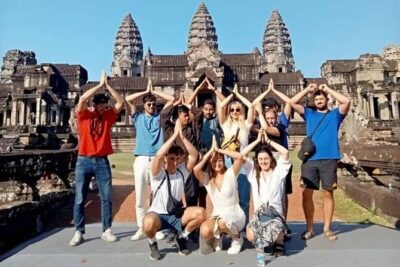
Angkor Wat Sunset Small Group Tour with Lunch Included
Read our review →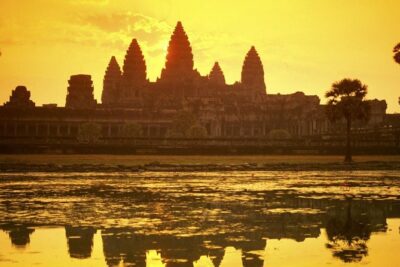
Full-Day Angkor Wat Sunrise Private Tour with Guide from Siem Reap
Read our review →