
Review · VARANASI
Hidden Corners of Varanasi Secret Alleys Temples and Traditions
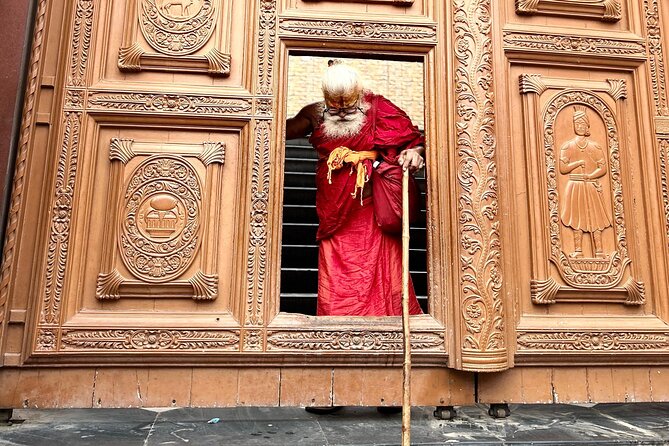
Varanasi reveals itself best on foot, and this walk takes you beyond the usual riverfront view. You move from Dashashwamedh Ghat to Manikarnika, through narrow lanes, working shrines, old homes, and temples that are easy to miss without someone who knows the way.
I like the private format, which lets your group ask questions and set the pace. I also like the blend of major sights and small discoveries, especially the underground Manikarnikeshwar Mahadev Temple and a simple tea stop. The main drawback is the subject matter: Manikarnika Ghat is an active cremation ground, and some people may find the scene difficult.
Key Points at a Glance
- Manikarnika Ghat is the emotional center: You see one of Hinduism’s most important cremation sites and learn why the location matters.
- The walk reaches places you could miss alone: Vishalakshi Temple, Nepali Temple, and Manikarnikeshwar Mahadev Temple add depth beyond the standard ghat circuit.
- A private guide makes the lanes easier: Guides including Suhail can help with directions, local customs, and avoiding unwanted attention.
- The three-hour route mixes famous and ordinary Varanasi: You see ritual spaces, artisans, homes, shrines, and daily street life.
- Chai and local snacks are part of the rhythm: Bottled water and tea or coffee are included, while extra food and drinks cost more.
- The price is modest for a private walk: At $28.37 per person, the value depends mainly on how much you want context and help finding the lesser-known sites.
Why This Walk Shows You More Than the Ghats
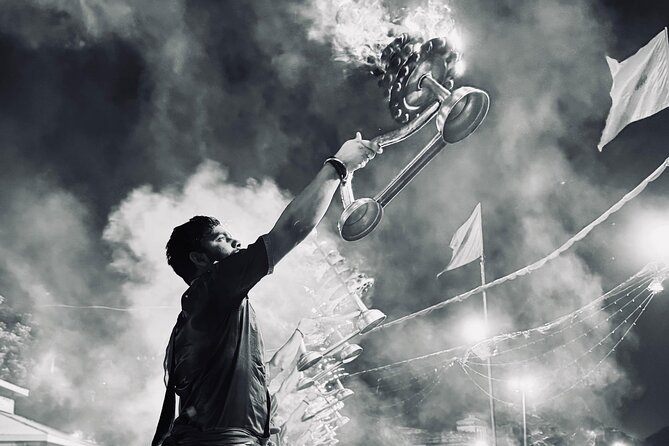
Many first visits to Varanasi stay close to the Ganges. That is understandable. The ghats offer prayer ceremonies, boats, pilgrims, temple bells, and one of India’s most striking public scenes.
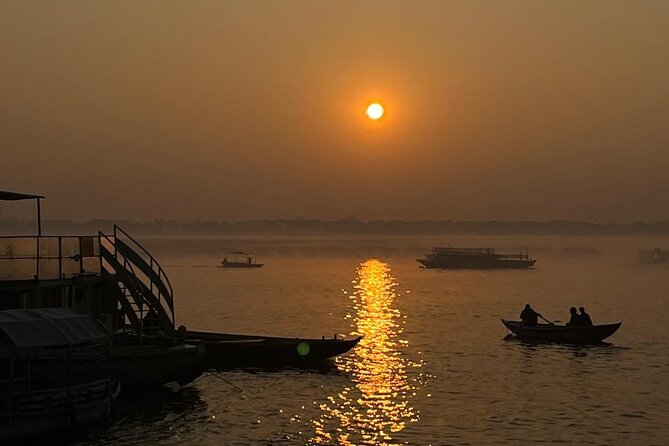
But Varanasi is not only a riverfront. Its real character also sits behind the steps, in lanes barely wide enough for two people, small shrines tucked into walls, old houses, workshops, tea stalls, and courtyards where religious life carries on without much notice.
This tour gives you both sides. You begin at a well-known ghat, then head into the older quarter toward temples and cremation grounds. The walk is not simply a checklist of religious buildings. It explains how the city’s beliefs, buildings, rituals, and ordinary routines overlap.
I especially like that the route does not stop at the most photographed places. The Vishalakshi Temple and Manikarnikeshwar Mahadev Temple require a little more local awareness. A guide can point out what you are seeing and explain why a modest doorway may lead to a site of major importance.
More Temple Tours around India:
- New Delhi: Akshardham Temple Tour with Water and Light Show
★ 4.8 · 313 reviews - Old Delhi Food-Spice Market-Temples Tour Soon Featured on NETFLIX
★ 5.0 · 304 reviews - Private Guided Spiritual Walk in Banganga Hindu Temples
★ 5.0 · 271 reviews
Starting at Shree Ganesha Palace
The meeting point is Shree Ganesha Palace at D 47/203 A Ramapura Girjaghar, near Godowlia and Girja Ghar. This is a useful place to begin because it sits near public transport and close to the old city’s main walking routes.
Your guide introduces the spiritual story of Kashi before the walk begins. That short introduction matters. Varanasi can feel confusing at first, with several names used for the same city and religious traditions that are not obvious to an outsider.
The opening stop lasts about 10 minutes. Use it to tell your guide what interests you most. You may want more temple detail, more help understanding ritual, or more time for street scenes and photographs. Since this is a private activity, your questions should shape the conversation more than they would on a large group outing.
Dashashwamedh Ghat and the Ten-Horse Legend
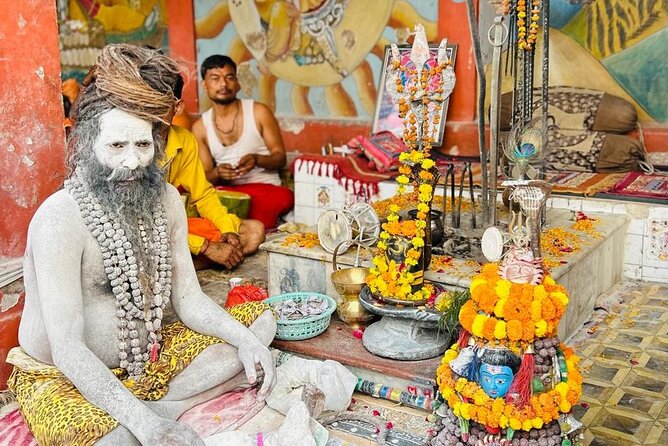
Dashashwamedh Ghat is one of Varanasi’s key riverfront spaces. It is a place of prayer, bathing, ceremony, and constant movement, and it gives you an immediate sense of how public religion is in this city.
The guide explains the story behind the ghat’s name, linked to a sacrifice involving ten horses. The point is not only the legend itself. It helps you understand why the riverfront carries such weight in Hindu belief and why ghats function as more than scenic steps beside the water.
You spend about 15 minutes here. That is enough for an introduction, but not enough for a long period of quiet observation. If you hope to watch the evening Ganga Aarti, note that this walk is listed as a three-hour daytime-style route rather than a dedicated evening ceremony tour. Ask the operator about the exact departure time when booking.
Dashashwamedh can be crowded and intense. That is part of its appeal, but it also means you should keep your belongings secure and listen closely when the group moves on. Comfortable shoes are important from the first step.
Vishalakshi Temple and a Powerful Local Tradition
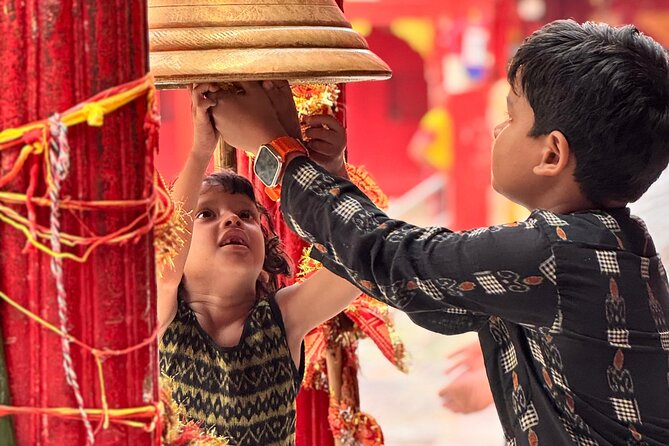
Near Mir Ghat, the Vishalakshi Temple offers a more focused religious stop. It is associated with the Shakti Peetha tradition, which holds that parts of the goddess Sati’s body fell at sacred sites across India. Here, the belief connects the location with her earrings.
You have about 15 minutes inside or around the temple. The small scale can be an advantage. Instead of only looking at a grand exterior, you get a closer sense of how worship happens in a working neighborhood shrine, with color, lamps, and regular devotion.
Temple etiquette matters. Follow your guide’s instructions about footwear, photography, and where to stand. The supplied information does not specify formal dress rules or camera restrictions, so ask before taking pictures.
This is one of the stops that gives the walk its purpose. You are not simply moving from one famous ghat to another. You are learning why a compact temple can matter so much to people who come to Varanasi for worship.
Same sacred ground, another way to see it:
- Taj Mahal Sunrise with Lord Shiva Temple:- All Inclusive
★ 5.0 · 207 reviews - Old Delhi Temples and Spiritual Sites Private 6-Hour Tour
★ 4.8 · 204 reviews - Tipu Palace + Koté Vishnu + Fort + KR Market + Jain Temple = Bengaluru Pété Walk
★ 5.0 · 150 reviews - New Delhi: Akshardham Temple Light Show with Custom Add-Ons
★ 4.8 · 125 reviews
The Nepali Temple’s Woodwork and Unusual Design
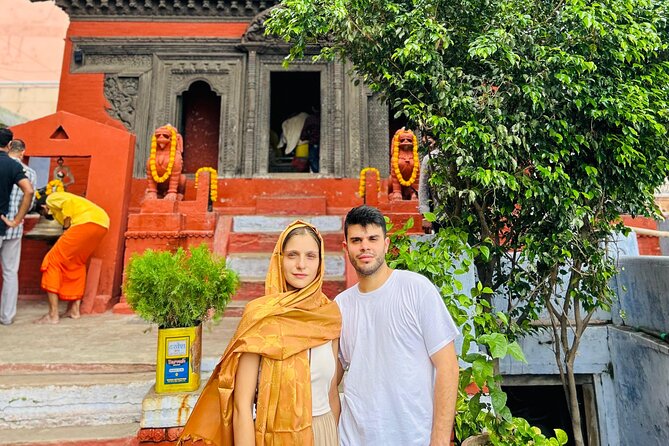
The Nepali Temple, also called Kathwala Temple, brings a different visual style to the route. Its pagoda form and carved woodwork reflect a Nepalese influence, making it feel distinct from many of the surrounding shrines.
The temple is sometimes compared with Khajuraho because of its erotic carvings. That comparison may attract attention, but the better reason to visit is the building itself. The carved details reward a slow look, especially after the sensory rush of the ghats.
You spend around 15 minutes here. That is a short visit, so your guide’s explanation adds real value. Without context, you might see only an unusual pagoda in an unexpected place. With context, the temple becomes a clue to the cultural links that have shaped Varanasi over time.
The setting is described as peaceful, but do not expect a museum-style visit. This is a religious site in an old city. Surfaces may be uneven, and the route between stops remains a walking route through tight lanes.
Manikarnika Ghat: The Stop That Requires Respect
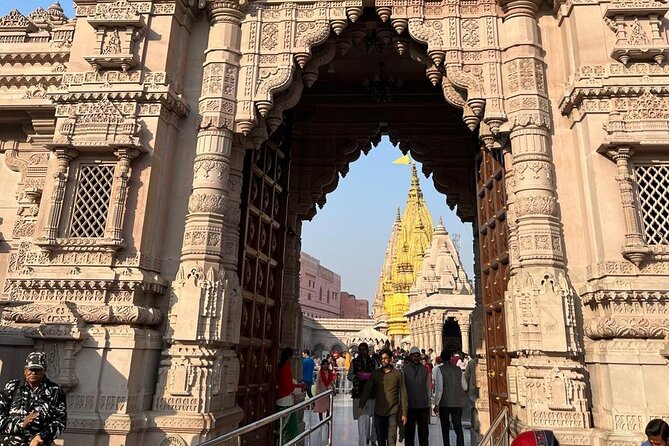
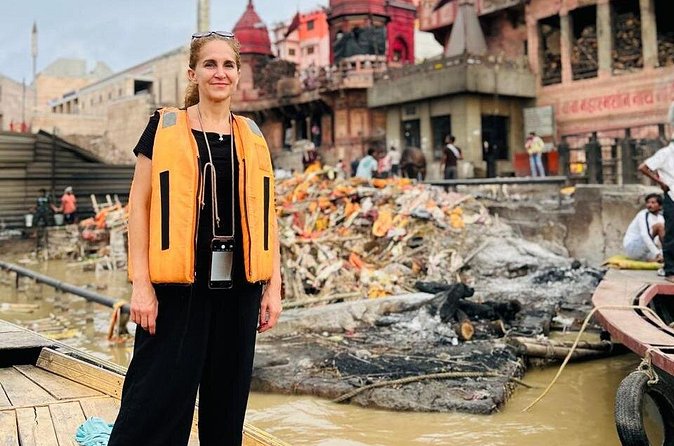
Manikarnika Ghat is the most serious part of the walk. It is Varanasi’s oldest and holiest cremation ghat, and Hindu belief connects cremation here with liberation from the cycle of rebirth.
The visit lasts about 30 minutes, longer than the other named stops. That gives your guide time to explain the customs and the role of the ghat rather than rushing past it.
You may see cremation activity. This is not a staged cultural display. It is a working place of mourning and religious duty. Keep a respectful distance, avoid intrusive photography, and follow your guide’s directions closely. If you know this setting will be upsetting, you can ask in advance how much time your group will spend there.
I consider this stop valuable because it presents Varanasi honestly. The city’s religious life includes celebration, beauty, noise, prayer, and death. A route that shows only temples and scenic river views would leave out one of the beliefs that makes Varanasi so important.
At the same time, no one should feel pressured to watch. A private walk gives you a better chance to tell the guide if you need a pause or want to move on.
The Underground Manikarnikeshwar Mahadev Temple
Beneath the ghat, the Manikarnikeshwar Mahadev Temple offers one of the route’s more unusual visits. It is an old shrine dedicated to Shiva, with a linga associated with the Kashi Khand tradition.
The temple is rarely visited compared with the major ghats, and the approach is part of the experience. A guide matters here because a doorway or passage that looks ordinary may not announce the religious site clearly.
You spend about 15 minutes at the shrine. The setting is likely to feel very different from Dashashwamedh Ghat. Instead of a broad riverfront and open steps, you encounter a smaller, more enclosed place tied closely to the beliefs surrounding Manikarnika.
The information provided links bathing near the area with religious merit, though the tour itself should not be treated as a bathing activity. You are visiting and learning about the shrine. Follow local instructions and avoid assuming that every sacred practice is meant for visitors.
Walking Through Old Kashi’s Narrow Lanes
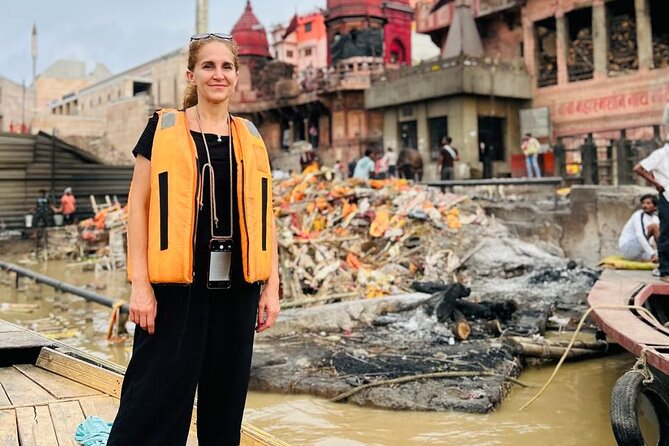
The final major portion of the route takes at least 30 minutes through the old lanes of Varanasi. This is where the tour moves from named monuments to the city behind them.
You might pass old homes, small shrines, artisans, tea sellers, and everyday scenes that do not appear on a normal sightseeing map. The lanes are part of the attraction, but also part of the challenge. Expect turns, uneven ground, pedestrians, and the occasional need to stop while people or goods move through a tight passage.
This is a good place to ask practical questions. Your guide can explain how homes, shrines, shops, and religious spaces share the same narrow streets. Guides such as Suhail are praised for helping people see Varanasi efficiently and with less worry about scams or getting lost. That does not remove the need for normal street awareness, but it can make the old city easier to approach.
One especially useful feature of the private format is flexibility. If your group becomes interested in a carving, shrine, or craft activity, you can ask for a moment to look rather than being swept along by a large crowd.
Chai, Local Bites, and What the Price Includes
Tea is included, along with bottled water and coffee or tea. The stop at a traditional tea stall is a small but welcome break after walking through the old city.
The tour description also refers to local delicacies. Extra food and drink are not included, so treat these as optional purchases unless your guide explains otherwise. The supplied details do not name the dishes or promise a full meal, so do not book this as a food tour.
At $28.37 per person, the cost is reasonable if you want a private introduction to Varanasi’s religious quarter. You are paying for a route through places that can be hard to identify, local explanation, navigation, and the chance to ask questions without a large group around you.
The value is less compelling if you already know the old city well or prefer to wander without a schedule. For a first visit, especially one lasting only a few days, the combination of major sights and lesser-known shrines makes the price easier to justify.
Timing, Comfort, and Practical Limits
The walk takes about three hours and returns to the meeting point. That return is useful because you do not need to arrange a separate pickup from an unfamiliar part of the old city.
The experience runs daily, with operating hours listed from 6:00 AM to 8:00 PM. The exact start time affects the mood of the walk, so choose carefully. Early hours may offer a calmer start, while later departures may bring more activity. The available details do not promise a specific ceremony or sunrise view.
Wear shoes suited to walking. Bring water even though a bottle is included, and dress in a way that feels respectful at temples and religious sites. Because Manikarnika is an active cremation ground, bring a calm and considerate attitude as well as your camera.
Most people can take part, and the activity is private for your group. Still, the route through old lanes may be tiring for anyone who has difficulty walking or standing. The information does not give a detailed accessibility assessment, so ask Omvity before booking if that is important for you.
Free cancellation is available up to 24 hours before the start time. Poor weather or failure to meet the minimum number of participants can lead to a different date, another experience, or a full refund.
Who Should Book This Varanasi Walk?
I would choose this tour if I wanted a first, structured look at Varanasi without spending the whole day on a larger sightseeing program. It suits couples, families, and small private groups who want temple visits explained in plain language and who value help in the old lanes.
It is also a good fit if you are uneasy about scams or getting turned around. Several comments about the service give special credit to Suhail or Sohail for keeping sightseeing smooth, finding lesser-known places, and adapting when flooding made some ghats hard to reach. The spelling varies in the available material, so confirm your guide’s name and meeting details before you go.
I would hesitate if you want a relaxed food tour, a long boat ride, or an extended visit at each temple. The schedule is compact, and Manikarnika may not suit everyone. This is a cultural and religious walk, not a light sightseeing stroll.
Should You Book It?
Book it if you want Varanasi explained from the inside out: famous ghats first, then temples, lanes, local customs, and the difficult realities of cremation. At $28.37, a private three-hour route is a fair deal for a first visit, especially with a guide who can help you move through the city confidently.
Skip it if you prefer to explore alone, dislike solemn religious sites, or need a route designed around limited walking. For most first-time visitors who want more than photographs of the Ganges, this walk offers a useful and respectful introduction.
FAQ
How long does the Varanasi walking tour last?
The tour lasts approximately three hours.
Is this a private tour?
Yes. Only your group participates in the activity.
Where does the tour start?
It starts at Shree Ganesha Palace, D 47/203 A Ramapura Girjaghar, Godowlia Road, near Girja Ghar in Varanasi.
Where does the tour finish?
The activity ends back at the meeting point.
Which major ghats are included?
The route includes Dashashwamedh Ghat and Manikarnika Ghat.
Which temples are visited?
The tour includes Vishalakshi Temple, Nepali Temple, and Manikarnikeshwar Mahadev Temple.
Are tea and water included?
Yes. Bottled water and coffee or tea are included. Additional food and drinks are not included.
Can I cancel for a full refund?
Yes, if you cancel at least 24 hours before the experience start time. Cancellations made less than 24 hours before the start time are not refunded.
Temple visits we reviewed lately in India
- Same Day Tour Of Kumbhalgarh Fort & Ranakpur Jain Temple★ 4.7 · 12 reviews
- Rishikesh: Kunjapuri Temple Sunrise Trek★ 5.0 · 5 reviews
- Private Full-Day Jaipur Guided Tour with Monkey Temple★ 5.0 · 11 reviews
- Amritsar : Golden Temple and Jallianwala Bagh Private Tour★ 5.0 · 16 reviews
- Old Delhi Temples and Spice Market Tour★ 5.0 · 5 reviews
- Night Ceremony at Madurai Meenakshi Amman Temple Tour★ 4.2 · 4 reviews
- New Delhi: Akshardham Temple Light Show with Custom Add-Ons★ 4.8 · 125 reviews
- New Delhi: Lotus Temple Private Tour with Skip-the-Line★ 5.0 · 5 reviews
Varanasi Temple Tours, compared.
Full Day Varanasi Private Tour with Temples, Ghats & Rituals
Read our review →
Varanasi in a Day Ancient Temples Sarnath and Ghats
Read our review →
Varanasi Day Tour with Temples & Ganga Aarti – Dawn to Dusk
Read our review →This tour also ranks in