
Review · VARANASI
Varanasi Day Tour with Temples & Ganga Aarti – Dawn to Dusk
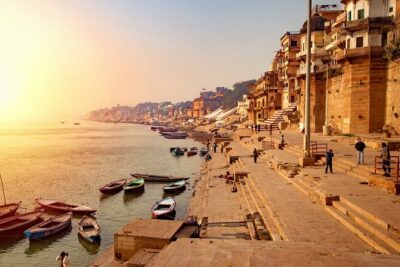
Varanasi makes its strongest first impression from the water, when the Ganges catches the early light and the ghats begin their daily rituals. This 14-hour private tour gives you that sunrise scene, the old city, several temples, Sarnath, and the evening Ganga Aarti in one very full day.
I like the two boat rides, which show Varanasi in two different moods. I also like the private format and licensed guide, especially for the narrow lanes, temple customs, and busy riverfront. The drawback is simple: this is a long, early start, and the schedule packs in enough sights to leave you tired.
Key points to know before booking
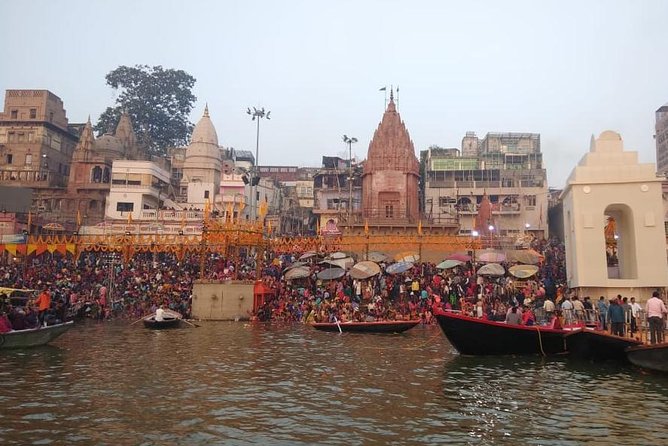
- Sunrise and evening on the Ganges: You see the river at dawn, then return for the lamp ceremony at Dashashwamedh Ghat.
- A serious one-day overview: The route covers the old town, four temples or religious sites, Banaras Hindu University, and Sarnath.
- Private travel by air-conditioned car: Hotel pickup and drop-off keep the long day easier to manage.
- A licensed guide matters here: Guides such as Vinod, Indrajeet, Akash, Jai Prakash Mishra, and Vineet Pandey have been praised for explaining customs, religion, and local history clearly.
- Sarnath adds a quieter counterpoint: The Buddhist site gives you a very different side of Varanasi, with stupas, the Ashoka Pillar, and the Sarnath Museum.
- Budget for extras: Food, drinks, temple entry fees, tips, and personal ritual expenses are not included.
Why the Ganges at sunrise is the right beginning
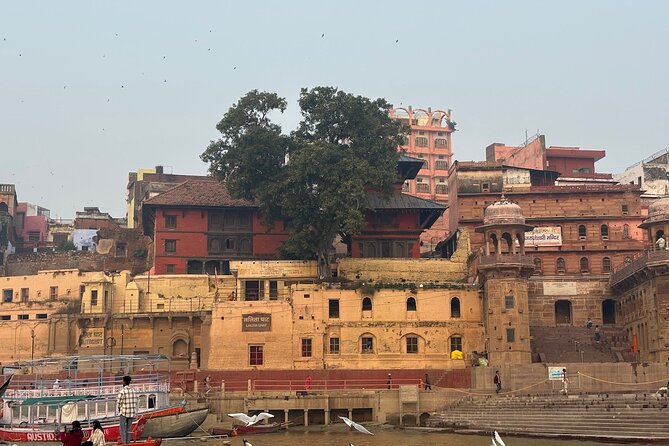
Your day starts at 5:30 am, with pickup by private air-conditioned car. The early hour is not just a scheduling trick. It takes you to the river at the time when Varanasi’s ghats begin to stir, with worship, bathing, boat traffic, and ordinary morning life unfolding along the steps.
The boat ride lasts about two hours and includes views of the major ghats. Dashashwamedh Ghat is the best known and the setting for the evening Ganga Aarti. Kedar Ghat has its own riverfront character, while Manikarnika Ghat is the main cremation ghat and one of the most sacred places for Hindu cremation.
Manikarnika requires a respectful attitude. This is a working religious site, not a spectacle. Your guide can help explain what you are seeing, but you should follow instructions about photography and keep a quiet manner near funeral activity.
The boat is also a good place to ask questions. Varanasi can feel like a jumble of rituals, legends, pilgrims, laundry, prayer, and commerce when you first arrive. A guide who explains the setting as you move along the river can turn that jumble into something you can understand.
More Temple Sunrise Tours in India
- Taj Mahal Sunrise with Lord Shiva Temple:- All Inclusive
★ 5.0 · 207 reviews - Private Guided Trek to Kunjapuri Temple & Waterfall at Sunrise
★ 5.0 · 14 reviews - Kunjapuri Temple Sunrise Trek With Professional Guide
★ 5.0 · 13 reviews
Walking through the old city and entering Kashi Vishwanath
After the river, the day moves into Varanasi’s old town. The lanes around the ghats are narrow and busy, and a walking section gives you access to details that a car cannot reach. You may see small shrines, shops, religious activity, and daily life close to the river.
The Shri Kashi Vishwanath Temple, also called the Golden Temple, is dedicated to Shiva and is among the city’s most important Hindu temples. The listed visit is about 20 minutes, and entry charges are not included in the tour price. Temple access can also depend on current rules and crowd conditions, so ask your guide early about what is possible that day.
This is one place where having a licensed guide is useful for more than facts. You may need help with local etiquette, clothing expectations, security procedures, and where to leave personal items. The tour information does not promise guaranteed interior access, so treat the temple visit as an important stop, but not one to measure only by how long you spend inside.
Temples, university grounds, and a broader view of Varanasi
The tour then widens beyond the ghats. At Banaras Hindu University, you see a major center of learning in the city. This stop gives you a break from the compressed lanes and riverfront crowds, and it adds modern educational life to the picture of Varanasi.
The Durga Temple was built in the 18th century by Rani Bhabani of Natore and is dedicated to the goddess Durga. The planned visit is short, about 10 minutes. That may be enough for a quick look, though anyone wanting a slow architectural study may find the pace brisk.
The route also includes Sankat Mochan Hanuman Temple, dedicated to Hanuman, and Bharat Mata Temple. Bharat Mata is unusual because it presents a map of India rather than the traditional statues found in many Hindu temples. Its location on the Mahatma Gandhi Kashi Vidyapith campus makes it another change of setting during a day otherwise shaped by riverfront religion.
Temple visits are not all treated alike. Some are quick exterior or orientation stops, while others may involve entry procedures and personal expenses. The advertised package includes the guide, car, taxes, and boat rides, but not temple entrance fees or money spent on rituals.
Three hours at Sarnath, where Buddhism began its public teaching
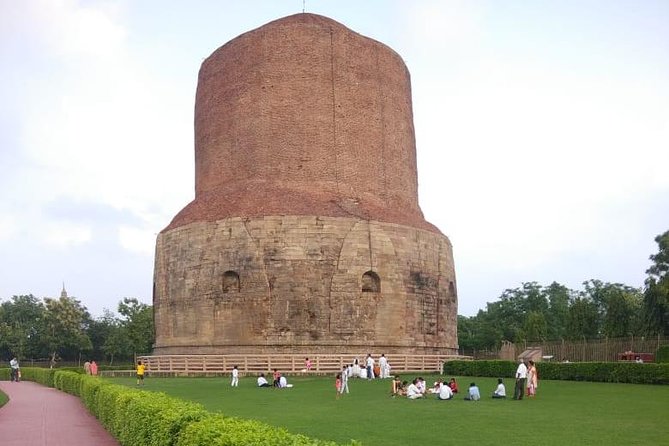
Sarnath is the longest stop, with about three hours allotted. It lies outside the central riverfront experience and gives the day a calmer, more open chapter. Buddhist tradition holds that the Buddha delivered his first sermon here, making Sarnath one of the most important Buddhist pilgrimage sites.
The Chaukhandi Stupa is one of the main monuments in the area. You also visit Dhamek Stupa, traditionally linked with the Buddha’s first teaching, and Dhammarajika Stupa, associated with relics of the Buddha. The Ashoka Pillar adds an important Mauryan connection to the site.
The Sarnath Museum is worth protecting time for. It is the oldest site museum of the Archaeological Survey of India and houses objects found during excavations at Sarnath. The scheduled visit is about 30 minutes, which gives you a useful introduction, though not enough time for a slow museum visit if you like to read every label.
Sarnath is connected with Jainism as well as Buddhism, so the site is not only a Buddhist stop. Your guide can help place the monuments in their religious and political setting. This is also where the tour feels less hurried than the central Varanasi sections, although the total day remains demanding.
Same sacred ground, another way to see it:
- New Delhi: Akshardham Temple Tour with Water and Light Show
★ 4.8 · 313 reviews - Old Delhi Food-Spice Market-Temples Tour Soon Featured on NETFLIX
★ 5.0 · 304 reviews - Private Guided Spiritual Walk in Banganga Hindu Temples
★ 5.0 · 271 reviews - Old Delhi Temples and Spiritual Sites Private 6-Hour Tour
★ 4.8 · 204 reviews
Returning for the evening Ganga Aarti
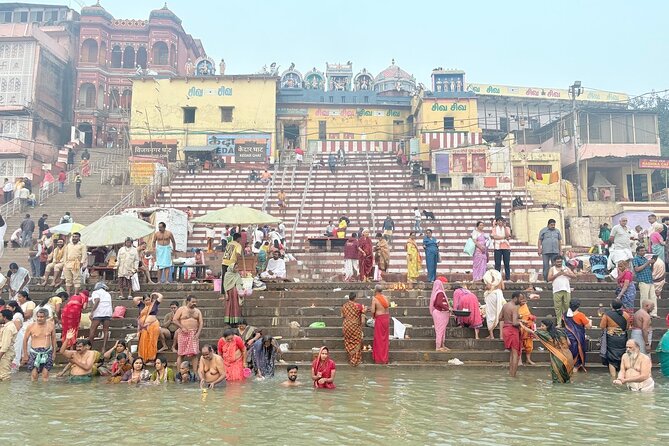
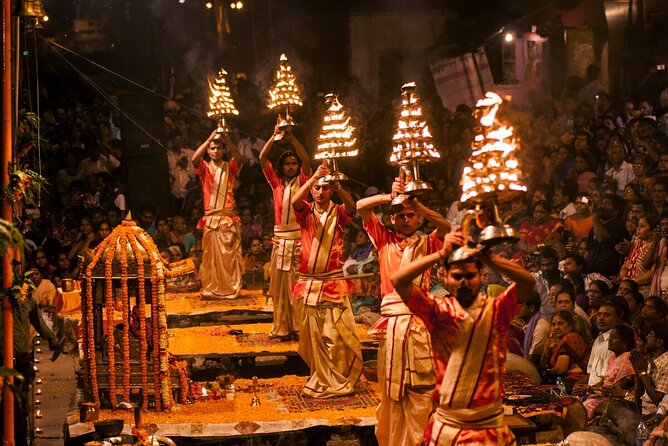
The final major event is the Ganga Aarti at Dashashwamedh Ghat. The ceremony lasts about an hour and includes lamps, chants, bells, drums, and cymbals. Hindus worship the Ganges as a goddess, and the ceremony is an offering to the river.
The evening boat ride gives you a river view of the ceremony rather than only a position on the steps. That perspective can be valuable because you see the lights, platforms, riverfront, and crowds as one scene. The two rides also create a useful contrast: sunrise is about gradual activity and soft light, while the evening ceremony is formal, musical, and highly charged.
Ask your guide how the evening timing will work. The tour includes the evening boat ride and Ganga Aarti, but the exact position of the boat and viewing arrangements can depend on conditions on the river. A past account specifically praised guide Akash for arranging a good seat at the evening Aarti, so it is sensible to raise your viewing preference before the ceremony begins.
What the private format adds to a very long day
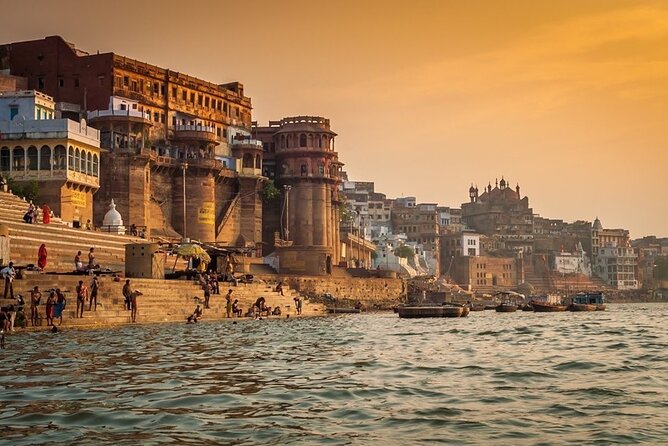
The private setup is one of the strongest reasons to consider this tour. Only your group participates, and the car takes you between the river, central Varanasi, university grounds, and Sarnath. You do not have to wait for a large group at every stop or spend the day following someone else’s pace.
That does not make the day relaxed. Fourteen hours, including a 5:30 am start, is a lot. You will walk in the old town, board boats twice, visit religious sites, and spend several hours at Sarnath. A moderate level of physical fitness is expected.
The private format does give you some room to ask for adjustments. One account describes the operator changing arrangements after a flight delay, and another describes splitting the experience across two half-days. The published duration is one day, though, so confirm any changes before booking rather than assuming the standard schedule can be divided.
The guide is central to the quality of the experience. Names associated with this service include Vinod, Indrajeet, Akash, Jai Prakash Mishra, and Vineet Pandey. Feedback about these guides repeatedly points to strong explanations of Varanasi’s customs, religion, and history, along with careful handling of logistics. Guide assignment may vary, so you should not book on the assumption that one particular person is guaranteed unless the operator confirms it.
Is $128 a fair price?
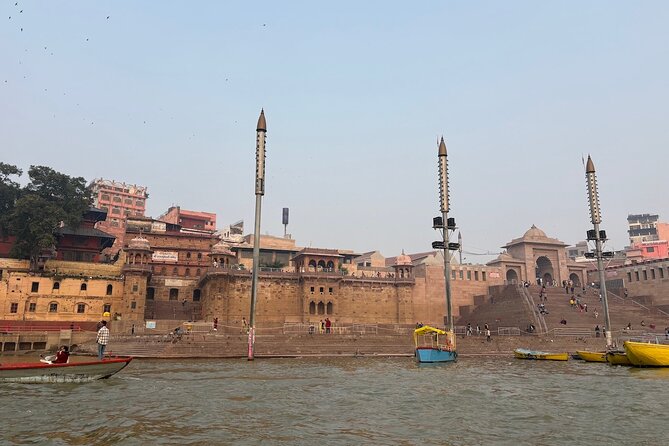
At $128 per person, the tour is not the cheapest way to see Varanasi. It is also not simply a sightseeing drive. The price covers a private air-conditioned car, hotel pickup and drop-off, a professional licensed guide, both boat rides, taxes, fees, and handling charges.
The value depends on how much you want to accomplish in one day. If you have only a short stay, arranging sunrise boating, temple visits, Sarnath transport, and the evening Aarti yourself would take time and involve several separate decisions. Here, the main transport and interpretation are combined.
The value is weaker if you dislike fixed schedules or prefer to spend an entire morning at one ghat. You will pay for coverage, not a slow, single-neighborhood experience. Food, drinks, tips, temple entry charges, and personal ritual expenses are extra, so add those to your working budget.
Group discounts are available, and the tour offers mobile ticketing. Hotel pickup is offered, but the data provided does not name a fixed pickup zone, so check that your accommodation qualifies before paying.
Who should book this Varanasi day tour?
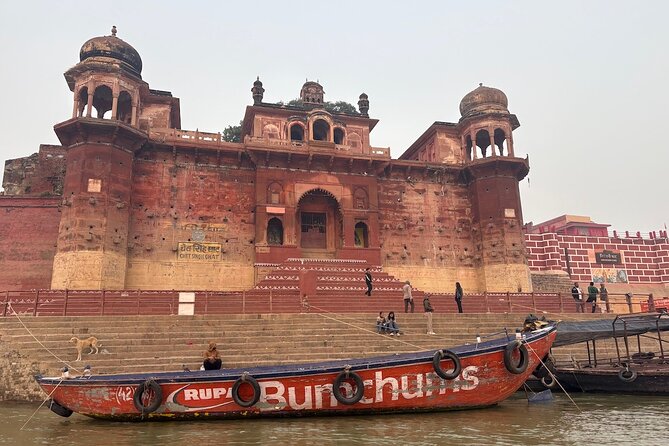
I would choose this for a first visit when time is tight and you want the city’s main religious and cultural sights explained in context. It suits couples, families with older children, and small private groups who value a car and a guide more than a loose independent day.
It is also a good fit if you want both major river experiences. Many short visits include either a dawn boat ride or the evening Aarti. This one schedules both, which lets you compare the quieter morning river with the ceremonial energy after dark.
I would hesitate if you have mobility limits, dislike early starts, or find long sightseeing days draining. Children must be accompanied by an adult, and everyone should expect a moderate level of physical activity. The old-city walking section and river access may be tiring even though the car handles the longer transfers.
The tour also asks for cultural sensitivity. Manikarnika Ghat is an active cremation site, and the temples are places of worship. You will get more from the day if you approach these stops with patience and respect rather than treating them as a checklist of photo opportunities.
Should you book it?
Book it if you want an efficient, well-supported introduction to Varanasi and have just one full day. The combination of two Ganges rides, old-town walking, temples, Banaras Hindu University, Sarnath, and the evening Aarti is hard to arrange smoothly on your own in such a short window.
Skip it if you want a slower pace or already have several days in the city. In that case, splitting the sights across two half-days could make sense, especially for the ghats and Sarnath.
The best reason to book is the licensed guide and private transport. The best reason to pause is the schedule. If you can handle an early start and a long day, $128 buys a strong overview of Varanasi’s religious life, riverfront traditions, and Buddhist heritage.
FAQ
What time does the tour start?
The stated start time is 5:30 am.
How long does the experience last?
The tour lasts approximately 14 hours.
Is hotel pickup included?
Yes. Hotel pickup and drop-off by private air-conditioned car are included.
Is the tour private?
Yes. Only your group participates in this private activity.
Are both boat rides included?
Yes. The package includes a morning boat ride and an evening boat ride on the Ganges.
Does the tour include the Ganga Aarti?
Yes. The evening Ganga Aarti at Dashashwamedh Ghat is included, with about one hour assigned to the ceremony.
Are food and drinks included?
No. Food and drinks are not included.
Can I cancel for a full refund?
Yes, if you cancel at least 24 hours before the experience start time. Cancellations made less than 24 hours in advance are not refunded, and changes within that period are not accepted.
Temple visits we reviewed lately in India
- Same Day Tour Of Kumbhalgarh Fort & Ranakpur Jain Temple★ 4.7 · 12 reviews
- Rishikesh: Kunjapuri Temple Sunrise Trek★ 5.0 · 5 reviews
- Private Full-Day Jaipur Guided Tour with Monkey Temple★ 5.0 · 11 reviews
- Amritsar : Golden Temple and Jallianwala Bagh Private Tour★ 5.0 · 16 reviews
- Old Delhi Temples and Spice Market Tour★ 5.0 · 5 reviews
- Night Ceremony at Madurai Meenakshi Amman Temple Tour★ 4.2 · 4 reviews
- New Delhi: Akshardham Temple Light Show with Custom Add-Ons★ 4.8 · 125 reviews
- New Delhi: Lotus Temple Private Tour with Skip-the-Line★ 5.0 · 5 reviews
Varanasi Temple Tours, compared.
Full Day Varanasi Private Tour with Temples, Ghats & Rituals
Read our review →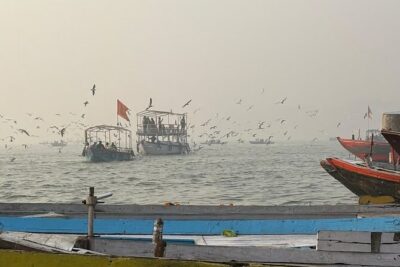
Varanasi in a Day Ancient Temples Sarnath and Ghats
Read our review →
Hidden Corners of Varanasi Secret Alleys Temples and Traditions
Read our review →This tour also ranks in