
Review · VARANASI
Varanasi in a Day Ancient Temples Sarnath and Ghats
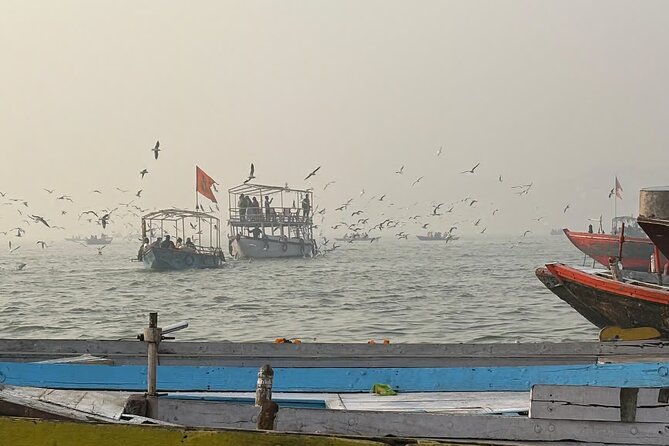
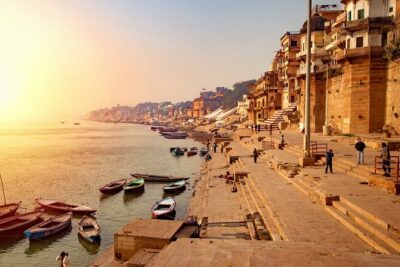
Varanasi reveals itself best from the Ganges just after sunrise. From a boat, you watch worshippers offer water to the Sun God, pilgrims bathe in the river, and the city’s ghats slowly wake up. I like that this tour pairs that quiet start with Ganga Aarti at sunset, giving you two very different views of the river.
I also like the mix of sacred Hindu sites, Banaras Hindu University, and Buddhist Sarnath. Guides such as Vishaw, Pablo, and Sumit have been praised for clear explanations and a calm manner. The main drawback is the pace: this is a 10 to 12-hour day with an ambitious route, and meal costs, Kashi Vishwanath donations, and some entry fees may be extra.
Key points to know before booking
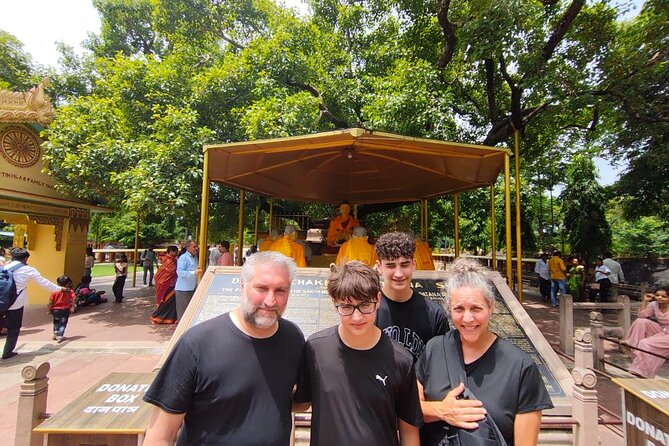
- Sunrise boat ride: Begin around 5 a.m. with roughly two hours on the Ganges, passing the main ghats from Dashashwamedh toward Harishchandra.
- Two river ceremonies: See early-morning devotion from the water, then return near sunset for Ganga Aarti, with a boat option available.
- Private touring: Your group travels by private air-conditioned vehicle with hotel pickup and drop-off.
- Hindu and Buddhist sights: The day includes Kashi Vishwanath, other important temples, Sarnath, the Ashoka Pillar, and Dhamek Stupa.
- A guide matters here: The route moves through places with religious rules and complex stories, so a government-approved guide adds real value.
- Full-day commitment: The tour covers a lot, but you should expect an early start, road time, walking, and limited time at some stops.
Why the Ganges at sunrise is the right beginning
The day starts with hotel pickup at about 5 a.m. That hour is not for everyone, but it is the best fit for the river portion of the tour. The light is soft, the heat is lower, and the ghats take on a more reflective mood before the day’s traffic builds.
The boat route begins near Dashashwamedh Ghat and continues toward Harishchandra Ghat. You pass a long stretch of Varanasi’s riverfront, where each ghat has its own purpose and atmosphere. From the boat, you can take in the broad sweep of the city without trying to navigate the narrow lanes on foot.
The spiritual side of the morning is central to the experience. You may see people offering water to the rising sun and devotees taking a ritual bath in the Ganges. This is not a staged show for sightseeing. It is a living religious practice, so your guide’s role is partly to explain what you are seeing and partly to help you observe respectfully.
The boat ride lasts about two hours and includes admission. It is subject to weather, so the precise plan can change if conditions are unsuitable. Bring a light layer for the early morning, and keep your phone or camera secure around the water.
More Temple Tours around India:
- New Delhi: Akshardham Temple Tour with Water and Light Show
★ 4.8 · 313 reviews - Old Delhi Food-Spice Market-Temples Tour Soon Featured on NETFLIX
★ 5.0 · 304 reviews - Private Guided Spiritual Walk in Banganga Hindu Temples
★ 5.0 · 271 reviews
Kashi Vishwanath and Varanasi’s temple circuit
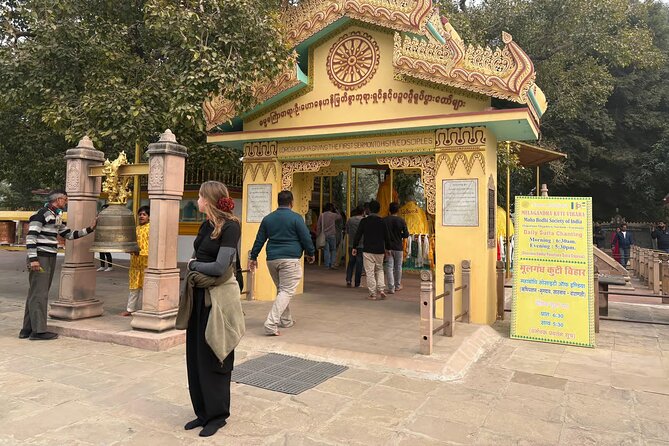
After the boat ride, the schedule turns to Varanasi’s temples. Kashi Vishwanath is the key stop. Dedicated to Lord Shiva, it is one of the city’s most important Hindu temples and one of the places where a guide can help you understand both the religious importance and the practical visit.
The tour information lists about two hours here, though timing can depend on local conditions. Kashi Vishwanath donations are not included, and the temple portion may involve rules or procedures that are easier to manage with local help. Dress and behavior should be respectful, and you should be ready for a sacred setting rather than a quiet museum visit.
The wider temple tour also names Bharat Mata Temple, Sankat Mochan, and Manas Mandir. Each offers a different angle on Varanasi’s religious life. The Bharat Mata Temple is associated with a map of India rather than a conventional deity image, while Sankat Mochan is linked with Hanuman and Manas Mandir with the Ramcharitmanas tradition.
You should confirm the exact temple sequence with your guide on the day. The overall plan is packed, and the time available at each place can shift. That flexibility is useful in Varanasi, where access and local activity do not always follow a tight clock.
Breakfast and Banaras Hindu University
Breakfast comes after the early river and temple visits, but it is listed as your own expense unless you select a meal option. This is an important small detail. After leaving your hotel before dawn, you will want to budget time and money for food rather than assume it is covered.
Around 10 a.m., the route continues to Banaras Hindu University, founded in 1916. The stop is listed at about one hour, with no admission charge. BHU gives the day a useful change of pace, moving you away from the riverfront’s religious intensity and into one of India’s major university campuses.
The stop is not presented as a long academic visit. Think of it as a short look at an important institution connected with modern Varanasi. I like this inclusion because it keeps the day from becoming a nonstop sequence of temples and monuments.
Sarnath, where Buddhism began its public teaching
At noon, the tour heads to Sarnath, about 10 kilometers northeast of Varanasi. This is where Gautama Buddha gave his first sermon to his disciples, in the area traditionally identified as the Deer Park.
Sarnath brings a very different tone from the Hindu sites in the morning. Instead of focusing on temple worship and river ritual, the visit centers on Buddhist teaching, archaeology, and the remains of an ancient religious center. You get a clearer sense of Varanasi’s wider importance when the itinerary includes both traditions.
The Sarnath visit is listed at about one hour, which makes the schedule fairly tight. The named sights include Buddha temples, the Ashoka Pillar, the archaeological museum, and the Dhamek Stupa. If you want a slow museum visit or time for extended reflection, this tour may feel brisk.
The Ashoka Pillar connects Sarnath with the Mauryan ruler Ashoka, who placed pillars across the Indian subcontinent between 268 and 232 BC. The pillar tradition reflects the reach of his rule and the spread of Buddhist ideas during that period. Your guide can help tie the surviving remains to the broader story of the site.
Same sacred ground, another way to see it:
- Taj Mahal Sunrise with Lord Shiva Temple:- All Inclusive
★ 5.0 · 207 reviews - Old Delhi Temples and Spiritual Sites Private 6-Hour Tour
★ 4.8 · 204 reviews - Tipu Palace + Koté Vishnu + Fort + KR Market + Jain Temple = Bengaluru Pété Walk
★ 5.0 · 150 reviews - New Delhi: Akshardham Temple Light Show with Custom Add-Ons
★ 4.8 · 125 reviews
Dhamek Stupa and the first sermon
The Dhamek Stupa receives a separate stop of about 30 minutes. It marks the place associated with Buddha’s first sermon, when he taught the path that became the foundation of Buddhist practice.
The stupa is important because the location is not simply an old structure to photograph. It represents the start of Buddha’s public teaching. Take a few minutes to look at the stonework and the surrounding grounds, then listen closely to the explanation. The meaning of the site is easy to miss if you rush through it as another monument.
The archaeological museum is also named among Sarnath’s attractions, though the supplied schedule does not give it a separate duration. Ask your guide how much time is possible on the day. The balance between the museum, the pillar, the stupa, and the temple visit may depend on opening conditions and the pace of your group.
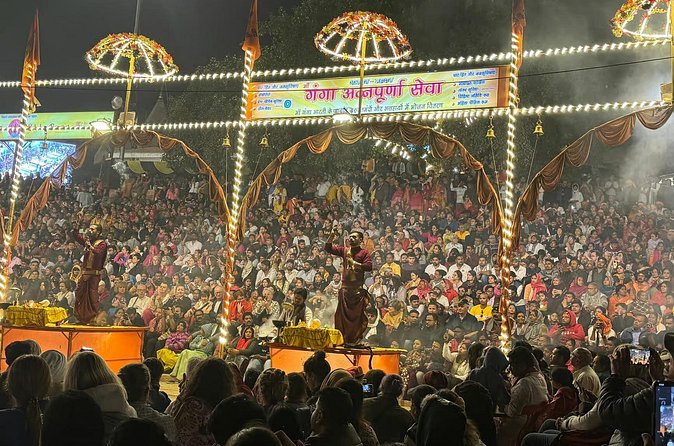
Ganga Aarti from the river
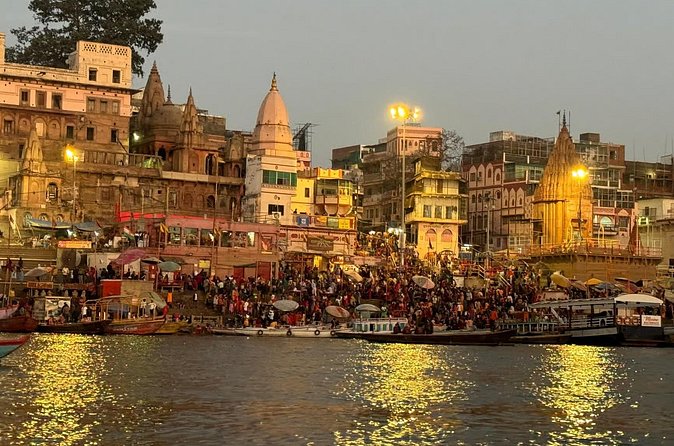
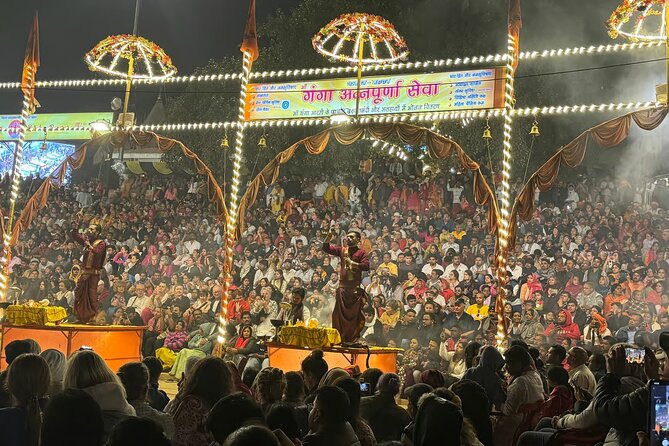
The final major event is Ganga Aarti, held near sunset. You return to the Ganges and watch the ceremony connected with offering light and prayer to the river. The listed duration is about two hours, and the plan includes a boat ride option.
This evening ceremony contrasts sharply with the dawn cruise. In the morning, the focus is on personal devotion and the slow start of the city. At Aarti, the riverfront becomes a shared public ritual, with lamps, music, and coordinated gestures forming the center of attention.
The tour says you can watch from above, and a boat option may provide a broad view of the ghats. Ask exactly which arrangement applies to your booking, since the wording allows for different options. Either way, this is the part of the day when a guide can help you understand what is happening instead of leaving you to watch without context.
You should also expect a crowded public setting. Keep your belongings close and follow your guide’s directions near the river. The ceremony is meaningful because it is part of local religious life, so watch quietly and avoid treating the participants as performers.
How the private format affects the day
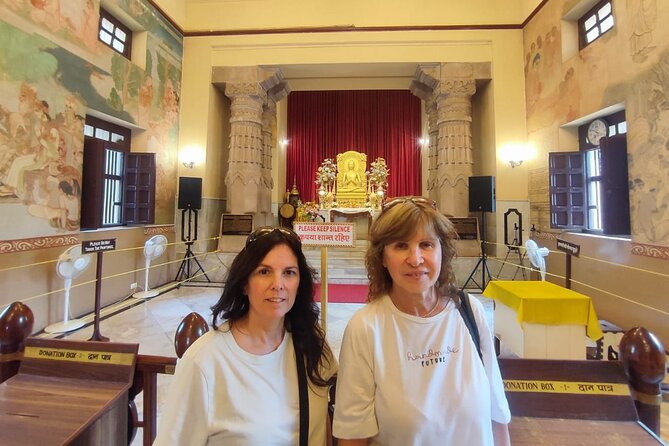
This is a private activity for your own group, not a shared coach tour. That matters in Varanasi because a long day with several religious sites is easier when you can ask questions and adjust the pace with your guide.
Hotel pickup and drop-off are included, along with private air-conditioned transportation. The vehicle gives you a place to rest between the river, temples, university, and Sarnath. It also makes the route more practical than trying to arrange several separate rides before sunrise.
A government-approved guide is included. The strongest praise attached to this experience focuses on the guides’ explanations, planning, safety, and friendly manner. Vishaw is described as teaching without pressure, while Pablo and Sumit are associated with clear help on the city’s story and character. Guide availability can change, so do not book solely around one name.
Mineral water is included. A meal is included only if you select the relevant option, and monument entry fees may also depend on the option chosen. Read the final booking details carefully so you know what is covered.
Is $90.55 good value?
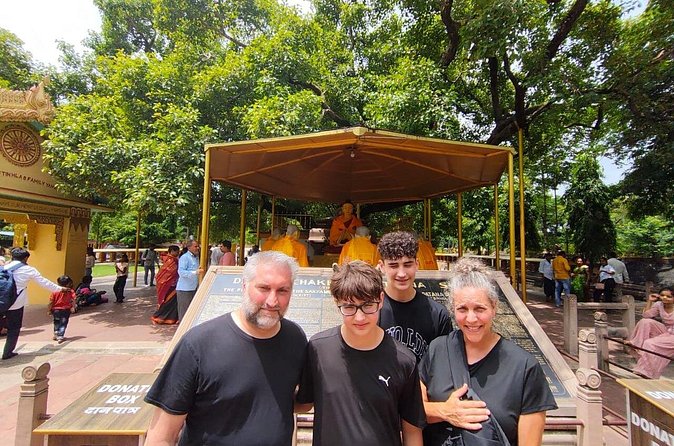
At $90.55 per person, the tour offers a lot of coverage for one day: private transportation, hotel pickup and drop-off, a guide, two major river moments, temples, BHU, Sarnath, and water. For someone with only one full day in Varanasi, the value comes from fitting the city’s main spiritual and historical themes into one organized route.
The price is easier to justify if you would otherwise need to arrange a dawn boat, a temple visit, a Sarnath car, and an evening Aarti plan on your own. You also avoid spending time figuring out how to move between widely separated stops.
Still, the headline price does not necessarily cover everything. Breakfast is your own expense unless a meal option is selected. Kashi Vishwanath donations are excluded, and monument entry fees may depend on the package you choose.
The tour is booked an average of 81 days ahead, which suggests that early planning may be sensible for a private full-day route. The stated cancellation policy allows a full refund when you cancel at least 24 hours before the local start time. Changes or cancellations inside that window are not accepted for a refund.
Who will enjoy this Varanasi day most?
I would choose this tour if you have limited time and want an organized first look at Varanasi. It suits anyone who values a private vehicle, hotel pickup, and a guide who can explain religious customs and historical sites as the day unfolds.
It is also a good fit if you want both major river experiences. Many short city visits include either a sunrise boat or Ganga Aarti, but this schedule offers both, along with Sarnath.
You should think twice if you prefer slow travel. The 10 to 12-hour schedule begins around 5 a.m. and includes several major stops, so you will not have unlimited time at each temple or monument. The route is broad rather than leisurely.
My call: book it for coverage, not a slow pace
I would book this tour for a first day in Varanasi, especially if you want the city’s major sacred and historical sites without managing transport yourself. The sunrise boat, Kashi Vishwanath, Sarnath, and evening Aarti form a strong overview, and the private format gives you more control than a large group outing.
Go in with realistic expectations. This is a demanding day, not a restful excursion, and some costs sit outside the base price. If you accept the early start and packed schedule, it gives you a useful introduction to Varanasi’s river rituals, temple traditions, Buddhist past, and modern university life.
FAQ
What time does the tour begin?
Hotel pickup is scheduled for about 5 a.m. for the sunrise boat ride on the Ganges.
How long does the experience last?
The full experience takes approximately 10 to 12 hours.
Is hotel pickup included?
Yes. Hotel pickup and drop-off are included with private air-conditioned transportation.
Is this a private tour?
Yes. Only your own group participates in the activity.
Are meals and temple donations included?
Breakfast is listed at your own expense unless a meal option is selected. Donations at Kashi Vishwanath are not included.
Can I cancel for a full refund?
Yes. You can receive a full refund if you cancel at least 24 hours before the experience start time. Cancellations or changes made within 24 hours are not refunded or accepted.
Temple visits we reviewed lately in India
- Same Day Tour Of Kumbhalgarh Fort & Ranakpur Jain Temple★ 4.7 · 12 reviews
- Rishikesh: Kunjapuri Temple Sunrise Trek★ 5.0 · 5 reviews
- Private Full-Day Jaipur Guided Tour with Monkey Temple★ 5.0 · 11 reviews
- Amritsar : Golden Temple and Jallianwala Bagh Private Tour★ 5.0 · 16 reviews
- Old Delhi Temples and Spice Market Tour★ 5.0 · 5 reviews
- Night Ceremony at Madurai Meenakshi Amman Temple Tour★ 4.2 · 4 reviews
- New Delhi: Akshardham Temple Light Show with Custom Add-Ons★ 4.8 · 125 reviews
- New Delhi: Lotus Temple Private Tour with Skip-the-Line★ 5.0 · 5 reviews
Varanasi Temple Tours, compared.
Full Day Varanasi Private Tour with Temples, Ghats & Rituals
Read our review →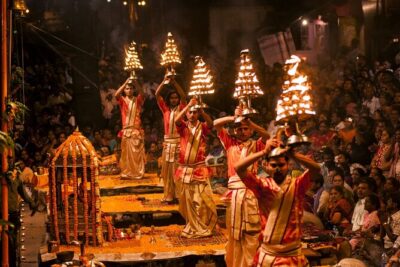
Varanasi Day Tour with Temples & Ganga Aarti – Dawn to Dusk
Read our review →
Hidden Corners of Varanasi Secret Alleys Temples and Traditions
Read our review →This tour also ranks in