
Review · SPAIN
From Girona: Cadaqués, St Pere de Rodes Monastery
The best thing about this day is the sharp change of mood. You go from the wind-cut cliffs of Cap de Creus to the white lanes of Cadaqués, then up into the mountains to Sant Pere de Rodes, a remarkable Romanesque monastery with broad views over the coast. I like the small group, limited to six, and the way the route joins scenery, art, and medieval history in one day.
I also like that you get a real stretch of free time in Cadaqués instead of only a quick photo stop. The main consideration is the long day and the rough, hilly nature of some stops. Cap de Creus is closed from June through September because of fire risk, so the exact route changes in the hottest months.
Key points at a glance
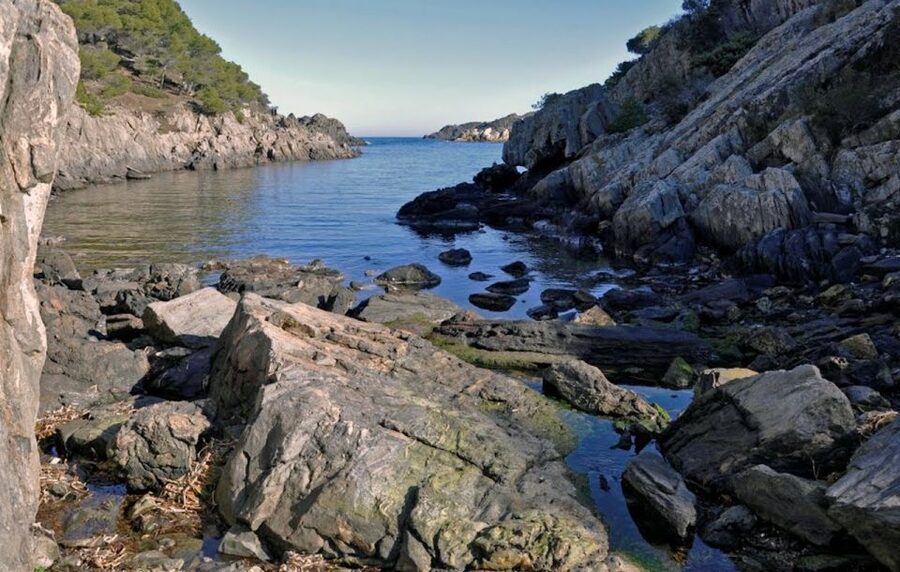
- Cap de Creus cliffs: Walk among unusual rock formations and dry coastal vegetation, with views toward the Gulf of Roses.
- Port Lligat connection: Pause near the place associated with Salvador Dalí before spending time in Cadaqués.
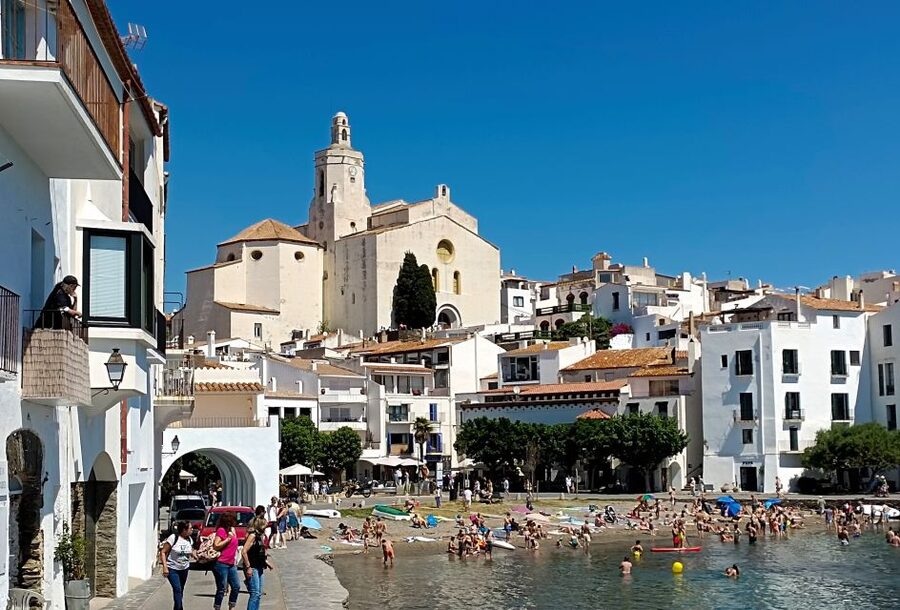
- Two and a half hours in Cadaqués: Wander the stone lanes, beach area, and Santa Maria Church at your own pace.
- Sant Pere de Rodes: Explore one of Catalonia’s finest Romanesque monuments in a dramatic mountain setting.
- Small-group transport: Ride in an air-conditioned van with no more than six participants.
- Guide quality: Claudia, Kim, and Pau are named guides from recent departures, with particular praise for clear English, historical detail, and flexible pacing.
Why this Costa Brava day trip works
This is not a standard beach excursion. It reaches the wilder northeastern corner of Catalonia, close to the French border, where the Costa Brava feels rocky, open, and exposed. The route also avoids making Cadaqués the whole story. You get the village, but you also see the national park and a major medieval monument.
I like that balance. If you spend all day in Cadaqués, you may leave with pretty photographs but little sense of the area around it. Here, the cliffs explain the coast, Cadaqués shows its human side, and Sant Pere de Rodes adds a powerful historical stop.
The tour begins at Plaça de Sant Feliu beside the River Caffe in Girona. From there, expect roughly nine hours on the road and at the sights. The first drive takes about an hour and a half, so this is best treated as a full day away from Girona, not a light half-day outing.
The group size matters. With up to six people, the van can handle a more personal pace than a large coach. Recent departures have been led by Claudia, Kim, and Pau. Claudia received praise for clear English, safe driving, and tailoring the day for a group of three. Pau was noted for bringing the monastery and park to life with historical anecdotes, while Kim was described as genuinely interested in history.
Those details tell you what to expect from the guide’s role. This is not simply a transfer with a few facts delivered at each stop. Your guide handles the driving, explains the places, and may adjust the flow to suit a small group.
More Temple Tours around Spain:
- Montserrat Monastery Half Day Experience from Barcelona
★ 5.0 · 6,014 reviews - Montserrat Monastery Small Group or Private Tour Hotel pick-up
★ 5.0 · 5,144 reviews - Escorial Monastery and the Valley of the Fallen Tour from Madrid
★ 5.0 · 2,494 reviews
Walking the exposed cliffs of Cap de Creus
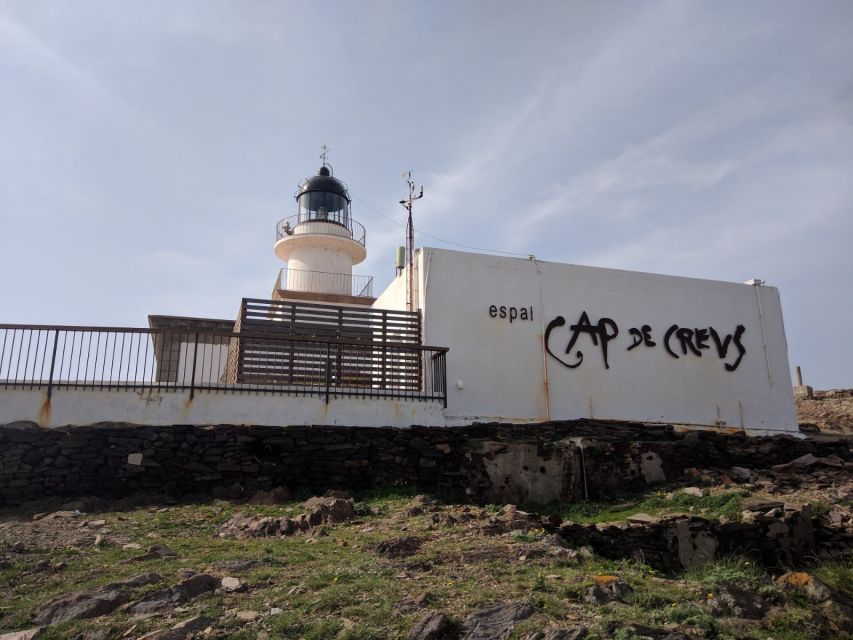
The first major stop is Cap de Creus Natural Park, at the northeastern tip of the Iberian Peninsula. The park is known for its bare, weather-shaped rock and open views across the Gulf of Roses. At the coast, the scenery feels more severe than the gentler coves farther south.
You spend about 30 minutes on a guided walk. The route includes time around the lighthouse and a chance to see the plants and rock formations that give the area its distinctive look. The short visit is enough to get a feel for the place, but it is not a long hiking excursion.
Bring sunscreen, a hat, and shoes you can walk in comfortably. Wind, sun, uneven ground, and exposed rock can make this stop feel more demanding than the short duration suggests. People with mobility impairments should note that the tour is not suitable for them.
There is an important seasonal limitation. From June through September, this section of the park is closed because of the high risk of fire. The description does not promise a substitute stop, so check the exact summer route before booking if Cap de Creus is your main reason for going.
For me, the value of this stop is its sense of scale. You are not just looking at a postcard village. You see the rough coast that helped shape the character of the region. The stop is brief, but it gives the rest of the day a stronger setting.
A quick pause at Port Lligat
The van continues for about ten minutes to Port Lligat, where you have a ten-minute photo stop. This small pause connects the coast with Salvador Dalí, who lived in the area and returned to it in his work.
The stop is not a full museum visit, and you should not expect an extended exploration of Dalí’s home. It is a chance to look out over the setting associated with the artist before heading to Cadaqués.
That limited time is worth understanding. If you want a detailed Dalí experience, this tour does not provide one. If you want context for why Cadaqués and its surrounding coves appear so often in his paintings, Port Lligat adds a useful link without taking much time from the village.
Two and a half hours to find your way around Cadaqués
Cadaqués is the most relaxed part of the day. You have about two and a half hours for a guided introduction and free time. That is enough to walk, eat, visit the church, and simply enjoy the setting without being pushed straight back into the van.
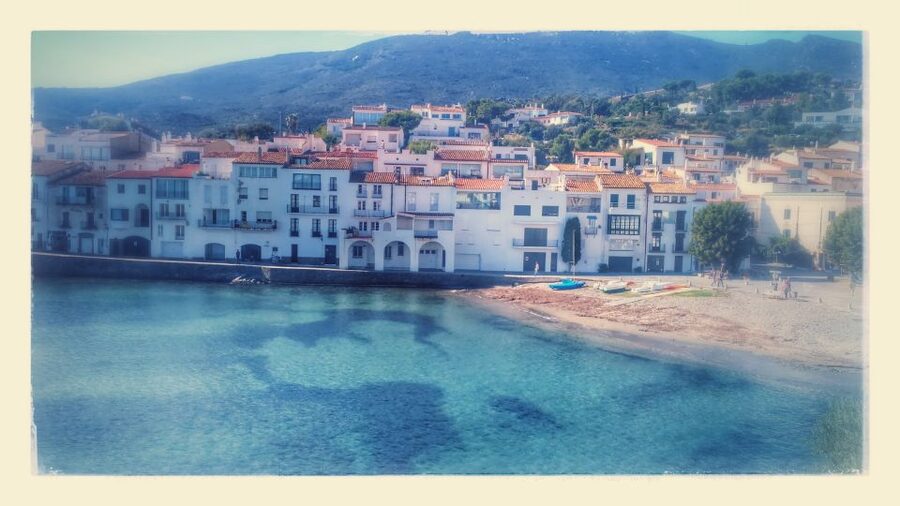
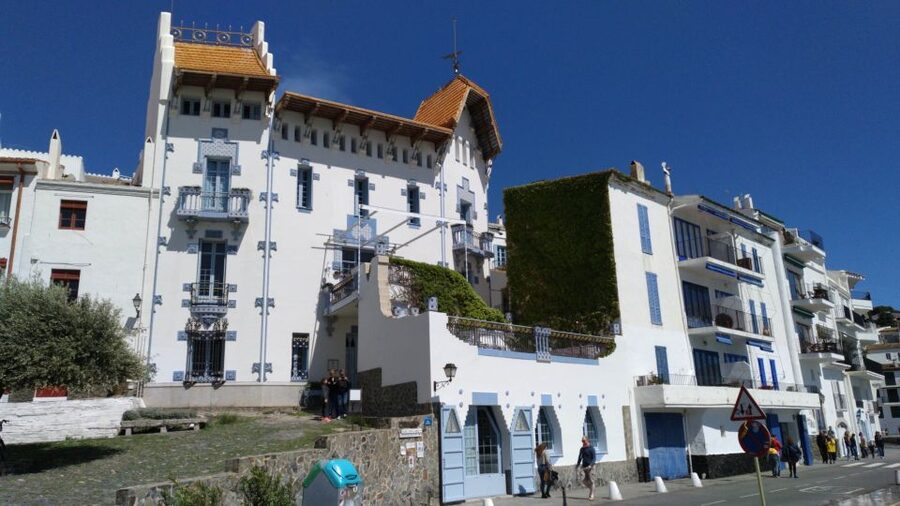
The village is known for its white buildings, small beaches, and lanes paved with pointed stones. The streets rise toward the Church of Santa Maria, located in the highest part of town. That position gives the church a visual role beyond its religious importance. It helps you understand the shape of Cadaqués, with the settlement climbing away from the water.
The stone lanes are attractive, but they are not the easiest surface for everyone. Wear shoes with good support. The village has slopes, and the climb toward the church may feel tiring after the walk at Cap de Creus.
I like the amount of time here. A ten-minute stop would reduce Cadaqués to a picture-taking exercise. Two and a half hours lets you choose your own pace. You can follow the guide for the main points, then stop for lunch, browse the lanes, or sit near the water.
Food is not included, so budget separately for lunch and drinks. That is a small inconvenience, but it gives you control over both price and timing. You are not locked into a set meal or a restaurant selected for the whole group.
Cadaqués can also be busy and popular, especially in warmer months. The tour description presents it as one of the prettiest villages on this part of the Costa Brava, and that appeal is exactly why the stop draws attention. Go expecting charm, not solitude. The nearby natural park may feel wild, but the village itself is a well-known destination.
Same sacred ground, another way to see it:
- Montserrat Museum and Monastery Entry Ticket
★ 4.5 · 1,740 reviews - Montserrat Small Group: Monastery, Black Madonna & Natural Park
★ 5.0 · 1,690 reviews - From Madrid: Escorial Monastery and the Valley of the Fallen
★ 4.7 · 1,434 reviews - Madrid: Flamenco Show at Tablao Sala Temple with Drink
★ 4.8 · 1,206 reviews
Sant Pere de Rodes and Catalonia’s Romanesque past
After Cadaqués, the route turns inland and upward. The drive to Sant Pere de Rodes takes about 35 minutes, followed by a one-hour visit to the monastery.
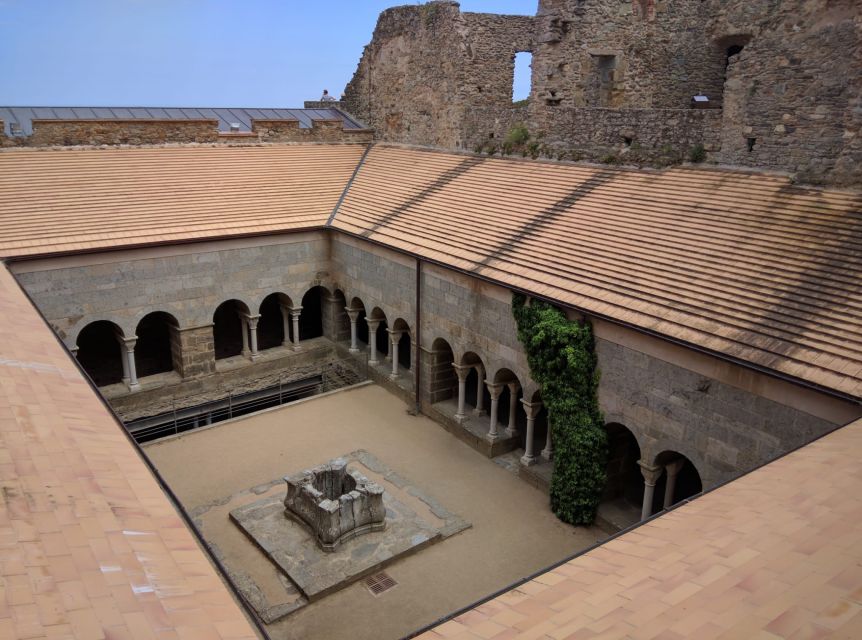
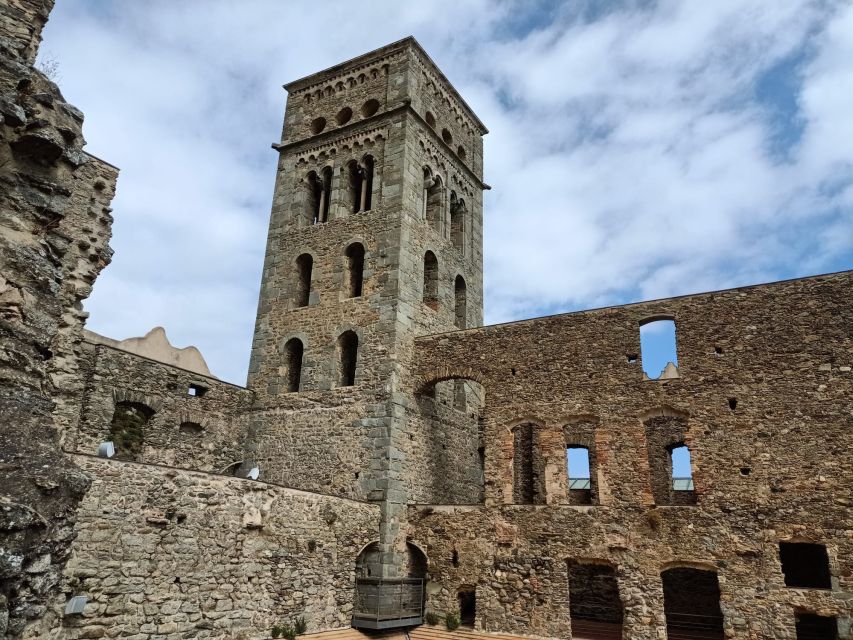
The monastery sits in the Rodes mountain chain at about 520 metres above sea level. Its position gives it a commanding view toward the Bay of Port de la Selva and the northern side of Cap de Creus. The setting is part of the experience. You are looking at the coast from above, after seeing it from the cliffs and from Cadaqués.
Sant Pere de Rodes is regarded as one of the leading examples of Romanesque architecture in Catalonia. Its origins are tied to legends as well as archaeological and historical questions, which gives the site an unusual air of mystery. The church is the main architectural prize, and its originality helps explain why this is more than a routine monastery stop.
The guided visit lasts about an hour. That is enough for an organized introduction to the church and monastery, though anyone with a strong interest in medieval architecture may wish for more time. The guide’s historical storytelling is especially important here. Without context, old stone walls can blur together. With a good explanation, the monastery becomes a place of power, belief, and mountain isolation.
Admission is not included. The stated ticket price is €6 per person, payable separately. Add that to the $175 tour price when working out the real cost of the day.
I consider this the feature that gives the excursion its depth. Cadaqués is beautiful, and Cap de Creus is dramatic, but Sant Pere de Rodes gives you something to think about after the photographs are taken. The contrast between the sea-facing village and the high monastery makes the day feel carefully balanced.
The van ride, timing, and value
The total price is $175 per person. That is not a bargain-priced local outing, but it includes a full nine-hour day, transport from Girona, an English- or Spanish-speaking guide, air conditioning, a bottle of water, and a guided monastery visit. With a group capped at six, the cost is easier to justify than it would be on a large coach with little personal attention.
You still need to pay for lunch, extra drinks, and the €6 monastery ticket. The bottle of water is useful, but bring more water if you need it for walking in warm weather.
Driving time adds up. The first transfer is about 90 minutes, followed by shorter rides between stops and a final 70-minute drive back to Girona. That is a lot of sitting, though the air-conditioned van makes it easier. The payoff is access to places that would be awkward to connect by public transport in one day.
The small group also helps with the feel of the day. You will not be lost in a crowd at the monastery or waiting for dozens of people to board a coach. Recent guide feedback highlights safe driving, clear English, historical anecdotes, and the ability to tailor the trip for a small party.
The schedule is full, but not frantic. The 30-minute Cap de Creus walk and ten-minute Port Lligat pause are short. Cadaqués receives the longest free period, and the monastery gets a focused hour. That distribution makes sense for a day that tries to cover three very different places.
Who should book this tour
I would choose this trip if you are staying in Girona and want to see a more remote part of Catalonia without renting a car. It suits you especially well if you enjoy coastal scenery, old architecture, village walks, and guides who add historical context.
It is also a good match for a first visit to the area. You get an overview without having to decide how to connect Cap de Creus, Cadaqués, Port Lligat, and Sant Pere de Rodes on your own.
The tour is less suitable if you want a long beach day, a serious hike, or a detailed Salvador Dalí museum visit. The Port Lligat stop is brief, and the Cap de Creus walk is short. Anyone with mobility limitations should avoid booking because of the walking surfaces, slopes, and stated suitability restriction.
Check the seasonal conditions before reserving. From June through September, the Cap de Creus section is closed because of fire danger. Also check the language you need, since the tour is offered in English or Spanish.
Should you book it?
Book this tour if you value variety and convenience more than a slow, single-place visit. For $175, plus lunch and the €6 monastery entry, you get a long day covering coastal cliffs, a Dalí-linked cove, Cadaqués, and one of Catalonia’s most important Romanesque sites.
I especially like the combination of a six-person maximum and guides such as Claudia, Kim, and Pau, whose recent departures have been marked by strong English, careful driving, flexible attention, and engaging history. The day is long, and the summer route needs checking, but this is a practical way to see dramatic northeastern Catalonia from Girona.
FAQ
Where does the tour meet in Girona?
The meeting point is Plaça de Sant Feliu, beside the River Caffe in Girona city.
How long does the tour last?
The experience lasts about nine hours, including transport and visits.
What languages are available?
The live guide is available in English or Spanish.
How large is the group?
The tour is limited to six participants.
Is lunch included?
No. Food and additional drinks are not included in the price.
Is entry to Sant Pere de Rodes included?
No. The monastery ticket costs €6 per person and is paid separately.
Temple visits we reviewed lately in Spain
- San Lorenzo de El Escorial: Monastery and Site Guided Tour★ 4.8 · 127 reviews
- Santander: Picos, Santo Toribio Monastery and Potes Day Tour★ 4.8 · 261 reviews
- Private Bécquer’s route, Trasmoz, Veruela’s Monastery +food★ 5.0 · 5 reviews
- Montserrat Monastery Ticket with Escolania Boys’ Choir★ 4.4 · 55 reviews
- Montserrat: PRIVATE TOUR – Monastery, Cable Car & Soft Hike★ 5.0 · 4 reviews
- Private Montserrat Monastery with pickup + Winery or Caves★ 4.9 · 4 reviews
- Món Sant Benet Monastery Tickets★ 5.0 · 7 reviews
- Medieval Route in Navarre: Olite, Ujué, Javier Castle, and Monastery of Leire★ 4.8 · 6 reviews
Spain Temple Tours, compared.
Montserrat Monastery Half Day Experience from Barcelona
Read our review →
Montserrat Monastery Small Group or Private Tour Hotel pick-up
Read our review →
Escorial Monastery and the Valley of the Fallen Tour from Madrid
Read our review →
Montserrat Small Group: Monastery, Black Madonna & Natural Park
Read our review →
From Seville: Italica Roman City & Medieval Monastery Tour
Read our review →
From Barcelona: Montserrat Monastery, Easy Hike, Cable Car
Read our review →
From Barcelona: Montserrat Monastery & Scenic Mountain Hike
Read our review →This tour also ranks in