Review · SIEM REAP
3-Days Discovery Of Angkor: Waterfalls,Floating Village and Banteay Srei temple
Angkor is not a one-temple stop, and this three-day private tour gives you a sensible sweep of the area. You visit the great monuments inside Angkor Archaeological Park, then head farther out to Kulen National Park, Banteay Srei, and Tonle Sap. I like the two different Angkor Wat visits: sunset on the first day, sunrise on the third. I also like having your own guide and driver, so you can slow down for photos or adjust the pace for older family members.
The main catch is stamina. Day 1 runs from 8:00 a.m. through a possible Phnom Bakheng sunset, while Day 3 begins at 4:40 a.m. Entrance fees are also not fully included, and breakfast is provided only on Day 3. Plan for extra costs, hot weather, and plenty of walking.
Key points at a glance
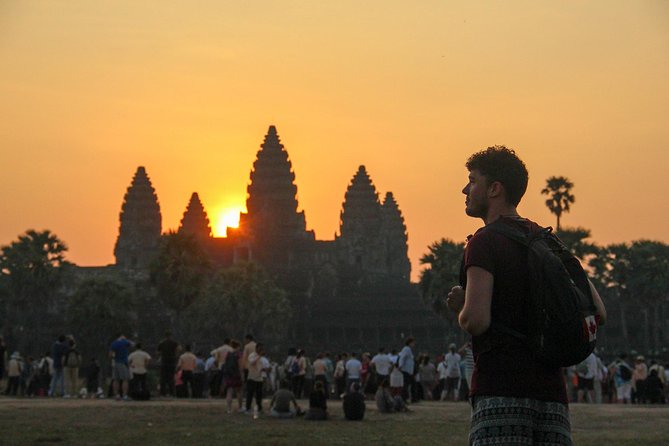
- Two very different Angkor Wat visits: See the temple after the main circuit on Day 1, then return before dawn for sunrise on Day 3.
- A private guide and vehicle: Only your group participates, with hotel pickup, air-conditioning, cold water, and cool towels.
- Kulen adds a change of pace: Waterfalls, forest roads, and the riverbed carvings at Kbal Spean break up the temple-heavy schedule.
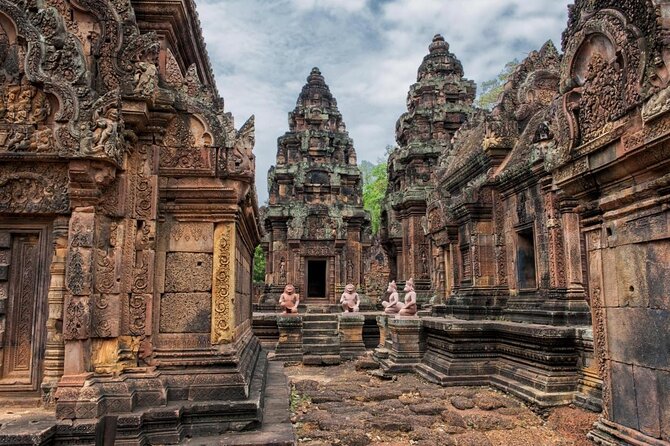
- Banteay Srei is the detail stop: Its small scale and finely carved Hindu sculpture offer a contrast to Angkor Wat’s huge proportions.
- Tonle Sap is an important extra: The private boat to Kampong Phluk costs $15 per person and gives you a close look at life around a flooded village.
- Budget beyond the headline price: The listed $183.08 price does not cover the Tonle Sap boat, Kulen fees, meals, soft drinks, or Angkor admission.
This itinerary works because it does not treat Angkor Wat as the whole story. You see royal roads, temple mountains, Buddhist monuments, Hindu carvings, a waterfall park, and a floating village. That range gives you a better sense of Cambodia than a single day around the famous temple.
The private format matters here. A guide such as Sam, Seila, Samath, Saroun, or another member of the local team can explain the sites while you walk, then adapt the timing to your group. Assignments vary, so you should not book expecting one particular guide unless the operator confirms it. Still, the guide team is repeatedly praised for clear historical explanations, photo help, patience, and flexible pacing.
Your driver is an equally important part of the experience. You return to an air-conditioned car or minivan after hot walks, with cold water and a cool towel included. Several guides and drivers have been singled out for safe driving, punctual pickups, power-bank help, and keeping umbrellas or extra water ready.
Day 1: Angkor Thom, Bayon, and a Long First Day
Pickup begins at 8:00 a.m. from your hotel lobby. Before entering the archaeological area, you stop to buy the Angkor pass. The admission cost is not included in the tour price, so confirm the current rate when booking or before departure.
More Temple and Waterfall Tours in Siem Reap
- 3-Day Angkor Wat & All Interesting Major Temples & Kulen Mount Waterfall
★ 5.0 · 63 reviews - Phnom Kulen Waterfall and Banteay Srei Temple Tour from Siem Reap
★ 5.0 · 30 reviews - 5-Day All Major Temples & Kulen Mount Waterfall & Koh Ker & Beng Mealea
★ 5.0 · 13 reviews
Angkor Thom South Gate
The South Gate is a brief introduction to the scale of Angkor Thom. You have about 15 minutes here, enough to see the approach and take photographs before continuing into the walled city.
Do not expect a long guided visit at this stop. Its value comes from setting up the next monuments, especially Bayon and the terraces. If you want a slower look at the gate, tell your guide early so the schedule can be adjusted.
Bayon Temple
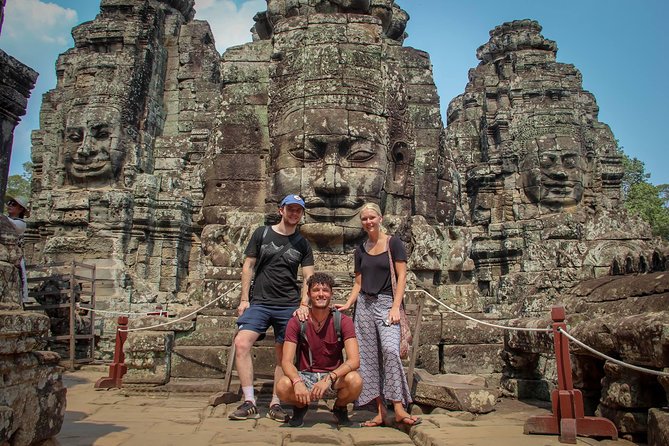
Bayon is the morning centerpiece. Built under Jayavarman VII in the late 12th or early 13th century, it is known for its towers carved with large serene faces. The temple is compact and visually busy, with corridors, galleries, and reliefs packed into a comparatively tight area.
You have about 45 minutes. That is enough for a strong first look, though not enough to inspect every carving. This is where a good guide makes a real difference. The stonework can feel confusing at first, and an explanation of the temple’s Buddhist purpose and royal setting helps you read what you are seeing rather than simply photograph faces.
Baphuon and the Two Terraces
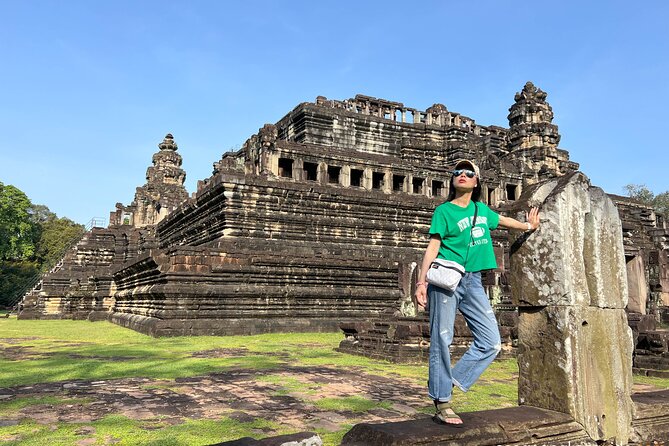
Baphuon follows Bayon with a different mood. It is an 11th-century temple mountain built as a state temple for Udayadityavarman II. Its three-tiered form gives you a clear example of the pyramid style used in Khmer sacred architecture.
The visit lasts about 35 minutes. Expect steps and uneven surfaces, so comfortable shoes are essential.
The Terrace of the Elephants and Terrace of the Leper King are shorter stops, about 15 minutes each. The Elephant Terrace was used as a viewing platform for royal ceremonies and victories. The Terrace of the Leper King has layered carvings and a name tied to a later legend, not the original purpose of the monument.
These stops are best treated as part of a connected royal complex. You will not spend long at either one, but they help explain how Angkor Thom functioned as a city rather than a collection of isolated temples.
More Angkor Wat Tours in Siem Reap:
- Angkor Wat Sunrise or Sunset Tour with Guide from Siem Reap
★ 5.0 · 12,109 reviews - Siem Reap: Angkor Wat: Small-Group Sunrise or Sunset Tour
★ 5.0 · 9,444 reviews - Siem Reap: Angkor Wat 2-Day Tour with Sunrise and Sunset
★ 4.9 · 4,429 reviews - Siem Reap: Full-Day Angkor Wat Guided Tour with Sunset
★ 4.9 · 3,803 reviews
Lunch and Angkor Wat After the Crowds
Lunch takes place at a local restaurant in the park and lasts roughly 45 to 60 minutes. Food and drinks are your responsibility. The schedule does not promise a set menu, so vegetarian diners should tell the operator and guide in advance. One negative experience specifically raised concerns about limited vegetarian choices, making this a useful point to clarify before the tour begins.
After lunch, you spend about 90 minutes at Angkor Wat. That may sound short for the world’s largest religious monument, and it is. The advantage is that you have already seen several sites in the morning, so your guide can focus the visit on the main galleries, central structure, and the sections most suited to your interests.
Angkor Wat rewards a measured pace, but the first day is already demanding. If you are tired, ask to protect your energy for Day 3, when you return before sunrise for a second visit. The itinerary is private, so the guide can usually help you decide how much ground to cover.
Phnom Bakheng Sunset, If You Still Have Energy
The final stop may be Phnom Bakheng, beginning around 4:00 p.m. The climb to the hilltop and the waiting time can take up to two hours. It is offered according to weather and your energy level, rather than as an absolute guarantee.
This is a good idea for people who want a classic sunset view and still feel strong after a full day. It is not a good idea to force it if you are already worn out. You have a sunrise at Angkor Wat two days later, so skipping the hilltop does not mean losing your only special light.
The possibility of a sunset visit is one of the itinerary’s appealing features, but you should understand the tradeoff: Day 1 can become a very long day with substantial walking and stairs.
Day 2 begins again at 8:00 a.m., but it feels different from the temple circuit. The road to Phnom Kulen takes you away from the concentrated monuments of Angkor and into a more rural setting. This is the day that gives the overall trip variety.
Phnom Kulen National Park and Kbal Spean
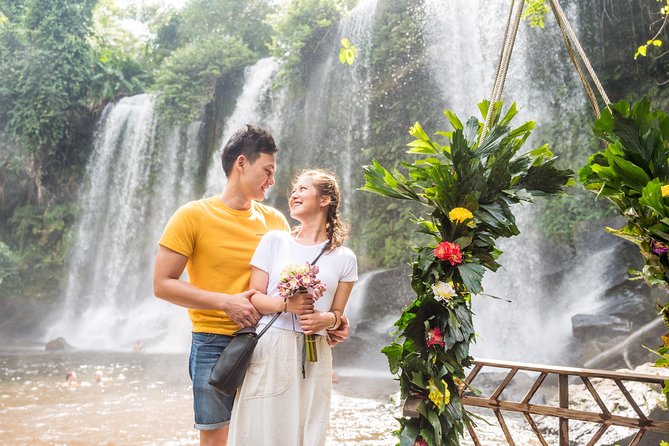
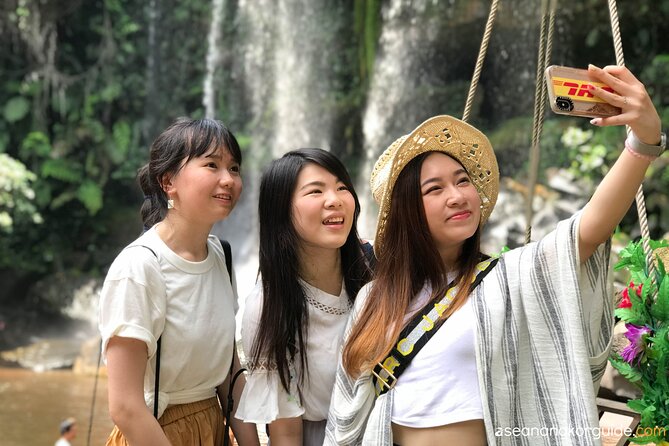
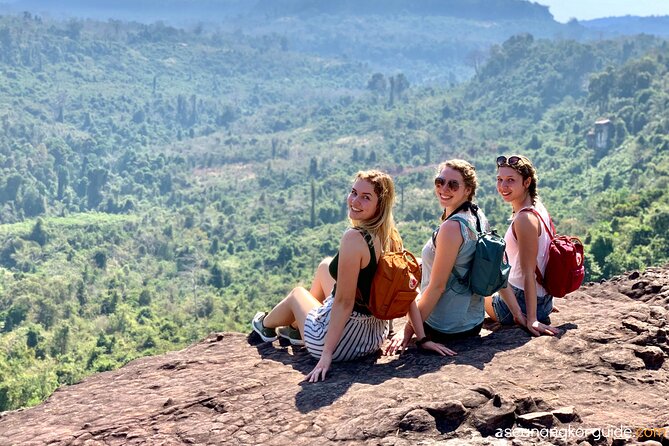
The Kulen portion lasts about three hours. You visit the waterfall area and see the riverbed lingas at Kbal Spean, carvings placed in the riverbed that reflect the area’s Hindu religious importance.
You can swim at the waterfalls, but water levels are low in the dry season from March through July. Set your expectations accordingly. In wetter months, the falls may provide a stronger swimming and cooling stop, while in the dry season the carvings and the change of scenery may be the main reasons to come.
The entrance costs need careful attention. The listed charges are $20 per person for Phnom Kulen National Park and another $20 per person for the Kulen Mountain pass. Those fees are separate from the tour price.
The roads can include rough dirt sections, and the day involves outdoor walking. A driver familiar with the route is valuable here. Wear shoes that can handle uneven ground, carry sun protection, and do not count on the waterfall as your only chance to cool down.
Banteay Srei and Fine Stonework
Banteay Srei takes about 45 minutes and is one of the most rewarding shorter stops. This 10th-century Hindu temple is dedicated to Shiva and is famous for its finely carved decoration.
Unlike Angkor Wat or Bayon, Banteay Srei is relatively small. Its appeal comes from detail rather than scale. You can focus on doorways, lintels, pediments, and the delicate figures carved into the pinkish stone. Forty-five minutes gives you a useful visit, though anyone fascinated by sculpture may wish for more time.
This stop also helps balance the story of Angkor. After seeing the grand Buddhist monuments associated with Jayavarman VII, you get a closer look at an earlier Hindu artistic tradition.
Kampong Phluk and Tonle Sap Lake
The afternoon continues to Kampong Phluk, a flooded village on Tonle Sap, the great freshwater lake. A private boat ride lasts about an hour and costs $15 per person, payable separately.
This is not just a scenic boat trip. The changing water level shapes how homes, roads, trees, and daily work function in the village. The boat gives you a way to see that relationship directly, rather than viewing the lake only from shore.
Conditions can vary with the season, and the appearance of the village changes with water levels. Treat the boat as an important cultural and environmental part of the tour, not merely a final photo stop. If you are sensitive to heat, keep water with you and use the vehicle’s return break wisely.
Day 3: Sunrise and the Smaller Angkor Temples
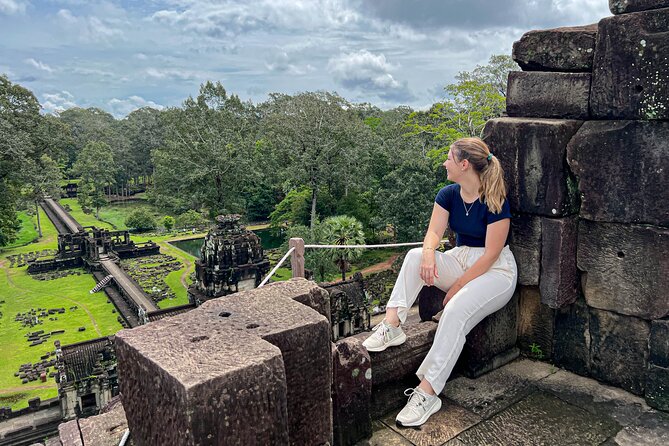
Pickup is at 4:40 a.m. from your hotel lobby. That early start is the price of seeing Angkor Wat before the day’s heat builds and of trying for the famous sunrise view.
Breakfast is included on Day 3 only. You should not assume breakfast is provided on Days 1 and 2. Plan your own morning food for those days and ask the operator how the Day 3 breakfast is arranged.
Angkor Wat at Sunrise
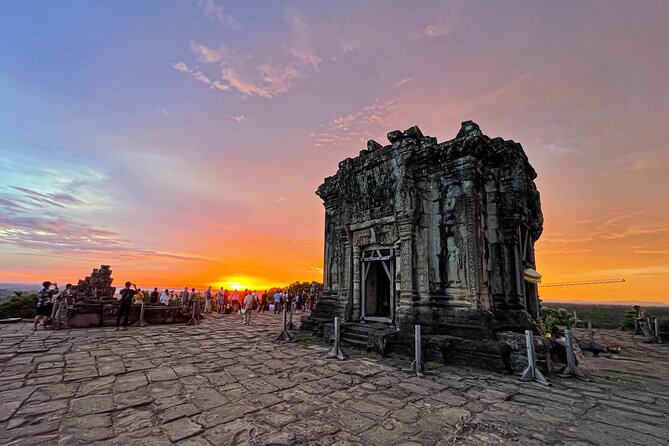
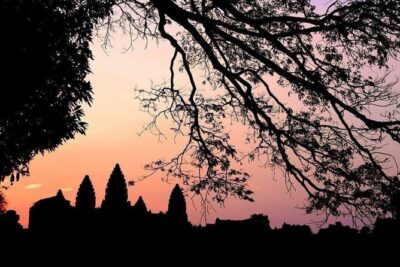
The sunrise visit lasts about an hour. Returning after the Day 1 visit is smart because you see the temple in a different mood and light. The first visit helps you understand the structure, while the second gives you time to focus on reflection pools, silhouettes, and the changing color around the towers.
Crowds and weather can affect the view. A private guide may help you choose a useful position and manage the timing, but no guide can control clouds or how many people arrive. Bring something warm for the predawn wait if you are sensitive to cooler morning air, then prepare for heat once the sun rises.
Ta Prohm and the Tomb Raider Connection
Ta Prohm is one of the most atmospheric stops on Day 3. It was used as a location in Tomb Raider, though the film took liberties with other Angkor temples. Here, the roots, stone galleries, and partly overgrown passages create a very different impression from the open scale of Angkor Wat.
You have about an hour. This is enough time to appreciate the famous tree-covered sections and hear how the temple fit into Jayavarman VII’s building program. Watch your footing, since the ruins include uneven paths and confined areas.
Pre Rup, Ta Som, Neak Pean, and Preah Khan
Pre Rup is a 10th-century pyramid temple dedicated to Shiva. The visit lasts about 35 minutes and gives you another clear example of the temple-mountain form. Its upper levels can be especially demanding in the heat, so use the shaded breaks and water provided by the driver.
Ta Som takes about 35 minutes. Built under Jayavarman VII, it is a smaller temple with a memorable tree growing through part of the structure. It is a useful contrast to Ta Prohm: more compact, less famous, and often easier to take in without feeling overwhelmed.
Neak Pean is a short 20-minute stop on an artificial island. Its design is linked to a Buddhist healing complex and the large Jayatataka reservoir. The approach across the water gives the visit a different feel from the enclosed temple corridors elsewhere in the park.
The final major stop is Preah Khan, with about an hour to explore. Built for Jayavarman VII in honor of his father, it combines long galleries, courtyards, carvings, and traces of later religious use. It is large enough to reward a slower pace, and by this point your guide can help connect the three days of architecture and belief.
The listed price is $183.08 per person. For three days of private transport, an English-speaking guide, hotel pickup and return, air-conditioning, cold water, cool towels, and a full schedule of major sites, that can be good value for a couple or small group.
The real cost is higher. You need to budget separately for:
- Angkor admission, which is not included and has no price stated here
- Phnom Kulen National Park, $20 per person
- Kulen Mountain pass, $20 per person
- Tonle Sap private boat, $15 per person
- Lunches, other food, and soft drinks
That adds $55 per person before Angkor admission and meals. Group discounts may improve the per-person value, and private transport becomes especially useful when four or more people share the vehicle.
The main comfort advantage is the private setup. You are not waiting for a large group to finish every stop, and the guide can adjust the pace. That matters for families, older relatives, photographers, and anyone who would rather spend longer at one temple than follow a fixed crowd.
Clothing, Heat, and Practical Preparation
Wear clothing that covers your shoulders and knees at the temples. Loose, light fabric works well in the heat and meets the modest dress standard. The park authority can refuse entry to areas when clothing is considered too revealing.
Bring comfortable shoes, sunscreen, mosquito spray, and a refillable water bottle or other personal supply. The tour provides cool water and towels, but you will still be walking in hot conditions for long stretches.
Service animals are allowed, and the activity states that most people can participate. Still, the early start, stairs, rough paths, and long Day 1 mean you should be realistic about mobility and endurance.
Free cancellation is available up to 24 hours before the start time. Changes or cancellations made inside that window are not accepted for a refund.
I would choose this tour if you have three days in Siem Reap and want more than the standard Angkor Wat circuit. The combination of major temples, Kulen, Banteay Srei, and Tonle Sap gives you a broad picture of the area without arranging separate transport each day.
It suits people who value explanation and flexibility. Guides such as Sam, Seila, and Samath have been praised for temple history, mythology, photo angles, and adjusting the pace. If photography matters to you, tell the operator when booking and ask whether a guide experienced with photos is available.
I would think twice if you dislike early mornings, long temple walks, or separate entrance payments. You may also find the schedule repetitive on Day 3 if you prefer a slower holiday. The private format helps, but it does not remove the physical demands of Angkor.
Should You Book It?
Book it if you want a well-filled three-day introduction to Angkor and the wider Siem Reap area, especially with your own guide and driver. The strongest features are the thoughtful mix of sites, the second Angkor Wat visit at sunrise, and the small comforts of cold towels, water, and air-conditioning.
Before paying, confirm the total budget, the Angkor ticket cost, the Day 3 breakfast details, vegetarian meal options, and whether the waterfall has enough water for swimming during your dates. If you are comfortable with those points, this is a practical way to see a lot without surrendering every decision to a large tour group.
FAQ
Is this a private tour?
Yes. Only your group participates, with private transport and hotel pickup and return.
Is Angkor admission included?
No. The Angkor admission ticket is not included, and the price is not specified in the tour details.
How much are the Tonle Sap and Kulen fees?
The private Tonle Sap boat costs $15 per person. Phnom Kulen National Park costs $20 per person, and the Kulen Mountain pass costs another $20 per person.
Is breakfast provided on all three days?
No. Breakfast is included on Day 3 only. Food and soft drinks on the other days are not included.
Can I swim at the Kulen waterfalls?
Yes, swimming is allowed, but there may not be much water from March through July during the dry season.
What should I wear to the temples?
Wear modest clothing covering your shoulders and knees. Loose, lightweight clothing and comfortable shoes are recommended.
Temple visits we reviewed lately in Siem Reap
- Angkor Wat Tour by Tuk-Tuk with English Speaking Driver★ 4.5 · 65 reviews
- Private Sunrise Angkor Wat Tour★ 4.6 · 16 reviews
- Private One Day Tour with Sunrise at Angkor Wat★ 5.0 · 3 reviews
- Siem Reap Tour Guide: Angkor Wat Sunrise Tour & Beng Mealea★ 5.0 · 4 reviews
- Siem Reap Private Tour: Angkor Wat Sunrise And Banteay Srei★ 5.0 · 3 reviews
- Private Angkor Wat Sunset Tour with Lunch and Snack Included★ 5.0 · 3 reviews
- Private Angkor Wat Sunrise Tours And Sunset Floating Village★ 5.0 · 3 reviews
- Private Angkor Wat Temple Tour★ 5.0 · 35 reviews
Siem Reap Temple Tours, compared.
Angkor Wat Sunrise or Sunset Tour with Guide from Siem Reap
Read our review →
Siem Reap: Angkor Wat: Small-Group Sunrise or Sunset Tour
Read our review →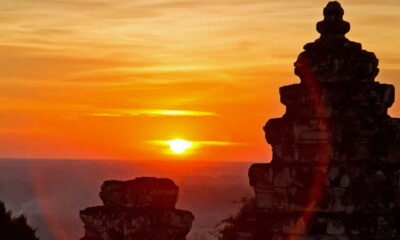
Siem Reap: Full-Day Angkor Wat Guided Tour with Sunset
Read our review →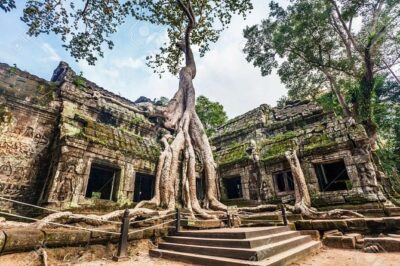
Angkor Wat Sunrise tour with Small – Group and Guide tours
Read our review →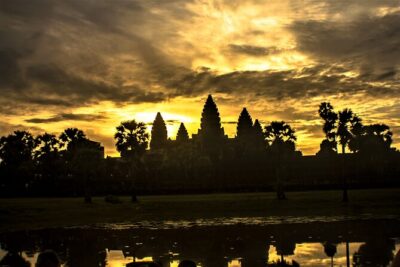
Angkor Wat Highlights and Sunrise Guided Tour from Siem Reap
Read our review →
Angkor Wat Sunset Small Group Tour with Lunch Included
Read our review →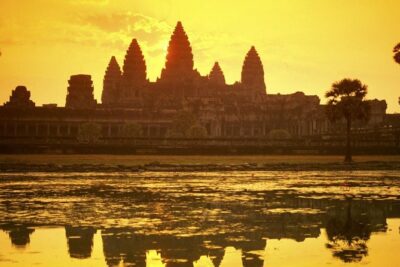
Full-Day Angkor Wat Sunrise Private Tour with Guide from Siem Reap
Read our review →