Review · SIEM REAP
3-Day Angkor Wat & All Interesting Major Temples & Kulen Mount Waterfall
Angkor Wat is only the beginning here. Over three long days, you’ll move from the giant temple complex to quiet Ta Nei, the pink stone carvings of Banteay Srei, Phnom Kulen’s waterfall, and the early Khmer temples around Roluos. The range is the real attraction. You get famous sights, lesser-visited ruins, and a change of pace in the forest and countryside.
I like the private format, which lets your guide adjust the pace and skip optional stops. I also like the strong guiding element. Guides such as Chhay, Pal Saruon, Small Mony, and Em Somuch are praised for clear explanations, good photo spots, and willingness to make small changes. The main drawback is the sheer length: early starts, many temples, heat, stairs, and long drives can leave you temple-tired.
At a glance: the details that matter
- Three very full days: The program covers major Angkor temples, remote ruins, Phnom Kulen, the Roluos group, and Siem Reap craft and market stops.
- Private transport: Your group rides in an air-conditioned vehicle with a driver, drinking water, and cool towels.
- Two different sunrise or sunset choices: Day one may end at Phnom Bakheng for sunset, while day three begins at Angkor Wat before dawn.
- Phnom Kulen adds a welcome change: You’ll see the 1,000 Lingas riverbed, the reclining Buddha, and a waterfall where swimming is possible.
- Extra fees are significant: The stated tour price is $248.50 per person, but temple admission costs $62 and Phnom Kulen costs $20 more per person.
- Good guides make the difference: The best part of the private setup is being able to ask questions, linger at a favorite temple, or shorten a stop when the heat wins.
Why this three-day plan works
This is not a quick Angkor Wat visit with a few nearby add-ons. It is a broad introduction to Cambodian religious art and royal history, with enough time to see how Khmer temple design changed over several centuries.
Day one concentrates on the central Angkor area. Day two reaches farther out to Phnom Kulen and the eastern temples. Day three returns to the main park, then continues to the Roluos group and Siem Reap. That spread gives you variety, but it also demands stamina.
Your guide meets you at your hotel or guest house, and the private vehicle keeps the days practical. Air conditioning matters in Cambodia. So do the supplied water and wet towels, especially after walking across exposed temple courtyards.
The program is flexible in small ways. Phnom Bakheng sunset is optional, as are Artisans Angkor and the Old Market. A guide can also adjust the pace within reason. Several guides have been praised for taking guests along shaded paths, finding useful photo positions, and accepting schedule changes.
More Temple and Waterfall Tours in Siem Reap
- 3-Days Discovery Of Angkor: Waterfalls,Floating Village and Banteay Srei temple
★ 5.0 · 214 reviews - Phnom Kulen Waterfall and Banteay Srei Temple Tour from Siem Reap
★ 5.0 · 30 reviews - 5-Day All Major Temples & Kulen Mount Waterfall & Koh Ker & Beng Mealea
★ 5.0 · 13 reviews
Day one: Angkor Wat, Ta Prohm, and the royal city
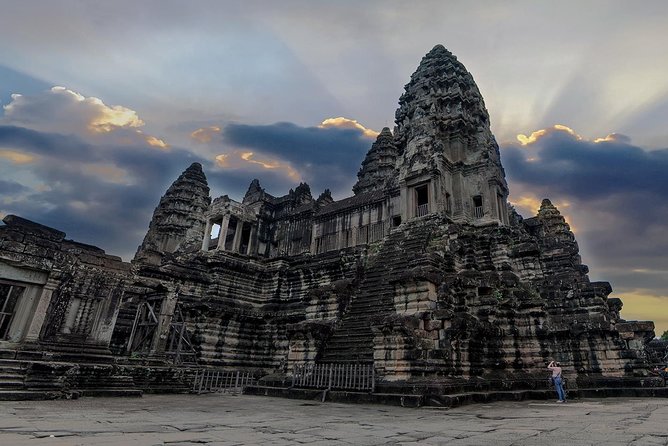
The first morning begins at 8:00am, when you meet your guide in the hotel lobby. You stop to buy the temple pass before entering the park. Angkor Wat receives about two and a half hours, which is enough for a serious first look rather than a hurried photo stop.
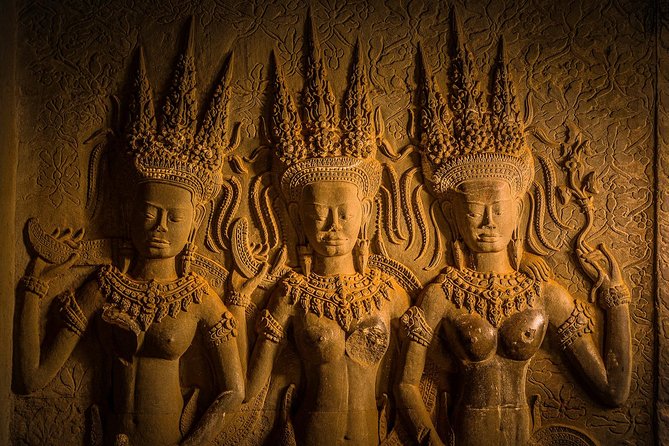
Angkor Wat rewards slow attention. Look beyond the familiar front view and notice the galleries, towers, bas-reliefs, and long approach across the causeway. Your guide can explain its Hindu origins and the later Buddhist use of the site. The admission fee is not included, so budget $62 per person for the Angkor and other temple areas.
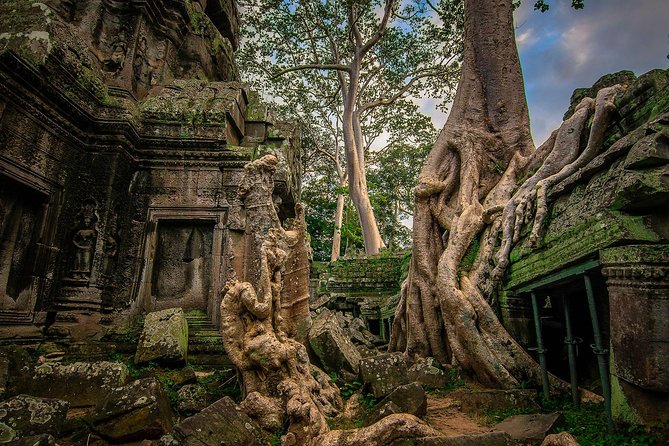
Ta Prohm follows, with about two hours on the small circuit road. This is the temple of giant tree roots, crumbling walls, and narrow stone passages. Its connection with the film Tomb Raider brings crowds, but the atmosphere still feels dramatic. Your guide’s timing and route matter here, since a quieter corner can make the visit much more enjoyable.
Ta Nei is a useful contrast. It is smaller, less restored, and surrounded by large trees. You get only about 45 minutes, but that is enough to see why it appeals to people who want a quieter ruin after Ta Prohm. Do not expect the scale or polish of Angkor Wat. Its value is the sense of an old temple in a wooded setting.
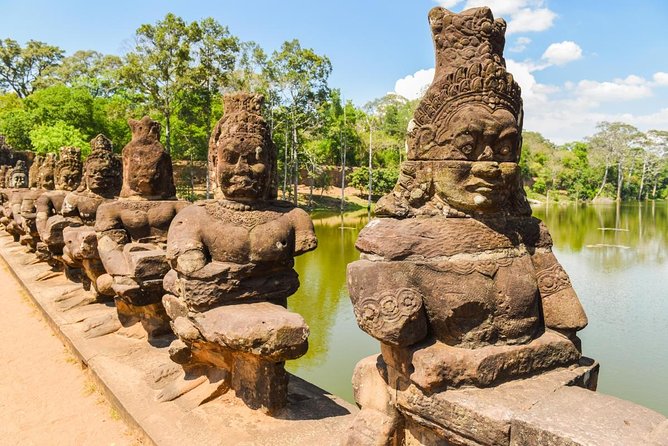
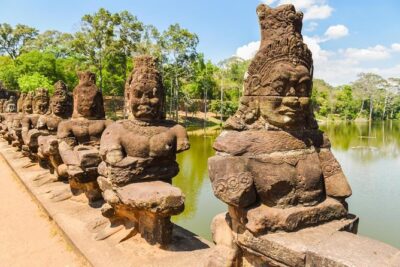
The afternoon moves into Angkor Thom through the Victory Gate on the eastern side. The stop lasts only about ten minutes, mainly for photographs, but it helps you understand the fortified royal city before entering its core.
Bayon is the centerpiece of Angkor Thom. Its towers carry the famous faces associated with the bodhisattva Avalokitesvara. The planned visit is about 45 minutes, so listen closely as your guide points out the faces, galleries, and relief scenes. Bayon can feel confusing at first because its towers crowd together. A good explanation turns the maze into a readable monument.
Baphuon, a Hindu temple built before Angkor Wat, gives you another change in style. You’ll have roughly 30 minutes, including a look toward the reclining Buddha added centuries later behind the temple. From there, you continue to the Royal Enclosure and Phimeanakas, a pyramid temple built in the 10th century within the former royal center.
Phimeanakas receives only 15 minutes, and that is one of the weaker time allocations on the first day. The temple is important, but you may prefer to spend longer around Baphuon or the royal walls if ancient architecture interests you more than collecting another stop.
The Terraces of the Elephants and the Leper King are short visits, about ten minutes each. They are best understood as carved ceremonial platforms rather than complete temples. The elephant carvings on the first terrace are the main visual feature, while the second terrace has more enclosed relief work.
The final stop is Phnom Bakheng, a hilltop temple used for sunset viewing. The planned visit can last two hours because of the climb and waiting time. A limited number of people are allowed up at once, so sunset is not guaranteed simply because you arrive there. If you dislike waiting or have already had enough for one day, the itinerary allows you to skip it.
Day two: Phnom Kulen waterfall and the pink stone temple
Day two moves well beyond the central Angkor zone. Phnom Kulen National Park is more than 60 kilometers from Angkor Park, and the stop takes about five hours. This is the longest single visit of the tour, but it gives the schedule a needed break from temple corridors.
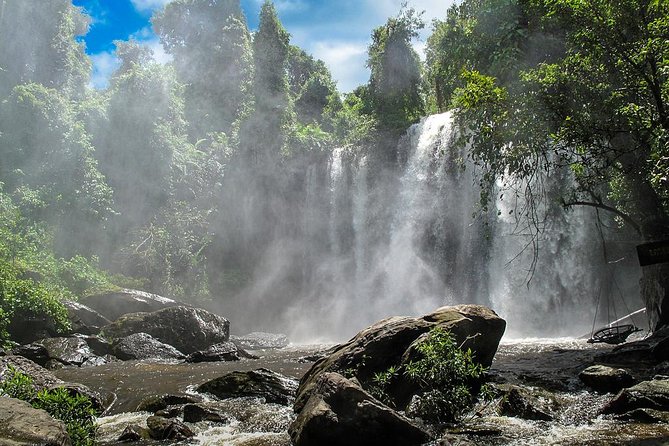
The 1,000 Lingas site is a riverbed carved with symbols connected to Shiva. It is not a conventional temple, and that is part of its appeal. You see religious sculpture in a natural setting rather than another stone monument with towers and galleries.
The park also includes the reclining Buddha and a waterfall. Swimming is possible at the waterfall, making this the most relaxed part of the three days. Bring suitable swimwear and expect the stop to feel more outdoors-oriented than the Angkor visits. The Phnom Kulen entrance fee is separate, at $20 per person.
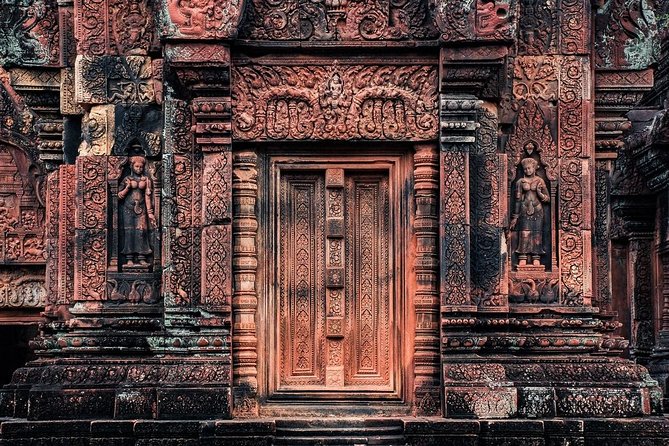
After the park, you visit Banteay Srei for about an hour. This Hindu temple, built from pink sandstone in the 10th century, is smaller than Angkor Wat but famous for fine carving. The scale makes the detail easier to appreciate. The temple was dedicated mainly to Shiva and is one of the most visually distinct stops on the route.
Banteay Samre follows for about 45 minutes. Its design is often compared with Angkor Wat, and the visit helps you see how Khmer builders reused broad architectural ideas in different places. It is not as famous as Banteay Srei, which can make it feel like a calmer stop.
Pre Rup closes the temple portion of the day. This late 10th-century temple-mountain has steep levels and a strong brick-and-stone profile. The name is connected with turning the body and funerary traditions. You get about 30 minutes, enough for a look around, though the steps can be tiring after the long drive and the waterfall visit.
This day suits you if you want more than the standard Angkor circuit. It is less suitable if you want a gentle holiday schedule. The combination of long driving, walking, water, and several temples makes day two active from beginning to end.
Day three: sunrise, jungle ruins, and the Roluos beginnings
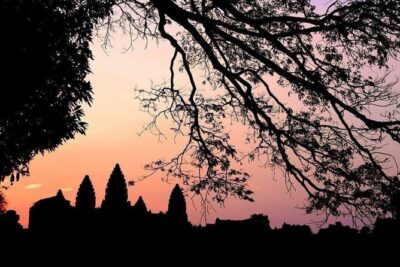
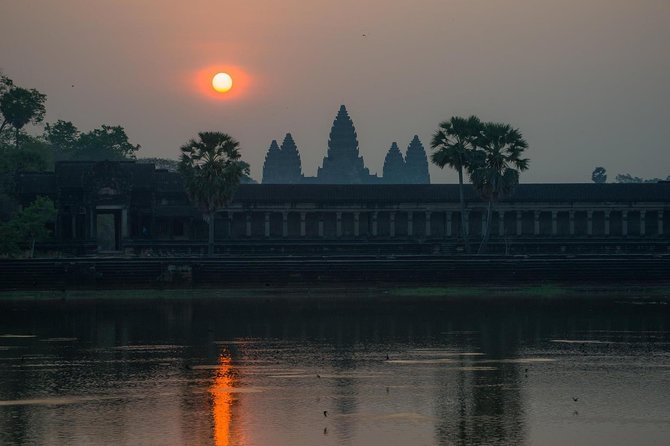
The third day starts at 5:00am for Angkor Wat sunrise. You have about one hour and 45 minutes at the temple. This is an early start, and you should know that sunrise conditions are never guaranteed. Still, the chance to see the temple before the main heat of the day is a strong reason to keep this part of the plan.
After breakfast, you return to the park for Preah Khan. This enormous Buddhist monastery was built by King Jayavarman VII and dedicated to his father. Allow about an hour. Preah Khan has long corridors, courtyards, carved stone, and sections where trees and masonry meet. It is large enough that a guide’s route helps you avoid wandering without understanding what you are seeing.
Neak Pean is a much smaller temple on an island in the middle of a former baray, or reservoir. The visit lasts about 30 minutes. Its setting is the main attraction, though access and water conditions can affect how close you get to the central structure.
Ta Som, another small Buddhist temple, follows for about half an hour. Its eastern side has a tree growing into the masonry, recalling Ta Prohm on a smaller scale. This is a good place to compare a modest ruin with the grander monuments you have already seen.
Eastern Mebon takes about an hour. This three-level temple-mountain has five towers and large elephant statues at the corners. The elephants are easy to miss if you focus only on the central towers, so this is a stop where your guide can point out details that add meaning to the visit.
The route then heads to the Roluos group, an earlier collection of Khmer temples outside the main Angkor area. Lolei is a small Hindu temple from the 9th century, with about 15 minutes planned. Preah Ko was the first temple built in the ancient city of Hariharalaya and receives about 30 minutes.
Bakong is the largest and most substantial stop in the group. It is an early sandstone temple-mountain and a key point in the development of Khmer architecture. You get about 45 minutes, usually with a lunch break along the way. After two days of famous monuments, the Roluos temples help you see the earlier foundations from which the later Angkor style grew.
The final stops are optional. Artisans Angkor presents traditional stone carving, wood carving, lacquering, gilding, and silk work. It can be worthwhile if you want context for Cambodian craft production, but you can skip it if you would rather spend your remaining energy elsewhere.
Psar Chaa, or the Old Market, is also optional. It is in central Siem Reap and works as a final browse for food, goods, and local shopping. Neither stop is essential to the temple story, which is useful to know when day three starts feeling long.
More Angkor Wat Tours in Siem Reap:
- Angkor Wat Sunrise or Sunset Tour with Guide from Siem Reap
★ 5.0 · 12,109 reviews - Siem Reap: Angkor Wat: Small-Group Sunrise or Sunset Tour
★ 5.0 · 9,444 reviews - Siem Reap: Angkor Wat 2-Day Tour with Sunrise and Sunset
★ 4.9 · 4,429 reviews - Siem Reap: Full-Day Angkor Wat Guided Tour with Sunset
★ 4.9 · 3,803 reviews
The guide and vehicle are central to the value
The private format is more than a comfort upgrade. It changes how you use the day. You can ask about Hindu and Buddhist symbols, request a slower look at a carving, or shorten a stop when your feet are done.
The strongest praise has gone to guides including Chhay, Pal Saruon, Small Mony, Em Somuch, and Chandri. Their useful qualities are clear explanations, strong knowledge of the temples, patience, and flexibility. One guide took guests along a shaded shortcut, which matters during hot afternoons. Another was praised for finding good photo locations without turning the trip into a photo-only outing.
The driver matters just as much. The service includes a private air-conditioned vehicle, road tolls, parking fees, water, and cool towels. Drivers named Sriang, Det, and San have been singled out for patience and reliable service. You will spend a lot of time moving between sites, especially on the Phnom Kulen day, so a calm driver improves the whole experience.
What the $248.50 price really covers
The listed price is $248.50 per person. It includes the private vehicle and driver, licensed English-speaking guide, hotel pickup and return, water, towels, parking, and road tolls.
You must add $62 per person for the Angkor and temple admission pass, plus $20 for Phnom Kulen. That brings the known cost to $330.50 per person before meals. Lunch is not included, with the suggested cost listed at about $5 per person depending on the menu.
At that total, this is not the cheapest way to see Angkor. But the value improves if you want three full days, a private group, a guide who can explain what you are looking at, and transport to Phnom Kulen and Roluos. Booking farther ahead may be sensible, since the experience is booked an average of 57 days in advance.
Who should book it
Book this tour if you want a wide view of Angkor rather than a short temple sampler. It suits you especially well if you care about history, architecture, photography, and having a private guide to shape the day.
It is also a good fit for mixed-interest groups. One person can enjoy the temples, another can look forward to the waterfall, and everyone gets a break from ruins on day two.
Think twice if you dislike early mornings, long drives, climbing, heat, or packed schedules. You may be happier with a shorter Angkor plan and a separate relaxed day. If you do choose this program, treat the optional sunset, craft center, and market as useful pressure valves.
Should you book this three-day Angkor tour?
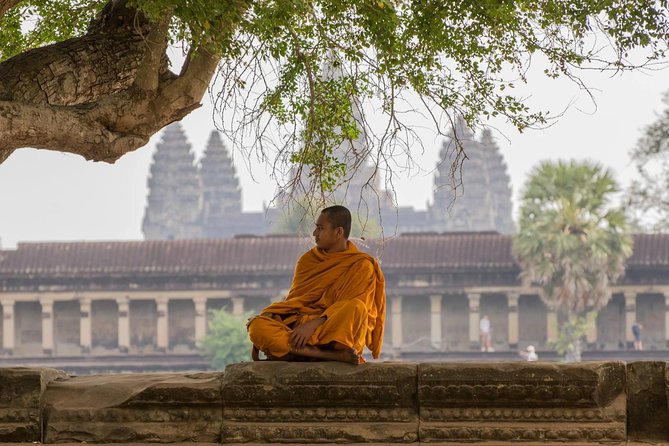
I would book it for a first visit when you want the major temples plus the less obvious corners of the region. The combination of Ta Nei, Phnom Kulen, Banteay Srei, Preah Khan, and the Roluos group gives the trip more texture than an Angkor Wat only itinerary.
The decision comes down to stamina and budget. You are paying extra for private transport and three days of guiding, then adding admission fees and meals. In return, you get a flexible schedule, a broad route, and a guide who can make a huge temple complex understandable. For an active visitor who wants both famous sights and quieter ruins, that is a fair trade.
FAQ
How long is the tour?
The experience lasts approximately three days.
Is hotel pickup included?
Yes. Pickup and return to your hotel or guest house are included.
Is the tour private?
Yes. Only your group participates in the activity.
Is the temple admission included?
No. Angkor and other temple admission costs $62 per person.
Is Phnom Kulen admission included?
No. The entrance fee for Phnom Kulen is $20 per person.
Are meals included?
No. Lunch is separate and is listed at about $5 per person, depending on the menu.
Can I swim at Phnom Kulen?
Yes. The itinerary includes a waterfall where swimming is possible.
Can I skip the sunset or final optional stops?
Yes. Phnom Bakheng sunset may be skipped, and Artisans Angkor and Psar Chaa are also listed as optional stops.
More three-day temple trips in Siem Reap
- Angkor Region: 3-day Private Tour of Top Temples
★ 5.0 · 47 reviews - From Siem Reap: Angkor Wat and Floating Village 3-Day Trip
★ 5.0 · 39 reviews - 3-Day Angkor Wat Tour with Kulen Mountain & Floating Village
★ 5.0 · 12 reviews - 3-Day Angkor Wat & All Interesting Temples With Beng Mealea
★ 5.0 · 6 reviews
Temple visits we reviewed lately in Siem Reap
- Angkor Wat Tour by Tuk-Tuk with English Speaking Driver★ 4.5 · 65 reviews
- Private Sunrise Angkor Wat Tour★ 4.6 · 16 reviews
- Private One Day Tour with Sunrise at Angkor Wat★ 5.0 · 3 reviews
- Siem Reap Tour Guide: Angkor Wat Sunrise Tour & Beng Mealea★ 5.0 · 4 reviews
- Siem Reap Private Tour: Angkor Wat Sunrise And Banteay Srei★ 5.0 · 3 reviews
- Private Angkor Wat Sunset Tour with Lunch and Snack Included★ 5.0 · 3 reviews
- Private Angkor Wat Sunrise Tours And Sunset Floating Village★ 5.0 · 3 reviews
- Private Angkor Wat Temple Tour★ 5.0 · 35 reviews
Siem Reap Temple Tours, compared.
Angkor Wat Sunrise or Sunset Tour with Guide from Siem Reap
Read our review →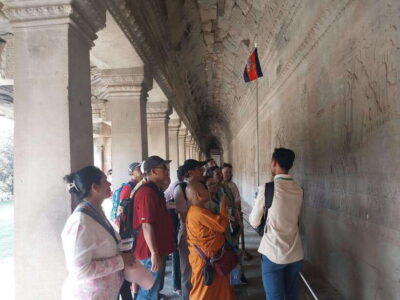
Siem Reap: Angkor Wat: Small-Group Sunrise or Sunset Tour
Read our review →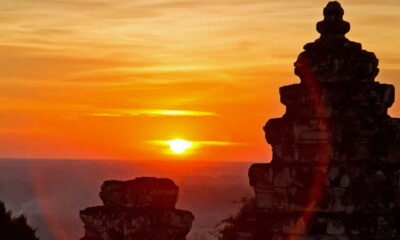
Siem Reap: Full-Day Angkor Wat Guided Tour with Sunset
Read our review →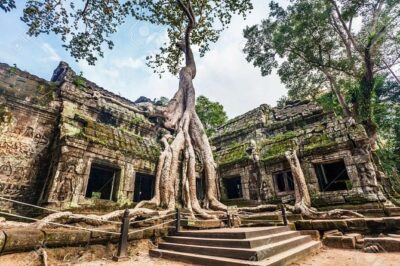
Angkor Wat Sunrise tour with Small – Group and Guide tours
Read our review →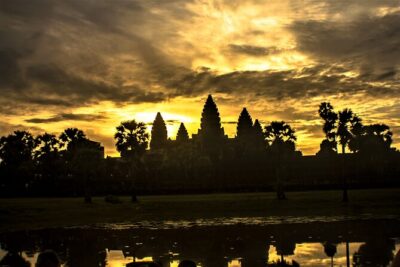
Angkor Wat Highlights and Sunrise Guided Tour from Siem Reap
Read our review →
Angkor Wat Sunset Small Group Tour with Lunch Included
Read our review →
Full-Day Angkor Wat Sunrise Private Tour with Guide from Siem Reap
Read our review →