
Review · XIAN
Xi’an: Daci’en Temple(Great Wild Goose Pagoda) E-ticket
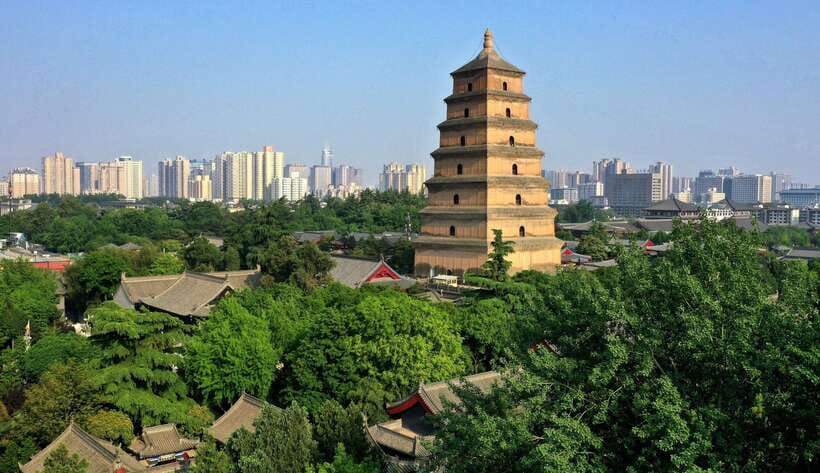
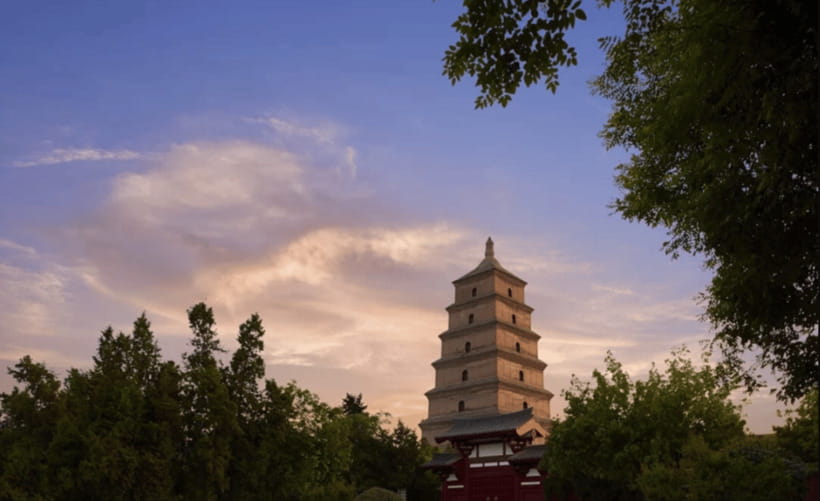
Xi’an’s Great Wild Goose Pagoda is one of those places where a single brick tower opens a door into China’s Buddhist past. Built in 652 for the monk Xuanzang, it once held the sacred texts and Buddhist images he brought back from a seventeen-year journey to India. I like the easy QR-code entry and the chance to see the pagoda within the calmer gardens of Daci’en Temple. The main catch is simple: this ticket does not include climbing the pagoda, and the local admission price may be far lower than the $9 online fare.
I also like that you can treat the site as a flexible one-day stop rather than a fixed guided tour. You can look at the Tang Dynasty carvings, walk through the temple grounds, and decide on the tower climb at the entrance. But check your QR code before setting out. At least one booking failed at the gate, and buying a replacement ticket on site spoiled the value.
Key points to know before you go
- The pagoda dates to 652: It was built during the Tang Dynasty for Xuanzang, the monk who returned from India with Buddhist scriptures.
- The $9 ticket covers Daci’en Temple entry: It does not cover admission to the interior of the Great Wild Goose Pagoda.
- The QR code is meant to skip the ticket line: Keep your passport or ID ready, and make sure the code is available on your phone.
- The temple gardens offer a quiet break: The grounds can feel more peaceful than the nearby city streets.
- The tower has seven stories today: You can buy a separate ascent ticket at the pagoda entrance.
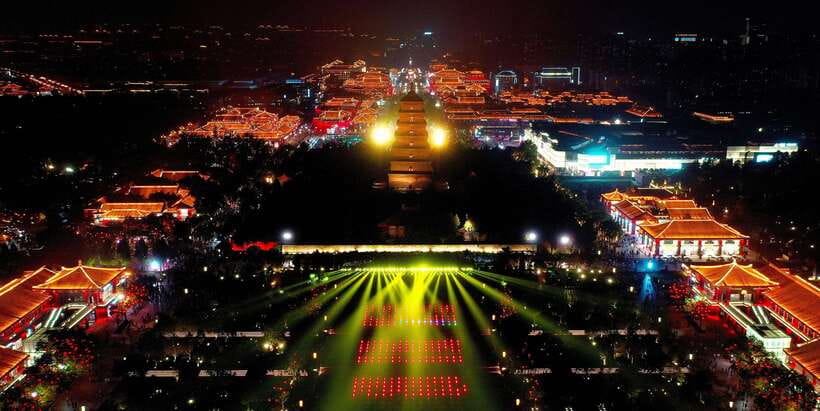
- A musical fountain runs nearby: It is set to classical Chinese music at noon and 8 p.m., with more shows on weekends and during summer.
What the $9 ticket actually gets you
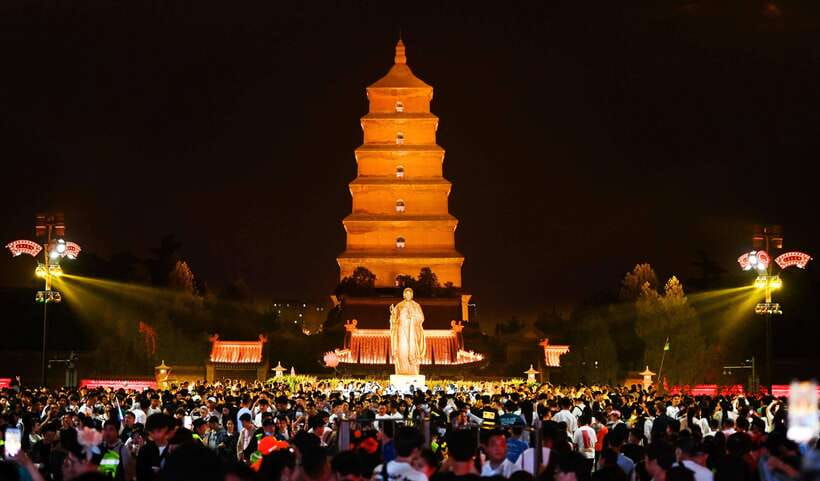
The product is an admission ticket to Daci’en Temple, not a guided tour and not a full pagoda package. You receive a QR code for entry and can use it during the one-day validity period shown with your booking.
That distinction matters. The Great Wild Goose Pagoda sits within the temple complex, but the ticket for the grounds is separate from the ticket to go inside the tower. You can see the pagoda from the temple area without paying the extra tower fee, then decide at the entrance if the climb is worth it.
The listed price is $9 per person. That is convenient for an overseas booking, but it may not be good value for everyone. A local admission price of 10 yuan, about €1.25 at the rate mentioned in the booking information, has been reported at the on-site ticket counter. If the gate is quiet and tickets are available, buying locally may save a great deal.
The online ticket makes more sense if you value advance planning, need a one-day reservation, or want to avoid dealing with a local ticket counter. It makes less sense if you are already nearby and can confirm the current price and entry rules in person.
More Entry Tickets in China:
- Beijing: The Temple of Heaven or Summer Palace Entry Ticket
★ 4.6 · 1,286 reviews - Temple of Heaven Ticket
★ 5.0 · 482 reviews - Beijing: Lama Temple (Yonghe Temple) Admission Ticket
★ 4.8 · 297 reviews
Entering Daci’en Temple with a QR code
The practical appeal is clear: show the QR code and enter. You do not need to collect a paper ticket in advance, and the booking advertises skip-the-line access.
Keep your passport or ID card with you. Children also need their passport or ID card, according to the entry instructions. Do not rely on a screenshot if your phone connection or screen brightness could cause trouble. Have the code open before you reach the gate.
There is an important warning here. A QR code did not work for one customer, who had to buy new tickets at the entrance. Another person reported that messages and questions went unanswered. I would save the QR code, booking details, and provider contact information before leaving your hotel, then allow enough time to solve a problem at the gate if necessary.
The operator is PidanTravelAgency. The service promises free cancellation up to 24 hours before the visit and a reserve-now, pay-later option. Those policies are useful when your Xi’an schedule is uncertain, but they do not remove the need to check the entry code and the ticket conditions.
The temple grounds and the pagoda view

Daci’en Temple gives you the setting that makes the pagoda meaningful. The tower is not an isolated photo prop. It belongs to a Buddhist temple complex, where religious use, historic buildings, gardens, and public activity come together.
The grounds have been praised as a quiet retreat. That is one of the best reasons to visit even if you do not climb the tower. You can take your time with the exterior, look at the traditional forms, and pause in the gardens rather than rushing through a single viewpoint.
The pagoda itself is built mainly from brick and wood. Its arched openings, carved details, and carefully ordered shape show the restrained style of traditional Chinese pagoda building. The current structure has seven stories and reaches about 64.5 meters, or 212 feet.
Its story is even more interesting than its size. Xuanzang returned to China after seventeen years in India, bringing back Buddhist scriptures and images. The pagoda was built to house them. It first had seven stories, later expanded to ten during the reign of Emperor Zhongzong, and eventually returned to seven after war and natural disasters.
That history gives the site a strong human focus. You are not simply looking at an old tower. You are looking at a building connected to a long journey, the movement of religious texts across Asia, and the growth of Buddhism in China.
Climbing the seven-story Great Wild Goose Pagoda
The ascent costs extra. You buy that ticket at the tower entrance, not through this Daci’en Temple admission.
Inside, the staircases are narrow. That is worth noting before you pay for the climb. The ascent may not suit anyone who dislikes tight stairs, has limited mobility, or simply prefers to enjoy the pagoda from the ground.
The reward is the view from the upper levels. The tower offers broad views over Xi’an and the surrounding countryside, and each level gives you another look at the structure’s design. Displays may include Buddhist statues, murals, ancient texts, and historical inscriptions, all of which help explain why the pagoda matters beyond its appearance.
Because the tower entry is separate, I would decide based on your interests. If you care about architecture, religious art, or city views, the extra fee may be worthwhile. If you mainly want the temple gardens and the famous exterior photograph, the basic admission may be enough.
Do not assume that the $9 price includes the climb. This is the most important booking detail in the entire experience.
More Temple Tours around China:
- Mini Group Xian Day Tour to Terracotta Army, City Wall, Pagoda and Muslim Bazaar
★ 5.0 · 1,320 reviews - Beijing Classic Full-Day Tour including the Forbidden City, Tiananmen Square, Summer Palace and Temple of Heaven
★ 4.0 · 610 reviews - Temple Heaven, Lama Temple, Summer Palace & Peking Duck Bus Tour
★ 5.0 · 377 reviews - Best of Shanghai Day Tour, including Jade Buddha Temple & Bund & Yuyuan Garden
★ 4.0 · 338 reviews
Buddhist history from the Tang Dynasty
The pagoda was built in 652, during the Tang Dynasty, a period when Xi’an was the capital of China and a major center of international exchange. Xuanzang’s journey to India helped bring Buddhist learning back to China, and the pagoda became a safe place for the scriptures he carried home.
The building also shows how religious purpose and architecture worked together. Its tall, balanced form created space for sacred objects while giving the temple a strong visual center. The brick construction, wooden details, carved decoration, and arched openings reflect the skill of Tang-era builders.
You can also find inscriptions and religious objects connected with the site’s long use. The pagoda remains a place of Buddhist worship, with ceremonies and festivals held there. That makes the visit feel less like a stop at a closed museum and more like time spent at a living religious site.
In 2014, the Great Wild Goose Pagoda became part of the UNESCO World Heritage Site called the Silk Road: Chang’an-Tian Shan Corridor. The designation recognizes its place in the movement of religion, ideas, art, and trade across Asia.
When to add the musical fountain
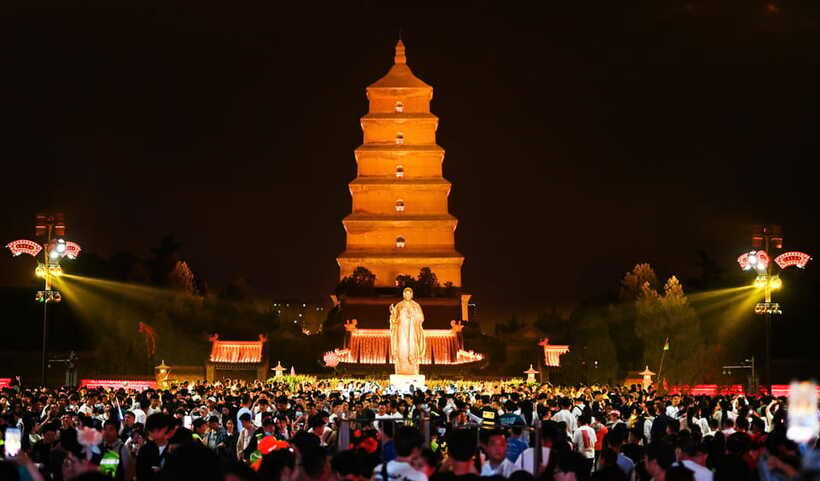
A musical fountain near the temple adds a modern public attraction to the historic setting. It displays to classical Chinese music at 12 noon and 8 p.m. daily, with more frequent performances on weekends and during summer.
If the fountain interests you, plan the temple visit around one of those times. You will need to confirm the exact schedule locally, since the information provided gives the regular times but not the length of each performance.
This can make a good pairing: temple grounds and pagoda in daylight, followed by the fountain at night. Just keep your expectations clear. The fountain is an added public spectacle, not part of the Daci’en Temple entry ticket.
Access, timing, and what to bring

The ticket is valid for one day, with starting times based on availability. This gives you room to fit the visit around other Xi’an sights, but it is not a multi-day pass.
The site is listed as wheelchair accessible. The separate tower climb is a different matter because of the narrow staircases. If you use a wheelchair or have difficulty with stairs, focus on the temple grounds and exterior views, and ask at the entrance about the accessible areas available that day.
Bring:
- Your passport or ID card
- A passport or ID card for each child
- Your phone with the QR code ready
- Booking details saved for offline access
Bikes, skateboards, alcohol, and drugs are not allowed. These rules are easy to follow, but knowing them in advance avoids a wasted journey or an awkward moment at the gate.
Who will get the most from this visit
I would recommend the temple and pagoda to anyone interested in Buddhist history, Tang Dynasty architecture, or the Silk Road. The site gives you a clear connection between Xuanzang’s journey, the spread of Buddhist texts, and Xi’an’s role in Chinese history.
It also suits independent visitors who dislike fixed tours. There is no guide or group itinerary to follow. You enter, explore at your own speed, and choose whether to pay for the tower.
Families may appreciate the flexible format, though adults should keep the narrow tower stairs in mind. The quiet gardens may appeal to anyone who needs a pause from Xi’an’s busy streets.
The ticket is less attractive for budget-focused visitors who can easily buy the 10-yuan admission at the gate. It is also a poor choice if you expect the price to include the tower climb, a guide, or a complete pagoda experience.
Is this e-ticket worth booking?
Book it if advance purchase and QR entry are more important to you than getting the lowest possible price. The basic admission gives you access to a major Buddhist site, a historic temple setting, and views of one of Xi’an’s best-known monuments. The one-day validity and free cancellation until 24 hours before the visit add useful flexibility.
Skip it if you are already near Daci’en Temple, the entrance has no line, and the local price is available at 10 yuan. In that case, the $9 online fare is difficult to justify.
If you do book, treat the QR code as the key detail. Save it in advance, carry your identification, and budget separately for the pagoda ascent. With those points clear, this can be a worthwhile and easy cultural stop. Without them, the ticket may cost far more than the experience needs to.
FAQ
What does the e-ticket include?
It includes entry to Daci’en Temple, the temple complex that contains the Great Wild Goose Pagoda.
Does the ticket include entry inside the pagoda?
No. The ticket does not include climbing the Great Wild Goose Pagoda. You must buy a separate ticket at the tower entrance.
How much does the e-ticket cost?
The listed price is $9 per person.
How long is the ticket valid?
The ticket is valid for one day. Starting times depend on availability.
How do I enter the temple?
Use the QR code supplied with the booking at the entrance.
Do I need to bring identification?
Yes. Bring your passport or ID card. Children also need a passport or ID card.
Is the site wheelchair accessible?
The activity is listed as wheelchair accessible. The pagoda climb has narrow staircases, so access to the upper levels may not suit everyone.
Can I cancel the booking?
You can cancel up to 24 hours in advance for a full refund.
Are bikes and skateboards allowed?
No. Bikes and skateboards are not allowed, and alcohol and drugs are also prohibited.
Temple visits we reviewed lately in China
- Shanghai: Yuyuan, City God Temple Old City Tour-Tip Based★ 5.0 · 10 reviews
- Shanghai: Yu Garden and City God Temple Walking Tour★ 4.9 · 27 reviews
- Private Tour to Yinshan Pagoda Forest w/Optional Activities★ 5.0 · 5 reviews
- Private Tour Datong Hengshan Hanging Temple Yungang Grottoes★ 5.0 · 4 reviews
- Private Tour: Longmen Grottoes, Shaolin Temple & Kungfu Show★ 4.8 · 17 reviews
- Private ForbiddenCity&TempleofHeaven&SummerPalace Day Tour★ 5.0 · 4 reviews
- Pingyao: Shuanglin Temple Tour or Entry Ticket Only Option★ 4.5 · 3 reviews
- Luoyang Private Day Tour to Shaolin Temple&Longmen Grottoes★ 5.0 · 10 reviews
Xian Temple Tours, compared.
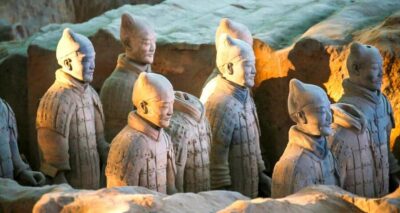
Xi’an: Terracotta Army, Lunch, City Wall, Pagoda, Bazaar
Read our review →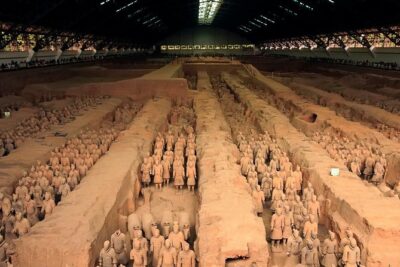
Terracotta Army, Big Wild Goose Pagoda&City Wall Full Day Tour
Read our review →This tour also ranks in