
Review · SIEM REAP
From Siem Reap: Banteay Srei Temple & Grand 5 Temple Tour
Banteay Srei is the star here: a small temple cut from pink sandstone, with carvings so fine you will want to slow down and study every lintel. The tour then threads through five more temples on Angkor’s Grand Circuit, giving you a fuller picture of the Khmer capital beyond the best-known stops.
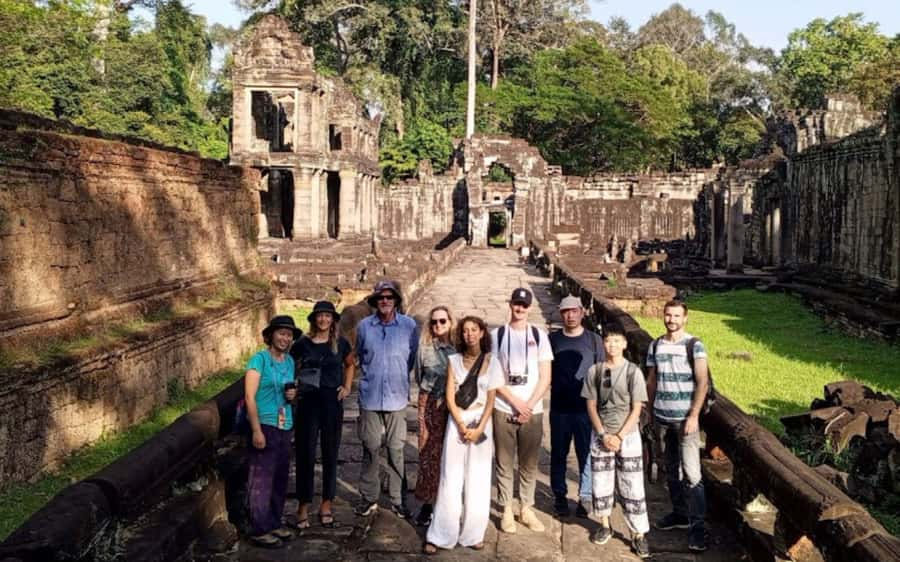
I like the excellent guide service, with guides such as Phyrom, Ry, Narath, Tola, and Dara Try praised for clear explanations, good pacing, and thoughtful photo stops. I also like the practical touches: air-conditioned transport, cold water, and chilled towels after each temple. The drawback is simple: this is a long, hot day with plenty of walking, and lunch plus the Angkor pass are extra.
Key points at a glance
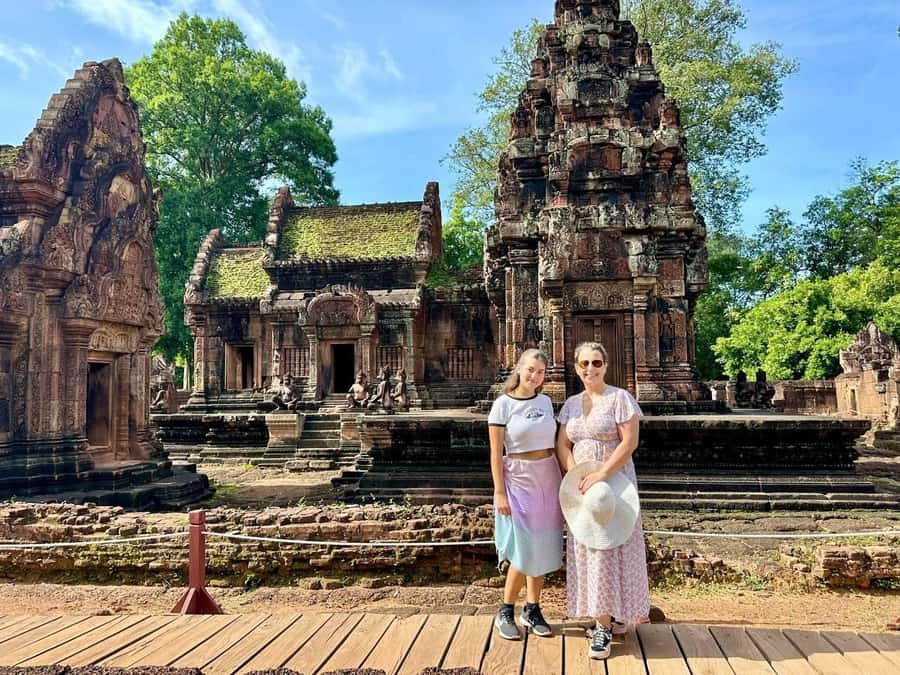
- Banteay Srei’s pink sandstone carvings: The finest details of the day are found at this compact temple.
- Six temples in one circuit: Visit Pre Rup, Banteay Srei, East Mebon, Neak Poan, Ta Som, and Preah Khan.
- Guides who explain meaning, not just dates: Expect discussion of Hindu mythology, Buddhist ideas, Khmer rulers, rituals, and temple design.
- A glimpse beyond the ruins: The route includes Preah Dak Village and views of everyday Cambodian life.
- Comfort that matters in the heat: Hotel pickup, an air-conditioned vehicle, bottled water, and cold towels are included.
- Good value at $20: The price covers transport and a guide, but you still need to budget for the Angkor pass and lunch.
Why Banteay Srei deserves the early spotlight
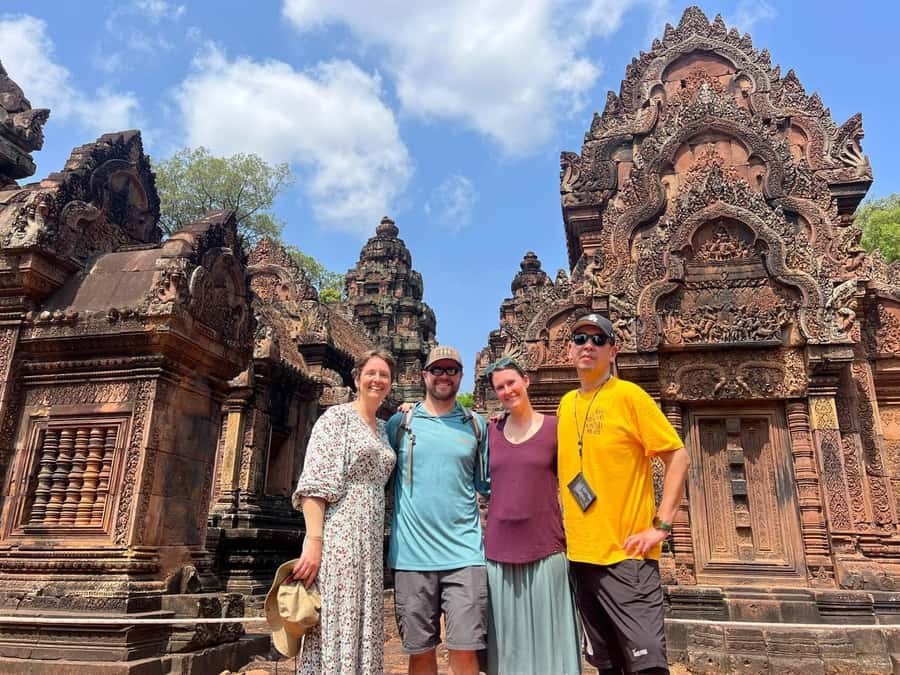
You leave Siem Reap in the morning, with pickup scheduled around 7:50 AM. There may be an initial shuttle to a meeting point before you join the vehicle for the temple circuit. That arrangement can add a little waiting, but it also allows the operator to gather passengers and organize the day.
The first temple is Pre Rup, a brick and laterite structure with a strong, tiered profile. It is one of the more complete buildings on this route, and it gives you an early lesson in how Khmer temple builders used height, symmetry, and repeated levels to suggest a sacred mountain.
Your guide should use this first stop to explain the broad setting: Angkor was once the center of the Khmer Empire, not a collection of isolated ruins. The temples served religious, political, and social purposes. You will hear about Hindu gods, Buddhist worship, royal power, and the rituals that gave each sacred building its meaning.
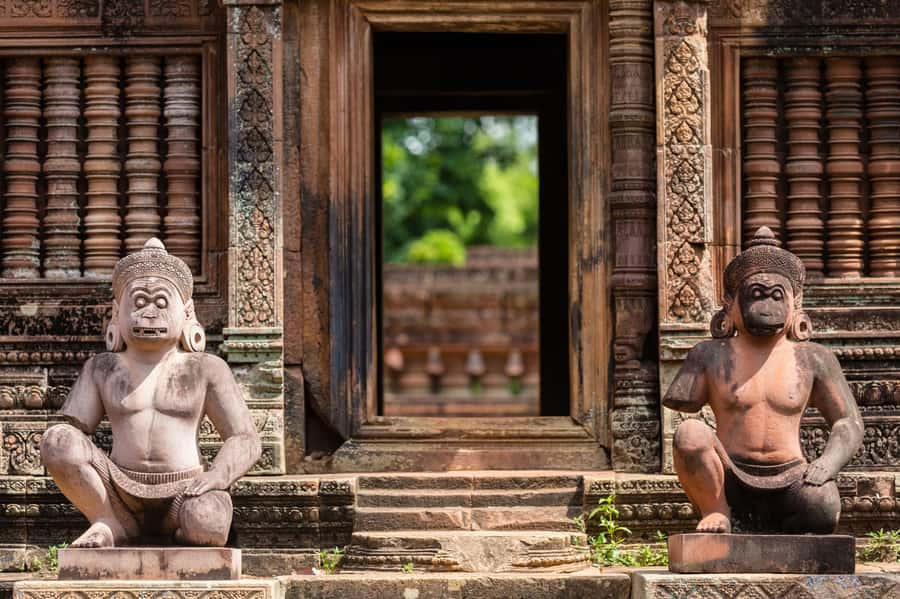
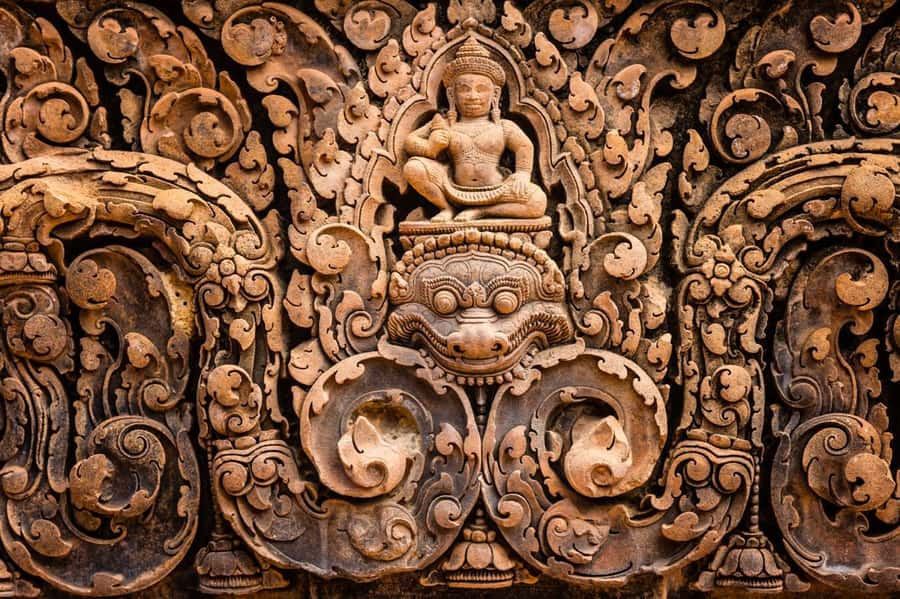
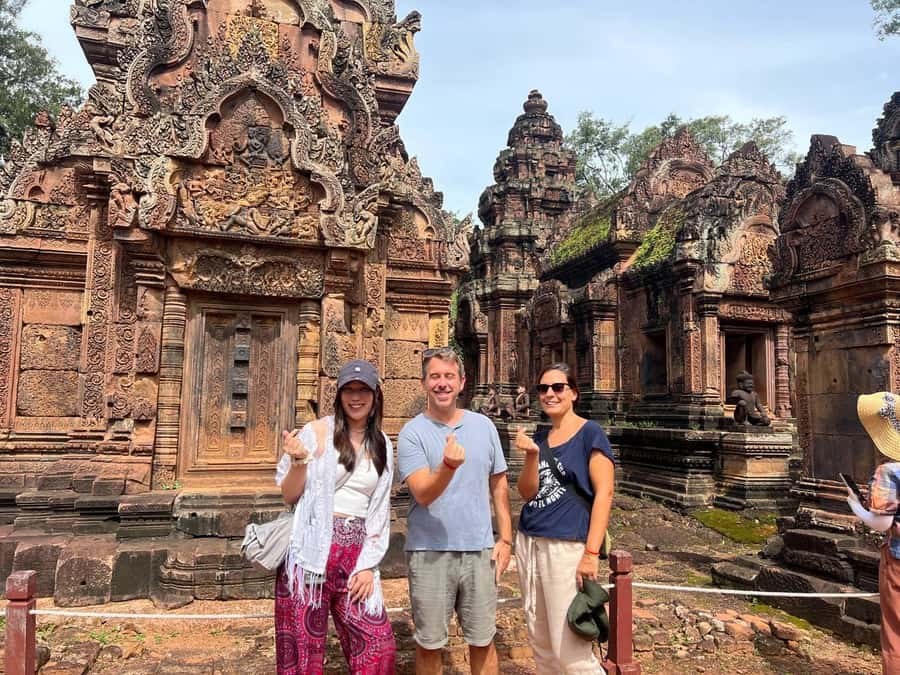
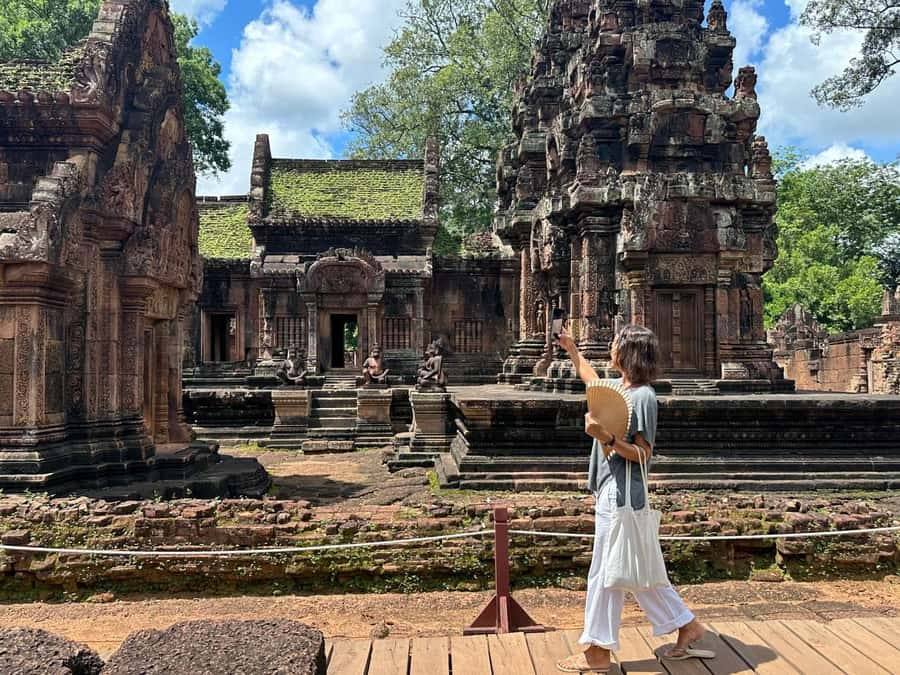
Then comes Banteay Srei, often called the Citadel of Women. The name is modern, and its exact connection to women’s craftsmanship is not certain, but the temple’s delicate work is unmistakable. Its pink sandstone allowed sculptors to cut unusually fine figures, floral patterns, and scenes from Hindu stories.
This is where a good guide makes a real difference. Guides such as Ry, Phyrom, Narath, and Lok are praised for pointing out small carvings that are easy to miss if you walk through on your own. You may see details around doorways, pediments, and galleries that look decorative at first but connect to Hindu mythology and royal belief.
Banteay Srei is smaller than Angkor Wat, but that is part of its appeal. You can take in its plan without feeling swallowed by the site. The drawback is that its fame brings plenty of attention, so your guide’s timing and choice of viewing points matter. The temple is also some distance from central Siem Reap, which makes shared transport useful.
More Angkor Wat Tours in Siem Reap:
- Angkor Wat Sunrise or Sunset Tour with Guide from Siem Reap
★ 5.0 · 12,109 reviews - Siem Reap: Angkor Wat: Small-Group Sunrise or Sunset Tour
★ 5.0 · 9,444 reviews - Siem Reap: Angkor Wat 2-Day Tour with Sunrise and Sunset
★ 4.9 · 4,429 reviews
What you learn about Khmer belief and ritual
This is not just a temple photo tour. The guides focus on how the Khmer understood sacred space. Hindu ideas appear in the stories carved into the stone, while Buddhist elements appear at several later or altered sites.
You might hear how temple towers were linked to Mount Meru, the sacred center of the Hindu universe. Water also had religious meaning, not just practical value. Reservoirs, pools, and island temples were tied to ideas of purity, healing, fertility, and cosmic order.
Several guides use maps and photographs to explain how the temples fit together. That helps because Angkor can otherwise feel like a series of impressive but unrelated stops. Phyrom, in particular, is praised for explaining the wider history on the drive and then connecting each temple’s design to the beliefs of its builders.
The quality of the English guide matters on a long day. The strongest guides named for this experience are described as clear, patient, and willing to answer questions. Some also add stories about modern Cambodia and their own daily lives, which keeps the history from feeling like a lecture.
You should still remember that the amount of explanation can vary by guide and group. Some guides may give more detail on architecture, while others focus more on religion, Cambodian history, or photo opportunities. If you have a particular interest, ask about it early in the day.
Preah Dak Village and the road between temples
The stop at Preah Dak Village adds something the temple grounds cannot. Here you can observe local life outside the formal world of royal monuments and sacred carvings.
The information provided does not promise a set workshop or a specific demonstration, so think of this as a brief look at the village rather than a full cultural program. That is still valuable. The road between temples lets you see how the archaeological zone relates to present-day communities.
Some guides also point out crops, trees, farms, and local habits along the way. One guide stopped to pick mangoes during the drive, an informal touch that made the day feel more connected to Cambodia beyond the ruins. That kind of moment depends on the guide and conditions, so do not treat it as a guaranteed part of the program.
East Mebon and the vanished reservoir
After lunch, the route continues to East Mebon. The temple once stood on an island in the middle of a large reservoir, an important reminder that Angkor’s power depended on major waterworks as well as stone construction.
Today, the surrounding water is gone, so you need the guide to picture the original setting. From the temple platform, you can study the towers, brickwork, guardian animals, and traces of the old layout. It is a good place to understand how Khmer rulers joined religion, engineering, and royal display.
East Mebon is less famous than Angkor Wat, but that makes it useful on a second day in the Angkor area. If you have already seen the central temples, this stop gives you a different scale and setting. It also shows why the wider Angkor area deserves more than a quick visit to the most photographed monuments.
More Temple Tours around Siem Reap:
- Siem Reap: Full-Day Angkor Wat Guided Tour with Sunset
★ 4.9 · 3,803 reviews - Angkor Wat Sunrise tour with Small – Group and Guide tours
★ 5.0 · 3,655 reviews - Angkor Wat Highlights and Sunrise Guided Tour from Siem Reap
★ 5.0 · 3,213 reviews - Angkor Wat Sunset Small Group Tour with Lunch Included
★ 5.0 · 3,059 reviews
Neak Poan and the idea of healing water
Neak Poan is one of the most unusual stops. The small temple sits on an island in Jayatataka Baray, and its design is linked to the mythical Himalayan lake believed to have healing waters.
The approach across the water gives the site a calmer feel than the larger temple complexes. You will not spend hours exploring a maze of galleries here. Instead, the interest lies in the setting, the water system, and the religious idea behind the temple.
Your guide can explain how the central sanctuary and surrounding pools related to healing and sacred geography. This is a place where context matters more than size. Without an explanation, you might see a small island temple and move on quickly. With the background, the site becomes a lesson in Khmer ideas about water, health, and the universe.
The wooden walkway and open setting can be exposed to sun. Keep your hat and sunscreen handy, and save some water for the return walk.
Ta Som, where trees meet stone
Ta Som is a compact temple with a memorable face: tree roots growing around a stone gate. It offers the kind of visual moment that makes the Grand Circuit worthwhile, especially after the larger and more formal monuments.
The roots are not simply a decorative feature added by the temple builders. They show how the forest has interacted with the ruins over time. Your guide may also point out carvings and explain how Ta Som fits into the wider building program of the Khmer rulers.
This stop is usually easier to grasp than a huge complex because the key features are close together. You can focus on the gate, the carvings, and the way vegetation has altered the structure. It is also a popular place for photographs, so patience helps if you want a clear view.
Do not expect a quiet private visit. The tour is shared, and several groups may follow similar routes. Still, a well-paced guide can give you time to look without turning the stop into a rushed photo break.
Preah Khan finishes the temple circuit
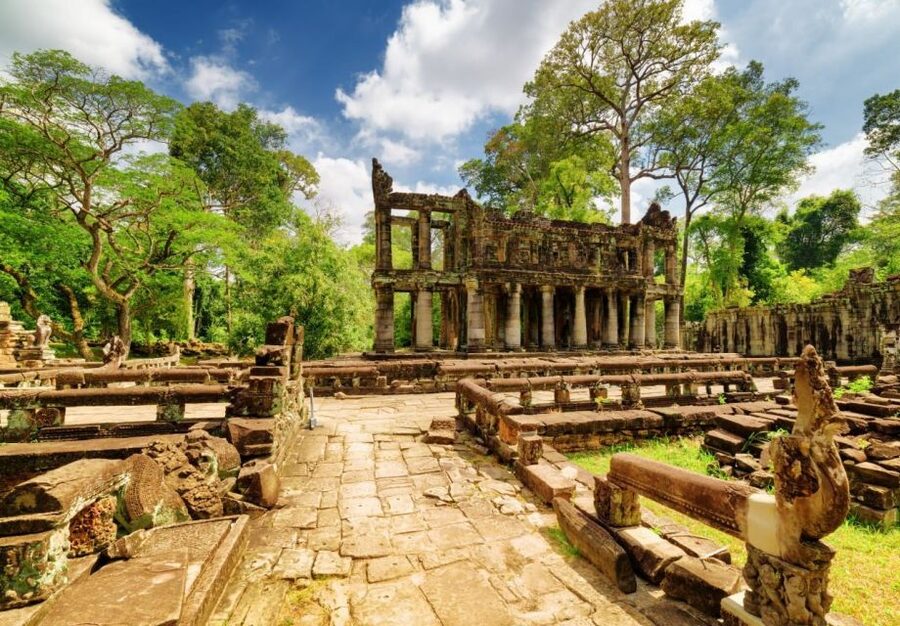
Preah Khan is the largest and most layered stop of the afternoon. It was a monastic complex with long galleries, courtyards, carvings, and a plan that rewards careful walking.
By this point, you may be tired. That makes Preah Khan both a strong finale and a test of your stamina. Its size can feel overwhelming if you try to inspect everything, so follow your guide’s route and focus on the main features first.
Preah Khan shows the mix of religious and practical life at Angkor. It was not simply a shrine with one central tower. It functioned as a major complex, and its corridors and inscriptions help explain the people, institutions, and beliefs that supported the Khmer capital.
Guides such as Kim, Ra, Chenda, and Narath are praised for keeping this kind of long stop manageable. They explain the important sections, answer questions, and help with photographs without making every moment feel scheduled. Some guides also arrange a sunset view near the lake at the end, but this should be treated as a possible extra rather than a guaranteed part of every departure.
Lunch, transport, and the real cost
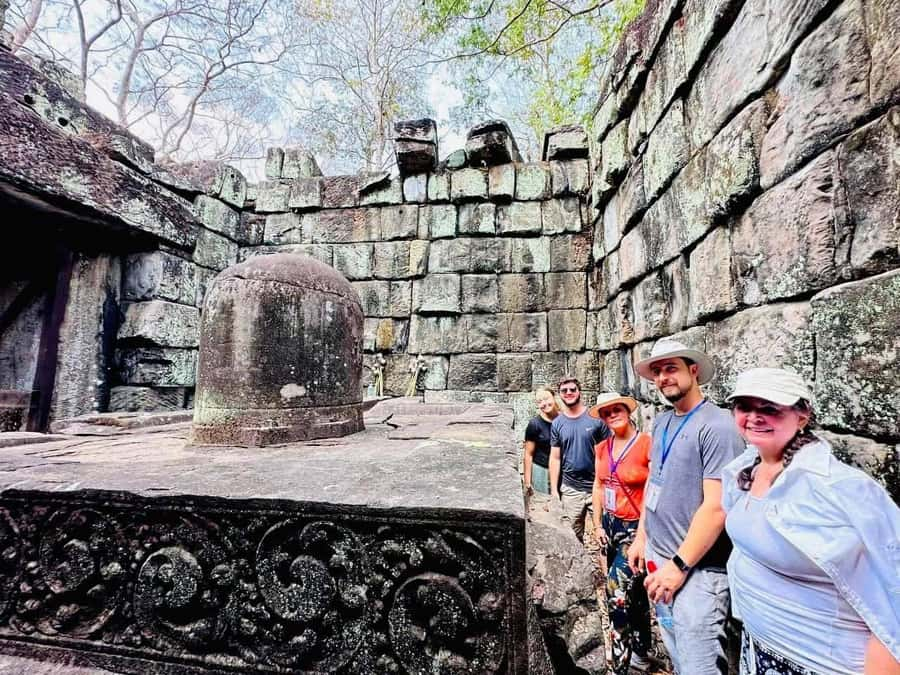
Lunch is taken at a nearby restaurant and is not included. You can expect Cambodian dishes such as curries, soups, or stir-fries, but the price and exact menu are not specified. Bring cash so you are not caught short.
The $20 tour price is good value if you want a guide and transport rather than hiring a vehicle for the day. It includes hotel pickup and drop-off, an air-conditioned vehicle, local taxes, bottled water, cold towels, and an English-speaking guide.
The Angkor Temple Pass is not included, and you stop at the Apsara Authority Ticket Office to buy it. This is the main extra cost to plan for. Lunch is another expense, and you should carry cash for both.
The cold towels are more important than they sound. After several walks in Cambodian heat, a chilled towel and bottle of water can make the next temple much easier. Several guides and drivers also check on the group, open vehicle doors in rain, and adjust pickup arrangements when needed.
The shared option is aimed at adults and is not suitable for infants or children under 12. A private option is available, but a private guide costs extra. Ask exactly what is included before booking if you want a fully private experience.
Who will enjoy this day most
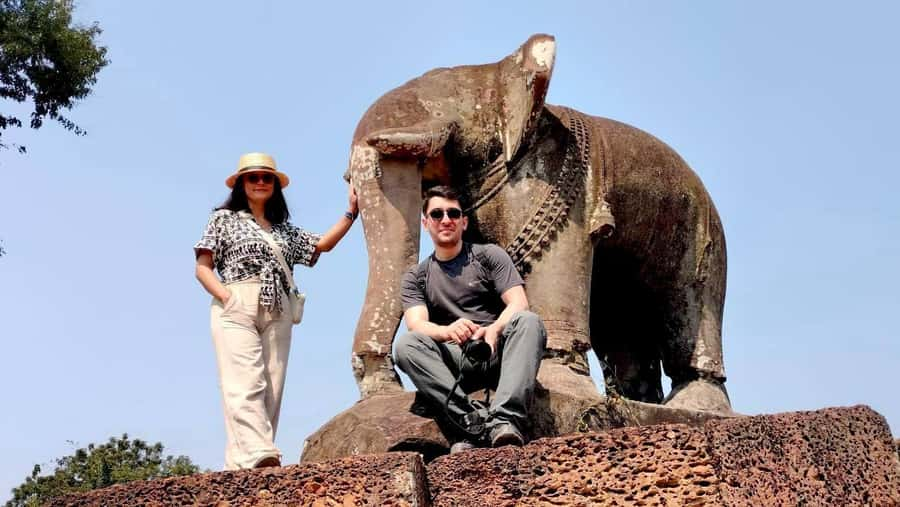
I would choose this tour if you have already seen the main Angkor temples, or if you want one organized day focused on the Grand Circuit. It gives you six distinctive sites without the cost and planning work of arranging separate transport and guiding.
It suits you especially well if you like architecture, Hindu mythology, Buddhist traditions, Cambodian history, and photography. The guides often take pictures for the group, and several are praised for finding good angles, which is helpful if you are traveling alone.
You need reasonable walking ability. The tour is not recommended for people with walking disabilities or wheelchair users, and the combination of uneven temple surfaces, heat, stairs, and a full day on the road can be demanding.
Wear clothing that covers your shoulders and knees. This rule applies to men and women, and entry can be refused if your clothes do not meet the temple requirements. Hiking shoes, sunscreen, insect repellent, and cash belong in a small day bag. Large bags are not allowed, and smoking and pets are not permitted.
Should you book this Grand Circuit tour?
Book it if you want good historical explanation and strong value rather than a slow private day at only one or two temples. Banteay Srei is the visual highlight, while Neak Poan, Ta Som, East Mebon, and Preah Khan give you variety.
Skip it if you dislike shared transport, long days, fixed stops, or walking in hot weather. You should also consider a private arrangement if you want to change the pace or spend much longer at one temple.
For most people with a spare day in Siem Reap, this is a smart follow-up to Angkor Wat and Bayon. The route shows the wider Khmer capital, the beliefs behind its buildings, and a little of the Cambodia that exists beyond the stonework.
FAQ
What temples are included in the tour?
The route includes Pre Rup, Banteay Srei, East Mebon, Neak Poan, Ta Som, and Preah Khan.
Is the Angkor entrance pass included?
No. You stop at the Apsara Authority Ticket Office to purchase the Angkor Temple Pass separately.
Is lunch included?
No. Lunch is taken at a nearby restaurant and must be paid for separately.
What does the $20 price include?
The price includes hotel pickup and drop-off, transport in a high-quality vehicle, local taxes, bottled water, cold towels, and an English-speaking guide.
What should I wear to the temples?
Your knees and shoulders must be covered. Shorts and sleeveless tops are not permitted for men or women.
Is the tour suitable for children or people with mobility difficulties?
The shared option is not suitable for infants or children under 12. The tour is also not recommended for people with walking disabilities or wheelchair users.
Temple visits we reviewed lately in Siem Reap
- Private Sunrise Angkor Wat Tour★ 4.6 · 16 reviews
- Angkor Wat Tour by Tuk-Tuk with English Speaking Driver★ 4.5 · 65 reviews
- Private One Day Tour with Sunrise at Angkor Wat★ 5.0 · 3 reviews
- Siem Reap Tour Guide: Angkor Wat Sunrise Tour & Beng Mealea★ 5.0 · 4 reviews
- Siem Reap Private Tour: Angkor Wat Sunrise And Banteay Srei★ 5.0 · 3 reviews
- Private Angkor Wat Sunset Tour with Lunch and Snack Included★ 5.0 · 3 reviews
- Private Angkor Wat Sunrise Tours And Sunset Floating Village★ 5.0 · 3 reviews
- Private Angkor Wat Temple Tour★ 5.0 · 35 reviews
Siem Reap Temple Tours, compared.
Angkor Wat Sunrise or Sunset Tour with Guide from Siem Reap
Read our review →
Siem Reap: Angkor Wat: Small-Group Sunrise or Sunset Tour
Read our review →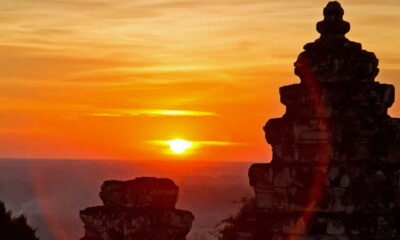
Siem Reap: Full-Day Angkor Wat Guided Tour with Sunset
Read our review →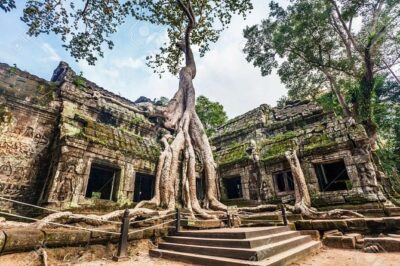
Angkor Wat Sunrise tour with Small – Group and Guide tours
Read our review →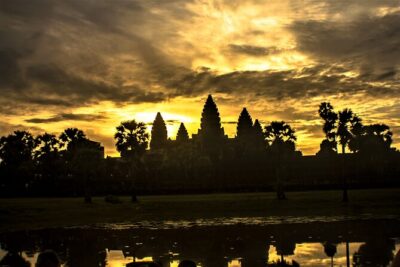
Angkor Wat Highlights and Sunrise Guided Tour from Siem Reap
Read our review →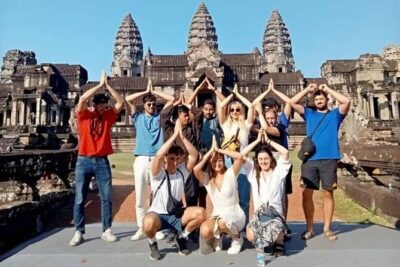
Angkor Wat Sunset Small Group Tour with Lunch Included
Read our review →
Full-Day Angkor Wat Sunrise Private Tour with Guide from Siem Reap
Read our review →
Angkor Wat Sunrise & 3 Main Temples with Breakfast – Small Group
Read our review →This tour also ranks in