
Review · PORTUGAL
Batalha Monastery Entrance Ticket
Batalha Monastery tells Portugal’s royal story in stone. King João I ordered it built after the Portuguese victory over Castile at Aljubarrota in 1385, and the result is a huge Dominican monastery with a Gothic church, a royal burial place, and later Manueline flourishes. I like the 32.5-meter central nave and the colorful medieval stained glass, among Portugal’s earliest examples.
I also like that your ticket covers more than the church. You can explore the Royal Cloister, domed Chapter Hall, monastery rooms, and the unfinished Imperfect Chapels. The main consideration is that this is an admission ticket rather than a guided visit, so you should arrive ready to read the displays and take your time with the architecture on your own.
Key points
- See one of Portugal’s finest Gothic churches, with a soaring 32.5-meter nave supported by eight columns on each side.
- Study early Portuguese stained glass in the chapel, where colored light adds warmth to the severe stone interior.
- Walk through the Royal Cloister and follow its carved passages toward the dormitory, dining room, and kitchen.
- Visit the Imperfect Chapels, the monastery’s famous unfinished architectural project.
- Pay $17 per person, with the booking fee included and ticket-line access provided.
- Use the ticket for one day, with free cancellation up to 24 hours before the visit and a printed voucher required.
Why Batalha Monastery Matters
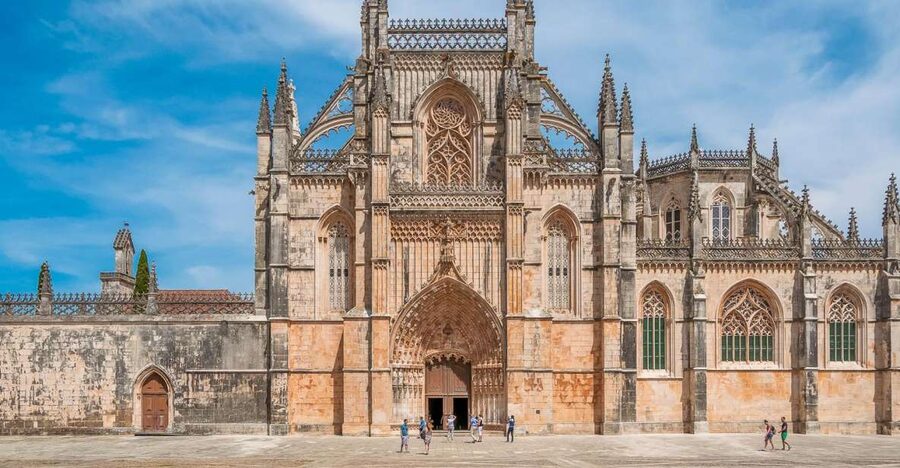
Batalha was not built as a quiet country retreat. It was a royal statement in stone, commissioned by King João I after Portugal defeated Castile at the Battle of Aljubarrota in 1385. The monastery honored that victory and housed Dominican monks, while also serving as a royal pantheon.
That political purpose helps explain the scale. You are not looking at a small parish church with a few decorative extras. The complex was built to carry national meaning, royal memory, and religious purpose all at once. Since 1983, UNESCO has recognized Batalha as a World Heritage Site.
I find this background useful because the architecture can otherwise feel like a long parade of arches and carved stone. Once you know that the building celebrates a military victory and a royal dynasty, the size and ambition make more sense.
More Entry Tickets in Portugal:
- Lisbon: Jerónimos Monastery Entrance Ticket
★ 4.1 · 14,164 reviews - Lisbon: Jerónimos Monastery E-Ticket and Audio Guide
★ 3.7 · 660 reviews - Lisbon: Belém Walking Tour with Jerónimos Monastery Ticket
★ 4.9 · 637 reviews
Entering the Church and Its 32.5-Meter Nave
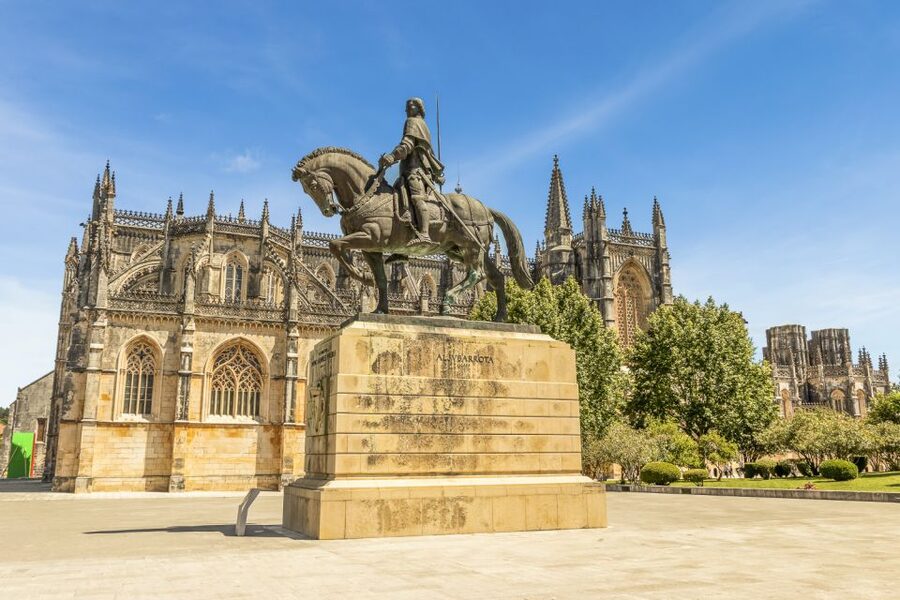
Begin with the church, where the scale is immediately clear. The central nave rises 32.5 meters and rests on eight columns on either side. Look upward before moving ahead. The height is the first detail that gives Batalha its power.
The design belongs mainly to the Portuguese Gothic tradition. You will see the vertical lines, pointed arches, and careful stonework associated with Gothic architecture, but Batalha also carries details that point toward Portugal’s later Manueline style.
The church rewards a slow pace. Rather than simply crossing from entrance to exit, take a few moments to compare the broad spaces with the more concentrated decoration around the chapels. The interior can feel solemn and spare in one direction, then suddenly intricate when your attention shifts to carved details.
Your ticket gives you access to the main areas, but it does not turn the visit into a scheduled tour with a guide. I would plan to pause often, read what is available, and let the building provide the main explanation.
Medieval Stained Glass in the Chapel
Batalha was one of the first buildings in Portugal to use stained glass. That fact makes the windows more than a decorative stop. They show an early stage in the country’s use of colored glass in major religious architecture.
Look for the Portuguese medieval stained glass from inside the chapel. The effect depends on the light, so the colors may change in strength as the day progresses. You will also notice how the glass works with the heavy stone structure. The windows bring color into a church otherwise dominated by pale masonry and shadow.
This is a good place to slow down. The nave gives you height and scale, while the stained glass gives you smaller, more personal details to study. If you rush, you may remember the size of the church but miss one of its most distinctive features.
The Royal Cloister and Carved Passages
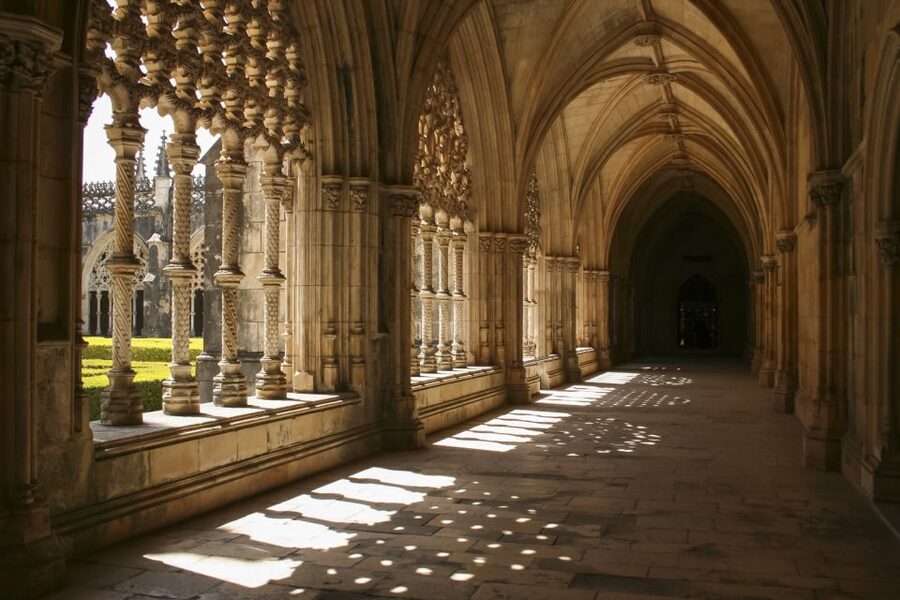
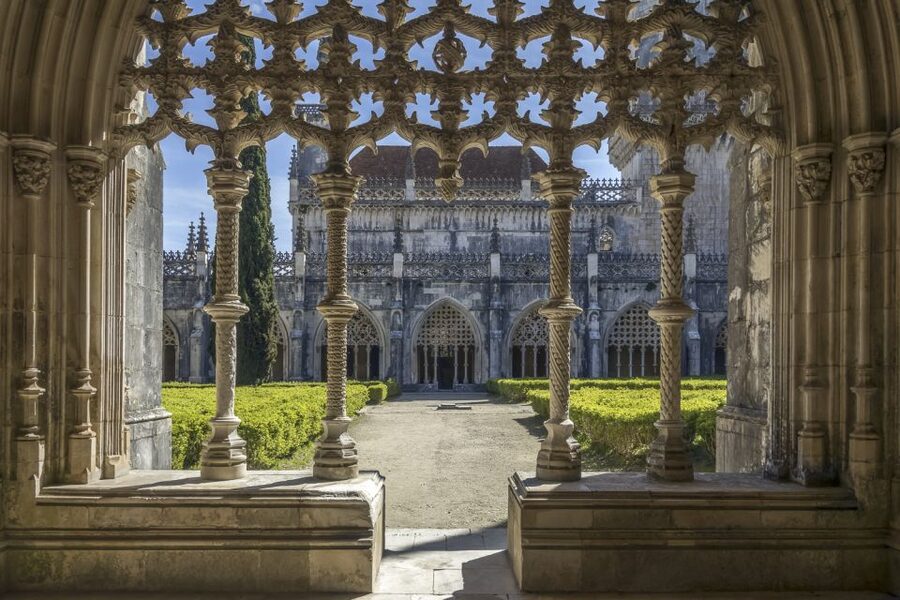
The Royal Cloister offers a different mood from the church. Here, the experience becomes more intimate, with carved arcades and repeated architectural patterns framing the open space.
You can walk through the cloister passages that lead toward the monastery’s dormitory, dining room, and kitchen. These rooms help you picture the practical side of monastic life. The church expresses royal ambition, but the cloister connects that ambition to the daily routines of the Dominican community.
I especially like this shift from public ceremony to private work. The monastery was not only a monument for kings. It was also a working religious complex, and the cloister is where that wider story becomes easier to grasp.
Pay attention to repetition. The carved details are not all meant to be seen in one quick glance. As you move through the passages, the changing angles let you notice different patterns and small variations in the stonework.
More Temple Tours around Portugal:
- Lisbon: Belem Walking Tour with Jeronimos Monastery Ticket
★ 4.7 · 490 reviews - Lisbon: Belem, Jeronimos Monastery, and Coach Museum Tour
★ 4.8 · 478 reviews - Belem and Jeronimos Monastery Guided Small Group Walking Tour
★ 5.0 · 410 reviews - “Porto: Fado Show with Guided Tour in a Historic Monastery”
★ 4.9 · 164 reviews
The Domed Chapter Hall
The Chapter Hall is another important stop. Its domed form creates a strong contrast with the long horizontal movement of the cloister. The room’s shape draws your attention upward, much as the central nave does in the church, but on a smaller and more contained scale.
This space helps you see how the monastery’s designers handled different types of architecture within one complex. The church is built for ceremony and worship. The cloister organizes movement. The Chapter Hall has its own distinct sense of enclosure and focus.
You should not treat this as a quick walk-through. The value here is architectural comparison. Notice how the dome changes the feel of the room, then compare it with the church’s tall nave and the cloister’s open arcade.
The Imperfect Chapels
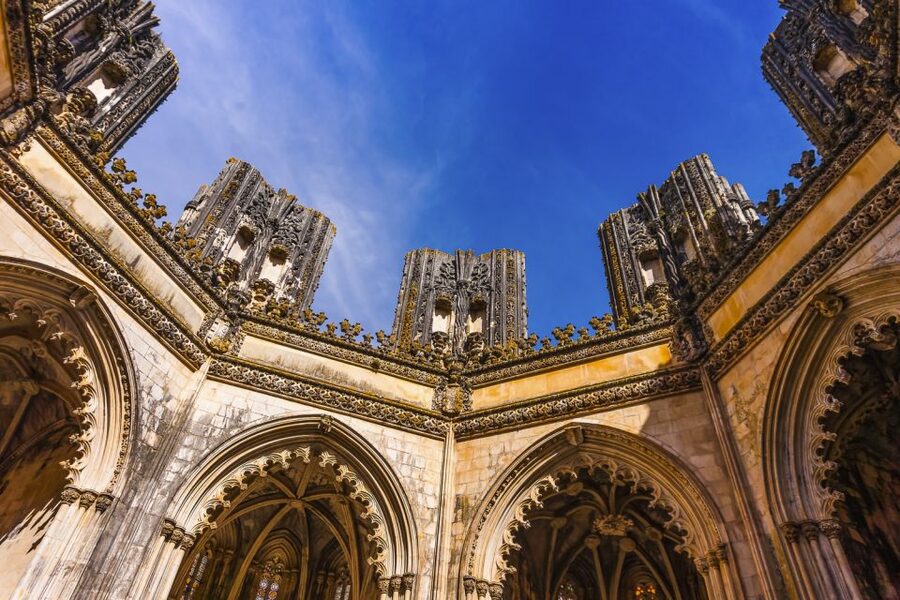
The Imperfect Chapels are among Batalha’s most memorable features because they were never completed. Their unfinished state gives you a rare look at a grand project that stopped before every surface received its intended finish.
The name may sound disappointing, but the opposite is true. Completed monuments can hide the stages of construction. Here, the unfinished work lets you see the ambition more clearly. You can study the scale, carved stone, and open-ended design without everything being polished into a final, uniform presentation.
This area also adds a useful note of realism to the monastery. Royal projects did not always reach their planned end. Time, money, changing priorities, or political events could leave even a major building incomplete. The Imperfect Chapels preserve that unfinished chapter in a way that feels direct and easy to understand.
Give yourself enough time here to look at the contrast between finished Gothic and Manueline details elsewhere in the complex and the incomplete work in the chapels. It is one of the places where Batalha feels most distinctive.
Gothic and Manueline Details Side by Side
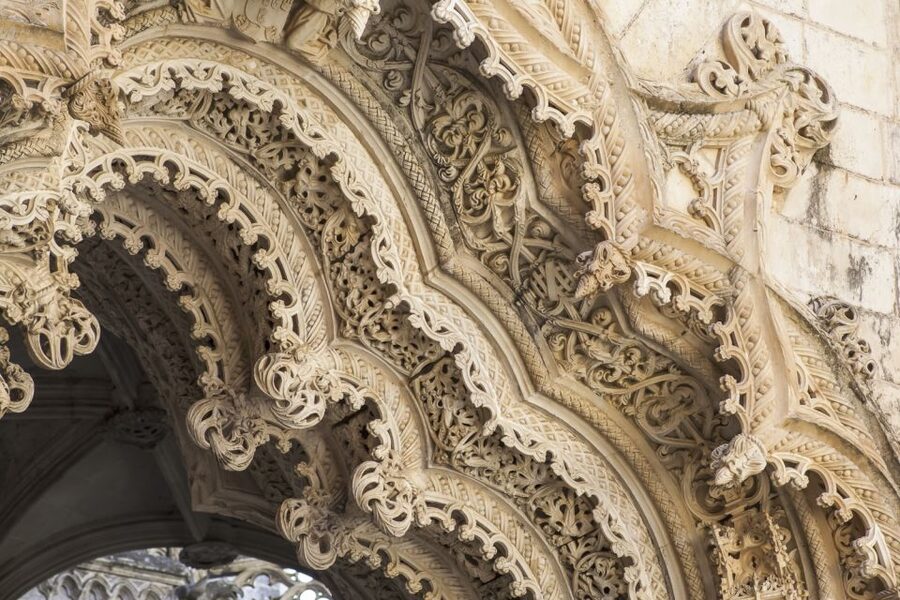
Batalha is important partly because it brings together two major Portuguese styles. The Gothic structure gives the monastery its height, order, and strong vertical lines. Manueline decoration adds a more elaborate layer, with carved architectural details that reward close inspection.
You do not need to be an architecture specialist to appreciate the difference. Start with the overall shapes, then move closer to the columns, arches, cloister carvings, and chapel details. The large forms tell you how the building works. The smaller carvings show how much care went into its surfaces.
I would avoid trying to identify every style label while you are inside. Instead, focus on how the building changes from one area to the next. The experience is strongest when you notice the contrast between the plain and the ornate, the finished and the incomplete, the public church and the working monastery.
Is the $17 Ticket Good Value?
At $17 per person, this is not the cheapest short stop in Portugal. It is also more than a basic church entrance. Your admission covers a large UNESCO-listed complex with several distinct sections, including the church, cloister, Chapter Hall, monastery rooms, and Imperfect Chapels. The booking fee is included.
The value depends on how you visit. If you only have time for a quick photograph outside, the ticket will not make much sense. If you enjoy architecture, Portuguese history, royal monuments, or religious buildings, you can get much more from the price by allowing enough time to explore the full complex.
The skip-the-ticket-line feature also has practical value. It reduces one small chore at the entrance, especially if you are visiting Batalha as part of a busy day of sightseeing. You still need to go to the monastery ticket office at Mosteiro de Santa Maria da Vitória, in Batalha, and you must bring a printed voucher.
You can also reserve now and pay later, which gives you some flexibility when planning. Free cancellation is available up to 24 hours in advance for a full refund. The ticket is valid for one day, so check the available starting times before booking.
Who Should Visit Batalha Monastery?
I would recommend this ticket to anyone who wants more than a quick look at Portugal’s major monuments. It suits you especially well if you enjoy carved stone, medieval churches, royal history, or the way buildings change over several centuries.
Families may appreciate the variety. The tall nave, colored windows, cloister, dome, and unfinished chapels offer different things to notice, which is easier than spending an entire visit in one nearly identical interior. The site is wheelchair accessible, another practical advantage for many visitors.
You should think twice if you prefer a guided explanation at every stop. No guide is listed as part of this activity, so the visit depends on your own pace and attention. That can be a benefit if you dislike being hurried, but it also means you need to take responsibility for understanding what you see.
Practical Advice Before You Go
Start at the ticket office at Mosteiro de Santa Maria da Vitória, Batalha, 2440-109 Batalha. The activity ends back at the same meeting point, and the ticket is valid for one day.
Bring the required printed voucher. The ticket includes the booking fee, and you can use the skip-the-ticket-line entry. Check availability for the starting time that suits your day, even though the ticket remains valid for the stated one-day period.
I would allow enough time for all the main areas rather than treating Batalha as a ten-minute photo stop. The church alone deserves a pause for the nave and stained glass. Add the Royal Cloister, Chapter Hall, monastery rooms, and Imperfect Chapels, and you have a substantial architectural visit.
Should You Book This Ticket?
Book it if you want to explore Batalha Monastery at your own pace and value access to the full complex rather than only the main church. The $17 price is reasonable for a UNESCO-listed royal monastery with early stained glass, Gothic and Manueline details, a large cloister, and the unusual Imperfect Chapels.
Skip it only if you have no time to look beyond the exterior or if you require a guided tour. For an independent visit, this ticket gives you the important spaces, flexible one-day validity, ticket-line access, and useful cancellation terms. Bring the printed voucher, slow down inside, and look up often.
FAQ
Where does the Batalha Monastery visit start?
It starts at the Batalha Monastery ticket office at Mosteiro de Santa Maria da Vitória, Batalha, 2440-109 Batalha.
Where does the activity end?
The visit ends back at the meeting point.
How much does the entrance ticket cost?
The ticket costs $17 per person, and the booking fee is included.
How long is the ticket valid?
The ticket is valid for one day. You should check availability for the starting times before booking.
Do I need a printed voucher?
Yes. A printed voucher is required for entry.
Can I cancel the booking?
Yes. You can cancel up to 24 hours in advance for a full refund. The activity also allows you to reserve now and pay later.
Temple visits we reviewed lately in Portugal
- Belém: Jeronimos Monastery, Tickets and Guided tour★ 4.9 · 30 reviews
- Lisbon: Skip-the-line Jerónimos Monastery Tour with Tickets★ 5.0 · 4 reviews
- Lisbon: Tour of Belem and Jerónimos Monastery★ 3.2 · 5 reviews
- Lisbon: Belém Private Walking Tour & Jerónimos Monastery★ 4.5 · 83 reviews
- From Lisbon: Évora, Chapel of Bones, & Roman Temple Tour★ 5.0 · 8 reviews
- From Lisbon: Fátima Sanctuary and Batalha Monastery (UNESCO)★ 5.0 · 5 reviews
- Lisbon: Belem Tour with Pastéis at Jerónimos Monastery★ 4.7 · 96 reviews
- Between Life & Death: Roman Temple, Cathedral & Bone Chapel★ 4.9 · 6 reviews
Portugal Temple Tours, compared.
Lisbon: Jerónimos Monastery E-Ticket and Audio Guide
Read our review →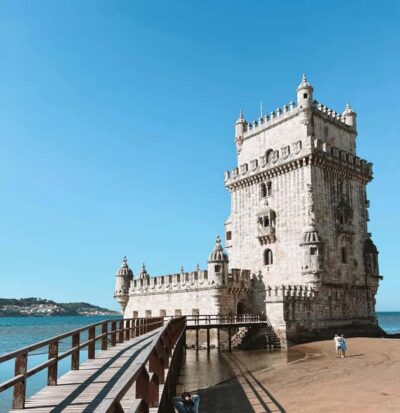
Lisbon: Belém Walking Tour with Jerónimos Monastery Ticket
Read our review →Lisbon: Belem Walking Tour with Jeronimos Monastery Ticket
Read our review →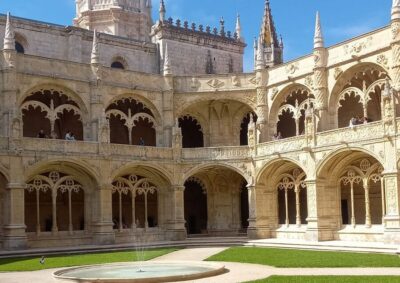
Lisbon: Belem, Jeronimos Monastery, and Coach Museum Tour
Read our review →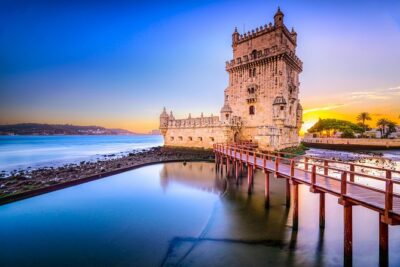
Belem and Jeronimos Monastery Guided Small Group Walking Tour
Read our review →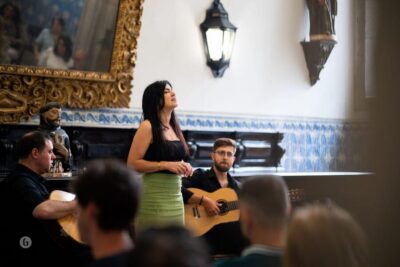
“Porto: Fado Show with Guided Tour in a Historic Monastery”
Read our review →
Fatima, Valinhos, Nazaré, Óbidos on Private tour
Read our review →This tour also ranks in