
Review · PORTUGAL
Batalha: A Local’s Guided Tour of the Batalha Monastery
Batalha Monastery is not just a grand church with pretty stonework. It is Portugal’s victory monument, built after the Battle of Aljubarrota helped secure the country’s independence. This 1.5-hour guided visit connects the carved arches, royal tombs, and unfinished chapels to the political choices that shaped Portugal.
I like the clear historical focus, especially the link between the battle, the Treaty of Windsor, and the Portuguese Crown. I also like that the tour enters the Founder’s Chapel and cloisters, rather than stopping at the famous facade. The main drawback is important: the $47 price does not include admission to the monument, and one booking problem in the feedback shows that you should confirm the guide and ticket arrangements before setting out.
Key points to know before you book
- The meeting point is easy to identify: Find the equestrian statue of Constable Nuno Álvares Pereira, where the guide waits.
- The tour explains power as well as art: You’ll connect the Battle of Aljubarrota and the Treaty of Windsor with the monastery’s purpose.
- The Founder’s Chapel is a major stop: It contains the tombs of King João I and Queen Filipa de Lencastre.
- You see several architectural styles: Gothic, Manueline, and Renaissance details appear across the monastery.
- English and Portuguese are available: A private group can also be arranged.
- Admission costs extra: The guided service covers the interior visit, but your monument ticket is not included.
Why Batalha Monastery deserves your time
Batalha Monastery rewards you most when you know what you are looking at. From outside, the scale and carved facade catch your eye first. Inside, the building becomes more interesting because every chapel, tomb, and cloister relates to royal authority, religious duty, or Portugal’s survival as an independent kingdom.
The monastery was tied to the Battle of Aljubarrota, fought in 1385. That battle secured João I’s position and helped Portugal resist the Castilian claim to the throne. The building therefore served more than a devotional purpose. It gave a permanent public form to a military victory and helped support the legitimacy of a new royal line.
That is the central idea to listen for during this tour. Batalha was not built in isolation from politics. Its grandeur told the people of Portugal, and neighboring powers, that the crown had divine favor, military strength, and a secure future.
A local guide can make that connection far easier to grasp than a quiet walk through the church with only a printed label. You’ll still have time to look at the stonework, but the building will no longer feel like a collection of disconnected details.
More Temple Tours around Portugal:
- Lisbon: Jerónimos Monastery Entrance Ticket
★ 4.1 · 14,164 reviews - Lisbon: Jerónimos Monastery E-Ticket and Audio Guide
★ 3.7 · 660 reviews - Lisbon: Belém Walking Tour with Jerónimos Monastery Ticket
★ 4.9 · 637 reviews
Meeting at the statue of Nuno Álvares Pereira
Your visit begins at the Estátua Equestre do Condestável D. Nuno Álvares Pereira, directly in front of the monastery. The statue honors the military commander associated with the Portuguese victory at Aljubarrota, so it is a fitting place to begin.
This starting point also gives the guide a clear way to find you. You do not need to search through the church grounds for a tour desk. Look for the guide in front of the statue, then begin the short walk into the monument.
The meeting point has symbolic value, too. Before you have seen a single chapel, you are already looking at one of the people connected with the battle that gave Batalha its purpose. A good guide can use that opening to explain why the monastery was commissioned and why the location became so important to Portuguese identity.
The available languages are Portuguese and English. Anna is named in several of the strongest comments about the tour. She is described as warm, open to questions, and able to connect Batalha with other buildings and artistic movements instead of rushing through a fixed script. That style should suit you if you prefer conversation and context over a fast recitation of dates.
The facade: Gothic scale with later Portuguese detail
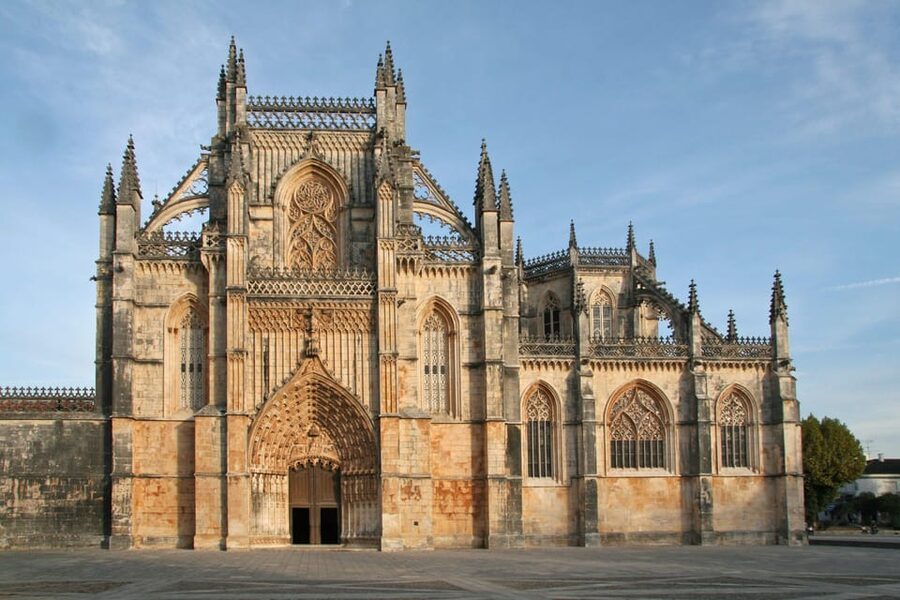
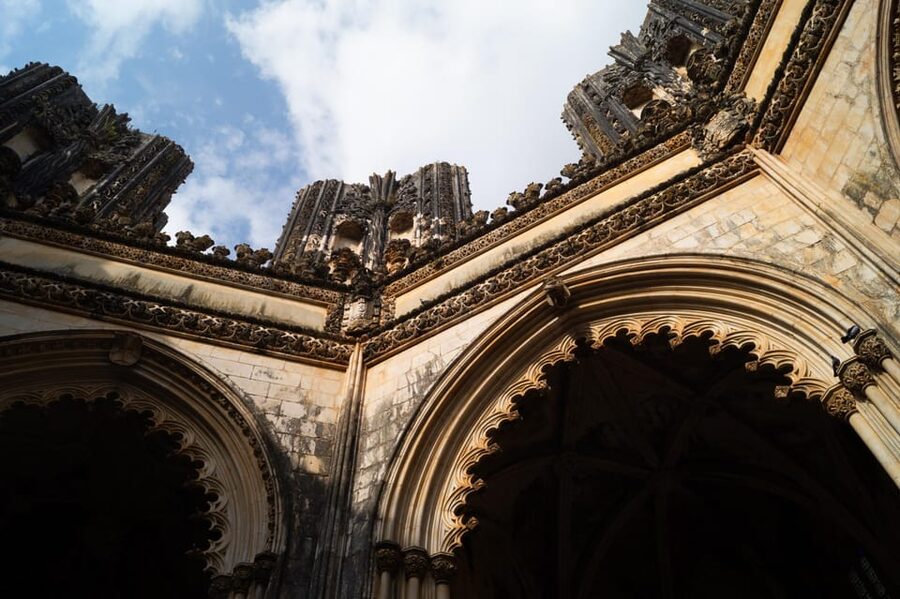
The exterior gives you a useful preview of the tour’s main themes. Batalha began with a Gothic design, but later work added Manueline and Renaissance features. Those changes reflect the long life of the building and the shifting tastes and ambitions of Portugal’s rulers.
Gothic architecture is often easiest to understand through structure: height, pointed forms, large windows, and the sense that stone is being pushed upward. At Batalha, the effect is grand but not empty. The carved details reward a closer look, especially when a guide points out how later decorative work differs from the earlier Gothic design.
The Manueline style brings a distinctly Portuguese character. Its decoration often refers to the sea, royal power, Christianity, and the country’s expanding place in the world. You should not expect every detail to be identified during a short visit, but the guide can help you see the building as a work that changed over time rather than as one perfectly uniform design.
Renaissance elements add another layer. They show how architectural ideas shifted after the original Gothic campaign. The mix is one reason the monastery feels more rewarding with explanation. Without help, you may simply register the facade as elaborate. With help, you can begin to separate its periods and purposes.
Inside the church and the Founder’s Chapel
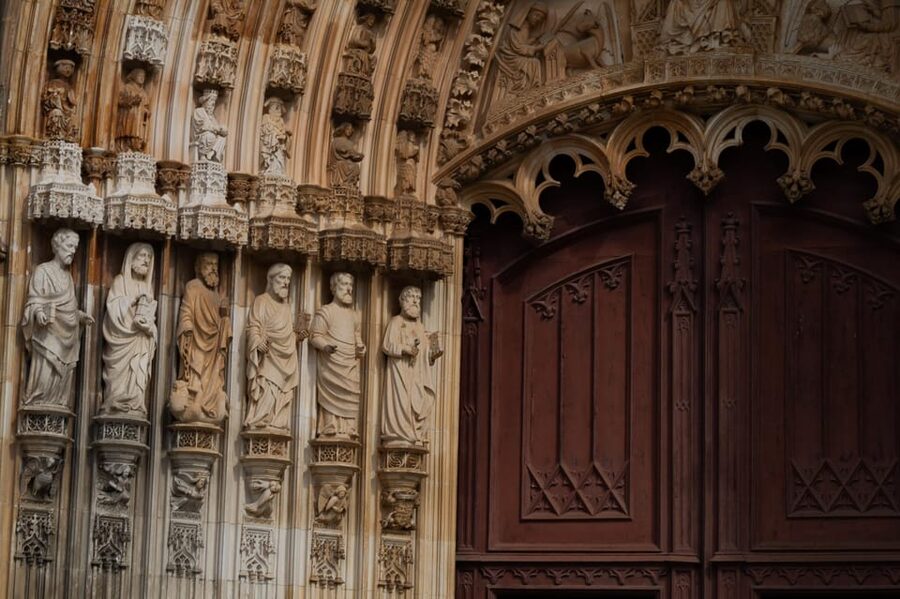
The interior visit includes the church and the Founder’s Chapel, the burial place of King João I and Queen Filipa de Lencastre. This is one of the most meaningful parts of the tour because the royal tombs tie personal memory to national politics.
João I was the king linked to the victory at Aljubarrota. Filipa of Lancaster was his English queen, and their marriage helped reinforce the long relationship between Portugal and England. The monastery’s story therefore reaches beyond one battle. It also connects to diplomacy, dynastic marriage, and the Treaty of Windsor.
The tombs are not just memorials to two individuals. They present the royal couple as founders of a successful line and as figures whose alliance helped shape Portugal’s future. Your guide can explain how the chapel presents monarchy as both sacred and public. The crown needed military success, but it also needed ceremony, burial places, and visible signs of continuity.
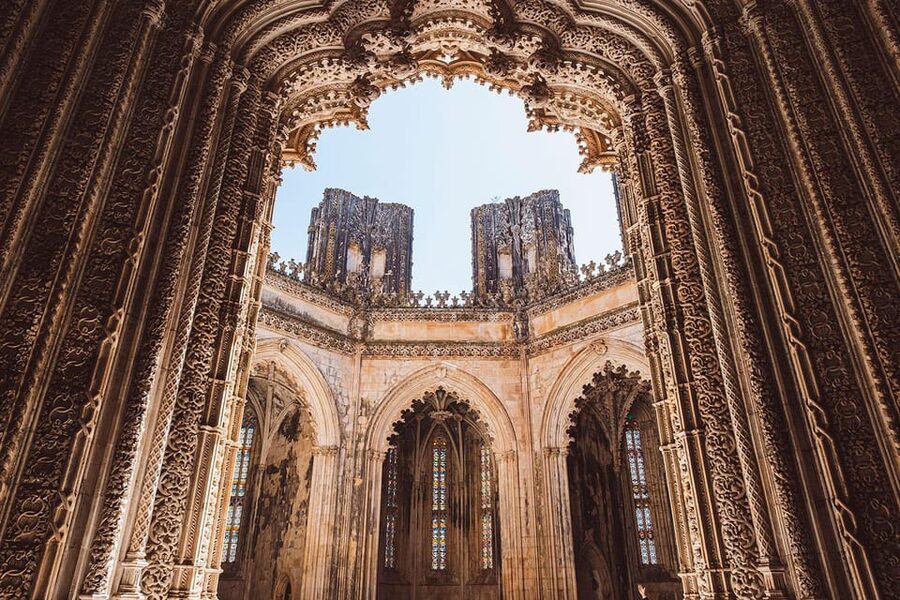
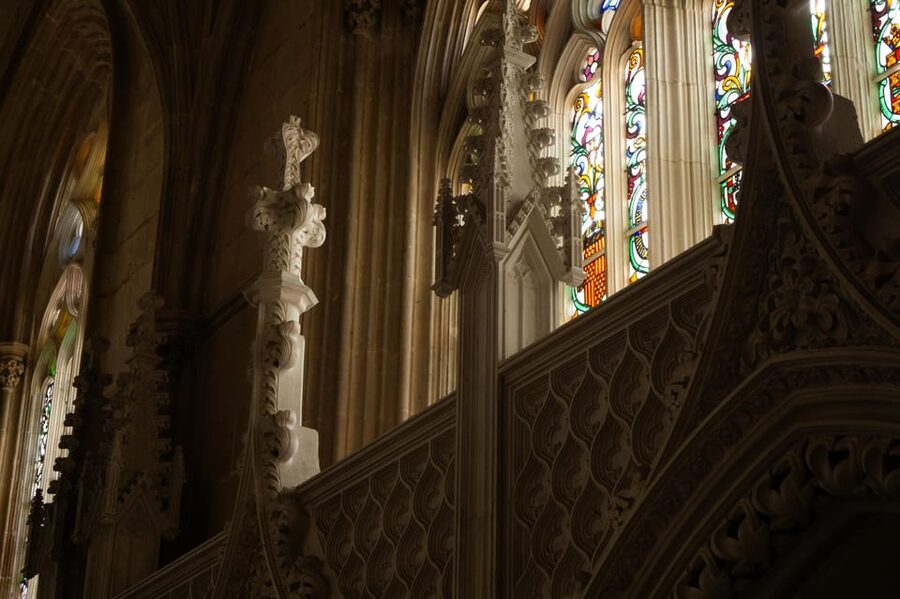
Look for the relationship between the tombs and the surrounding architecture. The chapel’s stonework, arches, and stained glass create a setting that gives royal memory a solemn frame. You may find that the artistic details make more sense once you understand the political story behind them.
This is also where a guided visit earns much of its price. If you only have a short time, it is easy to look at the tombs, take a picture, and move on. A guide can slow the moment down and explain why these particular people are central to the monastery’s meaning.
Same sacred ground, another way to see it:
- Lisbon: Belem Walking Tour with Jeronimos Monastery Ticket
★ 4.7 · 490 reviews - Lisbon: Belem, Jeronimos Monastery, and Coach Museum Tour
★ 4.8 · 478 reviews - Belem and Jeronimos Monastery Guided Small Group Walking Tour
★ 5.0 · 410 reviews - “Porto: Fado Show with Guided Tour in a Historic Monastery”
★ 4.9 · 164 reviews
Aljubarrota and Portugal’s fight for independence
The Battle of Aljubarrota is the historical engine of the visit. The tour explains its significance and shows how Batalha became a permanent statement about the result.
In 1385, Portugal faced a serious challenge to its independence and its succession. The outcome favored João I and the Portuguese side, helping secure a separate political future rather than a union under Castilian control. The monastery was founded in connection with that victory.
You do not need to be an expert in medieval Iberian politics to follow the story. The useful point is simple: Batalha represents a moment when Portugal’s crown needed to prove that it had the right to rule and the strength to endure. The building helped make that claim visible.
The tour also links the battle to the Treaty of Windsor with England. That treaty gave formal shape to the relationship between the two kingdoms and remains one of the key diplomatic links in Portuguese and English history. At Batalha, the story of war, marriage, diplomacy, and royal legitimacy comes together in one place.
I especially value this part of the experience because it keeps the monastery from becoming an art-history exercise only. You are not simply learning the names of architectural styles. You are seeing how architecture can be used to support a state, honor a victory, and shape public memory.
The cloisters: quieter spaces, finer details
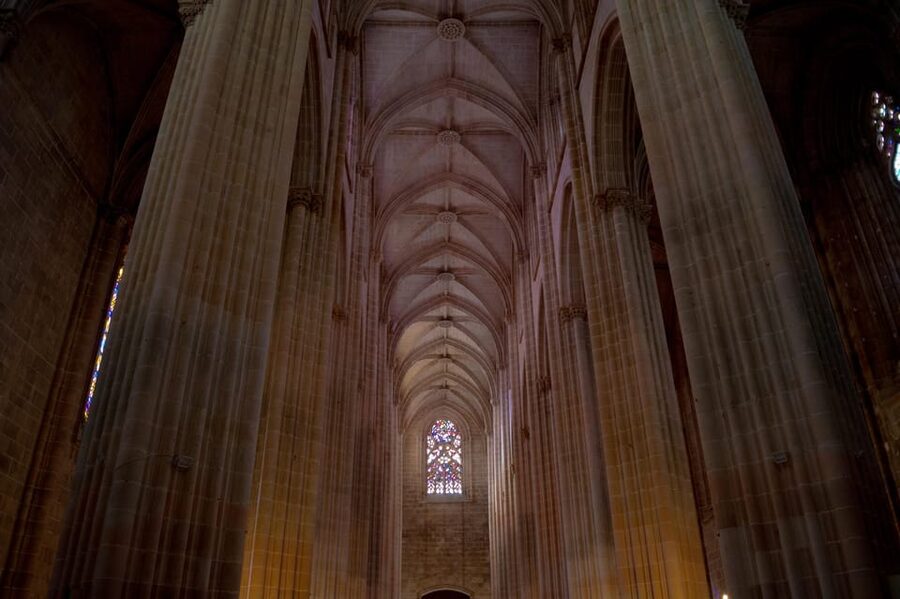
The cloisters offer a change of pace after the height and ceremony of the church. These covered walkways frame an interior court and reveal the monastery’s daily religious setting.
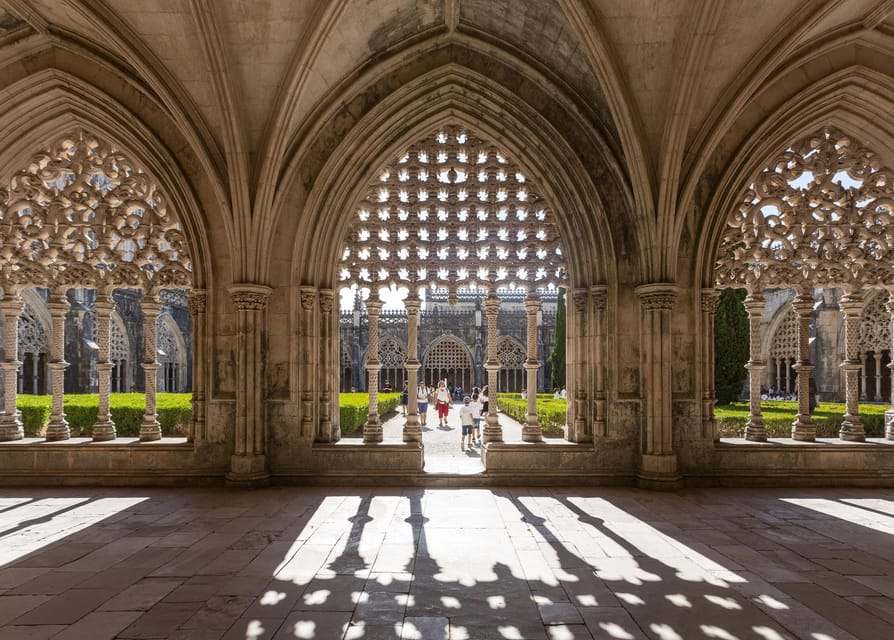
Here, the experience becomes less about royal display and more about rhythm, proportion, and repeated stone details. Look at the columns, arches, window openings, and carved surfaces. The design rewards patience, since small patterns can be easier to appreciate in the calmer cloister setting than on the larger facade.
The cloisters also help you understand how the monastery functioned as a religious community. Even if the tour does not reconstruct every part of daily monastic life, the space gives you a sense of separation from the town outside. It is a place designed for movement, prayer, and quiet work.
This stop is particularly useful for anyone who wants more than the standard church visit. The cloisters show the artistic skill of the builders at a human scale. You can examine details at close range, and your guide can point out how the decorative language relates to the building’s wider Gothic and Manueline design.
Is $47 good value when admission is extra?
The listed price is $47 per person, with monument admission not included. That makes the value depend on how much help you want with the history and architectural details.
If you already know the Battle of Aljubarrota, the royal succession, and Portuguese architectural styles, you may find the added guide fee less essential. You can still appreciate the monastery on your own, especially if you prefer to set your own pace.
For most first-time visitors, I think the guide adds real value because Batalha’s meaning is not obvious from the stone alone. The tour explains why the monastery was built, how the royal tombs relate to the crown, and why the Treaty of Windsor belongs in the story. Those links are difficult to pick up from a quick, unguided walk.
The small-group format is another advantage. It should make it easier to ask questions than on a large coach tour. A private group is available if you want a more tailored visit, though the supplied information does not give a separate private-group price.
Before booking, budget for the entrance ticket on top of the $47 fee. One past booking complaint involved confusion over whether admission was included and a guide becoming unavailable shortly before the scheduled visit. The provider later needs to resolve that case, but the practical lesson is clear: check your confirmation carefully and make sure you know exactly what the price covers.
Timing, language, and the shape of the visit
The tour lasts 1.5 hours and returns to the statue where you began. That is long enough for the church, Founder’s Chapel, and cloisters without taking up an entire day.
You should plan to arrive at the statue a little early. The meeting point is simple, but a late arrival could be difficult if the group moves inside. The available tour languages are Portuguese and English.
The format suits you if you like a focused introduction before continuing on your own. After the guided portion, you may want extra time to look again at the facade, tombs, stained glass, or cloisters. The supplied schedule does not promise additional free time, so treat the 1.5 hours as the full organized experience.
The tour is not suitable for wheelchair users. That limitation matters because the visit includes historic interior spaces and cloisters, where access can be difficult. If mobility is a concern, ask the provider for current access information before paying.
What the feedback suggests about the guide
The strongest pattern in the comments is praise for the guide’s warmth, clarity, and ability to explain the subject without sounding rushed. Anna receives particular approval for answering questions, drawing links with other buildings and styles, and making the visit feel personal.
That is a good fit for Batalha. The site can support a dry list of dates, but it is better when the guide explains how art and politics meet here. A conversational guide can also adjust the amount of detail to your interests.
The overall rating is 4.7 from eight reviews, which is a strong result but still a small sample. Most of the comments are highly positive, including feedback calling the experience interesting, educational, and well handled.
There is one serious negative account. A guest said the booking was accepted late in the evening, then canceled shortly before the visit because no guide was available. The same person also believed entrance was included and felt the guide lacked experience. That experience does not match the more favorable comments, but it is too specific to ignore. Confirm the date, meeting arrangement, guide availability, and separate admission cost before you go.
Who should book this Batalha visit?
I would choose this tour if you want the monastery’s political meaning explained as you see it. It is especially suitable for first-time visitors, history fans, architecture students, and anyone interested in the long connection between Portugal and England.
It also works well for people who do not want a full-day excursion. The meeting point is central to the site, the visit lasts 1.5 hours, and the route focuses on the monument rather than adding unrelated stops.
You may prefer an independent visit if you want silence, photography time, or a slower look at every carved detail. The tour is also a weaker choice if the extra admission cost surprises you or if you need wheelchair access.
Should you book it?
Book this tour if you want Batalha Monastery to make sense as more than a beautiful church. The best reasons are the focus on Aljubarrota, the royal tombs, the Treaty of Windsor, and the mix of Gothic, Manueline, and Renaissance design.
At $47, it is a fair guided-tour price only if you value explanation and conversation, and you must add the monument ticket. Confirm the booking details before departure, especially after the reported last-minute cancellation. If those terms suit you, this is a compact, useful way to understand one of Portugal’s most important national monuments.
FAQ
Where does the tour begin?
The tour begins at the Estátua Equestre do Condestável D. Nuno Álvares Pereira. The guide waits in front of the statue.
How long does the tour last?
The guided visit lasts 1.5 hours and returns to the statue where it began.
Is admission to Batalha Monastery included?
No. The monument entrance ticket is not included in the $47 tour price.
Which parts of the monastery are included?
The guided visit includes the interior, the Founder’s Chapel, and the cloisters.
Will I see the tombs of King João I and Queen Filipa de Lencastre?
Yes. Their tombs are in the Founder’s Chapel, which is included in the tour.
Which languages are available?
The live tour guide is available in Portuguese and English.
Can I book a private group?
Yes. A private group option is available.
Is the tour suitable for wheelchair users?
No. The activity is listed as unsuitable for wheelchair users.
Temple visits we reviewed lately in Portugal
- Belém: Jeronimos Monastery, Tickets and Guided tour★ 4.9 · 30 reviews
- Lisbon: Tour of Belem and Jerónimos Monastery★ 3.2 · 5 reviews
- Lisbon: Skip-the-line Jerónimos Monastery Tour with Tickets★ 5.0 · 4 reviews
- Lisbon: Belém Private Walking Tour & Jerónimos Monastery★ 4.5 · 83 reviews
- From Lisbon: Évora, Chapel of Bones, & Roman Temple Tour★ 5.0 · 8 reviews
- From Lisbon: Fátima Sanctuary and Batalha Monastery (UNESCO)★ 5.0 · 5 reviews
- Lisbon: Belem Tour with Pastéis at Jerónimos Monastery★ 4.7 · 96 reviews
- Between Life & Death: Roman Temple, Cathedral & Bone Chapel★ 4.9 · 6 reviews
Portugal Temple Tours, compared.
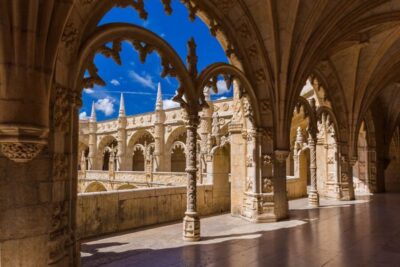
Lisbon: Jerónimos Monastery E-Ticket and Audio Guide
Read our review →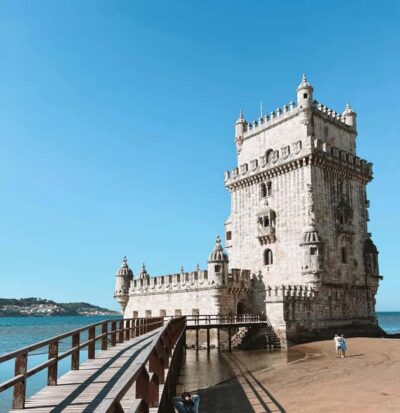
Lisbon: Belém Walking Tour with Jerónimos Monastery Ticket
Read our review →Lisbon: Belem Walking Tour with Jeronimos Monastery Ticket
Read our review →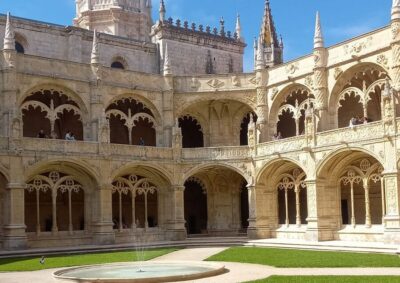
Lisbon: Belem, Jeronimos Monastery, and Coach Museum Tour
Read our review →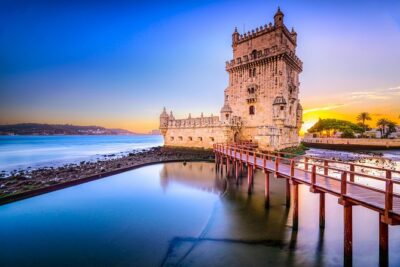
Belem and Jeronimos Monastery Guided Small Group Walking Tour
Read our review →
“Porto: Fado Show with Guided Tour in a Historic Monastery”
Read our review →
Fatima, Valinhos, Nazaré, Óbidos on Private tour
Read our review →This tour also ranks in