
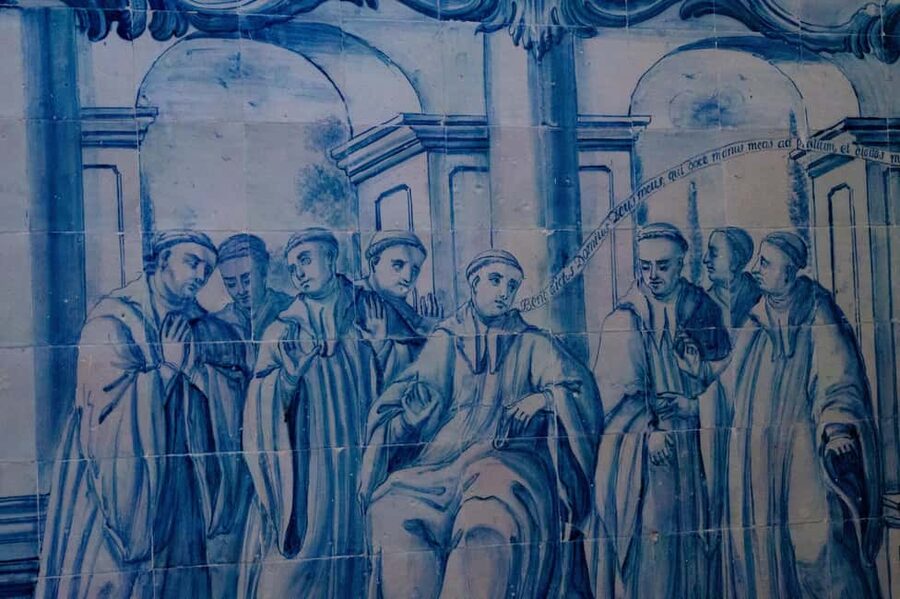
Review · PORTUGAL
Alcobaça: Discover the Monastery with a Local Guide Tour
The most moving part of this tour is not the grand church. It is the carved tombs of Pedro and Inês, where a tragic royal love story is told in stone. Your guide connects those tombs to the monastery’s religious work and to the political story of Portugal, so the building feels like more than a beautiful stop for photographs.
I like two things right away: you get access to rooms many visitors might otherwise hurry past, including the monks’ kitchen, dormitory, and library, and the guide gives the vast monastery a human scale. A possible drawback is the short 90-minute format. It is enough for a strong introduction, but not enough for a slow, detailed look at every corner.
Key points to know before you book
- The Pedro and Inês tombs: Intricate Gothic carvings bring Portugal’s most famous tragic love story into the heart of the church.
- A rare Cistercian church: The three-aisle design is described as the only example of its kind from the 12th and 13th centuries.
- More than the church: The tour includes the monks’ dormitory, kitchen, and library, along with the cloister, Chapter Room, and Refectory.
- A guide-led history lesson: Learn how King Afonso Henriques, Bernard of Clairvaux, and the Cistercian Order shaped Alcobaça.
- A practical 90-minute visit: The tour starts and ends at the monastery entrance, making it easy to fit into a day in Alcobaça.
- Good guide reports: Ana is praised for precise explanations, while Wilson is remembered for combining strong local knowledge with humor.
Why Alcobaça Monastery deserves your time
Alcobaça Monastery is one of Portugal’s great historic buildings, but its importance can be easy to miss if you only admire the façade and take a few pictures. The monastery links faith, farming, royal power, architecture, and a famously sad love story in one compact visit.
The building began as part of a promise made during the Portuguese Reconquest. In 1153, King Afonso Henriques donated land to Bernard of Clairvaux, an important figure in the Cistercian Order. That act gave the Portuguese Crown spiritual support while placing a major religious community in a newly consolidated part of the kingdom.
I find that political background useful because it explains why this is such a large and carefully planned monastery. It was not only a place for prayer. The monks also managed a huge estate and helped turn the surrounding area into one of Portugal’s most productive agricultural regions through new methods and careful organization.
The tour is led in English or Portuguese, and a private group is available. That matters here. A guide can point out details in the stonework, explain unfamiliar religious terms, and answer questions that a standard audio guide might not cover. One past guide, Ana, was praised for precise explanations and a friendly manner. Wilson was remembered for adding humor while explaining the grounds, buildings, and history.
Those names do not guarantee who will lead your tour, but they give you a useful sense of the guiding style associated with this experience: clear, conversational, and open to questions beyond a fixed script.
More Temple Tours around Portugal:
- Lisbon: Jerónimos Monastery Entrance Ticket
★ 4.1 · 14,164 reviews - Lisbon: Jerónimos Monastery E-Ticket and Audio Guide
★ 3.7 · 660 reviews - Lisbon: Belém Walking Tour with Jerónimos Monastery Ticket
★ 4.9 · 637 reviews
Meeting your guide at the church entrance
You meet in front of the entrance to the monastery church. There is no separate transfer or complicated route to follow. The tour stays within the Monastery of Santa Maria de Alcobaça and returns to the same general starting point.
Allow a little time to arrive before the scheduled start. The visit lasts about 1.5 hours, so a late arrival could cut into the parts you most want to see. Since the guide will shape the visit around the building, this is not a tour where you simply walk behind a group and wait for the next room.
The monastery is a religious site, so dress modestly. Food and drinks are not allowed inside. Those rules are easy to follow, but they are worth remembering if you are visiting as part of a longer day out.
The Gothic church and its unusual three-aisle plan
The church is the natural starting point because it gives you the clearest sense of the monastery’s scale. You enter a space designed around the Cistercian preference for simplicity and spiritual focus, rather than lavish visual distraction.
The three-aisle layout is one of the building’s most important features. It is described as the only church of its kind from the 12th and 13th centuries, making the design more than a technical detail. Your guide can help you see how the layout supports the Cistercian way of worship and daily life.
This is also presented as Portugal’s earliest Gothic masterpiece. That claim gives the church a place in the country’s architectural story, not just its religious one. Look upward and across the long interior, but also listen for the explanation of how the building reflects the order’s preference for restraint.
The grand façade comes into better focus after you understand what lies inside. It represents centuries of building and craftsmanship, but the tour’s value is in connecting that visual grandeur to the people who planned, built, prayed, worked, and were buried here.
If you prefer quick sightseeing, the church alone may satisfy you. If you want to understand why the building looks and feels the way it does, the guide is especially useful at this point.
Pedro and Inês, Portugal’s tragic royal love story
The tombs of Pedro and Inês are the emotional center of the visit. Their intricate carvings make them important works of medieval art, but the story behind them is what gives the stone its pull.
Pedro was a Portuguese prince who loved Inês de Castro. Their relationship became entangled with royal politics, and Inês was killed. Pedro later became king, and their story took on an almost legendary quality. The tombs preserve that memory in a form you can study at close range.
I like this section because it avoids treating the monastery as a collection of dates and architectural labels. The tombs show how personal grief, royal authority, artistic skill, and public memory can meet in one place.
Your guide will help you read the carvings and place the couple within the wider story of the Portuguese Crown. Pay attention to how the tombs are positioned and decorated. The work is not merely ornamental. It presents a message about love, death, kingship, and the hope of recognition beyond this life.
The story can also be intense. If you are mainly interested in architecture, you may prefer a shorter explanation before returning your attention to the church itself. For many people, though, this is the moment that makes Alcobaça memorable.
Same sacred ground, another way to see it:
- Lisbon: Belem Walking Tour with Jeronimos Monastery Ticket
★ 4.7 · 490 reviews - Lisbon: Belem, Jeronimos Monastery, and Coach Museum Tour
★ 4.8 · 478 reviews - Belem and Jeronimos Monastery Guided Small Group Walking Tour
★ 5.0 · 410 reviews - “Porto: Fado Show with Guided Tour in a Historic Monastery”
★ 4.9 · 164 reviews
The Royal Pantheon and the power of the Crown
The Royal Pantheon adds another layer to the visit. Here, the monastery becomes a place tied directly to Portugal’s ruling family. Kings and queens were laid to rest in a setting that helped connect the Crown with faith, tradition, and national identity.
The tour explains the spiritual and political legitimization of the Portuguese monarchy. That may sound formal, but the idea is simple: royal authority was strengthened when it was linked to the church, to sacred spaces, and to a religious order with international importance.
This is one reason I recommend a guided visit instead of a quick self-guided walk. The stones do not explain their political purpose on their own. A guide can show you how a religious foundation also supported the public image of the kingdom.
The monastery’s story begins with Afonso Henriques and the promise made during the Reconquest. The Royal Pantheon brings that story forward, showing how later generations of rulers continued to use the monastery as a place of memory and legitimacy.
The Chapter Room and the monks’ working world
The Chapter Room shifts the focus from kings to monks. Here you learn about the community that kept the monastery running and upheld a vow of poverty while managing a large, productive estate.
That contrast is central to understanding Alcobaça. The monks lived under strict religious rules, yet the institution controlled land, labor, food production, and practical systems on a large scale. Their daily life was austere, but their organization had a major effect on the surrounding region.
I find this part particularly valuable if you want more than royal drama. It shows the monastery as a working institution, not a silent monument. The monks prayed, met, administered property, and made decisions that affected farming and settlement beyond the walls.
The included access to the monks’ dormitory and library adds useful context. You can picture the difference between communal religious life and the grand spaces built for worship and royal burial. The rooms may be less visually dramatic than the church, but they explain how the monastery functioned.
The Cloister of Silence and medieval water engineering
The Cloister of Silence offers a calmer pause in the middle of the visit. Its purpose was connected to meditation and quiet reflection, so the mood changes from the scale of the church to a more enclosed and controlled space.
This is a good place to slow down and look at the relationship between architecture and routine. The cloister was not simply decorative. It helped organize movement through the monastery and provided an environment suited to quiet religious practice.
The kitchen provides a different kind of interest. Medieval hydraulic engineering helped supply and manage water, showing the technical skill behind monastic life. This is the sort of detail that is easy to overlook when you are focused on carved stone and royal tombs.
The kitchen also reminds you that the monastery had to feed a large community. Religious ideals did not remove the need for storage, cooking, cleaning, and water management. Those practical systems are part of the building’s story, and the guided explanation helps you notice them.
The Refectory and the monks’ austere diet
The Refectory was where the monks ate, bringing physical nourishment into the same disciplined routine as prayer and work. Your guide explains the austere nature of their diet and how food fit within Cistercian religious rules.
This stop works well after the kitchen because you can connect preparation with communal eating. The monastery was not a string of grand rooms. It was a carefully managed place where daily habits were repeated over generations.
I appreciate this human detail. Learning what monks ate, where they slept, and how they moved through the building can make the history easier to grasp than another list of dates. You see how religious ideals shaped ordinary choices.
The Refectory is also a reminder that simplicity was part of the Cistercian identity. The monastery could be architecturally impressive while the monks themselves followed a restrained way of life. That tension is one of Alcobaça’s most interesting themes.
Is the $47 price good value?
At $47 per person, this is not the cheapest way to enter a historic building. The value depends on how much explanation you want and how much of the monastery you plan to see.
For 90 minutes, you receive a guided visit to the church and access to important monastic spaces, including the dormitory, kitchen, and library. You also get the Royal Pantheon, Pedro and Inês tombs, Chapter Room, Cloister of Silence, and Refectory woven into one story.
I think the price is reasonable for visitors who care about history, architecture, or royal Portugal and do not want to piece the story together alone. A private group option may make the cost more appealing for a small party that values the chance to ask questions at its own pace.
The short duration is the main limit. If you want to study every carving, linger in silence, or make your own detailed architectural notes, you may wish for more time. Think of this as a focused introduction rather than an exhaustive museum visit.
The tour also offers free cancellation up to 24 hours before the start and a reserve-now, pay-later option. Those policies are useful if your Portugal plans are still shifting.
Who should book this Alcobaça visit?
I would choose this tour if you want a clear explanation of why Alcobaça matters. It suits history and architecture fans, people interested in Portugal’s monarchy, and anyone drawn to the Pedro and Inês story.
It is also a good fit if you prefer human explanation over reading labels. The guides are available in English and Portuguese, and past guide feedback points to strong answers, precise explanations, and well-placed humor. That combination can keep a serious subject from feeling dry.
The experience is not suitable for children under six. The information also says it is not suitable for people with mobility impairments or wheelchair users, even though the general details describe the site as wheelchair accessible. Because those points conflict, contact the provider before booking if accessibility is important to you.
Should you book the Alcobaça Monastery tour?
Book it if you want the monastery’s major sights tied together in one coherent story, especially the Gothic church, Royal Pantheon, and Pedro and Inês tombs. The inclusion of the monks’ rooms and working spaces gives the visit more substance than a quick look at the façade.
Skip it if you prefer to explore completely alone or want a very long, slow architectural study. Ninety minutes moves at a steady pace, and the $47 cost is aimed at visitors who value a local guide’s explanation.
For most first-time visitors to Alcobaça, I think the tour is a sensible choice. It gives you the building’s faith, politics, art, and daily life without requiring a full day. Dress modestly, arrive at the church entrance on time, and save your attention for the tombs, cloister, and kitchen. Those are the places where the monastery’s story becomes easiest to remember.
FAQ
How long does the Alcobaça Monastery tour last?
The guided tour lasts 1.5 hours, or 90 minutes.
Where does the tour meet?
Your guide waits in front of the entrance to the church of the monastery.
Does the tour return to the starting point?
Yes. The experience starts at the Monastery of Alcobaça and ends back at the monastery.
Which languages are available?
The live guide speaks English or Portuguese.
What areas are included?
The tour includes the Monastery of Santa Maria de Alcobaça, including the monks’ dormitory, kitchen, and library. It also covers the church, Royal Pantheon, Chapter Room, Cloister of Silence, and Refectory.
How much does the tour cost?
The listed price is $47 per person.
Can I cancel the booking?
Yes. You can cancel up to 24 hours in advance for a full refund.
Is the tour suitable for wheelchair users?
The information says the activity is wheelchair accessible, but it also says it is not suitable for wheelchair users or people with mobility impairments. If this applies to you, contact the provider before booking to confirm the current conditions.
Temple visits we reviewed lately in Portugal
- Belém: Jeronimos Monastery, Tickets and Guided tour★ 4.9 · 30 reviews
- Lisbon: Skip-the-line Jerónimos Monastery Tour with Tickets★ 5.0 · 4 reviews
- Lisbon: Tour of Belem and Jerónimos Monastery★ 3.2 · 5 reviews
- Lisbon: Belém Private Walking Tour & Jerónimos Monastery★ 4.5 · 83 reviews
- From Lisbon: Évora, Chapel of Bones, & Roman Temple Tour★ 5.0 · 8 reviews
- From Lisbon: Fátima Sanctuary and Batalha Monastery (UNESCO)★ 5.0 · 5 reviews
- Lisbon: Belem Tour with Pastéis at Jerónimos Monastery★ 4.7 · 96 reviews
- Between Life & Death: Roman Temple, Cathedral & Bone Chapel★ 4.9 · 6 reviews
Portugal Temple Tours, compared.
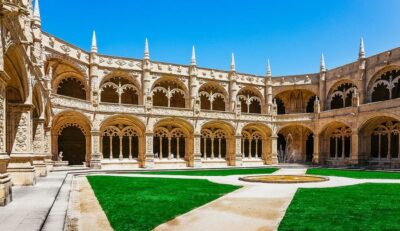
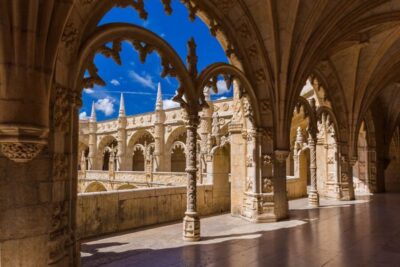
Lisbon: Jerónimos Monastery E-Ticket and Audio Guide
Read our review →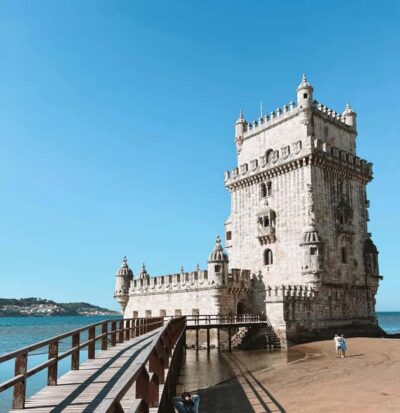
Lisbon: Belém Walking Tour with Jerónimos Monastery Ticket
Read our review →Lisbon: Belem Walking Tour with Jeronimos Monastery Ticket
Read our review →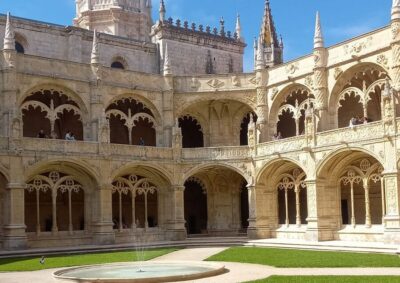
Lisbon: Belem, Jeronimos Monastery, and Coach Museum Tour
Read our review →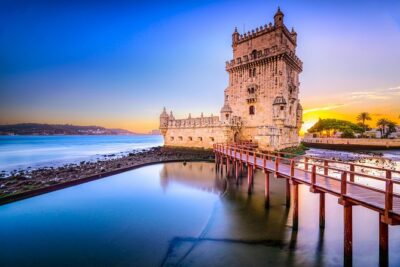
Belem and Jeronimos Monastery Guided Small Group Walking Tour
Read our review →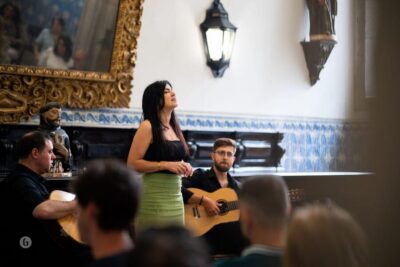
“Porto: Fado Show with Guided Tour in a Historic Monastery”
Read our review →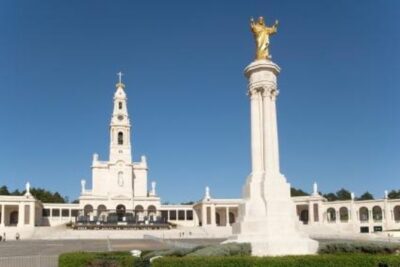
Fatima, Valinhos, Nazaré, Óbidos on Private tour
Read our review →This tour also ranks in