
Review · BEIJING
Beijing: Lama Temple (Yonghe Temple) Admission Ticket
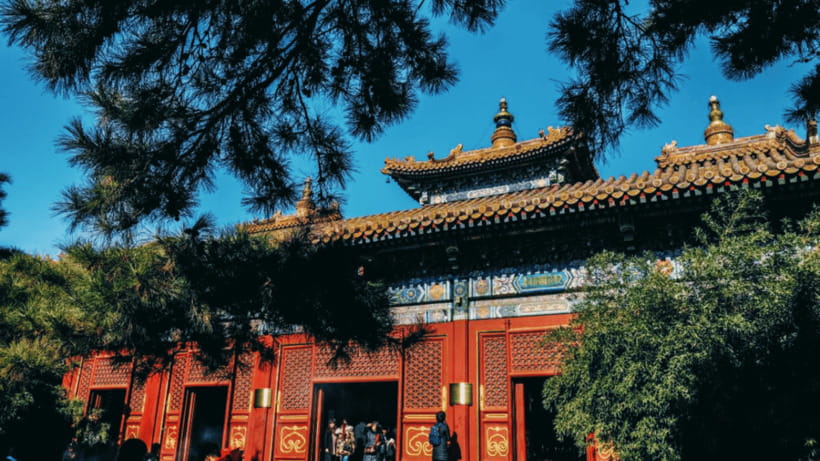
The most striking thing about Beijing’s Lama Temple is that it is both a working place of worship and a major historic sight. Incense smoke, prayer, painted halls, and visitors moving quietly through the courtyards give the complex a real religious purpose, not just a museum feel. I like the 18-meter sandalwood Buddha and the way the architecture brings Han, Manchu, Tibetan, and Mongolian details together. I also like that a $10 ticket gives you access to the main buildings without joining a tour.
The main consideration is that this is not a guided visit. You explore on your own, and the QR code from GetYourGuide is not itself the entry ticket. You need to send your passport name and number in time, then wait for the confirmation and ticket instructions by email or WhatsApp.
Key points to know before you go
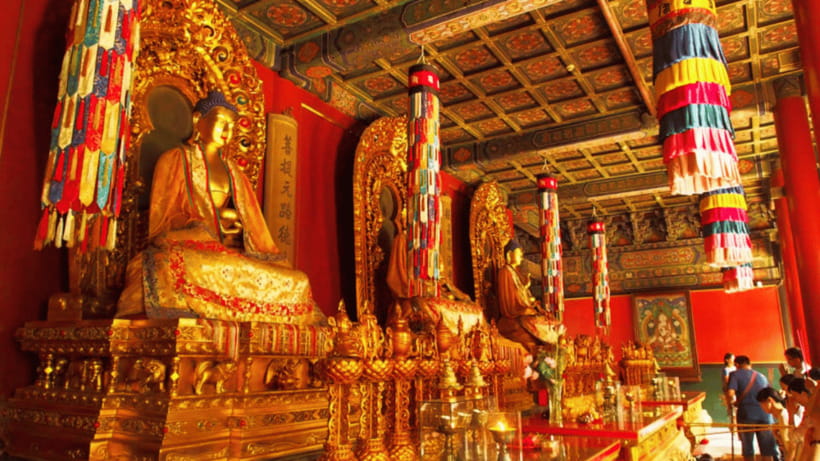
- See the 18-meter sandalwood Buddha: The huge Maitreya figure is carved from one piece of sandalwood and has held a Guinness World Records place since 1990.
- Visit a living Buddhist temple: Local worshippers light incense and pray in the courtyards, so the atmosphere can be quiet, smoky, and deeply reverent.
- Explore several architectural styles: Han, Manchu, Tibetan, and Mongolian influences appear across the gates, halls, roofs, colors, and decorative details.
- Use the ticket for an independent visit: You receive admission and access to the main buildings, but no guide or audio guide is included.
- Allow time for security: The ticket can reduce the ticket-line hassle, but it does not let you skip security checks.
- Send exact passport details: Real-name booking is required, and the name must match the passport shown at the entrance.
Why the Lama Temple is worth your time
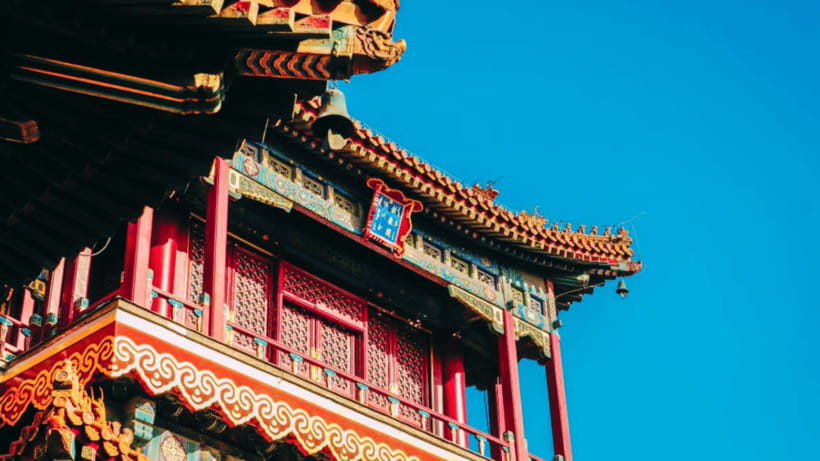
Yonghe Temple, better known in English as the Lama Temple, is one of Beijing’s most rewarding religious sites. It is not simply a collection of old buildings. People still come here to pray, burn incense, and make offerings, and that daily use changes the way you experience every courtyard.
The site began in 1694, during the 33rd year of Emperor Kangxi’s reign. It first served as the residence of the future Emperor Yongzheng. In 1725, it became an imperial palace, and in 1744, during the reign of Emperor Qianlong, it was converted into a Tibetan Buddhist temple.
That unusual past explains the mixture of palace scale and Buddhist purpose. You get formal imperial architecture, but also prayer halls filled with statues, thangkas, and offerings. I find that combination more interesting than a site built for only one purpose.
The complex is not enormous, yet it contains plenty to see. The ticket is priced at $10 per person, which is fair if you take your time through the courtyards and halls. If you rush in, photograph the largest statue, and leave, the value is weaker. Give the place room to unfold.
More Temple of Heaven Tours in Beijing:
- Beijing: The Temple of Heaven or Summer Palace Entry Ticket
★ 4.6 · 1,286 reviews - Beijing Classic Full-Day Tour including the Forbidden City, Tiananmen Square, Summer Palace and Temple of Heaven
★ 4.0 · 610 reviews - Temple of Heaven Ticket
★ 5.0 · 482 reviews
Entering through the gates and courtyards
Your visit begins with the temple’s three carefully designed archways. These gates set the tone for the rest of the complex, with formal lines, painted decoration, and a strong sense of separation from the surrounding city.
After showing your confirmed ticket at the designated entrance channel, you still go through security. This is important: the admission arrangement helps with the ticket line, but it does not provide skip-the-line access for security. Bring your passport, since real-name identification is required at the gate.
Once inside, move at an unhurried pace. The courtyards help you notice the changes in scale between the open spaces and the richly decorated halls. Incense smoke may hang in the air, particularly when many people are praying. That smoke is part of the atmosphere, but visitors sensitive to it should be prepared.
The temple can become crowded during major holidays and on January 1, when many people come to pray. A busy day does not erase the temple’s character, but it can make the courtyards less peaceful and photography more difficult.
Yonghe Gate and Yonghe Palace Hall
The Yonghe Gate and Yonghe Palace Hall form the central early part of the visit. These buildings show how the former imperial residence was reshaped for Buddhist worship.
Look beyond the rooflines and bright colors. The value here is in the meeting of courtly design and religious use. The architecture has the order you would expect from an imperial complex, but the halls contain Buddhist images and objects that give the interiors a different mood.
You may find yourself moving between two kinds of attention. Outside, you are studying roof decoration, gates, courtyards, and symmetry. Inside, the focus turns to statues, thangkas, and ritual objects. I like this change because it keeps the visit from becoming a simple walk through a palace.
There is no guide included to explain each room, so read any available information carefully and take your time. The provider may send a small guide or e-guide along with the ticket instructions, but this is not the same as having a guide beside you throughout the visit.
The Four Learning Halls
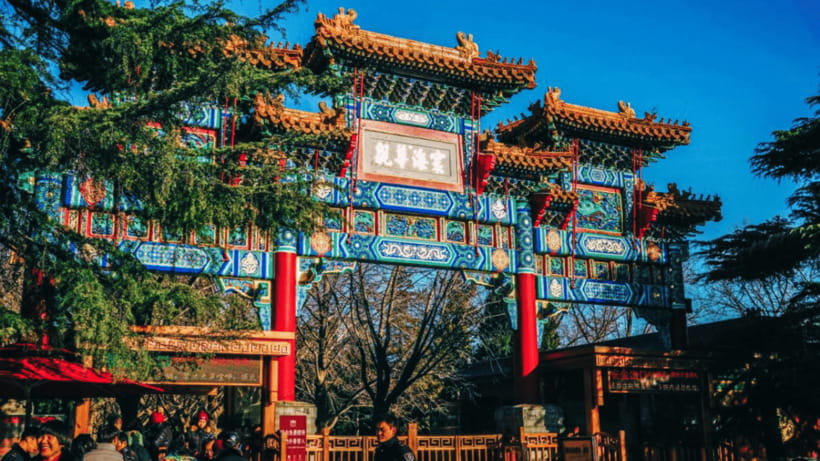
One of the more distinctive parts of Yonghe Temple is the group known as the Four Learning Halls. These include the Hall of Medicine Buddha, Mathematics Hall, Tantric Hall, and Lecture Hall.
The names alone show that the temple was built as a place of study as well as prayer. These halls help you see Tibetan Buddhism as a learned religious tradition, not only as a collection of statues and ceremonies.
The Medicine Buddha Hall connects the visit with healing and well-being. The Mathematics Hall points to the intellectual side of religious education. The Tantric Hall and Lecture Hall add further layers to the temple’s teaching function. The available information does not provide a detailed room-by-room route, so I would treat these buildings as places to observe rather than expect a fixed presentation.
Architectural details matter here. The temple’s Han, Manchu, Tibetan, and Mongolian influences are not confined to one room. You may notice them in the building forms, decoration, colors, and religious imagery across the complex.
More Entry Tickets in Beijing:
- Beijing: Temple of Heaven Ticket with 5 UNESCO Site Options
★ 5.0 · 130 reviews - Beijing Lama temple ticket; #1 efficacious; limited Discount
★ 3.7 · 116 reviews - Beijing: Confucius Temple and the Impercial College E-ticket
★ 4.4 · 92 reviews - Beijing: Temple of Heaven Guided Tour with Options or Ticket
★ 4.7 · 69 reviews
The 18-meter sandalwood Maitreya Buddha
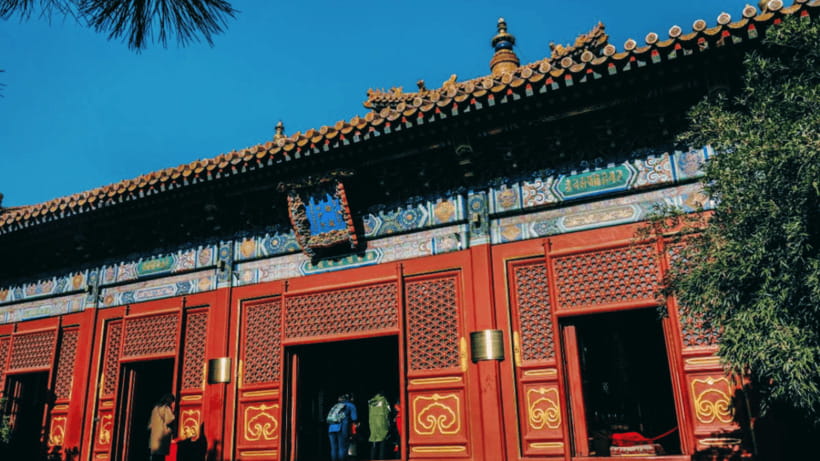
The largest single attraction is the enormous sandalwood Buddha. The statue reaches 18 meters and was carved from one piece of sandalwood. It has held a Guinness World Records place since 1990, which gives you a useful sense of its scale before you even see it.
The statue is generally identified as Maitreya, the Buddha of the future. Its size makes it memorable, but the material is just as remarkable. A figure of this height carved from one tree is not something you casually pass by.
This is the point where a self-guided visit works well if you are willing to pause. Stand where you can take in the whole figure, then look at the surrounding hall and the way the building frames it. A quick photograph cannot convey the full effect.
The statue is also a reminder that the temple’s treasures are not limited to architecture. Inside the halls, you can find Buddha statues, thangkas, and other valuable religious objects. The collection gives the visit visual variety, though you should keep your attention respectful, especially when worship is taking place.
Incense, prayer, and the temple’s living purpose
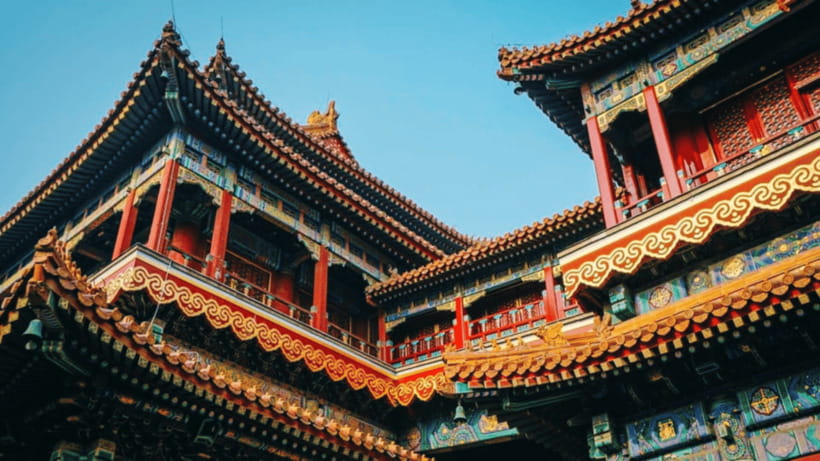
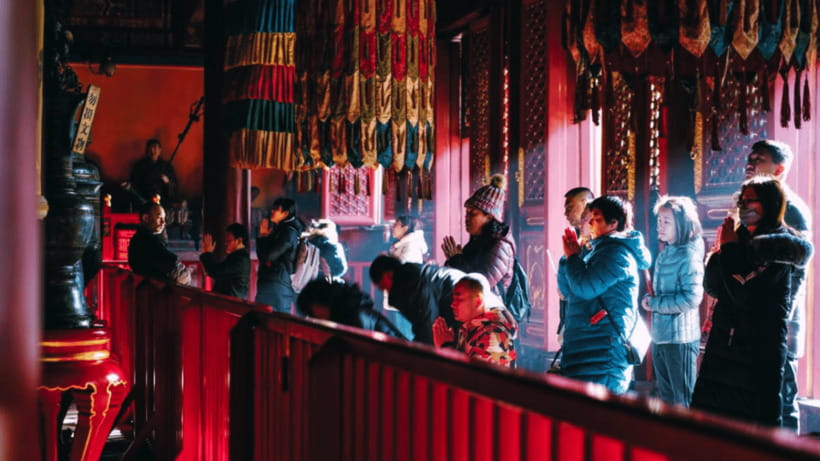
I consider the religious activity one of the strongest reasons to visit Yonghe Temple. Local people come to pray in the same courtyards you are exploring. You may see incense burning and people making offerings, with smoke drifting through the open spaces.
That atmosphere can be beautiful, but it also calls for good manners. Keep your voice down near worshippers, do not block prayer areas for photographs, and remember that this is not only a historic attraction.
The temple’s appeal comes partly from this balance. You can admire the painted architecture and old objects, but you are also watching a place used in everyday religious life. That makes the visit feel more direct than a formal exhibition.
On the other hand, the active worship can mean crowds, smoke, and a less controlled experience. If you want empty courtyards and perfect photographs, choose your timing carefully and accept that major prayer days may be busy.
Three exhibition rooms and the wider complex
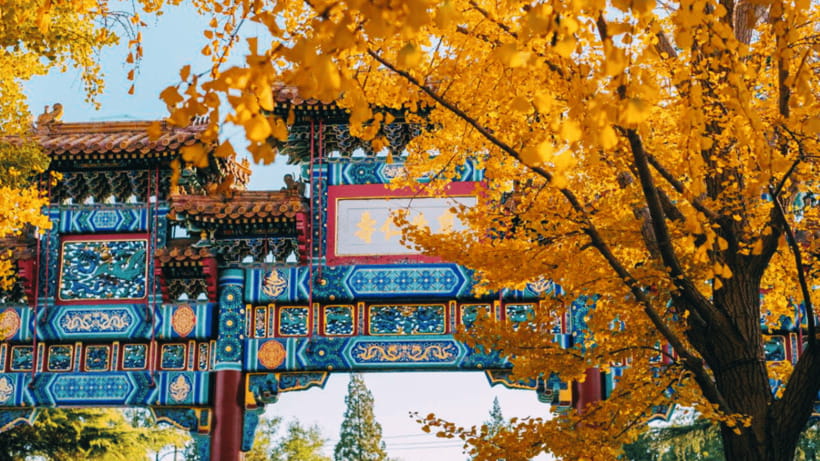
Along with the principal halls and Four Learning Halls, the complex includes three exhibition rooms. These add context to the objects and religious traditions represented at the temple.
The admission includes access to the major temple buildings and cultural exhibitions. That makes the $10 price more useful than a ticket limited to one courtyard or one building. You can move from the main architecture to smaller displays, then return to the open spaces when you need a break.
Since the experience lasts for one day rather than a fixed number of hours, you have flexibility within the opening schedule. Check the available starting times and plan around the closing rules. Final entry is one hour before closing, and everyone must leave 30 minutes before closing.
The listing does not provide a detailed walking time, so I would not plan the temple as a rushed stop between several distant sights. Its compact size makes it manageable, but the halls deserve more than a quick pass.
What the $10 ticket really buys you
At $10, this is a reasonably priced way to handle admission to a major Beijing cultural site. The ticket covers fast-track entry through the ticket channel, access to the main buildings and exhibitions, and the reservation fee.
The real value is convenience. Advance real-name booking can remove uncertainty at the gate, particularly for international visitors who may not be familiar with the local ticket system. Several bookings were handled through WhatsApp, with tickets or instructions sent on the day of the visit or shortly beforehand.
That convenience comes with a task of your own. You must provide your full name exactly as it appears on your passport and your passport number. If the provider does not receive those details in time, the booking can be canceled and a cancellation fee may apply.
Do not assume that the GetYourGuide QR code is the ticket. The instructions specifically say to wait for the confirmation email or communicate through WhatsApp. I would check both channels before leaving for the temple.
You do not receive a guided tour or an audio guide. If you like detailed explanations of every statue and hall, this may feel incomplete. If you prefer setting your own pace and stopping where your interest leads, the arrangement is a good fit.
Who will enjoy this independent visit
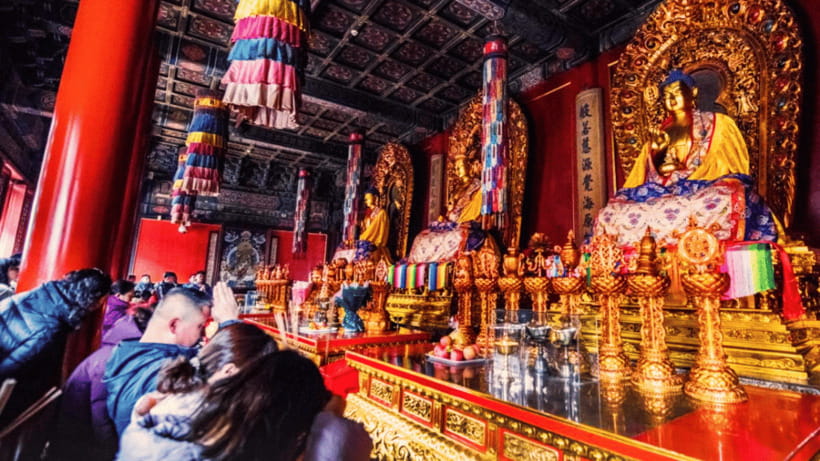
I would recommend this ticket to you if you want to explore Beijing’s religious architecture without committing to a group schedule. It suits visitors who are comfortable reading basic information, observing carefully, and using a short e-guide if one is provided.
It is especially useful for:
- People interested in Tibetan Buddhist architecture and worship
- Visitors who want a manageable cultural stop in Beijing
- Photographers who prefer choosing their own pace
- Families who need flexibility rather than a fixed tour route
- Anyone who wants to see the sandalwood Buddha and main halls without arranging a private guide
I would think twice if you need a fully explained tour in English or another language. No guide or audio guide is included, and the ticket mainly solves admission rather than interpretation.
The temple is wheelchair accessible, which is helpful, but the supplied information does not describe specific routes or facilities inside each hall. If you need detailed accessibility information, confirm it before booking.
Practical details that can save you trouble
Bring your passport. Your real-name booking must match the identification shown at the gate, and only genuine ID information is accepted.
Do not bring pets, weapons, sharp objects, or explosive substances. Security checks still apply even with advance admission.
Keep an eye on the confirmation process. The QR code alone is not valid entry, so wait for the actual ticket or instructions. The provider has used WhatsApp for communication and has also sent tickets by email, so make sure your contact details are correct.
Cancellation is free up to 24 hours in advance for a full refund. That gives you some breathing room, but it does not remove the need to submit passport information promptly after booking.
Should you book the Lama Temple ticket?
Book it if you want a low-cost, self-guided visit to one of Beijing’s most interesting religious sites, especially if the 18-meter sandalwood Buddha, incense rituals, and mixed imperial and Tibetan design appeal to you.
The strongest part of the experience is the temple itself. The ticket service adds practical value by arranging admission and sending instructions, but it does not replace a guide. Send your passport details promptly, confirm the real ticket by email or WhatsApp, and allow enough time to see the halls rather than treating Yonghe Temple as a ten-minute photo stop.
FAQ
How much does admission to the Lama Temple cost?
The admission ticket costs $10 per person. The price includes the reservation fee and access to the major temple buildings and cultural exhibitions.
Does the ticket include fast-track entry?
It includes fast-track entry through the ticket channel, but it does not let you skip the security check.
Is a guided tour included?
No. The ticket does not include a guided tour or an audio guide. You explore the temple independently.
Is the GetYourGuide QR code the valid entry ticket?
No. The QR code is not a valid ticket by itself. You must wait for the confirmation email or communicate through WhatsApp for the actual ticket and instructions.
What identification do I need?
Bring your passport. You must provide your full name as it appears on the passport and your passport number for the mandatory real-name booking.
What time is the latest entry?
Final entry is one hour before the temple closes. You must leave the temple grounds 30 minutes before closing.
Can I cancel for a refund?
Yes. You can cancel up to 24 hours in advance for a full refund.
Is the Lama Temple wheelchair accessible?
Yes, the activity is listed as wheelchair accessible. The available information does not give detailed access instructions for each individual hall.
Temple visits we reviewed lately in Beijing
- Private Tour to Yinshan Pagoda Forest w/Optional Activities★ 5.0 · 5 reviews
- Private ForbiddenCity&TempleofHeaven&SummerPalace Day Tour★ 5.0 · 4 reviews
- Forbidden City, Summer Palace & Temple of Heaven Tour★ 4.9 · 177 reviews
- Beijing: Temple of Heaven ticket; fast and smooth★ 3.4 · 23 reviews
- Chinese Kungfu class in old temple beside Forbidden Ci★ 4.8 · 53 reviews
- Beijing:Temple of Heaven+Forbidden City Private City Tour★ 5.0 · 4 reviews
- Beijing:Forbidden City Tour—Temple, Summer Palace&Great Wall★ 4.8 · 6 reviews
- Beijing:Forbidden City and Temple of Heaven Small Group Tour★ 4.9 · 97 reviews
Beijing Temple Tours, compared.
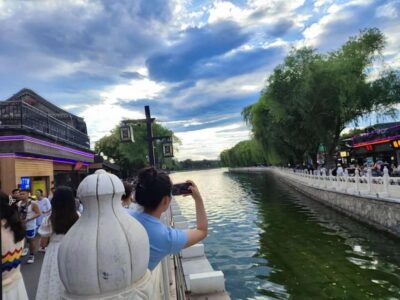
Beijing: The Temple of Heaven or Summer Palace Entry Ticket
Read our review →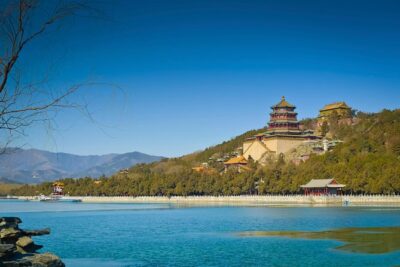
Beijing Classic Full-Day Tour including the Forbidden City, Tiananmen Square, Summer Palace and Temple of Heaven
Read our review →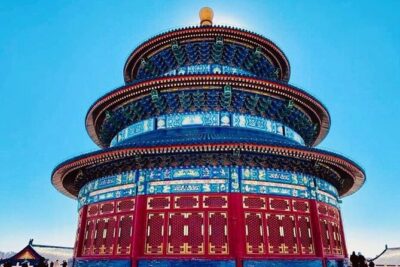
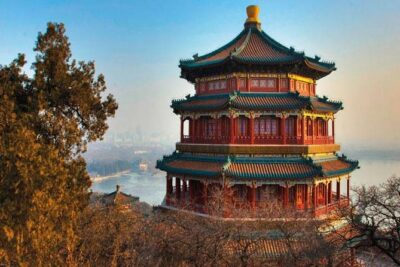
Temple Heaven, Lama Temple, Summer Palace & Peking Duck Bus Tour
Read our review →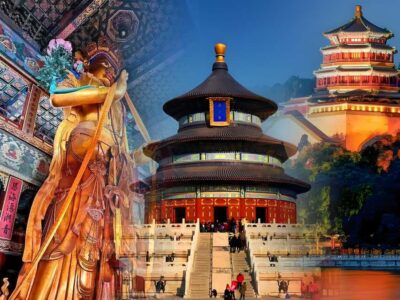
Temple Heaven, Summer Palace, Lama Temple, Hutong Bus Tour
Read our review →
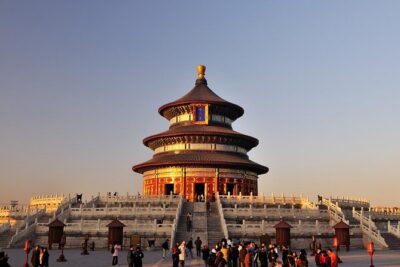
Temple of Heaven, Summer Palace, Lama Temple, Hutong Tours
Read our review →
Beijing Private Tour of Temple of Heaven, Tian’anmen Square, Forbidden City
Read our review →This tour also ranks in