
Review · BEIJING
Beijing: Confucius Temple and the Impercial College E-ticket
The most revealing part of this visit is the forest of stone tablets listing 51,624 successful imperial examination candidates. These names, hometowns, and ranks turn an old school complex into a record of how China selected its officials for centuries. The nearby halls and courtyards add the setting: formal, symmetrical, and unmistakably shaped by Confucian ideals.
I like the low price, about $7 per person, and the simple entry system. You show the QR code with your original passport, and the ticket includes both the Confucius Temple and Imperial College. The main drawback is that this is an admission ticket, not a clearly described guided tour, so you should be ready to read the displays or pay extra for an audio guide at the temple.
Key points at a glance
- 51,624 examination names: Read the names, birthplaces, and ranks carved on 198 stone tablets.
- Two historic institutions: Visit the Confucius Temple and the Imperial College, arranged as temple on the left and college on the right.
- Yuan Dynasty foundations: The temple dates to 1306, while the Imperial College was built in 1308.
- A useful exhibition stop: See displays on Confucius, the temple’s past, and a restored Dacheng Hall.
- Easy admission: Bring your original passport and use the supplied electronic ticket QR code.
- Optional audio help: An audio guide may be available for purchase at the temple entrance.
Why these two sites belong together
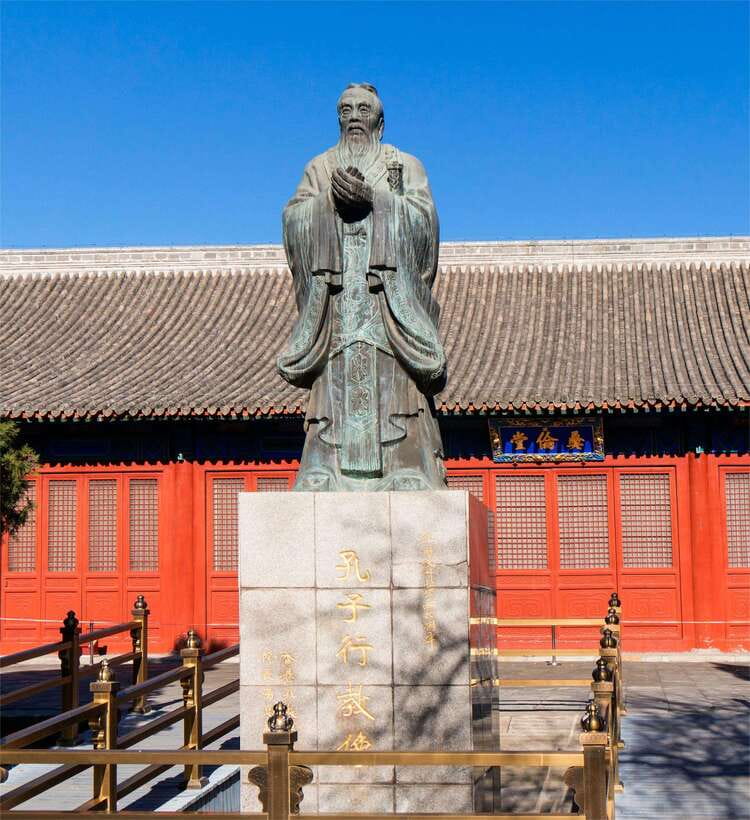
Beijing’s Confucius Temple and Imperial College form one visit, but they tell two different parts of the same story. The temple honored Confucius, the teacher whose ideas shaped Chinese education and government. The college trained and administered the scholars who hoped to serve the state.
That pairing gives the site its purpose. Confucius provided the moral and educational model. The Imperial College put that model into practice through formal study, examinations, and state appointments.
The complex began under the Yuan Dynasty more than 700 years ago. The Confucius Temple was built in 1306, and the Imperial College followed in 1308. Later dynasties used and altered the institutions, but the basic connection between learning, ceremony, and public service remained.
I find this more rewarding than a monument visited only for its age. You can see how education worked as a political system, not just as a private path to personal success. The buildings were designed for order and ritual, and the stone records show the human results of that system.
More Entry Tickets in Beijing:
- Beijing: The Temple of Heaven or Summer Palace Entry Ticket
★ 4.6 · 1,286 reviews - Temple of Heaven Ticket
★ 5.0 · 482 reviews - Beijing: Lama Temple (Yonghe Temple) Admission Ticket
★ 4.8 · 297 reviews
Entering with your QR code and passport
The entry process is pleasantly direct. Bring your original passport, not just a photograph or a copy, and have your electronic ticket ready on your phone. The stated entry method is to show the QR code together with the passport.
The ticket is valid for one day. Starting times depend on the availability shown when you book, so check the available time before paying. The attraction is listed as wheelchair accessible, which is useful information for anyone who needs step-free access or is visiting with a wheelchair.
The ticket is also described as allowing you to skip the ticket line. That does not remove the need for identity checks, so keep your passport and phone easy to reach. A dead phone battery would be a needless problem.
This is identified as a private group booking, but the included item is the attraction ticket itself. No guide is named, and no transport or meal is included. If you want spoken explanation, ask about the optional audio guide at the temple entrance.
Walking through the Confucius Temple
The Confucius Temple covers more than 22,000 square meters, with about 7,400 square meters of buildings. Its three courtyards follow a central south-to-north axis, leading you through a sequence of gates and halls rather than placing everything in one open courtyard.
The route begins at the Teacher Gate, followed by Dacheng Gate and Dacheng Hall. Chong Sheng Temple completes the central line. Each threshold helps create a sense of increasing formality, with the most important halls placed farther inside.
Dacheng Hall is the heart of the temple complex. One of the current exhibitions focuses on a restored version of this hall, giving you a way to understand how the building functioned and how its appearance has been presented over time.
Other displays cover Confucius and the history of the Beijing Confucius Temple. These exhibitions are helpful because the architecture alone can be hard to read. Without context, you see gates, roofs, courtyards, and tablets. With context, the same details point to ceremony, teaching, rank, and official culture.
The temple also holds a collection of cultural relics from the Yuan period and later eras. The supplied information does not specify every object on display, so keep your expectations practical: this is primarily an architectural and educational visit, with exhibitions that support the site rather than a large museum collection.
The stone tablets and China’s imperial examination system
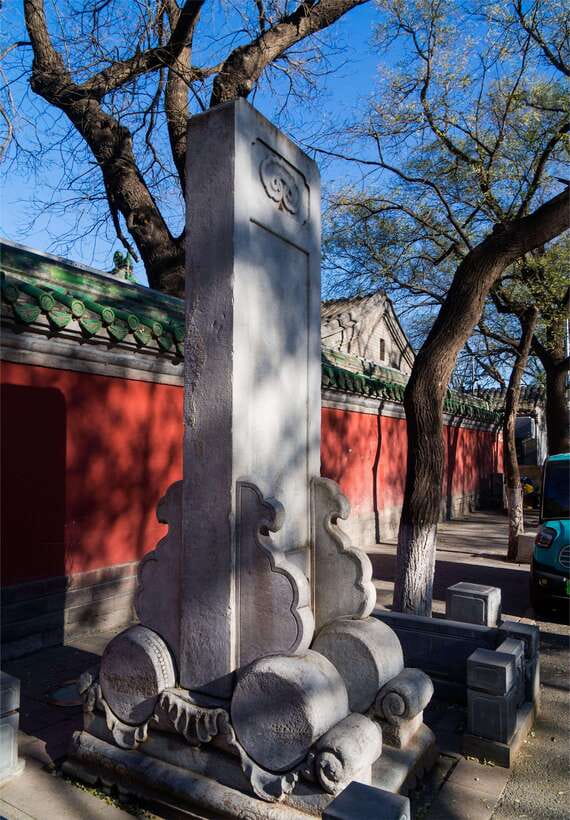
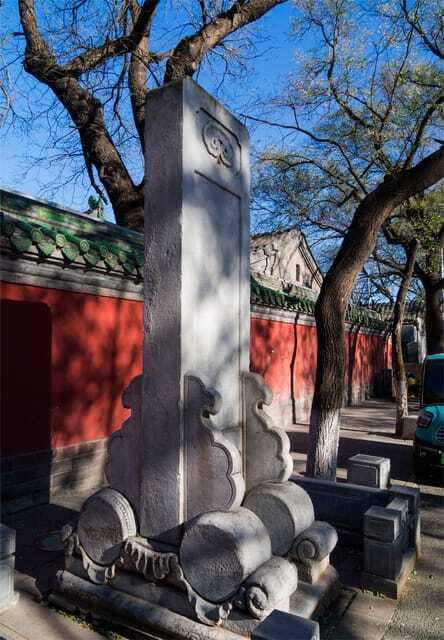
The tablets are the strongest reason to take your time here. There are 198 stone tablets arranged in four groups along both sides of the front courtyard. Together, they preserve the names, birthplaces, and ranks of 51,624 people who passed the Jinshi examination.
The Jinshi degree represented the highest level of the imperial examination system. Passing it could lead to a government career, social status, and lasting recognition. Seeing thousands of names carved into stone makes the scale of the system clear.
I recommend slowing down here instead of treating the tablets as background decoration. You may not be able to read every inscription, but the overall effect is easy to grasp. This was a system built to record achievement publicly and permanently.
The tablets are also valuable for historical study. They preserve personal and geographic information that helps researchers understand who succeeded, where they came from, and how official ranks were recorded. For you, that academic value becomes a very visible part of the visit.
More Temple Tours around Beijing:
- Beijing Classic Full-Day Tour including the Forbidden City, Tiananmen Square, Summer Palace and Temple of Heaven
★ 4.0 · 610 reviews - Temple Heaven, Lama Temple, Summer Palace & Peking Duck Bus Tour
★ 5.0 · 377 reviews - Temple Heaven, Summer Palace, Lama Temple, Hutong Bus Tour
★ 4.7 · 319 reviews - Beijing: Entry to Temple of Heaven Park
★ 4.6 · 314 reviews
Following the Imperial College’s formal axis
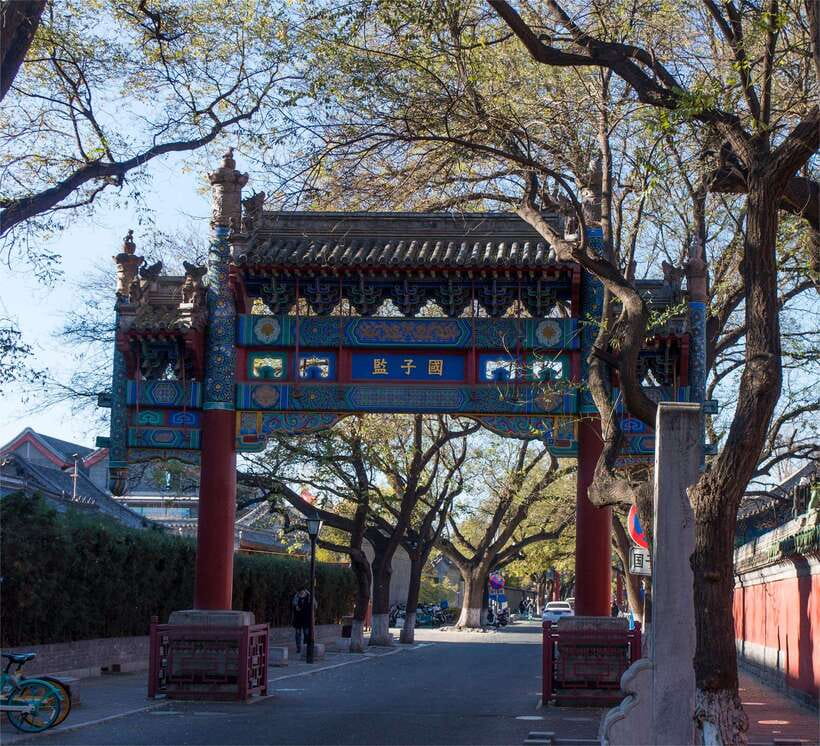
After the temple, continue to Guozijian, the Imperial College. This institution served as the highest state educational institution and education administration office during the Yuan, Ming, and Qing periods.
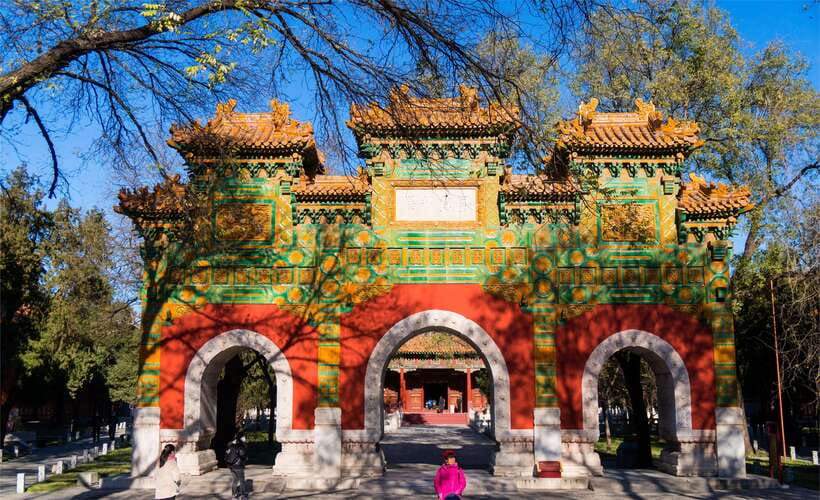
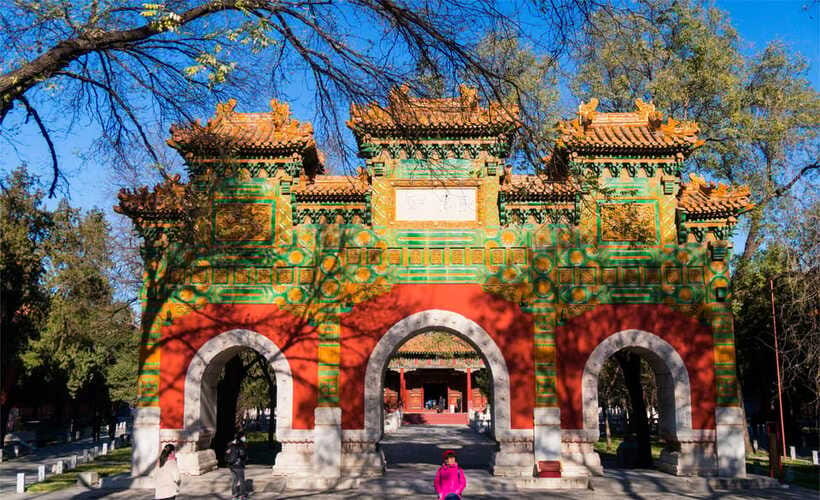
The college covers about 28,000 square meters and also has three courtyards. Its central route includes Jixian Gate, the Taixue or Imperial College Gate, the glazed memorial arch, Biyong Hall, Yilun Hall, and Jingyi Hall.
The glazed memorial arch is an important visual marker along the route. Biyong Hall is another major stop, while Yilun Hall and Jingyi Hall continue the sequence of formal educational spaces. The buildings are arranged with a strong central axis, making the college feel ordered and deliberate.
Two halls, six main rooms, an Imperial Tablet Pavilion, and Bell and Drum Pavilions are placed beside the central axis in a traditional symmetrical layout. That symmetry is not just decoration. It reflects the belief that education and government should operate according to clear rules and proper relationships.
The college can feel quieter and less immediately dramatic than the temple. That is part of its value. The temple gives you ceremony and memorial tablets; the college helps you picture the administrative side of education, where learning was connected to state service.
What the exhibitions add
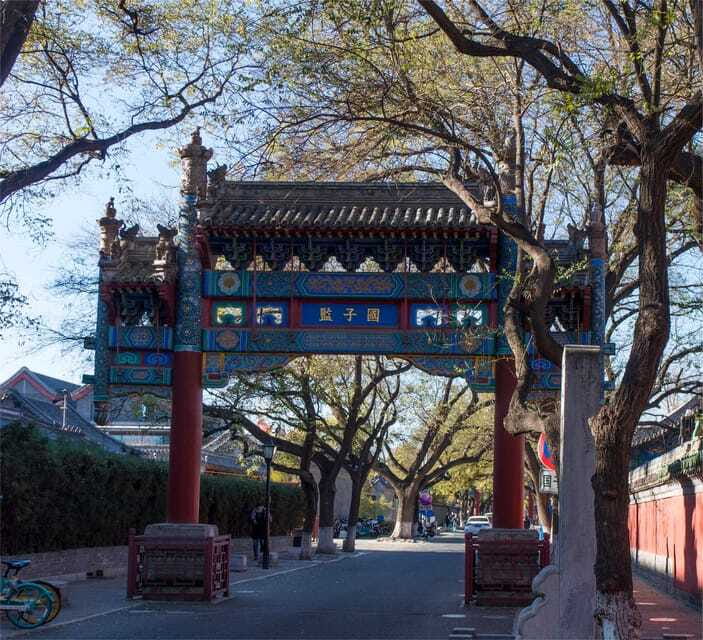
Three exhibitions are currently associated with the Confucius Temple. They include a restored Dacheng Hall exhibition, an exhibition about Confucius, and an exhibition on the history of the Beijing Confucius Temple.
These displays give you a useful pause from the courtyards. The buildings explain structure and status, while the exhibitions explain meaning. I would make time for them instead of rushing straight from gate to gate.
An audio guide may be purchased at the temple entrance. This is worth considering if you want more explanation but do not want to arrange a private guide. Since the ticket information does not name a guide or include guided commentary, the audio guide is the clearest stated way to add interpretation on site.
The experience is best for independent visitors who are comfortable moving at their own pace. If you prefer a guide to connect every building to a larger story, confirm what is included before booking, because the listed inclusion is the attraction ticket.
How much time should you allow?
The ticket is valid for one day, so you do not need to treat the visit as a tightly timed tour. The available booking time still matters for entry, but once inside, the two connected institutions give you room to set your own pace.
A quick visit could focus on the main gates, Dacheng Hall, the stone tablets, and Biyong Hall. A slower visit should include the exhibitions, the full central axes, and time to examine the tablet groups.
The total experience is best understood as a half-day cultural stop rather than a full-day activity by itself. The advertised duration is one day because the admission remains valid for that period, not because you need to spend every hour on site.
You should also plan for a reading-heavy visit. The architecture is easy to admire quickly, but the names, inscriptions, and exhibitions reward patience. If you are traveling with children, the formal courtyards may hold their attention briefly, while the tablet story and examination displays provide the most useful talking points.
Is the $7 price good value?
At about $7 per person, this is an inexpensive way to visit two important historic institutions in central Beijing. The value comes from the combined admission, the large grounds, the Yuan-era architecture, the exhibitions, and the stone records.
It is especially good value if you already enjoy historic buildings, education, political history, or museum displays. The price is also reasonable for independent visitors who want a self-guided cultural stop without paying for a full private tour.
The value is less certain if you expect a guided experience with detailed storytelling included. The ticket does not list a guide, transport, meals, or other extras. You may need to spend more on an audio guide at the entrance if you want help interpreting the site.
The current rating is 4.4 from 92 ratings, and the available booking feedback includes strong marks for the visit itself. A French-language note specifically points out the option to buy an audio guide at the temple entrance. That detail is useful because it confirms a practical way to make the visit more informative.
Who should book this experience?
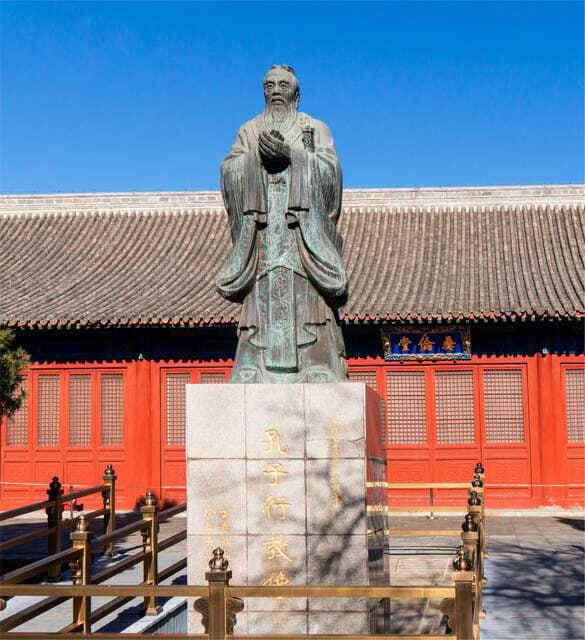
I would recommend it to you if you want a quiet, focused look at Beijing’s educational and official traditions. It suits history-minded visitors, architecture fans, and anyone curious about the imperial examination system.
It also works well for an independent day of sightseeing. You do not need to commit to a long guided itinerary, and the QR-code entry keeps the practical side simple. The private-group designation may appeal to people who prefer not to be placed into a shared tour, although you should confirm exactly how that arrangement works.
I would be more cautious if you want lively commentary, a named guide, or a highly social activity. None of those features is clearly included. The experience asks you to bring your own curiosity, and perhaps pay for the audio guide.
Bring your original passport, keep the QR code ready, and give the stone tablets more than a passing glance. They are the part that turns this from a pleasant old-building visit into a clear lesson in how education, status, and government were connected.
Should you book the Confucius Temple and Imperial College ticket?
Book it if a $7 admission ticket to two historic institutions sounds appealing, especially if you value architecture, exhibitions, and the imperial examination story. The easy passport-and-QR entry and wheelchair accessibility add practical value.
Skip it if you need a fully guided tour or expect every detail to be explained for you. For most independent visitors, though, this is a well-priced cultural stop with enough substance to justify the time. Buy the audio guide at the entrance if you want more context, and plan to move slowly through the tablet courtyards.
FAQ
What does the ticket include?
The ticket includes admission to Beijing’s Confucius Temple and the Imperial College.
How much does the experience cost?
The listed price is $7 per person.
How do I enter the attraction?
Show the electronic ticket QR code together with your original passport.
Do I need to bring identification?
Yes. You must bring your original passport or ID card, and the entry instructions specifically require the original passport with the electronic ticket.
How long is the ticket valid?
The ticket is valid for one day.
Is an audio guide included?
The ticket does not list an audio guide as an inclusion. An audio guide may be available to purchase at the temple entrance.
Is the site wheelchair accessible?
Yes. The experience is listed as wheelchair accessible.
Temple visits we reviewed lately in Beijing
- Private Tour to Yinshan Pagoda Forest w/Optional Activities★ 5.0 · 5 reviews
- Private ForbiddenCity&TempleofHeaven&SummerPalace Day Tour★ 5.0 · 4 reviews
- Forbidden City, Summer Palace & Temple of Heaven Tour★ 4.9 · 177 reviews
- Beijing: Temple of Heaven ticket; fast and smooth★ 3.4 · 23 reviews
- Chinese Kungfu class in old temple beside Forbidden Ci★ 4.8 · 53 reviews
- Beijing:Temple of Heaven+Forbidden City Private City Tour★ 5.0 · 4 reviews
- Beijing: Temple of Heaven Ticket with 5 UNESCO Site Options★ 5.0 · 130 reviews
- Beijing:Forbidden City Tour—Temple, Summer Palace&Great Wall★ 4.8 · 6 reviews
Beijing Temple Tours, compared.
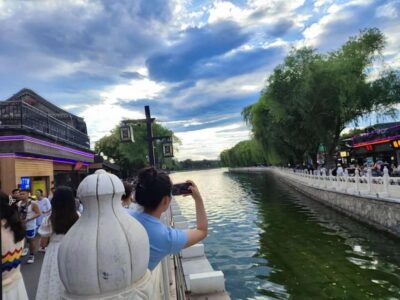
Beijing: The Temple of Heaven or Summer Palace Entry Ticket
Read our review →
Beijing Classic Full-Day Tour including the Forbidden City, Tiananmen Square, Summer Palace and Temple of Heaven
Read our review →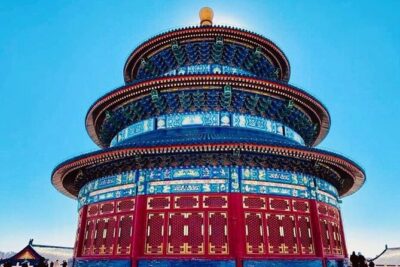
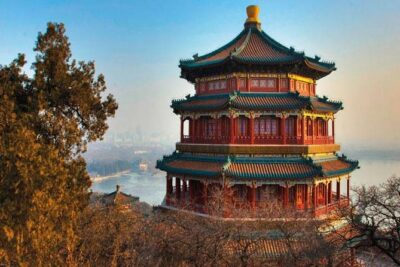
Temple Heaven, Lama Temple, Summer Palace & Peking Duck Bus Tour
Read our review →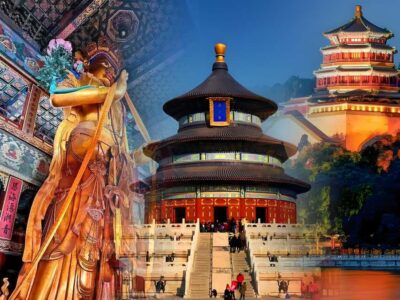
Temple Heaven, Summer Palace, Lama Temple, Hutong Bus Tour
Read our review →
Temple of Heaven, Summer Palace, Lama Temple, Hutong Tours
Read our review →
Beijing: Lama Temple (Yonghe Temple) Admission Ticket
Read our review →This tour also ranks in