
Review · SHARM EL SHEIKH
From Sharm: Mount Moses Trekking, Sunrise & Monastery Visit
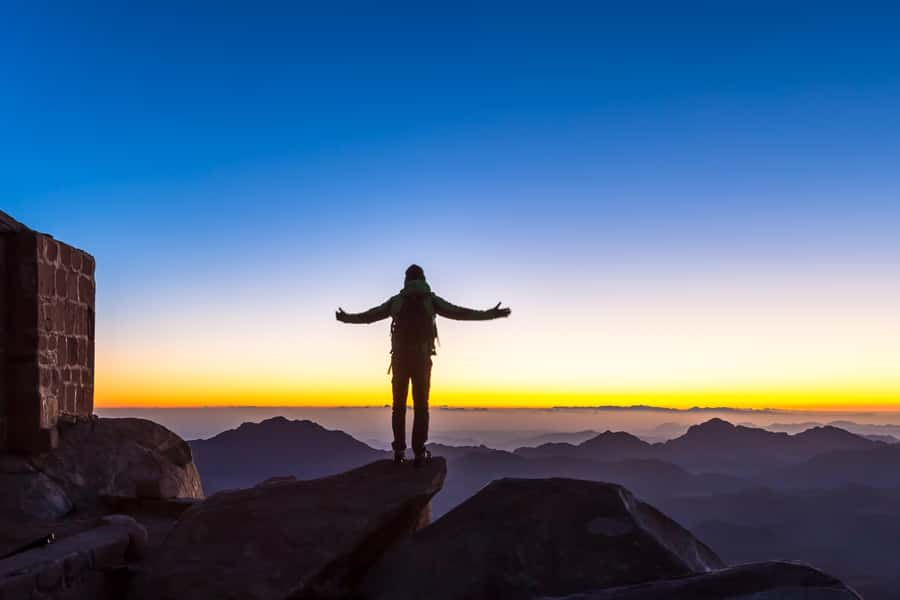
The reward here is a sunrise from Mount Sinai, reached after a night hike through the desert and a final climb over 750 uneven steps. At 2,285 meters, you look across bare mountain ridges as the first light spreads over South Sinai. It feels part pilgrimage, part endurance test, and part very early-morning adventure.
I like two things especially: the Bedouin guides, who set a steady pace and stop often, and the chance to pair the climb with St. Catherine’s Monastery. The monastery gives the day a cultural and religious focus instead of leaving you with only a mountain photograph.
The drawback is simple: this is a 16 to 17-hour outing with a four-hour drive each way, a night without proper sleep, and a demanding ascent. Transport arrangements can also be crowded, so do not book this expecting a relaxed coach holiday.
What makes this Mount Sinai trip worth considering
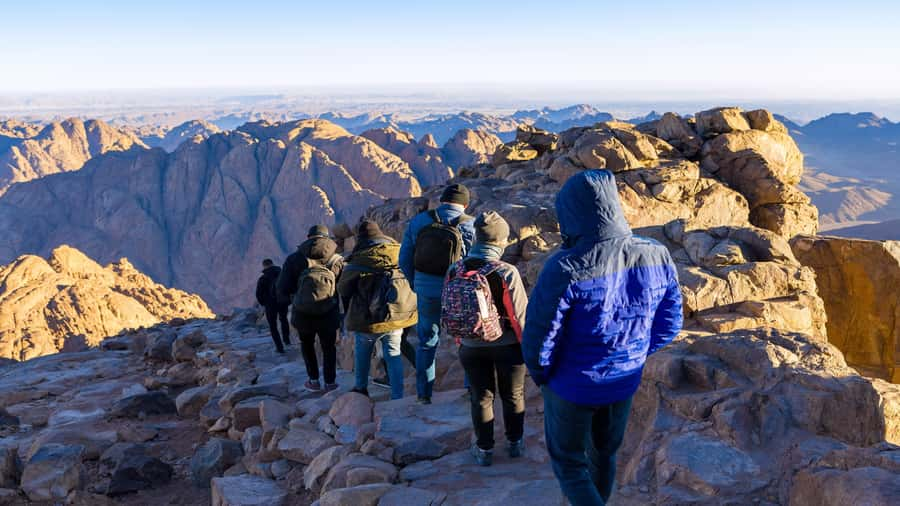
- Sunrise at 2,285 meters: You reach the summit before dawn and watch the desert ridges turn gold.
- A real night hike: The trail begins in darkness, with a torch needed for loose stones and camel droppings.
- Two different guides: An Egyptologist leads the wider tour, while a Bedouin guide assists with the mountain trek.
- St. Catherine’s Monastery afterward: You can see a sixth-century church, old manuscripts, icons, and the site associated with the burning bush.
- A low price for a very long day: At $50 per person, transport, water, and both guides are included, though food, drinks, toilets, and blankets cost extra.
- Cold summit conditions: Even when Sharm is warm, the mountaintop can be close to freezing, windy, and uncomfortable without proper layers.
The night departure from Sharm El Sheikh
Pickup is scheduled between 8:00 PM and 9:00 PM, though the exact time may change. You need to wait at the main gate of your hotel along the highway, not in the reception area. Confirm the meeting point carefully, especially if your hotel is set back from the main road.
The first part may involve a smaller minibus collecting people from several hotels. At a transfer point, you may change to a larger air-conditioned coach for the drive to St. Catherine. This system gets people together, but it can take time. Some departures have involved crowded vehicles, limited legroom, and even a folding seat in the aisle.
The drive takes about four hours in each direction, with security checkpoints sometimes making the total journey longer. That matters more than it sounds. You are not simply signing up for a hike followed by a short ride home. You are committing to a full night and most of the following day.
Bring a small bag rather than a large suitcase. You will carry it up the mountain, and the trail already demands enough effort. A headlamp is better than a phone flashlight, although guides may provide lights.
More Temple Sunrise Tours in Egypt
- Sunrise at Mt.Sinai and St.Catherine monastery. Entrance included
★ 4.5 · 64 reviews - Mount Sinai Sunrise and St. Catherine’s Monastery Trip from Dahab
★ 4.0 · 26 reviews - St Catherine Monastery and Mt Sinai Sunrise Tour from Dahab
★ 4.5 · 23 reviews
Walking into the mountain darkness
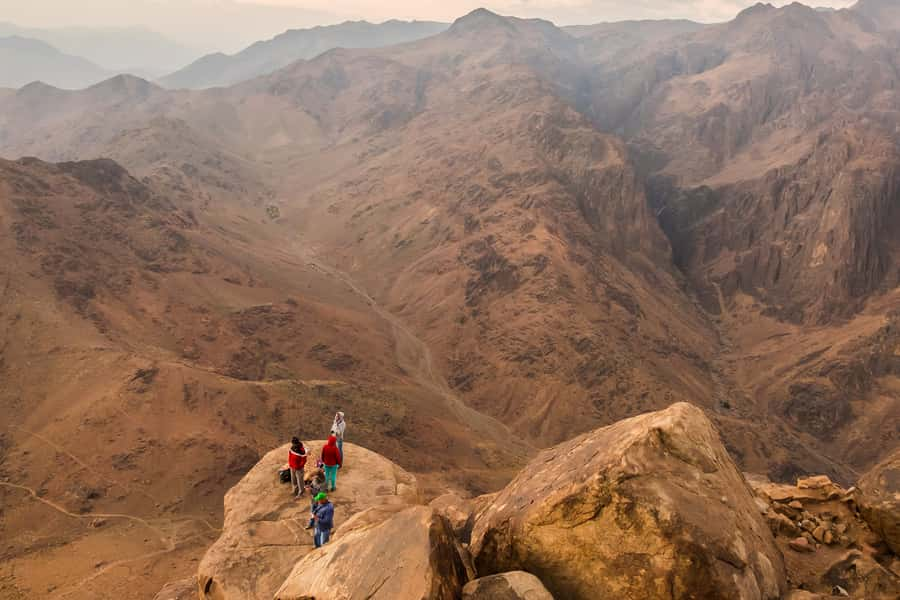
The trail begins at roughly 1,300 meters, according to the practical information given by the tour team, and rises to the summit at 2,285 meters. The full route is commonly described as about 7 kilometers each way, although exact distances vary by how the route is measured.
The first section is a steep, uneven path. In the dark, you need to watch every step. Loose stones, rough ground, and camel droppings are part of the route. The trail is not technically difficult like rock climbing, but it is tiring, especially after the long ride and with no proper sleep.
The pace is usually slow, with regular rest stops. You can buy hot drinks and snacks along the way, and there are basic toilets for a small fee. Carry tissues and small Egyptian pound notes, since toilet facilities are extremely simple and change may not always be available.
The trail can be crowded. Camels use parts of the same route, and you may need to move aside. The experience feels more like a shared pilgrimage than a quiet walk in the wilderness. If you want solitude, this is not the right mountain outing. If you like the energy of moving uphill with people from several countries, it adds to the occasion.
The Bedouin guide takes over for the trekking section. You may hear names such as Ashrof, Amr, Ali, Ibrahim, Jimmy, or Mohammad associated with different departures, but your guide will depend on the date and group. The strongest part of their role is practical: keeping people together, offering encouragement, and helping with the rougher sections.
Some walkers find the pace brisk. If you are a fast hiker, you may move ahead at times, but do not assume the group will follow your personal rhythm. If you have shortness of breath, bone pain, or a medical condition that affects exertion, think carefully before booking. This is not suitable for children under 14, pregnant women, wheelchair users, or people who struggle with sustained uphill walking.
The 750 steps are the real test
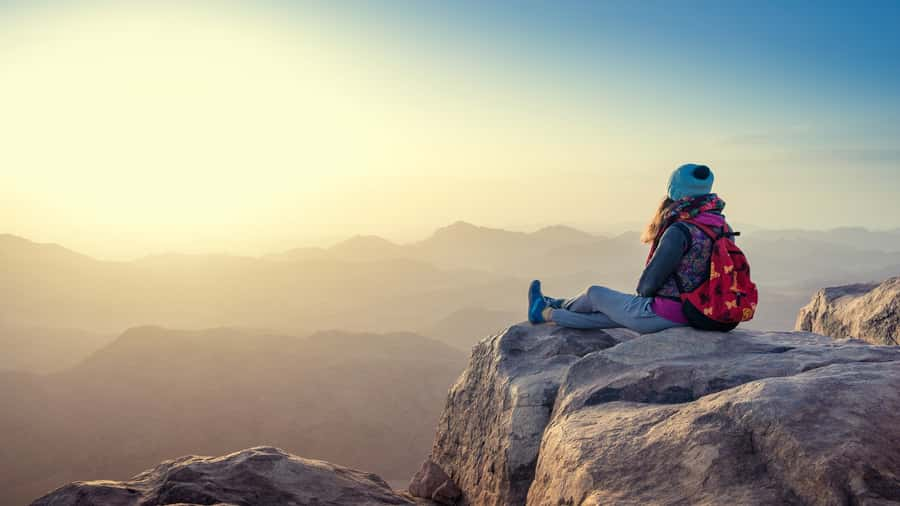
The final 750 steps are not neat stairs. They are irregular rocks and uneven stone steps, with some much higher than others. Several people who find the first 7 kilometers manageable regard this last section as the hardest part.
You need to climb it on foot. A camel can be used for the first part of the ascent, up to the beginning of the 750 steps, but it cannot carry you through the final section. The operator does not recommend the camel option, although it remains available if you are struggling.
A camel ride can help if breathing or fatigue becomes a serious issue. It is not a shortcut to the summit. One practical point: camel prices are separate, and the amount can vary. Carry cash in Egyptian pounds, euros, or US dollars, with clean, undamaged notes.
Use the rest stops wisely. Drink water, loosen or add layers as needed, and do not race early in the climb. You will need energy for the final rocks and for the descent later in the morning.
Waiting for sunrise on Mount Moses
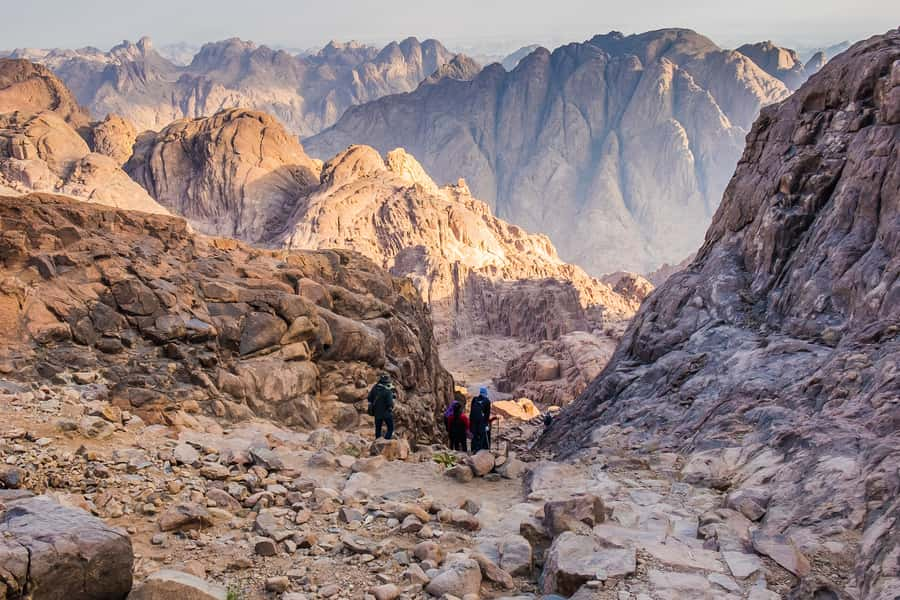
Most groups reach the top before sunrise, sometimes well before it. That early arrival helps you find a viewing place, but it creates a new problem: you may sit in the cold for an hour or more.
At the summit, wind can cut through clothing. Winter conditions have been reported around minus 2 degrees Celsius, and some departures have faced temperatures between minus 5 and minus 10 degrees. Conditions vary, but you should prepare for the coldest reasonable version of the experience.
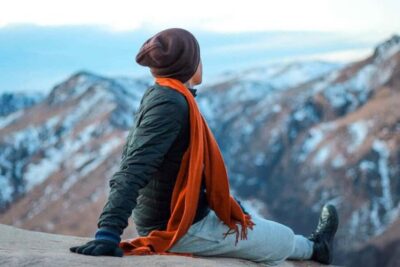
Pack thermal layers, a fleece or sweater, a down or insulated jacket, a windproof outer layer, hat, gloves, and warm socks. A blanket can be rented near the summit, often for around 200 Egyptian pounds, though prices can change. It is useful for the waiting period, even if you feel warm while climbing.
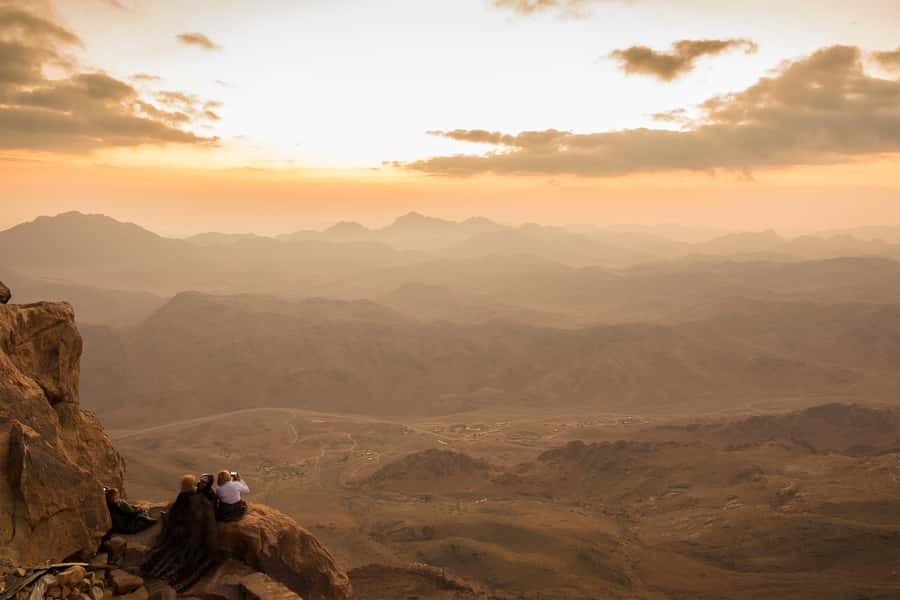
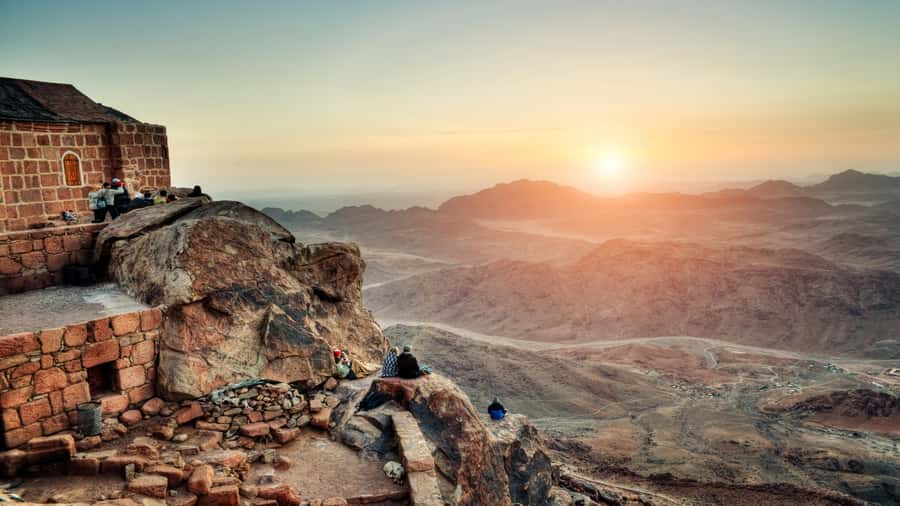
The sunrise itself is the reason to accept the discomfort. From the summit, the surrounding ridges appear as dark shapes before dawn, then slowly pick up orange, pink, and gold light. The views are broad and spare rather than green or lush. You see layers of bare mountains and desert valleys, with the changing light doing most of the work.
You can take photographs, pray, or simply sit quietly. The religious meaning is personal, but the setting explains why this mountain has such lasting importance in Judaism, Christianity, and Islam. The tour presents the summit as the place associated with Moses receiving the Ten Commandments.
Same sacred ground, another way to see it:
- From Aswan: Abu Simbel Temple Day Trip with Hotel Pickup
★ 4.4 · 2,807 reviews - Luxor Day Tour: Valley of Kings & Queens & Hatchepsut Temples
★ 5.0 · 1,496 reviews - Luxor: Valley of the Kings and Hatshepsut Temple Day Tour
★ 4.4 · 1,404 reviews - Luxor: Valley of Kings, Hatchepsut Temple ,Karnak & Luxor-DayTour
★ 5.0 · 735 reviews
The descent, breakfast, and the cost of tired legs
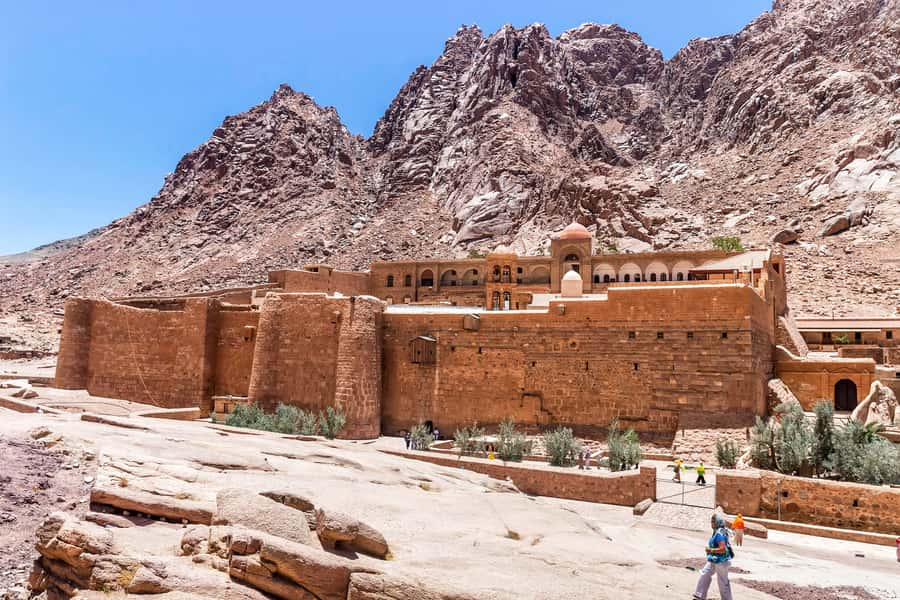
The way down takes about two hours for many people, although the exact time depends on the group. Descending is usually less exhausting than climbing, but uneven stones can be hard on knees and ankles. Good hiking shoes matter far more than fashionable clothes. Trainers may work for confident walkers, but flip-flops are a poor choice.
Once back at the base, you have time to rest and eat breakfast. Breakfast is not simply handed to you as part of the $50 price. You need to pre-order a breakfast box from your hotel and collect it before departure.
The tour includes bottled water, but extra drinks, snacks, and personal expenses are not included. The small shops along the trail sell hot drinks, chocolate, and other food. Prices can feel high for such basic items, so bring enough water and food from Sharm if you prefer predictable costs.
At this stage, you may be very tired. One practical concern is that some people have little energy left for the monastery. That is understandable, but St. Catherine’s is one of the reasons this trip is more than a mountain transfer.
St. Catherine’s Monastery and the burning bush
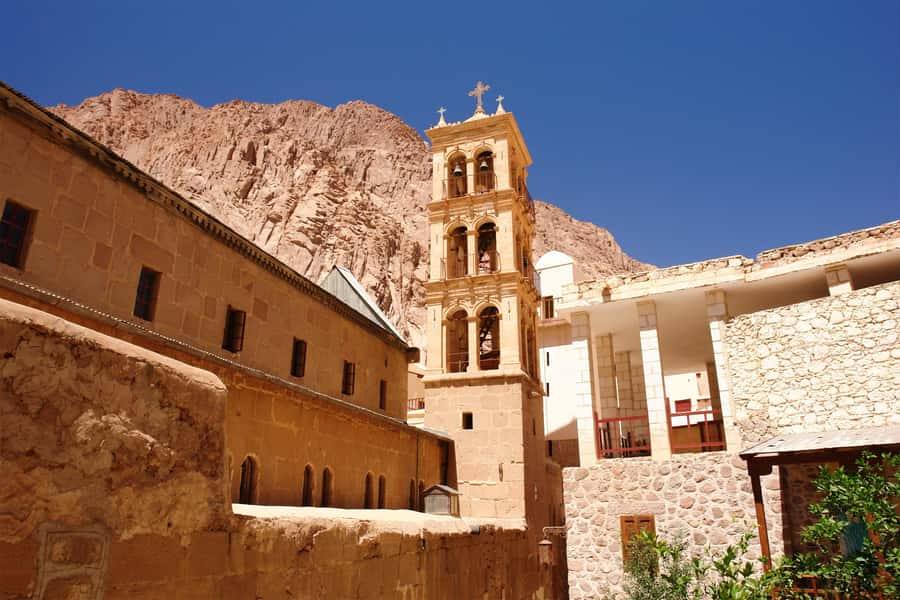
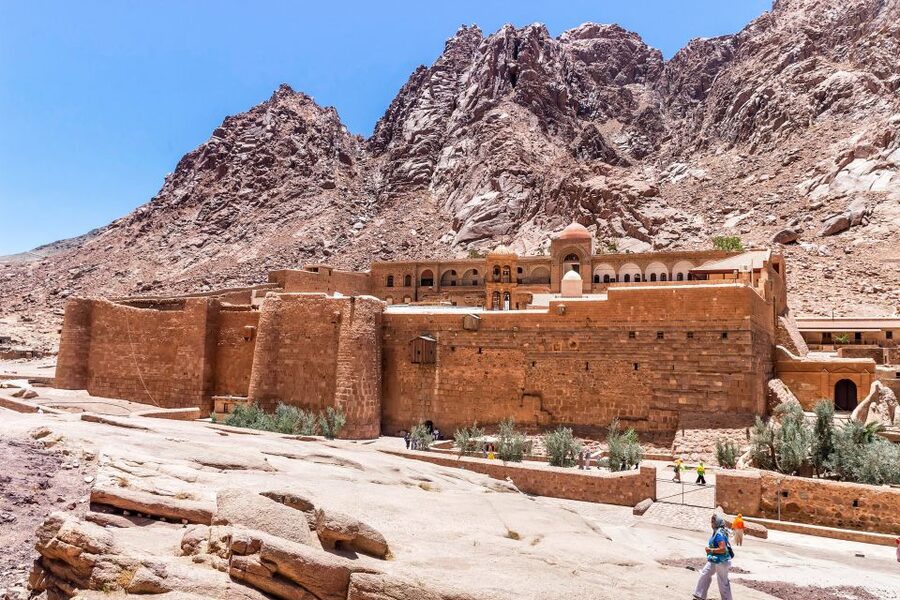
St. Catherine’s Monastery is a UNESCO World Heritage Site and one of the oldest functioning Christian monasteries in the world. The complex includes a sixth-century church beside the site associated with the burning bush.
You may see old manuscripts in the library and religious icons displayed in the museum. The collection gives useful context to the mountain and the long religious tradition of the Sinai Peninsula. The monastery of Saint Anthony, another major ancient monastery, lies across the Red Sea in the desert south of Cairo.
The visit can feel rushed after the climb. Some people find they have only enough energy for a short look, and the schedule may be tight because buses need to leave at a set time. If the monastery matters greatly to you, ask the guide early how much time will be available and conserve some energy on the descent.
The monastery is closed on Sundays and on certain Christian holidays. Closure dates can change, so check before booking. If it is closed, the mountain portion may still operate, but you should not assume the full visit will be available.
Is $50 good value for such a long day?
For $50 per person, the package covers hotel pickup and drop-off from Sharm El Sheikh, air-conditioned transport, water, an Egyptologist guide, and a Bedouin trekking guide. It is a strong price for the distance and the number of hours involved.
The value is less convincing if you want comfort. Extra food and drinks cost more. Toilets may require payment. A blanket and camel ride are separate expenses. Transport can be crowded, and the long road journey is part of the price you pay in time and energy.
Still, arranging the mountain, guides, security checkpoints, and monastery independently would be difficult for many visitors. I see the $50 as good value for an organized pilgrimage-style trip, provided you understand that the comfort level is basic.
Free cancellation up to 24 hours before departure and reserve-now, pay-later booking make it easier to commit while your Sharm plans are still changing. Those policies do not make the hike easier, but they reduce the risk of booking too far ahead.
What to pack for this particular day
Pack for two climates. You may leave a warm Sharm evening, climb in cold darkness, wait in strong wind, and descend into bright morning heat.
Bring:
- Passport
- Hiking shoes with a firm sole
- Headlamp or strong flashlight
- Warm layers, including a hat and gloves
- Windproof jacket
- Water and food
- Hotel breakfast box
- Tissues
- Small cash in Egyptian pounds, euros, or US dollars
- Phone power bank
Keep the bag light. You do not need many possessions, but you do need the right ones. A warm jacket that stays in the backpack is more useful than an extra shirt you will never wear.
Who should book this Mount Sinai experience?
You should book it if you want a demanding, meaningful day and you are comfortable with basic conditions. It suits people who enjoy hiking, religious sites, sunrise views, and group travel. You do not need to be an experienced mountaineer, but you should have a reasonable level of fitness and be ready for a sustained climb.
I would not choose it for young children, anyone pregnant, wheelchair users, or anyone with serious breathing, joint, or bone problems. I would also hesitate if you dislike night travel, crowded coaches, uneven trails, or waiting in freezing conditions.
Communication varies by departure. Guides may speak English, Russian, and Arabic, and the tour team has included guides such as Ashrof and Amr, but the specific staff will depend on the day. The Bedouin guide is the person who matters most during the climb, while the Egyptologist adds context at the monastery and on the bus.
Should you book it?
Book this tour if the thought of reaching Mount Sinai before dawn feels more exciting than exhausting. The sunrise is the payoff, and the monastery adds genuine historical and religious weight to the day.
Skip it if you need a comfortable vehicle, a private pace, or a guaranteed long visit inside the monastery. For everyone else, $50 buys an unusually full experience: a hard climb, a cold summit, a powerful sunrise, and a visit to one of Sinai’s most important religious places. Just bring proper shoes, serious warm clothing, cash, and realistic expectations about the long road home.
FAQ
How long does the Mount Sinai and monastery tour take?
The full experience lasts about 16 to 17 hours, including hotel pickup and drop-off. Security checkpoints can make the journey longer.
What time is hotel pickup?
Pickup from Sharm El Sheikh is scheduled between 8:00 PM and 9:00 PM. You should wait at the main gate of your hotel along the highway, not at reception.
How difficult is the Mount Sinai climb?
The route takes roughly 2 to 3 hours uphill for many groups, followed by about 750 uneven steps near the summit. The descent takes around two hours. A reasonable level of fitness is needed.
Can I ride a camel to the summit?
A camel can be used on the first part of the ascent, up to the 750 steps. The final steps and the return trek must be completed on foot.
What is included in the $50 price?
The price includes the 16 to 17-hour tour, hotel pickup and drop-off, air-conditioned transport, an Egyptologist guide, a Bedouin trekking guide, and water. Extra drinks and personal expenses are not included.
Is St. Catherine’s Monastery open every day?
The monastery is closed on Sundays and certain Christian holidays. Check the opening date before booking, since the holiday schedule may vary.
More temple hikes and treks in Egypt
- From Barcelona: Montserrat Monastery, Easy Hike, Cable Car
★ 4.9 · 1,021 reviews - From Barcelona: Montserrat Monastery & Scenic Mountain Hike
★ 4.9 · 978 reviews - Chiang Mai – Doi Suthep Temple & Wat Pha Lat Hike
★ 4.6 · 740 reviews - Chiang Mai – Doi Suthep Temple & Wat Pha Lat Hike
★ 5.0 · 657 reviews
Temple visits we reviewed lately in Egypt
- Luxor: Karnak and Luxor Temples Private Half-Day Tour★ 4.7 · 27 reviews
- Marsa Alam: Valley of the Kings & Karnak Temples Luxor Tour★ 4.6 · 177 reviews
- Luxor: Valley of the Kings and Hatshepsut Temple w/Nile Boat★ 5.0 · 230 reviews
- Luxor: Tour to Edfu Temple & Lunch & Felucca & Entrance Fees★ 4.8 · 7 reviews
- Luxor: Valley of The Kings and Hatshepsut Temple Day Trip★ 4.3 · 55 reviews
- Luxor: Hot Air Balloon Ride Over Temple of Hatshepsut★ 4.8 · 185 reviews
- Luxor: Karnak and Luxor Temples Private Half-Day Tour★ 4.4 · 4 reviews
- Luxor: Private Tour to Valley of Kings & Hatshepsut Temple.★ 4.4 · 16 reviews
Sharm el Sheikh Temple Tours, compared.
Sharm El Sheikh: Mount Sinai & St. Catherine Monastery Tour
Read our review →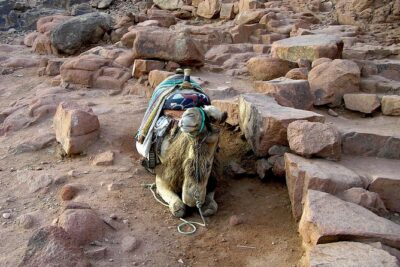
Sunrise at Mt.Sinai and St.Catherine monastery. Entrance included
Read our review →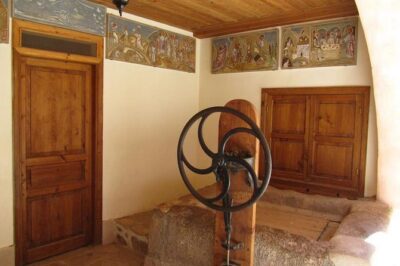
St Catherine Monastery Private Tour From Sharm El Sheikh
Read our review →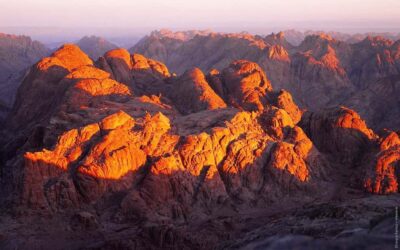
Cairo: 2-Day Trip to St. Catherine & Moses Mountain Climb.
Read our review →This tour also ranks in