Review · MUMBAI
Mumbai: Private tour for Kanheri Caves and Golden Pagoda
Kanheri Caves are one of Mumbai’s best surprises: 109 rooms cut from a single basalt outcrop, hidden among the greenery of Sanjay Gandhi National Park. Add the Golden Vipassana Pagoda, and you get a day that moves from ancient stone cells to a gleaming modern Buddhist monument.
I like the contrast between the two stops, and I like having private air-conditioned transport for the long Mumbai journey. The English-speaking guides, including Aryan and Nikheil on past departures, add useful context instead of leaving you to guess what the carvings mean.
The main caution is timing. Traffic can make the drive last 1 to 1.5 hours, and weekends can bring packed park buses, busy ferry crossings, and crowds near the park’s bathing spots. Go on a weekday morning if you can.
Key points to know before booking
- 109 Kanheri caves: See meditation cells, worship halls, sculptures, pillars, and inscriptions cut into dark volcanic rock.
- Seven-meter Buddha: The principal hall contains a tall Buddha figure surrounded by 34 carved pillars.
- Four writing systems: Look for inscriptions in Brahmi, Devanagari, Pallavi, and Sanskrit.
- Ferry and tuk-tuk connection: The route to the pagoda includes a 10-minute ferry and, according to the practical details of the journey, a tuk-tuk ride.
- Private touring: You get an English-speaking guide and air-conditioned car, with time to explore independently.
- Extra costs: Food, drinks, and entrance tickets are not included in the $21 starting price.
Why Kanheri Caves make a strong first stop
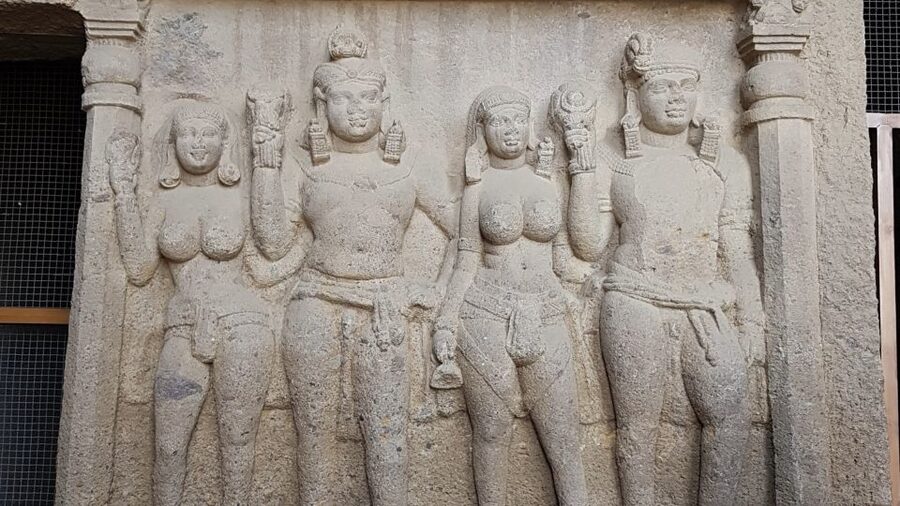
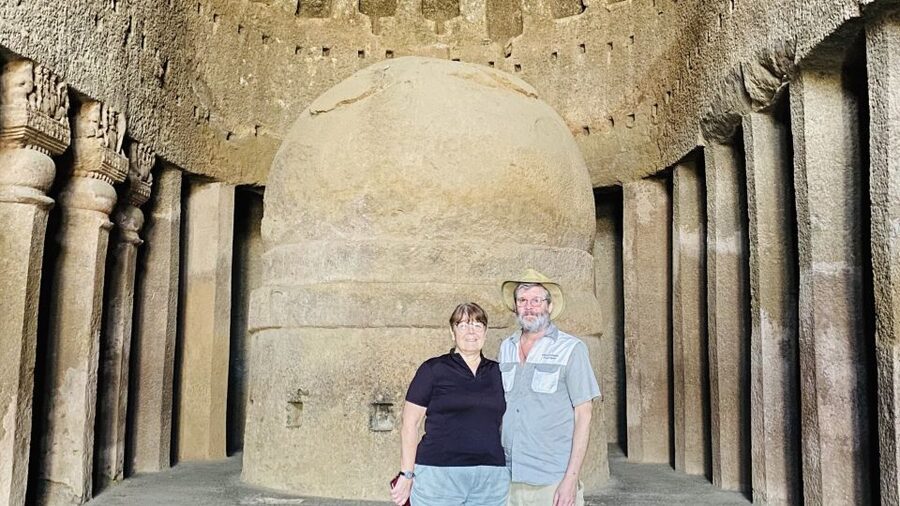
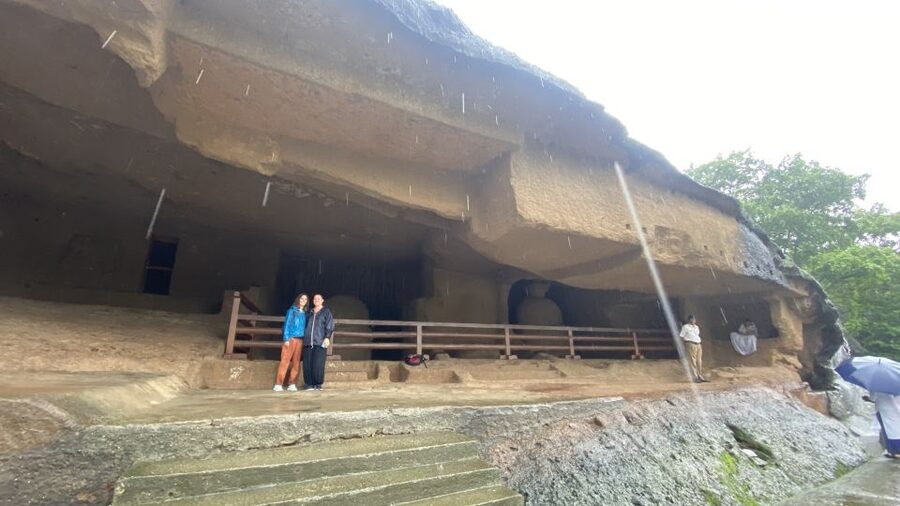
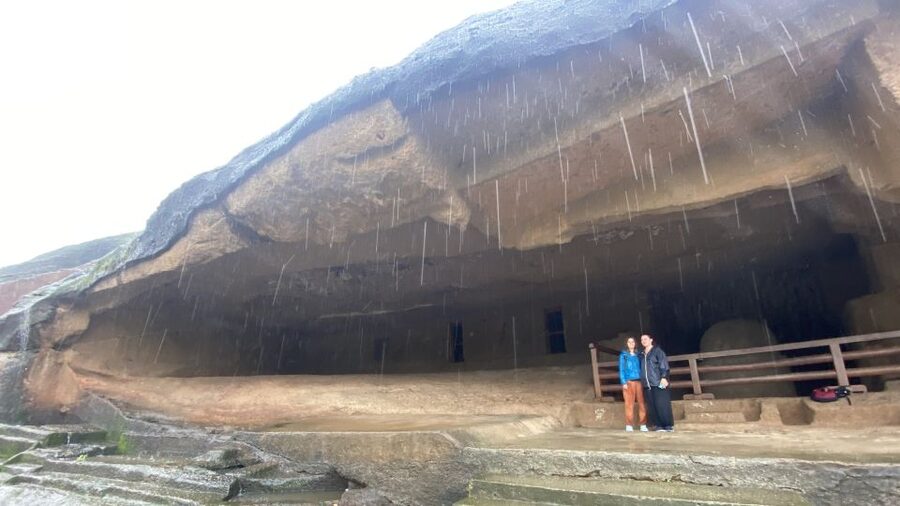
Kanheri is not a polished monument dropped into a city square. It is a working piece of old Buddhist architecture built directly into a huge basalt rock formation. The caves began in the 1st century and grew over time, creating a large complex of spaces for worship, study, and monastic life.
That setting matters. You reach the caves through Sanjay Gandhi National Park, one of Asia’s prominent national parks, so the visit has a welcome change of pace from central Mumbai. The park’s greenery frames the dark rock, and the journey may bring views of monkeys, deer, and birds. Wildlife sightings are not guaranteed, but the natural setting is part of the pleasure.
You are guided through five of the most important caves rather than trying to inspect all 109. That is the sensible approach. A private guide can point out what matters, explain the different types of rooms, and then give you free time to look around at your own speed.
The smaller caves are called viharas. These served as resting and living spaces for monks. Their simple cells help you picture the daily routine of people who stayed here for study, meditation, and religious work.
The larger chaityas were used for worship. These halls have a more ceremonial feel, with carved details and Buddhist sculpture. The difference between a plain monk’s cell and an ornate prayer space is one of the clearest ways to understand how the complex functioned.
More Cave Temple Tours in India
- Mumbai: Kanheri Caves and The Golden Pagoda Temple
★ 4.7 · 108 reviews - Sanjay Gandhi National Park+ Kanheri Caves + Temple +Tigar Safari
★ 5.0 · 54 reviews - Mumbai: Buddhist Kanheri Caves with Golden Pagoda Temple
★ 4.8 · 47 reviews
Inside the main hall, look up and slow down
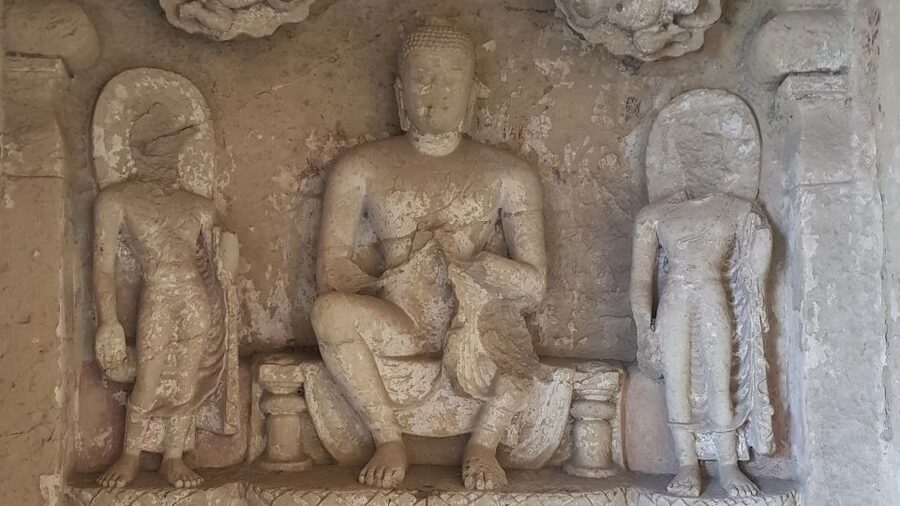
The main hall contains a seven-meter-high Buddha figure, a powerful focal point even if you have already seen Buddhist art elsewhere in India. Around it is a colonnade of 34 carved pillars, giving the space a strong rhythm and sense of order.
One unusual detail is the eleven-headed Avalokiteshwara. Your guide should explain the figure’s place in Buddhist belief and point out details that are easy to miss in the dim stone interior.
The caves also contain around 100 inscriptions. They appear in several scripts, including Brahmi, Devanagari, Pallavi, and Sanskrit. You do not need to read these languages to appreciate their value. They show how the site was used across different periods and connect the physical caves with the people who supported, visited, and maintained them.
This is where a guide earns the cost of a private tour. Without explanation, you may see carved walls and empty rooms. With a good explanation, you begin to understand how architecture, religion, writing, and everyday monastic life fit together.
The caves are not a quick photo stop. You will walk between rooms and spend time on uneven ground, so wear shoes with a firm sole. Comfortable footwear is listed as essential, and that advice is worth taking seriously.
The park journey is part of the experience
The drive from your Mumbai accommodation to the park usually takes about 1 to 1.5 hours. That range is wide because Mumbai traffic is unpredictable and your hotel location makes a difference.
If you choose hotel pickup, wait in the lobby about five minutes before the agreed time. The air-conditioned car gives you a comfortable break from the roads, but do not assume the whole day will be spent in the vehicle. The cave visit includes walking, and the connection to the pagoda involves a ferry and a tuk-tuk.
The stated meeting point is the main entrance of Sanjay Gandhi National Park. Pickup is optional, so confirm the arrangement when booking. This matters because the experience can feel very different if you must make your own way to the park entrance.
Weekends deserve special caution. The park attracts large local crowds, including people visiting its small waterfalls for bathing. Park buses can become extremely full, making the entrance and internal transport slower and less comfortable.
I would choose a weekday morning. You are more likely to have a calmer walk through the caves, and the earlier start helps before heat and crowd levels build. The monsoon period can also make the route less pleasant, so a dry-season visit is the safer choice if your schedule allows.
Crossing by ferry to the Golden Vipassana Pagoda
After Kanheri, the trip changes character. You take a ferry lasting about 10 minutes as part of the route toward the Golden Vipassana Pagoda in Gorai.
This is not presented as a private sightseeing boat. It is a ferry used by the local community, and it can be crowded with pedestrians and motorbikes. That is useful to know before you go. The crossing is part transport and part local-life experience, but you should not expect a quiet cruise across the water.
A tuk-tuk ride is also part of the practical connection after the ferry. The car cannot take you directly to the pagoda, so the final approach involves a change of vehicle. This extra step is not a flaw, but it is an important detail for anyone expecting door-to-door transport.
The ferry ride breaks up the day and gives you a glimpse of how people move around this part of Mumbai. It also means the total duration can vary. The advertised range is 2.5 to 6 hours, and traffic, queues, ferry conditions, and your starting point all affect the final timing.
More Private Temple Tours in India
- Full Day Varanasi Private Tour with Temples, Ghats & Rituals
★ 4.5 · 105 reviews - Full-Day Private Tour to the Kanchipuram Temples from Chennai
★ 5.0 · 73 reviews - Private Tour of Step well, Modhera Sun Temple & Patola saree weaving by car
★ 5.0 · 57 reviews - Ayodhya Private Tour & VIP Darshan -Special support for Seniors
★ 5.0 · 56 reviews
Golden walls, quiet rooms, and Buddhist symbolism
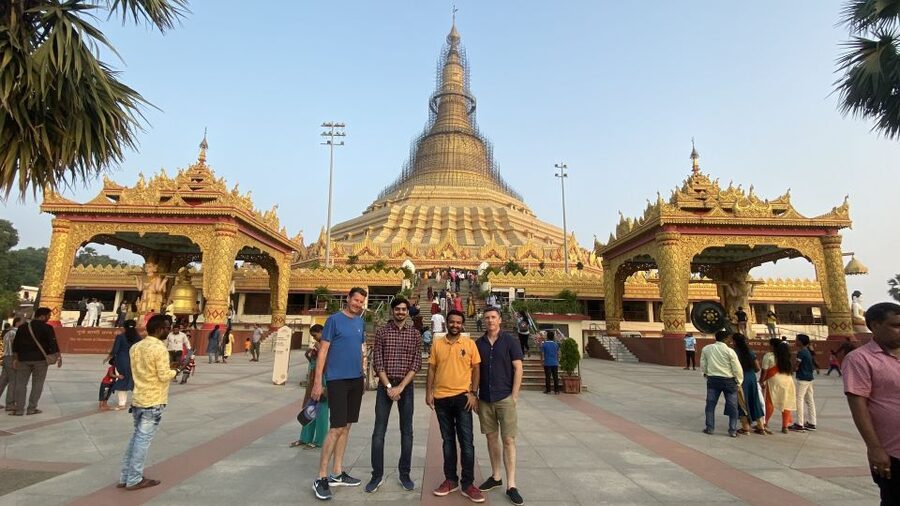
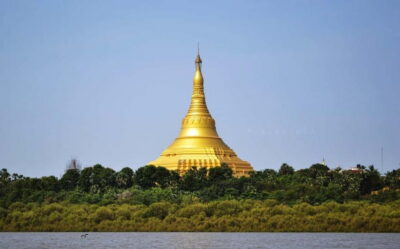
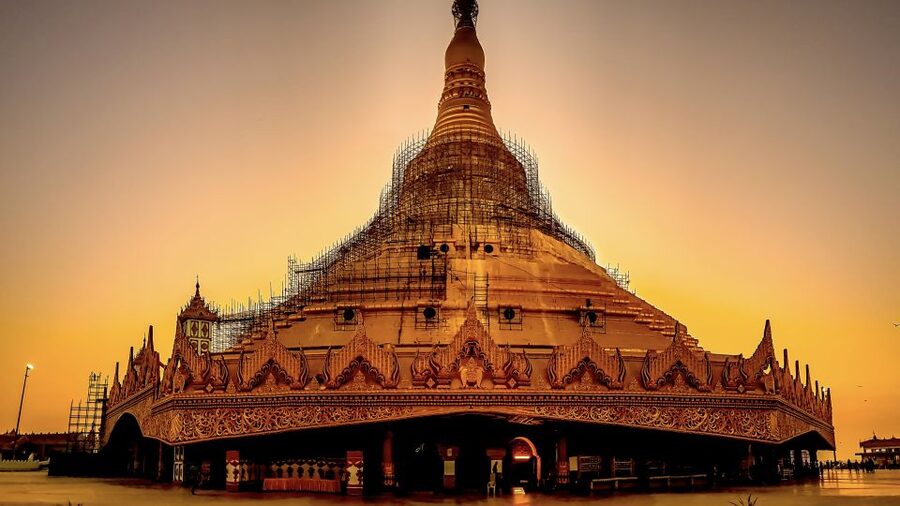
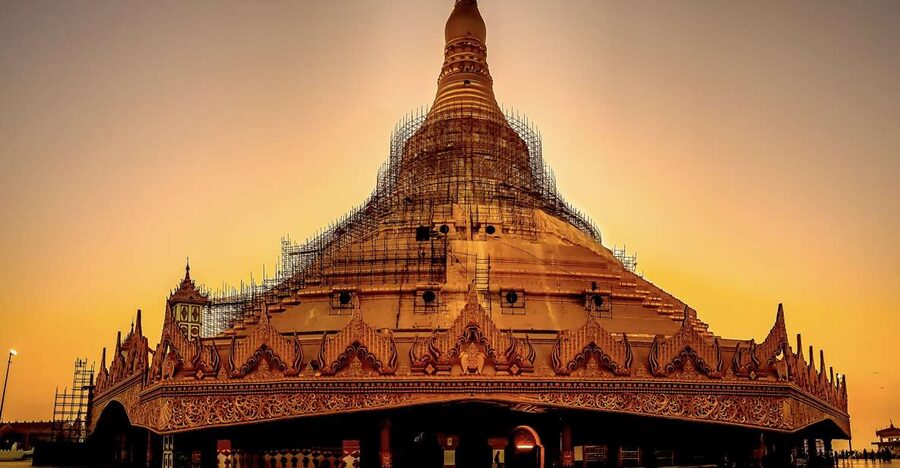
The Golden Vipassana Pagoda is visually very different from Kanheri. Its exterior catches the sunlight and shines above the surrounding greenery. The building’s Burmese-inspired design gives it a distinct appearance, and the golden finish creates a strong contrast with the dark cave walls from earlier in the day.
Inside, the pagoda holds relics of Gautama Buddha. The building is also designed without supporting pillars, an impressive feature that your guide can help explain. It is not only a striking object for photographs. The site is intended as a place for reflection, meditation, and contact with Buddhist teachings.
You have roughly one hour for sightseeing here. That is enough to see the principal spaces and take in the exterior, but it is not a long meditation retreat. Keep your expectations realistic: this is a guided visit to a spiritual site, not a formal meditation course.
The location adds to the appeal. The pagoda is surrounded by greenery and offers views toward the Arabian Sea, giving you a quiet pause after the traffic and activity of Mumbai. The word quiet should be taken as relative, especially on busy days, but the atmosphere is calmer than the city streets.
The pagoda works best as a second act. Kanheri shows Buddhism through ancient rock-cut rooms, inscriptions, and sculpture. The pagoda presents Buddhist devotion through a modern monument built around peace and meditation. Seeing both in one outing gives you a broader picture than visiting either site alone.
What the private guide adds
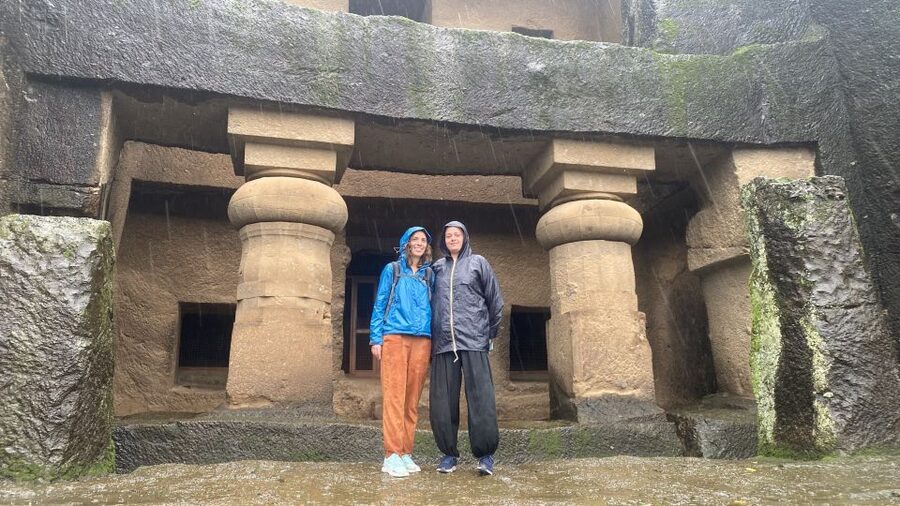
A private format is useful here because the day includes several transitions and two sites with different kinds of meaning. Your guide can explain why the caves are divided into viharas and chaityas, identify the major sculpture, and help you read the site through its inscriptions.
The strongest guide experiences have included Aryan and Nikheil, both praised for clear explanations, kindness, and a good sense of humor. Guide assignments can change, so book this for the structure and access rather than expecting a particular person unless the operator confirms the name.
You also receive free time at Kanheri. That balance is important. Some guided outings rush from one explanation to the next, while this one allows you to wander after seeing the principal caves. Use that time to inspect the smaller cells, look for inscriptions, and notice how the rock has been shaped rather than simply covered with decoration.
Because this is a private group option, the guide can adjust the pace more easily than on a large group outing. That is especially helpful if you want more history, more photography time, or a shorter visit inside the caves.
Is $21 good value?
At $21 per person, the experience is inexpensive for a private outing with hotel pickup and drop-off, an English-speaking guide, and air-conditioned transport. The value is strongest if you want a guide and do not want to arrange the park, ferry, and pagoda connections yourself.
The price does not include entrance tickets, food, or drinks. Add those costs to your budget before comparing it with a self-guided visit. The low advertised price is attractive, but it is not the complete cost of the day.
The tour also saves planning time. You do not have to work out how to combine Kanheri, the ferry, the tuk-tuk transfer, and Gorai on your own. For a first Mumbai visit, that convenience may matter more than the ticket price.
The main tradeoff is time. A two-site trip across Mumbai can occupy much of your day, with traffic taking up a large portion. If you have only a short stop in the city and want to see central sights, this may feel too far-flung. If you want history, Buddhist art, and a change from Mumbai’s urban core, it offers good value.
Practical details that affect your day
Wear comfortable, sturdy shoes. The caves are cut into rock, and the route involves walking rather than simply stepping off a vehicle beside the attraction.
Bring a passport or another form of identification. A passport copy is accepted according to the stated requirements. Do not bring luggage or large bags, as these are not allowed.
Carry water and plan for your own food, since meals and drinks are not included. The information provided does not specify a meal stop, so do not count on lunch being built into the schedule.
The tour is conducted in English. Cancellation is free up to 24 hours before the start, and you can reserve now and pay later. Those policies help if your Mumbai schedule is still shifting, but the more important booking question is the day you choose.
Avoid weekends if possible, and think twice about the monsoon period. A weekday morning gives you the best chance of a calmer visit, especially at the park entrance and on the ferry.
Who should book this experience?
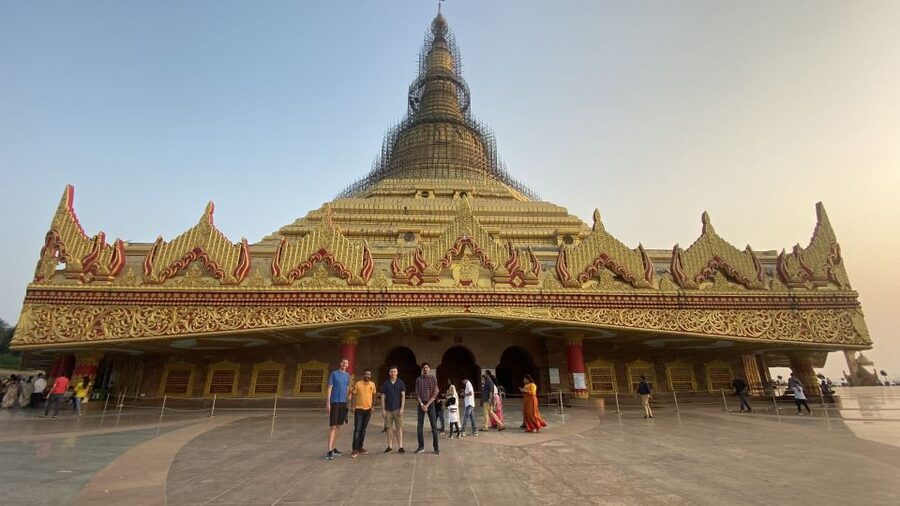
I would recommend it to you if you enjoy historic places that require some interpretation. Kanheri is rewarding for visitors interested in Buddhism, ancient writing, rock-cut architecture, and monastic life.
It also suits anyone who wants to see a different side of Mumbai. The park greenery, cave interiors, ferry crossing, tuk-tuk ride, and pagoda create a varied day rather than another round of city streets.
You may want to skip it if you dislike long road journeys, uneven walking surfaces, or shared local transport. The ferry can be crowded, and the total trip may stretch toward six hours depending on traffic and transfers.
Should you book the Kanheri and Pagoda tour?
Book it if you want two very different Buddhist sites in one organized day, and if a guide’s explanation will help you get more from the carvings and inscriptions. The combination of ancient caves and a golden pagoda is the real strength.
Choose a weekday morning, wear proper shoes, carry identification, and budget for entrance tickets and refreshments. If you can accept the long drive and the busy ferry, this is a thoughtful, good-value way to trade Mumbai’s traffic for stone, greenery, sea views, and a little quiet.
FAQ
How long does the tour take?
The experience lasts between 2.5 and 6 hours, depending on the selected start time, traffic, transfers, and availability.
Where does the tour begin?
The stated meeting point is the main entrance of Sanjay Gandhi National Park. Hotel pickup is optional, depending on the selected option.
How long is the drive to Kanheri Caves?
The drive from a Mumbai hotel takes about 1 to 1.5 hours, depending on the hotel location and traffic.
How many Kanheri Caves are there?
The Kanheri complex contains 109 caves carved from a basaltic rock outcrop. The guided visit focuses on five significant caves.
What languages are available for the guide?
The tour is conducted in English with a live English-speaking guide.
Are entrance tickets included?
No. Entry tickets are not included in the price. Food and drinks are also separate.
What should I bring and what is not allowed?
Bring a passport or ID card, with a passport copy accepted, and wear comfortable shoes. Luggage and large bags are not allowed.
Temple visits we reviewed lately in India
- Same Day Tour Of Kumbhalgarh Fort & Ranakpur Jain Temple★ 4.7 · 12 reviews
- Rishikesh: Kunjapuri Temple Sunrise Trek★ 5.0 · 5 reviews
- Private Full-Day Jaipur Guided Tour with Monkey Temple★ 5.0 · 11 reviews
- Amritsar : Golden Temple and Jallianwala Bagh Private Tour★ 5.0 · 16 reviews
- Old Delhi Temples and Spice Market Tour★ 5.0 · 5 reviews
- Night Ceremony at Madurai Meenakshi Amman Temple Tour★ 4.2 · 4 reviews
- New Delhi: Akshardham Temple Light Show with Custom Add-Ons★ 4.8 · 125 reviews
- New Delhi: Lotus Temple Private Tour with Skip-the-Line★ 5.0 · 5 reviews
Mumbai Temple Tours, compared.
Private Guided Spiritual Walk in Banganga Hindu Temples
Read our review →
Mumbai: Kanheri Caves and The Golden Pagoda Temple
Read our review →
Sanjay Gandhi National Park+ Kanheri Caves + Temple +Tigar Safari
Read our review →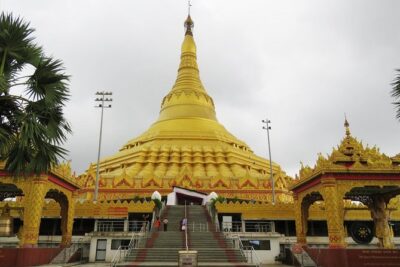
Kanheri Cave with Global Vipassana Pagoda Tour in Private Vehicle
Read our review →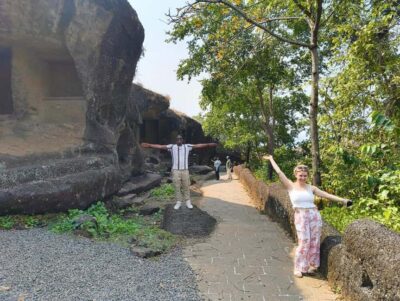
Mumbai Kanheri Caves & Golden Pagoda – A Buddhist Settlement
Read our review →