
Review · SIEM REAP
Angkor Wat: Sunrise 2.5 Days with Tonle Sap Lake Tour
Angkor Wat at sunrise is the headline, but the clever part of this 2.5-day route is the balance. You get the grand temples, smaller monuments, a sunset viewpoint, and a boat trip through Tonle Sap’s floating-village country. I like the mix of famous sights and quieter stops, especially Banteay Srei, Neak Pean, and Ta Nei. I also like the private or small-group feel, since guides can adjust the pace and answer questions instead of marching everyone along.
The main drawback is stamina. You are on your feet for long stretches, starting before dawn on Day 2, and the $69 price does not include the $62 temple pass or meals. Add those costs before you book, and remember that Tonle Sap’s water levels can change the final-day plan from March through July.
Key points to know before you book
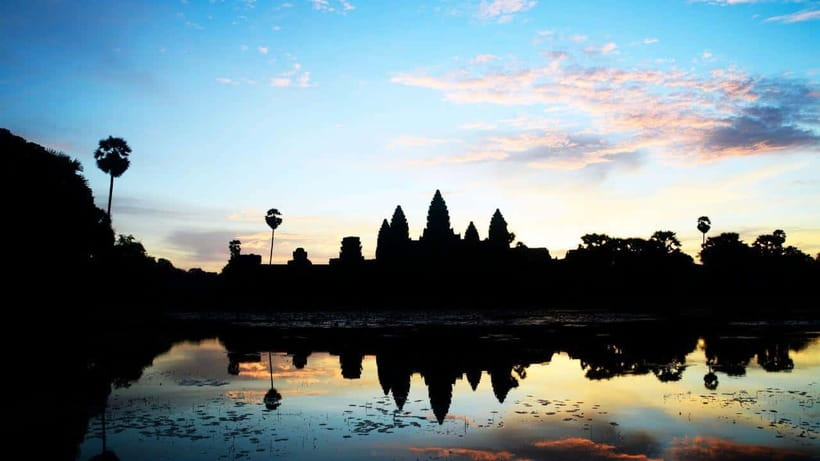
- Sunrise starts before dawn: You visit Angkor Wat in the early morning, then spend about two hours inside the temple.
- Banteay Srei is the detail star: This smaller sandstone temple is known for finely cut reliefs and rewards close attention.
- The route mixes major and quieter temples: Ta Prohm and Bayon bring the famous sights, while Ta Nei and Neak Pean offer a calmer change of pace.
- Sunset takes place at Bakheng: The hilltop setting can be atmospheric, but expect a busy time of day at a popular viewpoint.
- Tonle Sap adds a different Cambodia: At Kampong Phluk, you travel by boat through fishing villages and a flooded forest setting.
- The real cost is higher than $69: The Angkor pass costs $62 per person, and food is extra.
Two full temple days, then Tonle Sap
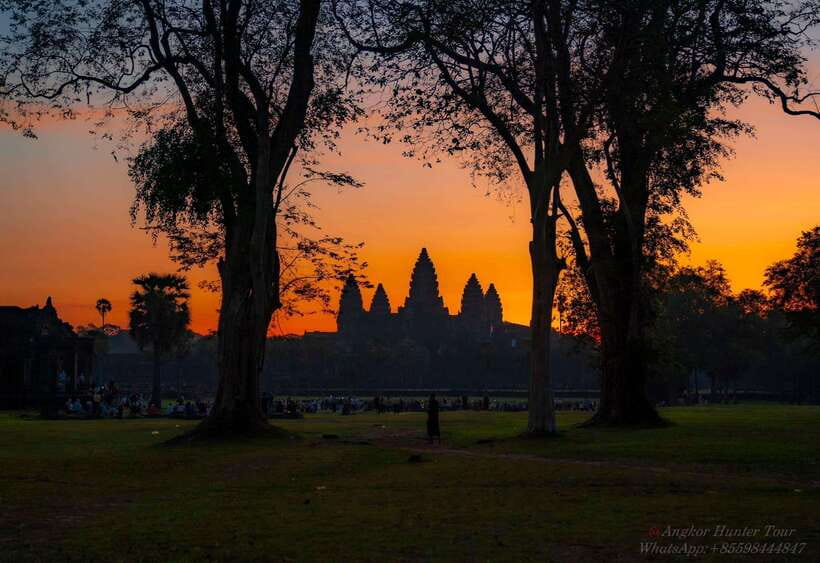
This tour works because Angkor is not treated as a single stop. The first two days give you time to see the major monuments without reducing every visit to a quick photograph. The third morning leaves the stone temples behind for the working communities around Tonle Sap Lake.
Your pickup is from accommodation in Siem Reap City. Transport is by air-conditioned vehicle, with bottled water and a cool towel included. That matters in Cambodia’s heat, especially when you are moving between exposed temple courtyards and shaded corridors.
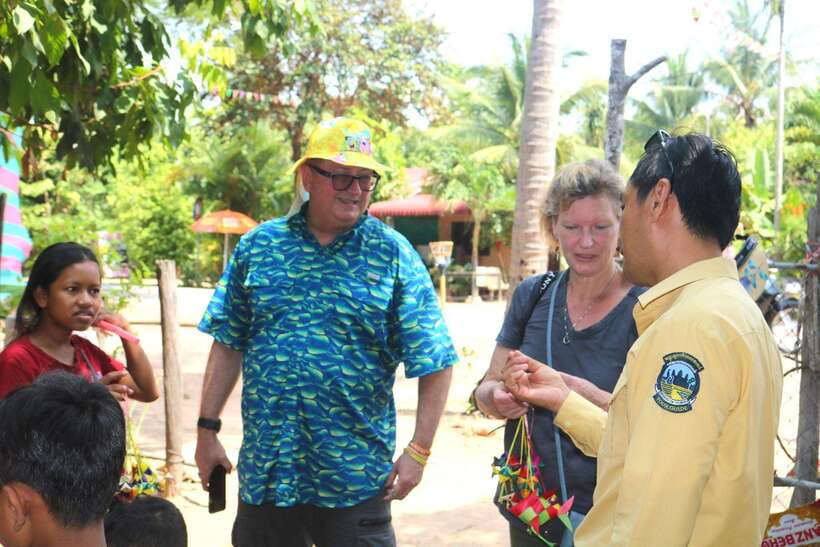
The group may be small, and some bookings receive a private guide even when the reservation is made as a group tour. That flexibility is useful. You can ask for more explanation, spend extra time taking photographs, or move along when a stop has given you enough.
Guides named in past bookings include Sopheap Rath, Sokpee, Chhay, Rom, Ruom, Pal Saruon, and Sam. Guide assignments can change, but the repeated strength of this experience is clear: expect the guide to explain temple design, Cambodian rulers, construction periods, and local life rather than simply point out doorways. Several guides have also been praised for finding strong photo positions, which is handy at sunrise and at the more intricate temples.
More Temple Sunrise Tours in Siem Reap
- Angkor Wat Sunrise or Sunset Tour with Guide from Siem Reap
★ 5.0 · 12,109 reviews - Siem Reap: Angkor Wat: Small-Group Sunrise or Sunset Tour
★ 5.0 · 9,444 reviews - Siem Reap: Angkor Wat 2-Day Tour with Sunrise and Sunset
★ 4.9 · 4,429 reviews
Day 1: Pre Rup and Banteay Srei
The first day begins at Pre Rup, a Hindu temple mountain built as the state temple of King Rajendravarman in 961 or early 962. Brick, laterite, and sandstone give the structure a different look from the large sandstone temples that dominate most photographs of Angkor.
Pre Rup is a useful early stop because it introduces the idea of the temple mountain. You climb through a structure designed to represent a sacred center, rather than entering a flat building with a simple floor plan. The upper levels also give you a sense of how the temples relate to the surrounding countryside.
Next comes Banteay Srei, often the artistic highlight of this day. The temple is smaller than Angkor Wat, but its sandstone reliefs are exceptionally fine. Figures, flowers, and decorative details were cut with care, so this is a place where I would slow down rather than rush through for a quick exterior photograph.
The smaller scale helps. At Angkor Wat, the sheer size can make it hard to notice individual carvings. At Banteay Srei, the decoration is closer to eye level and easier to study. Bring comfortable shoes, since you will be walking over uneven surfaces and spending much of the day outside.
Neak Pean and Preah Khan: quieter corners of Angkor
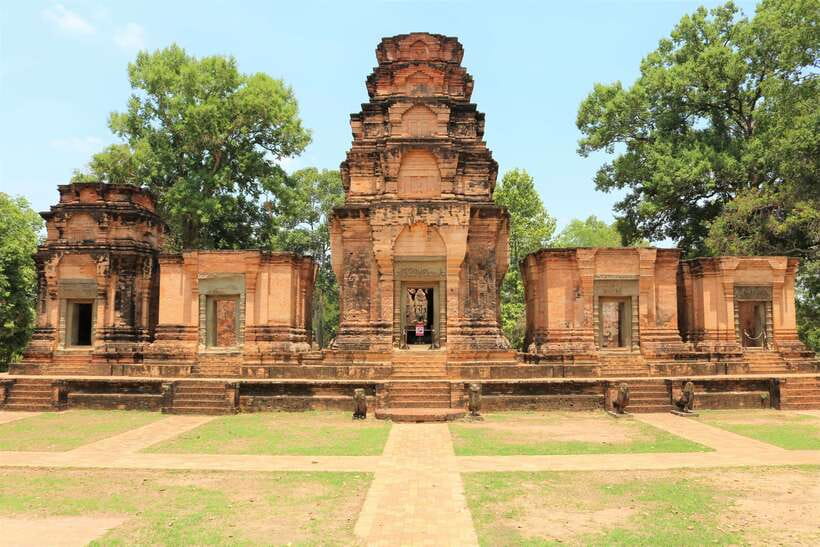
Neak Pean sits on an artificial island in the Jayatataka Baray, a large reservoir associated with the Angkor complex. Reaching it involves a walk toward the island, and the approach gives this stop a different rhythm from the temple mountains.
The temple is Buddhist and arranged around a circular island. Water is central to its design, so Neak Pean feels more open and reflective than the enclosed galleries of Angkor Wat. It is not the place to expect towering walls or long bas-reliefs. Its appeal comes from the setting and the unusual plan.
Preah Khan follows, and the mood changes again. This large, partly ruined temple combines crumbling stone, narrow passages, and tree roots. It is atmospheric without needing much decoration. You can get a strong sense of how time, plants, and weather have altered the site.
Preah Khan is also a good test of your energy. By this point, you have already seen several temples, and the complex asks you to keep walking. A guide helps you make sense of the many corridors and structures instead of wandering through a maze of stones with no context.
Sunset at Bakheng Mountain
The first day finishes at Bakheng, a temple on a hill used for sunset views. The late light changes the feel of the stone, and the climb gives you a break from flat temple paths.
This is also one of the moments when expectations matter. Bakheng is a popular sunset location, so it may not feel quiet or private. The value is the combination of a hilltop position, fading light, and a final look across the area after a long temple day. If you want a calm, empty viewpoint, this may disappoint. If you want a classic Angkor sunset stop built into the route, it makes practical sense.
Your guide can help manage the timing, but the day is still long. I would treat Bakheng as the finish line, not as another major temple lecture. Save some energy for the next morning.
More Angkor Wat Tours in Siem Reap:
- Siem Reap: Full-Day Angkor Wat Guided Tour with Sunset
★ 4.9 · 3,803 reviews - Angkor Wat Sunrise tour with Small – Group and Guide tours
★ 5.0 · 3,655 reviews - Angkor Wat Highlights and Sunrise Guided Tour from Siem Reap
★ 5.0 · 3,213 reviews - Angkor Wat Sunset Small Group Tour with Lunch Included
★ 5.0 · 3,059 reviews
Day 2: Angkor Wat before breakfast
The second day begins before dawn. You head to Angkor Wat to watch the sky brighten near the temple and one of the ancient library pools. The reflection and silhouette are the reason this start is so popular, but sunrise is not guaranteed to deliver dramatic color. Clouds, haze, and crowds are part of the deal.
The early start is tiring, yet it gives you the right atmosphere for the world’s best-known Angkor monument. As daylight grows, the towers, galleries, and long causeway become easier to read. Rather than leaving after the photograph, you continue inside for about two hours.
That time allows you to see the corridors, central chambers, and upper terraces. Angkor Wat is too large for a quick circuit to make much sense. A guide can show you how the spaces connect and explain the temple’s religious purpose and design.
You need respectful clothing here. Cover your shoulders and knees, and avoid shorts even though the Cambodian heat may tempt you to wear them. Comfortable walking shoes are essential. Insect repellent is also worth packing, particularly for the early morning.
Breakfast is taken at your own expense at a local restaurant near the temple area. This keeps the schedule flexible, but it also means food is not part of the advertised price. Carry water, use the supplied bottles, and take the short rest seriously. The next temples still require walking.
Ta Prohm and Ta Nei after the crowds
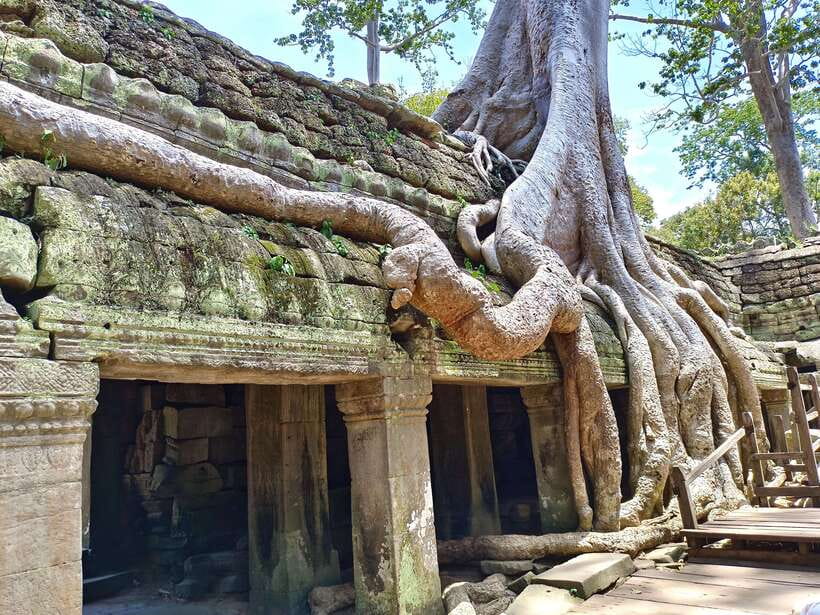
Ta Prohm is the famous Tomb Raider temple, and it earns its reputation through its atmosphere rather than its scale. Stone galleries, damaged walls, and tree roots create some of the most memorable scenes in Angkor.
The trees are not simply decoration. They show how the site has changed over time and why conservation is difficult. You may find parts of the temple crowded, especially around the most photographed roots, but the complex is large enough to offer more than one good view.
The route then moves to Ta Nei, a late 12th-century Buddhist temple. It is a quieter and more modest stop than Ta Prohm, which makes it valuable after the headline attraction. Here, you can pay attention to the stonework and setting without expecting the polished grandeur of Angkor Wat.
I like this pairing because it prevents the day from becoming one long parade of famous names. Ta Prohm gives you the iconic image. Ta Nei gives you a slower look at another Angkor temple and helps show that the complex is made up of far more than its best-known monuments.
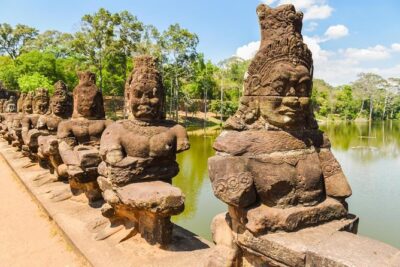
The included temple program also covers Angkor Thom and Bayon, the city area known for its monumental stone faces. The supplied day-by-day description places the focus on Angkor Wat, Ta Prohm, and Ta Nei, so confirm the exact order with your guide. The guide can usually shape the route around timing, energy, and access conditions.
Day 3: Kampong Phluk on Tonle Sap Lake
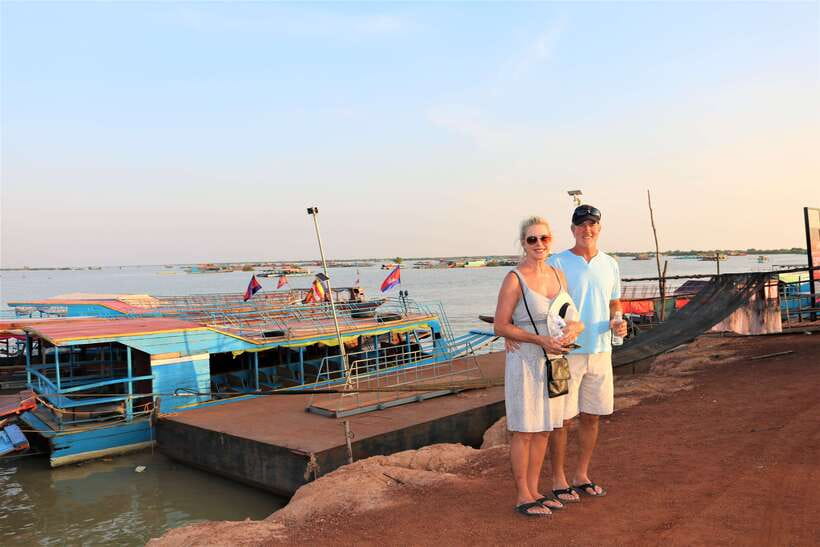
The third day begins around 8:00 AM with a drive through the countryside to Tonle Sap Lake. The lake changes greatly through the year. During the wet season it can swell to about 12,000 square kilometers, while in the dry half of the year it can shrink to roughly 2,500 square kilometers and drain toward the Tonle Sap River.
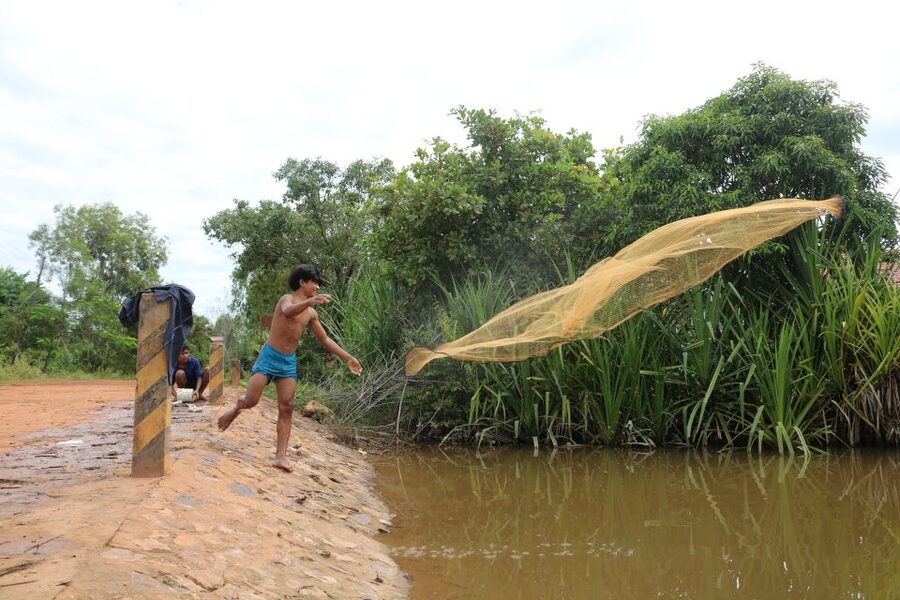
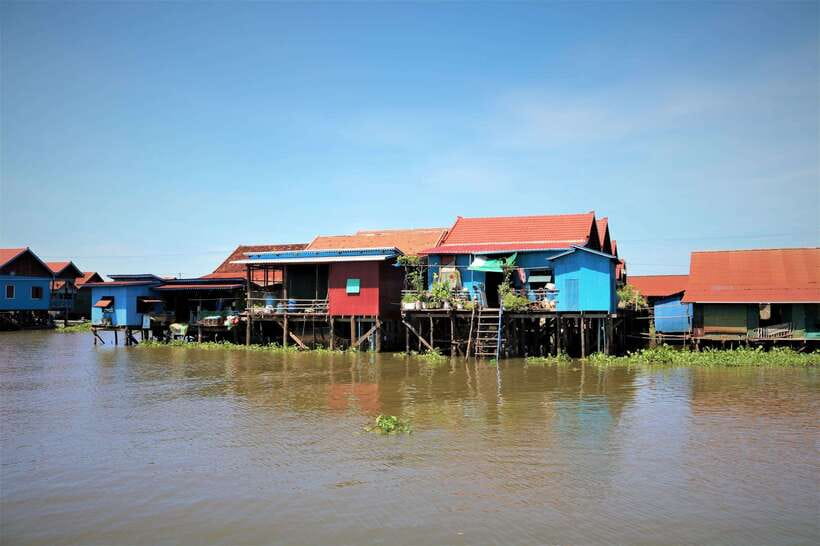
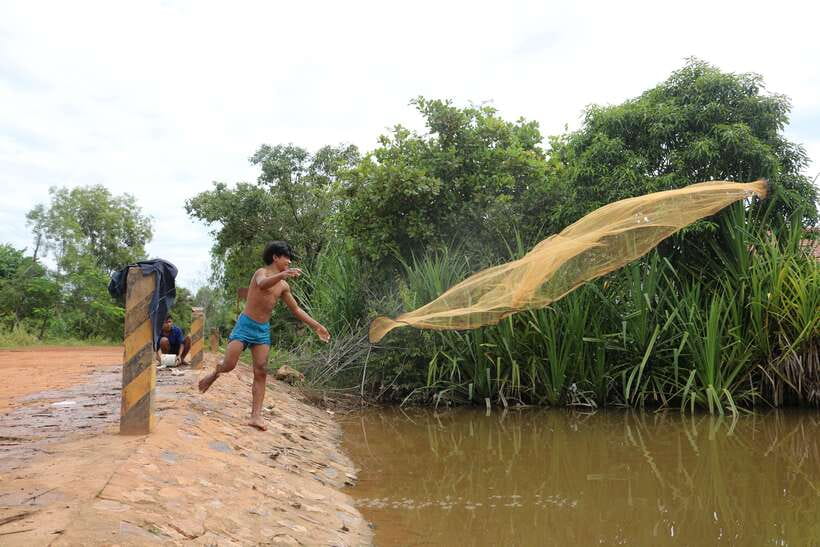
You take a boat to Kampong Phluk, a group of three fishing villages in a flooded forest setting. This is not another monument visit. The point is to see a different part of Cambodian life, shaped by seasonal water levels, fishing, boats, and homes adapted to the lake.
The boat ride gives the final day a slower pace. You can look beyond the main temple route and see why Siem Reap’s surroundings are worth more than a quick airport transfer. At the same time, keep your expectations practical. Water conditions affect what you see, and the experience depends on the season.
Lunch is not included, and you have a short rest before the day ends. Bring cash for food, since the tour price covers transport and guiding rather than meals.
From March through July, low water can make the Tonle Sap option unsuitable. During that period, the alternative is Cambodia Phare Circus, with a Seat C ticket. If the lake is your main reason for booking, ask about current conditions before confirming. If you are happy with a cultural alternative, the backup keeps the third day useful.
What the $69 price really covers
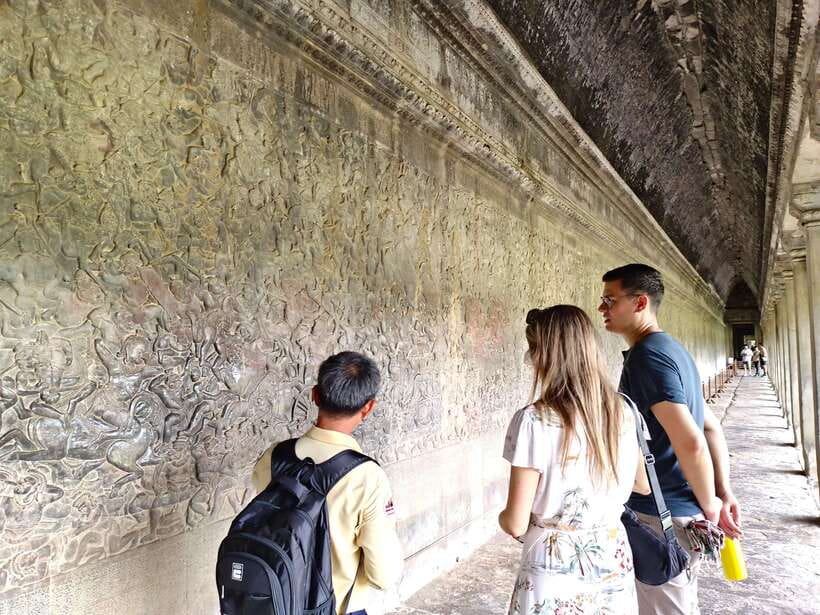
At $69 per person, the tour offers good value for a guided route lasting two temple days plus the Tonle Sap morning. You receive hotel pickup and drop-off in Siem Reap City, an English-speaking guide, an air-conditioned vehicle, bottled water, and a cool towel.
But the headline price is not the full cost. The Angkor entrance pass for two or three days is listed at $62 per person, and meals are separate. That brings the basic known cost to $131 before breakfast, lunch, and other food.
Even so, the price can make sense if you want a guide and vehicle rather than arranging separate rides and explanations. The value is strongest for first-time visitors who want the main temples organized into a sensible order. It is less compelling if you already have an Angkor pass, your own transport, and a strong plan for visiting the sites.
Free cancellation up to 24 hours before the activity and the reserve-now, pay-later option also give you some planning flexibility. The activity is not wheelchair accessible, and the long walking days make it a poor fit for anyone who cannot manage uneven temple paths.
Who should book this Angkor and Tonle Sap tour?
I would choose this tour if you want a guide-led first visit that covers the major Angkor sights without stopping at Angkor Wat alone. It suits people who value explanations, photography help, and a driver who keeps the days moving.
It is also a good match for anyone who wants a contrast between monuments and present-day lake communities. The third day changes the subject completely, which helps prevent three days of temples from feeling repetitive.
You should think twice if you dislike early starts, long walking days, or fixed sightseeing plans. Sunset at Bakheng and sunrise at Angkor Wat are popular experiences, not private moments. The lake trip also needs a seasonal backup from March through July.
FAQ
How long does the tour last?
The activity lasts 2.5 days, with two days focused on Angkor temples and a third morning devoted to Tonle Sap Lake or the stated alternative during the dry season.
Is the Angkor temple entrance pass included?
No. The two or three-day temple pass costs $62 per person and is not included in the tour price.
Are meals included?
No. Meals are at your own expense, including breakfast near the temple area and lunch during the Tonle Sap day.
What is included in the $69 price?
The price includes hotel pickup and drop-off in Siem Reap City, an English-speaking guide, an air-conditioned vehicle, bottled water, a cool towel, sunrise at Angkor Wat, sunset at Bakheng, and the listed temple and lake visits.
What happens to the Tonle Sap visit from March through July?
Because water levels can be low, the alternative is Cambodia Phare Circus with a Seat C ticket.
What clothing and equipment should I bring?
Wear clothing that covers your shoulders and knees, and bring comfortable walking shoes and insect repellent. Shorts are not allowed.
Should you book it?
Book this tour if you want the main Angkor landmarks, lesser-known temples, sunrise, sunset, and Tonle Sap arranged into one guided plan. The strongest reasons are the range of sites, the flexible small-group or private format, and the level of guide support reported from names including Sopheap Rath, Sokpee, Chhay, Rom, and Sam.
Before paying, budget for the $62 temple pass and meals, ask about the current Tonle Sap conditions, and prepare for two demanding temple days. If you can handle the early morning and the walking, this is a well-rounded introduction to Siem Reap rather than a simple Angkor Wat photo stop.
More five-day temple trips in Siem Reap
- 5-Day All Major Temples & Kulen Mount Waterfall & Koh Ker & Beng Mealea
★ 5.0 · 13 reviews
Temple visits we reviewed lately in Siem Reap
- Angkor Wat Tour by Tuk-Tuk with English Speaking Driver★ 4.5 · 65 reviews
- Private Sunrise Angkor Wat Tour★ 4.6 · 16 reviews
- Private One Day Tour with Sunrise at Angkor Wat★ 5.0 · 3 reviews
- Siem Reap Tour Guide: Angkor Wat Sunrise Tour & Beng Mealea★ 5.0 · 4 reviews
- Siem Reap Private Tour: Angkor Wat Sunrise And Banteay Srei★ 5.0 · 3 reviews
- Private Angkor Wat Sunset Tour with Lunch and Snack Included★ 5.0 · 3 reviews
- Private Angkor Wat Sunrise Tours And Sunset Floating Village★ 5.0 · 3 reviews
- Private Angkor Wat Temple Tour★ 5.0 · 35 reviews
Siem Reap Temple Tours, compared.
Angkor Wat Sunrise or Sunset Tour with Guide from Siem Reap
Read our review →
Siem Reap: Angkor Wat: Small-Group Sunrise or Sunset Tour
Read our review →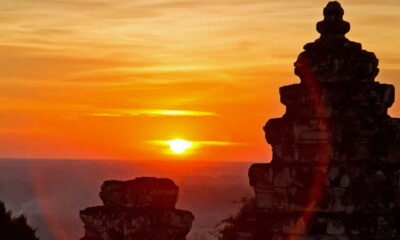
Siem Reap: Full-Day Angkor Wat Guided Tour with Sunset
Read our review →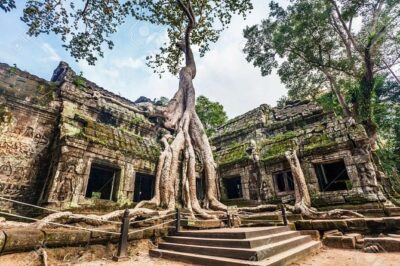
Angkor Wat Sunrise tour with Small – Group and Guide tours
Read our review →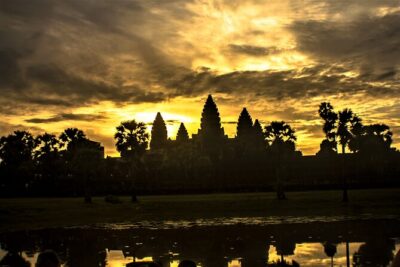
Angkor Wat Highlights and Sunrise Guided Tour from Siem Reap
Read our review →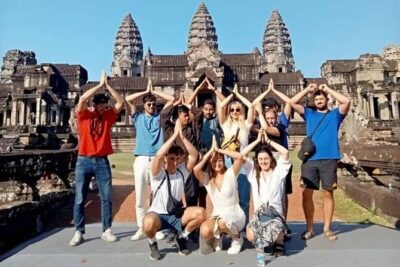
Angkor Wat Sunset Small Group Tour with Lunch Included
Read our review →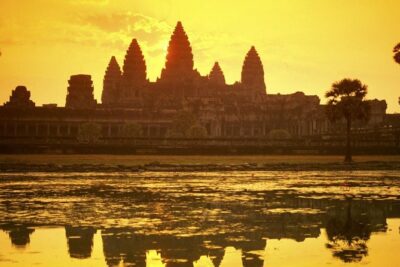
Full-Day Angkor Wat Sunrise Private Tour with Guide from Siem Reap
Read our review →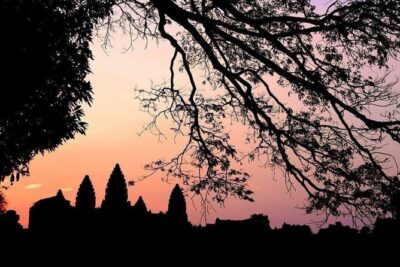
Angkor Wat Sunrise & 3 Main Temples with Breakfast – Small Group
Read our review →This tour also ranks in