
Review · CHINA
Luoyang Private Day Tour to Shaolin Temple&Longmen Grottoes
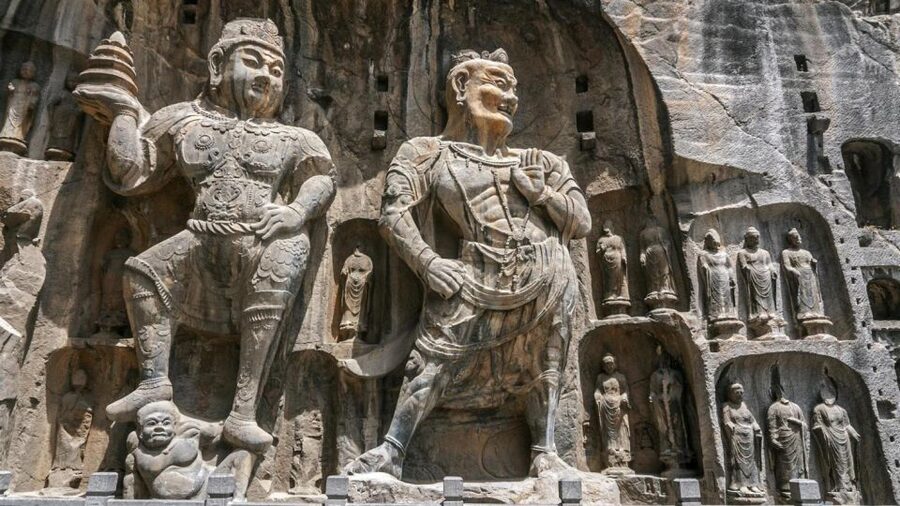
Longmen Grottoes gives this day its first great surprise: thousands of Buddhist carvings cut into cliffs beside the Yi River, followed by a boat ride that lets you see the stone walls from the water. Later, Shaolin Temple brings a different kind of drama, with a live Kung Fu show and the temple traditionally linked with Chan Buddhism and Chinese martial arts.
I like the private vehicle and private guide, since the day covers two major sights with a long transfer between them. I also like the boat cruise at Longmen and the chance to see the Pagoda Forest, not just the better-known temple courtyards.
The main drawback is the pace. You have only eight hours for two large sites, a 1.5-hour drive to Shaolin, lunch, and a show, so this suits you best if you want a strong overview rather than a slow, unhurried visit.
Key points to know before booking
- Longmen begins with a battery bus, saving you energy for the caves and cliff carvings.
- The boat cruise gives you a broad view of the grottoes from the Yi River.
- Shaolin includes a live Kung Fu performance, followed by the temple and Pagoda Forest.
- The private format keeps the day flexible, with an English-speaking guide and a vehicle reserved for your party.
- Lunch, entrance fees, bottled water, and hotel transfers are included, which makes the $268 price easier to judge.
- Your passport details are needed in advance, along with the full name and address of your Luoyang hotel.
Why this Luoyang day trip works
This is a culture-heavy day with two very different faces of China. Longmen is about carved stone, imperial faith, and quiet observation. Shaolin is about living religious tradition, martial arts, courtyards, and stories that have traveled far beyond China.
I see the tour as a practical answer to a common problem: you want both places, but you do not want to arrange several separate tickets, transfers, and local rides. Your guide handles the route and explains what you are seeing as you go.
The private setup matters most during the long day. You are not moving with a large group, and the guide can answer questions directly. Guides who have led this route include Jack, Cecilia, Fey, and Shane. The strongest praise has focused on clear English, detailed explanations, good timing, and allowing enough time for photographs.
Still, do not mistake private for leisurely. The itinerary is tightly packed. If you want to examine every niche at Longmen or spend a full afternoon around Shaolin, you should consider allowing more time in Luoyang on another day.
More Temple of Heaven Tours in China:
- Beijing: The Temple of Heaven or Summer Palace Entry Ticket
★ 4.6 · 1,286 reviews - Beijing Classic Full-Day Tour including the Forbidden City, Tiananmen Square, Summer Palace and Temple of Heaven
★ 4.0 · 610 reviews - Temple of Heaven Ticket
★ 5.0 · 482 reviews
Longmen Grottoes and the Yi River view
Your morning begins with pickup in the lobby of your Luoyang city hotel. The guide meets you holding a sign with your name, then you set off in an air-conditioned private vehicle for Longmen Grottoes.
After arrival, you take a battery bus to begin the visit. This is a useful detail, not just a transport convenience. The grotto area stretches for more than one kilometer along steep limestone cliffs, and saving some walking time helps you stay fresh for the carvings.
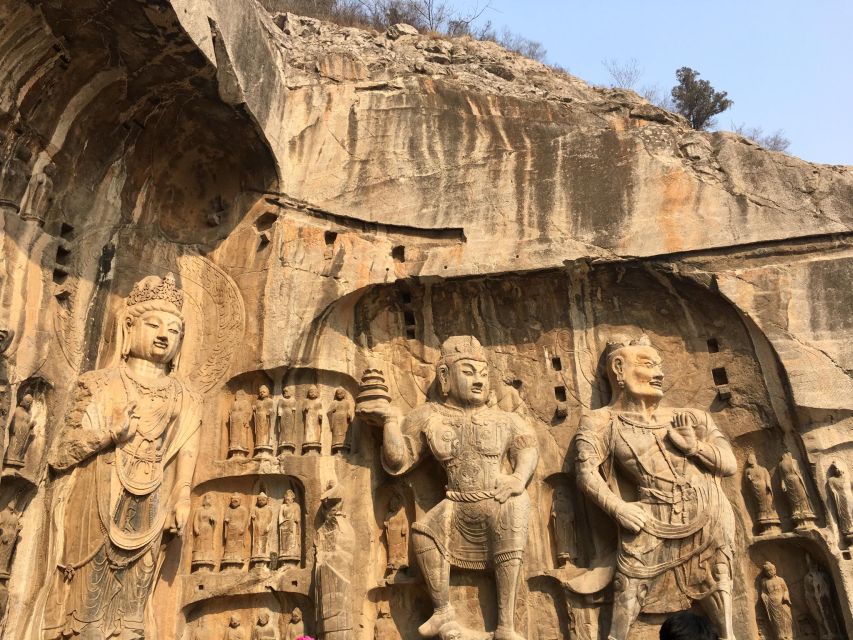
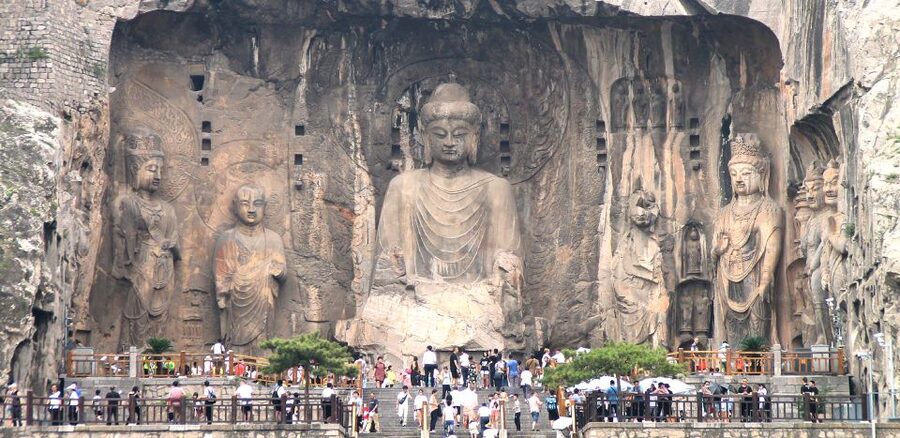
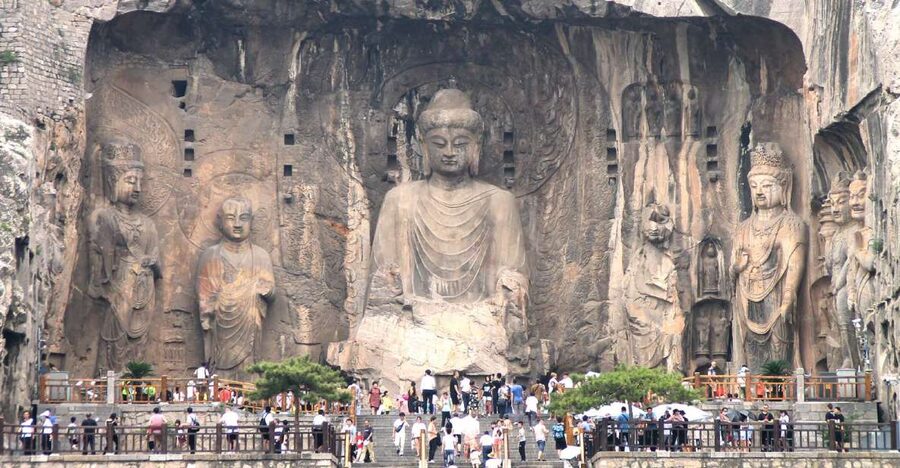
Longmen contains more than 2,300 caves and niches. The sculptures were carved over several centuries, with the main artistic periods linked to the Northern Wei and Tang dynasties. The site is one of China’s major collections of Buddhist art from the period dated here as 316 to 907.
The scale can be hard to grasp from photographs. You are not entering one single cave complex. You are following a long riverfront area where the cliff faces hold carved figures, inscriptions, and recessed chambers. Your guide provides the historical framework so the site does not become a blur of stone faces and weathered details.
The most useful part of a guided visit is learning how to look. Your guide can point out changes in style and explain why the grottoes were made. Without that context, it is easy to admire the carvings but miss their connection to imperial power, religious practice, and the changing eras of Chinese art.
Give yourself time to look up. Many details sit high on the cliff face, while others are close enough to inspect. The scale, age, and exposure of the carvings make this a place where a guide’s explanation adds real value.
The boat cruise changes the picture
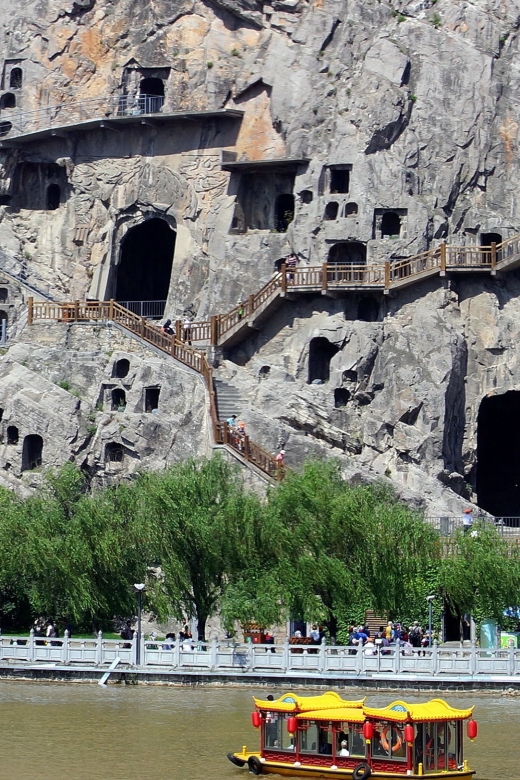
After seeing the grottoes from land, you take a boat cruise along the river. This is one of the most useful features of the day because it gives you a wider view of the cliffs.
From the water, the relationship between the carvings and the river becomes clearer. You can look back at the cliff faces instead of standing directly beneath them. The cruise also offers a break from walking and a chance to take photographs from a different angle.
I would treat the boat as a viewing ride, not a separate sightseeing stop with extensive commentary. Its value is visual. It helps you understand the full reach of Longmen and gives your legs a short rest before the next part of the day.
Longmen is likely to be the quieter and more reflective half of the tour. Shaolin brings more movement and performance, so this first stop provides a useful contrast.
The 1.5-hour drive to Shaolin Temple
Once you leave Longmen, the drive to Shaolin Temple takes about one and a half hours. This is the section where a private tour earns its keep. You travel in an air-conditioned vehicle rather than sorting out a separate connection, and your guide continues explaining the sites and their stories along the way.
Use the ride to ask questions. Guides on this route have been praised for clear English and detailed commentary, and the private format lets you focus on the subjects that interest you most. Jack, for example, has been noted for adjusting the pace and making sure the timing worked well. Fey has also been singled out for strong explanations of Chinese history.
The transfer is still a real chunk of the day. If you dislike road time, remember that Shaolin is not close to Longmen, and visiting both in one day requires this compromise. The benefit is that you see two major sights without changing hotels or arranging another excursion.
More Temple Tours around China:
- Mini Group Xian Day Tour to Terracotta Army, City Wall, Pagoda and Muslim Bazaar
★ 5.0 · 1,320 reviews - Temple Heaven, Lama Temple, Summer Palace & Peking Duck Bus Tour
★ 5.0 · 377 reviews - Best of Shanghai Day Tour, including Jade Buddha Temple & Bund & Yuyuan Garden
★ 4.0 · 338 reviews - Temple Heaven, Summer Palace, Lama Temple, Hutong Bus Tour
★ 4.7 · 319 reviews
Lunch and the Shaolin Kung Fu theater
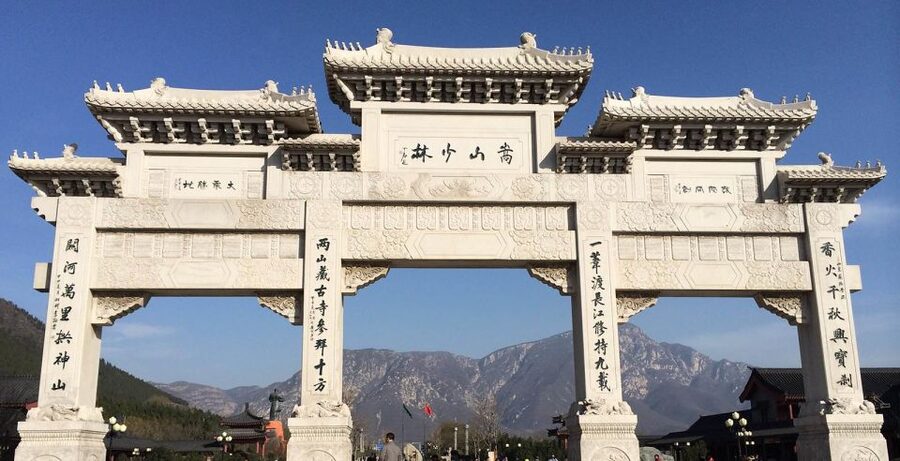
At Shaolin, the schedule includes a local lunch before the temple visit. This keeps the day moving and means you do not need to arrange a separate meal during a busy sightseeing window.
The meal is described as local, and the tour includes lunch, but no detailed menu is provided. If you have dietary restrictions, ask about them when booking rather than assuming the meal can be changed.
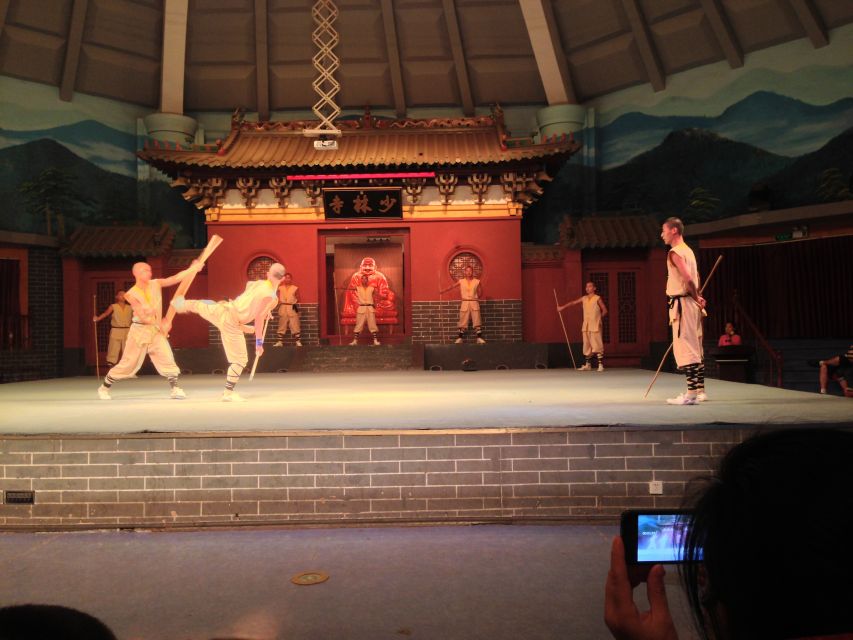
The Kung Fu theater comes next. Here you watch a live performance by Shaolin monks. It is a staged show, so you should not confuse it with observing ordinary temple life, but it provides a vivid introduction to the martial arts tradition associated with Shaolin.
This is often the most energetic part of the day. After the stone carvings at Longmen and a long drive, the performance gives you something immediate and easy to follow. It also helps explain why Shaolin has become such a powerful symbol of Chinese martial arts around the world.
The show is not the whole Shaolin experience. I would enjoy it, take it for what it is, and then pay close attention to the temple visit that follows. The performance offers spectacle. The buildings and Pagoda Forest provide the historical depth.
Shaolin Temple and the story of Chan Buddhism
Shaolin Temple was first constructed in 495 AD. It was later built up under Emperor Xiaowen of the Northern Wei Dynasty to accommodate the Indian master Batuo.
The temple is traditionally linked with the origin of Chinese Kung Fu and is recognized as an important source of Chan Buddhism. Your guide leads you through the buildings and courtyards while explaining the temple’s development and the life of the monks.
This is where the tour’s storytelling matters most. Shaolin is surrounded by familiar images from films and martial arts schools, but the actual temple is also a religious and historical site. A good guide helps separate popular legend from the broader story of Buddhist practice and the temple’s place in Chinese culture.
You should expect a walk through courtyards and temple buildings rather than a single dramatic interior. The interest builds through the sequence of spaces, details, and explanations. Ask questions as you go. Since the group is private, you do not need to wait for a large party to move on.
The schedule gives you a useful introduction, but not unlimited time. If you are especially interested in Buddhist architecture or religious history, you may want to make a note of what catches your attention and return to it later if your wider itinerary allows.
The Pagoda Forest is the quiet finish
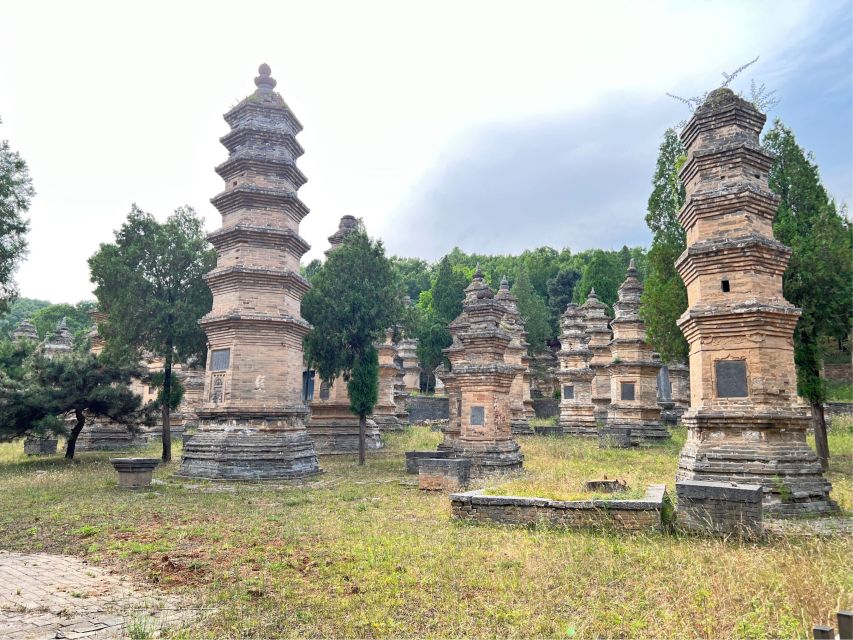
After the main temple area, you visit the Pagoda Forest. This is a concentration of tomb pagodas for eminent monks and temple abbots.
More than 240 pagodas of different sizes date from the Tang, Song, Jin, Yuan, Ming, and Qing dynasties, a span given here as 618 to 1911. The forest is described as the largest of its kind in China.
This stop gives the Shaolin visit a different mood. The Kung Fu show is lively and public. The pagodas are more solemn, and their variety shows how the temple continued across many generations. You can see the site not only as the home of martial arts, but also as a long-running religious institution.
The Pagoda Forest is easy to underrate if you are focused only on the temple and the performance. I would make a point of staying attentive here. It is one of the more distinctive parts of the route and helps place Shaolin in a much longer historical setting.
What the $268 price includes
At $268 per person, this is not a budget sightseeing day. Its value depends on how much you want handled for you.
The price includes private transport, hotel pickup and drop-off within Luoyang city, an English-speaking professional guide, entrance fees, lunch, and bottled water. You are paying for a full day of coordination as much as for admission to the sights.
For two people, the per-person cost may feel easier to justify if you value a private car and direct guide attention. For a solo visitor, it is a larger spend, though the private format avoids being placed with an unknown group.
The included boat cruise and battery bus also reduce small extra decisions during the day. You are not left figuring out how to connect the various parts of Longmen on your own.
I would compare this price with the cost of arranging two major sites independently, including transport and entrance tickets. I would also ask how much you value the guide’s explanations. If you mainly want transport and quick photographs, the tour may feel expensive. If you want history explained in English and a full day with the logistics covered, the price is more reasonable.
Timing, pickup, and practical details
The advertised duration is eight hours, with starting times subject to availability. Pickup is included from hotels in Luoyang city, and you should provide the hotel’s full name and address when booking.
You may request a different start time when making the reservation. That flexibility is useful, but it needs to be arranged in advance rather than assumed on the morning.
Bring your passport. Full names and passport numbers for every person are required for ticket booking. This is one of those small details that can cause a large problem if ignored.
The tour is for a private group and the guide language is English. The vehicle is air-conditioned, which matters during a long day with outdoor walking and a road transfer between the two sites.
Cancellation is allowed up to 24 hours in advance for a full refund, and you can reserve now and pay later. Those terms are helpful if your China itinerary is still changing, but the key practical task remains providing accurate personal and hotel details early.
Who should book this tour?
I would recommend it to first-time visitors to Luoyang who want the two headline cultural sites in one day. It suits couples, families, and small private parties that prefer questions answered directly instead of following a large group.
It is also a good match for anyone who wants a balanced day. You get ancient sculpture, a river cruise, Buddhist temple buildings, a martial arts performance, and the Pagoda Forest rather than repeating one type of sightseeing.
The tour is less suitable if you want a slow photographic study of Longmen or a long, quiet visit at Shaolin. Eight hours is enough for a strong introduction, but the route has little spare time.
The guides named in recent bookings include Jack, Cecilia, Fey, and Shane. The consistent strengths associated with the guiding are English explanations, useful historical detail, friendly service, and sensible pacing. Your assigned guide may be different, so treat those names as examples rather than a promise.
Should you book it?
Book this tour if you want Longmen Grottoes and Shaolin Temple in one organized day, especially if English commentary and private transport matter to you. The boat cruise, Kung Fu show, included lunch, and Pagoda Forest make the route more varied than a simple temple transfer.
Skip it if you already have plenty of time in Luoyang and prefer to spend a full day at each site. For most visitors with only one open day, though, this is a practical and well-filled way to see two of central China’s major cultural attractions.
FAQ
How long is the Luoyang private tour?
The tour lasts eight hours. It includes visits to Longmen Grottoes and Shaolin Temple, with about 1.5 hours of travel between the two sites.
Is hotel pickup included?
Yes. Pickup and drop-off are included for hotels in Luoyang city. Your guide meets you in the hotel lobby holding a sign with your name.
Is the tour private?
Yes. It is a private group tour with a private vehicle and a live English-speaking guide.
What languages are available?
The listed guide language is English.
Does the tour include lunch?
Yes. A local lunch is included at Shaolin Temple.
What should I bring?
Bring your passport. You must also provide each person’s full name and passport number when booking so the tickets can be arranged.
Can I cancel the tour for a refund?
Yes. You can cancel up to 24 hours in advance for a full refund. The tour also offers reserve now and pay later booking.
Temple visits we reviewed lately in China
- Shanghai: Yuyuan, City God Temple Old City Tour-Tip Based★ 5.0 · 10 reviews
- Shanghai: Yu Garden and City God Temple Walking Tour★ 4.9 · 27 reviews
- Private Tour to Yinshan Pagoda Forest w/Optional Activities★ 5.0 · 5 reviews
- Private Tour Datong Hengshan Hanging Temple Yungang Grottoes★ 5.0 · 4 reviews
- Private Tour: Longmen Grottoes, Shaolin Temple & Kungfu Show★ 4.8 · 17 reviews
- Private ForbiddenCity&TempleofHeaven&SummerPalace Day Tour★ 5.0 · 4 reviews
- Pingyao: Shuanglin Temple Tour or Entry Ticket Only Option★ 4.5 · 3 reviews
- Louyang Day Tour from Xian: Longmen Grottoes, Shaolin Temple★ 5.0 · 3 reviews
China Temple Tours, compared.
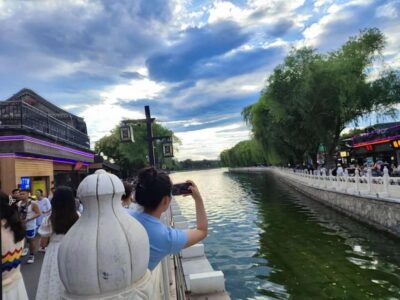
Beijing: The Temple of Heaven or Summer Palace Entry Ticket
Read our review →
Beijing Classic Full-Day Tour including the Forbidden City, Tiananmen Square, Summer Palace and Temple of Heaven
Read our review →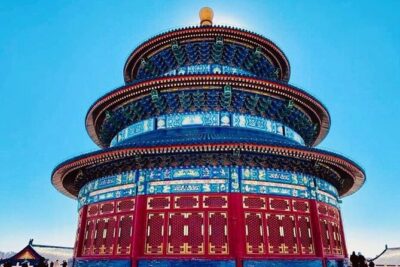

Temple Heaven, Lama Temple, Summer Palace & Peking Duck Bus Tour
Read our review →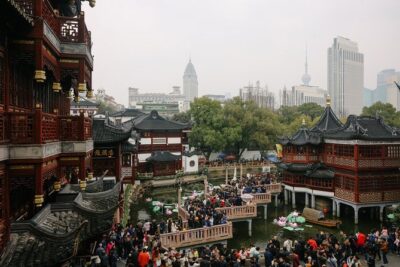
Best of Shanghai Day Tour, including Jade Buddha Temple & Bund & Yuyuan Garden
Read our review →
Temple Heaven, Summer Palace, Lama Temple, Hutong Bus Tour
Read our review →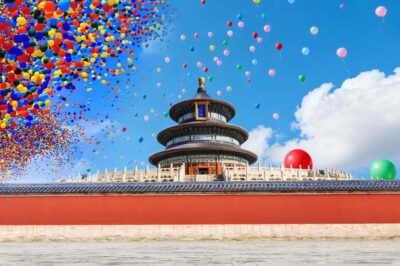
Temple of Heaven, Summer Palace, Lama Temple, Hutong Tours
Read our review →This tour also ranks in