
Review · LISBON
Lisbon: Belém Private Walking Tour & Jerónimos Monastery
Jerónimos Monastery is one of Lisbon’s great sights, but its carved stonework can feel like a beautiful puzzle without a guide. This private walking tour gives you the key to it, pairing the monastery with Belém’s riverside monuments and the story of Portugal’s seafaring age. Federico and Frederico are especially praised for making the past easy to follow, while Marta and Francisco have also led warmly received tours.
I like the way the visit connects the Monument to the Discoveries and Belém Tower with the monastery, rather than treating each sight as an isolated photo stop. I also like the included monastery entry, which can save substantial time when the ticket line is long. The main drawback is the amount of standing and walking, plus the fact that the tour lasts around three and a half hours and does not include entry to Belém Tower.
Key points to know
- Jerónimos Monastery is the main event: Explore the church and cloisters with guided access and included admission.
- Belém’s major sights are covered outside: See the Monument to the Discoveries and Belém Tower, but do not enter the tower.
- The guide adds real context: Expect stories about Vasco da Gama, Prince Henry the Navigator, Luís de Camões, Portugal’s kings, and the monks who lived here.
- The tour takes 210 minutes: Much of the monastery visit involves standing while the guide explains the architecture and symbols.
- The group is limited to 12: It is sold as a private group experience, with guides available in English, French, Spanish, and Portuguese.
- The price is high but includes the crucial ticket: At $353 per person, this makes the most sense for visitors who want a serious historical explanation and time-saving access.
Why Belém makes a strong half-day in Lisbon
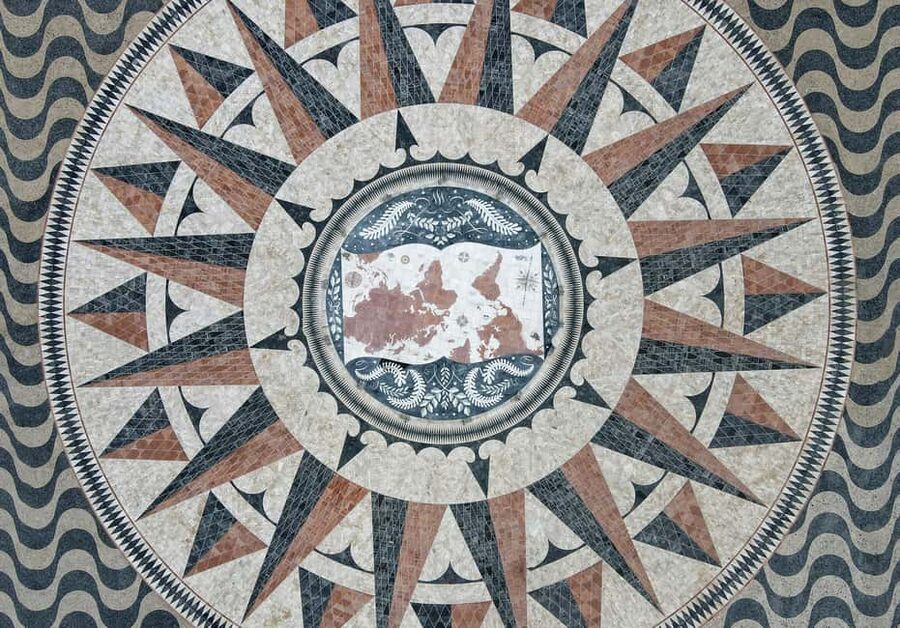
Belém sits beside the Tagus River west of central Lisbon. This is where Portugal’s Age of Discovery is presented in grand stone, broad promenades, and riverside monuments. The district gives you a clear setting for the country’s 15th- and 16th-century voyages, when ships left Portugal for distant parts of the world.
The tour begins in front of Jerónimos Monastery, next to the plaque indicating the church entrance. That meeting point matters because the monastery is both the starting point and the grand finale. You do not waste the first part of the morning hunting for a café, street corner, or vague meeting marker.
The opening walk takes you through Belém before you go inside. I like this order because the guide can explain the political and religious setting first, then point out how those ideas appear in the monastery’s stonework. You get a story with a beginning, not simply a series of famous buildings.
Belém is also easy to appreciate at walking speed. The district has broad paths and open river views, so the first part feels less cramped than many of Lisbon’s older streets. Still, the open setting brings little shelter from sun, rain, or wind. Wear comfortable shoes and clothing, as requested, and bring the kind of layers you can manage during a long outdoor walk.
More Temple Walking Tours in Portugal
- Lisbon: Belém Walking Tour with Jerónimos Monastery Ticket
★ 4.9 · 637 reviews - Lisbon: Belem Walking Tour with Jeronimos Monastery Ticket
★ 4.7 · 490 reviews - Belem and Jeronimos Monastery Guided Small Group Walking Tour
★ 5.0 · 410 reviews
The Monument to the Discoveries and Portugal’s seafaring story
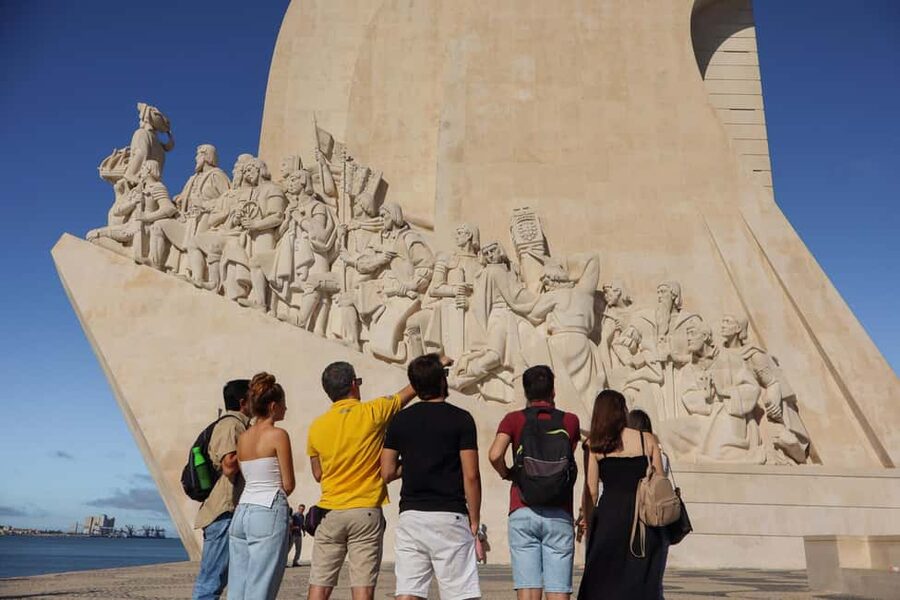
The Monument to the Discoveries is one of Belém’s most recognizable landmarks. Its shape honors the navigators, royal patrons, and other figures linked to Portugal’s overseas expansion. Your guide uses the monument as a visual lesson, introducing names such as Vasco da Gama and Prince Henry the Navigator.
This is more useful than simply stopping for a photograph. The monument celebrates national ambition, but the voyages also changed economies, politics, religion, and communities far beyond Portugal. A good guide can help you see both the pride built into the monument and the wider effect of the voyages.
Federico, Frederico, and other guides on this experience have been praised for linking Portuguese events to the wider world. That approach is a major reason to book a guided visit instead of walking past the monument alone. Without context, the figures carved into the stone can seem like a formal parade of names. With explanation, the monument becomes a map of the people and decisions behind Portugal’s maritime power.
You should expect to remain outside the monument during this tour. The included visit is a guided walking stop, not an interior tour. The time here is best used listening, looking up at the design, and taking photographs along the river.
Belém Tower from the outside
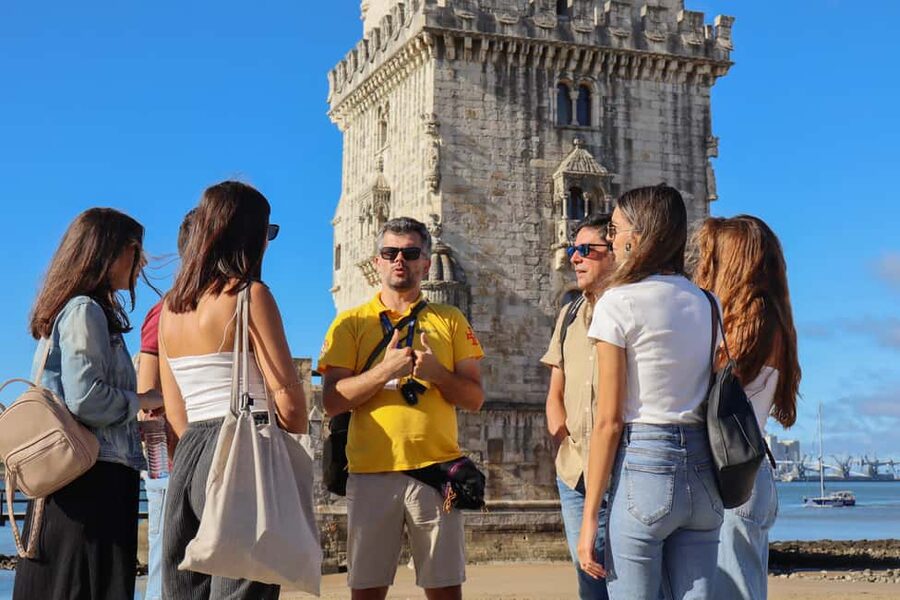
The walk continues to Belém Tower, the small fortress built at the river entrance to Lisbon. Its original defensive role is central to the story: the tower helped protect access to the city and later became a lasting symbol of Portugal’s maritime identity.
The tower is known for its Manueline details, the ornate style associated with Portugal’s Golden Age. Look for the contrast between military purpose and decorative stonework. It was designed to defend the river, yet it also carries the elaborate visual language used to celebrate royal power, faith, and overseas achievement.
This tour includes an exterior visit only. Belém Tower is closed to the public until 2026 because of renovation work, so no interior access is part of the experience. That limitation is important when comparing this tour with other Belém outings. You will see the tower, hear its story, and take pictures, but you will not climb inside.
The riverside section is the more active part of the experience. You keep walking, change viewpoints, and move between the major sights. That helps break up the standing required inside the monastery. In wet or windy weather, however, the exposure can make the day feel longer. One person still found the tour worthwhile during heavy rain and wind, but that is a useful reminder to check the forecast and dress sensibly.
Entering Jerónimos Monastery
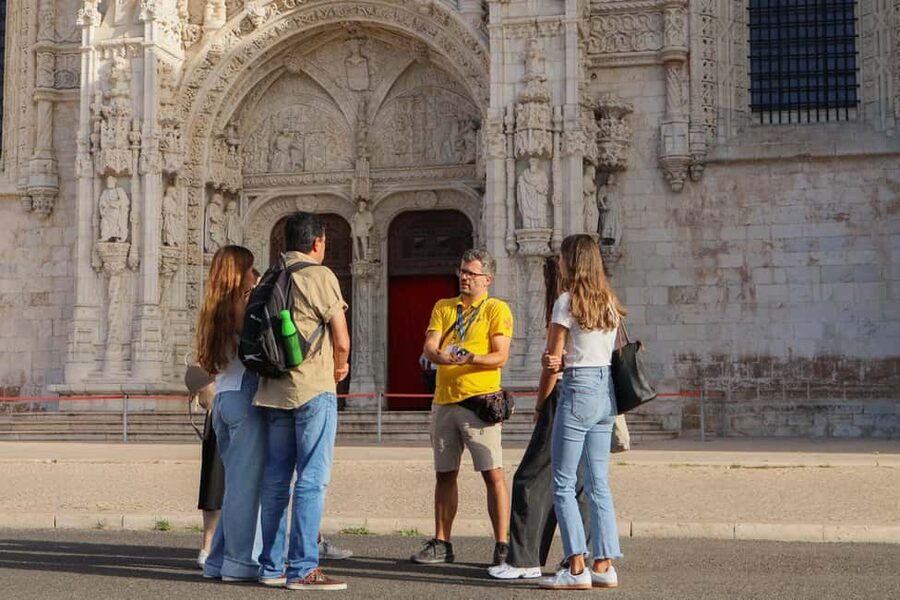
The monastery is the tour’s centerpiece. With admission included and guided access arranged, you can avoid the regular ticket line. This does not mean every minute will be spent moving without delay, but it can save valuable time at one of Lisbon’s busiest monuments.
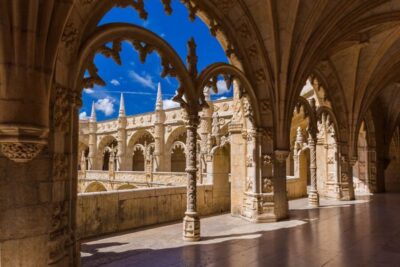
Inside, the guide explains the Manueline style and the symbols tied to Portugal’s voyages. Manueline design is not just decoration. Ropes, nautical forms, religious symbols, royal references, and carved plants can point back to the sea, the crown, the Christian faith, or the wealth associated with overseas trade.
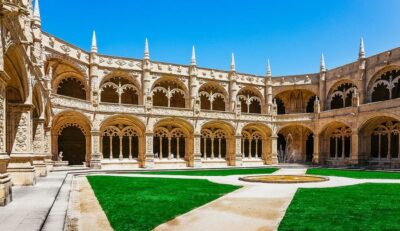
The cloisters are the visual high point. Their arches and columns are covered with careful stonework, and the open courtyard gives the building a calm rhythm. You will have time to examine the craftsmanship, but the guide’s explanation is what gives the carvings their meaning. If you enter without background, you may notice beauty without understanding the message.
That is where this tour earns its keep. The guide sets the scene outside, then shows you how the monastery reflects the country’s ambitions. The church and cloisters become part of a national story, not just a grand building.
Be ready to stand while listening. One detailed account praised the amount of information but suggested breaking the explanations into shorter sections with more pauses for questions. That is fair advice. The guides are often praised for their passion and personal attention, but three and a half hours of continuous history can test anyone’s concentration, especially in a large group.
More Temple Walking Tours in Lisbon:
- Lisbon: Belem Walking Tour with Jeronimos Monastery Entry
★ 4.9 · 163 reviews - Belém Walking Tour + Jerónimos Monastery Ticket
★ 5.0 · 24 reviews - Bangkok: City Highlights Temple and Market Walking Tour
★ 4.5 · 3,990 reviews - Bangkok: Grand Palace and Wat Phra Kaew Guided Walking Tour
★ 4.4 · 2,417 reviews
The Church of Santa Maria and national figures
The guided monastery visit includes the Church of Santa Maria. Its high ceilings and quiet interior provide a marked change from the outdoor monuments and the detailed cloisters. This is the place to slow down and look at the scale of the building.
The church is also tied to major Portuguese names. Vasco da Gama is buried here, as is Luís de Camões, the poet associated with Portugal’s national epic. Their tombs help connect exploration, literature, and national identity in one setting.
A strong guide does not just point out the tombs. The explanation shows why these figures matter and how the church fits into Portugal’s story. Federico and Frederico are repeatedly praised for making those connections clear, while one guide was described as a PhD candidate with a strong command of Portuguese history and art.
The church may be the most reflective part of the visit. After the noise and open space of Belém, the soaring interior invites a quieter look at the cost, faith, and ambition behind the Golden Age. You do not need to be an architecture specialist to appreciate it, but you should enjoy listening to a sustained explanation.
How the guide shapes the experience
The guide is the difference between a pleasant walk and a useful history lesson. This experience is not designed for people who want only a quick photo at each stop. You are paying for interpretation, connections, and the chance to ask questions.
Federico and Frederico receive the strongest praise in the supplied feedback. They are described as enthusiastic, professional, friendly, and attentive to individual needs. One guide reportedly added a short coffee and pastry stop during a longer outing, though you should not treat that as a guaranteed part of the advertised tour.
Marta is also praised for her energy and command of the subject. Francisco is described as passionate and well informed. The exact guide is not guaranteed, and the activity may be conducted by a multilingual guide depending on the group. English, French, Spanish, and Portuguese are listed as available languages.
The standard group size is limited to 12 participants. The experience is also described as a private group, so check the exact booking terms if privacy for only your own party is essential. A small group can make it easier to hear the guide and ask questions, although the walking pace and amount of explanation may still feel demanding.
Is $353 per person a fair price?
At $353 per person, this is not a budget sightseeing walk. The value rests on three things: the included Jerónimos Monastery ticket, the time saved by skipping the ticket line, and the guide’s ability to explain what you are seeing.
If you already know Portuguese history and are happy to read signs or use a guidebook, you may find the price hard to justify. You can see the Monument to the Discoveries and Belém Tower from outside without paying for this tour, and the monastery admission alone is only one part of the cost.
I would look at it differently if this is your main historical activity in Lisbon. The guide links Belém’s monuments to the monastery and places Portugal’s maritime expansion in a larger setting. One person described the tour as the only history lesson booked during a Lisbon trip and found it useful for understanding the rest of the country.
The price makes more sense for a private occasion, a family group, or anyone who values direct access to a specialist guide. It is less attractive if you want a light introduction, a fast pace, or plenty of unstructured time for photographs.
Free cancellation up to 24 hours before the start and reserve-now, pay-later terms make the booking less rigid. Meals, drinks, personal expenses, and entry to other monuments are not included.
Who should book this Belém tour?
I would recommend it to you if you enjoy buildings more once you understand their symbols. It is also a good match if you want Portugal’s exploration story explained by someone who can connect a monument, a king, a monk, and a navigator in one clear account.
The tour suits people who can walk and stand for several hours. It is not suitable for wheelchair users, pregnant women, or people with heart or respiratory problems according to the stated restrictions. Non-folding wheelchairs and non-folding strollers are not permitted, and children cannot attend unaccompanied.
Bring comfortable shoes. Do not bring oversized luggage, scooters, weapons, sharp objects, speakers, alcohol, drugs, or vaping devices. Assistance dogs are allowed, but other pets are not.
The experience is less suited to you if you dislike long explanations or want to enter Belém Tower. It is also worth reconsidering if outdoor weather is a major concern, since the Monument to the Discoveries and tower sections take place outside.
My verdict on the 210-minute experience
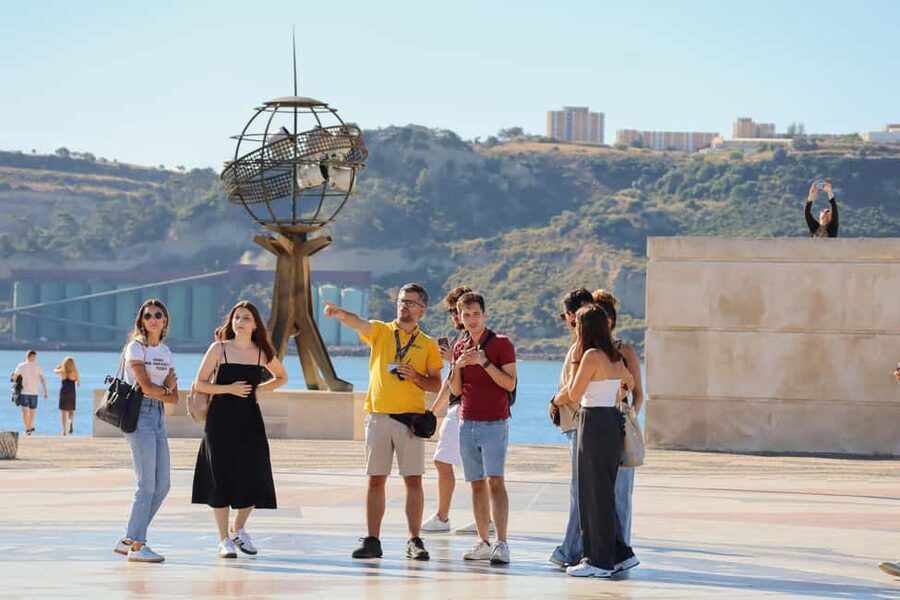
I would book this tour if Jerónimos Monastery is high on your Lisbon list and you want to understand it rather than simply photograph it. The strongest part is the guide’s storytelling, especially when the carved details are tied to Portugal’s voyages and national figures.
The main cautions are the high price, the long duration, and the amount of standing inside the monastery. Ask yourself whether you want a short sightseeing circuit or a serious, guided explanation. Choose this one for the latter.
The exterior-only visit to Belém Tower is not a fault in the current period, since the tower is closed for renovation until 2026. Just make sure your expectations match the offer. You will see the tower and learn its role, but the monastery is where the tour spends its greatest effort.
FAQ
How long does the Belém walking tour last?
The activity lasts 210 minutes, or about three and a half hours.
What is included in the tour?
The price includes admission to Jerónimos Monastery, a guided visit to its church and cloisters, a guided walk through Belém, exterior visits to the Monument to the Discoveries and Belém Tower, a professional guide, and travel insurance compliant with Portuguese regulations.
Do I enter Belém Tower?
No. The tour visits Belém Tower from the outside only. The tower is closed to the public until 2026 because of renovation work.
Where does the tour meet?
Meet the guide in front of the entrance to Jerónimos Monastery, next to the plaque indicating the church.
Is the monastery ticket included?
Yes. Entrance to Jerónimos Monastery is included, along with guided access to the church and cloisters.
What languages are available?
The listed languages are English, French, Spanish, and Portuguese. The guide may be multilingual depending on the group.
How large is the group?
The standard group size is limited to 12 participants. The experience is described as a private group activity.
Can I cancel the booking?
Yes. You can cancel up to 24 hours in advance for a full refund. Reserve-now, pay-later booking is also available.
Temple visits we reviewed lately in Lisbon
- Belém: Jeronimos Monastery, Tickets and Guided tour★ 4.9 · 30 reviews
- Lisbon: Skip-the-line Jerónimos Monastery Tour with Tickets★ 5.0 · 4 reviews
- Lisbon: Tour of Belem and Jerónimos Monastery★ 3.2 · 5 reviews
- From Lisbon: Évora, Chapel of Bones, & Roman Temple Tour★ 5.0 · 8 reviews
- From Lisbon: Fátima Sanctuary and Batalha Monastery (UNESCO)★ 5.0 · 5 reviews
- Lisbon: Belem Tour with Pastéis at Jerónimos Monastery★ 4.7 · 96 reviews
- Belém Walking Tour + Jerónimos Monastery Ticket★ 5.0 · 24 reviews
- Lisbon: Belem Walking Tour with Jeronimos Monastery Entry★ 4.9 · 163 reviews
Lisbon Temple Tours, compared.
Lisbon: Jerónimos Monastery E-Ticket and Audio Guide
Read our review →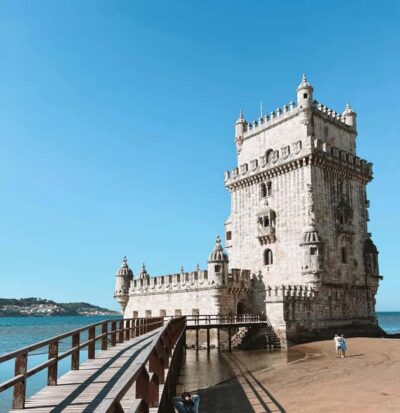
Lisbon: Belém Walking Tour with Jerónimos Monastery Ticket
Read our review →Lisbon: Belem Walking Tour with Jeronimos Monastery Ticket
Read our review →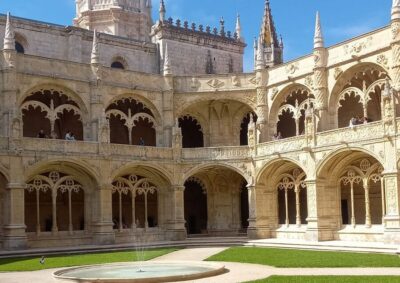
Lisbon: Belem, Jeronimos Monastery, and Coach Museum Tour
Read our review →
Belem and Jeronimos Monastery Guided Small Group Walking Tour
Read our review →
Fatima, Valinhos, Nazaré, Óbidos on Private tour
Read our review →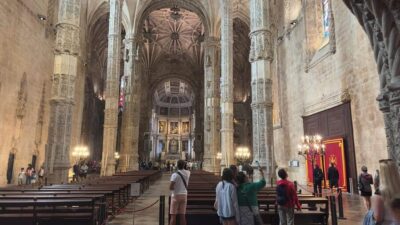
Lisbon: Belem Tour with Pastéis at Jerónimos Monastery
Read our review →This tour also ranks in