
Review · LISBON
Lisbon: Belem Walking Tour with Jeronimos Monastery Entry
Jerónimos Monastery is the star here, and the smart part is getting inside with entry already arranged rather than spending part of your morning in Lisbon’s long public queue. Once inside, your guide brings sense to the carvings, cloisters, royal tombs, and links to Portugal’s Age of Discovery.
I like two things in particular: the tour gives you the original Pastel de Belém, and it connects the monastery with the Monument to the Discoveries and Belém Tower instead of treating them as isolated sights. Guides such as Luis, Leonardo, Leo, and Federico are praised for clear English, good humor, and answers that go beyond a memorized speech.
The main drawback is current and important: Belém Tower is closed for restoration, so you see it from outside only. The walk also involves several hours on your feet, with little shelter on sunny days, so this is not a good fit if you have mobility limits or want a slow, indoor-only morning.
Key points at a glance
- Start with Jerónimos Monastery: Enter around 9:30 in the morning with tickets purchased in advance.
- Look up in the cloister: The upper level offers some of the finest views of the monastery’s Manueline stonework.
- Learn the people behind the monuments: See the tombs of Vasco da Gama, Luís de Camões, King Manuel I, and João III.
- Taste the original tart: A Pastel de Belém is included at the bakery linked to the monastery’s old monks.
- Walk through Portugal’s seafaring story: Continue to the Monument to the Discoveries and Belém Tower.
- Plan for outdoor walking: Bring comfortable shoes, sunscreen, a hat, and an umbrella if rain is possible.
Why this Belém tour works well
Belém can look simple on a map. The monastery is here, the tower is there, and the riverside monuments sit between them. But the meaning of the place is easier to grasp when someone explains how the buildings connect to Portugal’s 15th and 16th-century voyages.
That context is the real reason to book a guided walk. Inside the monastery, signs are limited, and the stonework can become a blur of columns, ropes, armillary spheres, plants, and carved figures. A good guide helps you see why those details were chosen and what the building meant to Portuguese society.
The tour costs $70 per person and lasts about three to three and a half hours. That is not the cheapest way to see Belém, but the price includes Jerónimos Monastery entry, a live English-speaking guide, and a Pastel de Belém. If you would otherwise buy a ticket, wait in line, and hire a guide separately, the value is reasonable, especially on a busy morning.
The experience is offered for private groups as well as shared groups. The supplied information does not promise one fixed group size, but several bookings were described as small, including one with only four people. A smaller group can make it easier to ask questions and hear the guide clearly.
More Temple Walking Tours in Portugal
- Lisbon: Belém Walking Tour with Jerónimos Monastery Ticket
★ 4.9 · 637 reviews - Lisbon: Belem Walking Tour with Jeronimos Monastery Ticket
★ 4.7 · 490 reviews - Belem and Jeronimos Monastery Guided Small Group Walking Tour
★ 5.0 · 410 reviews
Meeting at Jerónimos Monastery
You meet in front of the entrance to Jerónimos Monastery, near the south entrance to the church and the lines forming for access. This detail matters. The complex has several impressive façades and entrances, so do not simply walk up to the first doorway you see.
Pay close attention to the meeting-point photo and arrive early. One booking described traffic and a delayed ride as nearly causing a late arrival. The guide is expected to be waiting in the access line with the tickets, but the tour asks you not to arrive late because the group moves according to an entry time.
The visit begins at about 9:30 in the morning. That early start is useful. Belém is one of Lisbon’s busiest sightseeing areas, and entering early gives you a better chance of enjoying the cloisters before the day becomes more crowded.
You will not need to buy the monastery ticket separately. The guide handles access with pre-purchased entrance tickets, using a separate access arrangement rather than sending you to the standard ticket line. This does not mean you can ignore all queues, but it should save valuable time.
Inside the cloisters: Manueline stonework with a story
The guided monastery visit lasts about an hour and a half. It begins in the upper cloister, where you can look across the open courtyard and study the detailed Manueline design from above.
Manueline architecture developed in Portugal in the early 16th century. It uses late Gothic structures but adds Renaissance influences and decorative references connected with the sea, navigation, religion, and royal power. Your guide explains what the building represented at the time, rather than leaving you to admire the stonework without context.
The cloister is especially rewarding if you like architecture. You will see delicate columns, carved arches, and repeated decorative motifs that are easy to miss when you are moving through alone. The guide may also use images to clarify how the monastery and nearby monuments fit into Portugal’s story.
On the lower level, the tour visits important rooms including the Chapter Room and the old Refectory. These spaces help you picture the monastery as a working religious community, not just a grand national monument.
The tomb of Fernando Pessoa is also included. His remains were moved there in the 20th century, long after the monastery’s original religious and royal roles had changed. That small detail adds a link between Portugal’s older past and its modern literary identity.
The strongest part of the visit is the explanation. Luis, Leonardo, Leo, Federico, and other guides are repeatedly praised for making the history easy to follow, answering questions, and using humor without turning the tour into a comedy routine. One guide was also noted for taking photographs for the group, a useful touch when you are traveling without a companion to handle the camera.
Santa Maria de Belém Church and the royal tombs
After the cloister, you enter Santa Maria de Belém Church. This is the monastery’s great interior space, with high proportions, Manueline decoration, and a direct connection to Portugal’s monarchy and maritime era.
The church contains the tombs of King Manuel I and his son, João III, members of the Avis dynasty. It also holds the tombs of Vasco da Gama and Luís de Camões.
These names can sound familiar without being meaningful. The guide’s role is to explain who they were and why their presence here matters. Vasco da Gama represents Portugal’s major ocean voyages, while Camões is associated with the literary expression of those voyages and the national identity built around them.
I especially like this part for visitors who want more than pretty photographs. The church shows how religion, monarchy, national pride, and overseas expansion were tied together. The tour does not ask you to admire that story without question, but it gives you the background needed to understand why this building became such a powerful symbol.
The church is also a calmer counterpoint to the open-air monuments later in the morning. Still, you should be prepared for other people inside and for a steady pace through the main areas.
More Temple Walking Tours in Lisbon:
- Lisbon: Belém Private Walking Tour & Jerónimos Monastery
★ 4.5 · 83 reviews - Belém Walking Tour + Jerónimos Monastery Ticket
★ 5.0 · 24 reviews - Bangkok: City Highlights Temple and Market Walking Tour
★ 4.5 · 3,990 reviews - Bangkok: Grand Palace and Wat Phra Kaew Guided Walking Tour
★ 4.4 · 2,417 reviews
The Pastéis de Belém stop
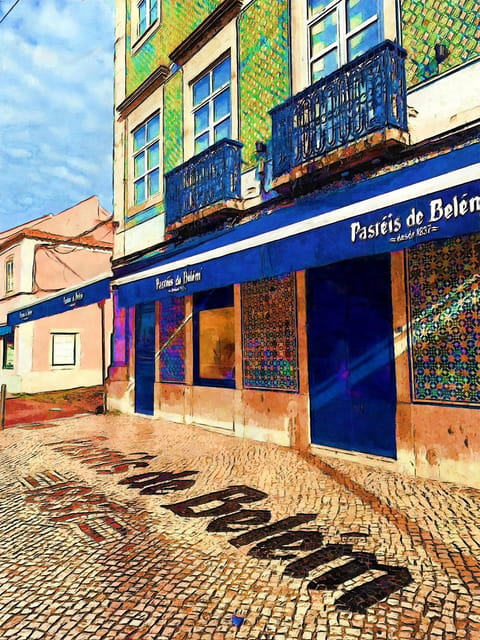
The pastry stop is not an afterthought. You visit Pastéis de Belém to try the original custard tart associated with Lisbon.
The recipe was created by monks from Jerónimos Monastery and has been sold at the same establishment since the middle of the 19th century. That connection makes the stop more interesting than simply buying a snack at the nearest café.
One Pastel de Belém is included in the price, and the visit lasts about 30 minutes. That gives you time to enjoy the pastry rather than swallowing it while walking. The tart is a practical reward after the monastery and before the longer outdoor stretch.
The stop also helps you understand how food can carry local history. The monastery supplies the religious and royal setting, while the pastry shop preserves a recipe tied to the old monastic community.
You should not treat the included tart as lunch. Lunch is not included, and the tour finishes at Belém Tower. If you need a full meal afterward, plan for it separately.
Empire Square and the Monument to the Discoveries
The walk continues through Empire Square Garden, with about 15 minutes of walking before the Monument to the Discoveries. This is where the morning shifts from medieval and early modern religious architecture to a 20th-century presentation of national history.
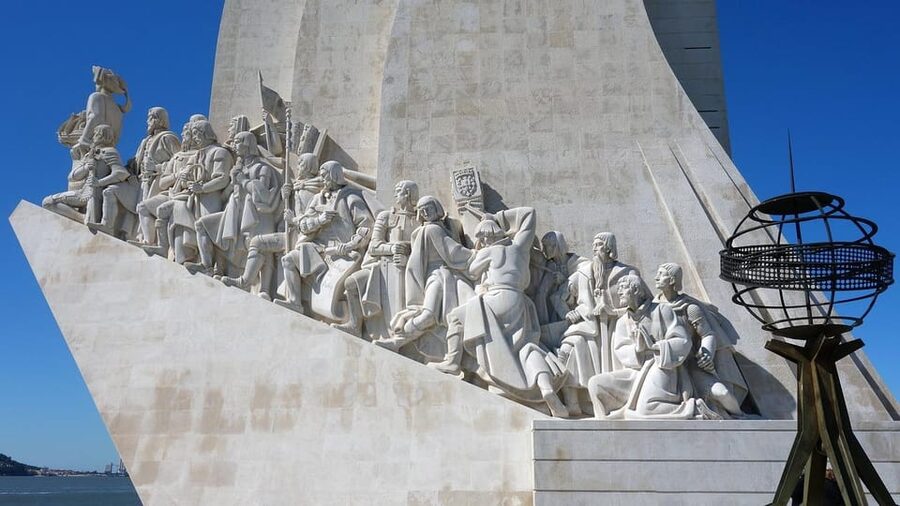
The Monument to the Discoveries was built in 1960 to mark the 500th anniversary of the death of Infante Dom Henrique, known as Prince Henry the Navigator. Other figures from Portugal’s great voyages are represented on the monument as well.
Your guide provides a guided visit and sightseeing stop of about 20 minutes. The value here is not simply the monument’s shape or riverside position. It gives you a chance to connect the people celebrated in the church and monastery with the national story presented in a later monument.
This is also a good place to ask questions. The guides are used to explaining how Portugal’s voyages expanded Portuguese culture around the world, and they can help you place the monument within that wider story.
The drawback is exposure. This part of the tour is outdoors, and summer heat can be intense. One booking took place on a very hot morning, while another went ahead in heavy rain. The tour runs in rain or shine, so sunscreen and an umbrella are sensible additions to your day bag.
Belém Tower from the outside
A walk of roughly 15 minutes brings you to Belém Tower. Together with Jerónimos Monastery, the tower has UNESCO World Heritage status and is another celebrated example of Manueline architecture.
The tower was built as a defensive point against attackers approaching Lisbon. Its position by the water makes that purpose easier to understand, even though the modern setting is much more peaceful.
At present, restoration work means the tower cannot be visited inside. The guide takes you to the exterior and explains its role, design, and place in Belém’s story. That is useful, but you should book this tour expecting an outside visit, not tower entry.
This limitation affected the experience for some people, but it does not remove the value of the stop if you mainly want to understand the district. You will still see the monument and hear the explanation. If entering the tower is your main goal, wait until restoration work is complete and check the current status before booking.
The tour ends at Torre de Belém. Transportation is not included, so you need to arrange your own way back or continue exploring the riverside area.
The guides and the pace
The guide is central to this experience. The tour is offered in English, and several guides are named in the supplied booking details, including Luis, Leonardo, Leo, Federico, Renan Stein, Daniel, and Ricardo.
The strongest pattern is clear communication paired with enthusiasm for Portuguese history. Luis is often singled out for answering questions, giving useful Lisbon suggestions, and keeping the information at a manageable pace. Leonardo and Leo are praised for making the stories engaging, while Federico is noted for his energy and clear explanations of the monastery’s architecture.
One caution comes from a booking that found the amount of information almost too much to follow. This is not a light sightseeing stroll with a few facts sprinkled in. You will hear a fair amount about architecture, monarchy, religion, and the voyages. If you prefer a quiet walk, the amount of explanation may feel heavy.
For most people, the pace sounds well judged: about 90 minutes inside the monastery, then shorter outdoor stops, a pastry break, and enough walking to connect the sights. Wear shoes you can comfortably use for three hours.
Who should book this experience?
I would choose this tour if you are visiting Lisbon for the first time, care about architecture or Portuguese history, or dislike wasting a morning in a ticket line. It is also a good choice if you want someone to explain the monastery rather than simply point you toward the cloister and leave you to guess what you are seeing.
It suits couples, solo visitors, families with older children, and private groups that want to ask plenty of questions. English is the only listed language, so you should be comfortable following a live English explanation.
I would be more cautious if you have mobility impairments, use a wheelchair, dislike outdoor walking, or want to enter Belém Tower. The experience is specifically not suitable for wheelchair users or people with mobility impairments, and the tower is currently closed for restoration.
Bring comfortable clothes, a hat, sunscreen, and an umbrella. Alcohol and drugs are not allowed, and visitors are asked not to make noise inside the monuments.
Booking flexibility and practical value
The booking terms are useful for a changing Lisbon itinerary. You can cancel up to 24 hours before the tour for a full refund, and you can reserve now and pay later. The tour may be canceled if the minimum number of people is not reached, so keep that possibility in mind when planning another timed activity afterward.
At $70, the tour makes the most sense when you value time and interpretation. The monastery entry and pastry are included, but lunch, transport, and Belém Tower entry are not. The biggest saving is not the tart. It is avoiding the standard ticket process and having a guide explain details that are easy to miss on your own.
The 4.9 rating from 163 bookings supports the idea that the experience is consistently strong, especially for guide quality and monastery access. Still, the rating should not hide the two current limitations: the tower cannot be entered, and the walk is not designed for people with mobility problems.
Should you book the Belém walking tour?
Book it if Jerónimos Monastery is high on your Lisbon list and you want the building to make sense, not just look beautiful. The combination of pre-arranged entry, a proper monastery explanation, an original Pastel de Belém, and an outdoor walk to the two major monuments gives you a useful half-day in Belém.
Skip it if you only want to see Belém Tower from inside, need a wheelchair-accessible route, or prefer exploring at your own pace without a steady stream of historical detail. For everyone else, the tour offers a practical way to connect Belém’s architecture, food, religion, monarchy, and seafaring story in one morning.
FAQ
How long does the Belém walking tour last?
The tour lasts about three to three and a half hours.
Where does the tour begin?
It begins in front of Jerónimos Monastery, near the south entrance to the church and the lines for monument access.
Where does the tour finish?
The tour finishes at Torre de Belém, also known as Belém Tower.
Is entry to Jerónimos Monastery included?
Yes. Entrance tickets to Jerónimos Monastery are included, and the guide has the tickets purchased in advance.
Can I enter Belém Tower?
No. Belém Tower is currently undergoing restoration and cannot be visited inside. The tour includes an exterior visit and explanation.
Is a Pastel de Belém included?
Yes. One original custard tart from Pastéis de Belém is included.
Is lunch included?
No. Lunch and transportation are not included.
What language is the tour in?
The tour is conducted in English with a live English-speaking guide.
Is the tour suitable for wheelchair users?
No. The experience is not suitable for wheelchair users or people with mobility impairments.
What should I bring?
Bring comfortable shoes, comfortable clothing, sunscreen, a sun hat, and an umbrella. The tour runs in rain or shine.
Temple visits we reviewed lately in Lisbon
- Belém: Jeronimos Monastery, Tickets and Guided tour★ 4.9 · 30 reviews
- Lisbon: Tour of Belem and Jerónimos Monastery★ 3.2 · 5 reviews
- Lisbon: Skip-the-line Jerónimos Monastery Tour with Tickets★ 5.0 · 4 reviews
- Lisbon: Belém Private Walking Tour & Jerónimos Monastery★ 4.5 · 83 reviews
- From Lisbon: Évora, Chapel of Bones, & Roman Temple Tour★ 5.0 · 8 reviews
- From Lisbon: Fátima Sanctuary and Batalha Monastery (UNESCO)★ 5.0 · 5 reviews
- Lisbon: Belem Tour with Pastéis at Jerónimos Monastery★ 4.7 · 96 reviews
- Belém Walking Tour + Jerónimos Monastery Ticket★ 5.0 · 24 reviews
Lisbon Temple Tours, compared.
Lisbon: Jerónimos Monastery E-Ticket and Audio Guide
Read our review →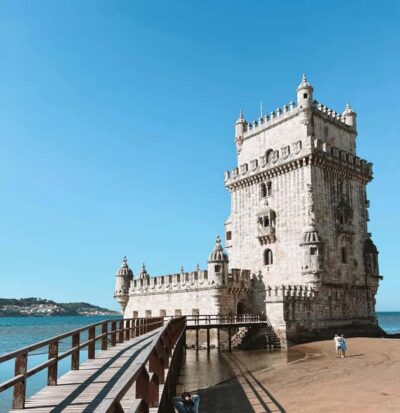
Lisbon: Belém Walking Tour with Jerónimos Monastery Ticket
Read our review →Lisbon: Belem Walking Tour with Jeronimos Monastery Ticket
Read our review →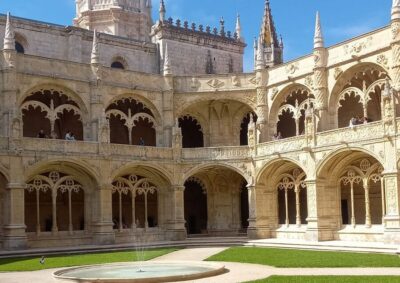
Lisbon: Belem, Jeronimos Monastery, and Coach Museum Tour
Read our review →
Belem and Jeronimos Monastery Guided Small Group Walking Tour
Read our review →
Fatima, Valinhos, Nazaré, Óbidos on Private tour
Read our review →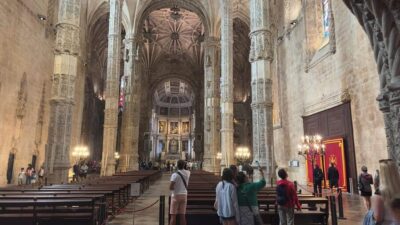
Lisbon: Belem Tour with Pastéis at Jerónimos Monastery
Read our review →This tour also ranks in