
Review · PORTUGAL
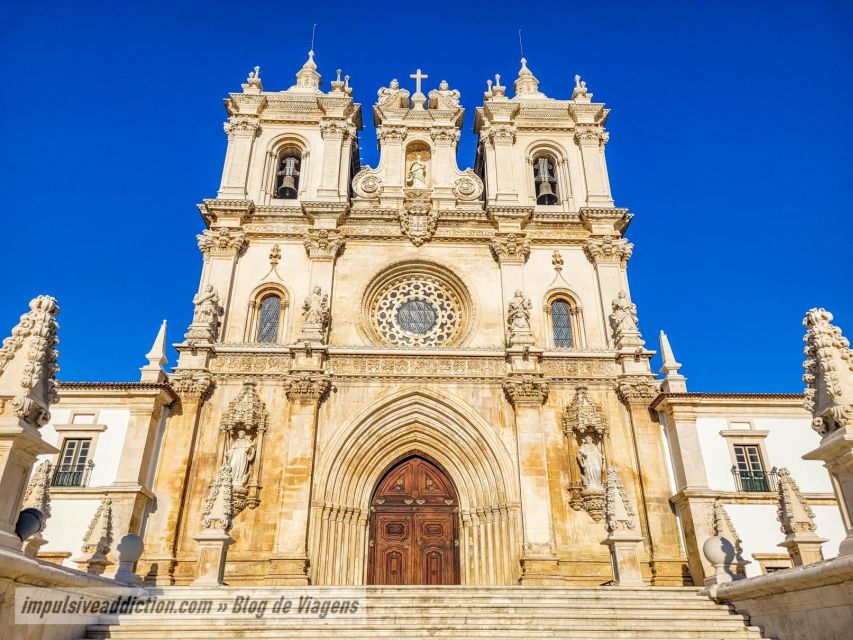
Alcobaça Monastery: Private Tour
The most memorable part of Alcobaça Monastery is not just its size, but the tragic love story carved into its stone. Pedro and Inês were separated by politics, murder, and royal power, then reunited in death through Pedro’s determination to make Inês Queen of Portugal.
I like the private format, because you can ask questions without waiting for a large group. I also like the way this tour connects the monastery to ordinary life, including the monks’ food traditions, pastry, and Ginjinha. The main drawback is simple: the monastery entrance ticket costs extra, so the $53 tour price is not the full admission cost.
Key points at a glance
- Pedro and Inês: Hear the dramatic story of Portugal’s most famous royal romance and its brutal political ending.
- A major Cistercian center: Explore a monastery built on a scale that helps explain the order’s importance in Portugal and Europe.
- Private two-hour visit: Ask your own questions and keep the guide’s attention on your interests.
- Clear guiding: J.P. is praised for explaining the site well and answering questions directly.
- English or Portuguese: Choose from two guide languages when checking available times.
- Food connections: Learn how monastic life is linked with pastry and Ginjinha, then use the guide’s local food tips after the tour.
Why Alcobaça’s love story comes first
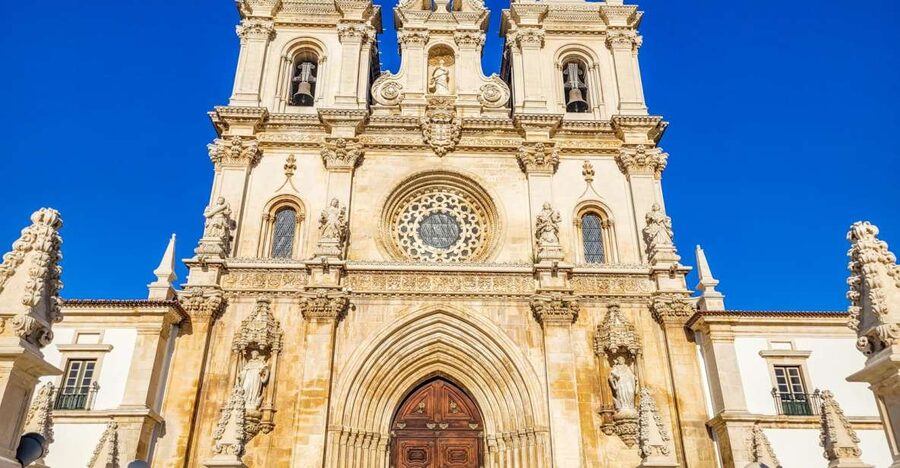
You can visit a church for its architecture, but Alcobaça gives you a human story to carry through the building. Pedro was a prince who loved Inês, a relationship opposed for political reasons. Inês was murdered, and when Pedro later became king, he sought revenge on those responsible.
The legend becomes even darker and more theatrical from there. Pedro is said to have had the assassins killed and their hearts removed, a grisly punishment for the heartbreak they caused. He then had Inês crowned Queen of Portugal after her death.
That story gives the monastery an emotional center. You are not simply moving from chapel to cloister. You are seeing the place where royal power, private grief, religion, and national memory meet.
Your guide can use this tale to explain why Pedro and Inês remain so important in Portugal. The story also helps you notice the tombs and the church with more attention than you might give them on a quick self-guided visit.
More Private Temple Tours in Portugal
- Fatima, Valinhos, Nazaré, Óbidos on Private tour
★ 5.0 · 158 reviews - Fátima Private Tour: Shrine| Sacred Path |Shepherds House
★ 5.0 · 81 reviews - Fatima Private Tour: Shrine, Sacred Way & Shepherds’ Hometown
★ 5.0 · 41 reviews
Entering a vast Cistercian monastery
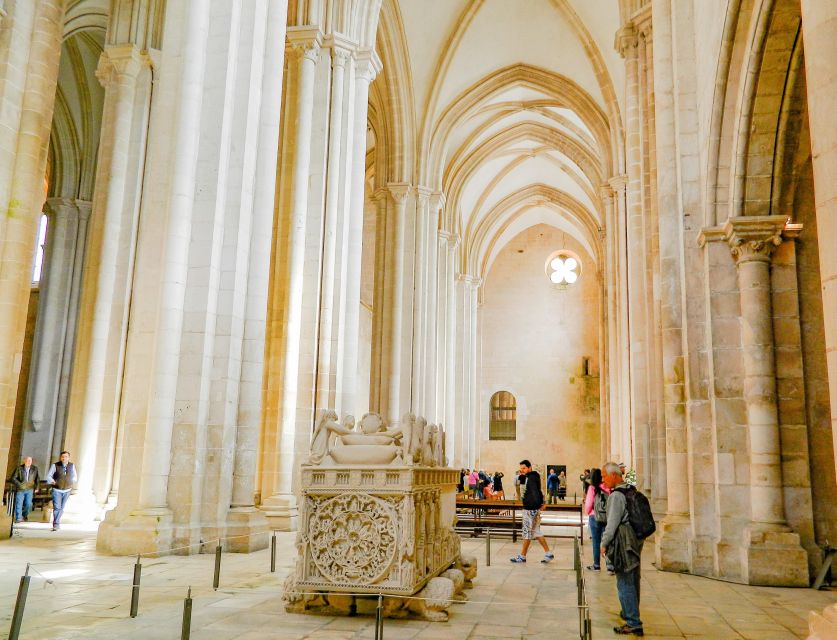
The tour begins at the main entrance of the monastery, at Praça 25 de Abril 46. From there, you spend about two hours on a guided visit through the church and monastic areas.
Alcobaça was one of the largest Cistercian centers in Europe. That fact matters because the building is not a small retreat hidden from public life. Its scale points to the influence, wealth, organization, and reach of the order.
The Cistercians followed a disciplined way of life built around Pray and Work. A good guide helps you understand what that meant in practice. The monastery was a religious home, a working institution, and a place tied to the wider development of Portugal.
I like this kind of explanation because it keeps the visit from becoming a list of dates and architectural labels. You learn why the monastery needed large rooms, courtyards, corridors, and working areas, not just what those spaces are called.
The church: plain lines and powerful tombs
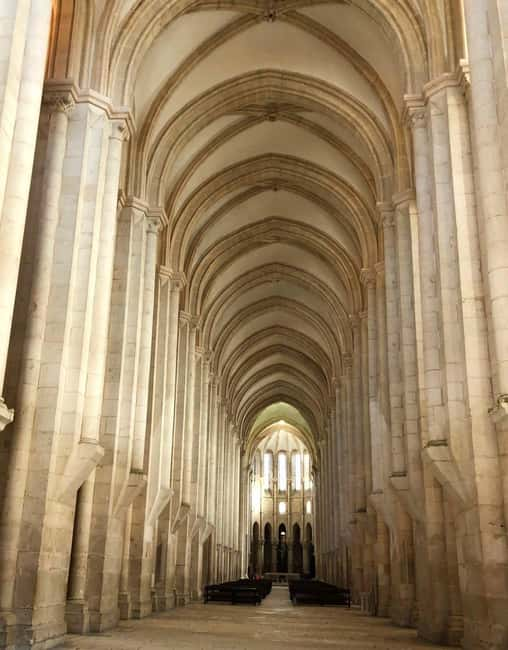
The church is especially striking because it is large and relatively restrained in decoration. Cistercian buildings were not designed around excessive ornament, so the interior can feel sober rather than flashy.
That simplicity is part of the point. Instead of filling every surface with decoration, the church uses scale, proportion, and a small number of important features to make an impression. Give yourself time to look up, across, and along the length of the space.
The tombs of Pedro and Inês are among the most important details to see. Their presence turns the church into the final chapter of the love story, but the tombs also carry political meaning. Pedro’s actions after becoming king show how personal loss and royal authority became tied together.
A guide is useful here because it is easy to admire the craftsmanship without understanding who is represented or why the tombs matter. The story gives the stonework a human face.
The church may appeal most to visitors who prefer architecture with restraint. If you want bright decoration at every turn, the interior could feel bare. If you appreciate order, proportion, and atmosphere, the quiet design should work well.
Cloisters, courtyards, and the monks’ daily routine
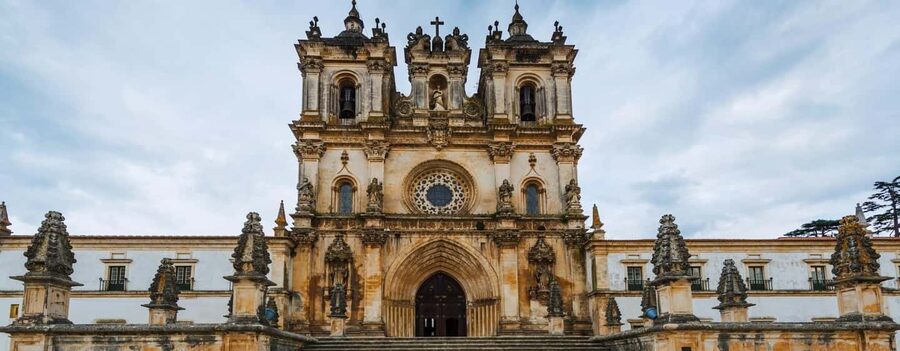
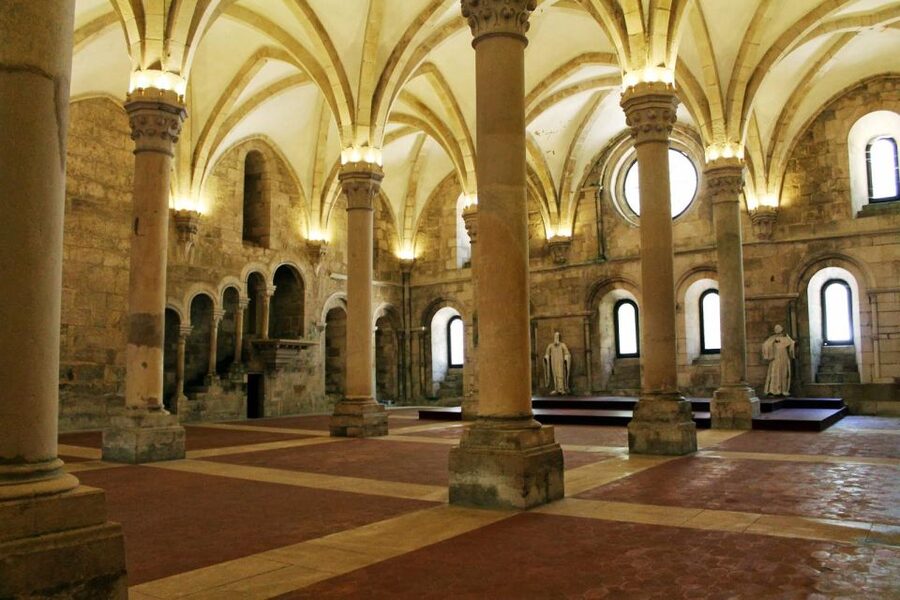
After the church, the tour continues into the monastery itself. You can expect cloisters, courtyards, halls, and other areas connected with the daily life of the monks.
The courtyards offer a change of mood from the church. They help you picture the monastery as a lived-in community rather than a grand monument used only for ceremonies. The arrangement of rooms and passageways shows how prayer, work, meals, study, and administration could fit into one large complex.
This is where the Cistercian connection becomes practical. The order’s motto was not only about silent prayer. Work was part of the religious routine, and the monastery needed people, space, and systems to keep functioning.
You will likely get more from these areas with a guide than by walking through alone. A private guide can explain what each space was used for and respond to the questions that come up naturally. The two-hour duration is long enough for context without turning the visit into an all-day commitment.
Still, two hours is not unlimited. If you want to inspect every architectural detail, take many photographs, or read every panel at your own pace, you may need extra time before or after the guided visit. The tour gives you a strong framework, but it cannot cover every corner in depth.
Same sacred ground, another way to see it:
- Lisbon: Jerónimos Monastery Entrance Ticket
★ 4.1 · 14,164 reviews - Lisbon: Jerónimos Monastery E-Ticket and Audio Guide
★ 3.7 · 660 reviews - Lisbon: Belém Walking Tour with Jerónimos Monastery Ticket
★ 4.9 · 637 reviews - Lisbon: Belem Walking Tour with Jeronimos Monastery Ticket
★ 4.7 · 490 reviews
The old kitchen and the edible side of monastic life
One of the more appealing details is the old kitchen. It brings the monastery down to earth. Grandeur is easy to understand in a church, but a kitchen reminds you that religious communities also had to prepare food, organize supplies, and feed the people living and working inside the complex.
The tour also connects the Cistercians with pastry and Ginjinha. That adds a welcome local touch. You are not only hearing about prayer and architecture, but also about traditions that survived through food and drink.
I would pay attention to this part if you enjoy understanding how historic places connect to present-day culture. The pastry and Ginjinha discussion can also help you choose what to try afterward.
Guide J.P. is particularly useful after the formal visit. He has given practical suggestions for nearby food and pastries, which is exactly the sort of local help that can improve the rest of your time in Alcobaça. You get the history inside the monastery, then a starting point for a meal or sweet treat nearby.
What the private format adds
At $53 per person, this is not the cheapest way to enter Alcobaça Monastery. The admission ticket is separate, so you need to add that cost when comparing the tour with a self-guided visit.
The value comes from the guide rather than from the ticket itself. You are paying for a private two-hour explanation in English or Portuguese, with time to ask questions and follow your own interests. If you have limited time or want the site explained in a clear sequence, that can be worthwhile.
A private group also makes the experience more personal. You do not have to rely on a guide’s comments being audible from the back of a large crowd. You can stop to ask about Pedro and Inês, the Cistercian order, the tombs, or the monastic rooms as the questions occur to you.
The private format suits couples, families, and small groups who want a focused visit. It may be less attractive if you are comfortable reading information on your own and mainly want entry to the building.
The tour includes water, a small but useful detail during a walking visit. It does not include the monastery ticket, so check the total price before booking.
Guide style and language choices
The experience is offered with a live guide in English or Portuguese. That makes it practical for international visitors and Portuguese-speaking visitors alike.
J.P. is the guide name connected with the clearest available details about the experience. His approach is described as clear, well prepared, and able to handle questions. Those qualities matter at Alcobaça because the site combines religious history, royal politics, architecture, and local customs.
A friendly guide can also make the difference between a solemn visit and a stiff one. The tone here appears to include room for practical conversation, especially when the subject turns to nearby food and pastries.
You should confirm the available language and start time when booking. The activity lasts two hours, but the exact starting times depend on availability.
Who should book this Alcobaça visit
I would recommend this tour to you if you want more than a quick look inside the church. It is especially useful if you enjoy stories about royal families, religious orders, and the daily details behind major monuments.
It also suits first-time visitors who do not want to work out the meaning of the monastery alone. The guide can connect the tombs, church, cloisters, kitchen, and Cistercian tradition into one clear visit.
Couples may enjoy the Pedro and Inês story, though it is not a light romantic tale. It includes murder, revenge, and political pressure. Families with older children may find it memorable, but very young children may not follow or appreciate the darker parts.
History fans should appreciate the relationship between the monastery and Portugal. Food-minded visitors will also enjoy the pastry and Ginjinha connection, especially with local suggestions from the guide after the tour.
You may want to skip the private tour if your priority is the lowest possible cost. Since admission is not included, a self-guided visit will likely be better value for someone who prefers to read at their own pace and does not need a live explanation.
Booking, cancellation, and meeting point
You meet at the main entrance of Alcobaça Monastery, at Praça 25 de Abril 46. This is convenient because you do not need to arrange separate transport to an out-of-town meeting point.
The activity offers free cancellation up to 24 hours before the scheduled start for a full refund. You can also reserve now and pay later, which is useful if you are arranging several parts of a Portugal trip and want to keep your plans flexible.
The price is listed as $53 per person. Remember to add the separate monastery admission ticket when working out your budget.
Should you book it?
Book this tour if you want the monastery explained through people and daily life, not just architecture. The Pedro and Inês story gives the visit its emotional pull, while the Cistercian background explains why Alcobaça became such a major center.
I especially like the private two-hour format, the clear guiding associated with J.P., and the practical food advice at the end. The main caution is the extra admission cost. If that fits your budget, this is a focused and useful way to understand Alcobaça without giving up half a day.
FAQ
How long does the Alcobaça Monastery private tour last?
The guided visit lasts two hours.
Where does the tour meet?
The meeting point is the main entrance of the Monastery of Alcobaça, at Praça 25 de Abril 46.
Is the monastery entrance ticket included?
No. Tickets to the Monastery of Alcobaça are not included in the tour price.
What is included in the tour?
Water is included.
What languages are available?
The live guide is available in English or Portuguese.
Is this a private group experience?
Yes. The activity is operated for a private group.
How much does the tour cost?
The listed price is $53 per person.
Can I cancel the booking?
Yes. You can cancel up to 24 hours in advance for a full refund.
Can I reserve now and pay later?
Yes. The booking option allows you to reserve your place and pay later.
What will I learn during the tour?
You will learn about Pedro and Inês, the Cistercian order, the monastery’s role in Portuguese history, monastic daily life, and the links between the monks, pastry, and Ginjinha.
Temple visits we reviewed lately in Portugal
- Belém: Jeronimos Monastery, Tickets and Guided tour★ 4.9 · 30 reviews
- Lisbon: Skip-the-line Jerónimos Monastery Tour with Tickets★ 5.0 · 4 reviews
- Lisbon: Tour of Belem and Jerónimos Monastery★ 3.2 · 5 reviews
- Lisbon: Belém Private Walking Tour & Jerónimos Monastery★ 4.5 · 83 reviews
- From Lisbon: Évora, Chapel of Bones, & Roman Temple Tour★ 5.0 · 8 reviews
- From Lisbon: Fátima Sanctuary and Batalha Monastery (UNESCO)★ 5.0 · 5 reviews
- Lisbon: Belem Tour with Pastéis at Jerónimos Monastery★ 4.7 · 96 reviews
- Between Life & Death: Roman Temple, Cathedral & Bone Chapel★ 4.9 · 6 reviews
Portugal Temple Tours, compared.
Lisbon: Jerónimos Monastery E-Ticket and Audio Guide
Read our review →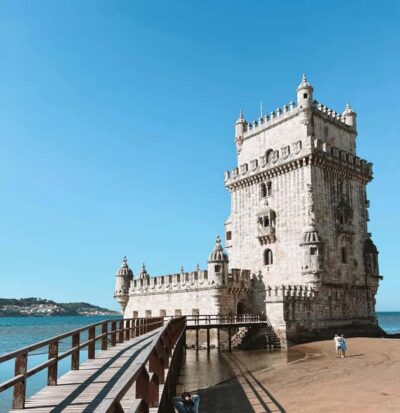
Lisbon: Belém Walking Tour with Jerónimos Monastery Ticket
Read our review →Lisbon: Belem Walking Tour with Jeronimos Monastery Ticket
Read our review →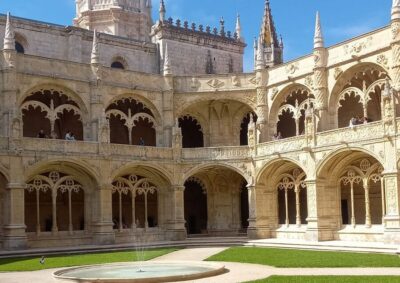
Lisbon: Belem, Jeronimos Monastery, and Coach Museum Tour
Read our review →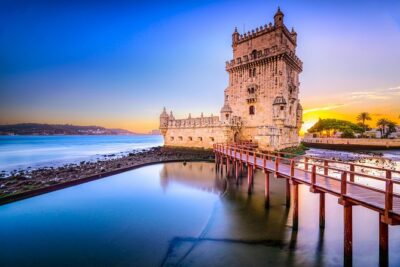
Belem and Jeronimos Monastery Guided Small Group Walking Tour
Read our review →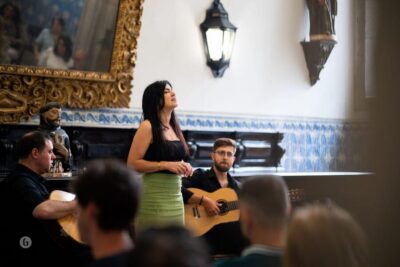
“Porto: Fado Show with Guided Tour in a Historic Monastery”
Read our review →
Fatima, Valinhos, Nazaré, Óbidos on Private tour
Read our review →This tour also ranks in