
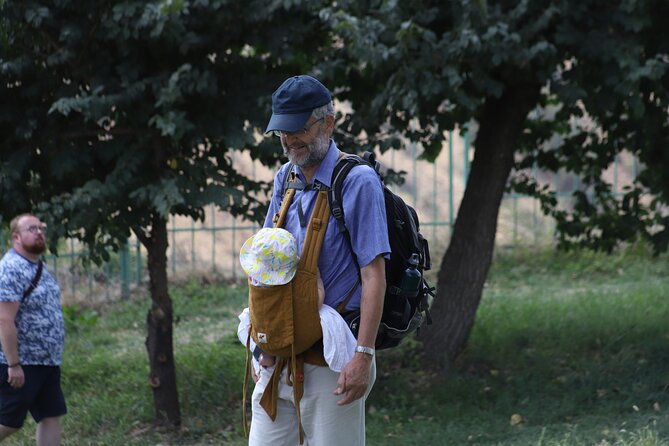
Review · YEREVAN
Yerevan: Garni, Geghard, Symphony of Stones & Lavash Baking
The best part of this Yerevan day trip is the variety packed into six hours. You move from a Mount Ararat viewpoint to a medieval monastery, a dramatic basalt canyon, a pagan temple, and a family-style lavash demonstration. Geghard Monastery and the Symphony of Stones are the real stars.
I like the strong mix of Armenian culture and outdoor scenery, and I like that the tour costs only $23 before the two small entrance fees. Guides such as Yegor, Igor, Hasmik, and Anna are praised for clear storytelling and warm attention to the group. The main caution is organization: bilingual departures, long restaurant stops, vehicle temperature, and a short lavash demonstration can affect the day.
Key points to know before booking
- Mount Ararat begins the story: Charents Arch gives you a memorable viewpoint when the sky is clear.
- Geghard is the emotional high point: Part of this medieval monastery is cut directly into the mountain.
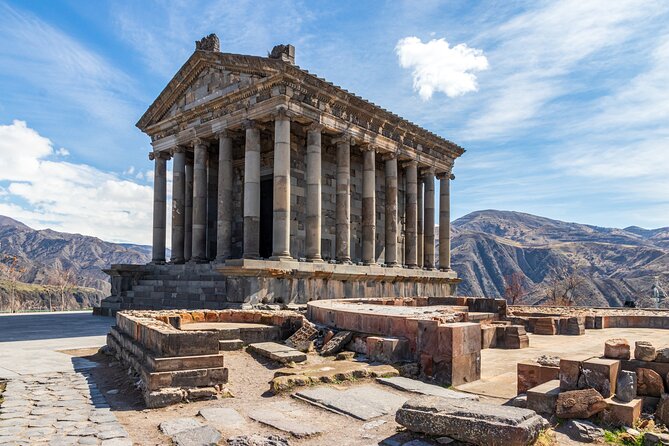
- Garni links ancient and modern Armenia: See the country’s only preserved pagan temple, then watch lavash being baked.
- The Symphony of Stones costs extra: Admission is 300 AMD, while Garni Temple costs 1,500 AMD.
- The price is unusually low: Transport, an English-speaking guide, and the baking demonstration are included for $23.
- The format can vary: Some departures combine English and Armenian groups, and weather can force changes.
Why this six-hour route works so well from Yerevan
Armenia rewards a short trip outside the capital. Within a manageable half-day, you see religious architecture, pre-Christian history, mountain scenery, and an everyday food tradition. The sites are close enough to Yerevan to avoid an exhausting full-day drive, yet varied enough that the day never feels like a single monument visit.
The tour starts at 9:00 a.m. outside the Komitas Yerevan State Conservatory on Sayat-Nova Avenue. It ends back at the same meeting point. Transport is provided in a minibus, and the group can reach up to 20 people. That size keeps the cost down, though it also means you need to stay alert when the group moves between stops.
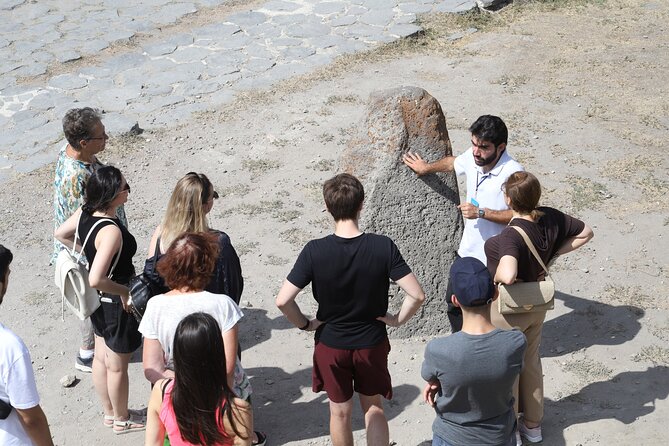
The English guiding is one of the strongest parts of the experience. Guides named Yegor, Igor, Hasmik, Mery, Taku, Anna, Ani, and others have led different departures. The style can vary by guide, but the best ones give useful background before allowing you time to look around. One guide, Yegor, was also praised for playing both modern and traditional Armenian music during the drives, a small touch that makes the roads feel less like dead time.
More Armenian Monastery Tours in Yerevan:
- Group Tour: Garni, Symphony of Stones, Geghard, Lavash Baking
★ 5.0 · 1,042 reviews - Group Tour: Garni pagan temple, Geghard monastery, Lake Sevan, Sevanavank
★ 5.0 · 430 reviews - Group Tour: Echmiadzin Cathedral & churches, Zvartnots Temple
★ 5.0 · 352 reviews
Charents Arch and the first view of Mount Ararat
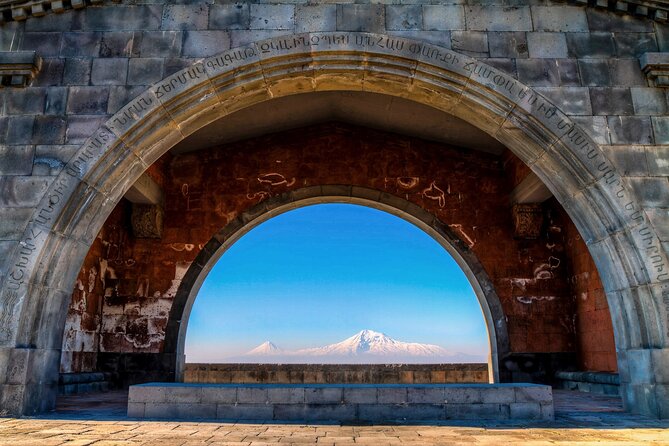
Your first stop is Charents Arch, near the village of Voghjaberd. The structure was designed by architect Rafael Israelyan in 1957 after he noticed the view of Mount Ararat from the hill. It is also called the Mount Ararat Temple, although it is an arch rather than a functioning temple.
The front carries the final line of a poem by Yeghishe Charents, celebrating Ararat, known in Armenian tradition as Masis. The stop gives your guide a natural opening to discuss Armenian identity, poetry, geography, and the importance of the mountain across the border in modern Turkey.
Allow about an hour here, although the exact time can depend on traffic and weather. The view is the point, so clear air matters. Several departures have had cloudy skies or snow, making Ararat difficult or impossible to see. Even then, the arch itself and the open hilltop provide a worthwhile beginning, but you should not treat the mountain view as guaranteed.
Bring a phone or camera, and listen for the guide’s explanation before wandering off for pictures. This is a simple viewpoint rather than a large attraction, so the quality of the stop depends heavily on visibility and the guide’s storytelling.
Geghard Monastery, where stone becomes architecture
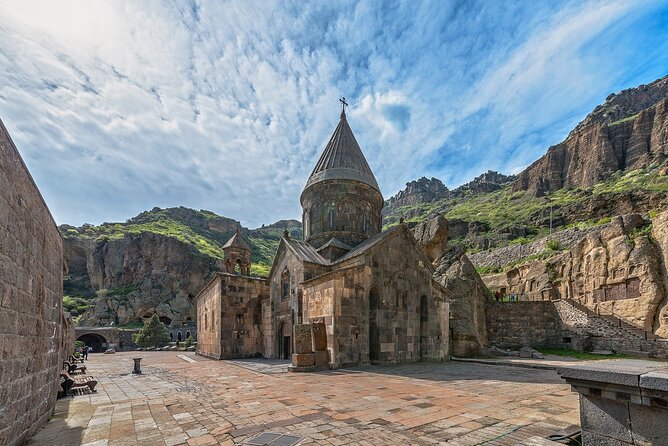
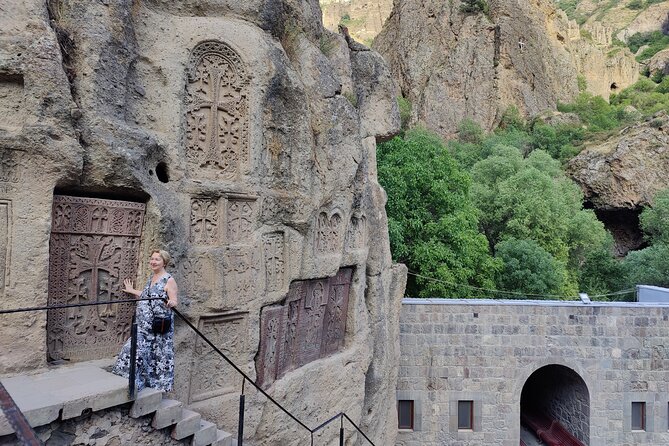
Geghard is the most powerful cultural stop on the route. The medieval monastery sits among steep cliffs, with sections carved into the surrounding rock. The name Geghardavank means Monastery of the Spear, referring to the spear associated with the Crucifixion and believed to have been brought to Armenia by the Apostle Jude, known locally as Thaddeus.
That relic is now held in the treasury at Echmiadzin, but the story helps explain why Geghard became such an important religious center. The complex is protected as a UNESCO World Heritage Site, and its setting does much of the work: rough mountain walls, dark stone chambers, and a sense that the monastery grew out of the cliff rather than being placed beside it.
Give yourself time to notice the texture of the place. The carved rooms are not grand in the polished-palace sense. They are intimate, shadowy, and severe. If religious singing takes place during your visit, the sound can make the stone interiors especially memorable. Some departures have included spiritual songs inside the monastery, though this should not be treated as a guaranteed part of every visit.
Your guide should explain the religious symbols and the complex’s history, then let you explore. That balance matters. Geghard is a place where a long lecture can get in the way of simply looking, listening, and taking in the rock-cut spaces.
The Symphony of Stones in Azat Canyon
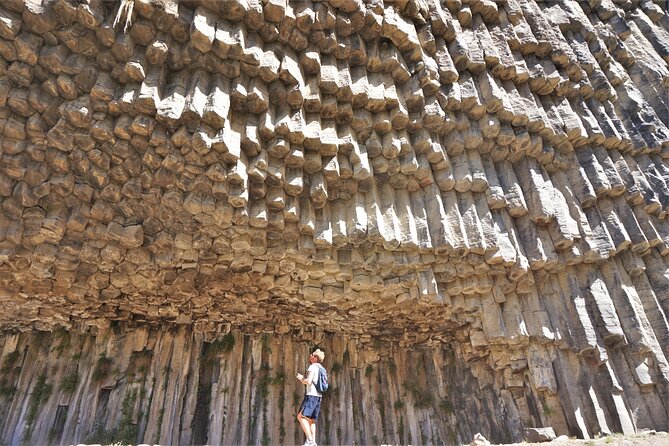
The Symphony of Stones is a natural formation of tall, hexagonal basalt columns extending along the canyon. The regular shapes look like the pipes of a giant organ, which explains the poetic name. The formation is part of the UNESCO-protected area connected with Garni.
This is the most purely scenic portion of the tour. The columns are a good reminder that Armenia is not only about monasteries and royal ruins. The canyon gives you a brief outdoor walk and a change of scale after the enclosed rooms at Geghard.
Admission is not included and costs 300 AMD. The stop is listed as about an hour, but walking conditions and weather can affect the experience. Snow and ice have changed routes on some departures, and one group was unable to visit the formation because of weather. Wear shoes with a firm sole, particularly in colder months, and be ready for uneven ground.
The guide’s explanation here can be brief, so ask questions if you want more geological context. This is one of the places where the tour works best when you combine the guide’s introduction with your own time to look closely at the columns and canyon walls.
More Temple Tours around Yerevan:
- Group Tour: Khor Virap, Garni temple, Geghard, Lavash baking
★ 5.0 · 333 reviews - Private 7-8-hour Khor Virap, Garni temple & Geghard monastery trip from Yerevan
★ 5.0 · 272 reviews - Private Tour to Tsaghkadzor, Kecharis Monastery, Lake Sevan, Sevanavank
★ 5.0 · 86 reviews - Private tour to Hin Areni winery, Tatev monastery & ropeway, Khndzoresk caves
★ 5.0 · 58 reviews
Garni Temple and pre-Christian Armenia
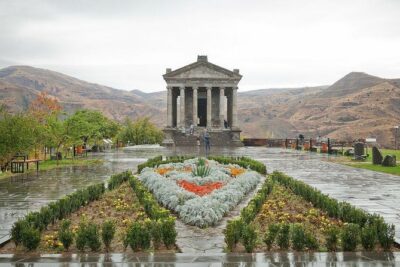
Garni Temple gives the tour its strongest link to ancient, pre-Christian Armenia. Built in the first century and dedicated to Mithra, the sun god, it is the only preserved pagan temple in Armenia and in the territory of the former Soviet Union.
The temple has not survived untouched. A major earthquake destroyed it in 1679, and restoration took place from 1968 to 1975. That restoration history is worth knowing because the site is both an ancient monument and a modern reconstruction effort. Your guide can help explain what belongs to the original structure, what was lost, and why Garni matters so much to Armenian history.
The setting adds to the appeal. The temple sits above the Azat Canyon, giving you a clear sense of how the ancient builders used the terrain. Look beyond the columns and consider the contrast with Geghard. Geghard represents medieval Christian Armenia carved into rock, while Garni points to an older religious world shaped by classical forms and sun worship.
Garni admission costs 1,500 AMD and is not included in the tour price. You normally have time to walk around the temple area and hear the main explanation before continuing to the food demonstration. The location can become busy, so staying near your guide helps you avoid missing the next departure.
Lavash baking, a cultural finish with a practical limit
The final stop is a lavash baking demonstration lasting about 40 minutes. Lavash is Armenia’s famous thin bread, and seeing it made adds a useful, everyday layer to a route otherwise dominated by monuments.
The experience is generally a demonstration rather than a full hands-on cooking class. You watch the bread being prepared and baked, then have a chance to taste it. Some departures include a family-run restaurant setting, a courtyard, and additional food such as lunch. The quality of the meal can vary, and the food is not part of the stated inclusions.
This is where you should manage expectations. If you imagine rolling dough yourself or spending a long time learning the recipe, you may find the class too short. On some departures, the actual baking demonstration has lasted only a few minutes, with limited explanation. Other groups have found the food and setting to be a highlight.
Lunch can also affect the schedule. A restaurant stop lasting up to 1 hour and 45 minutes has been reported, including long waits even when food was ordered ahead. Another departure included a restaurant meal that felt overpriced for its quality. You may enjoy the courtyard and fresh food, but the meal is not the reason to book this tour. The monuments and the baking tradition are the stronger reasons.
What the $23 price really buys you
At $23 per person, this is one of the better-value ways to see the main sights outside Yerevan. The price includes transport, an English-speaking guide, and the lavash baking demonstration. You pay only 1,500 AMD for Garni and 300 AMD for the Symphony of Stones, according to the stated fees.
That low price does come with tradeoffs. You are joining a group of up to 20 people rather than arranging a private car and guide. Departures may combine English and Armenian speakers, which can lengthen explanations and make the flow less smooth. The vehicle has been described as comfortable and clean on some trips, but air conditioning has been an issue on others.
The value is strongest if you want a broad introduction to Armenia and do not need a highly polished private experience. You get four major stops, several different kinds of scenery, and a guide who can place the sites in a wider historical story. It is less suitable if you want a quiet pace, a guaranteed single-language group, or complete control over meal timing.
Timing, weather, and comfort on the road
The tour lasts about six hours, starting at 9:00 a.m. and returning to the original meeting point. It is a fairly active morning and afternoon, but the route is not described as strenuous. Most people can participate, and public transportation is available near the starting point.
Weather deserves attention. Mount Ararat may disappear in cloud, and snow or ice can change the order of stops or prevent access to the Symphony of Stones. The experience requires good weather, so a cancellation caused by poor conditions may lead to another date or a full refund.
Vehicle comfort has been mixed. Several departures used a clean, comfortable minibus, and drivers were praised for handling difficult winter roads carefully. At least two accounts raised concerns about poor air conditioning or a driver failing to adjust the temperature. If you are sensitive to heat or cold, dress in layers and bring water.
Road safety feedback has also varied. Some drivers were specifically praised as careful, while one account described aggressive driving. That does not establish a pattern for every departure, but it is a fair reason to keep the low-cost group format in mind.
Which guide style should you hope for?
The most successful departures appear to depend heavily on the guide. Yegor and Igor are repeatedly associated with clear explanations, humor, and strong knowledge of Armenian culture. Hasmik is described as warm, enthusiastic, and gifted at telling historical stories. Mery, Taku, Ani, and Anna have also led well-received tours.
A good guide makes the route feel connected. Instead of treating Charents Arch, Geghard, Garni, and the canyon as separate photo stops, the guide links them through Armenia’s changing religions, architecture, geography, and cultural traditions.
The weaker experience comes when the group is split, instructions are unclear, or a bilingual format is not explained in advance. Keep your guide’s phone number or meeting instructions available, listen carefully at each stop, and return to the vehicle on time. These simple habits matter more on a group outing than on a private tour.
Who should book this Yerevan day trip?
I would choose this tour if you have limited time in Yerevan and want the main nearby sights without arranging several separate excursions. It suits solo visitors especially well because the minibus gives you an easy social setting, and the route offers enough variety to keep the day moving.
It is also a good fit for first-time visitors who want context, not just transport. The history reaches from the first century to the medieval period and into modern Armenian cultural life. You also get a taste of food traditions rather than spending the whole day inside archaeological sites.
I would hesitate if your priority is silence, flexibility, or a fully hands-on cooking class. I would also think twice if long restaurant stops frustrate you or if you need guaranteed air conditioning. In those cases, a private trip may suit you better, though it will cost more.
Should you book it?
Book this tour if you want a low-cost, efficient introduction to Garni, Geghard, Mount Ararat, and the Azat Canyon area. The strongest reasons are the excellent range of sights, the remarkable rock-cut monastery, and the chance to hear Armenian history from a local English-speaking guide.
Go with realistic expectations about the food stop and lavash session. You are paying for a demonstration, not necessarily a cooking workshop, and the restaurant timing may not be perfectly controlled. Clear weather is important for Charents Arch, while winter conditions can affect the canyon stop.
For $23, the balance is favorable. You get much more than a simple sightseeing transfer, but you should accept the compromises that come with a large, low-priced group tour.
FAQ
How long does the Garni and Geghard tour last?
The experience lasts approximately six hours. It starts at 9:00 a.m. and ends back at the meeting point in Yerevan.
Where does the tour start?
The meeting point is outside the Komitas Yerevan State Conservatory at 1a Sayat-Nova Avenue, Yerevan 0001, Armenia.
What is included in the price?
The price includes guide service, transport service, and the lavash baking master class.
Are entrance fees included?
No. Garni Temple requires an entrance fee of 1,500 AMD, and the Symphony of Stones requires 300 AMD.
Is the tour offered in English?
Yes. English is listed as the available language. Some departures may combine English and Armenian groups.
How large is the group?
The tour can include a maximum of 20 people.
Can the Symphony of Stones visit be canceled?
Yes. Weather can affect the route, and poor conditions may lead to a changed itinerary or cancellation. If the activity is canceled because of weather, you can be offered another date or a full refund.
Can I cancel for a full refund?
You can cancel at least 24 hours before the start time for a full refund. Cancellations or changes made less than 24 hours before the start time are not accepted for a refund.
Temple visits we reviewed lately in Yerevan
- Private Tour: Tsaghkadzor, Kecharis Monastery★ 4.8 · 5 reviews
- From Yerevan: Full-Day Tatev Monastery Complex Tour★ 4.9 · 9 reviews
- From Yerevan: Echmiadzin cathedral and Zvartnots temple★ 4.9 · 15 reviews
- Day trip to Khor Virap, Areni Winery and Noravank Monastery★ 5.0 · 21 reviews
- Private Tour to Tsaghkadzor, Kecharis Monastery, Lake Sevan, Sevanavank★ 5.0 · 86 reviews
- Private Tour: Tsaghkadzor, Sevan lake,Sevanavank, Dilijan, Haghartsin monastery★ 5.0 · 43 reviews
- Private tour to Garni temple, Geghard Monastery, Symphony of Stones★ 5.0 · 56 reviews
- Private tour to Hin Areni winery, Tatev monastery & ropeway, Khndzoresk caves★ 5.0 · 58 reviews
Yerevan Temple Tours, compared.
Group Tour: Garni, Symphony of Stones, Geghard, Lavash Baking
Read our review →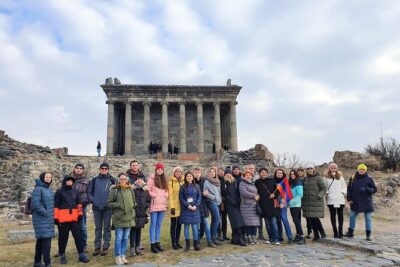
Group Tour: Garni pagan temple, Geghard monastery, Lake Sevan, Sevanavank
Read our review →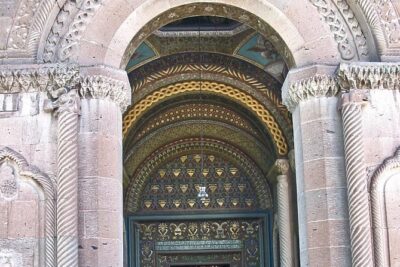
Group Tour: Echmiadzin Cathedral & churches, Zvartnots Temple
Read our review →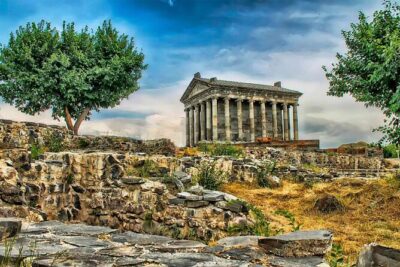
Group Tour: Khor Virap, Garni temple, Geghard, Lavash baking
Read our review →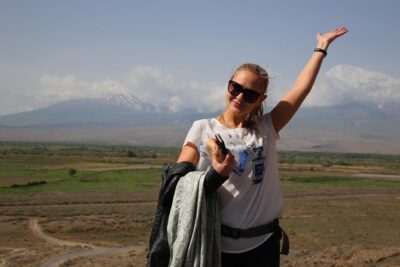
Private 7-8-hour Khor Virap, Garni temple & Geghard monastery trip from Yerevan
Read our review →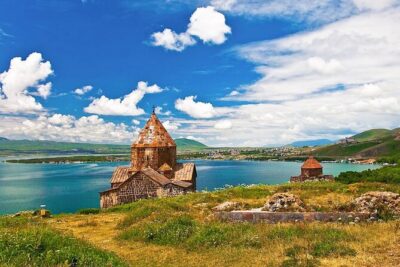
Private Tour to Tsaghkadzor, Kecharis Monastery, Lake Sevan, Sevanavank
Read our review →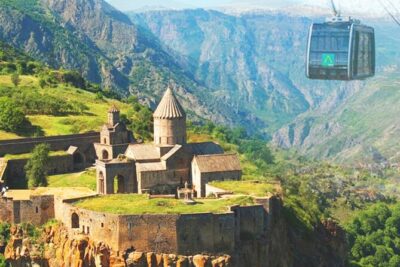
Private tour to Hin Areni winery, Tatev monastery & ropeway, Khndzoresk caves
Read our review →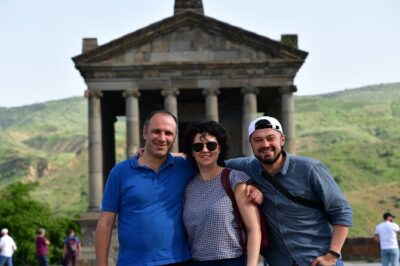
Private tour to Garni temple, Geghard Monastery, Symphony of Stones
Read our review →This tour also ranks in