
Review · KUSADASI
Private Halfday Ephesus Tour with Temple of Artemis Tour
The Temple of Artemis and Ephesus give you two very different glimpses of the ancient world in one half-day. The temple is now a quiet archaeological site with only scattered remains, while Ephesus unfolds as a long Roman street lined with columns, fountains, theaters, and public buildings. I like the private format and the chance to focus your questions on what interests you. I also like the skip-the-line arrangement, especially when your time in Kusadasi is limited.
The main trade-off is the extra admission cost: the ancient Ephesus ticket is 40 euros per person, paid separately from the $213 tour price. Five hours is enough for the main sights, but not for a slow, exhaustive visit. You should also expect uneven ancient paving and plenty of walking, so this is not a good fit for anyone with a mobility impairment.
Key points at a glance
- Two major sites in five hours: Visit the Temple of Artemis before exploring the better-preserved ruins of Ephesus.
- A genuinely private outing: You travel with your own group and an English-speaking guide rather than joining a large coach tour.
- Strong guide-led interpretation: The tour includes explanations of the Odeon, Roman Baths, Celsus Library, Great Theater, Hadrian’s Temple, and other monuments.
- Useful for cruise passengers: Pickup is arranged at the passenger exit or main gate of Kusadasi Port, with a return toward Kusadasi afterward.
- Ticket cost is separate: Budget an additional 40 euros per person for ancient Ephesus admission.
- Practical walking advice: Wear comfortable shoes and bring sun protection, a camera, a charged phone, and a passport or copy.
Why Ephesus works so well as a half-day tour
Ephesus is one of the best-preserved ancient cities in the region, and it rewards a guide because its ruins are more than a collection of attractive stones. A column, bath, fountain, or theater becomes easier to understand when you know who used it and why it was placed there.
The five-hour schedule gives you a sensible introduction rather than an all-day archaeological marathon. You see the Temple of Artemis first, then spend the larger part of the visit at Ephesus. That order makes sense: the temple site is much more fragmentary, while Ephesus has enough surviving structure to fill your eyes and your camera.
I would choose this tour if your time in Kusadasi is limited, especially if you are arriving by ship. A private guide can keep the pace moving and adjust the explanations to your interests. If you want a very slow study of every inscription and foundation, you will probably want more than five hours.
More Acropolis and Ancient Greek Temple Tours in Turkey:
- Ephesus Temple of Artemis and House of Mary Private Half Day Tour
★ 5.0 · 1,573 reviews - Ephesus and Temple of Artemis Private Tour from Kusadasi Port
★ 5.0 · 672 reviews - Kusadasi: Ephesus & Temple of Artemis Tour with Entry Ticket
★ 4.8 · 449 reviews
Meeting your guide at Kusadasi Port
Your guide waits at the passenger exit gate of the Kusadasi cruise terminal. If you book within the final 12 hours, the meeting point may shift to the first security point outside the main gate. You walk through the passenger exit toward the city center to reach that gate.
This detail matters because port meeting points can be confusing, particularly when several tour companies are collecting passengers at once. Look for your name. If you cannot find the guide, the supplied contact number is +90 542 609 70 43.
Hotel pickup is also available in Kusadasi or Selcuk. The included transport is an air-conditioned, non-smoking vehicle, and car park fees are covered. You do not need to arrange a separate taxi to the archaeological sites.
The ride from the coast takes you into the surrounding countryside. The description allows time to enjoy the scenery or stop for shopping on the way back, but shopping is an opportunity rather than the central purpose of the tour. If you prefer to spend every available minute among the ruins, say so clearly to your guide.
The Temple of Artemis: a famous site with very little left
Your first stop is the Temple of Artemis, once counted among the Seven Wonders of the Ancient World. Today, the visit is about understanding the scale and fame of the sanctuary rather than seeing a complete temple.
Only ruins remain, so set your expectations correctly. You will not walk through a restored building or see a full row of standing columns. Instead, the site helps you picture the importance of Artemis worship and the monumental ambition of the ancient city.
This stop works best with a guide’s explanation. Without context, the scattered remains may take only a few minutes to view. With interpretation, you can better appreciate why this place held such a high place in ancient accounts.
The Temple of Artemis also provides a useful contrast with Ephesus. At the temple, absence tells much of the story. At Ephesus, surviving architecture lets you trace streets, public spaces, and civic life in far greater detail.
Walking into Ephesus through its public buildings
The Ephesus portion is the heart of the tour. Your guide leads you through an ancient city associated with the Hittite city of Apasas, although ancient historians also connected its foundation with the Amazons. These competing traditions give the site an intriguing beginning, but the visible remains you see today are especially tied to its later Greek and Roman periods.
You can expect to see the Odeon, where the advisory council held meetings. It is a smaller performance and civic space than the Great Theater, and its inclusion helps show that Ephesus was not simply a place of grand monuments. It was also a working city with political administration.
The Roman Baths offer another useful stop. Public baths were social and civic centers, not merely places to wash. The surviving remains help you recognize how much planning went into urban life, from heated rooms to gathering spaces.
Your guide also points out columns, monuments, and smaller ruins along the route. The value of a private tour appears here. You can ask for help distinguishing a religious structure from a civic one, or pause to hear more about daily life instead of rushing from one famous photograph to the next.
More Temple Tours around Turkey:
- 3-Hour Private Ephesus, Terrace Houses, Cruiser Only
★ 5.0 · 274 reviews - From Izmir: Ephesus, Artemis Temple Tour with Tickets/Lunch
★ 4.7 · 36 reviews - Kusadasi Shore Excursion: Private Tour to Ephesus including Basilica of St John and Temple of Artemis
★ 4.5 · 32 reviews - Kusadasi Shore Excursion: Private Tour to Ephesus including House of Virgin Mary and Temple of Artemis
★ 4.5 · 26 reviews
Celsus Library and the city’s grandest views
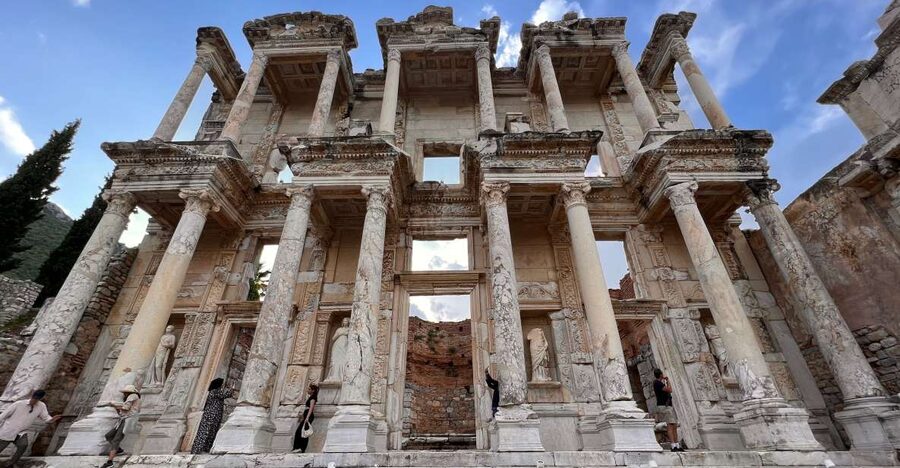
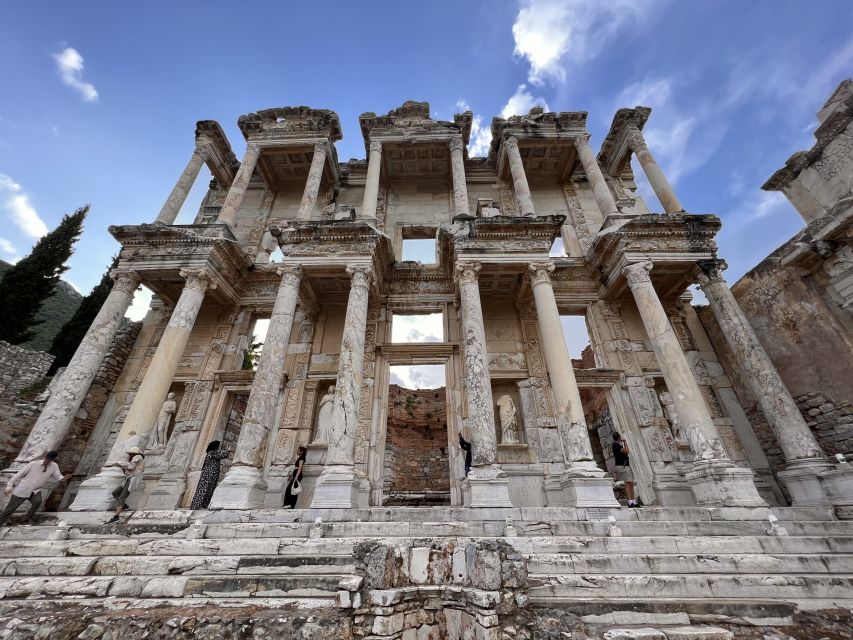
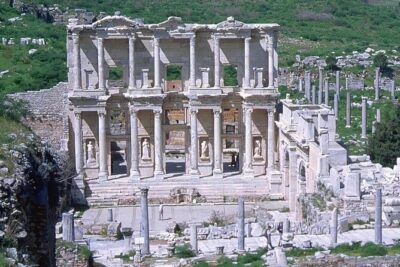
The Celsus Library is likely to be one of the visual highlights. Its restored facade, with its columns and sculptural detail, is among the most recognizable views at Ephesus. It gives you a clear sense of how architecture and decoration were used to signal status and learning.
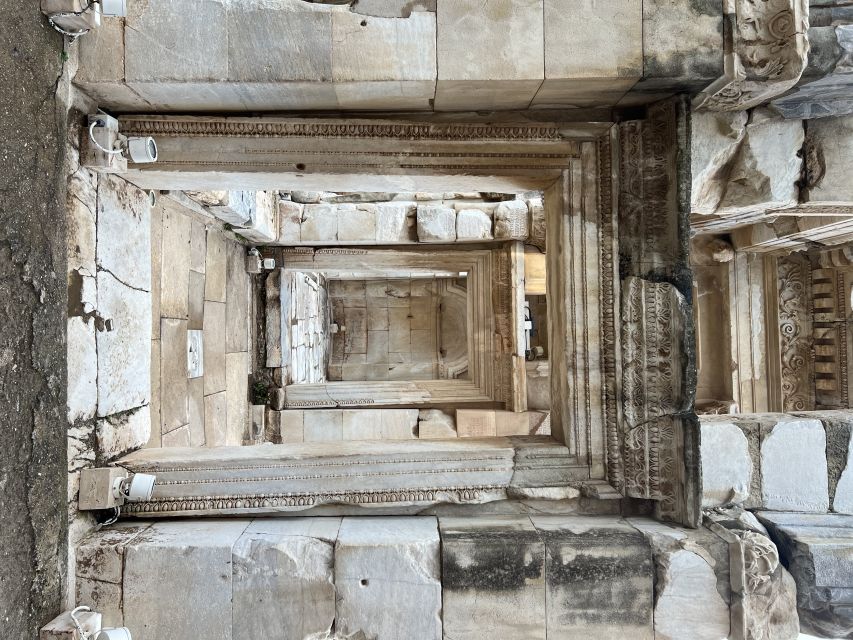
Take time to look beyond the postcard view. Your guide can help explain the building’s place within the city and point out details that are easy to miss when you are busy framing a photograph. The facade is striking, but the surrounding street and nearby remains help you understand that it was part of a much larger urban setting.
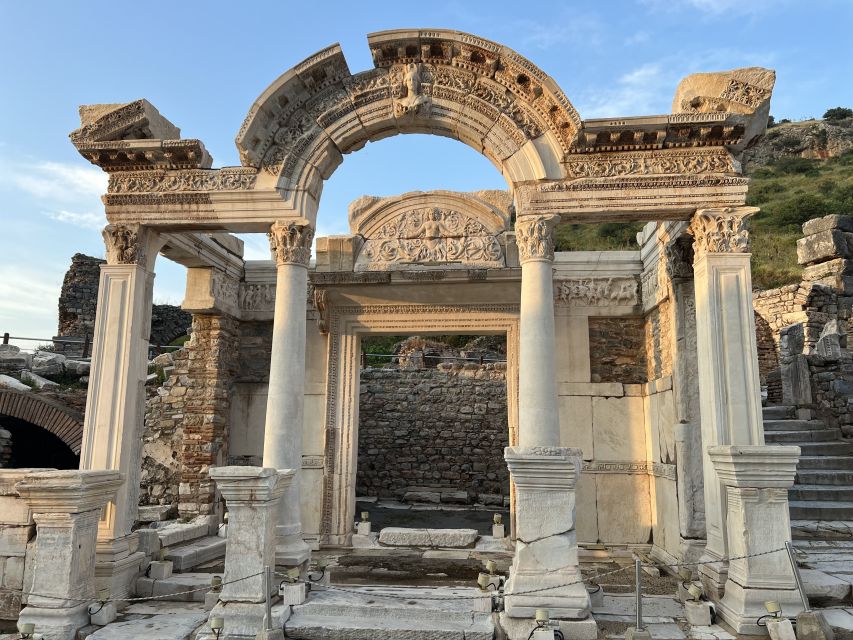
Hadrian’s Temple adds a different style and scale. It is more compact than the library and theater, yet its decorative doorway and surviving architectural elements show the care given to public and religious buildings.
Trajan’s Fountain is another named highlight. Fountains were practical, but they also shaped the appearance of a Roman city. A stop here gives you a chance to notice how water, monuments, and public movement fit together.
The Great Theater and the scale of Ephesus
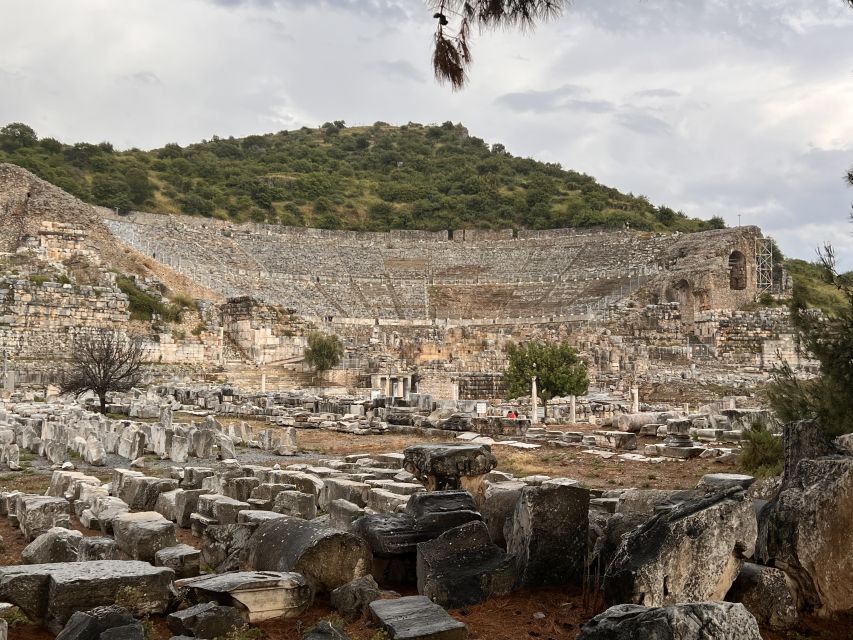
The Great Theater is the stop that most clearly communicates the size of Ephesus. Its broad seating area and open performance space show how many people could gather for entertainment, civic events, and public spectacle.
You should expect a lot of walking between the main sights. Ancient paving can be uneven, and the route is not suited to people with mobility impairments. Comfortable shoes are essential, not optional.
Bring a hat and sunglasses, since much of the archaeological area may expose you to the sun. A camera is useful, but a charged smartphone is just as important for contacting the operator or managing your plans during the day. Tripods are not allowed.
The tour takes place rain or shine. That makes a light weather check worthwhile before you leave your hotel or ship, even though the operation does not depend on perfect conditions.
What the private format changes
A private group is more than a nicer label. It gives you room to control the pace within the limits of a five-hour itinerary. You can ask for more detail at the Celsus Library, keep the explanation brief at a less important ruin, or make your priorities clear if you are watching the clock before a ship departure.
The guide’s role is especially important here. The tour includes an English-speaking professional guide, and the strongest practical feedback centers on clear explanations and good transport. One booking party specifically received an upgrade to a private tour and described the guide as having profound knowledge. Another praised the transport and explanations while moving through the site.
Those comments point to the experience’s real strength: not luxury extras, but smooth movement and useful interpretation. The ruins are already impressive, but a guide who explains what you are seeing saves you from treating Ephesus as a long row of disconnected fragments.
Price, tickets, and what you actually receive
The listed tour price is $213 per person. That price covers the professional English-speaking guide, transfer from Kusadasi Port or a Kusadasi hotel, air-conditioned non-smoking transportation, and car park fees.
Admission is not included. The ancient Ephesus entry fee is 40 euros per person, paid directly to the guide in euros, dollars, or Turkish lira. Since the guide prepays the tickets, you can skip the ticket line. This is a useful time saver, but it does not remove the admission charge, so include it in your real budget before booking.
The value depends largely on your group size and schedule. For a private group, the cost buys direct transport, a dedicated guide, and less waiting. If you are traveling alone or as a couple, it is more expensive than joining a standard group outing. If you are sharing the tour with family or friends, the private arrangement becomes easier to justify.
The tour has a 4.7 rating from five submitted ratings, and the most praised points are the transport and the quality of the explanations. That matches what you should care about most on a short Ephesus visit: getting there reliably and understanding what you are looking at.
Who should book this Ephesus tour
I would recommend it for cruise passengers who want a dependable half-day plan from Kusadasi Port. It also suits visitors staying in Kusadasi or Selcuk who prefer a guide and private vehicle rather than arranging transport independently.
It is a good match if you want the major Ephesus sights without spending a full day at the site. The Temple of Artemis adds an important second stop, even though its physical remains are modest.
Families and small groups may also appreciate the private setup, since the guide can shape explanations around the group. History enthusiasts should know that five hours gives you the main sights, not every corner of the ancient city.
I would not choose it if you have difficulty walking, need a fully accessible route, or want a leisurely archaeological study. The itinerary includes uneven ruins, outdoor walking, and a firm time limit.
Should you book it?
Book this tour if you want the efficient version of Ephesus: private transport, an English-speaking guide, the Temple of Artemis, the Celsus Library, the Great Theater, Hadrian’s Temple, Trajan’s Fountain, and other major remains in five hours.
Before booking, add the 40 euro Ephesus admission fee to the advertised price and confirm your port meeting point. If those costs work for you and you value clear explanations over the lowest possible fare, this is a practical way to see the Aegean Coast’s most important ancient site.
FAQ
How long does the tour last?
The tour lasts five hours.
Where does the tour meet in Kusadasi?
Your guide meets you in front of the passenger exit gate at the Kusadasi Port terminal. Depending on how close to departure you book, the meeting point may be the first security point outside the main gate.
Can I be picked up at my hotel?
Yes. Pickup is available from hotels in Kusadasi or Selcuk.
Is the tour private?
Yes. The activity is arranged for a private group.
What language does the guide speak?
The tour includes a live English-speaking guide.
Is transportation included?
Yes. The tour includes transfer service and transportation in an air-conditioned, non-smoking vehicle. Car park fees are also included.
Are entrance fees included in the tour price?
No. Ancient Ephesus admission costs 40 euros per person and is paid separately to the guide.
Can I skip the ticket line?
Yes. The guide prepays the tickets so you can avoid the regular ticket queue.
What should I bring?
Bring comfortable shoes, sunglasses, a hat, a camera, a passport or copy, and a charged smartphone.
Are tripods allowed?
No. Tripods are not allowed on the tour.
Temple visits we reviewed lately in Turkey
- Less Walking Private Ephesus, Virgin Mary, Temple Skip Lines★ 5.0 · 22 reviews
- KUSADASI PORT: House of Mary, Ephesus and Atemis Temple Tour★ 4.5 · 10 reviews
- Kusadasi: Ephesus, House of Virgin Mary, and Temple Tour★ 4.3 · 22 reviews
- From Izmir: Ephesus, Artemis Temple Tour with Tickets/Lunch★ 4.7 · 36 reviews
- Ephesus & Temple of Artemis Private Tour from Kusadasi Port★ 4.6 · 4 reviews
- Ephesus TempleofArtemis&House of Mary Private Half Day Tour★ 4.6 · 19 reviews
- Cappadocia: Ihlara Valley, Kaymakli, & Selime Monastery Tour★ 3.6 · 4 reviews
- Bodrum: Ephesus, House of Virgin Mary, and Temple Tour★ 3.5 · 18 reviews
Kusadasi Temple Tours, compared.
Ephesus and Temple of Artemis Private Tour from Kusadasi Port
Read our review →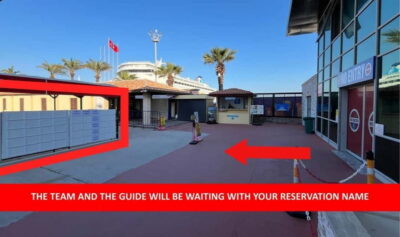
Kusadasi: Ephesus & Temple of Artemis Tour with Entry Ticket
Read our review →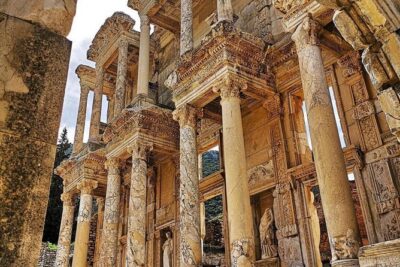
3-Hour Private Ephesus, Terrace Houses, Cruiser Only
Read our review →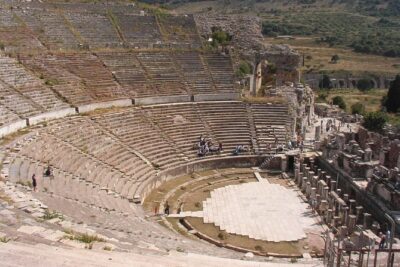
Kusadasi Shore Excursion: Private Tour to Ephesus including Basilica of St John and Temple of Artemis
Read our review →
Kusadasi Shore Excursion: Private Tour to Ephesus including House of Virgin Mary and Temple of Artemis
Read our review →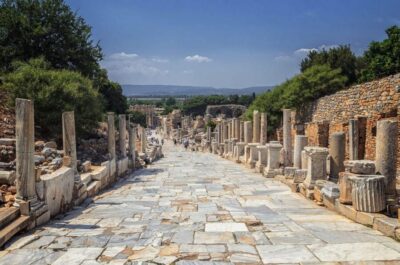
Kusadasi: Ephesus, House of Virgin Mary, and Temple Tour
Read our review →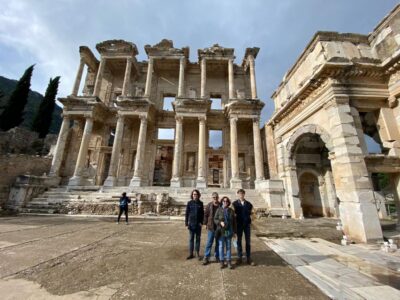
Less Walking Private Ephesus, Virgin Mary, Temple Skip Lines
Read our review →This tour also ranks in