
Review · LUXOR
Luxor: Abu Simbel Temple Private Guided Day Trip with Lunch
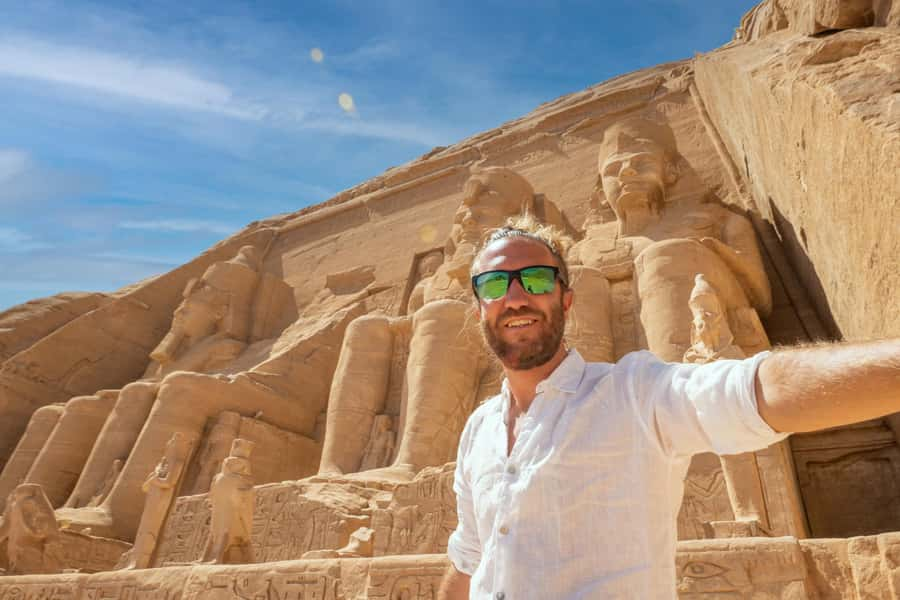
Abu Simbel is one of Egypt’s great payoffs: four giant seated figures of Ramses II greet you from a cliff-cut temple far south of the Nile Valley. This 15-hour private day trip from Luxor gives you a practical way to see it without changing hotels or arranging several separate transfers.
I like the private car and the careful drivers, including Emad, George, Rami, and Abdul Rahman, who are often praised for handling the long road safely. I also like the guides at the site, especially Ahmed Achraf, Mustafa, Hani, and Medo, who explain the temple’s symbols and relocation instead of leaving you to stare at the façade and guess.
The catch is simple: this is a very long day. The drive can take about five to seven hours each way, depending on the route and stops. A sedan may feel tight after so many hours, and a morning pickup can be delayed, so you need stamina and a flexible attitude.
Key points before you book
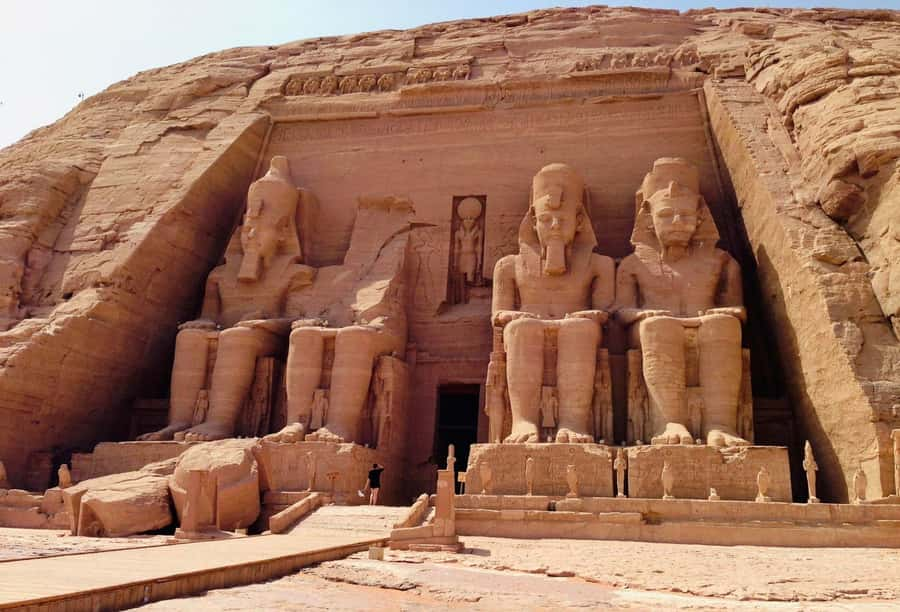
- Abu Simbel is the main event: See the Great Temple of Ramses II and the smaller Temple of Queen Nefertari.
- Plan for a dawn departure: Pickup may be around 4:30 a.m., with the return to Luxor late in the day.
- Private road transport adds real value: You have your own air-conditioned car and driver rather than piecing together taxis and tickets.
- Expect about two hours at the temples: That is enough for the main sights, but not a leisurely archaeological study.
- Lunch is included in Aswan or near Abu Simbel: Vegetarian meals can be arranged, though food is described as basic by some customers.
- East Bank pickup is included: West Bank pickup requires an extra charge.
Why Abu Simbel is worth such a long road day
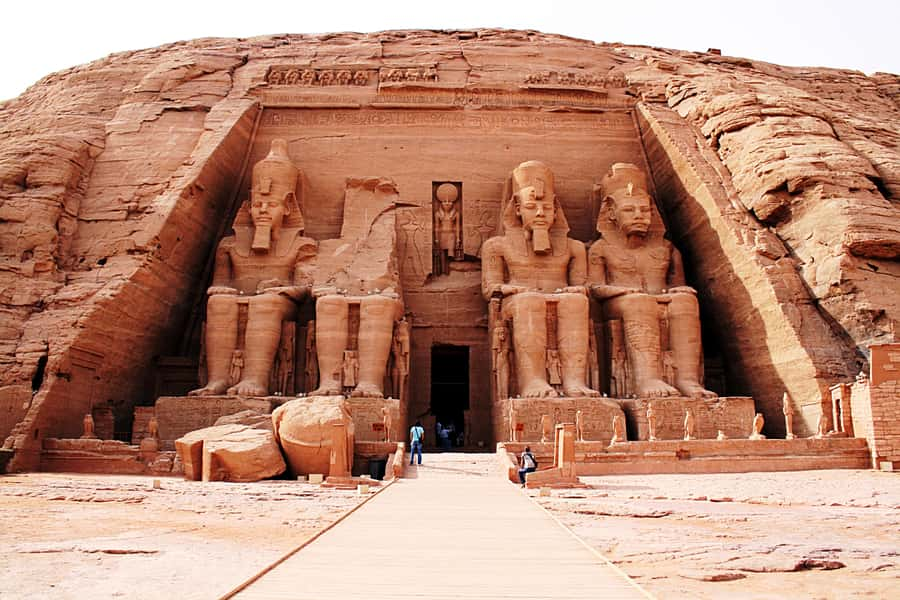
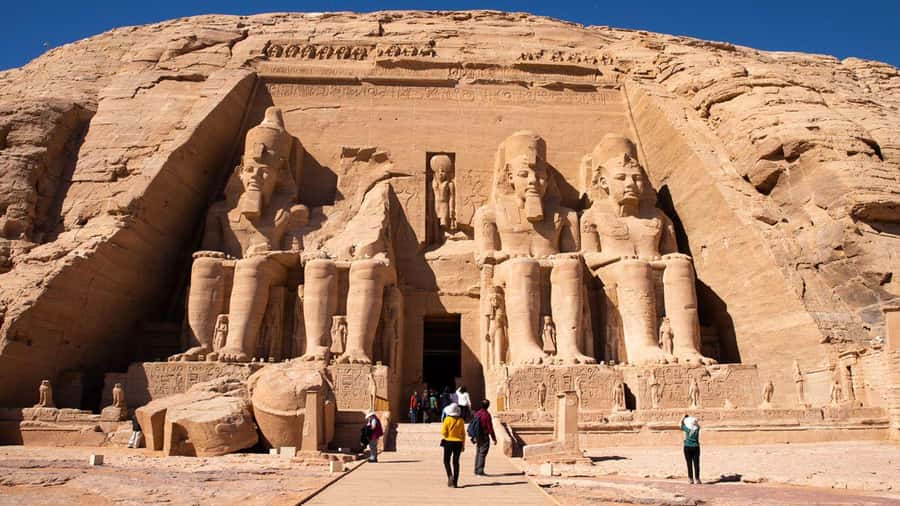
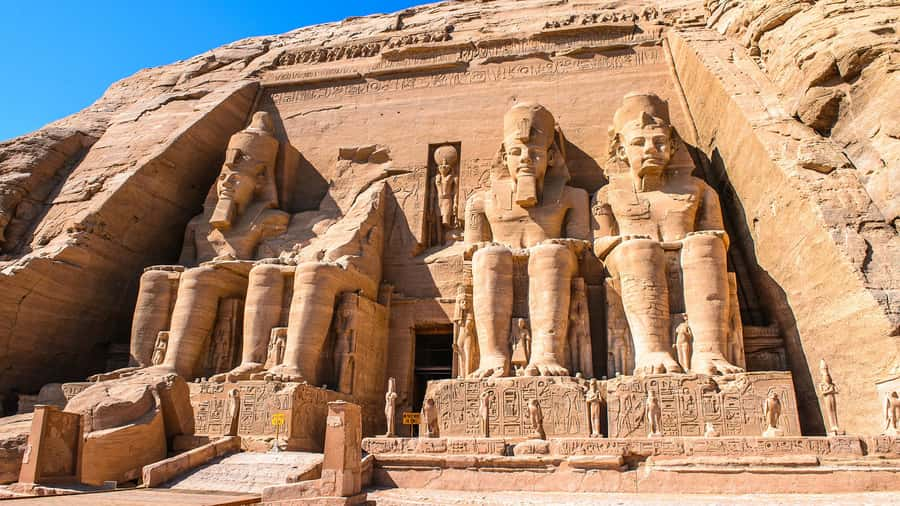
The appeal here is not a quick checklist stop. Abu Simbel feels remote, monumental, and carefully staged by ancient Egyptian power. The façade of the Great Temple is dominated by four seated statues of Ramses II, each carved on a scale that makes people at the entrance look tiny.
Inside, you can expect rooms decorated with royal scenes, religious images, and military themes. The smaller temple honors Queen Nefertari, Ramses II’s wife, and gives the visit a useful contrast. The two buildings are close together, so your time is spent seeing the central monuments rather than walking between distant sites.
The setting beside Lake Nasser adds to the experience. The temples were moved when the lake was created by the Aswan High Dam, a huge modern engineering project that saved them from rising water. Guides such as Medo and Ahmed Sony are praised for explaining this relocation, the temple alignment, Ramses II, and Queen Nefertari in clear terms.
I like this combination of old and modern stories. You are not only looking at statues. You are also seeing the result of a twentieth-century effort to cut, move, and rebuild an ancient monument. That context makes the site much easier to appreciate.
More Abu Simbel and Philae Temple Tours in Luxor:
- Private Day Trip to Abu Simbel Temple with Guide from Luxor
★ 4.5 · 67 reviews - Day Tour visit Edfu Kom Ombo temples from Luxor
★ 3.8 · 21 reviews - Luxor: Tour to Edfu Temple & Lunch & Felucca & Entrance Fees
★ 4.8 · 7 reviews
Leaving Luxor before sunrise
The day begins early, often around 4:30 a.m. Your driver collects you from a hotel on Luxor’s East Bank and takes you south in a private, air-conditioned car. The early start is not glamorous, but it makes the schedule possible.
The main benefit of a private car is control. You can sleep, stop for refreshments, and take breaks without coordinating with a large coach. Several drivers are praised for keeping the vehicle cool and quiet while passengers rested. Some drivers also shared local stories and pointed out projects along the road.
You should still ask what vehicle is planned if you are traveling with several people. A normal sedan can work well for two or three passengers, but the long journey may feel cramped with a full load of luggage or several adults. One customer specifically wished for a more spacious car after the extended drive.
The road itself is part of the day. You will see stretches of Egyptian countryside and long, open routes toward Aswan and Abu Simbel. Do not expect a packed sightseeing schedule on the way. The point of the private transfer is to get you to the site safely and efficiently.
Pickup times can shift. One morning driver arrived about 30 minutes late, although the company notified the customer and stayed responsive. I would keep your first morning free of fixed plans and confirm the pickup details by WhatsApp.
The long route from Luxor to Abu Simbel
The distance is the tour’s main drawback. Depending on traffic, checkpoints, breaks, and road conditions, the journey has been described as roughly five to seven hours each way. Some customers calculated about 12 hours of driving in total, leaving around two hours for the temples and about an hour for lunch.
That ratio tells you exactly what you are buying. You are not booking a relaxed Luxor excursion with several short stops. You are paying for access to a site that is far from Luxor, with the hard transport work handled for you.
A private driver makes the road more manageable. Drivers named George, Gerges, Mohammed, Mano, Raymond, Emad, and Abdul Rahman are repeatedly praised for safe and professional service. Several customers also mention that their drivers managed checkpoints, heavy crowds, and the return journey calmly.
Take water, snacks, a hat, and anything that helps you rest in a car. One thoughtful detail reported by a customer was a bag of snacks and small gifts before departure. You should not depend on that being included every time, but it shows the kind of small service the operator may provide.
Breaks are possible, but the exact number and timing can vary. If you need a particular stop, tell the driver early rather than waiting until the last hour of the trip.
Meeting the guide at the temple entrance
The guide usually meets you at Abu Simbel rather than accompanying you from Luxor. This arrangement keeps the long road transfer focused on the driver, while the guide handles the archaeological visit.
English is included. Spanish, German, and French guides are available as paid options, and the activity also lists Arabic among the available languages. Guide quality can shape the visit, and the names praised most often include Ahmed Achraf, Mustafa, Hani, Medo, Mohamed, Honey, and Ahmed Sony.
Ahmed Achraf receives especially strong praise for clear explanations and for allowing time to take photographs. Mustafa is described as patient, funny, and well informed. Hani is praised for his warmth and humor, while Medo is credited with explaining Ramses II, Nefertari, symbolism, and the relocation project in an easy-to-follow way.
The guide may not remain beside you for every minute. One account describes a quick explanation at the start, followed by independent time inside the temples. Another describes a confusing handover at the entrance and difficulty finding the guide later in the visit.
That is worth knowing before you arrive. If you want a constant private lecture, clarify the arrangement with the guide at the start. If you prefer a short introduction followed by freedom to explore and take photos, the format may suit you well.
More temple visits with lunch in Luxor:
- Luxor: Karnak Temple and Luxor Temple Tour with Lunch
★ 4.4 · 658 reviews - Private tour West Bank Luxor, Valley of the Kings, temples, lunch
★ 5.0 · 73 reviews - Hurghada: Luxor Valley of The Kings, Karnak Temple & Lunch
★ 3.6 · 6 reviews - From Luxor: Private Edfu and Kom Ombo Temples Tour & Lunch
★ 4.3 · 4 reviews
Inside the Great Temple of Ramses II
The Great Temple is the visual high point. Four seated statues of Ramses II dominate the façade, with the entrance set between them. Their scale is hard to understand from photographs, and the surrounding desert makes the monument feel even more imposing.
Your guide can help you read the façade and interior rather than simply pointing out the largest objects. Ask about the royal imagery, the temple’s alignment, the role of Ramses II, and how the site was reconstructed after relocation.
Inside, move slowly enough to notice the reliefs and painted decoration. The temple was built to project royal authority and devotion, so the images are not random decoration. They connect the king with the gods, military victory, and the religious life of ancient Egypt.
You generally get around two hours at the complex. That is enough to see both temples, hear a useful explanation, and take photographs. It is less time than a specialist might want, especially if you enjoy reading every wall.
Several customers appreciated being given time alone for pictures. That balance matters. A guide gives the site meaning, but you also need quiet minutes to look up at the statues and absorb the setting.
The smaller Temple of Queen Nefertari
The smaller temple is dedicated to Queen Nefertari and the goddess Hathor. It is not simply a spare version of the larger temple. Its façade and decoration give you another view of royal power, with Nefertari presented in a highly honored role beside Ramses II.
Make sure your visit includes both buildings. The Great Temple is the famous image, but the smaller temple helps you understand how royal women could be represented in monumental Egyptian art.
The temples are close enough to visit during the same stop. Your guide may lead you between them, then give you time to look around independently. If you want photographs of both façades without being rushed, say so at the beginning.
Sun can be strong around the site, even when the car journey felt cool. A hat, water, and comfortable shoes are sensible. The tour information does not specify detailed accessibility arrangements, so ask the operator in advance if you have mobility concerns.
Lunch near Aswan or Abu Simbel
Lunch is included after the temple visit, generally in Aswan or at a restaurant near Abu Simbel before the return drive. This is a practical pause after the site and before another long stretch in the car.
Food is described as local, clean, tasty, and sometimes excellent, though one customer found it basic and suggested ordering independently. Vegetarian food was arranged successfully for one person. If you have dietary needs, state them when booking and confirm them with the guide or driver that morning.
Do not expect lunch to become a separate culinary tour. Its value is convenience. You can eat, use the break to recover, and continue without searching for a restaurant in an unfamiliar place.
The timing may also vary. Since the temple visit, ticket arrangements, road conditions, and return route can shift, lunch may not happen at exactly the same hour each day.
Returning to Luxor after a full day
After lunch, you return to Luxor in the same private vehicle. This is when the quality of the driver matters most. You may be tired, the light may be fading, and the road still has many hours to go.
The strongest practical praise for this trip goes to the drivers. Customers describe them as careful, friendly, punctual, and patient. One driver collected a forgotten jacket from a café while the passengers visited Abu Simbel. Another handled nearly 1,000 kilometers in one day while keeping a good attitude.
You should still treat the return as a serious road journey, not a short transfer after dinner. Avoid scheduling an early flight or another fixed activity immediately afterward. If your plans allow it, a night in Aswan would be easier on the body, but this particular option is designed to return you to Luxor.
The tour can also be useful if your onward plans take you toward Aswan. One customer arranged a drop-off at Aswan International Airport instead of returning to Luxor. That was a special change, so you should request any altered destination before booking and confirm whether an extra charge applies.
What the $148 price really covers
At $148 per person, the cost includes East Bank hotel pickup and drop-off, private transportation, entry to Abu Simbel, an English-speaking guide, and lunch. That is a fair package for a remote site when you consider the distance, fuel, driver, ticket, guide, and meal.
The value is strongest for two or three people sharing a car. You get a private transfer without having to arrange separate transport, buy the entry ticket, find a guide at the temple, and locate lunch after arrival.
The price is less attractive if you dislike long road days or only want a quick look at the monument. In that case, staying in Aswan and visiting Abu Simbel from there would usually create a shorter outing, though that alternative is not included in this package.
West Bank hotel pickup is not included and costs extra. East Bank pickup is part of the standard arrangement. Check your hotel location carefully, since Luxor’s two banks are separated by the Nile and the included pickup area matters.
The booking terms are useful for a fixed itinerary. You can cancel up to 24 hours in advance for a full refund, and you can reserve now and pay later. Those policies do not shorten the drive, but they reduce the risk of committing too early.
Who should book this Abu Simbel day trip?
I would choose this for someone with limited time in Egypt who refuses to miss Abu Simbel. It also suits solo visitors and couples who want door-to-door transport, a named driver, and a guide without joining a large coach.
It is a good match if you value practical organization more than a slow pace. You will have time for both temples, photographs, lunch, and a clear explanation, but the schedule is not designed for lingering.
Families with young children should think carefully about the drive. The private car helps, since you can stop and rest, but five to seven hours each way is still a lot for one day.
If you are sensitive to car space, ask about the vehicle before paying. If you want a specific language, guide, or drop-off point, confirm the added cost and arrangement in advance.
Should you book it?
Book this tour if Abu Simbel is high on your Egypt list and Luxor is your base. The temples are spectacular, the private transport removes much of the planning, and guides such as Ahmed Achraf, Mustafa, Hani, and Medo can give the visit useful context.
Skip it if you have several days and can spend the night closer to Abu Simbel, or if long road journeys leave you miserable. For everyone else, this is a demanding but sensible way to reach one of Egypt’s most remarkable monuments. Bring water, accept the early start, protect your afternoon and evening from other plans, and treat the drive as part of the price of seeing Abu Simbel.
FAQ
Where does the Abu Simbel tour begin?
The tour includes pickup from hotels on Luxor’s East Bank. Pickup from the West Bank is available as an add-on.
How long does the tour last?
The stated duration is 15 hours. The drive itself may take about five to seven hours each way, depending on stops and road conditions.
What time does pickup usually happen?
Pickup can be very early, with one listed departure around 4:30 a.m. Starting times should be confirmed when you check availability.
Is transportation private?
Yes. The tour includes private transportation in an air-conditioned car, with hotel pickup and drop-off in the included area.
Is a guide included?
Yes. A professional English-speaking guide is included. Spanish, German, and French guides are available for an additional cost, and Arabic is also listed among the available languages.
Which temples will I visit?
You will visit Abu Simbel’s Great Temple of Ramses II and the smaller Temple of Queen Nefertari.
Is the Abu Simbel entrance ticket included?
Yes. Entry to Abu Simbel Temple is included, and the activity advertises skip-the-ticket-line access. Allow some flexibility, since ticket delays have occurred.
Is lunch included?
Yes. Lunch is included, generally after the temple visit in Aswan or near Abu Simbel. Vegetarian food has been arranged on request.
Can I cancel the tour?
You can cancel up to 24 hours in advance for a full refund, according to the stated booking terms.
Can I reserve without paying immediately?
Yes. The reserve-now-and-pay-later option lets you hold the booking without paying on the day of reservation.
More Day Trips in Luxor
- Luxor: Valley of The Kings and Hatshepsut Temple Day Trip
★ 4.3 · 55 reviews - From Luxor: Day Trip to Dendera & Abydos Temples with Guide
★ 4.3 · 22 reviews - Athens: Cape Sounion & Poseidon Temple Sunset Half-Day Trip
★ 4.8 · 8,241 reviews - From Aswan: Abu Simbel Temple Day Trip with Hotel Pickup
★ 4.4 · 2,807 reviews
Temple visits we reviewed lately in Luxor
- Luxor: Karnak and Luxor Temples Private Half-Day Tour★ 4.7 · 27 reviews
- Marsa Alam: Valley of the Kings & Karnak Temples Luxor Tour★ 4.6 · 177 reviews
- Luxor: Tour to Edfu Temple & Lunch & Felucca & Entrance Fees★ 4.8 · 7 reviews
- Luxor: Valley of The Kings and Hatshepsut Temple Day Trip★ 4.3 · 55 reviews
- Luxor: Hot Air Balloon Ride Over Temple of Hatshepsut★ 4.8 · 185 reviews
- Luxor: Karnak and Luxor Temples Private Half-Day Tour★ 4.4 · 4 reviews
- Luxor: Private Tour to Valley of Kings & Hatshepsut Temple.★ 4.4 · 16 reviews
- Luxor: Temple of Hatshepsut QR Ticket – Skip The Line★ 4.8 · 5 reviews
Luxor Temple Tours, compared.
Luxor Day Tour: Valley of Kings & Queens & Hatchepsut Temples
Read our review →
Luxor: Valley of the Kings and Hatshepsut Temple Day Tour
Read our review →
Luxor: Valley of Kings, Hatchepsut Temple ,Karnak & Luxor-DayTour
Read our review →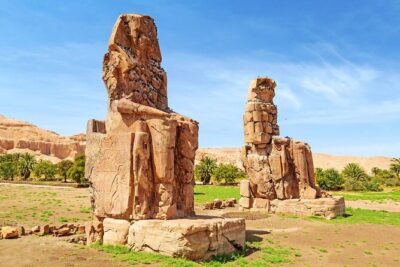
Full Day Tour of Luxor West Bank Temples and Tombs (Private)
Read our review →
Luxor: Karnak Temple and Luxor Temple Tour with Lunch
Read our review →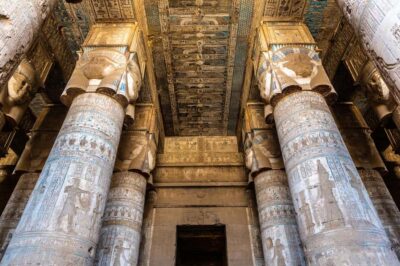
From Luxor: Dendera Temple All-Inclusive Tour & Felucca Ride
Read our review →
Luxor: Hot Air Balloon Ride Over Temple of Hatshepsut
Read our review →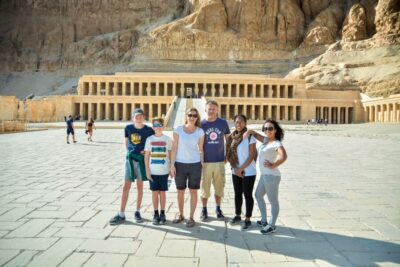
Marsa Alam: Valley of the Kings & Karnak Temples Luxor Tour
Read our review →This tour also ranks in