
Review · HUE
Hue Royal Tombs Tour: Visit Best Pagodas & Mausoleums
Hue’s royal tombs are not all alike. Khai Dinh is crowded with carved detail and European touches, while Minh Mang feels calm, formal, and carefully balanced. Tu Duc is more personal, with pavilions and grounds tied to the emperor’s life before death. This private car tour lets you compare them without wrestling with Hue’s spread-out roads or arranging several rides.
I like two things here: you can shape the day around the tombs and pagodas that interest you, and your driver or guide can give useful local help along the way. Guides such as Bi, Duy, Ba, and Tra My have been praised for punctual service, good driving, clear explanations, and practical tips. The main drawback is cost control: entrance tickets are extra, and the full list of stops can make an already long day feel rushed.
What makes this Hue tour worth considering

- Private car transport connects distant tombs: The royal mausoleums sit outside central Hue, so one vehicle saves time and makes the day simpler.
- Compare five Nguyen Dynasty tombs: Minh Mang, Tu Duc, Khai Dinh, Gia Long, and Dong Khanh each show a different side of imperial design.
- Add important Buddhist sites: Thien Mu Pagoda and Tu Hieu Pagoda bring religion, local custom, and living heritage into the day.
- Choose your own pace: The itinerary can be adjusted, with options lasting from two to eight hours.
- Get more than monument facts: Your guide can explain royal family life, including emperors, wives, concubines, and eunuchs.
- Use ticket combinations wisely: The Imperial City and tomb passes may cost less than buying every site separately.
A practical way to see Hue’s scattered royal sites
Hue’s imperial sights are spread across the city and its southern outskirts. You can reach some by taxi, scooter, or hired car, but fitting several tombs together takes planning. A private vehicle removes that burden. Pickup and drop-off are available at hotels in Hue’s city center or at Hue Train Station, and the service is for a private group rather than a large shared bus.
The advertised price begins at $15 per person, which is attractive if you are traveling with others and choose a shorter option. But treat that as a starting point, not the final cost of a full sightseeing day. Entrance fees are separate at 150,000 Vietnamese dong per tomb per person, and food and drinks are not included.
The best value comes when you want several tombs in one outing and prefer a driver who knows the routes. It is less compelling if you only want one nearby monument and are happy to arrange a short taxi ride yourself.
The duration can range from two to eight hours depending on the option you book and how many sites you select. The listed sightseeing stops add up to roughly four hours of scheduled visits, before driving time and any meal or rest stop. Read the exact option carefully, since the number of included tombs changes with the price.
More Temple Tours around Vietnam:
- Small-Group Mekong Delta Day Trip: Boat Ride, Cottages & Pagoda
★ 5.0 · 1,327 reviews - Hanoi: Ninh Binh, Trang An, Mua Cave and Bai Dinh Pagoda
★ 4.7 · 345 reviews - Linh Ung Pagoda – Marble Mountains – Hoi An Ancient Town Daily Ingroup Tour
★ 5.0 · 299 reviews
Tu Duc Tomb: an emperor’s retreat and final resting place
Tu Duc Tomb is a good opening stop because it helps you understand how an emperor used a tomb complex before it became a burial site. Construction took place from 1864 to 1867, during Tu Duc’s lifetime. He used the grounds as a place to live and work, so the site includes more than a grave.
The complex covers about 12 hectares and is divided into a temple area and a burial area. That division matters. The temple side reflects ceremony and remembrance, while the burial side deals with the emperor’s death and memorial life.
Your guide can use Tu Duc to explain the private side of Nguyen court life. The grounds also became a place where minor wives, concubines, and eunuchs lived after the emperor died in 1883. That detail gives the site a human angle, though the subject can be sensitive and is best handled with context rather than gossip.
You are scheduled for about 45 minutes here. That is enough for a guided introduction and photographs, but not enough for a slow visit to every corner. If Tu Duc interests you most, ask to spend extra time here and shorten one of the lesser-known stops.
Minh Mang Tomb: formal design beside the water
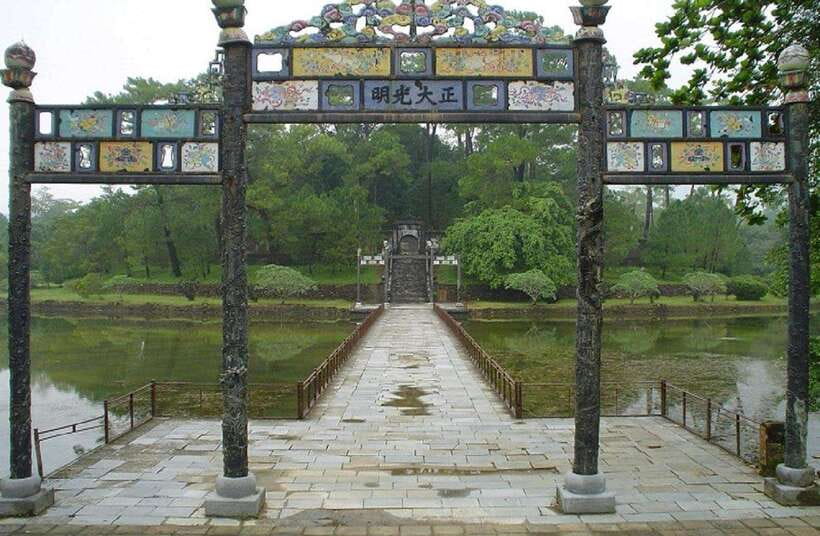
Minh Mang Tomb offers a different mood. Construction began in 1840, when the emperor started the complex for himself, and it was completed by his son, King Thieu Tri, after Minh Mang died. The site covers about 15 hectares and contains 26 buildings with different functions.
The layout is known for its order and ceremony. You can expect a sequence of gates, courtyards, temples, and garden areas rather than one isolated monument. The setting helps explain why this tomb is often considered one of the most composed imperial sites around Hue.
The complex also served as a living place for minor wives and concubines who had no children with the emperor, as well as eunuchs, after Minh Mang’s death. This is one of the most useful reasons to take a guide. A casual visit can leave you with pretty photographs but little sense of how the court operated.
The scheduled visit is about 45 minutes. Wear comfortable shoes and be ready for walking between structures. The guide can point out the broad design, but you should not expect a full scholarly lecture in that time.
Khai Dinh Tomb: a small site with a very different look
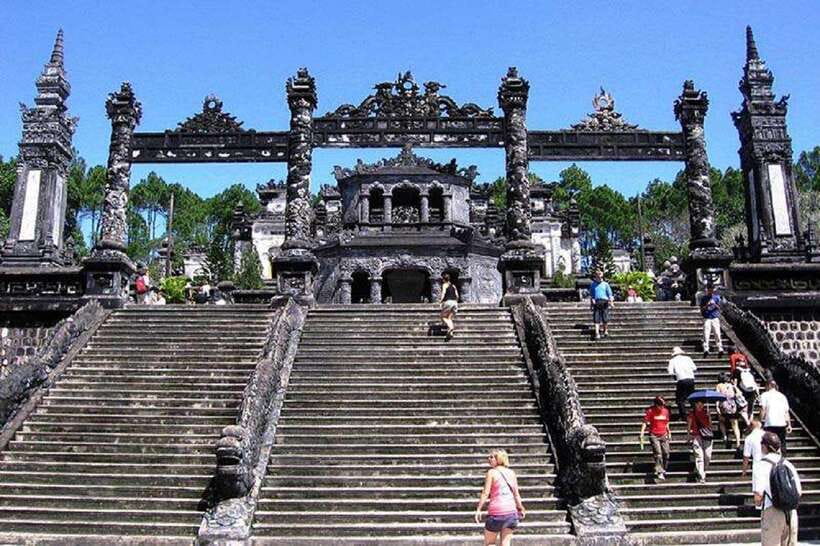
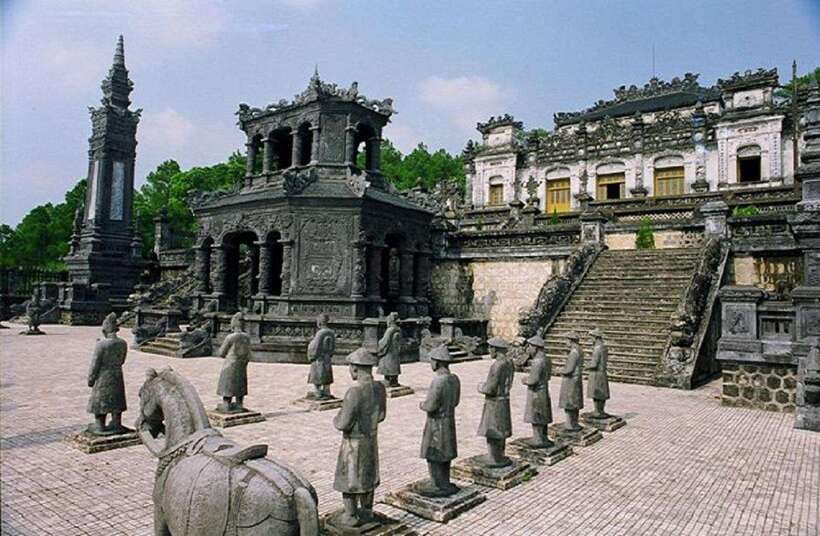
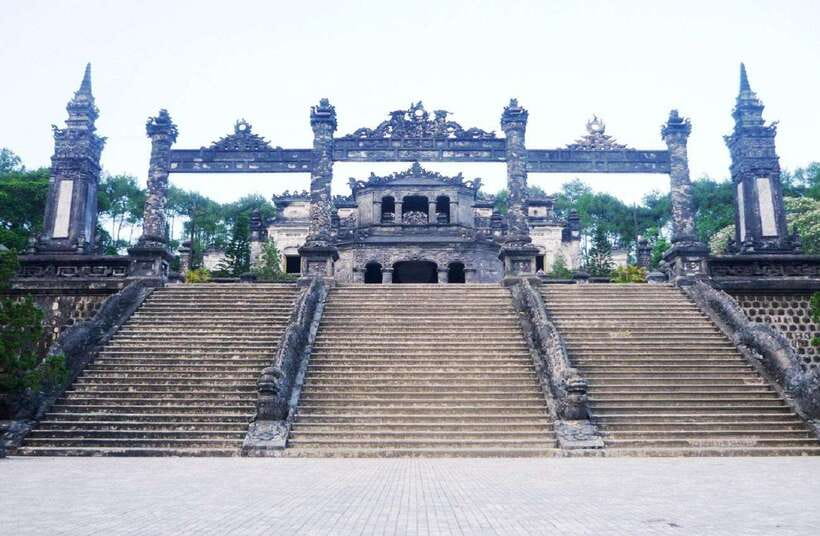
Khai Dinh Tomb is the sharpest contrast to Minh Mang and Tu Duc. Work began in 1920, during Khai Dinh’s reign, and continued after his death until 1931. The emperor began the project himself, while his child oversaw the final work.
The tomb measures about 48.5 meters by 117 meters and is more compact than several other royal complexes. Its fame comes from its blend of Eastern and European styles. Expect a more elaborate, highly decorated appearance, with a design that reflects a later period of the Nguyen Dynasty.
This is also identified as the only Nguyen royal tomb where the emperor is known to be buried beneath the tomb itself. That fact gives the monument an especially direct connection to Khai Dinh, even though the building took shape over many years.
The planned visit lasts about 30 minutes. That can work well if you want a quick look at the decoration and a contrast with the older tombs. If you dislike stairs or prefer open grounds, Khai Dinh may feel less comfortable than Minh Mang. The tour is wheelchair accessible, but you should confirm the practical details of your chosen route before booking.
Same sacred ground, another way to see it:
- 1-Day Mekong Delta Cai Rang Floating Market-Ancient House-Pancake
★ 5.0 · 653 reviews - HCM City: 1-Day Cu Chi Signature Tunnels & Liberated Village
★ 5.0 · 523 reviews - Tay Ninh – Cao Dai & Ba Den Mountain + Optional Cu Chi Tunnels
★ 5.0 · 275 reviews - Hue: Royal Tombs & Pagoda Private Tour By Dragon Boat & Car
★ 4.9 · 257 reviews
Gia Long Tomb: the founder’s wider mausoleum complex
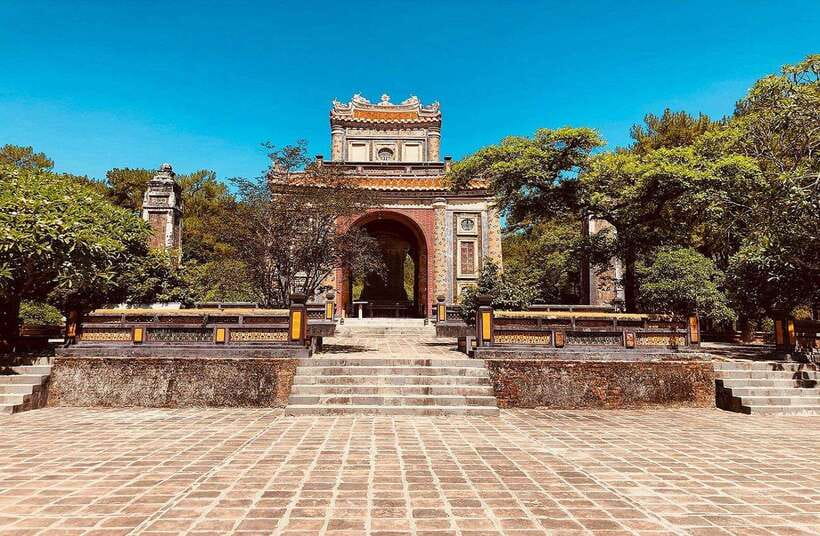
Gia Long was the founder of the Nguyen Dynasty, and his mausoleum dates from 1814 to 1820. Unlike a single building that tells the whole story, Gia Long Tomb is part of a larger group of royal mausoleums in Long Ho Ward.
The scheduled stop is one hour, longer than the time allowed at Khai Dinh or Dong Khanh. That makes sense for a site where the broader complex matters as much as one central structure. Your guide can connect the place to the beginning of the dynasty and explain how the mausoleum relates to nearby royal burials.
This stop may appeal most if you want a quieter and less hurried visit. At the same time, the tour information gives fewer specific details about the individual buildings than it does for Minh Mang, Tu Duc, or Khai Dinh. If you are choosing only two or three tombs, ask your guide what is open and what can be covered comfortably on your date.
Dong Khanh Tomb: a smaller complex in a rural setting

Dong Khanh Tomb, also called Tu Lang, is in Thuong Hai village, within Thuy Xuan Ward. It has about 20 large and small structures and is divided into a palace area and a tomb area.
The site’s location in a rural part of Hue gives it a different setting from the grander, more formal complexes. The architecture is relatively dense, so you may spend more time looking at how the buildings fit together rather than walking across huge grounds.
Only about 30 minutes is planned here. That is enough for a short visit and an explanation of the two main sections, but it leaves little room for lingering. Consider Dong Khanh an optional addition for a longer itinerary rather than an essential stop for a first, short tour.
Thien Mu Pagoda: Hue’s best-known religious landmark

Thien Mu Pagoda was built in 1601 by the founder of the Nguyen family in central Vietnam. It is one of Hue’s most important religious sites, and its origin is tied to a dream reported by local people.
That story gives the pagoda a place in local belief as well as in city history. The visit helps balance the royal tombs, which focus on emperors and court life, with the role of Buddhism in everyday Hue culture.
About 30 minutes is planned here. You can expect time for photographs, a guided walk, and a look at the pagoda grounds. Because this is a religious site, dress and behavior should be respectful. The listing includes walking and even a scooter ride among possible activity labels, but the exact transport depends on the option you book.
Tu Hieu Pagoda: a quieter stop with modern spiritual connections
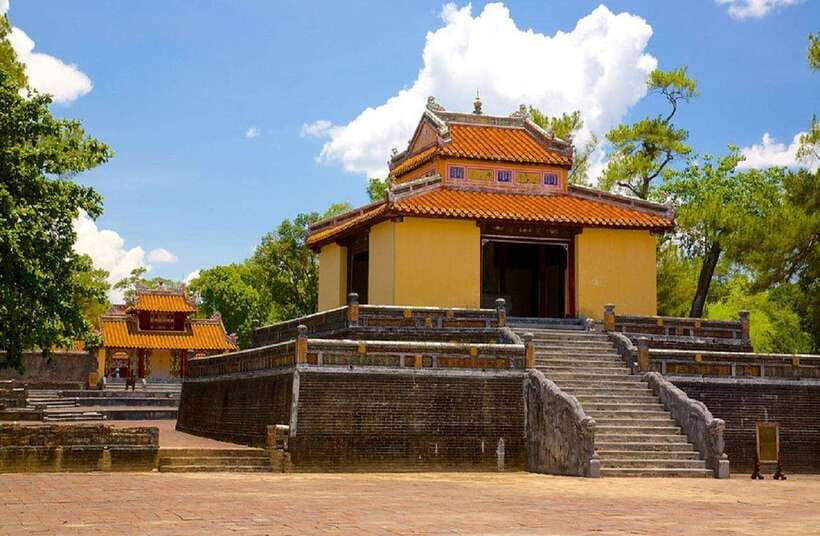
Tu Hieu Pagoda is also known as the Root Temple. It is described as one of Hue’s major temples and a cultural and historical site. The grounds offer a useful change of pace after several imperial monuments.
The pagoda is also associated with Zen Master Thich Nhat Hanh, the Vietnamese spiritual leader, poet, and peace activist known around the world for his teachings on mindfulness, ethics, and peace. He lived here after returning to Vietnam from the United States.
The scheduled stop is 30 minutes. That is enough to see the site and understand its role, but you will need to keep moving if you are also visiting five tombs. I would choose Tu Hieu if religious life and modern Vietnamese spiritual history matter to you. If your priority is imperial architecture, use the time for another tomb instead.
How the guides and drivers shape the day
The strongest part of this experience is not only the car. It is the help you receive between monuments. Hue’s tombs are far apart, and a good driver saves energy while a good guide turns separate buildings into a connected story.
Bi has been praised for sharing small facts during the drive and for being accommodating. Duy arrived on time, explained ancient sites along the road, and allowed plenty of time at each place rather than pushing the group onward. Ba helped with sightseeing ideas, transfer prices, money exchange advice, and a stop for Hue’s distinctive salted coffee. Tra My guided a morning visit to the mausoleums.
Those details point to the service’s practical strength. You can ask about the order of stops, how long to stay, and which sites are worth prioritizing. Still, guide quality can vary by assignment, so do not assume every option includes the same person or the same level of guiding. The guide is included only with the option that specifies a guide. Some choices may provide private transportation without a full guided service.
Tickets, timing, and the real cost
The individual tomb fee is 150,000 dong per tomb per person. With five tombs, that can add up quickly. The available combination tickets may be a better deal if you also plan to visit Hue’s Imperial City.
The stated combinations are:
- 420,000 dong per person for the Imperial City and two tombs
- 530,000 dong per person for the Imperial City and three tombs
- Combo tickets are valid for two days
These tickets do not cover every possible stop in the same way, so check what your chosen option includes. If you plan to visit five tombs, you may still need to budget for additional admissions.
Food and drinks are not included. Bring money for refreshments, and allow time to eat if you book an itinerary closer to eight hours. Pickup and drop-off in the city center are included, which adds value and keeps you from paying separate taxi fares at both ends.
Free cancellation is available up to 24 hours before departure, and you can reserve now and pay later. The tour is offered in English and is suitable for a private group. These terms are useful if your Hue plans are still shifting.
Who should book this private tombs tour?
I would choose this tour if you want to see several royal sites without managing transport yourself. It works especially well for couples, families, and small groups who value a private vehicle and the ability to adjust the route.
It also suits you if you want background on court life rather than only photographs. The information about wives, concubines, eunuchs, succession, and burial customs gives the tombs more meaning.
You may prefer another plan if you want a very slow visit to one or two monuments. The full route covers a lot of ground, and the 30-minute stops can feel brief. A scooter or taxi may also be cheaper for a confident independent visitor, though you will have to arrange the route and admission details yourself.
Should you book the Hue Royal Tombs Tour?
Book it if your main goal is efficient access to Hue’s scattered tombs, with a private car and the option of a local English-speaking guide. The best plan is to choose two or three tombs, then add Thien Mu Pagoda or Tu Hieu Pagoda if you still have time. Minh Mang, Tu Duc, and Khai Dinh make a strong first set because their styles and stories are so different.
Choose the longer option only if you genuinely want Gia Long and Dong Khanh as well. Check the exact number of included tombs, budget separately for tickets, and ask about the guide option before paying. At $15 per person to start, the service can be very good value, but the final cost depends on admissions and the length of your route.
FAQ
Where does the Hue Royal Tombs Tour begin?
Pickup is available in Hue city center or at Hue Train Station. For hotel pickup, provide the exact hotel name and address.
Where does the tour finish?
The driver returns you to your hotel in Hue city center or another agreed city-center drop-off point.
How long does the tour last?
The available options range from two to eight hours. The exact duration depends on the itinerary and number of sites selected.
Which royal tombs can I visit?
Possible tombs include Tu Duc, Minh Mang, Khai Dinh, Gia Long, and Dong Khanh. The number included depends on the option you book.
Are entrance tickets included?
No. Tomb admission costs 150,000 Vietnamese dong per tomb per person.
Are combo tickets available?
Yes. A ticket for the Imperial City and two tombs costs 420,000 dong per person, while the Imperial City and three tombs costs 530,000 dong per person. These tickets are valid for two days.
Is a tour guide included?
A tour guide is included with the option that specifies a guide. The tour is offered in English.
Is transportation private?
Yes. Private transportation by car or van is included, and the group is private.
Are food and drinks included?
No. You pay separately for food and drinks during the tour.
Can I cancel the booking?
You can cancel up to 24 hours in advance for a full refund. Reserve-now, pay-later booking is also available.
Temple visits we reviewed lately in Vietnam
- Sacred Nights at Bai Dinh Pagoda: A Spiritual Escape★ 4.9 · 16 reviews
- Perfume Pagoda Full-day trip From Hanoi★ 4.2 · 5 reviews
- Best trip Perfume Pagoda Full Day★ 5.0 · 3 reviews
- Ninh Binh : Mua Cave, Bai Dinh Pagoda, and Trang An Day Tour★ 4.7 · 3 reviews
- Ninh Binh Jeep Tour: 4 hours visit Tam Coc, Bich Dong pagoda★ 3.4 · 7 reviews
- Ninh Binh Jeep Adventure: Temples, Lotus, Fishing & Cooking★ 4.5 · 5 reviews
- Ninh Binh : Bai Dinh Pagoda, Trang An, and Mua Cave Tour★ 4.5 · 4 reviews
- Ninh Binh Jeep tour:2 hours visit Bich Dong, Thai Vi temple★ 3.8 · 38 reviews
Hue Temple Tours, compared.
Hue: Royal Tombs & Pagoda Private Tour By Dragon Boat & Car
Read our review →
Hue: Royal Tombs Private Tour with 3 Best Tombs & Pagoda
Read our review →
Hue: 3 Tombs + Pagoda with Knowledgeable ES Driver
Read our review →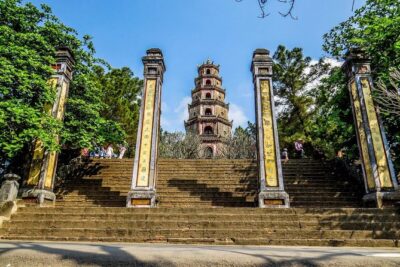
Hue: Custom Tour with Dragon Boat, Private Car & Motorbike
Read our review →
Hue: Dragon Boat, Perfume River, Pagoda & Royal Tomb Tour
Read our review →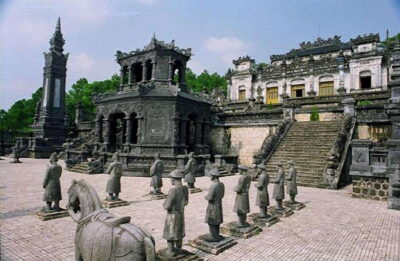
Hue: Private Dragon Boat, Pagoda, and Royal Tomb Tour
Read our review →
Hue: Royal Tombs and Thien Mu Pagoda Private Guided Tour
Read our review →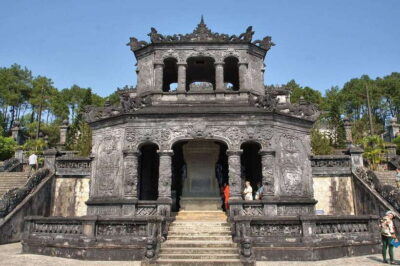
Hue: Explore the Royal City Customize with Dragon Boat
Read our review →This tour also ranks in