
Review · CHIANG RAI
Chiang Rai : Half-Day Temple Tour in Chiang Rai (8 am -1 pm)
Chiang Rai’s most memorable temples are not all cut from the same cloth. The White Temple is a dazzling work of modern Buddhist art, the Blue Temple glows with rich color, and the Big Buddha complex mixes Thai and Chinese design. This private half-day trip links them without making you sort out transport.
I like the small private group, limited to three people, and the hotel pickup, which keeps the morning simple. I also like the mix of famous sights and the quieter Wat Doi Khao Khwai. The main drawback is pace: four temple stops in five hours leave little room to linger, and two admission fees are extra.
Key points to know before booking
- The White Temple gets the longest visit: Plan on about an hour for its unusual art, symbolic bridge, and bright white details.
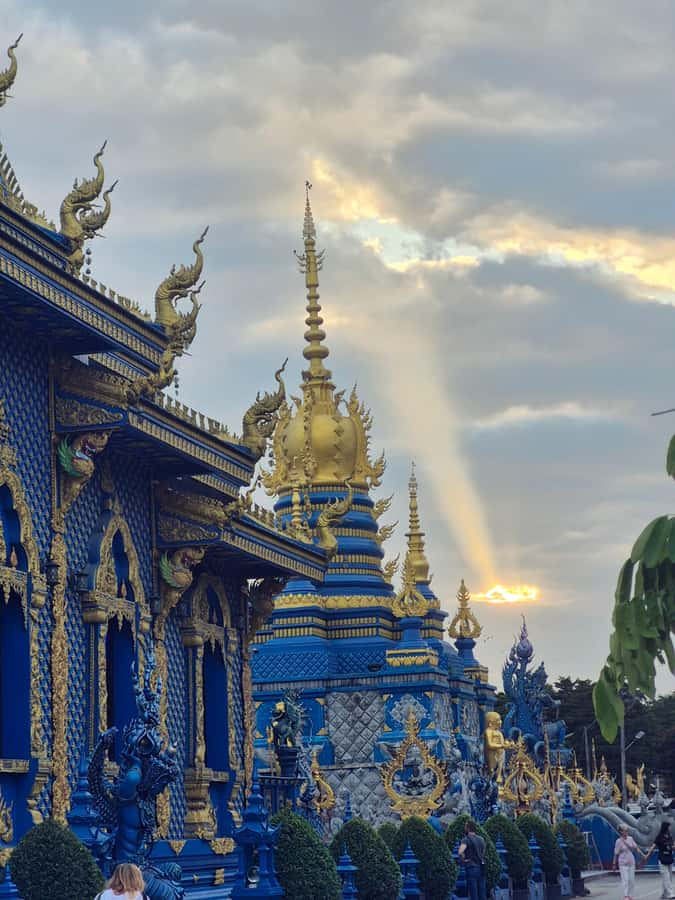
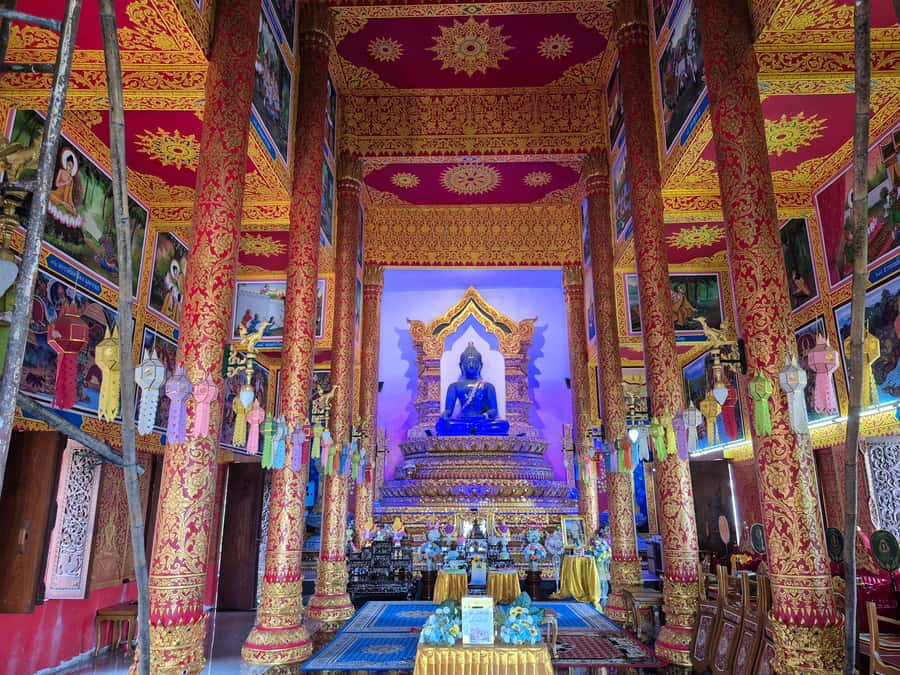
- The Blue Temple is a color contrast: Its blue and gold interior, carvings, and calm Buddha image offer a very different mood.
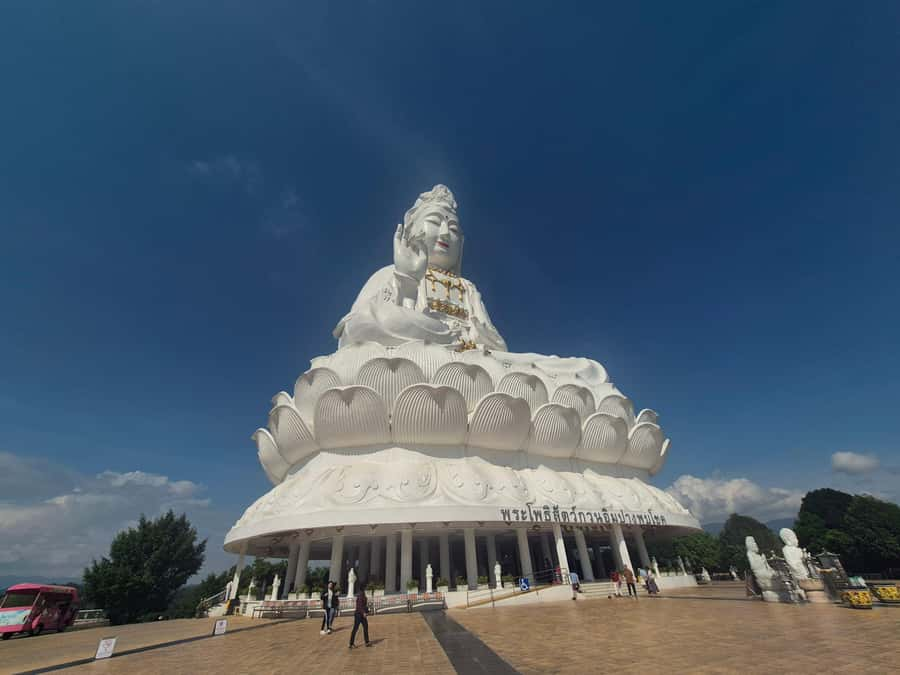
- The Big Buddha complex has a practical highlight: A lift inside the giant white Guan Yin statue gives you broad views over Chiang Rai.
- A private vehicle saves time: Hotel pickup, air conditioning, and a group capped at three make this easier than arranging several rides yourself.
- The price is per group: The $123 rate covers up to three people, though the White Temple and Huai Pla Kang entrance fees are separate.
- Dress matters at every temple: Cover your shoulders and knees, wear shoes suitable for walking, and carry cash.
Why this four-temple route works
Chiang Rai is famous for temple architecture that feels more experimental than the classic golden complexes found elsewhere in Thailand. Here, contemporary artists have used Buddhist ideas, bold colors, enormous statues, and elaborate carvings in surprising ways.
That variety is the strength of this tour. You are not looking at four near-identical shrines. The White Temple is bright and theatrical. The Blue Temple is more intimate and strongly colored. Huai Pla Kang brings in Chinese influence and a giant Guan Yin figure. Wat Doi Khao Khwai offers a calmer hilltop setting.
You get five hours from pickup to return, with travel in an air-conditioned vehicle and an English-speaking guide. For a first morning in Chiang Rai, that is a useful shape. You see the major temple sights, hear some context, and return to town in time for lunch or an afternoon of your own.
The private format matters more than it may sound. With a group of up to three, you can ask questions, adjust the pace within reason, and avoid waiting for a large bus group. It is not a fully flexible custom day, since the route has several fixed stops, but it should feel more personal than a standard coach excursion.
More Half-Day Tours in Chiang Rai:
- Athens: Cape Sounion & Poseidon Temple Sunset Half-Day Trip
★ 4.8 · 8,241 reviews - Cape Sounion and Temple of Poseidon Half-Day Small-Group Tour from Athens
★ 4.5 · 3,205 reviews - From Athens: Temple of Poseidon & Cape Sounion Half-Day Tour
★ 4.3 · 1,082 reviews
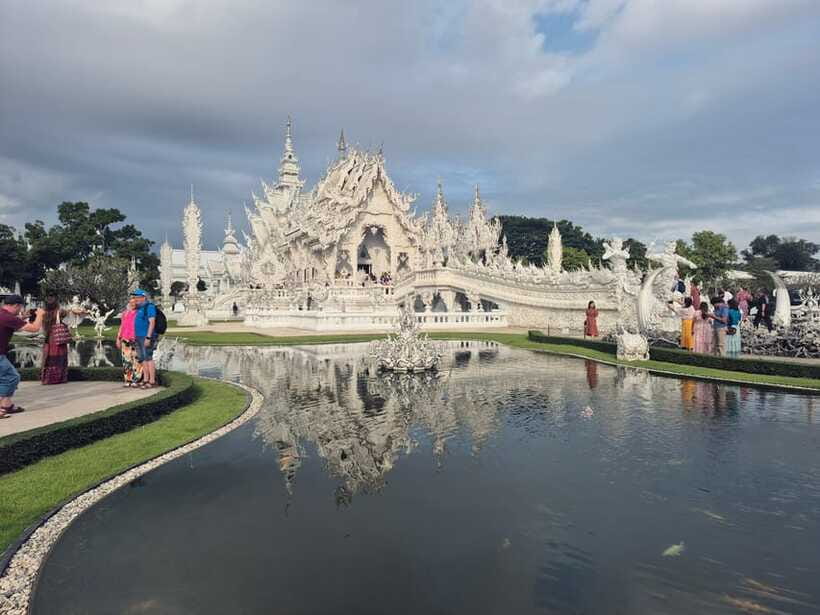
Wat Rong Khun, the White Temple, takes center stage
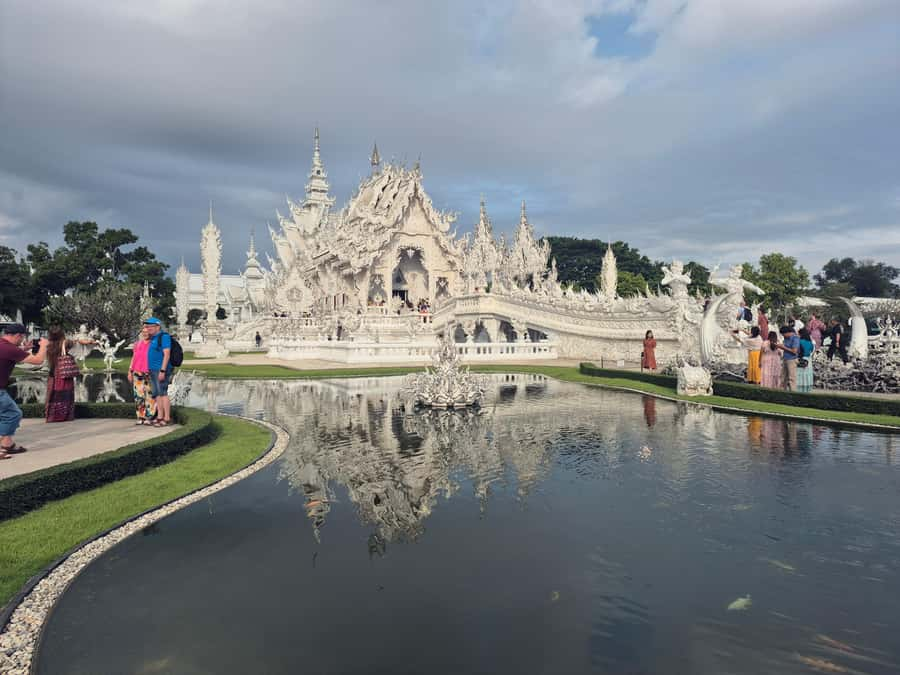
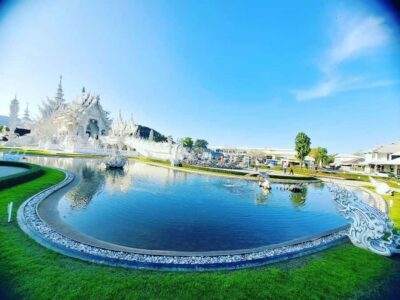
Your first major stop is Wat Rong Khun, usually called the White Temple. Allow about an hour here. That is the right amount of time for the main grounds, photographs, and a short explanation of the temple’s modern design.
The building is covered in white surfaces and small reflective details that catch the light. Instead of the weathered look of an old temple, you get something polished, symbolic, and deliberately dramatic. The White Temple blends Buddhist teaching with modern artistic ideas, so the experience is as much about interpretation as it is about architecture.
The bridge of the cycle of rebirth is one of the main visual moments. Its symbolism gives your guide a useful way to explain Buddhist ideas before you reach the main hall. Look closely at the surrounding details rather than rushing straight to the best photo position. The small carvings and unusual images are part of the point.
The main hall includes contemporary themes alongside Buddhist material. That mix can feel unexpected if you are looking for a traditional Thai temple, but it is exactly what makes this stop different. I would treat it as a living work of religious art rather than an ancient monument.
The entrance fee is 100 baht per person, paid separately. Photography is allowed outside, but restrictions apply inside the main halls. Arrive early if you can. The morning light and lower visitor numbers make it easier to see the details without a crowd pressing behind you.
Wear clothing that covers your shoulders and knees. This is required for the temple visits and saves you from having to worry about a last-minute clothing adjustment at the entrance.
The unnamed 45-minute stop and route timing
The listed schedule includes a second 45-minute visit with photo time, a guided explanation, and free time, but the stop is not named in the itinerary details. The wider route description identifies the tour’s four main sights as the White Temple, Blue Temple, Big Buddha Temple, and Wat Doi Khao Khwai.
The order may vary on the day. One version places Wat Huai Pla Kang before Wat Rong Suea Ten, while the tour description presents the Blue Temple earlier and Wat Doi Khao Khwai as the closing stop. That is worth clarifying with the operator if the exact sequence matters to you.
This is not a major problem, but it does affect expectations. You should think of the experience as a compact route through four temple areas rather than a tour where every stop follows a rigid published order.
The schedule gives roughly 45 minutes at Huai Pla Kang and about 35 minutes at the Blue Temple. Wat Doi Khao Khwai is described as a final peaceful stop if time allows. Since the day is only five hours, traffic, walking, and time spent at the earlier temples may affect how long you have at the hilltop site.
Wat Huai Pla Kang and the giant Guan Yin statue
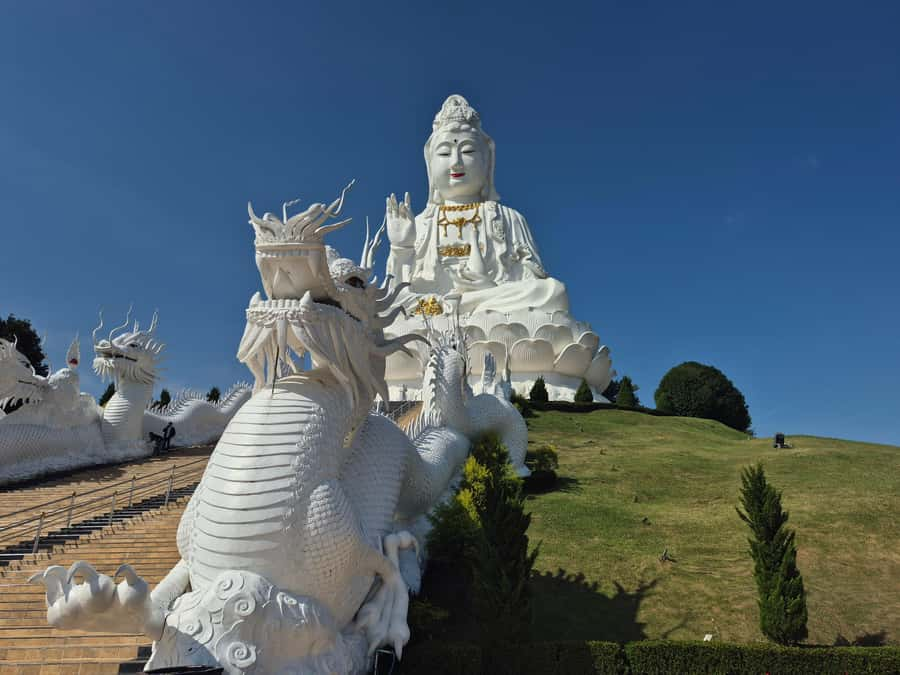
Wat Huai Pla Kang, also called the Big Buddha Temple in the tour description, is a striking change from the White Temple. The complex combines Chinese and Thai influences, and its scale is hard to miss.
The grounds include a large nine-tiered pagoda and a giant white Guan Yin statue, often called the Goddess of Mercy. The statue is the main draw, not simply because of its size but because you can take an elevator ride inside it. From higher levels, you get panoramic views over Chiang Rai and the surrounding countryside.
That lift makes this more than a quick photo stop. It gives you a different way to see the area and a useful break from looking at temple walls at ground level. The views depend on weather and visibility, but the tour specifically includes the chance to look across the region from the statue.
The entrance fee is 40 baht per person, also not included. You have around 45 minutes here, including guided touring and free time. That is enough to see the main features, but not enough for a slow exploration of every building.
I would keep your camera ready outside and listen for instructions about photography inside. Flash photography is not allowed, and temple interiors may have stricter rules than the open grounds.
More Temple Tours around Chiang Rai:
- From Chiang Mai: Chiang Rai Temples and Golden Triangle Tour
★ 4.5 · 1,770 reviews - Chiang Rai: Iconic Temples & 7 Major Sites—River View Buffet
★ 4.9 · 692 reviews - Chiang Rai: White, Blue, Red Temples, Long Neck Tour
★ 4.8 · 652 reviews - From Chiang Rai: Famous Temples and Golden Triangle Day Tour
★ 4.7 · 115 reviews
Wat Rong Suea Ten, the Blue Temple
Wat Rong Suea Ten, known as the Blue Temple, is the strongest visual counterpoint to the White Temple. Its blue and gold decoration gives the main hall a darker, more enclosed feel, while the White Temple is bright and reflective.
Inside, you can admire the serene Buddha statue and the detailed carvings around the hall. The color scheme is not just a small design choice. It changes the mood of the visit and gives the temple a sense of calm that differs from the theatrical quality of Wat Rong Khun.
The temple also has a connection to an artist associated with the construction of the White Temple. Your guide can help explain that link and place the two buildings in the same modern Chiang Rai art story, even though their appearance is very different.
The scheduled visit is about 35 minutes. I suggest using that time carefully: look at the exterior details first, then spend a few quiet minutes inside if conditions allow. This is not the place to race through taking photographs. Flash photography is prohibited, and photography inside the main halls may be limited.
Nearby cafés offer coffee, local snacks, and blue ice cream. That small refreshment stop can be a pleasant touch after several temple visits, but food and drinks are not included in the tour price. You will need to pay for anything you buy.
Wat Doi Khao Khwai brings a quieter finish
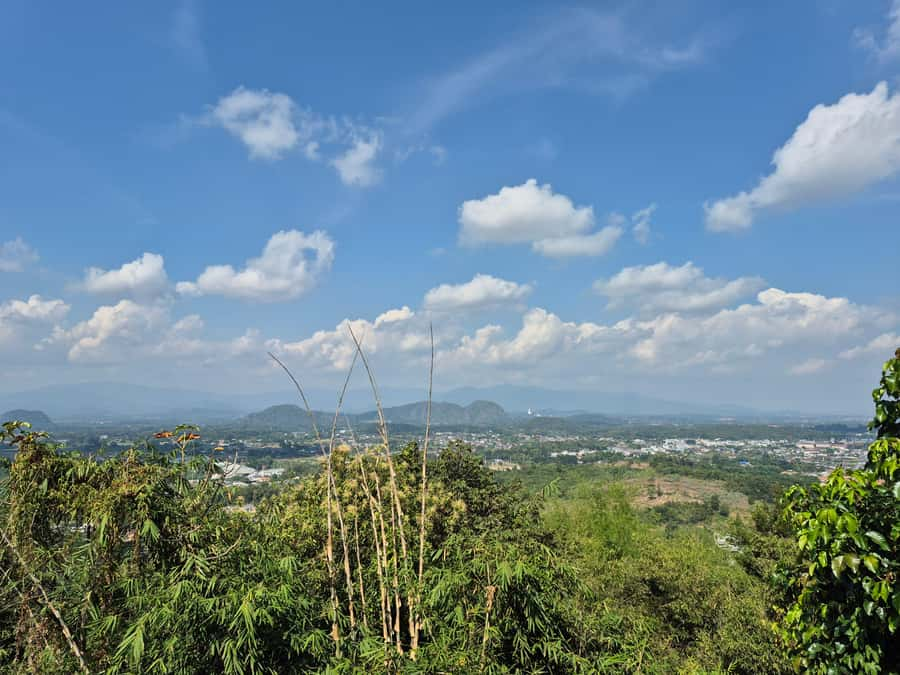
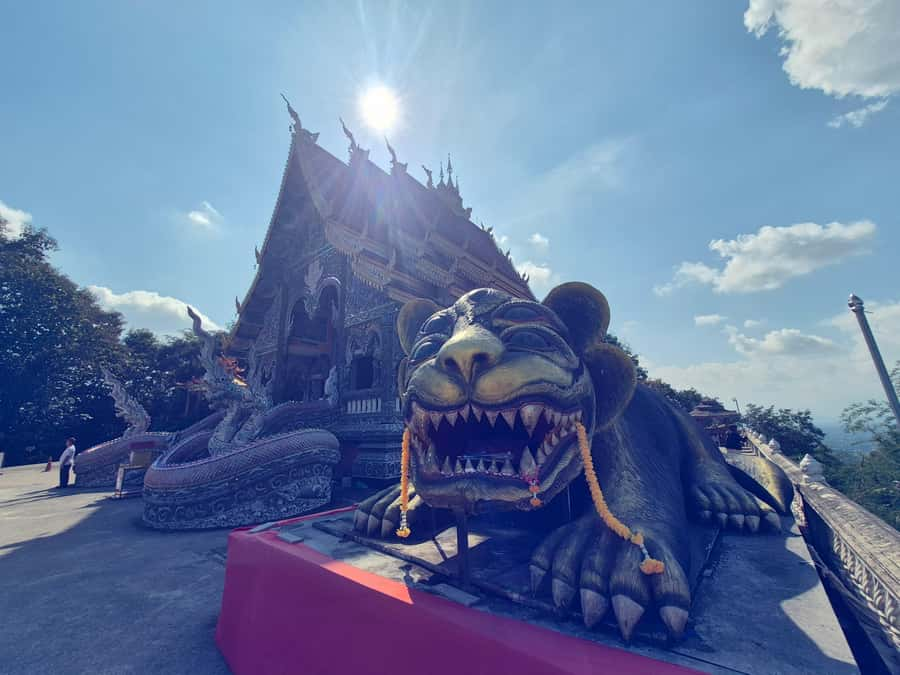
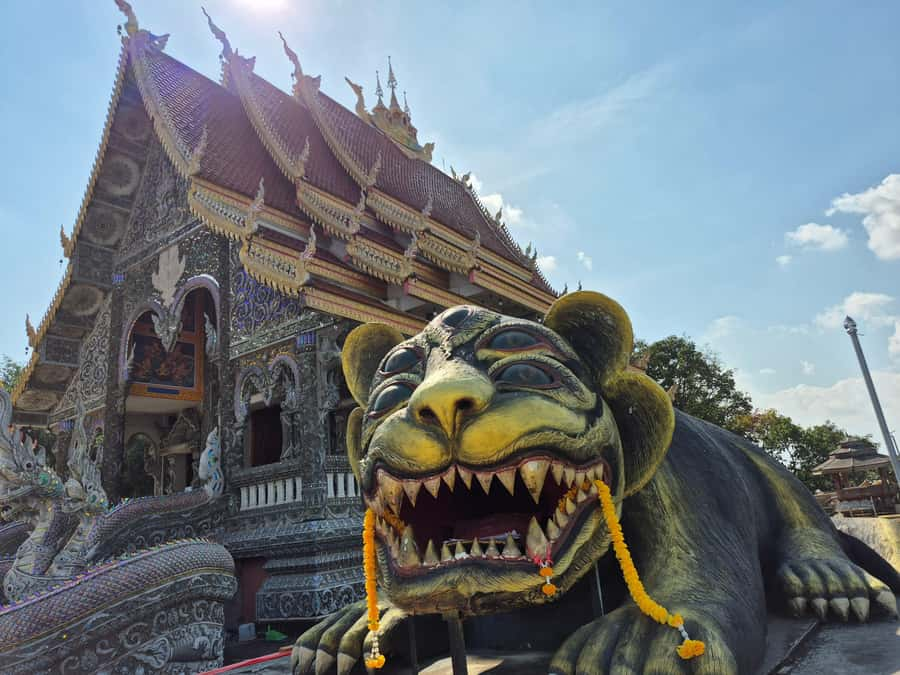
Wat Doi Khao Khwai is the calmest part of the route. It sits on a hill and is surrounded by nature, with views toward the countryside and a more peaceful atmosphere than the busier headline temples.
The site includes ancient chedis and serene Buddha statues. Those details give the stop a slower, more reflective character. After the bright surfaces of the White Temple and the bold colors of the Blue Temple, a hilltop temple is a sensible way to finish.
The important qualification is time. The description says to explore this temple if time allows, so I would not book the tour expecting a long visit here. If Wat Doi Khao Khwai is especially important to you, ask the guide at the start whether it is guaranteed in the day’s route and how much time is normally available.
This stop will suit you if you want more than famous photo sites. It is also a good reason to choose a private tour, since you can tell the guide that you value the quieter setting as much as the headline temples. The overall route still has a fixed five-hour limit, so flexibility is limited.
What the private vehicle and guide add
Pickup is available from hotels in Chiang Rai within about four kilometers of Bus Terminal 1 and not far from downtown. You should check your hotel location carefully before booking. If your accommodation is outside this area, do not assume pickup is included.
The air-conditioned vehicle is practical in Chiang Rai’s heat. You will move between several sites, walk around open temple grounds, and spend time in the sun, so having a cool ride between stops makes the half-day easier.
The English-speaking guide is central to the experience. These temples have plenty to look at, but their symbols are not always self-explanatory. A good explanation of the cycle of rebirth bridge, the modern art elements, the Guan Yin statue, and the connection between the White and Blue Temples gives the buildings more meaning.
Aryu is named as a local guide associated with the experience. If he leads your tour, you can ask about local food, the mountain region around Chiang Rai, and the temples beyond the standard facts. His local knowledge is especially useful if you want to turn the fixed route into a more personal conversation.
The tour includes drinking water and insurance. Meals, café purchases, and personal expenses are yours to cover.
Is $123 good value for up to three people?
At $123 per group of up to three, the price works best for a couple, a family of three, or a small group that values private transport. Split three ways, the base cost is about $41 per person before entrance fees. For two people, it is about $61.50 each before those fees.
That price includes hotel pickup and return, an air-conditioned vehicle, an English guide, water, and insurance. You are paying for convenience and a private arrangement, not just entry to the temples.
The extra admission fees are modest but should be included in your mental budget. Wat Rong Khun costs 100 baht per person, and Wat Huai Pla Kang costs 40 baht per person. Food and drinks are also separate.
I consider the price reasonable if you have only one morning in Chiang Rai or do not want to arrange several local rides. It is less compelling if you are comfortable organizing your own transport and prefer to spend most of a day at one or two sites. The tour covers a lot, but its schedule is tight.
What to wear and bring
Temple etiquette is simple but important. Wear clothing that covers your shoulders and knees. Long pants are specifically recommended, and comfortable walking shoes will help on temple grounds and hilltop paths.
Bring cash for the two entrance fees, refreshments, and personal expenses. A camera is useful, but remember that outside photography is more freely allowed than inside photography. Flash use is prohibited.
I would also bring water even though drinking water is included, especially if you are sensitive to heat. Do not bring alcohol or drugs, and smoking is not allowed. Baby strollers are also not permitted.
The activity is not suitable for pregnant women, wheelchair users, people with mobility impairments, people over 75 years old, or babies under one year. That is important because the tour includes temple walking, steps or uneven areas may be present, and the Guan Yin visit involves an elevator ride within a large statue complex.
Who should book this Chiang Rai temple tour?
This tour suits you if you want Chiang Rai’s main temple sights in one organized morning and prefer not to share a large vehicle. It is particularly useful for couples, small families, and friends traveling as a group of three.
You will get the most from it if you enjoy architecture, Buddhist art, photography, and short explanations of local culture. The route also works well for first-time visitors who want an overview before choosing which places deserve a longer return visit.
I would think twice if you dislike quick stops or want a long, quiet meditation at each temple. The White Temple gets about an hour, but the Blue Temple and Huai Pla Kang receive less time, and Wat Doi Khao Khwai may depend on the day’s timing.
Free cancellation is available up to 24 hours before the tour for a full refund, and you can reserve now and pay later. That helps if your Chiang Rai plans are still shifting.
Should you book it?
Book this experience if you want a private, efficient introduction to Chiang Rai’s most distinctive temples, with transport and a guide taken care of. The White Temple, Blue Temple, giant Guan Yin statue, and hilltop setting give you four clearly different experiences in a single morning.
Skip it if you prefer independent travel, need wheelchair access, or want a slow full-day visit. Before paying, confirm your hotel is within the pickup area and ask about the exact order of the stops, especially if Wat Doi Khao Khwai is a priority.
FAQ
How long does the Chiang Rai temple tour last?
The tour lasts five hours, generally from 8 am to 1 pm. Check availability for the exact starting time.
Which temples are included?
The route includes Wat Rong Khun, also called the White Temple, Wat Rong Suea Ten, also called the Blue Temple, Wat Huai Pla Kang or the Big Buddha Temple, and Wat Doi Khao Khwai.
Is the tour private?
Yes. It is a private group experience for up to three people.
Is hotel pickup included?
Yes, pickup and drop-off are included for hotels in Chiang Rai that are within about four kilometers of Bus Terminal 1 and not far from downtown.
Are temple entrance fees included?
No. Wat Rong Khun costs 100 baht per person, and Wat Huai Pla Kang costs 40 baht per person. These fees are paid separately.
Is an English-speaking guide included?
Yes. The tour includes an English-speaking guide. Aryu is identified as a local guide associated with this experience.
Can I take photographs at the temples?
Photography is allowed outside, but it may be restricted inside the main temple halls. Flash photography is not allowed.
What should I wear?
Wear respectful clothing that covers your shoulders and knees. Long pants and comfortable walking shoes are recommended.
Is the tour suitable for wheelchair users or people with mobility impairments?
No. The activity is listed as unsuitable for wheelchair users and people with mobility impairments. It is also not suitable for pregnant women, people over 75 years old, or babies under one year.
Temple visits we reviewed lately in Chiang Rai
- Private trip Chiang Rai Day trip, White Temple, Blue temple★ 4.8 · 13 reviews
- From Chiang Mai: Day Trip Chiang Rai White, Blue, Red Temple★ 5.0 · 4 reviews
- From Chiang Rai 3 Temples & Golden Triangle &Tea Plantation★ 4.8 · 20 reviews
- From Chiang Mai : 3 Temples & Golden Triangle with Lunch★ 4.5 · 17 reviews
- ChiangRai:Full Package!Temples,Long Neck,The Golden Triangle★ 4.7 · 9 reviews
- Chiang Rai: Temple Treasures & Popular Sightseeings (Buffet)★ 4.7 · 10 reviews
- Chiangrai : Half Day Tour 3 Famous Temples / (Private tour)★ 5.0 · 4 reviews
- Chiang Rai:Photos of traditional Thai costumes,White Temple★ 4.9 · 26 reviews
Chiang Rai Temple Tours, compared.
From Chiang Mai: Chiang Rai Temples and Golden Triangle Tour
Read our review →
Chiang Rai: Iconic Temples & 7 Major Sites—River View Buffet
Read our review →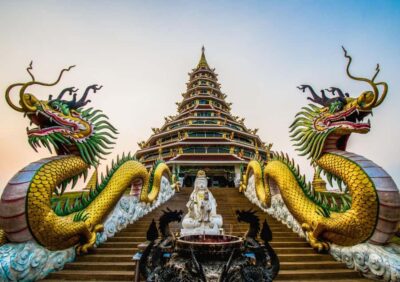
Chiang Rai: White, Blue, Red Temples, Long Neck Tour
Read our review →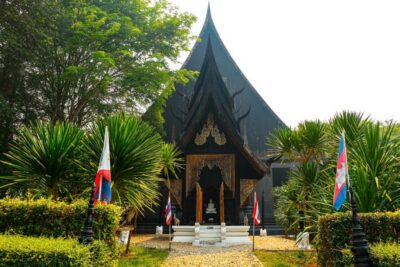
From Chiang Rai: Famous Temples and Golden Triangle Day Tour
Read our review →
Chiang Rai: Half Day Tour – 3 Famous Temples & Lalita Cafe’
Read our review →
Chiang Rai: 3 Temples, Long Neck Village & Lalitta Café
Read our review →
Chiang Rai:Photos of traditional Thai costumes,White Temple
Read our review →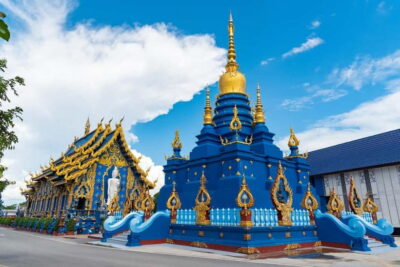
Chiang Mai to Chiang Rai: 3 Temples & Hot Springs & Pickup
Read our review →This tour also ranks in