
Review · BANGALORE
Bangalore: Basavanagudi Walking Tour with Bull Temple
Basavanagudi makes a fine introduction to Bengaluru because it gives you far more than a few monuments. In three hours, you move from a famous dosa restaurant into a flower market, a 16th-century temple, a cave shrine, and an old residential quarter where century-old houses still shape the streets.
I like the breakfast at Vidyarthi Bhavan, which turns the meeting point into part of the experience rather than a simple street corner. I also like the contrast between the noisy Gandhi Bazaar and the quiet Gavi temple. The main consideration is physical: this is a walking tour with temple floors, steps, and uneven surfaces, so it is not a good match for anyone with limited mobility.
Key points at a glance
- Start with dosa and coffee at Vidyarthi Bhavan: Your tour begins at one of Basavanagudi’s best-known local restaurants, with breakfast or snacks depending on your chosen time.
- Walk through Gandhi Bazaar: Produce, flowers, shops, and local food stalls provide the strongest everyday glimpse of the neighborhood.
- See the enormous Bull Temple statue: The 16th-century temple centers on a single monolithic bull, surrounded by detailed Hindu sculpture.
- Enter the cave at Gavi Gangadeshwara Temple: This 10th-century shrine offers a very different mood from the open market and grander Bull Temple.
- Finish among old houses: The final walk shows Basavanagudi’s older residential character and may include a visit inside a traditional home.
- Plan for temple etiquette: Bring water, wear comfortable shoes, cover your knees, and be ready to remove your footwear at places of worship.
Why Basavanagudi works so well on foot
Basavanagudi is one of Bengaluru’s most characterful older districts. This tour does not treat the neighborhood as a string of isolated attractions. Instead, you walk between them and see how temples, markets, restaurants, homes, and daily routines fit together.
That matters in a city as large as Bengaluru. A car can carry you from one famous sight to another, but it cannot give you the same sense of how the area feels at street level. Here, your guide can point out what is being sold, explain local customs, and help you read details that are easy to miss on your own.
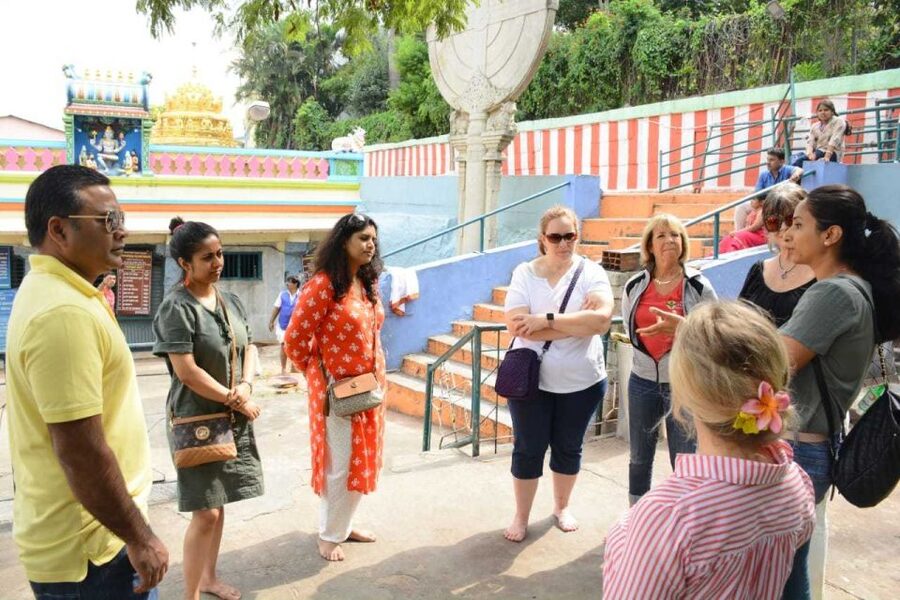
The tour is private, which gives you a better chance to ask questions and adjust the conversation to your interests. Guides such as Deepti and Navitha have been praised for friendly conversation and clear explanations of Hinduism, Bengaluru, and neighborhood life. Your assigned guide may differ, but an English-speaking guide is included.
The three-hour length is also sensible. You get a focused morning or afternoon without committing an entire day to one district. At the same time, you should not expect a full survey of Bengaluru’s major monuments. This is a local neighborhood walk, not a citywide sightseeing tour.
More Temple Walking Tours in India
- Private Guided Spiritual Walk in Banganga Hindu Temples
★ 5.0 · 271 reviews - Tipu Palace + Koté Vishnu + Fort + KR Market + Jain Temple = Bengaluru Pété Walk
★ 5.0 · 150 reviews - Bangalore: Palace, Temples, Fort & Markets Walking Tour
★ 4.9 · 97 reviews
Beginning with breakfast at Vidyarthi Bhavan
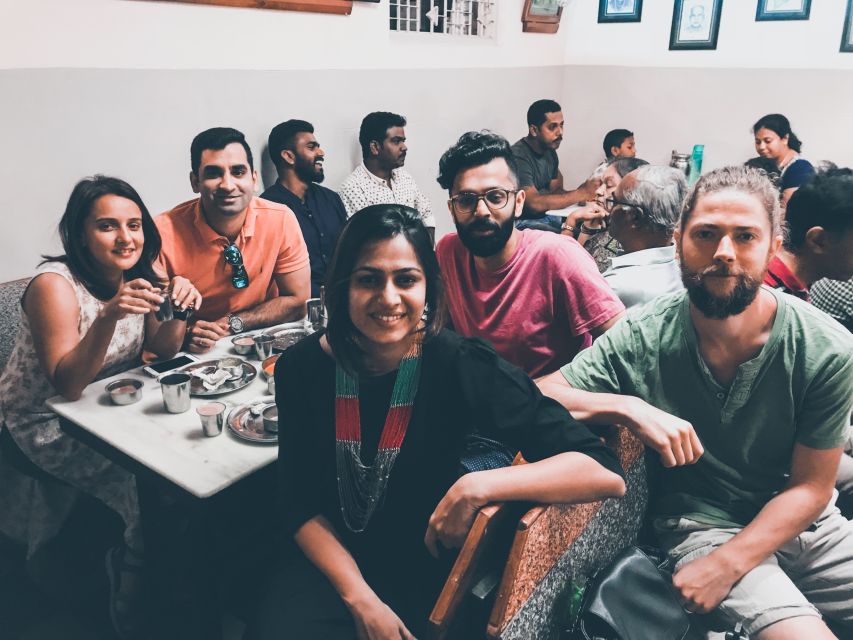
The meeting point is the entrance of Vidyarthi Bhavan at 32 Gandhi Bazaar Main Road. This restaurant is not just a convenient landmark. It is part of Basavanagudi’s food culture, and beginning here gives the tour a warm, practical start.
Depending on your time slot, you receive breakfast or snacks. Dosas and coffee are especially important to the experience. The restaurant has long been associated with local South Indian eating, so this is a chance to begin with a familiar neighborhood ritual rather than an international hotel breakfast.
Your guide can help explain what you are eating and how the meal fits into Bengaluru’s food traditions. One useful feature is that the meal is included, so you do not need to begin the tour by finding a place to eat or deciding what to order. Still, the exact food and timing depend on the chosen slot, so do not treat this as a large meal with an extensive menu.
The restaurant is closed on Fridays. An alternative meeting or food arrangement is provided on that day, but you should expect the opening stop to change. If Vidyarthi Bhavan is a particular reason you want to book, choose another day.
Reading Gandhi Bazaar through its smells and sounds
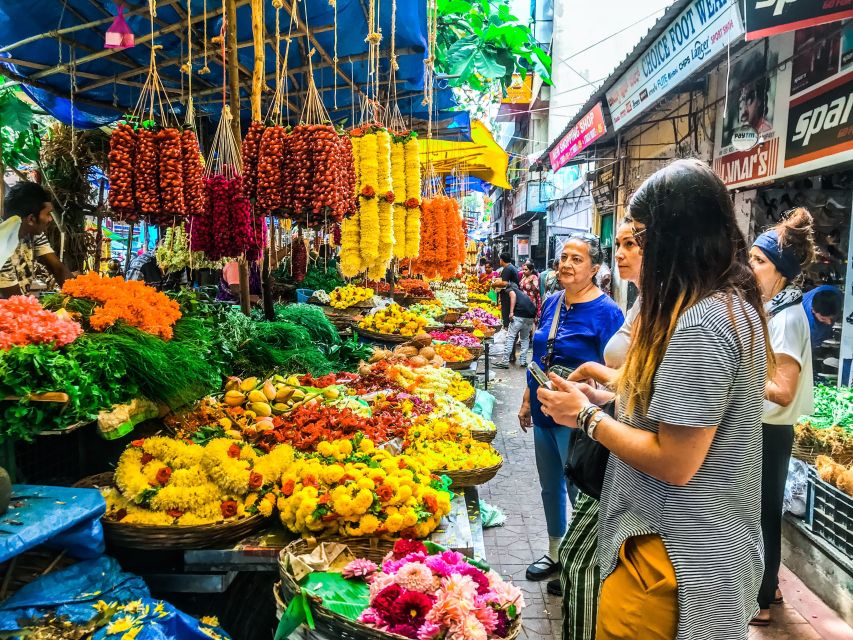
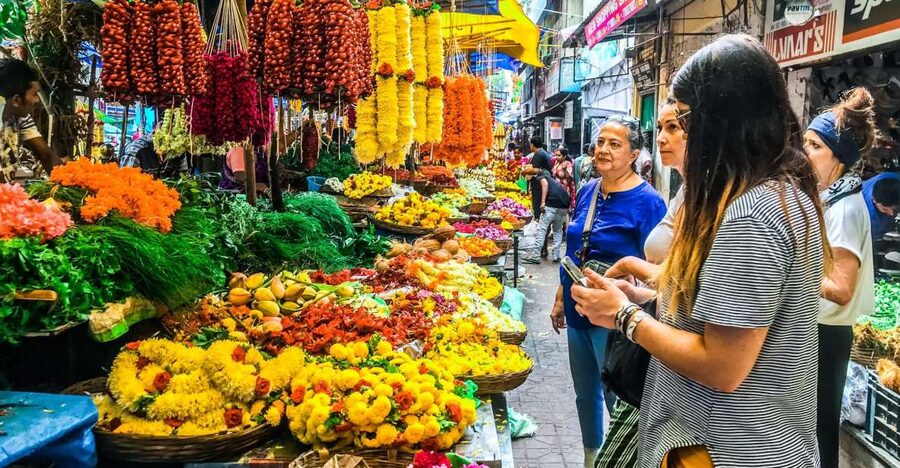
After breakfast, you head into Gandhi Bazaar. This is the part of the walk where your senses do most of the work. You can expect produce stalls, flower sellers, small shops, and local purveyors arranged along busy streets.
A market like this is useful because it shows what people buy for ordinary life. Fresh flowers may be prepared for worship or celebrations. Produce tells you something about local cooking. Shopfronts reveal the mix of long-established trade and present-day neighborhood needs.
Your guide adds meaning to the scene. Without help, a market can become a blur of color and movement. With someone who knows the area, you can ask about flowers, food, customs, and the way the bazaar functions. You may also get shopping tips, though purchases are not the focus of the tour.
Give yourself permission to slow down here. The market is not a place to rush through while taking photographs. Watch how people select goods, notice the aromas, and be mindful of shoppers carrying purchases. The street can be crowded, and the tour’s pace may be affected by local activity.
Gandhi Bazaar is also a good reason to choose a time slot carefully. A morning tour pairs naturally with breakfast and market life. The supplied information does not promise a specific market schedule or level of activity, so the exact feel can vary by day.
Meeting the giant bull at the 16th-century temple
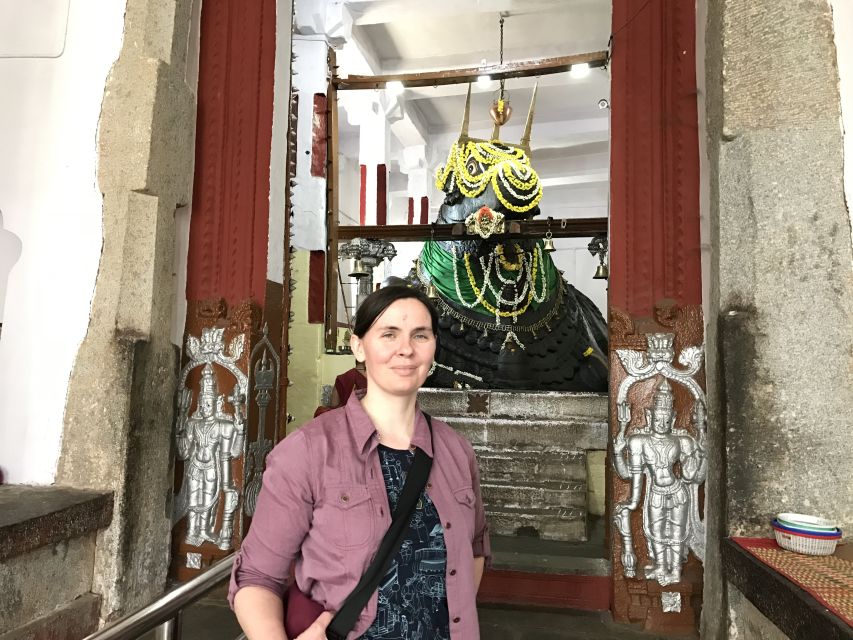
The Bull Temple is the tour’s best-known religious sight. Built in the 16th century, it centers on a monolithic statue of Nandi, the sacred bull associated with the Hindu god Shiva.
A monolithic statue is carved from one piece of stone. That simple fact helps you appreciate the scale of the object. You are not looking at a collection of assembled parts, but a single powerful form that has been shaped and preserved over centuries.
The pyramidal temple also contains an elaborate collection of statues. Your guide can explain the religious setting and help you understand why this is one of Bengaluru’s important Hindu sites. The value of a guided visit is especially clear here, since temple sculpture and Hindu symbolism can be difficult to interpret without context.
This is an active place of worship, not a museum arranged solely for sightseeing. Keep your voice low, follow instructions, and ask before taking photographs if you are unsure. You must remove your shoes in places of worship, and your knees should be covered. Those rules are simple, but they make a major difference in showing respect.
The Bull Temple is not a reason to expect a long visit. The attraction is concentrated in the statue, the architecture, and the atmosphere around the shrine. The guide’s explanation is what turns a short stop into a meaningful one.
Same sacred ground, another way to see it:
- New Delhi: Akshardham Temple Tour with Water and Light Show
★ 4.8 · 313 reviews - Old Delhi Food-Spice Market-Temples Tour Soon Featured on NETFLIX
★ 5.0 · 304 reviews - Taj Mahal Sunrise with Lord Shiva Temple:- All Inclusive
★ 5.0 · 207 reviews - Old Delhi Temples and Spiritual Sites Private 6-Hour Tour
★ 4.8 · 204 reviews
Entering the cave at Gavi Gangadeshwara Temple
The Gavi Gangadeshwara Temple gives the tour a striking change of mood. The 10th-century shrine is located within a cave, making it unlike the open market and more formal Bull Temple.
The cave setting is the attraction. Rather than approaching a temple only through a large exterior gateway, you enter a space shaped by rock and darkness. That physical change makes the stop memorable even if you have already visited several temples in India.
The name can also appear as Gavi Gangadeshwara or Gavi temple. Your guide can help explain the shrine and the religious ideas connected with it. The tour description presents this as a place to uncover local mysteries, so leave room for questions instead of treating it as a quick photo stop.
Expect to remove your shoes here as well. Comfortable footwear that is easy to take on and off will save time. Temple floors may be uneven, and the tour is not recommended for anyone with limited mobility. If you have trouble with steps, standing, or walking over irregular ground, ask about suitability before booking.
The cave is also a reminder that this tour is not polished sightseeing from beginning to end. You are visiting living places of worship in an old district. That brings character, but it also means conditions may be less predictable than at a modern attraction.
Old Basavanagudi homes and a closer look at local life
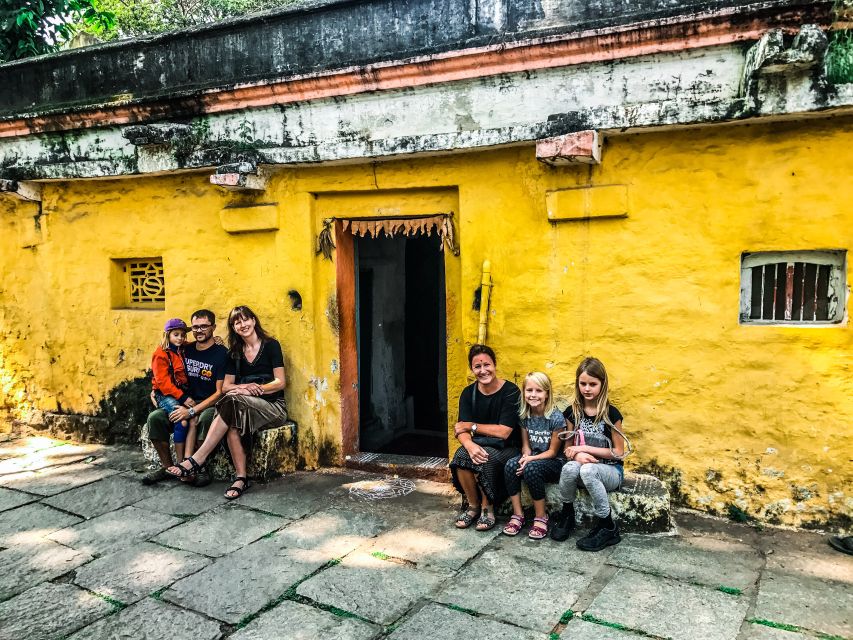
The final part of the tour moves through the oldest section of the neighborhood. You see houses dating back around a century and learn how older buildings continue to define Basavanagudi.
This stop gives useful balance to the temples. Religious buildings tell you about public faith and community traditions. Old homes show how people lived, built, adapted, and maintained a neighborhood over time.
One especially appealing detail is the possibility of visiting the inside of a traditional house. The experience has included access to someone’s home, which offers a more personal view than looking only at façades from the street. Because private-home access can depend on local arrangements, you should treat it as part of the experience that may vary, not as a guaranteed museum-style visit.
The residential walk is also where conversation often becomes the main attraction. Guides such as Deepti and Navitha have been praised for discussing both Bengaluru and wider Indian culture. You can ask about Hinduism, local customs, food, architecture, or how the district has changed.
Do not expect every house to be open or every street to look preserved. The value is in seeing an old neighborhood as a lived-in place. Some buildings may show wear, and traffic or street activity may interrupt the quiet. That is part of the setting rather than a flaw in the tour.
What the $43 price includes
At $43 per person, this is not the cheapest way to walk around Basavanagudi. You could visit the market and temples independently for less, especially if you already know where to go and how to manage temple etiquette.
The price makes more sense if you value a private English-speaking guide, the food stop, and the connections between the sights. You are paying for interpretation, local orientation, and a planned route that combines food, markets, worship, architecture, and neighborhood life.
Breakfast or snacks are included, along with the guided tour. Hotel pickup and drop-off are not included, so you need to reach Vidyarthi Bhavan on your own. Bangalore traffic is unpredictable, and the tour may finish a few minutes early or late because of road conditions. This is worth considering if you have a train, flight, or tightly timed appointment afterward.
For a first visit to Bengaluru, the price can be fair if you want help getting your bearings in an older district. It is less compelling if you prefer to explore independently, have already visited Basavanagudi, or mainly want a list of major monuments.
Optional customization may be possible, but changes can bring extra costs for transport or entry tickets. Discuss any special request at the beginning of the tour. Later changes may not be possible.
Who will enjoy this three-hour walk
I would recommend this experience to you if you enjoy food, local markets, religious architecture, and ordinary neighborhood scenes more than big-ticket attractions. It is particularly useful early in a Bengaluru visit, when you want a sense of the city and a guide who can answer basic questions about local customs.
It also suits curious solo visitors and couples who want a private conversation rather than a large group presentation. Families with older children may appreciate the mix of dosa, markets, caves, temples, and old homes, though the walk requires attention and respectful behavior.
You should think twice if you have limited mobility. The tour includes walking, temple visits, shoe removal, and potentially uneven surfaces. It is also not ideal if you want a relaxed vehicle-based outing or a tour focused on grand monuments outside Bengaluru.
Wear comfortable shoes, bring water, and pack an umbrella and sunglasses. Cover your knees before entering the temples. Light clothing that still meets temple expectations will make the day easier.
Should you book the Basavanagudi walking tour?
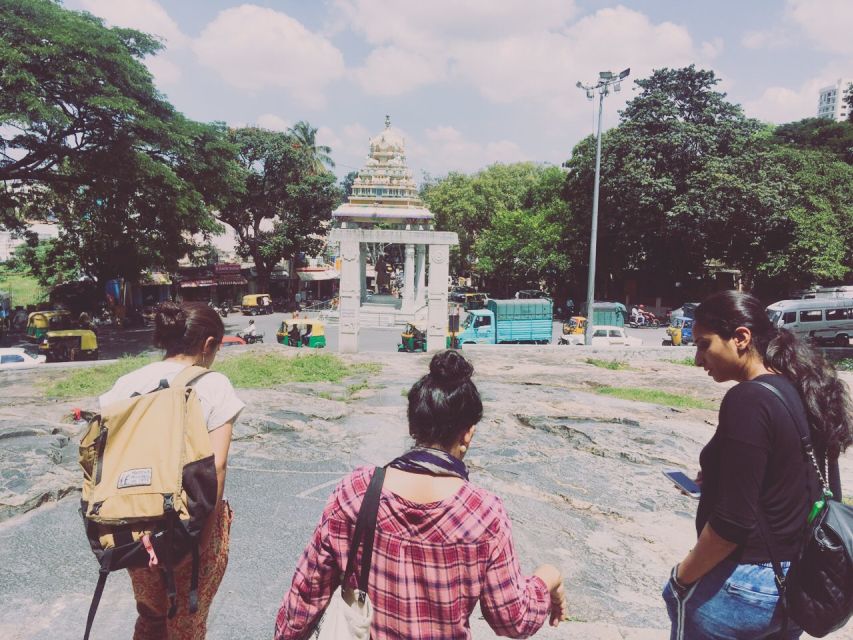
Book it if you want Bengaluru explained through a neighborhood rather than reduced to a checklist of sights. The combination of Vidyarthi Bhavan, Gandhi Bazaar, flower sellers, the Bull Temple, the cave temple, and old homes gives you a strong three-hour slice of local life.
The best parts are the food start, the sharp contrast between market streets and sacred spaces, and the chance to ask a guide about Hinduism and the district as you walk. The main drawbacks are the lack of hotel transport, unpredictable traffic, and the physical demands of the route.
For many visitors, $43 is a reasonable price for a private introduction to Basavanagudi, especially when breakfast or snacks are included. Choose it for context and conversation, not for a long list of major monuments.
FAQ
How long does the Basavanagudi walking tour last?
The tour lasts three hours. Starting times vary, so you should check availability when booking.
Where does the tour begin?
The meeting point is at the entrance of Vidyarthi Bhavan, 32 Gandhi Bazaar Main Road, Gandhi Bazaar, Basavanagudi, Bengaluru, Karnataka 560004, India.
Is breakfast included?
Yes. Breakfast or snacks are included, depending on the time slot you choose. The tour begins at Vidyarthi Bhavan, where you can have coffee, snacks, or breakfast.
What language is the tour offered in?
The tour is offered with a live English-speaking guide.
Does the tour include hotel pickup and drop-off?
No. Hotel pickup and drop-off are not included. You need to make your own way to the Vidyarthi Bhavan meeting point.
What should I wear for the temple visits?
Cover your knees, and be prepared to remove your shoes at places of worship. Comfortable shoes are recommended for the walking route.
Is the tour suitable for people with limited mobility?
No. The tour is not recommended for people with mobility impairments because it involves walking and temple visits with potentially uneven surfaces.
Temple visits we reviewed lately in India
- Same Day Tour Of Kumbhalgarh Fort & Ranakpur Jain Temple★ 4.7 · 12 reviews
- Rishikesh: Kunjapuri Temple Sunrise Trek★ 5.0 · 5 reviews
- Private Full-Day Jaipur Guided Tour with Monkey Temple★ 5.0 · 11 reviews
- Amritsar : Golden Temple and Jallianwala Bagh Private Tour★ 5.0 · 16 reviews
- Old Delhi Temples and Spice Market Tour★ 5.0 · 5 reviews
- Night Ceremony at Madurai Meenakshi Amman Temple Tour★ 4.2 · 4 reviews
- New Delhi: Akshardham Temple Light Show with Custom Add-Ons★ 4.8 · 125 reviews
- New Delhi: Lotus Temple Private Tour with Skip-the-Line★ 5.0 · 5 reviews
Bangalore Temple Tours, compared.
Tipu Palace + Koté Vishnu + Fort + KR Market + Jain Temple = Bengaluru Pété Walk
Read our review →
Bangalore: Palace, Temples, Fort & Markets Walking Tour
Read our review →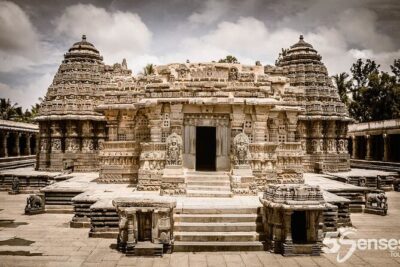
World heritage Somnathpur sculptures and Talakadu temple mystery
Read our review →
Old Bangalore Historical Walk thro Palace, Temples, Fort & Market
Read our review →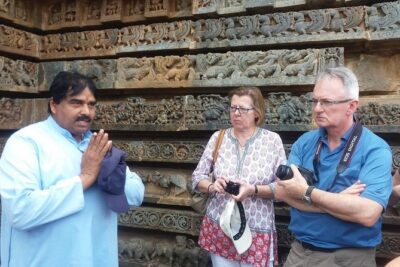
World heritage site of Belur & Halebid with temple sculptures
Read our review →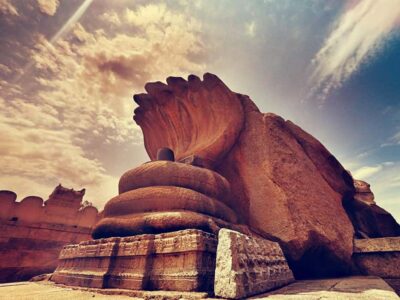
From Bangalore: Lepakshi Temple and Adiyogi Statue Day Trip
Read our review →
This tour also ranks in