
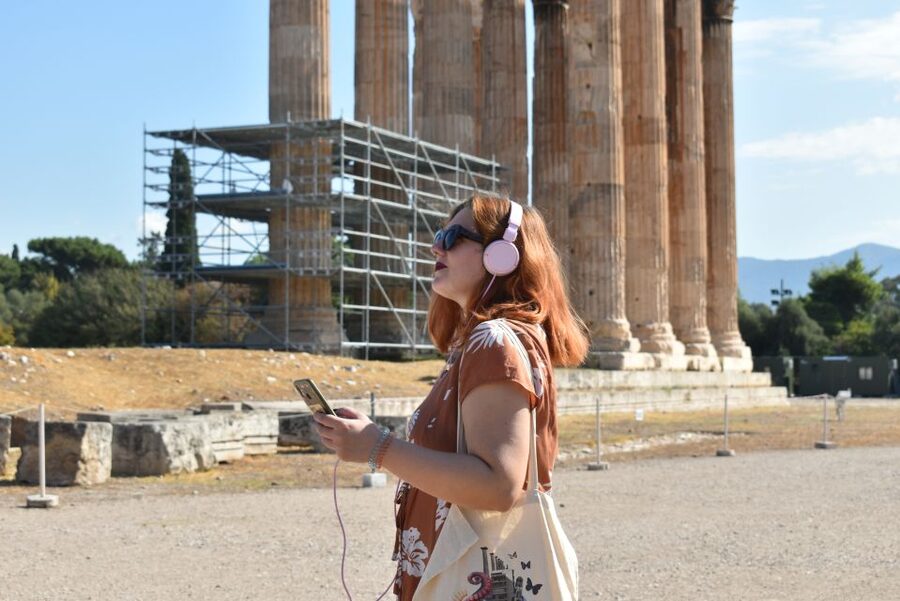
Review · GREECE
Athens: Temple of Olympian Zeus Ticket and Audio Tour
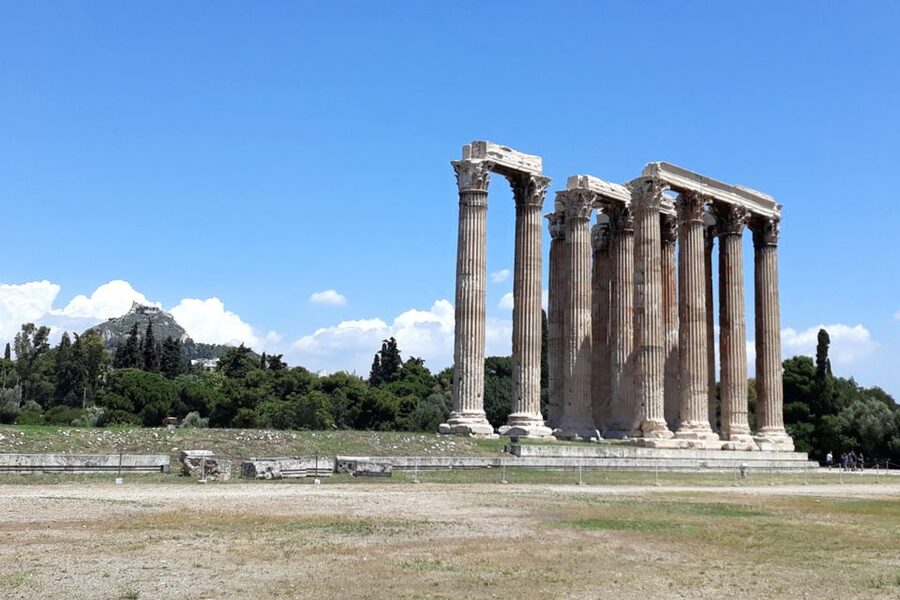
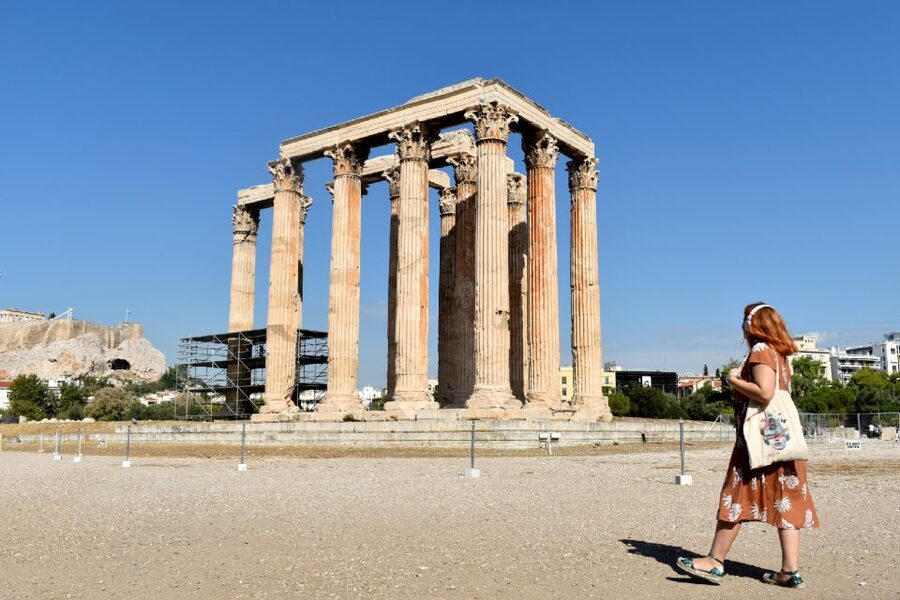
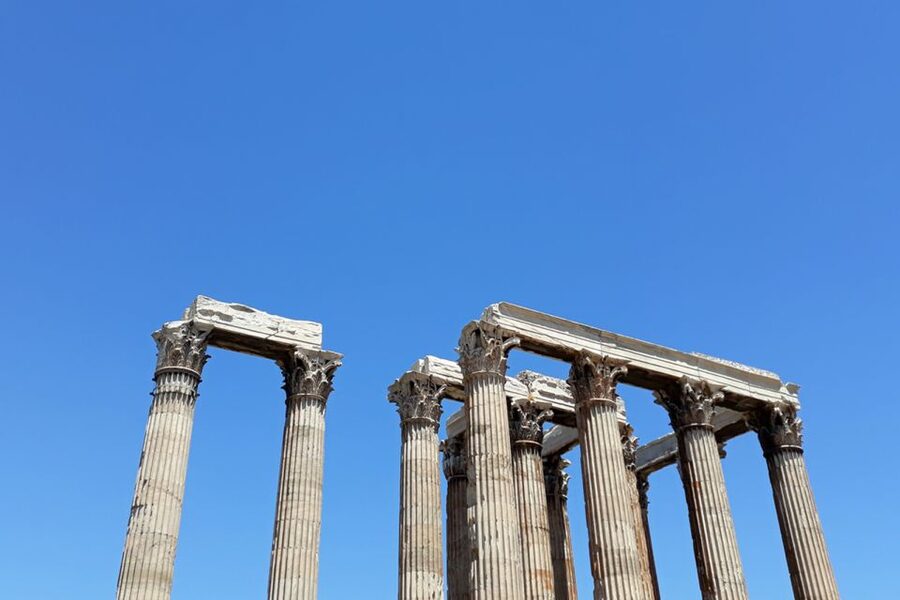
The first thing to grasp about the Temple of Olympian Zeus is its sheer scale. Only a fraction of the temple survives, yet the 17-meter columns still make you look up and imagine the enormous building that once filled this part of Athens.
I like the freedom of the self-guided format. You can pause, replay, and sit in the shade while the story catches up with you. I also like that the route ends at the Balaneion, an ancient bathhouse, rather than stopping at the obvious columns. The main drawback is simple: there is not much left of the temple, and some visitors may feel the $30 price is high when the site can be seen in part from outside.
Key points to know before you go
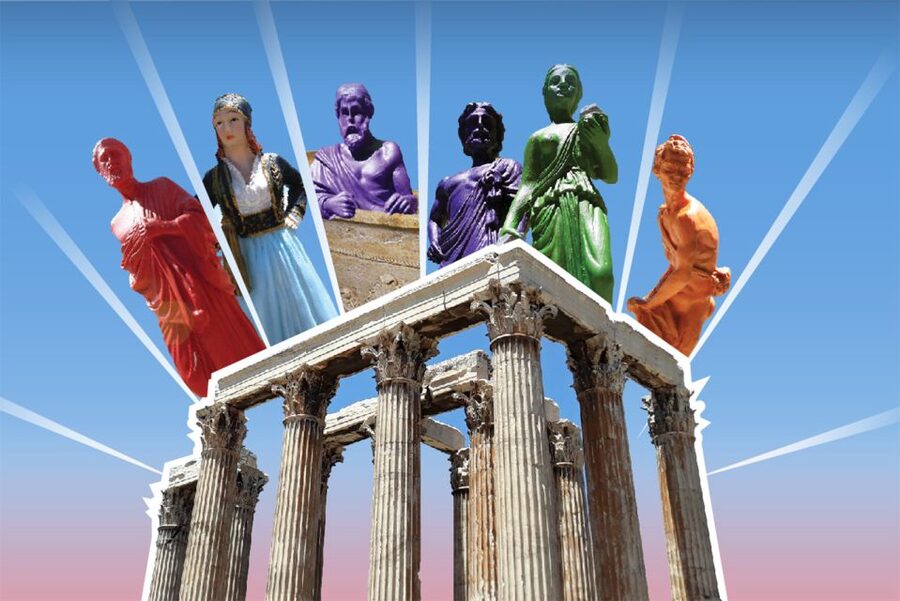
- The 17-meter columns are the main event: The surviving pillars give you a clear sense of the temple’s lost scale.
- The audio tour tells a 700-year story: You hear how Athenian rulers and Roman emperors tried to connect their power with Zeus.
- The route begins near the Great Propylon: The entrance sets up myths of the Great Deluge and ancient Athens.
- The Balaneion adds an everyday view: The final stop shifts attention from gods and rulers to public bathing and daily life.
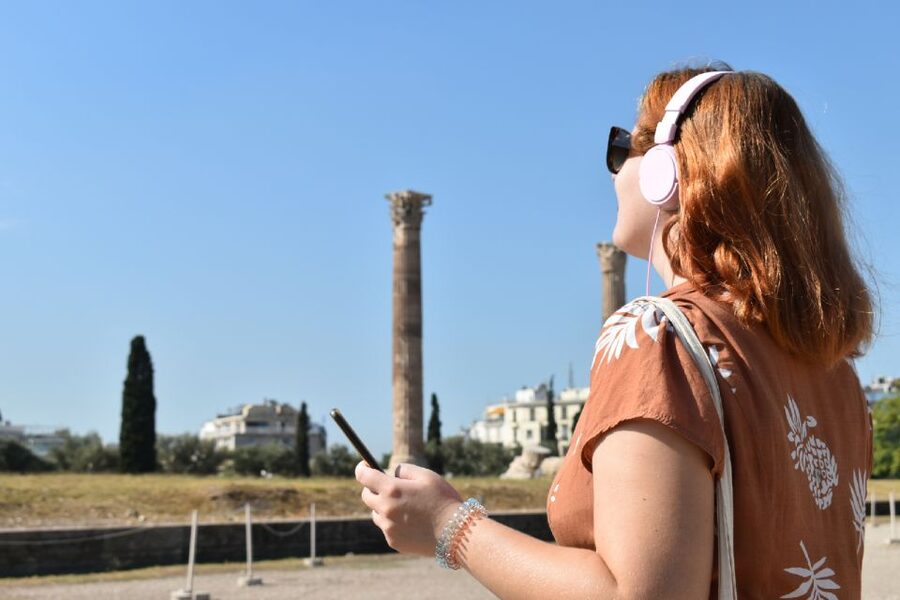
- You need your own working phone and headphones: The ticket includes digital access, not equipment.
- The experience takes one to two hours: It suits an independent visit, not a guided group with fixed commentary.
What the Temple of Olympian Zeus can still show you
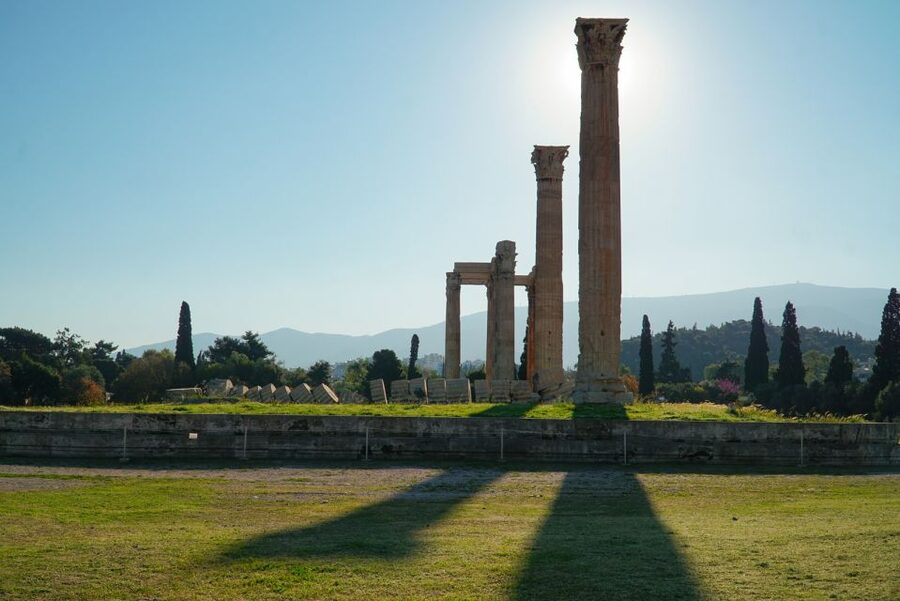
The Olympieion sits in central Athens, close to the familiar sights of the historic center. Its surviving columns are easy to recognize, but the site is more rewarding once you understand that this was not a small sanctuary with a few decorative stones.
This was planned as a colossal temple dedicated to Zeus, the chief god of the ancient Greek world. The building project stretched across roughly 700 years. That long delay is part of the story, because the temple changed with the ambitions of the people trying to finish it.
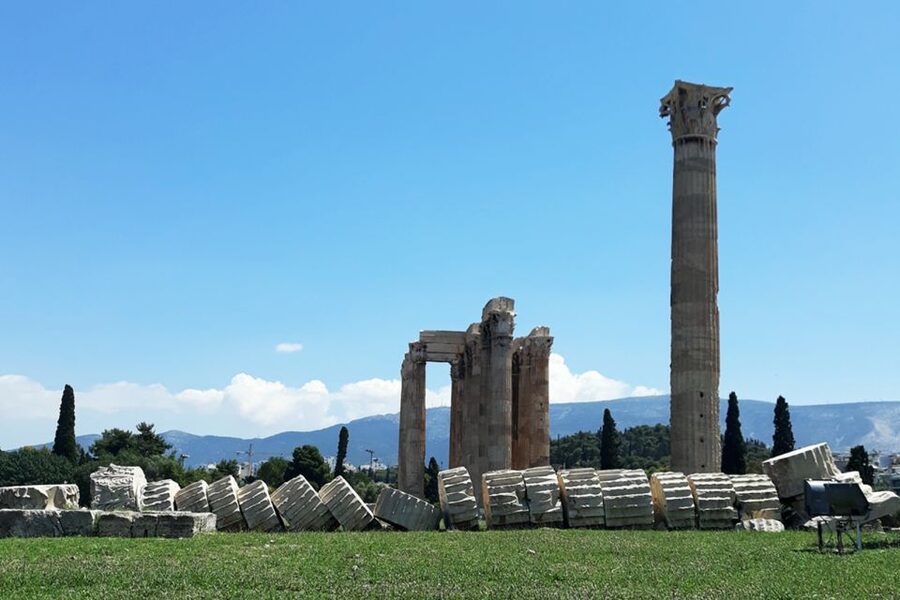
You will not walk into an intact interior. The roof, walls, statues, and much of the original structure are gone. What remains is a group of massive columns, foundations, scattered architectural pieces, and the open space that lets you judge the building’s size.
That can create a mixed first impression. If you want rooms, painted decoration, and a complete monument, this site may feel spare. If you enjoy reading ruins and using a good explanation to rebuild a vanished place in your mind, the audio adds real value.
More self-guided temple routes in Greece:
- Athens: Cape Sounio & Poseidon Temple Trip with Audio Guide
★ 4.4 · 4,521 reviews - Temple of Poseidon and Cape Sounion Sunset Tour with Audio Guide
★ 4.5 · 542 reviews - Athens: Cape Sounion and Poseidon Temple Sunset with Audio Guide
★ 4.5 · 405 reviews
Starting at the Great Propylon
The visit begins near the Great Propylon, the monumental gateway that once announced the temple precinct. This is a useful starting point because the audio does not treat the site as a pile of columns. It sets the scene with mythology, politics, and the growth of Athens.
One early story concerns the Great Deluge, a flood linked to divine anger and Zeus. The tale gives the audio a mythic opening, then leads you toward the physical remains. You hear how ancient Athenians connected their city to heroic founders, powerful gods, and stories of survival.
The gateway also helps you think about arrival in ancient times. A visitor approaching the sanctuary would have passed through a formal entrance before reaching the temple. Today, the structure is incomplete, but the route still gives you a sense that this was once a carefully planned sacred precinct.
You should keep your phone charged before entering. The audio is delivered through an app, and the experience works best when you can listen without stopping every few minutes to solve a battery or connection problem. Offline content and an offline map are included, which is useful if you do not want to use mobile data.
The columns and the long road to completion
The central stretch of the visit focuses on the temple itself. Move slowly around the surviving columns rather than rushing straight through. Their height is difficult to judge in photographs, while standing near them makes their scale more convincing.
The audio explains the temple’s turbulent building story. Work began in the ancient Greek period, but the project was repeatedly delayed and reshaped. Political changes mattered as much as engineering. A ruler could support the temple to display wealth, divine favor, and control over the city, while a later ruler might abandon or alter the plan.
The story reaches the Roman period, when Emperor Hadrian helped complete the temple. That detail gives the monument another layer. Hadrian was not simply finishing an old construction job. He was linking his rule to the prestige of Athens and to the celestial authority of Zeus.
The audio also connects the temple with an Athenian tyrant who wanted to place his power beside that of the gods. This is where the site becomes more than an architectural stop. The columns are political statements in stone. Their size says something about the resources, labor, and authority required to build them.
I find this historical framing especially useful for people who already plan to visit the Acropolis. The Acropolis shows the city’s most famous hilltop sanctuary and its surviving classical buildings. The Olympieion offers a different lesson: grand plans could take centuries, and later rulers could use ancient monuments to make claims about their own power.
Myths of Theseus and the making of Athens
The audio also brings in the story of Theseus and the bloody founding traditions of Athens. This is not a soft, polished origin story. It includes violence, rivalry, and the hard-edged myths that ancient cities used to explain their beginnings.
Theseus matters here because the temple’s story is tied to the city around it. Athens was not just a collection of monuments. It was a place that told stories about heroic founders, divine punishment, political struggle, and civic identity.
You may find the myth sections more dramatic than the architectural explanations. That is helpful if you enjoy classical mythology, though listeners seeking only dates and construction details may find the narrative a little theatrical. The audio aims to tie the city’s coming of age to the temple’s long construction, so the focus moves between myth, politics, and physical remains.
Use the replay function if a section catches your interest. One useful feature of this format is that you do not have to keep pace with a guide or a group. You can listen again, look closely at the columns, then continue when you are ready.
More Audio Guides in Greece:
- Epidaurus: Temple of Asclepius & Theatre with optional audio
★ 4.2 · 241 reviews - Epidaurus: Temple of Asclepius E-ticket & Audio Tour
★ 3.7 · 17 reviews - Athens: Cape Sounion &Temple of Poseidon Sunset Tour & Audio
★ 4.7 · 3 reviews - Rome’s Iconic Temple: Pantheon Audio Guided Tour with Fast Access
★ 4.0 · 1,188 reviews
Storm damage and nineteenth-century warnings
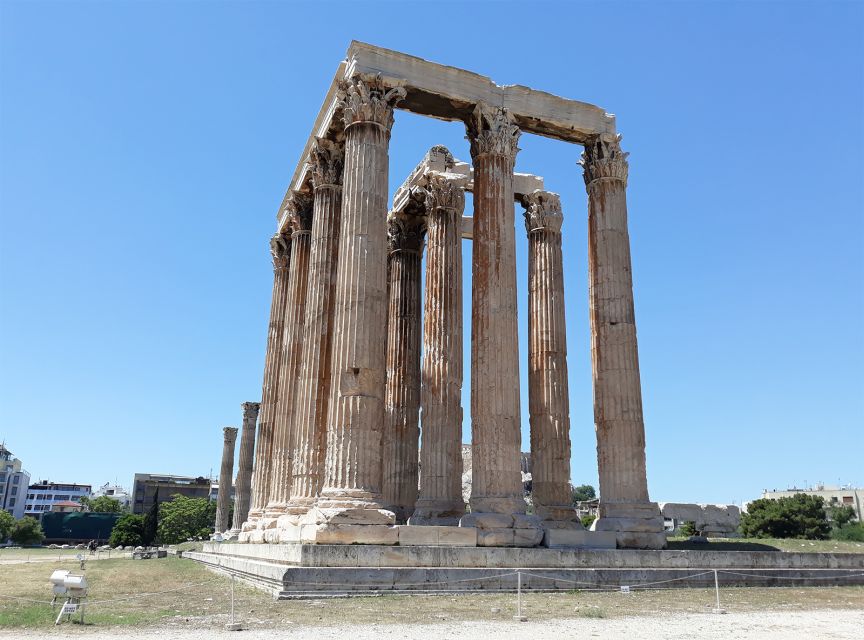
The story does not stop in antiquity. The audio describes a fierce thunderstorm that caused serious damage to the temple. That reminder is important because ancient monuments did not simply disappear at one moment. Weather, earthquakes, reuse, neglect, and human decisions all helped shape what you see now.
The tour also moves into nineteenth-century Athens, when locals reportedly had premonitions of disaster. These later stories show that the ruins remained part of the city’s imagination long after the ancient religious system had faded.
This later history gives the site a longer timeline than many short archaeological visits. You are not only looking backward to classical Greece. You are also considering how modern Athens lived beside these ruins and interpreted their condition.
The audio’s broad sweep is one of its strongest features. It covers gods, tyrants, emperors, storms, and modern fears. The tradeoff is that you may not receive a detailed explanation of every visible stone. If you want a precise architectural inventory, a specialist guidebook or live guide would suit you better.
Ending at the Balaneion bathhouse
The final stop is the Balaneion, an ancient public bathhouse near the temple. This is a smart ending because it changes the scale of the visit.
The temple represents divine power and imperial ambition. The bathhouse points toward ordinary routines. Public bathing was linked to washing, rest, social contact, and physical care. At the Balaneion, you can think about how people used the ancient city in practical ways, not only how rulers and priests presented it.
Do not expect a complete bath complex with all its rooms operating before you. You are seeing remains, and the audio helps you picture their purpose. The point is not visual drama. It is the chance to imagine everyday life alongside the great religious monument.
This final stop also keeps the visit from becoming a single-note parade of giant columns. You begin with myth, move through power and construction, and finish with a more human question: how did people spend time, clean themselves, and meet others in the ancient city?
How the phone audio tour works
The experience includes a secure promo code that gives you access to the audio after you download the app. It works on Android and iOS smartphones, with audio available in English, French, German, Italian, Spanish, and Greek.
You do not receive a live guide. That matters when you decide what kind of visit you want. A live guide can answer questions, adjust the pace, and point out small details in person. This audio tour gives you privacy and control, but any questions you have will need to wait until you research them later.
Bring headphones. The phone speaker may be hard to hear in an open archaeological site, especially if other people are nearby. A charged smartphone is essential, and you should check compatibility before booking. The app does not support Windows phones, iPhone 5 or 5C and older models, older iPod Touch devices, or older iPads listed in the access information.
The offline map and offline audio are practical advantages. You can avoid roaming charges and keep listening if the signal is weak. Download everything before you arrive rather than relying on the entrance area for a last-minute setup.
Is $30 a fair price?
At $30 per person, the price is not a bargain admission ticket. You are paying for the entry fee plus digital audio access and convenience. The value depends on how much you want the story.
If you are happy to look at the columns for a few minutes, take photographs, and continue walking, you may not feel the cost is justified. One criticism of the experience is that much of the site can be viewed from outside, and the temple has far fewer remains than the Acropolis.
I see better value if you enjoy self-guided visits and want context without joining a group. The ability to replay the audio is useful, especially if you want to sit on one of the shaded benches and take your time. The site has places to sit, and that makes the one to two-hour duration manageable in hot weather.
EU citizens aged 0 to 25 can enter free with identification, though they must wait in line to show an ID card or passport. Children aged five and under from non-EU countries can receive free admission with a passport confirming age and nationality. If either rule applies to you, check the admission procedure before paying for a standard ticket.
Timing, comfort, and access
Plan for one to two hours, depending on how often you pause and replay sections. The audio does not force you to follow a strict pace, so you can make the visit shorter or stay longer around the temple.
Comfortable shoes matter because archaeological sites often involve uneven ground. Sunglasses, a sun hat, and water are sensible choices for Athens, particularly during the warmer months. Food and drink are not included.
The experience is not suitable for wheelchair users. Baby strollers and pets are not allowed. These restrictions are important for families and anyone who needs step-free access or mobility equipment.
Construction work is scheduled to begin in front of the archaeological site exit on October 7, 2025. The exit will be closed, and the accessible entrance will temporarily serve as both the entrance and exit. Check current arrangements if you visit after that date, since the route may feel less straightforward.
Who will enjoy this visit most?
I would choose this experience if you like history in short, manageable chapters and prefer to set your own pace. It suits solo visitors, couples, and small groups who do not want a guide speaking constantly beside them.
It is also a good add-on for anyone interested in mythology. The stories of Zeus, the Great Deluge, Theseus, and the temple’s political uses give the columns a stronger sense of place.
You may want to skip it if your Athens schedule is tight and you have already decided that the Acropolis is your only archaeological priority. The Olympieion is not a replacement for the Acropolis, and its remains are less complete. It works best as a separate stop for people who want to see how different periods of Athenian history overlap.
Should you book the Temple of Olympian Zeus audio tour?
Book it if you want more than a quick look at the columns and value an independent audio walk. The strongest reasons are the clear 700-year building story, the ability to replay the commentary, the myths tied to Athens, and the unusual finish at the Balaneion bathhouse.
Skip it if you dislike phone-based tours, need a live guide, or mainly want a complete monument. At $30, the experience earns its price through interpretation rather than the number of surviving ruins. Bring headphones, download the content in advance, and allow enough time to sit, listen, and picture the missing temple.
FAQ
How long does the Temple of Olympian Zeus experience take?
The stated duration is one to two hours. Your timing depends on how often you pause, replay the audio, and look around the site.
Is a live guide included?
No. This is a self-guided audio tour, and no live guide accompanies you.
Which languages are available?
The audio guide is available in English, French, German, Italian, Spanish, and Greek.
Do I need a smartphone?
Yes. You need a compatible Android or iOS smartphone to download and use the audio tour.
Are headphones included?
No. You need to bring your own headphones.
Does the tour work offline?
Yes. Offline audio content and an offline interactive map are included, helping you avoid roaming charges.
Is the entrance ticket included?
Yes. The package includes an adult e-ticket for the Temple of Olympian Zeus.
Can EU citizens aged 0 to 25 enter free?
Yes. EU citizens aged 0 to 25 are entitled to free admission, but they must wait in line and show an ID card or passport.
Are children aged five and under admitted free?
Children up to age five from non-EU countries can receive free admission by showing a passport to confirm their age and country of origin.
Is the experience suitable for wheelchair users?
No. The activity is not suitable for wheelchair users. Baby strollers and pets are also not allowed.
Temple visits we reviewed lately in Greece
- Rethymno: Melidoni Cave and Arkadi Monastery Half-Day Trip★ 4.3 · 120 reviews
- Rethymno: e-Bike tour to Arkadi monastery★ 4.7 · 7 reviews
- Private tour Athens, Cape Sounio, Temple Poseidon, Riviera★ 5.0 · 4 reviews
- Private Rib Cruise to Poseidon Temple at Sounio Cape★ 5.0 · 8 reviews
- Patmos Guide Tour to St. John Monastery, Cave of Apocalypse★ 4.2 · 4 reviews
- Mykonos: Highlights Tour with Panagia Tourliani Monastery★ 4.9 · 140 reviews
- Kastraki: Meteora Morning Horse Riding with Monastery Visit★ 5.0 · 27 reviews
- Meteora: Hiking Tour with Local Guide and Monastery Visit★ 4.8 · 20 reviews
Greece Temple Tours, compared.
Athens: Cape Sounion & Poseidon Temple Sunset Half-Day Trip
Read our review →
Athens: Cape Sounio & Poseidon Temple Trip with Audio Guide
Read our review →
Cape Sounion and Temple of Poseidon Half-Day Small-Group Tour from Athens
Read our review →
Cape Sounion & Temple of Poseidon: Small Group Tour
Read our review →
Rhodes: Symi Island & Panormitis Monastery Day Trip by Boat
Read our review →
Athens: Cape Sounion & Temple of Poseidon Sunset Experience
Read our review →
Meteora Sunset with Monastery & Hermit Caves Tour in Small Group
Read our review →
Athens Half Day Tour, Acropolis, Parthenon, Temple of Olympian Zeus & Hephaistus
Read our review →This tour also ranks in