
Review · ATHENS
Athens: Agora and Hephaistos Temple Entrance Ticket
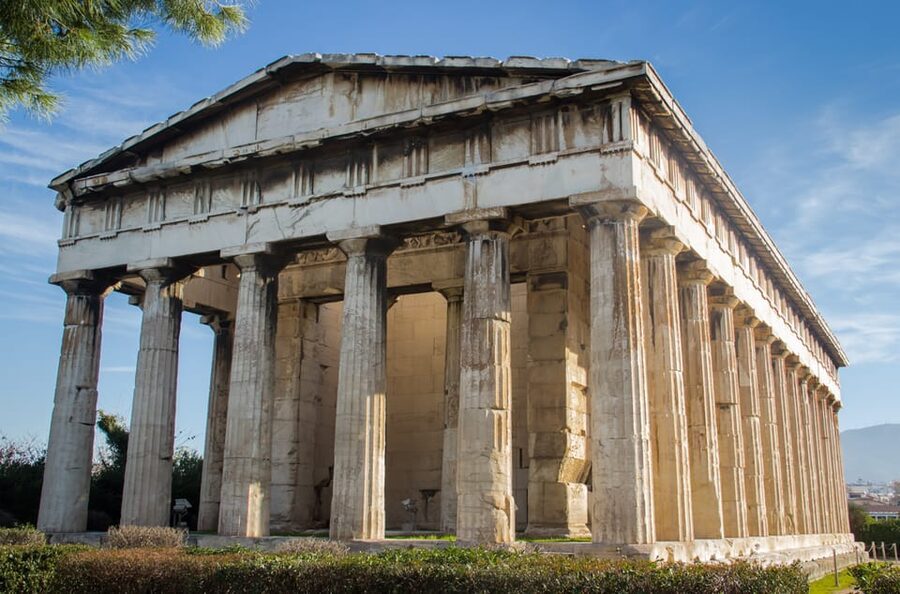
The Temple of Hephaistos is the prize here: a complete-looking Doric temple set above the remains of ancient Athens. I like that this ticket gives you time to wander the Agora at your own pace, and I like the way the site connects grand monuments with the ordinary political and market life of the city. The church linked with St. Paul adds another layer to the visit.
The catch is practical, not ancient. The entrance directions have caused confusion, and the entry point has changed. The ticket is also locked to your chosen time, so arriving late can turn a simple visit into a stressful one.
Key points to know before you go
- Hephaistos Temple is the star: It is considered the best-preserved ancient Greek temple, and you can see its columns and structure without having to imagine the whole building from scattered ruins.
- The Agora explains daily Athenian life: This was a marketplace, meeting place, and political center, not simply a field of broken stones.
- The entry is now at Thissio Square: Visitors enter and leave from Jacqueline de Romilly Square on Apostolou Pavlou, rather than the older point shown in some directions.
- The audio guide is optional: It is available in English, German, Spanish, Italian, and French, but some people find the route difficult to follow.
- Your time slot matters: Entry is allowed only at the selected time, or 15 minutes before or after.
- Bring sun protection: The site is open and can involve uphill walking, with limited shade.
Why the Ancient Agora deserves time beyond the Acropolis
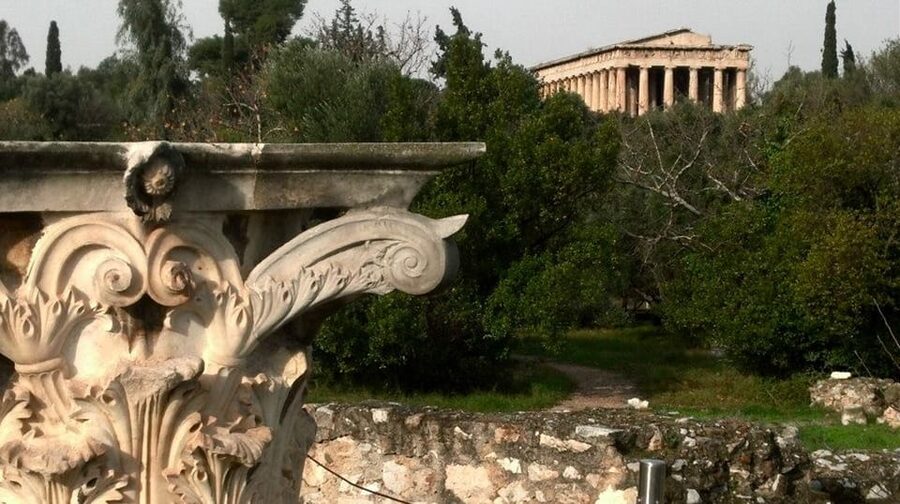
The Acropolis gives you Athens at its grandest. The Ancient Agora gives you Athens at street level, at least as much as an archaeological site can. This was where people met, traded, argued, worshipped, conducted politics, and handled the business of city life.
That difference makes the Agora a useful second stop after the Acropolis. Instead of looking mainly at temples built on a rocky height, you walk through the remains of the city below. Foundations, columns, paths, and partial walls help you picture a working neighborhood rather than a single heroic monument.
I would allow at least two hours if you want to walk slowly and read the signs. One visitor spent four hours seeing the site, which is possible if you include the museum and pause often. You can make the visit shorter, but rushing would reduce the Agora to a quick photograph of Hephaistos Temple.
The grounds are broad enough to feel like a walk, not just a sequence of indoor rooms. You will be moving between open areas and uphill sections, so comfortable shoes matter. A hat, water, sunscreen, and a camera are sensible choices, especially in warm weather.
More Entry Tickets in Athens:
- Afternoon English Tour: Sounion with Temple of Poseidon Ticket
★ 4.0 · 591 reviews - Sounion tour with Official Guide &ticket for Poseidon Temple
★ 4.1 · 202 reviews - Athens: Temple of Olympian Zeus Entrance Ticket
★ 3.5 · 43 reviews
Finding the new entrance at Thissio Square
The most important detail is also the easiest to miss. The entrance and exit are at Thissio Square, also called Jacqueline de Romilly Square, on the pedestrian street of Apostolou Pavlou. This arrangement was scheduled to remain in place through the end of 2025, so check the current instructions if your visit is later.
Older maps and app coordinates have pointed some ticket holders toward a closed or unused entrance. That has led to extra uphill and downhill walking, with some people losing around 10 minutes or worrying about missing their slot. The audio guide itself has also been reported to begin from the former entrance, which can make the opening instructions confusing.
My advice is simple: do not rely only on the pin in your phone. Check the current entrance wording before you leave, then head for Thissio Square. If you see a locked gate or no ticket staff, do not wait around. You may be at the old access point.
Once at the correct entrance, the process is straightforward. Scan your ticket at the validating machines and walk in. There is no live guide meeting you, and you do not need to wait for a group to form.
Walking through the Agora’s political and market center
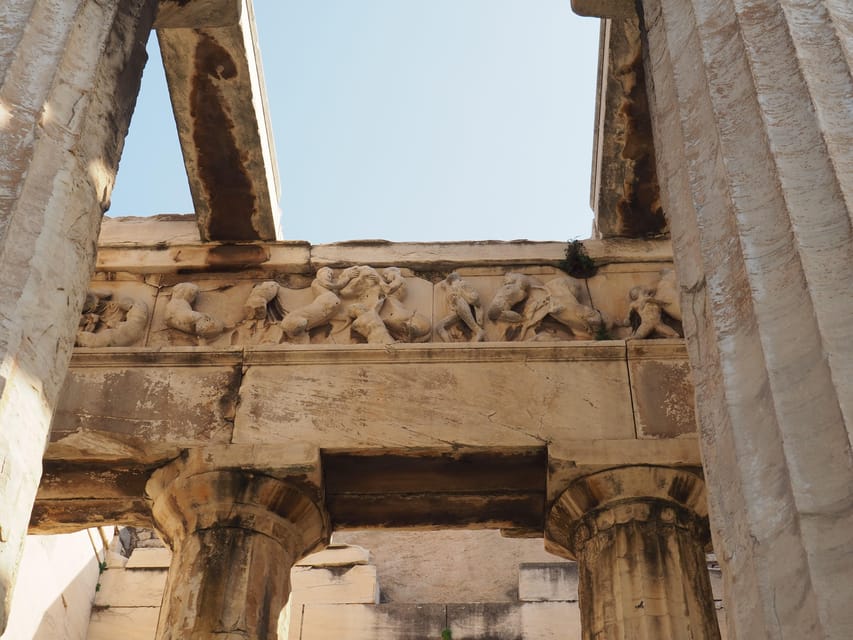
Inside, the Agora can initially look like what you would expect from an archaeological site: foundations, stones, low walls, and the outlines of buildings that are no longer standing. Give it a few minutes, though, and the plan begins to make sense.
This was not just a marketplace in the modern shopping sense. It was part meeting place, part political forum, part public stage, and part commercial district. The remains show how much of Athenian life took place outside the famous hilltop temples.
The best way to approach the site is to use the surviving buildings as anchors. Read the signs, then look across the open ground and imagine people moving between public buildings, workshops, religious spaces, and market stalls. The Agora rewards context more than a quick checklist.
You might find that the scattered ruins are less immediately impressive than the Acropolis. That is fair. The value here comes from understanding how the city functioned, not from seeing a single enormous monument. If you prefer complete buildings and dramatic views only, the visit may feel less exciting at first.
The setting does provide a fine view back toward the Acropolis. One of the pleasures is turning around from the Agora and seeing the famous hill from a lower, more grounded position. It helps connect the two sites geographically and historically.
The Temple of Hephaistos, the visit’s main reward
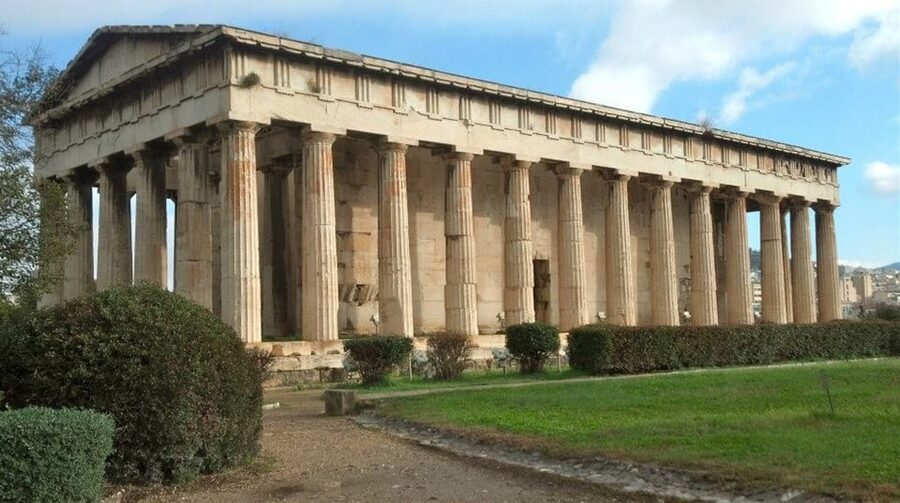
The Temple of Hephaistos is the clearest reason to buy this ticket. It is often described as the best-preserved ancient Greek temple in the world, and the description is easy to understand once you see it.
Its Doric columns, pediment, and overall form remain remarkably legible. You do not have to reconstruct the entire building from a few standing stones. The temple still reads as a temple.
That makes it especially useful if you want to understand ancient Greek architecture. The Acropolis temples are more famous, but their survival is less complete. At Hephaistos, you can study the proportions and repeated columns in a way that is difficult at more damaged sites.
The temple sits on higher ground within the Agora, so the walk to it involves an incline. There is a reward at the top beyond the building itself: you can look over the archaeological grounds and back toward the Acropolis. Bring water, since there is not much shade in parts of the site.
Photography is easy here, but do not treat it as only a photo stop. Walk around the temple if access and site rules allow, examine the surviving details, and take time to compare the building with what you have already seen on the Acropolis.
More Temple Tours around Athens:
- Athens: Cape Sounion & Poseidon Temple Sunset Half-Day Trip
★ 4.8 · 8,241 reviews - Athens: Cape Sounio & Poseidon Temple Trip with Audio Guide
★ 4.4 · 4,521 reviews - Cape Sounion and Temple of Poseidon Half-Day Small-Group Tour from Athens
★ 4.5 · 3,205 reviews - Cape Sounion & Temple of Poseidon: Small Group Tour
★ 4.7 · 1,945 reviews
The Church of the Holy Apostles and a later chapter
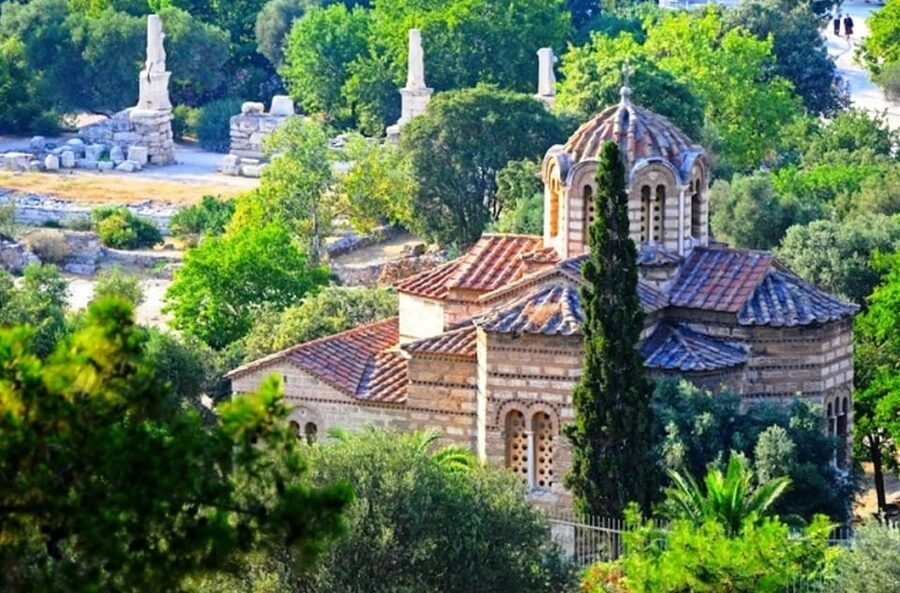
The Church of the Holy Apostles provides a sharp change from the ancient Greek remains. It is an important reminder that the Agora continued to matter long after the classical city changed.
The church is connected with St. Paul, who is said to have preached here. That link gives the site interest for anyone following early Christian history, but the church is also valuable as a surviving later building within an ancient setting.
Rather than treating the Agora as frozen in one period, the church helps you see layers of use. Greek civic life, Roman-era changes, and Christian worship all belong to the story of this ground. You are not simply moving from one ancient ruin to another.
The church is one of the included sights, along with the Temple of Hephaistos. Its presence also breaks up the long walk through foundations and open ground. If you enjoy historical sites that show several periods in one place, this will add real value.
Choosing the self-guided audio tour
You can add a self-guided audio tour in English, German, Spanish, Italian, or French. It is presented by professional licensed guides and storytelling specialists, with historical explanations and selected stories to accompany the walk.
An audio guide can help you make sense of low walls and vanished buildings. It gives you a narrative to follow and can add small details that a bare site plan may not explain. One especially useful feature is the map, which can help you understand where you are within the Agora.
Still, I would not call the audio option essential. Some people find the route hard to follow because the commentary begins at the former entrance rather than the current one. Another visitor found the written signs easier to follow than the recorded tour.
If you choose the audio guide, get your bearings before pressing play. Start from the current entrance, compare the audio map with the actual site, and do not feel obliged to follow every instruction in order. If the commentary sends you toward a closed gate or a route that does not match the grounds, use the signs and map instead.
The audio guide is best for you if you like background stories while walking alone. Skip it if you prefer to read at your own pace, or if you already have a strong guidebook covering the Agora.
What the $30 ticket is really buying
The listed price is $30 per group of up to one person, so in practical terms this is an adult admission ticket rather than a group bargain. Its value depends on your timing and the kind of visit you want.
Pre-purchasing can save time when the site is busy or when you want a specific entry period. Several people found that scanning the ticket made entry easy, and one person was able to move past a long line. The benefit is convenience and certainty, not necessarily a lower price.
On quieter days, you may find tickets available at the site and decide that booking ahead cost more than necessary. One visitor felt exactly that after finding few people waiting. Since the ticket is non-refundable and cannot be changed to a different date or time, flexibility has a price.
The time slot is important. You can enter only at the chosen time, or within 15 minutes before or after. Do not book an opening time casually if you expect to arrive later. One visitor booked for the time the site opened without realizing it was also the required entry time.
The standard offer is an adult-price ticket for everyone, regardless of age. From April 1, 2025, EU citizens under 25 and non-EU citizens under 18 can receive free admission by showing identification at the ticket booth. People with disabilities can also receive free admission with a Disability Certificate. This booking does not appear to be the right choice if you qualify for free entry and are comfortable handling admission at the booth.
How long to stay and how hard the walk feels
The activity is valid for one day, but that means you have one day for the selected entry, not unlimited flexibility across several dates. You should plan around the time printed on the ticket.
The walking is manageable for most people, but the site is not a flat indoor museum. You may walk uphill toward Hephaistos Temple, cross open ground, and spend time standing in the sun. A summer visit can feel tiring because shade is limited.
Wheelchair access is available, but the archaeological setting still includes open paths and uneven historic ground. If mobility is a concern, allow extra time and confirm the current access arrangements when booking.
A relaxed visit might look like this:
- Enter at Thissio Square and scan your ticket.
- Get oriented with the site map before starting the audio guide, if selected.
- Walk through the central Agora remains and read the signs.
- Visit the Church of the Holy Apostles.
- Continue uphill to the Temple of Hephaistos.
- Allow time for the site museum if it is open during your visit.
- Finish with views toward the Acropolis and a final walk through the grounds.
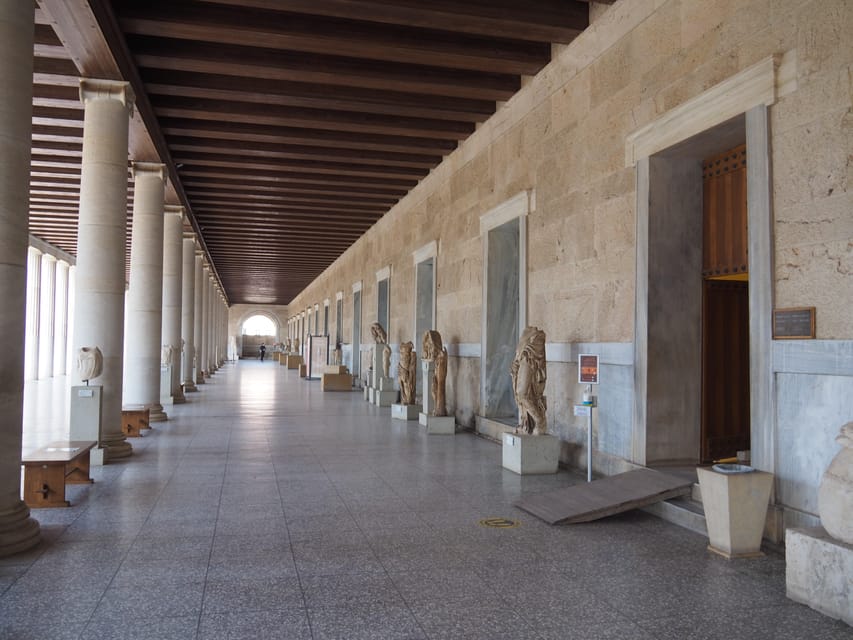
The museum deserves attention if you have the energy. It can make the stones and foundations easier to understand by showing objects connected with the site. The ticket information specifically includes the temple and church, so confirm what your admission covers if the museum is a main reason for booking.
Who should book this Agora ticket
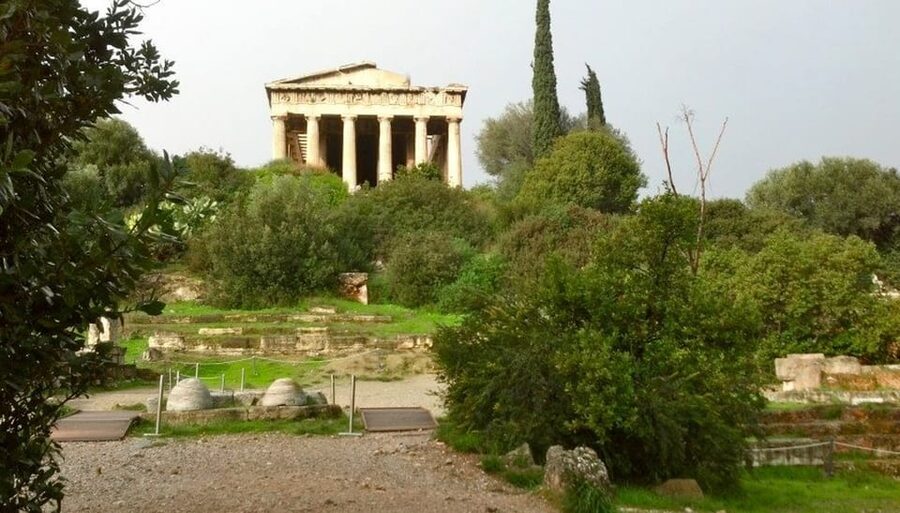
I would recommend it to someone who has already seen, or plans to see, the Acropolis and wants a fuller picture of Athens. It is also a good fit if you like self-guided visits, ancient architecture, and sites where political and everyday life matter as much as famous monuments.
Families can use the open grounds to keep moving, though children may have limited patience for foundations without an audio guide or some preparation. Architecture fans should make the Temple of Hephaistos a priority. Anyone interested in early Christianity will appreciate the Church of the Holy Apostles.
I would think twice if your schedule is tight, your entry time is uncertain, or you dislike walking in direct sun. I would also avoid paying for the audio option unless you are comfortable navigating it yourself.
Should you book it?
Book this ticket if Hephaistos Temple and the wider story of Athens appeal to you. The temple is genuinely special, and the Agora adds the civic setting that the Acropolis cannot provide.
Book ahead when you need a fixed time or expect a busy day. Buy at the site instead if you want flexibility and are visiting during a quiet period, provided tickets remain available. Above all, verify the entrance at Thissio Square and arrive within the narrow time window. That small bit of planning can turn a confusing start into an easy, rewarding walk through ancient Athens.
FAQ
Where do I enter the Ancient Agora?
Visitors enter and leave at Thissio Square, also called Jacqueline de Romilly Square, on the pedestrian street of Apostolou Pavlou. This entrance arrangement was scheduled to remain in place until the end of 2025.
How long is the ticket valid?
The ticket is valid for one day. You must enter during the selected time slot, or up to 15 minutes before or after it.
Is a live guide included?
No. This is an entrance ticket without a live guided tour. A self-guided audio tour is available if you select that option.
Which languages are available for the audio guide?
The audio guide is available in English, German, Spanish, Italian, and French.
What does admission include?
Admission includes entry to the Temple of Hephaistos and the Church of the Holy Apostles. The self-guided audio tour is included only if you choose that option.
Can children use this ticket?
People of all ages can use the regular adult-price ticket, with everyone paying the full price under this offer. From April 1, 2025, EU citizens under 25 and non-EU citizens under 18 can receive free admission at the ticket booth by showing identification.
Can I change my date or entry time?
No. The travel date and entry time cannot be amended, and the activity is non-refundable.
Temple visits we reviewed lately in Athens
- Private tour Athens, Cape Sounio, Temple Poseidon, Riviera★ 5.0 · 4 reviews
- Private Rib Cruise to Poseidon Temple at Sounio Cape★ 5.0 · 8 reviews
- From Athens: Temple of Poseidon & Cape Sounio Half-Day Tour★ 4.6 · 6 reviews
- From Athens: Temple of Apollo and Oracle Delphi Day Trip★ 4.3 · 51 reviews
- From Athens: Lake Vouliagmeni Spa & Temple of Poseidon Tour★ 4.6 · 156 reviews
- From Athens: Private Anc. Corinth, Temple of Hera, Blue Lake★ 5.0 · 6 reviews
- Athens to Meteora, Day Trip with Local Guide,up to 9 people★ 4.8 · 11 reviews
- From Athens: Cape Sounio and Temple of Poseidon Private Tour★ 4.6 · 33 reviews
Athens Temple Tours, compared.
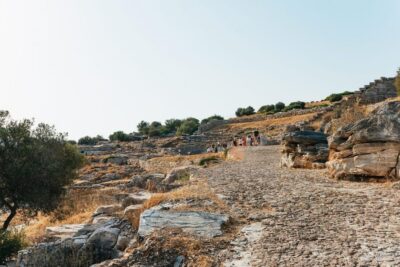
Athens: Cape Sounion & Poseidon Temple Sunset Half-Day Trip
Read our review →
Athens: Cape Sounio & Poseidon Temple Trip with Audio Guide
Read our review →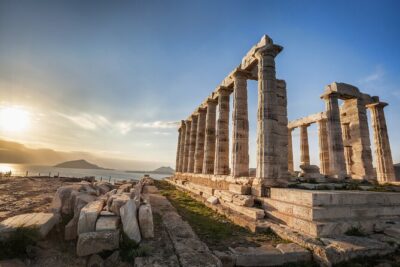
Cape Sounion and Temple of Poseidon Half-Day Small-Group Tour from Athens
Read our review →
Cape Sounion & Temple of Poseidon: Small Group Tour
Read our review →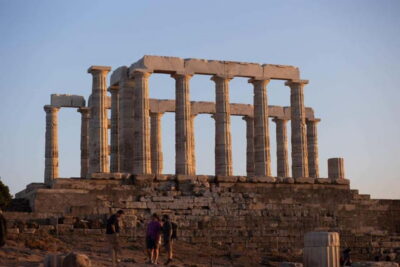
Athens: Cape Sounion & Temple of Poseidon Sunset Experience
Read our review →
Athens Half Day Tour, Acropolis, Parthenon, Temple of Olympian Zeus & Hephaistus
Read our review →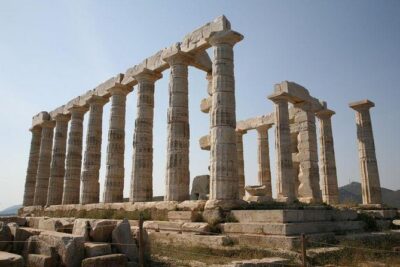
Afternoon English Tour: Sounion with Temple of Poseidon Ticket
Read our review →
Lake Vouliagmeni Thermal Spa And Temple Of Poseidon Private Full Day Tour
Read our review →This tour also ranks in