
Review · AGRIGENTO
Agrigento: Valley of the Temples Private Archeological Tour
The Valley of the Temples gives you one of Sicily’s clearest links to ancient Greece. In two hours, you walk among huge Doric columns, ruined sanctuaries, and the remarkably complete Temple of Concordia while a private guide explains what you are seeing.
I like the focused route and the one-to-one format. You get the major temples without trying to cover every corner of Agrigento’s enormous archaeological park, and a private guide can spend time on the subjects that interest you most. I also like that admission is included, so you can concentrate on the site rather than sorting out tickets.
The main drawback is the short running time. This is a brisk archaeological visit, not a full-day exploration of the 1,300-hectare park. You also need to reach the Juno ticket office on your own, bring water and sun protection, and note that the experience is not suitable for wheelchair users.
Key points to know before booking
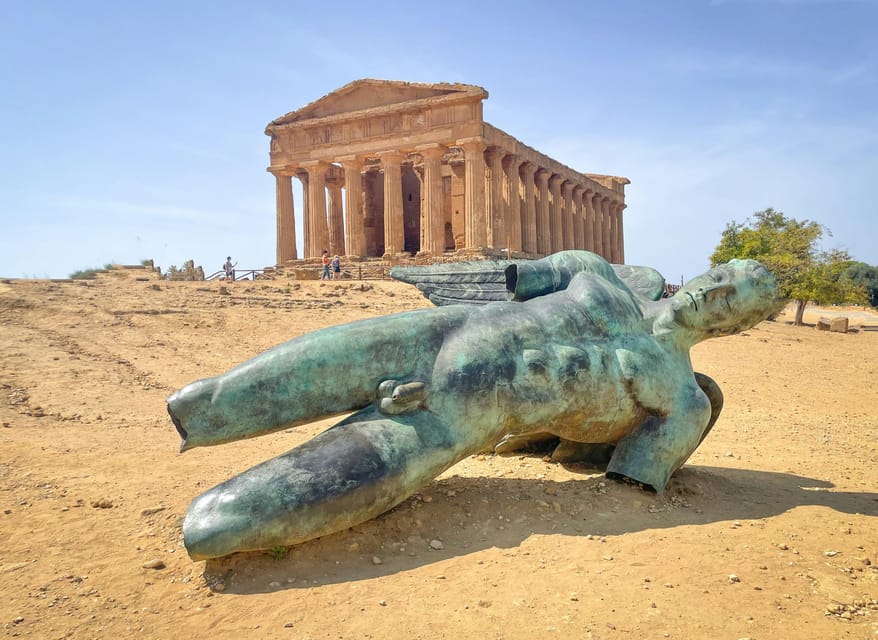
- The Temple of Concordia is the star of the route: This unusually well-preserved Greek temple makes the ancient building methods easy to understand.
- You visit four major temple areas: The route covers Hera, Concordia, Herakles, and Olympian Zeus, with guided explanations at each stop.
- A private guide changes the experience: Guides such as Liz and Sara have been praised for explaining engineering, Greek life, construction, and the long story of Agrigento.
- The tour lasts two hours: That is enough for the principal monuments, but not enough for every part of the archaeological park.
- The meeting point is specific: Your guide meets you in front of the ticket office at the Temple of Juno on Via Panoramica Valle dei Templi.
- The price reflects personal attention: At $164.26 per person, this is a premium visit, best suited to people who want interpretation rather than a quick walk among ruins.
Why the Valley of the Temples deserves a guided visit
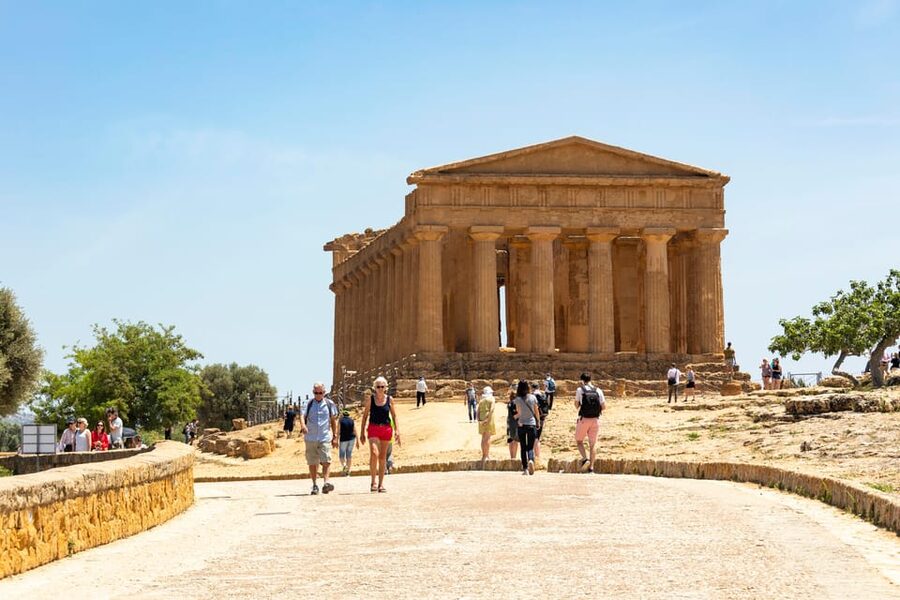
Agrigento was once known as Akragas, a Greek city famous in antiquity as one of the most beautiful cities of mortals. Its sacred ridge is lined with temples built in the Doric style, the severe Greek form recognized by heavy columns, plain capitals, and strong geometric lines.
Without context, the site can become a long collection of stone blocks. With a good guide, those blocks begin to make sense. You can learn how the temples were planned, what rituals took place inside them, and why the builders chose such large scale for religious buildings.
That interpretation is the real reason to book a private visit. The temples are impressive on their own, but the experience becomes more useful when someone explains the difference between a surviving structure and a field of scattered remains. One past guide, Sara, was especially praised for connecting construction and temple use with the wider story of Agrigento. Liz was also singled out for clear explanations and engaging storytelling. Guide assignments can change, so you should not book solely expecting either person, but those comments show the sort of service the experience aims to provide.
The setting also rewards a slower pace. The ridge gives you room to look across the ancient site and compare a standing temple with the broken remains of another. That contrast is one of Agrigento’s great lessons: time has not treated every building equally.
More Valley of the Temples Tours in Agrigento:
- Agrigento: Valley of the Temples Skip-the-Line Sunset Tour
★ 4.5 · 1,512 reviews - Agrigento: Valley of the Temples Ticket & App Audioguide
★ 4.3 · 1,160 reviews - Agrigento: Valley of the Temples E-Scooter Tour
★ 4.6 · 557 reviews
Meeting your guide at the Temple of Juno
Your visit begins at the ticket office of the Tempio di Giunone, or Temple of Hera Lacinia. The official meeting address is Via Panoramica Valle dei Templi, and the guide meets you in front of the ticket office.
This detail matters. Transportation to the meeting point is not included, so plan your route before the start time and allow enough time to find the correct entrance. The tour ends back at the same meeting point, which makes it easier to continue your day from there.
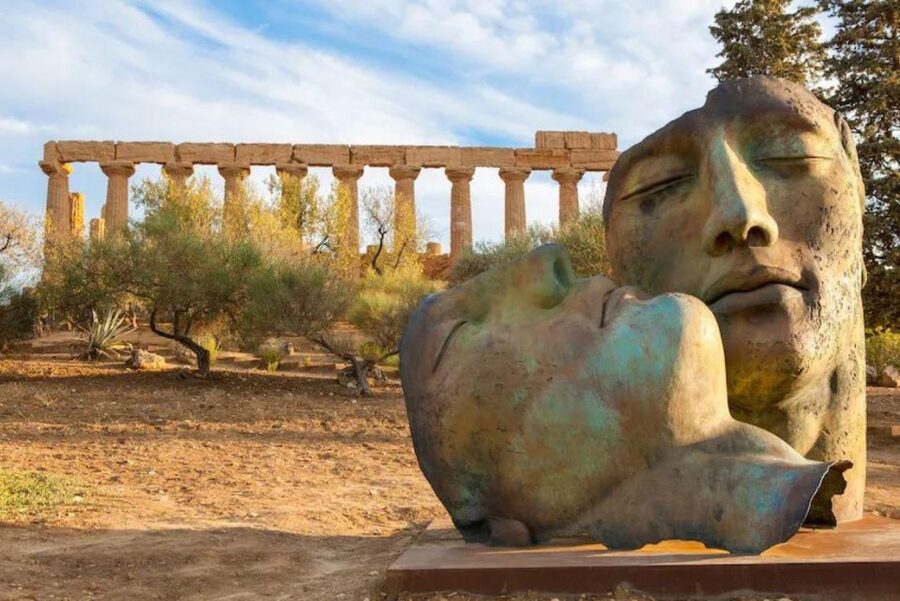
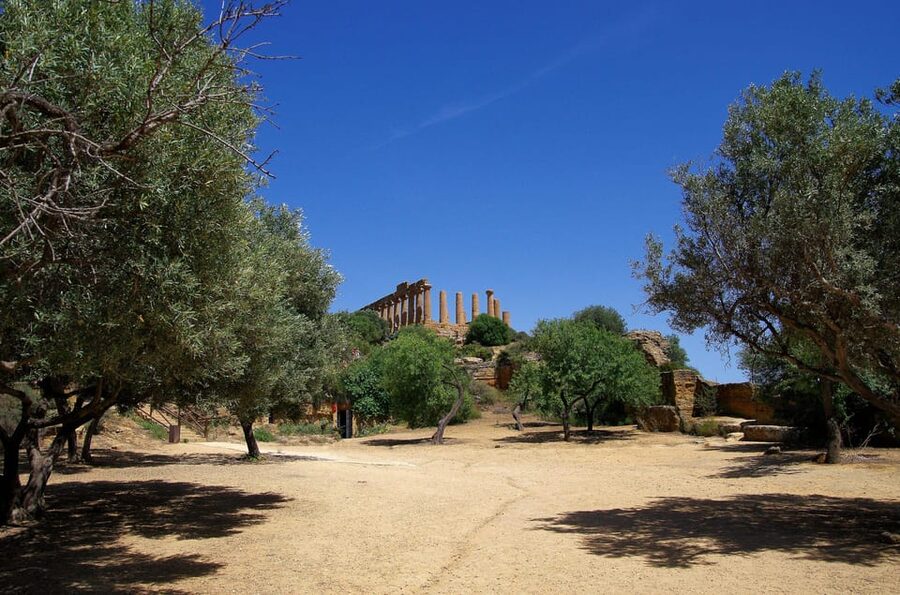
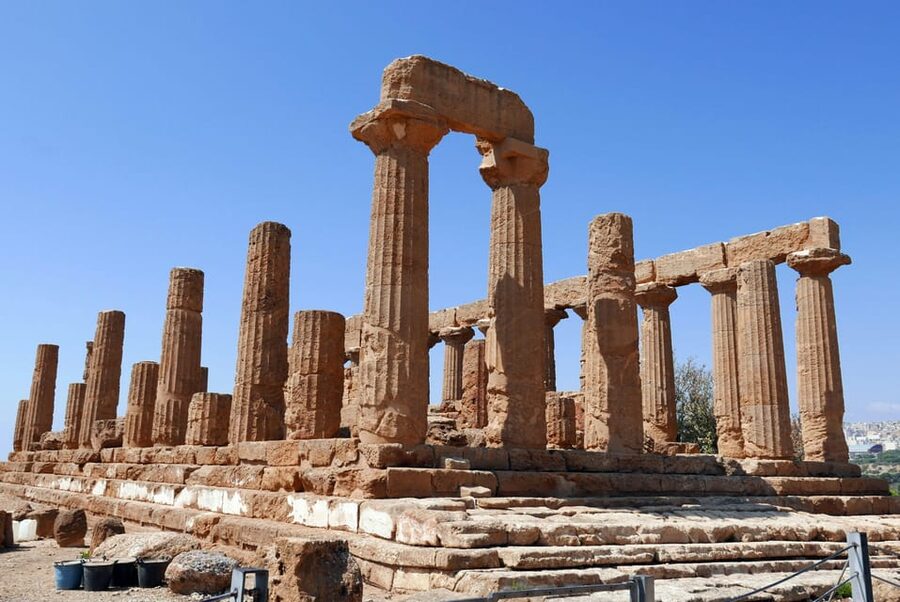
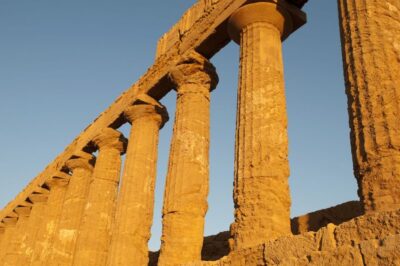
The opening stop is already one of the site’s major monuments. The Temple of Hera Lacinia sits at the eastern end of the sacred ridge and gives you a strong first look at the Doric style. The remains let you appreciate the temple’s high position and orderly columns, while your guide can explain how the sanctuary fitted into Greek religious life.
You should arrive wearing good walking shoes. The site is large, and the ground around ancient ruins is not always smooth. The operator specifically recommends comfortable clothing, water, and sunscreen. Those are not minor suggestions in Sicily, especially if you visit during a hot part of the day.
Temple of Hera Lacinia: a strong start on the sacred ridge
Hera, known to the Romans as Juno, was linked with marriage and family life. The temple’s name helps you remember that Agrigento changed hands and cultures over the centuries, with Greek and Roman names often attached to the same gods and monuments.
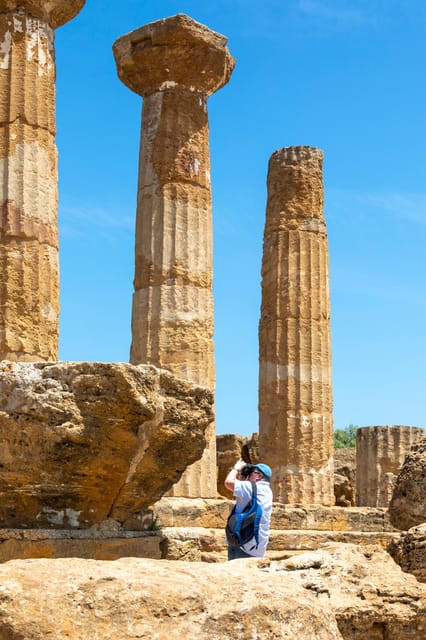
At this stop, you can study the basic parts of a Greek temple before moving on to more complex remains. Look at the rhythm of the columns, the raised platform, and the way the building was meant to be seen from a distance. Your guide can turn these visual details into an explanation of ancient engineering and religious practice.
The visit is guided rather than simply observational. That is useful because the first few minutes help you learn how to read the rest of the site. Once you understand the difference between a column drum, a platform, and a sanctuary area, later ruins become easier to interpret.
The limitation is time. Two hours does not allow for a long stop at every monument, so this part is likely to be concise. If Hera is your main interest, tell your guide early. A private group gives you more opportunity to shape the conversation than a large scheduled group would.
Temple of Concordia: Agrigento’s best-preserved monument
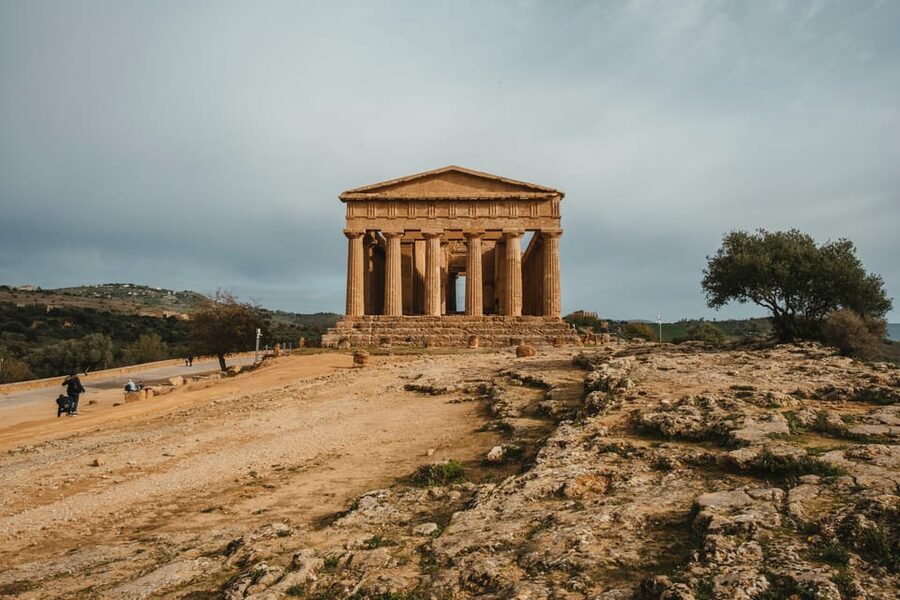
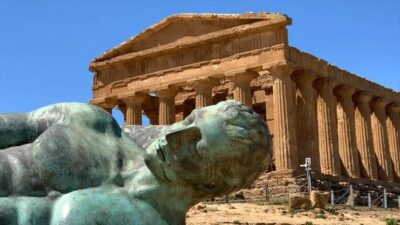
The Temple of Concordia is the emotional center of the visit. Its columns, walls, and overall form remain remarkably complete compared with most ancient Greek temples. You do not need much imagination to understand the basic shape of the original building.
This is where the value of a guide becomes especially clear. You can look at the temple and admire its proportions, but an explanation of the building process helps you see the work behind the appearance. Ancient builders had to quarry, transport, shape, and position enormous blocks with careful accuracy. The temple’s survival also gives you a better reference point for understanding the fragments elsewhere.
The name Concordia is Roman, and the structure belongs to the Greek world of Akragas. That mix of names and periods can be confusing, so listen for the guide’s explanation of how Agrigento’s identity changed over time. The site is not just a set of Greek temples frozen in one moment. It reflects later use, changing religious traditions, and centuries of wear.
I would give this stop the most attention. If you are choosing between a quick self-guided walk and this private experience, the Temple of Concordia is the clearest place to see what an informed explanation adds. You can ask about columns, worship, preservation, or the city’s place in the ancient Mediterranean.
More Temple Tours around Agrigento:
- Palermo: Valley of the Temples and Scala dei Turchi Day Trip
★ 4.1 · 463 reviews - Agrigento: Valley of the Temples Entry Ticket & Audio Guide
★ 4.1 · 268 reviews - Agrigento: Valley of the Temples Tour Skip-the-Line Entry
★ 4.4 · 156 reviews - Agrigento: Skip-the-Line Valley of the Temples Night Tour
★ 4.8 · 72 reviews
Temple of Herakles: broken columns and old myths
The Temple of Herakles, or Hercules, is older and far less complete than Concordia. Its scattered columns and foundations make it a different kind of stop. Instead of presenting a nearly whole building, it asks you to picture the structure from partial evidence.
The mythological connection gives your guide a natural way into the ancient Greek imagination. Herakles was a powerful hero whose stories traveled widely through the Greek world. The temple’s dedication helps show how mythology, civic identity, and worship were tied together.
This is also a useful stop for learning how archaeologists work. When only fragments remain, the shape and purpose of a building must be understood through surviving foundations, architectural pieces, historical accounts, and comparison with other temples. You may find this less immediately dramatic than Concordia, but it can be more rewarding if you enjoy questions about reconstruction.
Again, keep your expectations realistic. The tour provides a guided visit, not a specialist archaeological seminar. Its strength is the connection between the visible ruins and the larger Greek culture that produced them.
Temple of Olympian Zeus: imagining a lost giant
The Temple of Olympian Zeus was the most ambitious structure on this route. Today, you see fragments rather than a complete temple, but the scale of the remains points to an enormous original building.
Your guide helps bridge the gap between what survives and what once filled the site. The temple was intended to dominate the area, and its fallen pieces make the ambition of the project easier to grasp. This is the stop where storytelling matters most because the physical remains alone cannot show the full design.
The ruined condition also provides a useful contrast with Concordia. One building lets you study a Greek temple in near-complete form. The other shows how time, damage, and collapse can reduce a monumental project to partial evidence. Taken together, the two stops teach you more than either one could alone.
The description of the experience also includes the Sanctuary of the Chthonic Deities, associated with gods of the underworld and ancient rites. The named route focuses on the four principal temples, so you should confirm with your guide how much time is available for this sanctuary on your chosen visit. If included, it adds a different side of Greek religion, one concerned with earth, fertility, death, and ritual practice rather than only the grand public temples.
What a private guide adds to ancient stones
A private format matters most when you have questions. You can ask for more explanation of engineering, Greek daily life, myths, or the way the temples were used. In a large group, the guide must keep moving and follow one level of detail. Here, the conversation can be more personal.
The strongest praise attached to this experience concerns explanation. One account highlighted ancient engineering and Greek life. Another emphasized that Sara connected the construction and use of the temples with Agrigento’s centuries of change. Liz was appreciated for her stories and charm.
Those details suggest a useful way to approach the tour: do not treat it as a photo stop. Ask your guide to explain something you can actually see. How were the blocks placed? What did worshippers do here? Why has Concordia survived so well compared with Zeus? Specific questions will help you get more from the two-hour window.
Language choice is another practical advantage. Live guiding is available in English, Italian, French, Spanish, and German. A private guide speaking your strongest language can make technical terms and mythological stories much easier to follow.
Is $164.26 per person good value?
At $164.26 per person, this is not a bargain sightseeing walk. The price makes most sense if you value a private group, a live guide, and included entry tickets. You are paying for interpretation and personal attention, not transportation, meals, or an entire day at the archaeological park.
For a couple with a strong interest in ancient history, the cost may be reasonable because you can ask questions and keep the visit focused. It can also work well for a small private group that wants one guide rather than joining strangers. If you mainly want to see Concordia and take photographs, the price may feel high compared with visiting independently.
The two-hour length keeps the commitment manageable. You do not need to give up a full day in Agrigento, and the route covers the principal monuments. Still, the limited duration means you should view this as an introduction to the Valley of the Temples, not a complete exploration of the 1,300-hectare archaeological area.
Tickets are included, which removes one cost and one task. Food, drinks, and transportation are not included, so budget for those separately. The reserve now and pay later option also lets you hold a place without paying immediately, and cancellation is free up to 24 hours before the activity for a full refund.
Who should book this Agrigento tour?
I would choose this experience if you want the temples explained rather than simply photographed. It suits history fans, architecture lovers, first-time visitors to Agrigento, and anyone who finds ancient ruins difficult to interpret without help.
It is also a good match for couples or families who prefer a private conversation. The available languages make it practical for international visitors, and the short format fits neatly into a broader Sicily schedule.
I would hesitate if you need wheelchair access, since the activity is not suitable for wheelchair users. I would also think twice if you dislike walking in sun or uneven outdoor settings. Comfortable shoes, water, and sunscreen are essential parts of the plan.
Weather matters too. If conditions become too poor for a safe visit, the activity is canceled and you receive a full refund. Check the forecast, but do not assume every day will be cool or shaded.
Should you book it?
Book this private tour if you want the major temples placed into a clear story. The Temple of Concordia, the myths linked with Herakles, the remains of Olympian Zeus, and the sanctuary areas make more sense when someone connects them to Greek worship, engineering, and city life.
Skip it if you are happy exploring alone, want a full day across the entire park, or are looking for a low-cost ticket with no guide. For everyone else, the strongest reason to go is simple: a good guide can turn Agrigento from impressive ruins into a place you understand.
FAQ
How long does the private tour last?
The tour lasts two hours.
Where does the tour begin?
Your guide meets you in front of the ticket office of the Temple of Juno, also called the Tempio di Giunone, on Via Panoramica Valle dei Templi.
Where does the tour end?
The activity ends back at the same meeting point.
Which temples are included?
The guided visit includes the Temple of Hera Lacinia, the Temple of Concordia, the Temple of Herakles, and the Temple of Olympian Zeus.
Is entry to the Valley of the Temples included?
Yes. Tickets to access the Valley of the Temples are included.
What languages are available?
Live guiding is available in English, Italian, French, Spanish, and German.
Is this a private group experience?
Yes. The activity is organized for a private group.
What should I bring?
Wear comfortable shoes and clothes, and bring water and sunscreen.
Is the tour suitable for wheelchair users?
No. The activity is not suitable for wheelchair users.
Temple visits we reviewed lately in Agrigento
- From Agrigento to Siracusa: Valley of Temples & Roman Villa★ 5.0 · 3 reviews
- E-BIKE TOUR AGRIGENTO: Valley of the Temples & Old Town with meal included★ 5.0 · 4 reviews
- Agrigento: Valley of the Temples Tour Skip-the-Line Entry★ 4.4 · 156 reviews
- Agrigento: Valley of the Temples Entry Ticket & Audio Guide★ 4.1 · 268 reviews
- Agrigento: Valley of the Temples Gardens Picnic Experience★ 4.1 · 15 reviews
- Agrigento Valley of the Temples and Kolymbethra Private Tour★ 5.0 · 18 reviews
- Agrigento: Skip-the-Line Valley of the Temples Night Tour★ 4.8 · 72 reviews
- Agrigento: Valley of the Temples and Historical Center by E-Bike with Lunch Included★ 5.0 · 4 reviews
Agrigento Temple Tours, compared.
Agrigento: Valley of the Temples Skip-the-Line Sunset Tour
Read our review →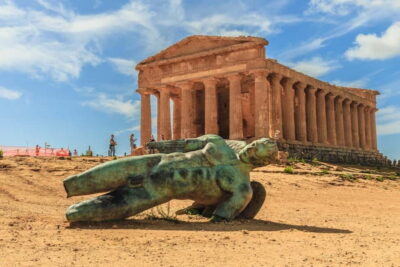
Agrigento: Valley of the Temples Ticket & App Audioguide
Read our review →
Agrigento: Valley of the Temples E-Scooter Tour
Read our review →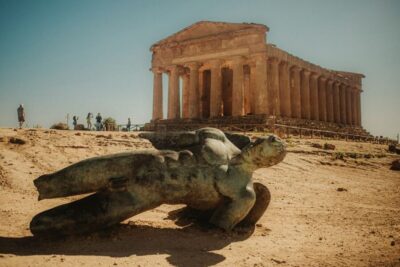
Palermo: Valley of the Temples and Scala dei Turchi Day Trip
Read our review →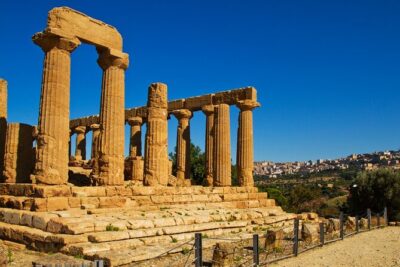
Agrigento: Valley of the Temples Entry Ticket & Audio Guide
Read our review →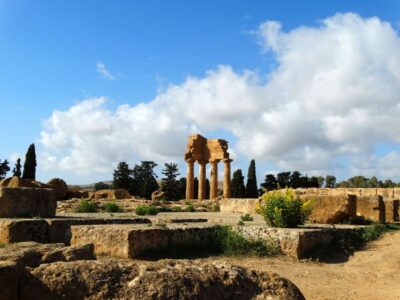

Agrigento: Valley of the Temples Gardens Picnic Experience
Read our review →This tour also ranks in