Review · AGRIGENTO
Agrigento: Valley of the Temples Private Tour
The Valley of the Temples gives you something rare: a long, open-air walk among Doric temples still rising above the Sicilian countryside. The Temple of Concordia is the star, but Juno, Hercules, and Zeus create a much fuller picture of ancient Agrigento than a single photo stop ever could.
I like the private-group format, which gives your party a guide rather than a one-size-fits-all speech. I also like the human details, from the story behind the Icarus statue to the prickly pear plants along the paths. The main drawback is simple: entry tickets are not included, and two hours can feel brisk if you want plenty of time for photographs or a slow look at every ruin.
Key points at a glance
- See four major temple sites: Juno, Concordia, Hercules, and Zeus are covered in one guided walk.
- Meet outside the Juno Temple ticket office: This is also the parking area for the largest car park, so check the meeting details carefully.
- Look for the seven-meter Telamon: The reconstructed giant near the Temple of Zeus helps you picture the scale of the original building.
- Hear more than dates and names: Guides such as Rossana and Daniel have been praised for explaining architecture, mythology, politics, customs, and even local plants.
- Plan for a separate ticket purchase: Admission and any museum visit are outside the tour price.
- Choose your language: Tours are offered in English, Italian, Spanish, German, and French.
Why this private walk works at Agrigento
Agrigento’s archaeological area is not a compact museum with ruins lined up in neat rooms. It is a broad outdoor site, with temples set along paths and slopes. That makes a guide useful. The stones are impressive on their own, but the stories explain why one temple survived, why another was quarried, and how the ancient city related to the Greek world.
This experience costs $326.26 for a private group of up to 25 people. That is not a cheap ticket for one or two people. For a larger family or group of friends, though, the price can make good sense because it is charged by group rather than by individual. You also get a licensed guide for your party, instead of joining an unknown crowd.
The walk lasts about two hours. That is enough time for the main temples and a strong overview, but it is not an all-day archaeological study. You will want to keep moving between stops, especially if you are taking photographs. If you hope to visit the museum as well, plan that separately because the museum is not included.
The experience is available as a private group, with live commentary in five languages. Rossana Valenti has been singled out for her friendly, wide-ranging explanations, including details about trees and plants. Daniel has also received especially strong praise for his explanations of architecture, politics, mythology, customs, and plants. Your assigned guide may differ, but these examples show the sort of personal, informed approach this tour aims to provide.
More Private Temple Tours in Italy
- Agrigento Valley of the Temples and Kolymbethra Private Tour
★ 5.0 · 18 reviews - Pantheon: The Iconic Ancient Roman Temple – Semi-Private Tour
★ 5.0 · 173 reviews - Agrigento; Valley of the Temples, Scala dei Turchi from Palermo, Private Tour
★ 5.0 · 68 reviews
Meeting at the Juno Temple entrance
Your starting point is outside the ticket office at the Valley of the Temples, by the car park for the Juno Temple. This detail matters. The meeting point has caused confusion for at least one party because a map location was inaccurate, leading to a late arrival. The guide extended that tour, but you should still use the ticket office as your main reference and allow time to find it.
Look for a guide wearing a clearly visible license badge around the neck. This is a helpful detail in a large archaeological area, especially when several groups may be arriving at once.
You can buy admission tickets at the ticket office. Since the entry price is not included in the tour fee, ask about the total cost before you begin your visit. The tour itself ends back at the starting point, which makes the arrangement fairly simple if you have a car or need to continue from the same entrance.
Temple of Juno and the high eastern ridge
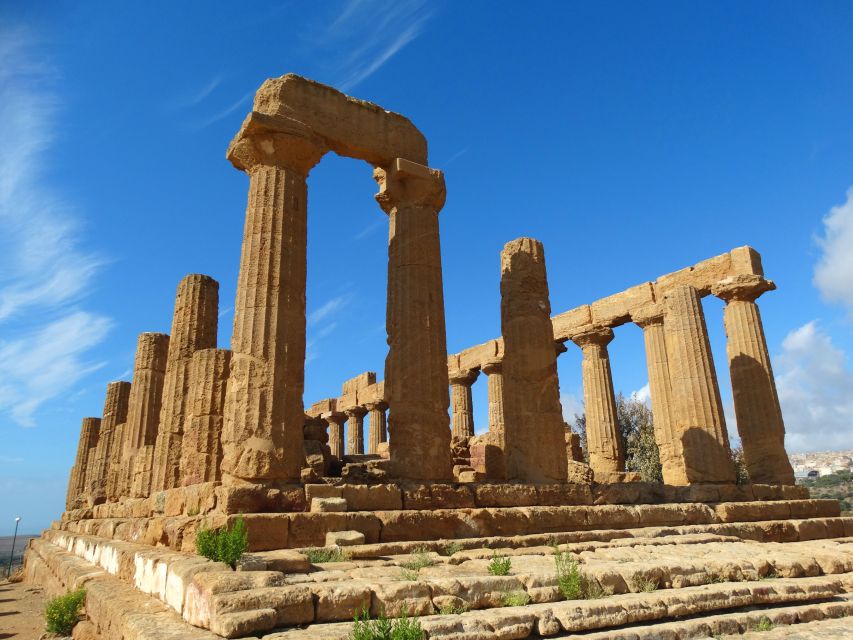
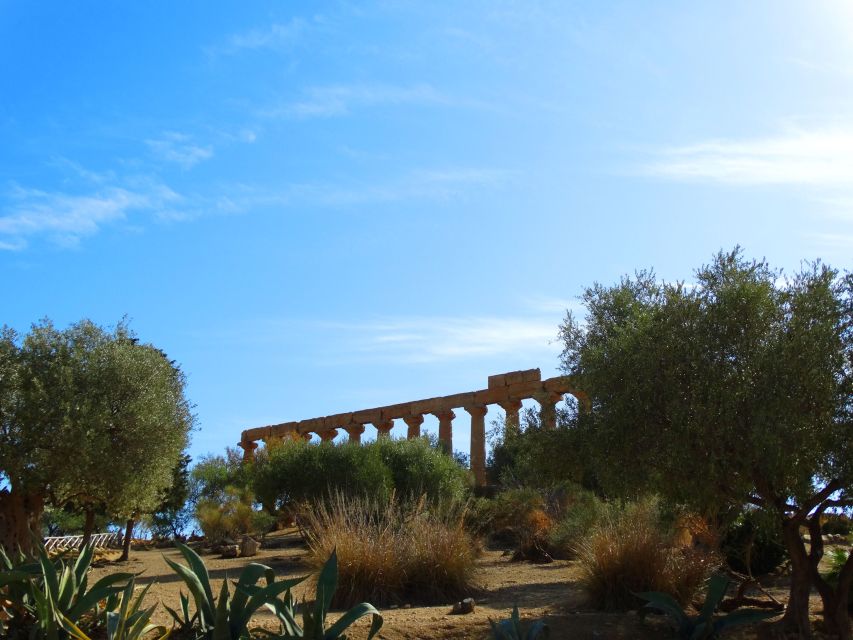
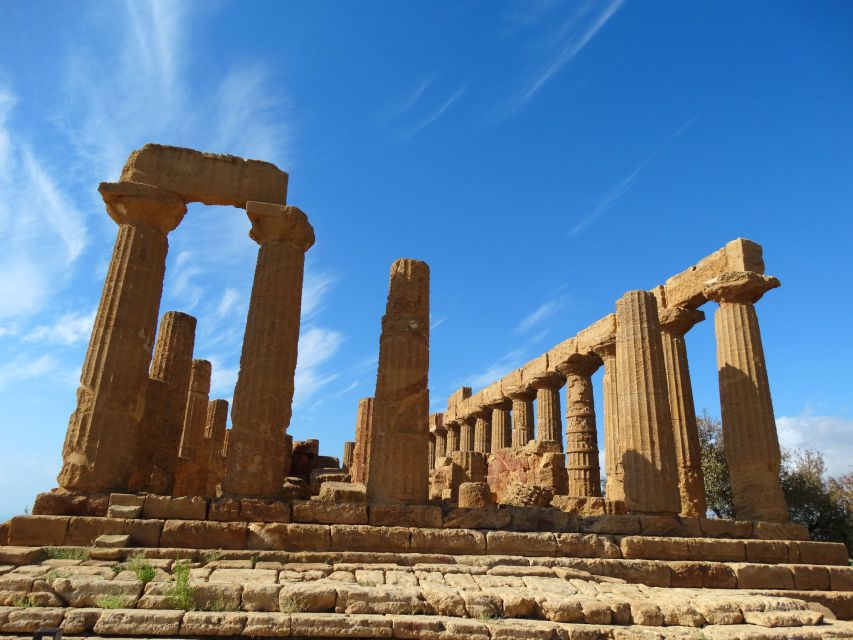
The first major stop is the Temple of Hera Lacinia, known to the Romans as Juno. It was built around 450 BC on a high point, about 120 meters above the surrounding area, and its Doric columns give you an immediate sense of the Greek character of ancient Agrigento.
The temple was linked to Juno, a goddess associated with marriage, women, and fertility. The explanation becomes more interesting when you hear about the painting once kept inside, thought to show the goddess herself. This is the kind of detail that changes the stop from a line of columns into a place with religious purpose.
The high position also gives you one of the best early views across the archaeological area. The route includes paths, steps, and open ground, so comfortable shoes are sensible. The exact amount of walking can feel different depending on your pace, but this is not a tour where you simply step off a bus beside each monument.
Juno is a good opening stop because it combines remains, setting, and mythology. You get the first close look at Doric construction, then a wider view that helps you understand how the temples were arranged along the ridge.
Concordia, Agrigento’s best-preserved temple
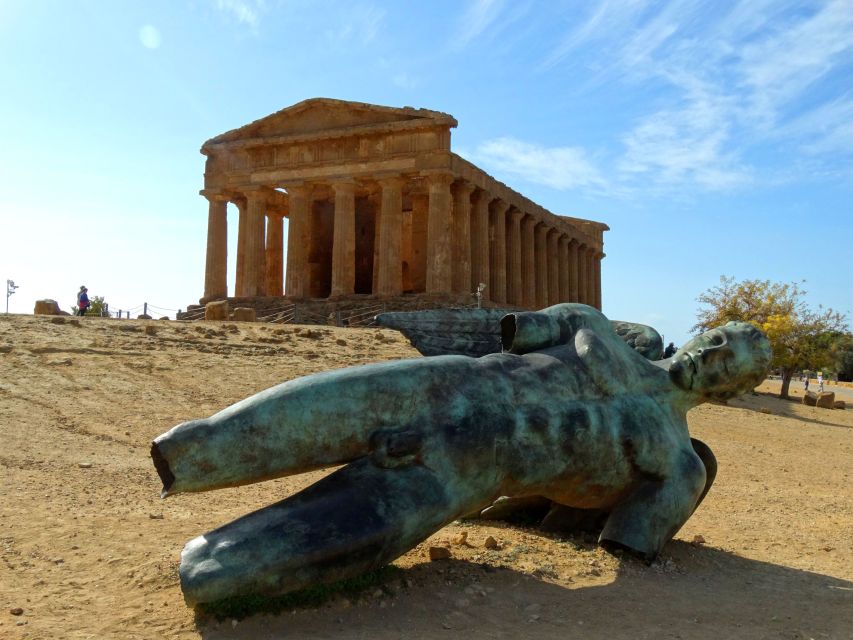
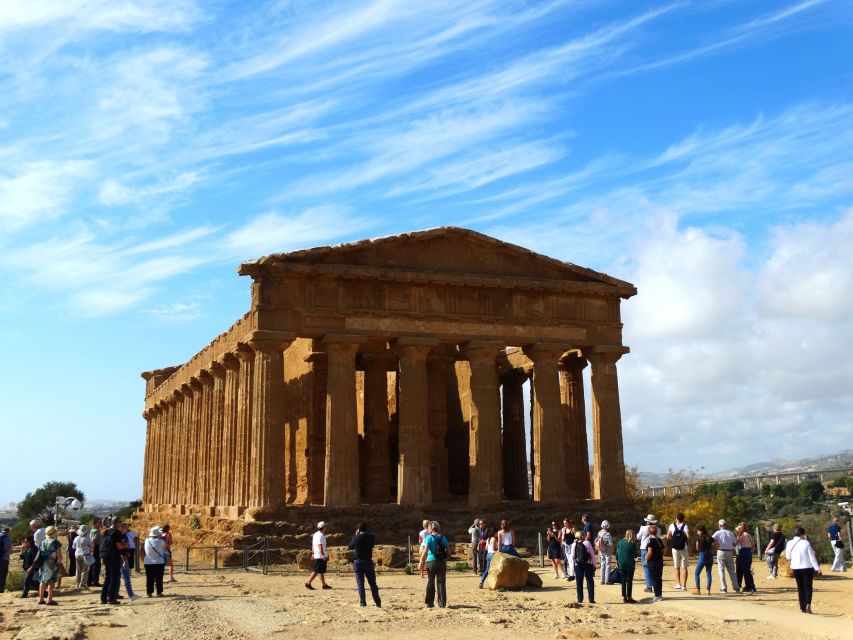
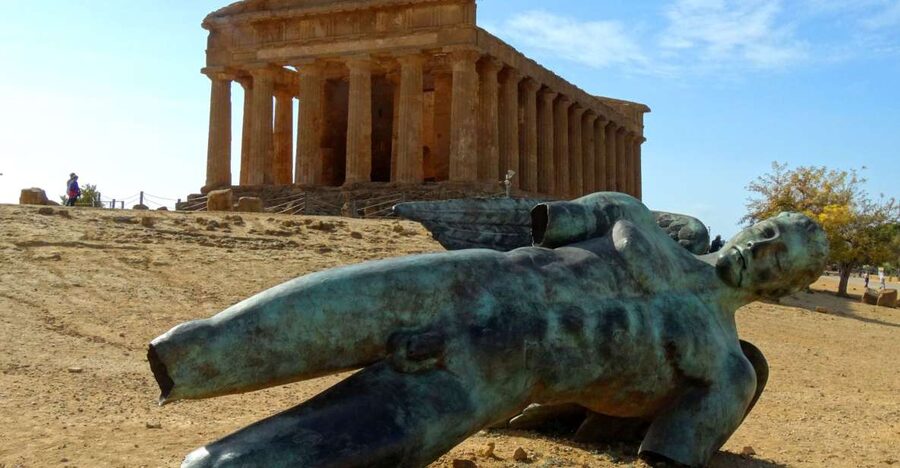
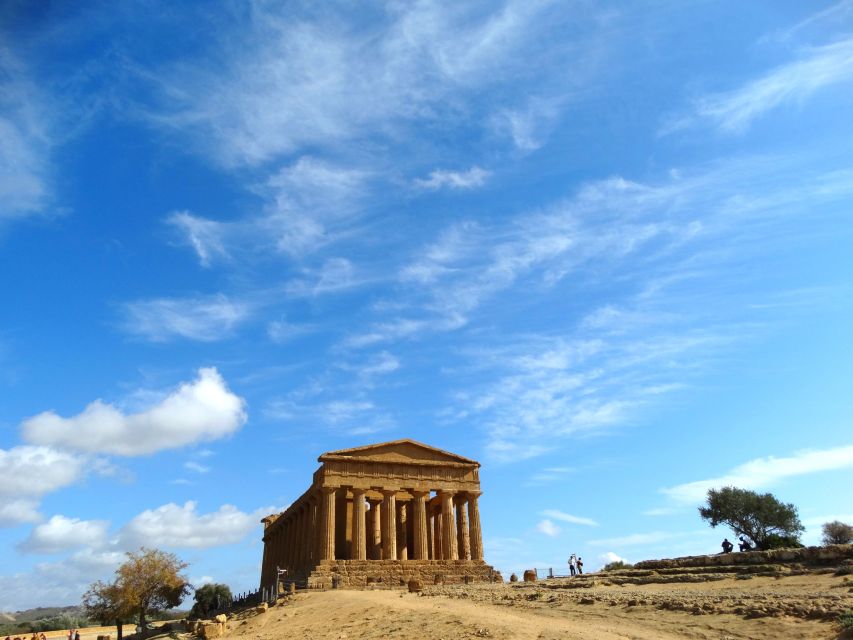
A short walk brings you to the Temple of Concordia, the site’s most complete and recognizable monument. Built around 430 BC, it survived in unusually good condition because it was converted into a Christian church. That later use protected much of the structure when other ancient buildings were damaged or dismantled.
Its preservation is the main reason this temple makes such a strong impression. You can study the columns, the long rectangular form, and the balance of the Doric design without trying to imagine every part from scattered foundations. The temple is often described as one of the best-preserved Greek temples in the world, second only to the Parthenon in Athens.
In front of the temple, you will see a bronze statue of Icarus by the Polish sculptor Igor Mitoraj. The figure refers to the Greek story of Icarus, who flew too close to the sun, melted the wax holding his wings together, and fell into the Mediterranean.
The modern sculpture creates a useful contrast. Behind it is an ancient temple built for worship; in front is a contemporary work about ambition, failure, and the danger of ignoring limits. I like this pairing because it keeps the stop from feeling frozen in the past. It also gives you a memorable photo point, although the temple itself deserves more attention than a quick picture.
More Valley of the Temples Tours in Agrigento:
- Agrigento: Valley of the Temples Skip-the-Line Sunset Tour
★ 4.5 · 1,512 reviews - Agrigento: Valley of the Temples Ticket & App Audioguide
★ 4.3 · 1,160 reviews - Agrigento: Valley of the Temples E-Scooter Tour
★ 4.6 · 557 reviews - Palermo: Valley of the Temples and Scala dei Turchi Day Trip
★ 4.1 · 463 reviews
Hercules and the paths through the valley
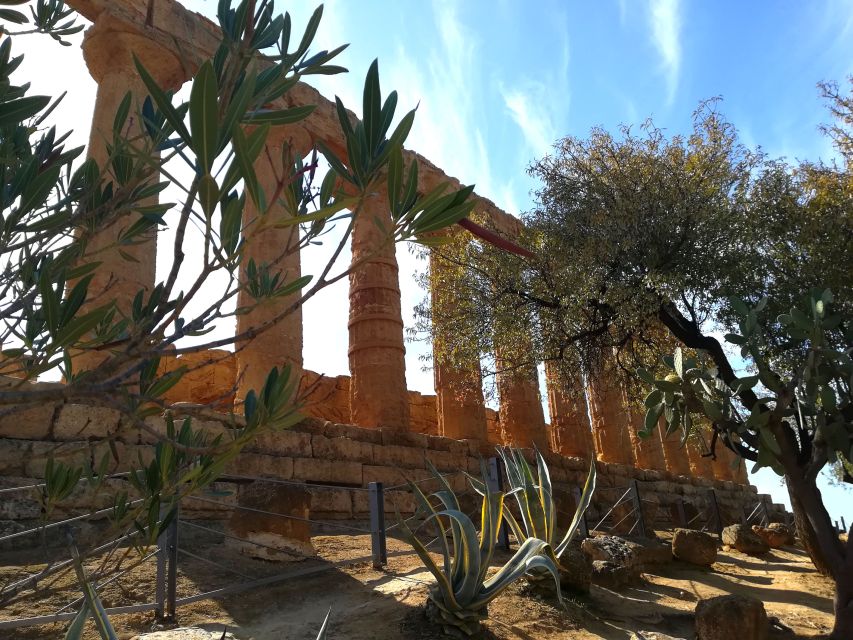
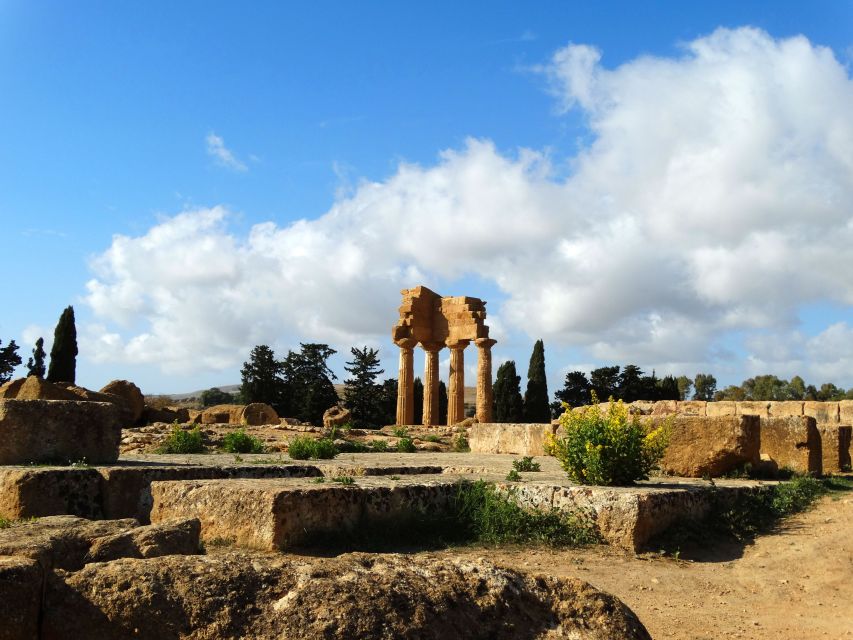
The Temple of Hercules, or Heracles in Greek tradition, is considered the oldest of Agrigento’s Doric temples. Its name comes from a bronze statue of Hercules once associated with the building. Much less of the temple remains than at Concordia, so this is where a guide’s explanation becomes especially useful.
At a site with partial columns and broken foundations, it can be hard to tell what you are looking at. A guide can help you read the surviving pieces and picture the building’s original form without pretending that the ruins are more complete than they are.
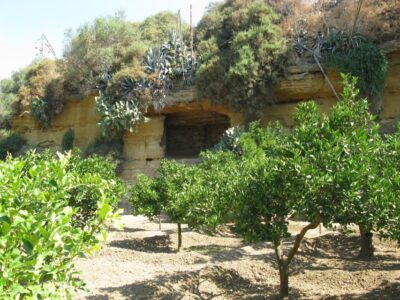
The walk between the temples is part of the experience. You pass prickly pear plants and open views across the valley, with the ruins appearing and disappearing along the path. This is not a polished urban monument with a café at every turn. The open setting is one of the pleasures, but it also means you should be prepared for sun, walking, and limited shade.
The guide’s commentary can widen here beyond temple dates. Daniel, in particular, has been praised for tying together architecture, political life, customs, mythology, and plant life. That combination suits the site. Ancient temples were not isolated art objects. They belonged to a working city, a belief system, and a particular setting.
The huge scale of the Temple of Zeus
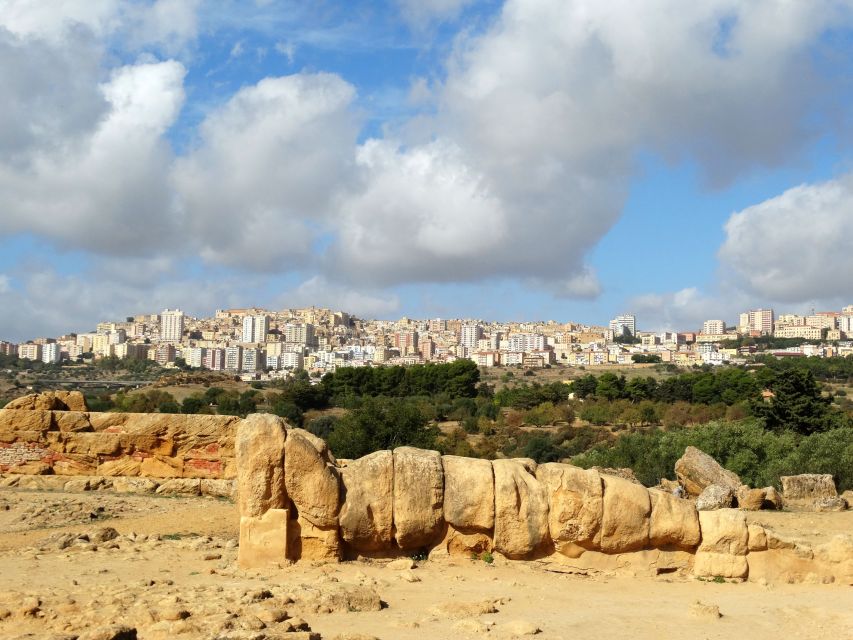
The final major stop is the Temple of Jupiter, or Zeus. Originally, it was one of the largest temples of classical antiquity. Earthquakes damaged it over time, and its stones were later used as a quarry for construction of the pier at Porto Empedocle.
That reuse is both fascinating and frustrating. You are seeing an important temple in a ruined state partly because later builders treated it as a convenient source of stone. The site shows how ancient monuments were not always protected as heritage. They were often dismantled when their materials were useful.
Among the remains is a reconstruction of one of the Telamons, giant stone figures more than seven meters high. These figures were placed outside the temple and represented giants supporting or guarding the structure. Seeing one upright gives you a sense of the scale the original temple must have had.
This is the point where the tour helps you imagine what no longer survives. The Temple of Concordia lets you study a building that is still largely intact. Zeus asks you to reconstruct a vanished monument from foundations, fragments, and one enormous figure. The contrast between the two stops is one of the strongest features of the route.
What the two-hour timing means
Two hours is a practical length for a first visit. You can see the four principal temples without turning the day into a long archaeological lecture. The private format also means the guide can adjust the pace to your group, within the limits of the scheduled time.
Still, you should be realistic about the clock. If your group stops at every viewpoint, asks many questions, and takes extensive photographs, you may need more time at the site before or after the guided portion. The listed duration is not a promise of a relaxed full-day exploration.
One unusual strength is that the commentary can extend beyond the expected subjects. The best guiding here includes plants, sculpture, architecture, ancient religion, and later reuse of the ruins. Rossana Valenti has been praised for being both friendly and well prepared, and one party’s tour was extended after a late arrival. That is reassuring, but it is better to arrive on time rather than rely on extra time being available.
Price, group size, and overall value
At $326.26 for up to 25 people, this tour is most attractive when shared among several people. A couple paying the full private-group price may find it expensive, especially after adding entry tickets. A family or larger party can spread the cost across the group and gain the privacy of having the guide focus on its questions.
The value comes from the guide, not from included admission or transportation. You are paying for a licensed professional to interpret a large and sometimes confusing archaeological area. That matters more at Hercules and Zeus, where surviving remains require explanation, than at Concordia, whose beauty is easy to recognize.
You should also remember that the ticket price does not cover the museum. If you want the indoor collections as well as the outdoor temples, budget extra time and money. This tour focuses on the archaeological area and returns you to the original meeting point.
Free cancellation up to 24 hours before the scheduled start gives you some flexibility, and you can reserve now and pay later. Those terms are useful when your Sicilian plans are still moving, but the main decision remains group size and interest in guided interpretation.
Who should book this tour
I would choose this tour for a family, group of friends, or anyone who wants the major temples explained without joining a large public group. It is also a good fit if you enjoy connecting architecture with mythology and daily life rather than simply walking around taking pictures.
The tour suits people who have about two hours for Agrigento and want a clear route through the most important outdoor monuments. The choice of English, Italian, Spanish, German, or French makes it practical for mixed-language groups.
You may want a different plan if you are visiting alone or as a couple and are mainly interested in wandering at your own pace. You may also prefer more time if your priority is photography, detailed study, or the museum. In those cases, use the guided walk as a focused introduction and allow extra time on your own, if your schedule permits.
Should you book the Valley of the Temples private tour?
Book it if you can share the $326.26 cost with a group and want the temples placed in their historical and mythological setting. The strongest parts are the well-preserved Concordia, the scale of the reconstructed Telamon, and the chance to ask a guide about details you might otherwise miss.
Before booking, confirm your meeting point at the Juno Temple ticket office, not simply the map pin. Remember that entry tickets and the museum cost extra. If those points work for your plans, this is a focused, useful way to understand Agrigento’s greatest archaeological area without giving up the flexibility of a private group.
FAQ
How long does the private tour last?
The tour lasts about two hours. Check the available starting times when booking.
Where does the tour begin?
It begins outside the ticket office at the Valley of the Temples, at the car park for the Juno Temple, described as the largest parking area.
Where does the tour end?
The activity ends back at the original meeting point.
Are entry tickets included?
No. Entry tickets are not included, but you can buy them at the ticket office on site.
Is the museum included?
No. The museum visit is not included in this activity.
Which languages are available?
Live guiding is available in Italian, English, Spanish, German, and French.
Is this a private group tour?
Yes. The private group can include up to 25 people.
Can I cancel for a full refund?
Yes. You can cancel up to 24 hours in advance for a full refund. You can also reserve now and pay later.
More Private Temple Tours in Agrigento
- Ubud: Waterfalls, Water Temple & Rice Terraces Private Tour
★ 5.0 · 5,484 reviews - Montserrat Monastery Small Group or Private Tour Hotel pick-up
★ 5.0 · 5,144 reviews - Full-Day Angkor Wat Sunrise Private Tour with Guide from Siem Reap
★ 5.0 · 2,920 reviews - Chiang Rai Temples: Private Tour from Chiang Mai
★ 5.0 · 1,267 reviews
Temple visits we reviewed lately in Agrigento
- From Agrigento to Siracusa: Valley of Temples & Roman Villa★ 5.0 · 3 reviews
- E-BIKE TOUR AGRIGENTO: Valley of the Temples & Old Town with meal included★ 5.0 · 4 reviews
- Agrigento: Valley of the Temples Tour Skip-the-Line Entry★ 4.4 · 156 reviews
- Agrigento: Valley of the Temples Entry Ticket & Audio Guide★ 4.1 · 268 reviews
- Agrigento: Valley of the Temples Private Archeological Tour★ 5.0 · 20 reviews
- Agrigento: Valley of the Temples Gardens Picnic Experience★ 4.1 · 15 reviews
- Agrigento Valley of the Temples and Kolymbethra Private Tour★ 5.0 · 18 reviews
- Agrigento: Skip-the-Line Valley of the Temples Night Tour★ 4.8 · 72 reviews
Agrigento Temple Tours, compared.
Agrigento: Valley of the Temples Skip-the-Line Sunset Tour
Read our review →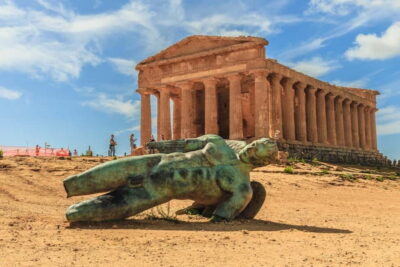
Agrigento: Valley of the Temples Ticket & App Audioguide
Read our review →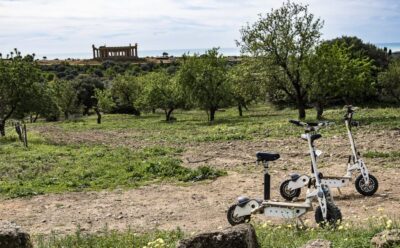
Agrigento: Valley of the Temples E-Scooter Tour
Read our review →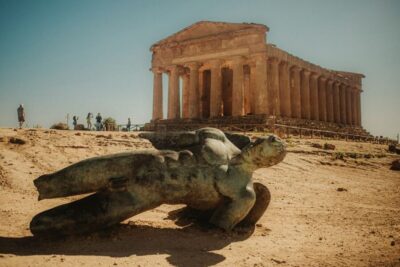
Palermo: Valley of the Temples and Scala dei Turchi Day Trip
Read our review →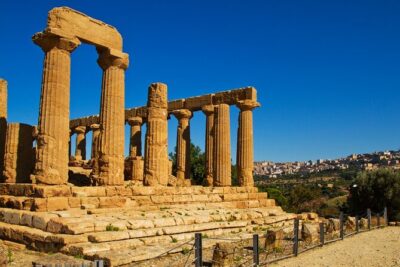
Agrigento: Valley of the Temples Entry Ticket & Audio Guide
Read our review →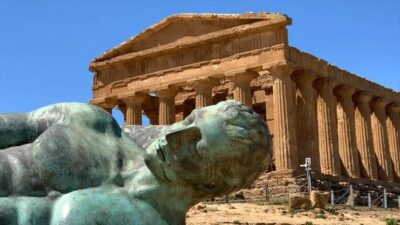
Agrigento: Valley of the Temples Private Archeological Tour
Read our review →