Review · BANGKOK
Bangkok: Wat Pho and Wat Arun Guided Walking Tour
Bangkok’s two essential riverside temples fit neatly into this three-hour walking tour. You’ll see Wat Pho’s enormous 46-meter reclining Buddha, then cross to Wat Arun, where a tall white Chedi covered in colored mosaics makes one of the city’s best photo scenes. Guides such as Nancy, Sun, Jack, and former monk Tee bring useful stories about Buddhism, Thai kings, and temple customs.
I like the sensible meeting point at Tha Tian Pier, close to both sights, and the way the tour gives you a guide without turning the morning or afternoon into a full-day commitment. The coconut water is a small but welcome touch in Bangkok’s heat, and the tour’s glass-bottle water and carbon-offset approach suit visitors trying to travel with less waste.
The main drawback is that this is a walking tour in hot, busy surroundings. You’ll also pay temple admission separately, and several people found it hard to hear the guide when street noise rose, so staying close to the group matters.
Key points to know before booking
- Two major temples in three hours: Wat Pho and Wat Arun offer a strong first look at Bangkok’s sacred architecture.
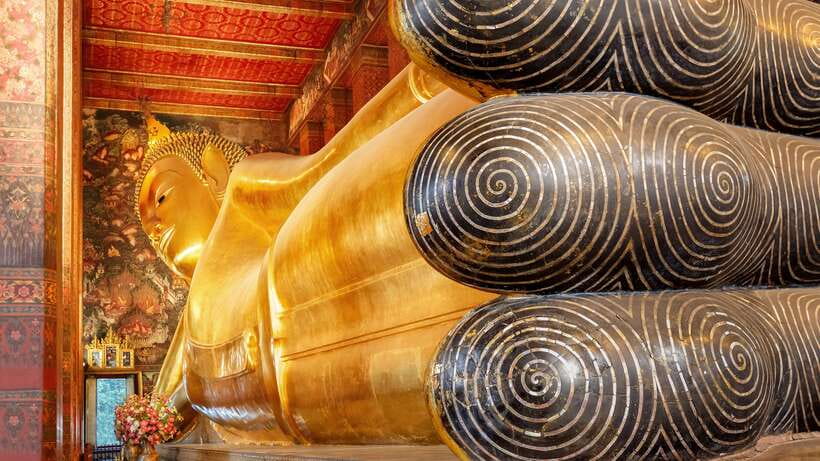
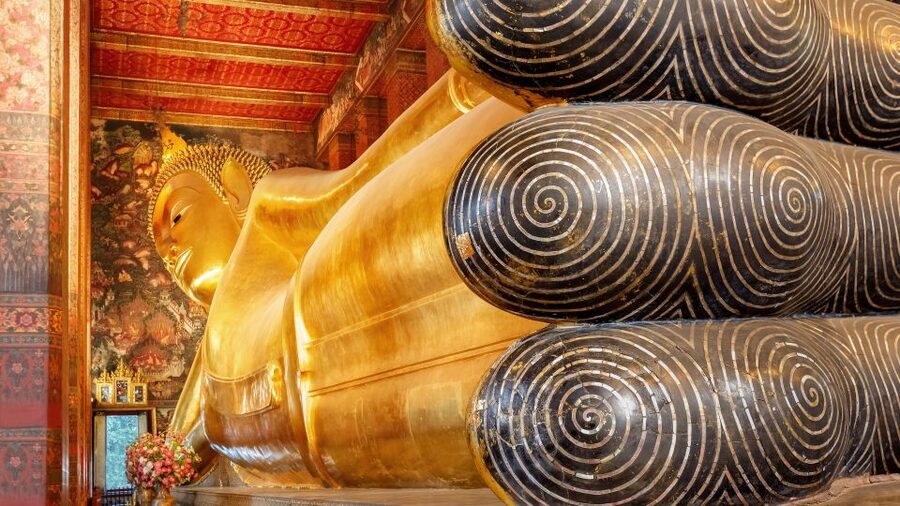
- Wat Pho’s 46-meter reclining Buddha: The statue is the tour’s most powerful indoor sight, with colorful shrines around the temple grounds.
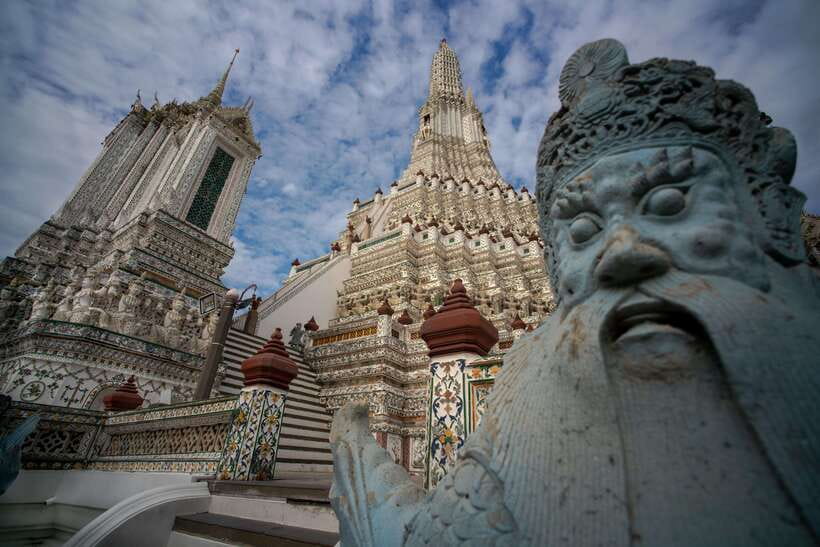
- Wat Arun beside the Chao Phraya River: Its white mosaic Chedi supplies the classic Bangkok photograph.
- Guides add cultural context: Nancy, Sun, Jack, Tee, and others are praised for clear explanations, humor, patience, and help with photos.
- Coconut water included: A refreshing stop helps break up the walk in Bangkok’s heat.
- Budget price, extra admission: The tour costs $17 per person, but Wat Pho and Wat Arun tickets cost 300 and 200 Thai Baht respectively.
Why these two temples make a smart Bangkok introduction
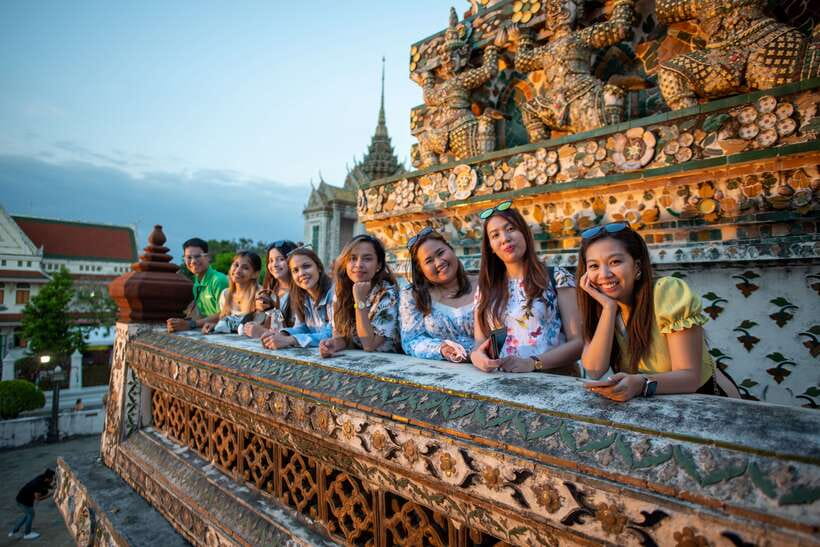
If you have only a short time in Bangkok, Wat Pho and Wat Arun give you two very different kinds of temple experience. Wat Pho feels broad, layered, and full of devotional detail. Wat Arun is more immediately dramatic, with its tall riverside Chedi covered in small ceramic and porcelain mosaic pieces.
The pair also tells a useful story about Bangkok’s setting. The Chao Phraya River is not just a scenic backdrop. It connects the old royal and religious center of the city, and the short journey between these temples helps you understand how closely the river shaped Bangkok’s early development.
I like this pairing because neither temple feels like a token stop. You get a major Buddha image, detailed shrines, traditional temple structures, river views, and a guide who can explain what you are looking at rather than leaving you to guess.
The tour is not designed for slow, solitary wandering. Its value comes from making the complicated parts easier: finding the entrance, understanding Buddhist images, keeping track of the group, and knowing which details deserve your attention.
More Temple Walking Tours in Bangkok
- Bangkok: City Highlights Temple and Market Walking Tour
★ 4.5 · 3,990 reviews - Bangkok: Grand Palace and Wat Phra Kaew Guided Walking Tour
★ 4.4 · 2,417 reviews - Bangkok: Grand Palace and Wat Arun Guided Walking Tour
★ 4.5 · 118 reviews
Meeting at Tha Tian Pier
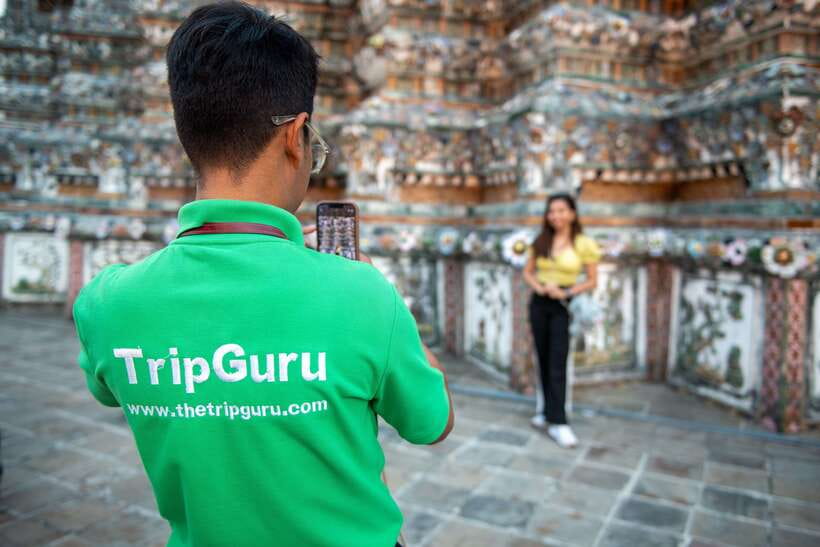
You meet your guide at Tha Tian Pier, where a TripGuru sign identifies the group. The operator sends the meeting time and point by email the evening before, and you should arrive 10 minutes early.
This location is practical because the pier sits close to both temples. It also puts you in one of Bangkok’s most useful riverfront areas, with boats, streets, food stalls, and temple traffic all nearby. Hotel pickup is not included, so you must make your own way there.
Bring cash for the admission fees and any extra food or drinks. Comfortable shoes are essential, and I would add sunscreen, a hat, sunglasses, insect repellent, and a refillable bottle if you have one. One small bottle of water is provided for the first temple, but it may not be enough for three hours in the heat.
The guide will speak English or Chinese. Group size can vary, though some departures are small enough to feel relaxed. A small group makes it easier to ask questions and stay close when crossing streets or moving through busy temple areas.
Wat Pho and the reclining Buddha
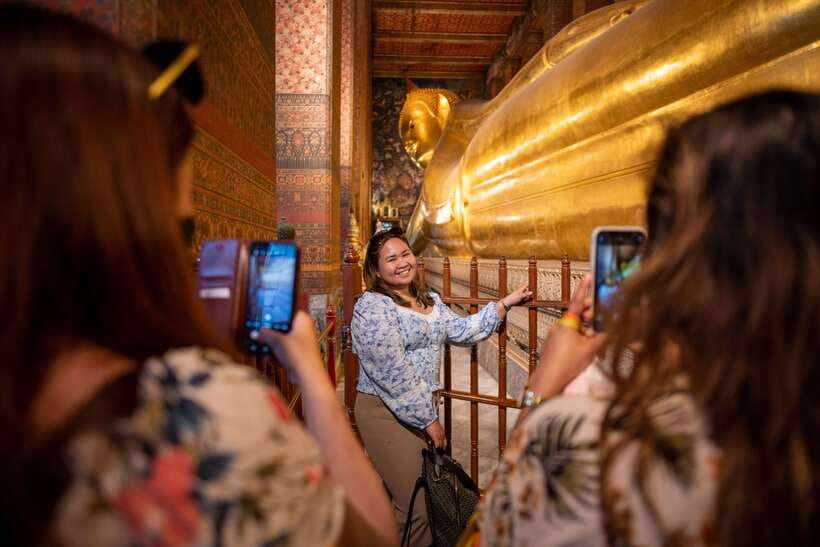
Wat Pho is scheduled as the first main stop, with about 90 minutes for guided sightseeing. The temple is best known for its huge reclining Buddha, which measures 46 meters long and fills the interior with its scale.
The statue is not simply a quick photo stop. A guide can help you understand the religious meaning of the reclining Buddha and point out details that are easy to miss when you are focused on the sheer size of the image. The surrounding grounds add plenty to the visit, with colorful mosaic shrines and repeated layers of Thai decorative work.
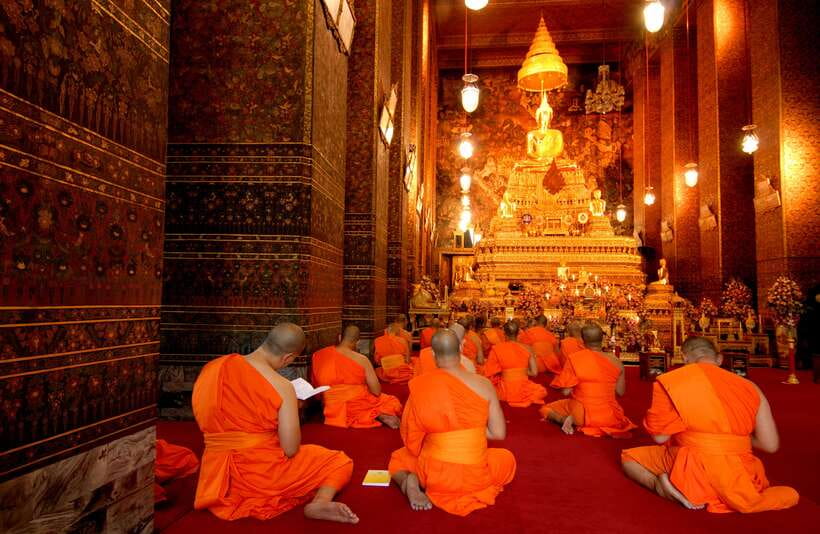
You’ll walk through more than one space, so the temple feels like a working religious complex rather than a single monument. Give yourself time to look up, study the tile patterns, and notice the contrast between the calm interior around the Buddha and the movement outside.
The strongest part of a guided visit is the explanation of temple design. Guides including Nancy and Jack have been praised for explaining the purpose of different sections and for answering questions about Buddhism and Thai culture. Sun is also frequently described as attentive and willing to pause for photographs and questions.
You should dress carefully here. Clothing that exposes the shoulders, underarms, back, or knees may not be accepted at some sites. A sarong, scarf, or light sweater is a useful backup, though wearing suitable clothing from the start is easier.
Wat Pho can feel crowded and warm, especially when several groups arrive together. The tour keeps you moving, which helps you see the main points in the time available, but it may not satisfy you if you want a long, unhurried study of every shrine.
The transfer toward Wat Arun
The supplied route lists Wat Pho first and Wat Arun second, with both sites receiving about 90 minutes. One departure may reverse the order, so pay attention to the confirmation email and your guide’s instructions.
The walk between the temples is part of the experience rather than dead time. You move through the riverside area and return to the Chao Phraya setting that gives this tour its shape. The route is not presented as a private boat excursion, and boat transport is not listed as included, so you should expect the guide to direct you through the local connection between the sites.
A complimentary coconut water is included. That sounds minor, but in Bangkok it is genuinely useful. It gives you a cool pause between major sights and a chance to catch your breath before the next temple.
The heat deserves respect. One guide found shaded spots for the group, while another checked on people who were struggling in the humidity. Still, you should pace yourself, drink regularly, and tell your guide if you feel unwell.
More Temple Walking Tours in Thailand
- Bangkok: Grand Palace, Wat Pho, & Wat Arun Walking Tour
★ 4.6 · 116 reviews - Bangkok 3-Major Royal Temples Walking Tour
★ 4.6 · 59 reviews - Bangkok: Grand Palace, Wat Pho and Chinatown Walking Tour
★ 4.8 · 20 reviews - Bangkok: Wat Pho & Wat Arun Half-Day Private Walking Tour
★ 5.0 · 5 reviews
Wat Arun and the white mosaic Chedi
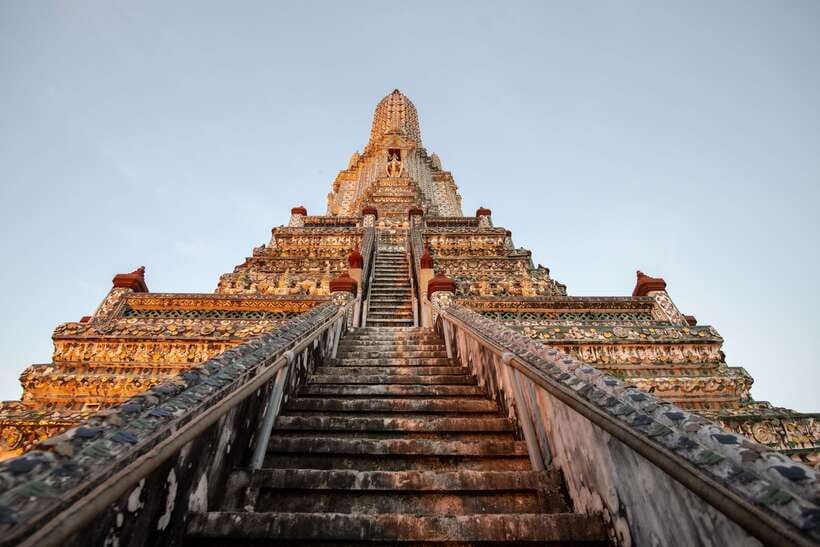
Wat Arun is the visual high point for many people. This roughly 300-year-old temple rises beside the river, with a large white Chedi decorated with thousands of colorful mosaic pieces.
From a distance, the structure looks clean and almost pale. Up close, the surface becomes much more intricate, with small pieces catching the light and forming patterns across the exterior. It is the kind of place that rewards both the wide shot and the close-up photograph.
Your guide can explain the temple’s place in Thai religious and royal culture, as well as the meaning behind Buddhist features you might otherwise treat as decoration. Several guides have also helped visitors find good photo positions and taken individual pictures at memorable viewpoints.
The temple is especially attractive for photographers, but do not reduce it to a social-media stop. Its river setting, height, surface detail, and ceremonial design make it one of Bangkok’s most recognizable religious sites. The view across the water also helps you see how the old city’s monuments relate to one another.
Wat Arun may involve uneven walking and a fair amount of standing. The tour is not suitable for people with mobility impairments, and the operator also advises against booking if you are pregnant or have heart problems or high blood pressure. That warning matters in Bangkok’s heat and should be taken seriously.
What the guides add
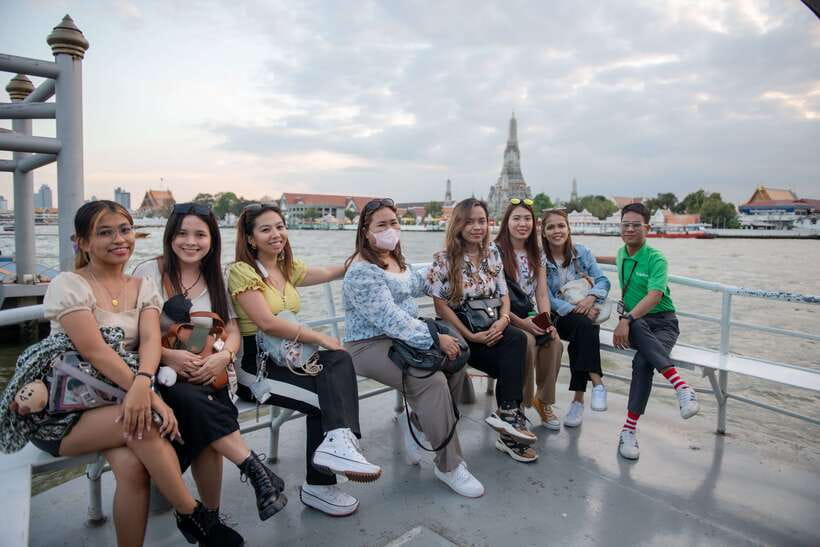
The guide can make or break a temple visit, and this experience has a strong record in that area. Nancy is repeatedly praised for detailed explanations, patience, and her ability to connect temple architecture with Thai culture and Buddhism. Sun is described as warm, funny, careful, and good at finding shade.
Jack is praised for clear information and for explaining why different parts of a Buddhist temple matter. Tee brings an unusual background as a former monk, along with humor and insight into Buddhism. Other guides, including Angie, Cherry, Tank, Kulsaya, Pranee, Jimmy, and Surina, are described as friendly, organized, and willing to answer questions.
The best guides appear to strike a useful balance. They explain the main points, leave time for photographs, and allow you to look around without turning every minute into a lecture. That balance matters at Wat Pho and Wat Arun, where you need quiet time to take in the decoration.
There is one practical weakness: street noise can make spoken explanations difficult to hear. If you are at the back of the group, move closer when the guide begins speaking. A small microphone would help, but no audio system is listed, so do not expect one.
Price and what you pay separately
At $17 per person, the tour is fairly priced for a three-hour guided visit to two of Bangkok’s most important temples. The guide, walking route, coconut water, and carbon-offset credits are included.
The entry fees are extra:
- Wat Pho: 300 Thai Baht
- Wat Arun: 200 Thai Baht
That adds 500 Thai Baht per person to the advertised price. You also cover your own transport to Tha Tian Pier, meals, and any drinks beyond the included coconut water.
The value depends on what you want. If you already know Bangkok well and are happy reading signs or exploring on your own, you may prefer to buy the tickets and wander independently. If you want cultural background, help with navigation, and a planned route that fits both temples into one outing, the additional $17 is a sensible spend.
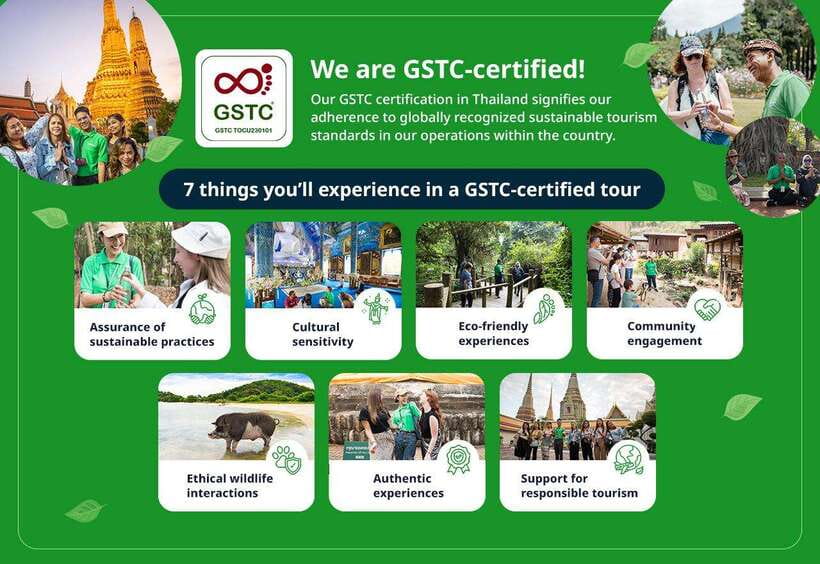
The tour is also GSTC-certified and uses glass bottles and carbon-offset credits. That does not remove the environmental cost of sightseeing, but it shows attention to waste and emissions without changing the basic temple experience.
Timing, clothing, and comfort
Multiple start times make it easier to fit the tour around a Bangkok itinerary. Check the available departures carefully, since the exact time affects how much heat and crowding you encounter.
Wear light clothing that still covers your shoulders and knees. A scarf or sarong can help, but it is better not to rely on a cover-up if your main outfit remains too revealing. Temple dress rules are strict in places.
You should also plan for three hours of walking, standing, and outdoor exposure. This is not a difficult hike, but it is not an air-conditioned sightseeing bus. Comfortable shoes will matter more than stylish ones.
Traffic can make arriving at the pier stressful. One useful piece of practical advice is to avoid depending on a car or taxi at the last moment. The pier is served by Bangkok’s public transport network, and the most reliable plan is the one that gets you there early rather than racing through traffic.
Who should book this temple tour?
I would choose this tour if you are visiting Bangkok for the first time, have only a half-day available, or want a friendly guide to explain Buddhist art and temple customs. It is also a good fit if you like taking photos but still want context, since the guides generally allow time to explore and help with pictures.
It suits solo visitors and couples especially well because a guide can make the route simpler and provide company without requiring a full-day group program. Families with older children may also appreciate the short duration, though the heat and walking still require sensible pacing.
I would hesitate if you have mobility limits, are pregnant, or have heart or blood-pressure concerns. I would also skip it if you strongly prefer independent exploration or dislike fixed timing. The $17 fee is modest, but the experience works best for someone who values explanation and structure.
Should you book it?
Book this tour if you want Wat Pho and Wat Arun in one compact outing, with a local guide, a coconut-water break, and useful help with temple etiquette. The strongest reason to go is the guide’s role: people such as Nancy, Sun, Jack, and Tee bring warmth, humor, and cultural detail that can turn beautiful buildings into meaningful places.
Just budget for the 500 Thai Baht in admission fees, arrive early at Tha Tian Pier, dress conservatively, and stay close enough to hear the guide. If you can handle the heat and steady walking, this is a good-value introduction to Bangkok’s riverside temples.
FAQ
How long does the Bangkok temple tour last?
The tour lasts three hours.
Where does the tour meet?
You meet your guide at Tha Tian Pier, also written as Tha Tian Pier in Bangkok.
Where does the tour finish?
The tour returns to Tha Tian Pier.
Which temples are included?
The tour includes Wat Pho and Wat Arun.
Is a guide included?
Yes. A live guide is included, with tours offered in English or Chinese.
Are temple entrance tickets included?
No. Wat Pho admission costs 300 Thai Baht, and Wat Arun admission costs 200 Thai Baht.
Is hotel pickup included?
No. You must make your own way to Tha Tian Pier.
What refreshments are included?
Coconut water is included. The tour also provides water in a glass bottle, but additional food and drinks are not included.
What should I wear?
Wear clothing that covers your shoulders and knees. Clothes exposing the shoulders, underarms, back, or knees may not be allowed at some sites. Bring a sarong, scarf, or sweater if needed.
Can I cancel the booking?
Yes. You can cancel up to 24 hours before the activity for a full refund. You can also reserve now and pay later.
More Grand Palace and Wat Pho Tours in Bangkok
- Bangkok: Grand Palace, Wat Pho, and Wat Arun Guided Tour
★ 4.8 · 3,632 reviews - Bangkok: Grand Palace, Wat Pho, Wat Arun Sacred & Local Tour
★ 4.3 · 2,256 reviews - Grand Palace & Temples of Bangkok with experienced guide
★ 5.0 · 890 reviews - Bangkok: Grand Palace, Wat Pho, and Wat Arun Private Tour
★ 4.8 · 855 reviews
Temple visits we reviewed lately in Bangkok
- Professional Thai Costume Photography at Wat Arun, Bangkok★ 5.0 · 18 reviews
- Private Floating & Train Market + DRAGON Temple + Thai Cafe★ 4.9 · 13 reviews
- Grand Palace, Wat Pho, and Wat Arun: Guided Tour in Spanish★ 4.5 · 57 reviews
- From Bangkok: Don Wai Market, Wat Samphran & Lotus Café Tour★ 4.5 · 48 reviews
- From Bangkok: Ayutthaya Ancient City Temple Tour★ 4.9 · 52 reviews
- Damnoen Saduak, Reclining Buddha, and Wat Arun Private Tour★ 4.9 · 56 reviews
- Bangkok: Lord Ganesha Temple Tour★ 4.7 · 16 reviews
- BKK’s Ultimate Food & Canal Tour “Tuk-Tuk Temples & Tastes”★ 5.0 · 4 reviews
Bangkok Temple Tours, compared.
From Bangkok: Ayutthaya Temples Guided Tour with Lunch
Read our review →
Bangkok: City Highlights Temple and Market Walking Tour
Read our review →
Bangkok by Night: Temples, Markets and Food Tuk-Tuk Tour
Read our review →
Bangkok: Grand Palace, Wat Pho, and Wat Arun Guided Tour
Read our review →
Bangkok: Temples, Canals & Local Life Bike Tour
Read our review →
Bangkok: Grand Palace and Wat Phra Kaew Guided Walking Tour
Read our review →
Bangkok: Grand Palace, Wat Pho, Wat Arun Sacred & Local Tour
Read our review →