
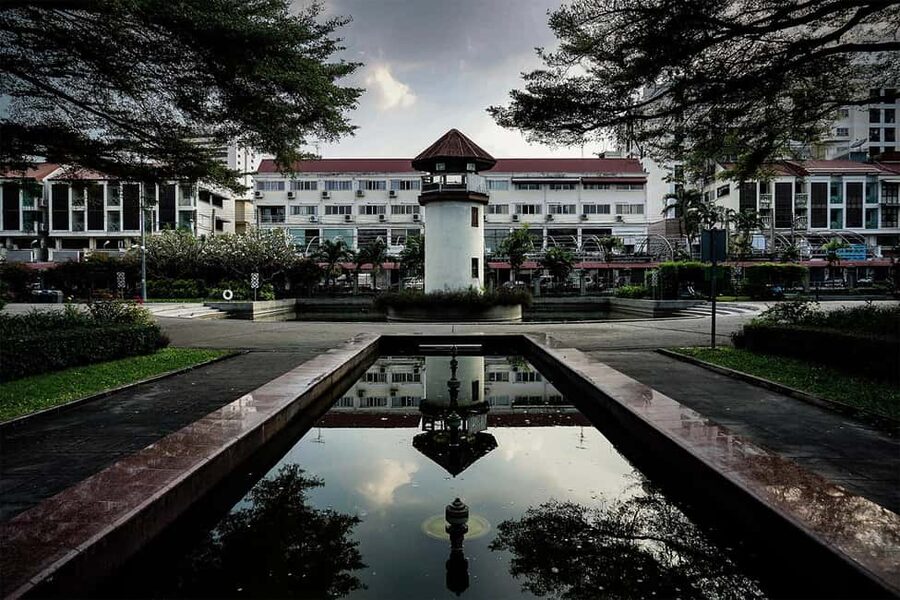
Review · BANGKOK
Bangkok Shadows: Ghosts, Haunted Temples & Dark Secrets
Bangkok’s old center takes on a darker mood after sunset. This three-hour walk links Wat Saket, an old prison park, a former crematorium, and the Giant Swing, using stories of plague victims, executions, criminals, and restless spirits to show a side of the city most sightseeing tours skip.
I like the way guide Jeed turns history, food, and local belief into one connected story. I also like the dinner at a local restaurant and the route through streets and alleys you might not choose on your own. The main drawback is that traffic, bright lights, and street noise can weaken the spooky mood and make parts of an English explanation hard to catch.
Key points to know before you book
- Wat Saket begins the story: Golden Mount and Wat Saket introduce the plague legends and the old city’s darker past.
- Jeed is a strong guide choice: He brings history, Thai culture, food, and ghost stories together in clear, lively storytelling.
- Dinner is part of the experience: A traditional Thai meal at a local restaurant is included, adding genuine local flavor to the evening.
- The route favors history over jump scares: Expect legends, executions, cremation grounds, and spiritual customs rather than theatrical effects.
- Noise matters: Busy roads and city sounds can make some explanations difficult to hear.
- This is a walking tour for able-bodied visitors: Comfortable shoes are important, and the route is not suitable for wheelchair users or people with mobility impairments.
Bangkok’s darker side begins at Golden Mount
Meet at Romsai Coffee near Golden Mount. Your guide waits there, and this is a sensible place to start because Wat Saket quickly moves you from everyday Bangkok into the older, more uneasy side of the city.
Wat Saket is best known for the Golden Mount, but this tour focuses on the stories attached to the temple and its surroundings. The stop is linked with plague victims whose cries are said to linger in the shadows. The storytelling mixes documented events, local beliefs, and ghost lore, so you should listen for the difference between what is known and what is passed down.
I enjoy this kind of opening because it gives the rest of the walk a frame. You are not simply collecting spooky tales. You are hearing how disease, death, religion, and city growth shaped Bangkok’s old quarters.
The Golden Mount area is also a practical reminder that this is a real city walk, not a dark attraction built for tourists. Streetlights, traffic, and passing activity remain close at hand. That can make the atmosphere less frightening, but it also keeps the history grounded.
More Temple Tours around Bangkok:
- From Bangkok: Ayutthaya Temples Guided Tour with Lunch
★ 4.7 · 10,535 reviews - Bangkok: City Highlights Temple and Market Walking Tour
★ 4.5 · 3,990 reviews - Bangkok by Night: Temples, Markets and Food Tuk-Tuk Tour
★ 5.0 · 3,752 reviews
A temple where offerings connect the living and dead
The route includes Phi Rong Temple, identified in the route details as Dev Mandir Temple Hindu Samaj Bangkok. This difference in naming is worth checking when you reserve, since the two names may not immediately sound like the same stop.
The important part is the custom described here. Local people gather to offer food, flowers, and incense for spirits and ancestors. The practice gives the tour a more thoughtful turn. Instead of treating ghosts only as things to fear, it shows a Thai view of the unseen world as part of family duty, respect, and daily religious life.
This may be one of the most worthwhile stops for you if you want cultural context. The offerings are not simply decoration for a scary story. They point to the continuing relationship between the living and those who have died.
Please behave quietly and respectfully at the temple. You will be visiting a place of worship, so this is a moment to watch and listen rather than pose for dramatic photographs.
Dinner brings the story back to everyday Bangkok
A traditional Thai dinner at a local restaurant is included. The exact dishes are not specified, so you should not book this expecting a particular menu or a carefully staged tasting.
What makes the meal useful is its setting within the walk. You get a break from the historical stories, sit down, and eat in a place your guide selects. The food adds a normal, social side to a tour built around death and fear. It also gives Jeed a chance to explain Thai food and culture as part of the wider evening.
The meal has earned especially warm praise from the people who have taken this walk. You should still keep your expectations practical. This is dinner included with a walking tour, not a standalone food tour. The value comes from combining a local meal with the guide’s explanations.
Carry a little cash for personal needs. Food and drinks are included, but the tour does not state that every extra purchase is covered.
Samran Rat and the old Ghost Gate
After dinner, the route continues to Samran Rat and its so-called Ghost Gate. The gate is described as Bangkok’s historic exit for the dead, giving the stop a strong link between city planning, funerary practice, and local legend.
The image behind the story is unsettling: corpses once passed along a route where the living went about their daily business. That contrast is central to the tour. Bangkok’s old center was never neatly divided into tourist sights, homes, temples, prisons, and places of death. Those worlds sat close together.
You will probably get more from this stop if you focus on the historical setting instead of waiting for something supernatural to happen. The tour does not promise paranormal evidence, and there are no theatrical effects listed. The Ghost Gate works best as a place where the guide explains how old Bangkok handled death and how that past became part of local folklore.
The route through streets and alleys is one of the more distinctive parts of the evening. You may find yourself in corners of the city you would not select alone. That is useful, but stay close to your guide and watch your footing around traffic and uneven surfaces.
Same sacred ground, another way to see it:
- Bangkok: Grand Palace, Wat Pho, and Wat Arun Guided Tour
★ 4.8 · 3,632 reviews - Bangkok: Temples, Canals & Local Life Bike Tour
★ 4.9 · 3,511 reviews - Bangkok: Grand Palace and Wat Phra Kaew Guided Walking Tour
★ 4.4 · 2,417 reviews - Bangkok: Markets, Temples and Food Night Tour by Tuk Tuk
★ 4.9 · 2,371 reviews
Romaneenart Park and the prison’s grim past
Suan Rommaneenart, also called Romaneenart Park, occupies the site of a former prison. The grounds are connected with punishment, imprisonment, and executions, so the atmosphere changes again from temple legend to institutional violence.
The tour frames the park as a place where screams never die. I would treat that as storytelling language rather than a promise of audible hauntings. The real interest lies in the site’s former purpose and in the stories of people confined and punished there.
This stop can be more effective than a simple ghost tale because it asks you to picture the human cost behind the old city’s laws. Prisons and execution grounds are easy to pass without a second thought. A good guide makes you pause and consider who was held there, who was condemned, and how later generations remember the site.
You may also find that this is where the city noise becomes a problem. One person who took the tour found the surrounding sounds made the English explanations difficult to follow. If your hearing is easily affected by traffic and street noise, stay near the guide and ask for repeats when needed.
Wat Thepsirin, cremation, and the uncomfortable history of exclusion
The evening also brings you to Wat Thepsirin, described as a former crematorium for criminals, outcasts, and people considered disgraced. This is among the most serious stops because it deals with social rejection as well as death.
The story is not only about ghosts. It is about how societies label certain people and separate them from the rest of the community, even after death. That gives the tour more substance than a chain of haunted-place claims.
The route details use Dev Mandir Temple Hindu Samaj Bangkok, while the longer description refers to Wat Thepsirin in this part of the journey. Since the supplied route names both places differently, confirm the exact stop with the operator if the temple detail matters to you.
This is also a point where respectful behavior is essential. Temples and cremation grounds are not stage sets. Listen to the explanation, avoid treating worshippers or religious objects as props, and follow your guide’s instructions about photography.
The Giant Swing and Wat Suthat finish the walk
The final section reaches the Giant Swing and Wat Suthat, two of central Bangkok’s most recognizable landmarks. Here the tour turns to old rituals, accidents, and stories of pret, the restless or hungry spirits of Thai belief, along with other lost souls.
The Giant Swing is an especially strong ending because it is visually striking even without the ghost stories. By this point, the guide has connected temples, punishment, food offerings, cremation, and urban legends. The landmark becomes part of a larger story about ritual and risk.
Wat Suthat adds another layer of religious setting to the finale. You are still in the middle of the city, yet the stories encourage you to notice the boundary between ordinary public space and places believed to hold spiritual force.
The tour finishes at 146 Thanon Bamrung Mueang. That is useful to know when planning your evening, since you are not returned to the starting coffee shop. Arrange your next stop from the finish rather than assuming the walk loops back.
What Jeed adds to the experience
Jeed is the guide name most closely associated with this experience, and the strongest part of his work is the way he connects several subjects. He covers Thai food, culture, local history, and ghost traditions instead of delivering a series of unrelated scary anecdotes.
His English is generally clear, though the city environment can interfere. The experience is offered in English and Thai, and the group is private, which gives you a better chance to ask questions or request a repeat than you would have on a large public walk.
A colleague may also lead the tour. If having Jeed specifically matters to you, ask when booking rather than assuming he will be present.
The guide’s approach seems best suited to people who enjoy stories and conversation. If you want staged scares, actors, special effects, or a silent walk through dark locations, this is probably not the right choice. The city remains active and bright, and the guide does most of the work through narration.
Is $79 a fair price?
At $79 per person, the cost is reasonable if you value a private three-hour experience with a guide, dinner, dark-history interpretation, and mandatory insurance. You are paying for more than entry to a single temple. The route links several locations and includes access to a local meal and a guide who provides context along the way.
The value is less clear if you judge the tour only by its ghost factor. One person found the walk too bright, busy, and ordinary to feel truly frightening. That is a fair criticism. Bangkok streets do not become empty film sets at night, and the tour does not list paranormal demonstrations.
I see the price as stronger for a private cultural history walk with an eerie theme than for a pure ghost hunt. You get local stories, religious customs, sites connected with punishment and death, and a meal. That combination is unusual, especially if you have already seen Bangkok’s main temples during the day.
The tour has a rating of 4.6 from five ratings, with particularly strong praise for the guides and dinner. That is a small sample, so I would use it as a useful sign, not a guarantee.
Practical advice for a smoother night
Wear comfortable clothes and walking shoes. The route covers several stops and includes city streets and alleys, so heavy luggage would be a nuisance and large bags are not allowed.
Bring your phone or camera if you want to record the temples and landmarks, but remember that some locations call for discretion. A little cash is useful for personal needs.
Allow extra time to reach Romsai Coffee. Bangkok traffic can delay you, and no refund or rescheduling is available for a late arrival or no-show. The meeting point is specific, so check the map before leaving and avoid cutting your arrival too close.
Alcohol and drugs are forbidden. The tour is not suitable for wheelchair users or people with mobility impairments.
Free cancellation is available up to 24 hours before the start, and you can reserve now and pay later. Check the available starting time when booking, since the exact departure time can vary.
Who should book Bangkok Shadows?
I would choose this walk if you enjoy Bangkok’s older neighborhoods, local spiritual customs, and stories that sit between fact and folklore. It suits visitors who want a different evening from rooftop bars and standard temple circuits.
It is also a good fit if you appreciate a strong guide. Jeed’s mix of food, culture, and history gives the evening more range than the title alone suggests.
I would hesitate if you need a quiet environment for every explanation, have limited mobility, or want guaranteed scares. The city can be loud, the route is not wheelchair accessible, and the supernatural side is presented through stories rather than proof or special effects.
Should you book it?
Book this tour if you want to hear Bangkok’s darker stories while seeing real temples, former punishment sites, and old city streets. The dinner and private guide help justify the $79 price, especially for people who prefer a personal route to a large group outing.
Skip it if you want a polished horror show. The best parts are the cultural details, Jeed’s storytelling, and the unusual locations. The fear is secondary, and the city itself is often too bright and noisy to create a full haunted-house mood.
FAQ
Where does the tour begin?
The tour begins at Romsai Coffee near Golden Mount. The guide will be waiting there.
Where does the tour finish?
The tour finishes at 146 Thanon Bamrung Mueang.
How long does the experience last?
The tour lasts three hours.
What languages are available?
The tour is offered with a live guide in English or Thai.
Is dinner included?
Yes. A traditional Thai dinner at a local restaurant is included.
Is this a private tour?
Yes. The experience is organized for a private group.
What should I bring?
Bring comfortable shoes, comfortable clothes, a camera or phone, and some cash for personal needs.
Is the tour suitable for wheelchair users?
No. The experience is not suitable for wheelchair users or people with mobility impairments.
Temple visits we reviewed lately in Bangkok
- Professional Thai Costume Photography at Wat Arun, Bangkok★ 5.0 · 18 reviews
- Private Floating & Train Market + DRAGON Temple + Thai Cafe★ 4.9 · 13 reviews
- Grand Palace, Wat Pho, and Wat Arun: Guided Tour in Spanish★ 4.5 · 57 reviews
- From Bangkok: Don Wai Market, Wat Samphran & Lotus Café Tour★ 4.5 · 48 reviews
- From Bangkok: Ayutthaya Ancient City Temple Tour★ 4.9 · 52 reviews
- Damnoen Saduak, Reclining Buddha, and Wat Arun Private Tour★ 4.9 · 56 reviews
- Bangkok: Lord Ganesha Temple Tour★ 4.7 · 16 reviews
- BKK’s Ultimate Food & Canal Tour “Tuk-Tuk Temples & Tastes”★ 5.0 · 4 reviews
Bangkok Temple Tours, compared.
From Bangkok: Ayutthaya Temples Guided Tour with Lunch
Read our review →
Bangkok: City Highlights Temple and Market Walking Tour
Read our review →
Bangkok by Night: Temples, Markets and Food Tuk-Tuk Tour
Read our review →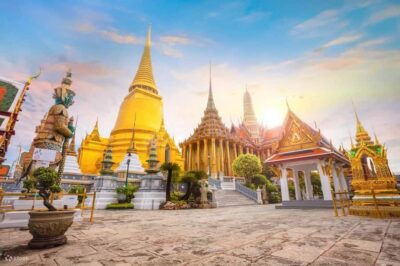
Bangkok: Grand Palace, Wat Pho, and Wat Arun Guided Tour
Read our review →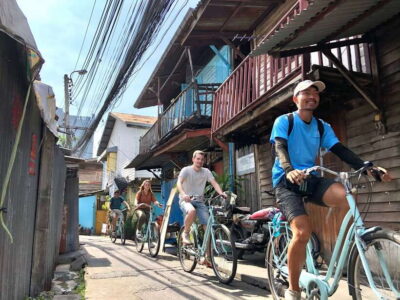
Bangkok: Temples, Canals & Local Life Bike Tour
Read our review →
Bangkok: Grand Palace and Wat Phra Kaew Guided Walking Tour
Read our review →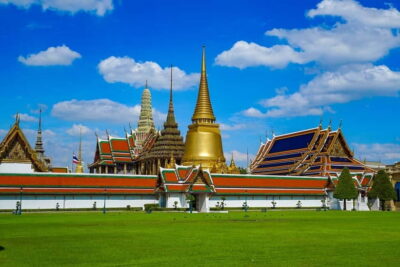
Bangkok: Grand Palace, Wat Pho, Wat Arun Sacred & Local Tour
Read our review →
Bangkok: Wat Pho and Wat Arun Guided Walking Tour
Read our review →This tour also ranks in