
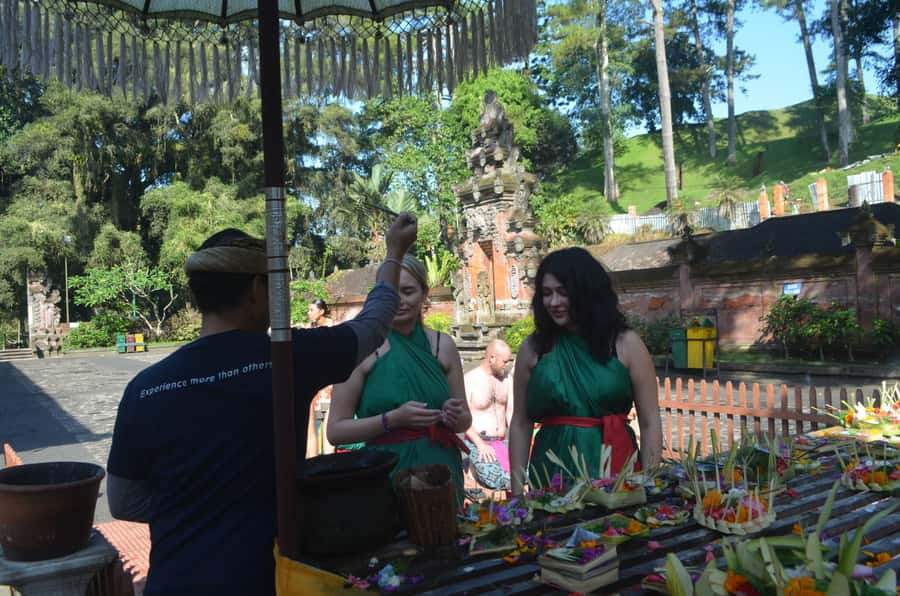
Review · INDONESIA
Bali: Purification at Tirta Empul Temple
Tirta Empul is not simply a temple stop with a quick photo break. Here, you take part in a Balinese purification ritual, changing into a provided wet suit and moving through the holy spring water under your guide’s direction. The temple visit, offerings, and calm pace give the day more meaning than a standard sightseeing trip. I especially like the private format and the fact that your guide explains each step before you enter the water.
I also like the practical touches: a locker for your belongings, a temple costume, bottled water, hotel pickup, and help with photos. Guides such as Bagus and Eka have been singled out for their friendly manner, careful explanations, and ability to make the day feel personal. The main drawback is simple: women may not take part during menstruation, according to local religious rules, though they may still visit the temple.
Key points at a glance
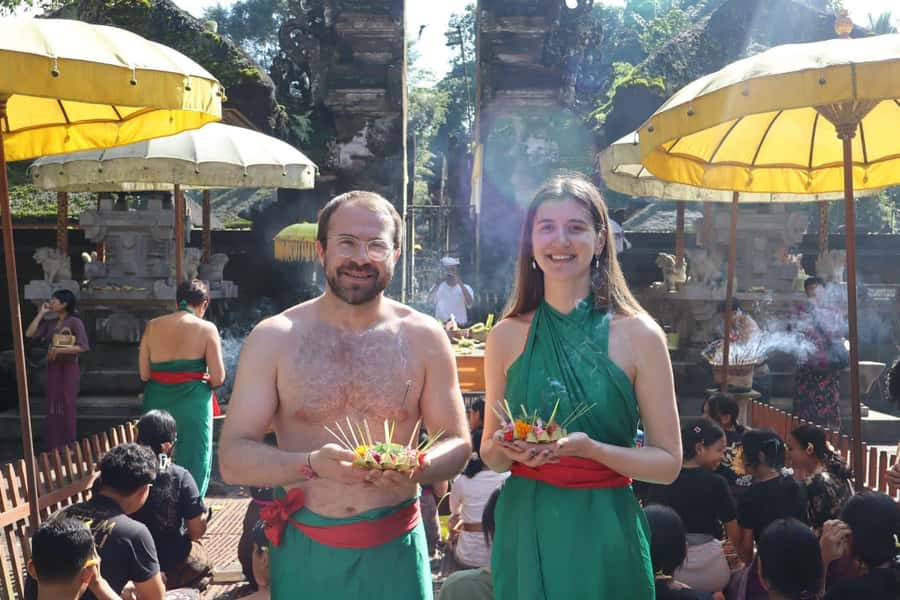
- The purification ritual is guided step by step, so you are not left guessing what to do at the spring.
- Balinese temple clothing, offerings, a wet suit, and a locker are included, which makes the ritual easier to manage.
- The private group format gives you more personal attention from an English-speaking guide.
- Guides Bagus and Eka receive special praise for taking photos, explaining local customs, and helping visitors feel at ease.
- The six-hour outing adds a coffee plantation and Tegallalang Rice Terrace, though coffee tasting and lunch cost extra.
- Pickup and drop-off from your Bali hotel are included, with free cancellation up to 24 hours before departure.
Why Tirta Empul feels different from a normal temple visit
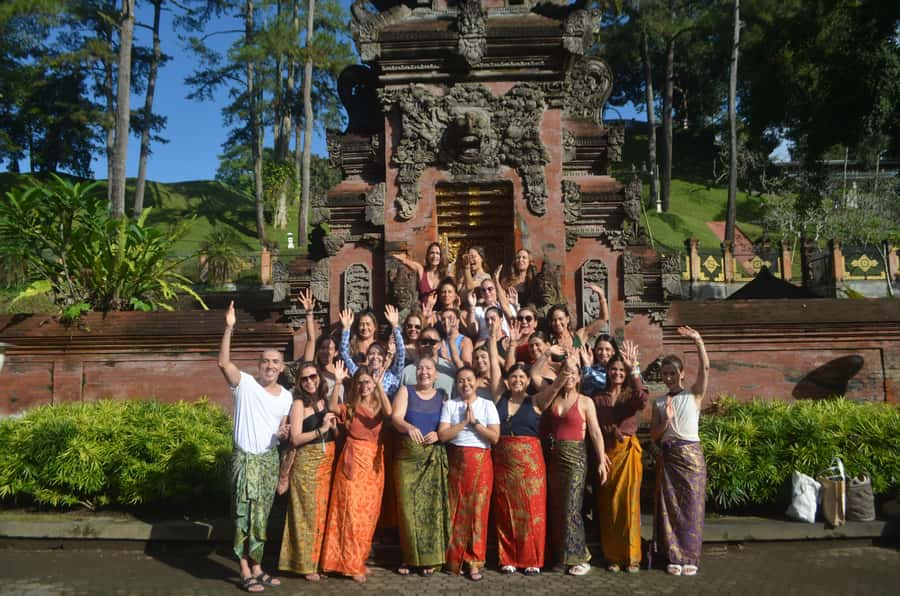
Tirta Empul is a place of worship, not just an attractive old building. Its central feature is the holy spring, where Balinese Hindus come for melukat, a purification ritual involving prayer, offerings, and bathing in spring water.
The exact religious meaning belongs to the Balinese community, so your role should be respectful and attentive. You are not entering a themed water attraction. You are following a local custom in an active temple setting. That distinction matters, and a good guide helps you understand it before you take part.
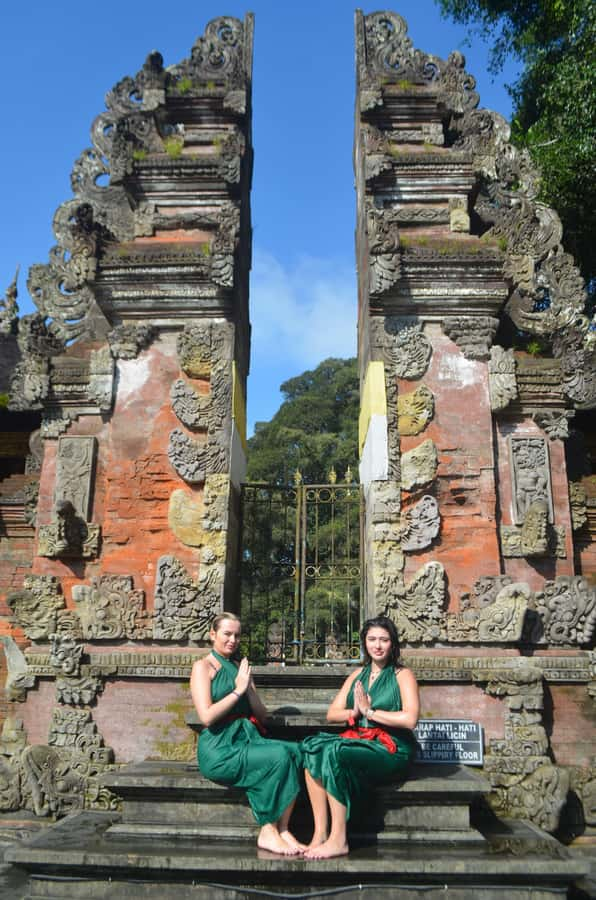
Your visit begins with entry into the temple complex and time to look around. You can take pictures in the inner court before preparing for the ritual. This opening period is useful because it lets you get familiar with the setting instead of rushing straight into the water.
At the entrance, you receive Balinese clothing to wear inside the temple. You then change into the wet suit provided for the purification. The clothing arrangement may take a little time, so do not expect the whole experience to move at a fast sightseeing pace.
More Uluwatu and Tanah Lot Temple Tours in Indonesia:
- Bali: Besakih Temple & Lempuyang Temple Gates of Heaven Tour
★ 4.8 · 3,243 reviews - Bali: Kecak Fire Dance Show & Uluwatu Temple Entry Ticket
★ 4.2 · 3,023 reviews - Bali Sunset: Uluwatu Temple, Kecak Dance and Jimbaran Bay
★ 4.7 · 2,397 reviews
The six-hour route from hotel pickup to the temple
The day begins with pickup at your hotel lobby in Bali. You should be ready about 10 minutes before the stated pickup time. Since this is a private group, the outing is more flexible than a large bus tour, and you can ask questions as you go.
The total duration is about six hours. Tirta Empul receives the largest share of the day, with about two and a half hours listed for the temple visit, guided tour, and sightseeing. That is a sensible amount of time for changing clothes, learning the ritual, taking part, storing your belongings, and seeing the grounds.
After the temple, the route continues to a coffee plantation for about 30 minutes. The final listed stop is Tegallalang Rice Terrace, where lunch is planned for about an hour. Keep in mind that the coffee tasting and lunch are available as add-ons rather than part of the base price. Confirm the cost before booking if you want both included.
The return drive brings you back to Bali after the stops. Exact pickup times and driving conditions can affect the pace, so I would avoid scheduling a tight evening plan immediately afterward.
Preparing for the holy spring ritual
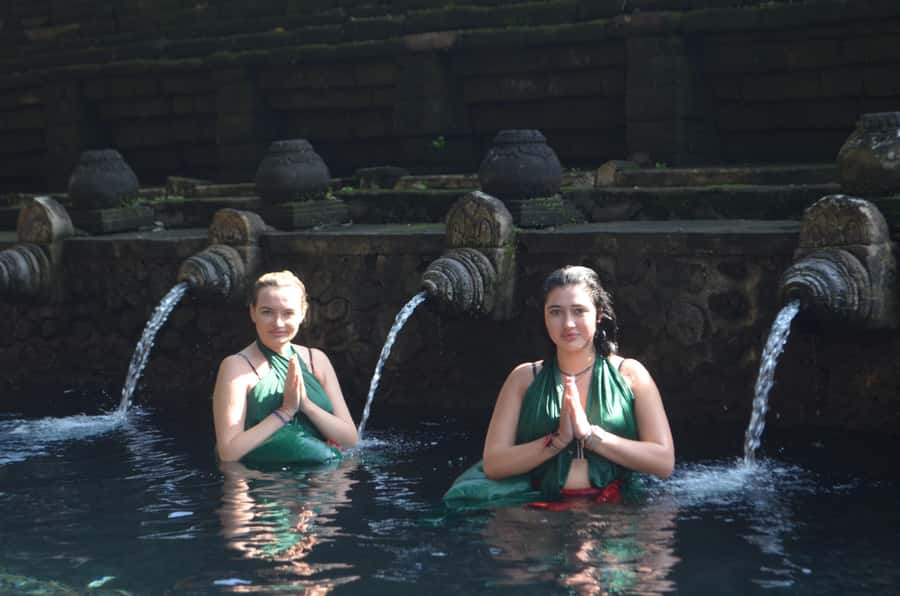
Before entering the water, your guide explains how to begin. Offerings are prepared for you, and the guide tells you how to proceed through the ritual correctly. Listen closely here. The instructions are not just about where to stand. They help you behave properly in a sacred setting.
You will change into the provided wet suit before getting into the spring. A locker is supplied for your belongings, which is a major convenience. Still, I would bring only what you need and keep valuables to a minimum.
The supplied information asks you to bring a change of clothes, a towel, camera, biodegradable sunscreen, and cash. A wet suit is also listed among the things to bring, even though a wet suit is included. To avoid confusion, confirm this detail with Baliosa Tour before departure, and pack a backup if you prefer certainty.
A towel and dry clothes matter more than they might on an ordinary temple outing. You will leave the water wet, and the rest of the day continues with sightseeing. Biodegradable sunscreen is the considerate choice around spring water and temple grounds.
Alcohol and drugs are not allowed. Respectful clothing and behavior are important throughout the visit, especially because this is a religious ceremony rather than a casual swim.
What the purification itself is like
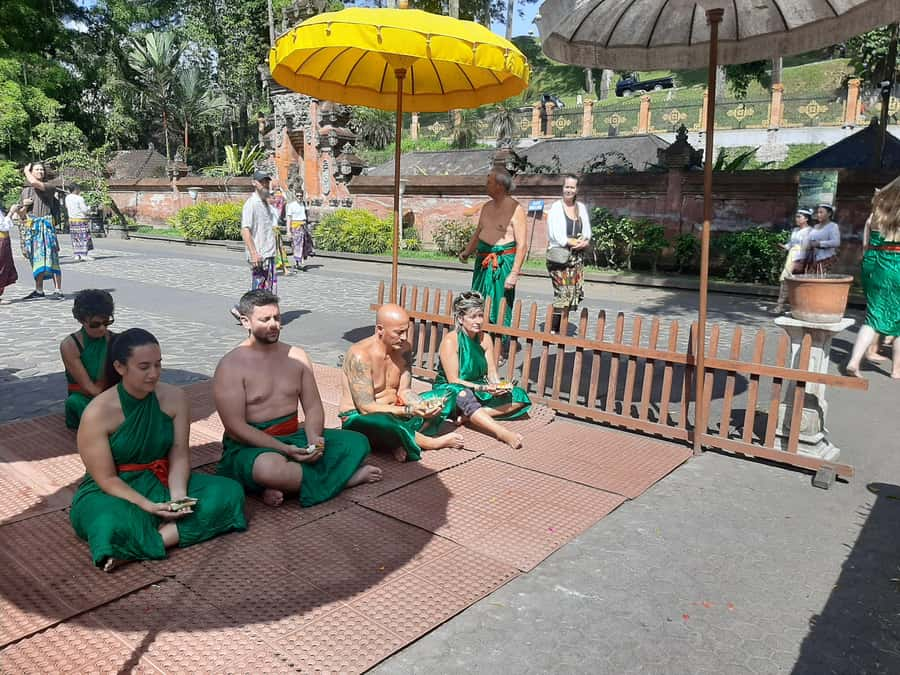
The central ritual takes place at the spring pool. Your guide directs you through the process and explains the rules before you enter. The water comes from the holy spring, and the experience is meant to refresh and purify you in a spiritual sense.
Do not treat the ritual as a race to visit every water spout. Follow the instructions, watch what is happening around you, and allow the ceremony to set the pace. Your guide is there to help you take part in the right way.
This is where the private format pays off. You can ask for a second explanation if a step is unclear. You can also tell the guide if you need a moment to change, organize your belongings, or prepare yourself before entering the water.
Photography is possible around the temple, and guides Bagus and Eka are particularly noted for helping with photos. Take pictures before or after the ritual when appropriate, but keep your camera use from distracting you or others during the ceremony.
Women who are menstruating are not permitted to perform the purification ritual because of local religious belief. This is a firm condition of participation. You can still join the temple visit and see the complex, but you should not plan on entering the water for the ritual during that time.
More Temple Tours around Indonesia:
- Ubud: Monkey Forest, Jungle Swing, Rice Terrace, and Water Temple
★ 5.0 · 7,160 reviews - Ubud: Waterfalls, Water Temple & Rice Terraces Private Tour
★ 5.0 · 5,484 reviews - Full-Day Tour to Water Temples and UNESCO Rice Terraces in Bali
★ 5.0 · 2,539 reviews - Tirta Empul: Temple Tour with Optional Spiritual Cleansing
★ 4.9 · 1,257 reviews
The temple grounds and inner court
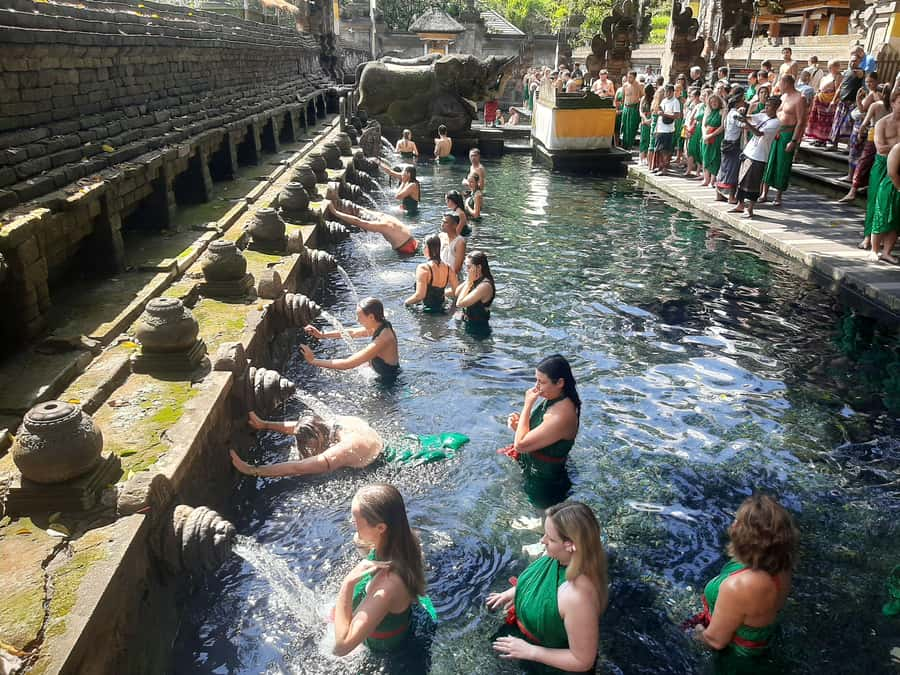
The temple visit is more than the spring pool. You have time to explore the complex and take pictures in the inner court before the ceremony begins. The temple clothing helps you feel properly dressed for the setting and makes the visit feel distinct from a quick roadside stop.
I would use this time to look closely at the carved details, courtyards, and water features rather than taking a few rushed photographs and moving on. The guide can add context about local tradition and explain how the temple fits into Balinese religious life.
The experience works best for people who want cultural contact with clear guidance. You do not need to arrive with a detailed knowledge of Balinese Hindu practice. You do need to arrive willing to listen and follow local rules.
Coffee plantation and Tegallalang Rice Terrace
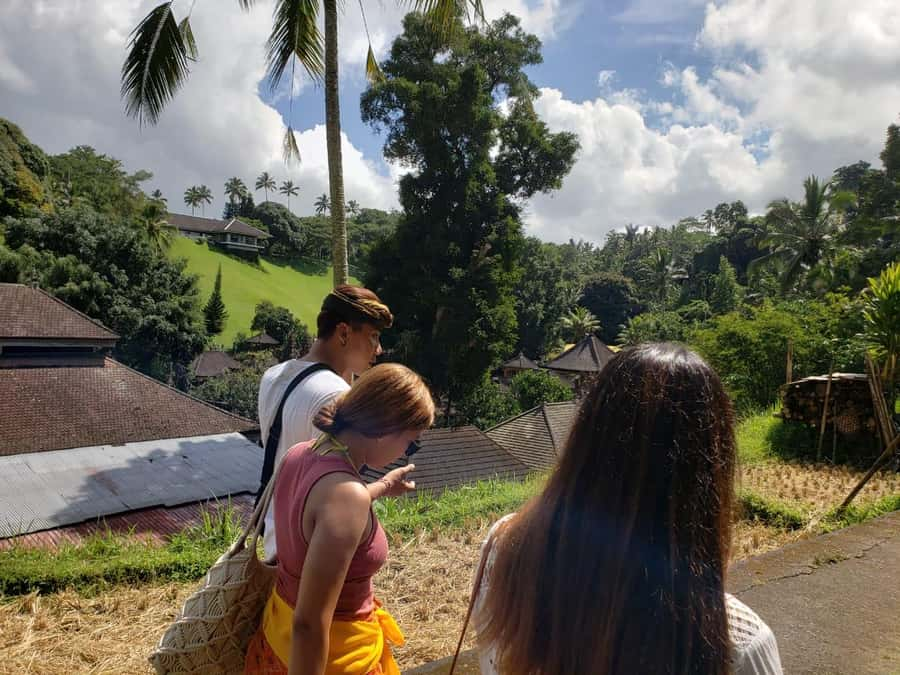
The coffee plantation is a short stop, listed at about 30 minutes. It gives the day a change of pace after the ritual. Coffee tasting is offered as an add-on, so check whether it is included in your selected package before assuming you will sample the coffee.
The short timing means this is not a long plantation tour. Think of it as a brief stop built into the route. If coffee is a major interest, confirm what the add-on includes and how much time is available.
Tegallalang Rice Terrace is the final listed sightseeing area, with about an hour set aside for lunch. The rice terraces provide a scenic contrast to the temple, and the stop gives you a chance to dry off, eat, and continue the day at a slower pace.
Lunch is also an add-on. The base price does not cover personal expenses, so bring cash for food, drinks, shopping, or other purchases. If you want a simple, predictable budget, ask for the full cost of lunch and coffee tasting before departure.
What the $70 price really covers
At $70 per person, the value depends on how much you want included assistance rather than just admission. The price covers hotel pickup and drop-off, entrance tickets, offerings, the wet suit, a locker, bottled water, and a private English-speaking guide.
That package removes several small expenses and practical worries. You do not need to arrange separate transport to Tirta Empul, buy your own temple entry, find offerings, or work out where to store your clothes and valuables. For a first visit, that support has real value.
The cost does not include personal expenses, tips, lunch, coffee tasting, or a special-language guide. Special language support is available as an add-on. You should budget for those extras if you want more than the basic English-guided experience.
The strongest value comes from the private format and the ritual guidance. If you only want to see Tirta Empul from the outside, this tour may offer more structure than you need. If you want to take part respectfully without arranging every detail yourself, the price is easier to justify.
The guides make a real difference
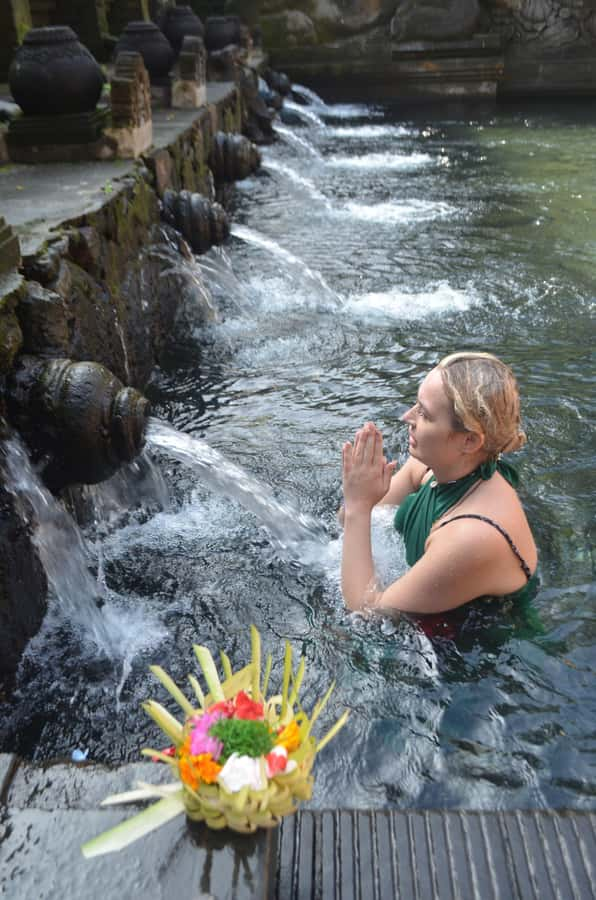
The guide is central to this activity. You need someone who can explain the ritual clearly, manage the clothing and offerings, help with photographs, and keep the day comfortable without turning the ceremony into a performance.
Bagus has received especially strong praise for being warm, courteous, resourceful, and good at taking photos. He is also noted for helping visitors experience the day in a local way and for adding other small activities. That kind of practical help can be useful during a private outing.
Eka is available as a French-speaking guide option and has been praised for making the experience feel personal and informative. If you need a language other than English, ask about the special-language guide add-on before booking.
The guide also controls how well the stops connect. A clear explanation at the temple, useful help with photographs, and a smooth transition to the coffee plantation and rice terrace can make a six-hour day feel relaxed rather than crowded.
Who should book this experience
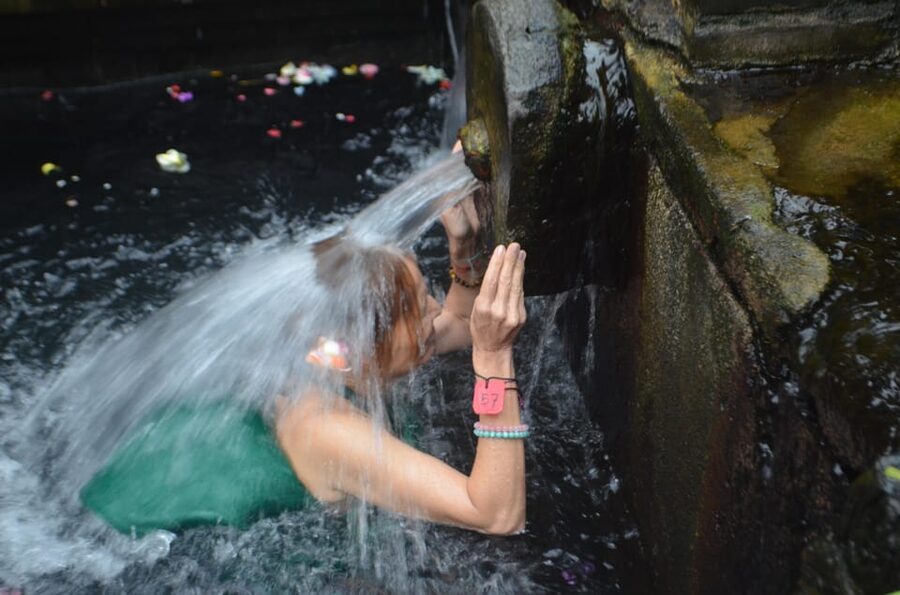
I would recommend this tour to you if you want an active cultural experience, not just temple photographs. It suits couples, friends, and small private groups who value personal guidance and hotel transport.
It is also a good fit if you are nervous about taking part in a ritual you do not understand. The guide explains the process, provides the offerings, and helps you follow the rules. That support makes the experience approachable.
You should think twice if you dislike changing clothes, getting wet, or following a set religious procedure. This is not a casual pool visit. You also need to be comfortable with the fact that lunch and coffee tasting are extra.
The tour is not suitable for wheelchair users, and it is not suitable for people over 95 years old. Women during their period may visit the temple but cannot perform the purification ritual.
Practical booking advice
Free cancellation is available up to 24 hours before departure for a full refund. You can also reserve now and pay later, which helps if your Bali plans are still changing.
The tour is offered with an English-speaking live guide. Pickup is included, and you should wait in your hotel lobby 10 minutes before the agreed time. Since the group is private, make sure the booking details match the number of people in your party.
Bring dry clothes, a towel, biodegradable sunscreen, cash, and a camera. Bottled water, offerings, temple entry, a wet suit, and a locker are supplied, but confirming the wet suit detail in advance is sensible because the packing list also asks you to bring one.
Should you book the Tirta Empul purification tour?
Book it if you want to take part in the Balinese purification ritual with clear instruction, hotel transport, and a private guide. The combination of ceremony, temple time, coffee plantation, and Tegallalang Rice Terrace gives you a varied half-day without having to organize each stop yourself.
The best reason to choose it is the personal guidance. Bagus and Eka are praised for warmth, clear step-by-step explanations, and photographs, which are exactly the qualities this experience needs. Skip it if you only want a quick temple visit, need wheelchair access, or cannot take part in the ritual during your visit.
FAQ
How long does the Tirta Empul tour last?
The experience lasts about six hours, including hotel pickup and drop-off, the temple visit, the coffee plantation, and the Tegallalang Rice Terrace stop.
Is hotel pickup included?
Yes. Pickup and drop-off from your Bali hotel are included. You should be ready in the hotel lobby 10 minutes before pickup.
Is the tour private?
Yes. The experience is offered as a private group tour with a live English-speaking guide.
What is included in the price?
The $70 price includes hotel transport, entrance tickets, offerings, a wet suit for purification, a locker, and bottled water.
Are lunch and coffee tasting included?
No. Lunch and coffee tasting are available as add-ons. Personal expenses are also not included.
Can women take part during their period?
No. Women who are menstruating are not permitted to perform the purification ritual because of local religious belief. They may still join the temple visit.
What should I bring?
Bring a change of clothes, a towel, camera, biodegradable sunscreen, and cash. A wet suit is also listed among the items to bring, although a wet suit is provided, so confirm this detail with the provider.
Is the tour suitable for wheelchair users?
No. The experience is not suitable for wheelchair users.
Can I cancel the booking?
Yes. You can cancel up to 24 hours before the experience for a full refund. Reserve now and pay later is also available.
Temple visits we reviewed lately in Indonesia
- SEMARANG SHORE TOURS: BOROBUDUR TEMPLE EXCURSIONS★ 5.0 · 3 reviews
- SEMARANG TOURS : GEDONGSONGO TEMPLE/TRAIN MUSEUM AMBARAWA★ 4.8 · 11 reviews
- Yogyakarta: Selogriyo Temple, Rice Terraces & Waterfall Tour★ 5.0 · 46 reviews
- Yogyakarta: Selogriyo Temple Tour & Java Rice Terrace Trek★ 5.0 · 175 reviews
- Selogriyo Temple Rice Terraces Private Tour with Local Lunch★ 5.0 · 4 reviews
- Ubud: Rice Terrace, Holy Water Temple & Waterfalls Trek Tour★ 4.9 · 115 reviews
- Private ubud tour Rice teracce, temple & Secret waterfall★ 3.7 · 3 reviews
- Prambanan Temple Afternoon Tour★ 4.9 · 48 reviews
Indonesia Temple Tours, compared.
Ubud: Monkey Forest, Jungle Swing, Rice Terrace, and Water Temple
Read our review →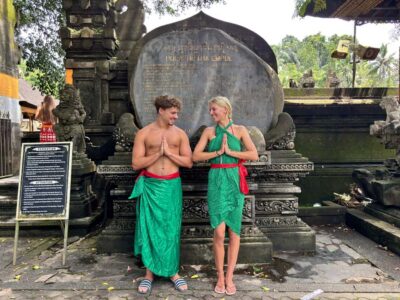
Ubud: Waterfalls, Water Temple & Rice Terraces Private Tour
Read our review →
Bali: Besakih Temple & Lempuyang Temple Gates of Heaven Tour
Read our review →
Bali: Kecak Fire Dance Show & Uluwatu Temple Entry Ticket
Read our review →
Full-Day Tour to Water Temples and UNESCO Rice Terraces in Bali
Read our review →
Bali Sunset: Uluwatu Temple, Kecak Dance and Jimbaran Bay
Read our review →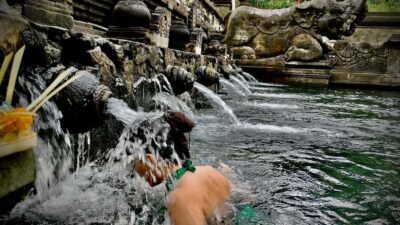
Tirta Empul: Temple Tour with Optional Spiritual Cleansing
Read our review →Private Uluwatu Temple and Kecak Fire Dance Evening Tour in Jimbaran Bay
Read our review →This tour also ranks in