
Review · BALI
Bali: Archeology Museum, Gunung Kawi & Goa Gajah Temple Tour
The most rewarding part of this tour is the way it links several ancient sites around Tampak Siring and Bedulu. You move from sacred spring pools to royal burial shrines, rock carvings, a cave temple, and a museum filled with old stone relics. It is a useful day for seeing Bali beyond beaches and rice-field viewpoints.
I like the private format, which lets your guide set the pace and sometimes change the order to avoid heat or crowds. I also like the range of sites: Gunung Kawi gives you a strong physical sense of ancient Bali, while Yeh Pulu and Gedong Arca add smaller, quieter stops that many visitors miss.
The catch is the walking. Gunung Kawi, Yeh Pulu, and Goa Gajah involve stairs, uneven paths, and exposed stretches, so this is not an easy sightseeing ride. The museum may also be closed on Sundays, though guides have substituted another temple when needed.
Key points to know before booking
- Five important stops in one day: Tirta Empul, Gunung Kawi, Yeh Pulu, Goa Gajah, and the Gedong Arca Archaeological Museum.
- Private transport and guide: Hotel pickup, drop-off, entrance fees, and mineral water are included in the $36 price.
- A history-focused day: The route covers ancient Hindu worship, royal monuments, rock carvings, sarcophagi, and Balinese customs.
- Plan for serious walking: Gunung Kawi includes a long stairway, and several sites have slippery or uneven stone paths.
- Optional extras change the character of the day: Add coffee tasting, a massage, a jungle swing, rafting, or an ATV ride if your chosen option includes it.
- Strong guide service matters here: Guides such as Suker, Sumadi, Joe, Komang Sparsa, Dharma, and Subi have been praised for clear explanations and flexible pacing.
Why this central Bali history tour is worth your time
At $36 per person, this is good value if you want transport, a private guide, entrance fees, and several major archaeological sites in one seven-hour outing. You are not paying only for a driver and a series of photo stops. The guide is an important part of the experience because the stones, carvings, and temple layouts make far more sense when someone explains their religious use and place in Balinese history.
The private setup is especially helpful. You can stop to ask questions, take your time at a carving, or slow down on the stairs without holding up a large group. Several guides, including Suker, Sumadi, Joe, Dharma, and Komang Sparsa, are praised for explaining both the sites and everyday Balinese customs. That broader context is one of the tour’s best features.
You should expect a full day rather than a relaxed half-day outing. Seven hours includes driving between sites, walking through temple grounds, and time for explanations. Food and drinks are not included, so carry cash for lunch, snacks, and personal purchases.
More Uluwatu and Tanah Lot Temple Tours in Bali:
- Bali: Besakih Temple & Lempuyang Temple Gates of Heaven Tour
★ 4.8 · 3,243 reviews - Bali Sunset: Uluwatu Temple, Kecak Dance and Jimbaran Bay
★ 4.7 · 2,397 reviews - Bali: Tanah Lot Temple Half Day Sunset Tour
★ 4.4 · 702 reviews
Tirta Empul and the meaning of sacred water
The day begins at Tirta Empul, a Hindu temple dating from the 10th century. Its best-known feature is the holy spring and the row of bathing pools used for purification rituals. The water is treated as sacred, not simply as a pleasant place to cool off.
You can look at the bathing areas and learn how the cleansing practice fits into Balinese Hindu belief. If you plan to take part in the ritual, follow your guide’s instructions and respect the local customs. Modest clothing is required, with shoulders and knees covered.
Tirta Empul can feel more active than the smaller archaeological stops because it remains an important place of worship. That is part of its value. You are not looking at a dead monument, but a living temple where religious practice continues.
Bring a hat, sunscreen, and water. Much of the visit takes place outdoors, and shade is limited in some areas. Photography is allowed, but ask before using a drone, since restrictions can apply at temples.
Gunung Kawi and the long stairway to royal monuments
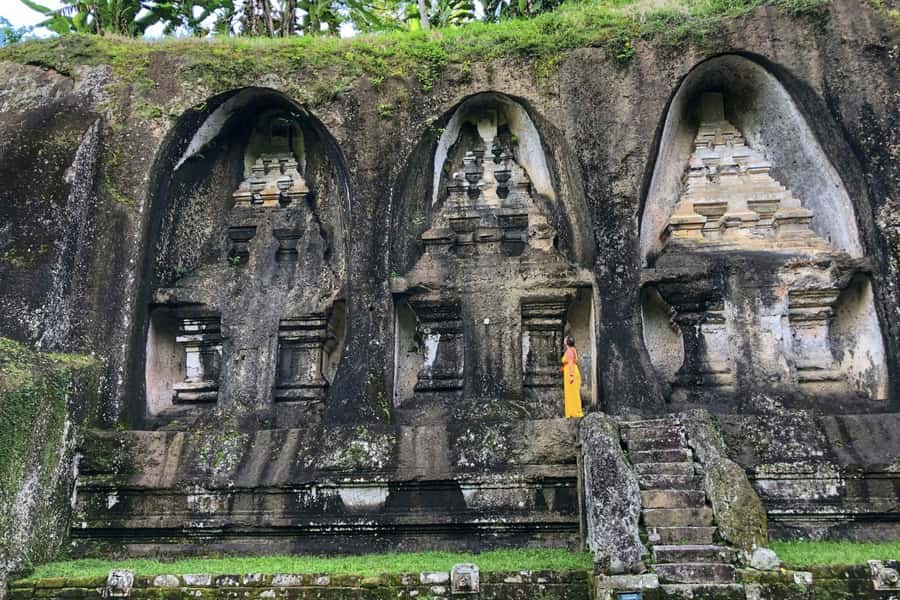
Gunung Kawi is likely to be the most physically demanding stop. The route includes a long descent and ascent, with roughly 300 steps often noted as part of the visit. The stone stairway and uneven paths can be slippery after rain, so sturdy walking shoes are a much better choice than sandals with little grip.
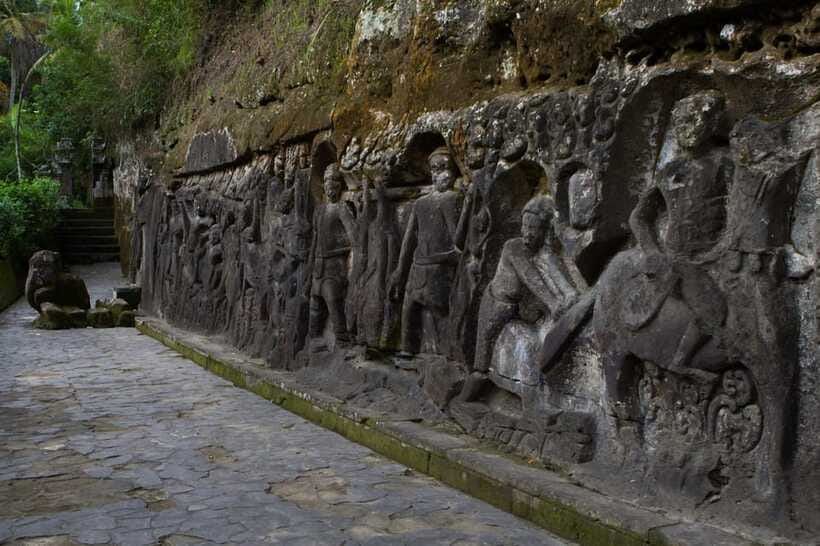
The reward is a striking archaeological setting beside the Pakerisan River. Monumental shrines are cut into the rock walls, and the complex is linked to Balinese rulers of the 11th century. It is sometimes described as pre-Hindu in atmosphere, though the site belongs to the early Hindu period of Bali. Your guide can help sort out the layers of belief and legend.
This is the stop where a guide makes the biggest difference. The ruins do not explain themselves, and stories about forgotten kings can otherwise blur into a quick photo opportunity. Guides such as Komang Sparsa and Dharma have been praised for explaining both the religious meaning and the archaeological details.
If the weather is hot, ask to visit Gunung Kawi earlier in the day. One guide, Dharma, was noted for putting the site with the most walking first, before the heat became intense. The private format makes that sort of adjustment possible.
Yeh Pulu’s everyday scenes carved in stone
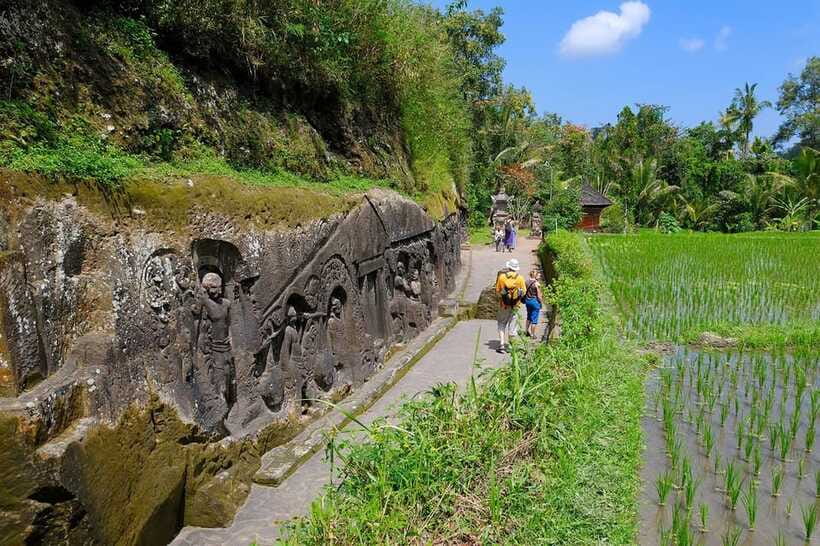
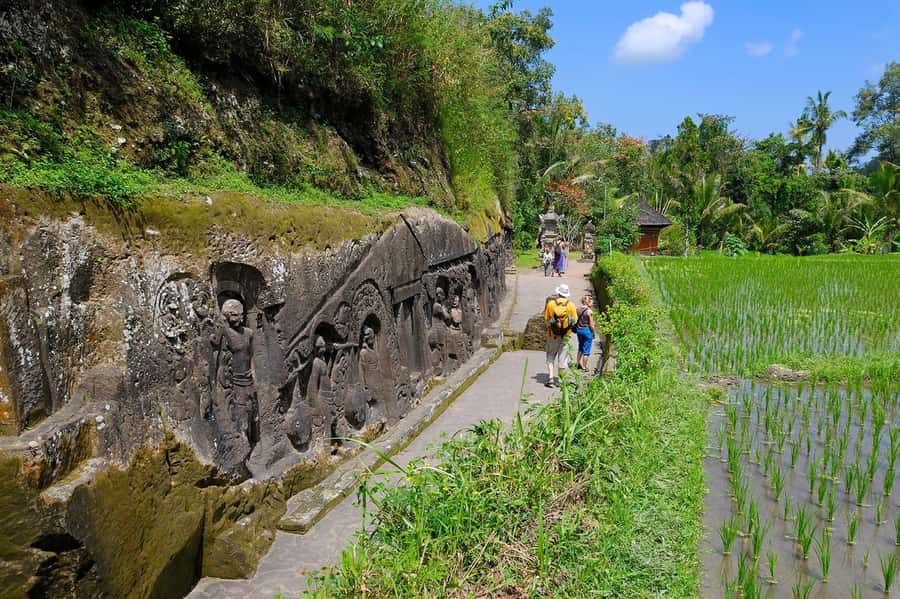
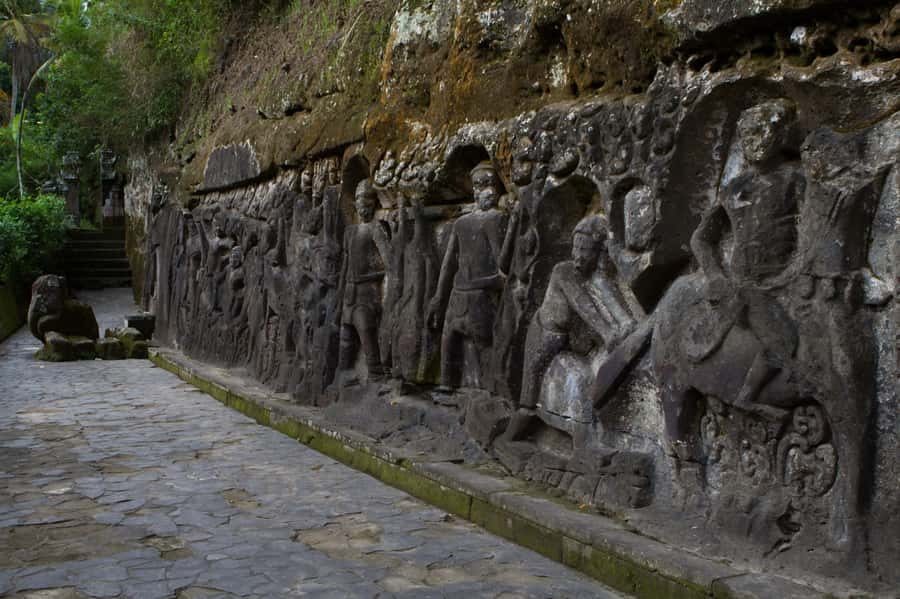
Yeh Pulu is a quieter archaeological site near Bedulu. Its main feature is a roughly 25-meter line of carvings cut into a rock face. The scenes include mythological figures, Hindu gods, and people involved in ordinary village activities.
That mix is what makes Yeh Pulu special. Instead of seeing only royal or divine subjects, you get hints of daily life alongside religious imagery. The carvings offer a more personal look at the people and beliefs of the period, even though some details remain open to interpretation.
The site is not enormous, but it rewards close attention. Let your guide point out the figures and explain the stories rather than rushing through with a few photographs. The walk is still uneven, and the area can be slippery after rain.
Yeh Pulu also helps balance the larger temple complexes. Gunung Kawi feels monumental, while Yeh Pulu feels more intimate. Together, they give you two different ways to think about ancient Bali.
More Museum Visits in Bali:
- Montserrat Museum and Monastery Entry Ticket
★ 4.5 · 1,740 reviews - Lisbon: Belem, Jeronimos Monastery, and Coach Museum Tour
★ 4.8 · 478 reviews - From Sofia: Rila Monastery and Optional Museum, Cave or Spa
★ 4.6 · 270 reviews - Takua Pa: Food Market, Tsunami Museum, Temple, & Old Town
★ 4.9 · 165 reviews
Goa Gajah, the cave with the demon-faced entrance
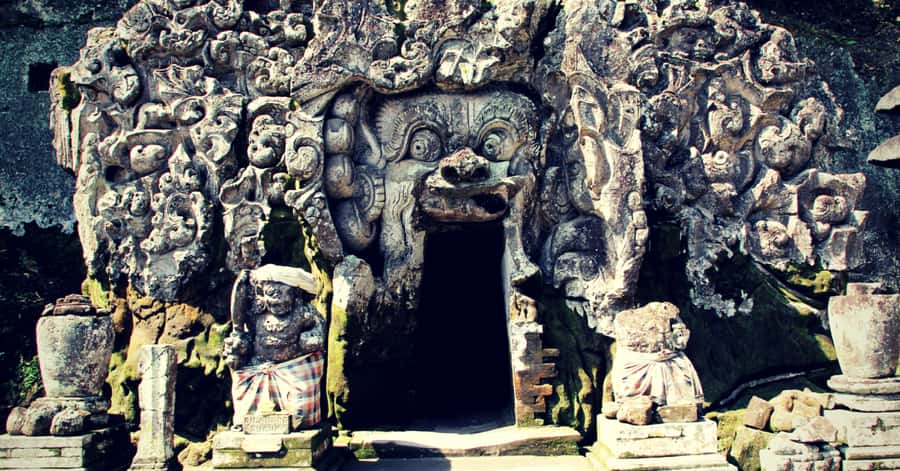
Goa Gajah dates from the 9th century and is one of Bali’s most recognizable historic sites. Its entrance, shaped like a demon’s open mouth, leads into a small cave associated with meditation and spiritual practice.
The entrance is the obvious photograph, but do not stop there. Inside and around the cave, you will find stone carvings, bathing structures, and other remains that show the site’s religious importance. The setting has a quieter mood than a working temple such as Tirta Empul, though it remains a sacred place and should be treated with care.
The paths around Goa Gajah include steps and uneven ground. Wear shoes that you can walk in comfortably for several hours. You should also keep your voice down, avoid touching carvings, and follow any instructions about restricted areas.
The four main temple and archaeological stops work well together. Tirta Empul shows active ritual, Gunung Kawi presents royal monuments, Yeh Pulu offers carved scenes of myth and daily life, and Goa Gajah brings you into a place built for spiritual reflection.
Gedong Arca and Bali’s collection of old stone relics
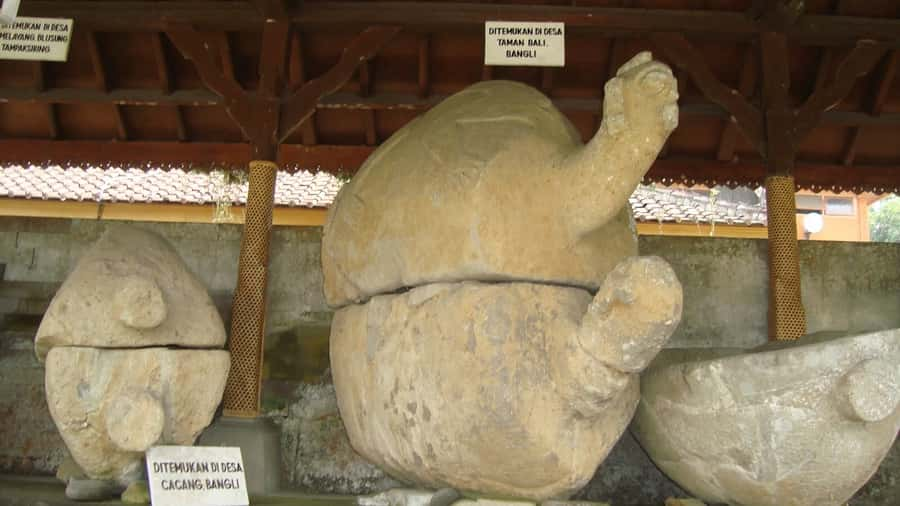
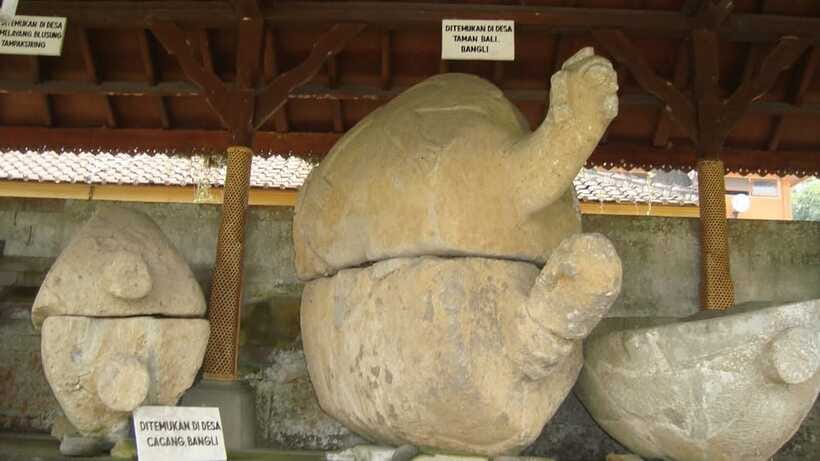
The final stop is the Bali Gedong Arca, also called the Bali Archaeological Museum, in Tampak Siring Village. The collection includes heritage objects gathered over the centuries, including sarcophagi and other ancient stone pieces.
This museum is useful because it gives you a closer look at objects that can be hard to understand in their original outdoor setting. A sarcophagus is easier to study when you can see its shape and decoration without a long line of people waiting for a photograph. The museum also gives the day a clear ending by bringing different periods and sites together.
Check the museum’s opening situation when you book, particularly if you are going on a Sunday. On one occasion, the museum was closed and the guide substituted another temple. That flexibility is helpful, but you should not assume the museum visit is guaranteed on every day.
The museum is best for people who enjoy archaeology and material culture. If you mainly want dramatic views, it may feel less exciting than Gunung Kawi. If you like understanding how ancient objects were made, used, and preserved, it adds real value.
What the private guide changes
The guide is not an extra decoration on this tour. You are visiting sites where a short explanation can change what you see. A carved figure at Yeh Pulu, a water spout at Tirta Empul, or a burial monument at Gunung Kawi can look like an interesting stone until someone explains its purpose.
The guides named in the tour feedback include Suker, Gusde, Komang, Joe, Subi Made, Sumadi, Dharma, Sandi, Dayu, Kadek, and I Komang Sparsa. Their strongest qualities are clear English, patience, local cultural knowledge, and the ability to answer questions beyond the official route.
You can also ask your guide about current customs, temple etiquette, food, local art, or daily life. One guide took a visitor to an artist studio, while others recommended a lunch stop or adjusted the route to avoid traffic and crowds. These extras are not guaranteed, but the private format gives you room to ask.
The listed tour language is English. A female guide, German-speaking guide, or Korean-speaking guide can be selected as an add-on when available for your chosen option.
Optional add-ons: useful extras or too much in one day?
The basic route already fills seven hours, so think carefully before adding activities. Coffee or luwak coffee tasting is the easiest extra to combine with the cultural stops. It adds a lighter break and was described as a pleasant part of the day by people who chose it.
A jungle swing with coffee is more focused on photographs and leisure. It can work if you want a classic Bali picture, but it shifts the day away from archaeology. A traditional massage is another sensible add-on if you expect your legs to complain after the stairs. Options include one-hour and two-hour massages.
Rafting with a buffet lasts three hours, while solo or tandem ATV rides last one hour. These are substantial activities, not quick add-ons. Check the exact package before booking because some extras are available only with certain options, and a packed schedule may leave little time for the historical sites.
A Polaroid package includes 10 photographs. It may appeal if you want printed souvenirs, but your own camera is still worth bringing. Ask before taking photographs at sacred areas, and never touch carvings simply to improve a picture.
Walking, clothing, weather, and practical comfort
Dress for temples rather than for a resort. Your shoulders and knees should be covered, and you need shoes that handle stairs and rough stone. The tour is not recommended for wheelchair users, people with mobility impairments, pregnant women, people over 70, or anyone who finds steep steps difficult.
Menstruating visitors are not permitted to enter the temples because of local customs. This is important to know before you reserve, since it affects access to the core sites.
Carry sunscreen, a camera, cash, and a light raincoat. The tour runs in light rain, but rain can make stone paths slick. Keep drinking water throughout the day. Mineral water is included, but food and other drinks are not.
Alcohol and drugs are not allowed, and pets cannot join the activity. These are sacred places, so quiet behavior and respect for restricted areas matter more than getting the perfect photograph.
Who should book this $36 experience?
You should book this tour if you want a history and culture day based around Ubud and central Bali, especially if you prefer a private vehicle and a guide who can explain what you are seeing. It suits curious first-time visitors, repeat Bali visitors who have missed the archaeological sites, and anyone interested in temples, mythology, architecture, and religious practice.
It is less suitable if you want a slow day with little walking. The temples are not all close together, and the combination of heat, stairs, and uneven paths can be tiring. You should also think twice about adding rafting, an ATV ride, or a long massage unless you are comfortable with a very full schedule.
The price is strong for what is included: hotel pickup and drop-off, entry fees, mineral water, private transport, and an English-speaking guide. The value depends on using the guide well. Ask questions, request a sensible pace, and tell the guide if you want more time at the museum or less time at an optional shopping or coffee stop.
Should you book the Bali archaeology tour?
Book it if you want to understand Bali rather than simply photograph it. Tirta Empul, Gunung Kawi, Yeh Pulu, Goa Gajah, and Gedong Arca show different sides of the island’s past, and the private guide helps connect them.
Skip it if steep stairs and rough paths will make the day uncomfortable. For everyone else, this is a well-priced, focused way to see central Bali’s ancient sites, with enough flexibility to make the experience feel personal.
FAQ
How long does the tour last?
The tour lasts seven hours, including hotel pickup and drop-off, transport between the sites, walking, and guided visits.
Which places are included?
The itinerary includes Tirta Empul Temple, Gunung Kawi, Yeh Pulu, Goa Gajah Temple, and the Bali Gedong Arca Archaeological Museum.
Is the tour private?
Yes. It is offered as a private group experience with an English-speaking live guide.
Are entrance fees and transport included?
Yes. Hotel pickup and drop-off, entry fees, and mineral water are included. Food, drinks beyond the included water, and personal spending are not included.
Is the tour suitable for people with limited mobility?
No. The tour includes extensive walking, steep stairs, and uneven paths, especially at Gunung Kawi, Yeh Pulu, and Goa Gajah. It is not suitable for wheelchair users or people with mobility impairments.
Can I add other activities?
Yes, available add-ons include coffee tasting, traditional massage, a jungle swing with coffee, rafting with a buffet, ATV rides, language-specific guides, and a Polaroid photo package. Availability depends on the option you choose.
Temple visits we reviewed lately in Bali
- Ubud: Rice Terrace, Holy Water Temple & Waterfalls Trek Tour★ 4.9 · 115 reviews
- Bali: Water Temple, Waterfalls and Unesco Rice Terrace Tour★ 4.9 · 66 reviews
- Bali: Beaches, Uluwatu Temple Sunset & Fire Kecak Dance Show★ 4.9 · 9 reviews
- Bali: Secret Garden, Ulun Danu Temple and Waterfall Tour★ 4.8 · 12 reviews
- Bali: Uluwatu Temple, GWK, and Padang Beach Full-Day Tour★ 4.7 · 107 reviews
- Bali: Uluwatu ATV Quad Bike with Temple Tour & Kecak Dance★ 4.4 · 8 reviews
- Bali: Taman Ayun and Tanah Lot Temple Sunset Tour★ 4.7 · 154 reviews
- Bali: Kintamani Cafe, Waterfall, Temple and Cretya Ubud Tour★ 5.0 · 100 reviews
Bali Temple Tours, compared.

Bali: Besakih Temple & Lempuyang Temple Gates of Heaven Tour
Read our review →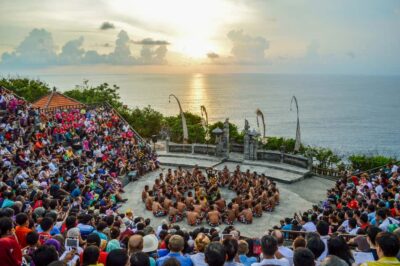
Bali Sunset: Uluwatu Temple, Kecak Dance and Jimbaran Bay
Read our review →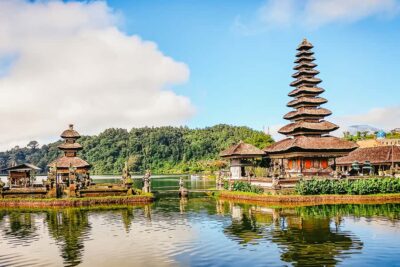
North Bali: Sunrise Tour with Dolphins, Waterfalls & Temples
Read our review →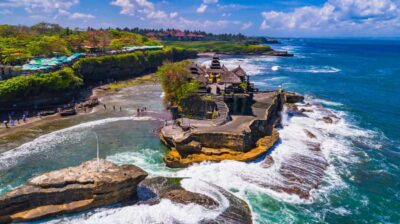
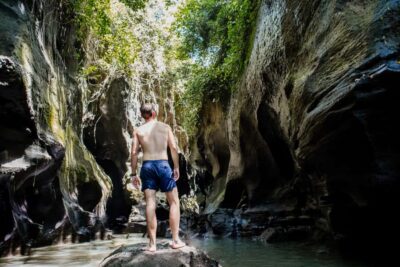
Bali: Hidden Canyon, Waterfall & Temples Small Group Tour
Read our review →
North Bali: Sekumpul Waterfalls and Ulun Danu Temple Tour
Read our review →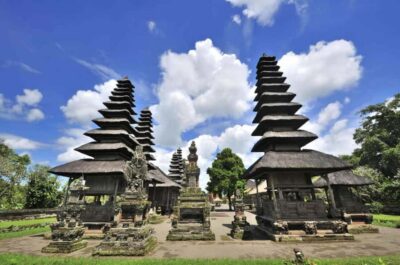
Bali/Batur: Mystical & Burial Rituals Tour with Kehen Temple
Read our review →This tour also ranks in