Review · UBUD
Monkey Forest, Kanto Lampo, Waterfall, Temple & Rice Terrace
Kanto Lampo Waterfall gives this Ubud day a welcome splash. You can get close to the falling water, feel its spray, and then move from jungle scenery to rice fields, a holy spring temple, and a coffee plantation. I like the wide mix of Bali experiences and the fact that hotel pickup covers several popular resort areas. I also like the flexible pace, with guides such as Reval and Tarisa making room for photos and extra time at the sights.
The main caution is the amount of ground covered. From Kuta, Seminyak, Nusa Dua, Sanur, or Canggu, the drive to Ubud can add time to an already full day. English ability may vary by guide, too, so you may learn less about Balinese culture than you hoped, even when the practical service is warm and attentive.
Key points at a glance
- Five very different stops: Combine monkeys, a waterfall, rice terraces, a purification temple, and coffee tasting in one day.
- Kanto Lampo is hands-on: You can approach the falling water and feel the cool spray rather than simply view it from far away.
- Tirta Empul adds cultural depth: The holy spring temple remains an active place of ritual purification for Balinese Hindus.
- Pickup reaches beyond Ubud: Collection is offered in Ubud, Kuta, Seminyak, Canggu, Nusa Dua, and Sanur.
- Flexible guiding is a real strength: Reval is praised for changing the schedule, while Tarisa allowed time at each waterfall stop.
- The $23 price is attractive: Bottled water, hotel transfers, and entrance fees when that option is selected add useful value, though lunch and personal spending are extra.
What this Ubud day is really trying to do
This is not a quiet single-site visit. It is a broad introduction to the Ubud area, built around several of Bali’s most familiar sights.
You begin with the Ubud Monkey Forest, then head to Kanto Lampo Waterfall, Tegalalang Rice Terrace, Tirta Empul Temple, and a coffee plantation. The sequence gives you a quick look at nature, agriculture, religion, and local food production.
I see this as a good first Ubud outing if you want orientation rather than one long, slow visit. You will collect a lot of impressions in one day: macaques in the trees, water over dark rock, carefully worked rice fields, temple pools, and coffee and tea tasting.
The tradeoff is simple. Five major stops require movement between places, and each stop has a different feel. If you prefer to spend half a day studying one temple or walking slowly through the countryside, this plan may feel busy.
Hotel pickup is included from selected areas in Ubud, Kuta, Seminyak, Canggu, Nusa Dua, and Sanur. That matters because getting to Ubud independently can be a chore from the southern beach districts. Pickup saves you the trouble of arranging separate transport, although the exact time on the road depends on your starting point.
More Temple and Waterfall Tours in Indonesia
- Ubud: Waterfalls, Water Temple & Rice Terraces Private Tour
★ 5.0 · 5,484 reviews - Ubud Tour with Monkey Forest Waterfalls Temples and More
★ 5.0 · 495 reviews - Ubud Top Attractions: Waterfalls, Temples and Rice Terraces
★ 5.0 · 460 reviews
Meeting Bali’s monkeys in Ubud
The Monkey Forest is an easy way to begin with one of Ubud’s best-known sights. It is a wooded sanctuary where long-tailed macaques move around the trees and sacred temple grounds.
The appeal is not only the animals. You also get a look at the way nature and religious spaces share the same setting in Bali. The forest feels different from an ordinary city park, with paths, dense growth, and temple structures woven into the visit.
Keep your attention on your belongings and follow the guide’s instructions around the macaques. The animals are free to move close to people, which makes the visit lively but also means you should not treat them like tame pets.
A guide can improve this stop by explaining the religious setting and helping you manage the practical side of being near the monkeys. Reval was praised for taking photographs without needing to be asked, a useful touch at a place where it is easy to spend your time watching the animals instead of taking pictures.
The Monkey Forest can be one of the more crowded-feeling stops on a popular Ubud day, though the tour information does not give a fixed group size or visiting time. If photography matters to you, tell your guide early. The schedule is described as flexible, and that can help you avoid rushing through the parts you enjoy most.
Getting close to Kanto Lampo Waterfall
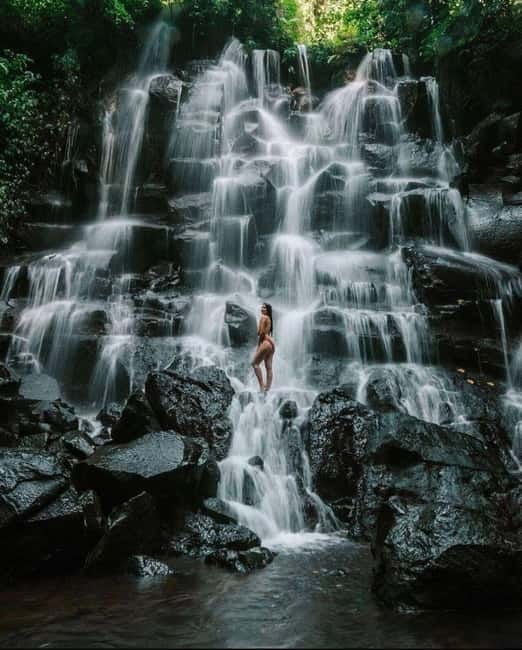
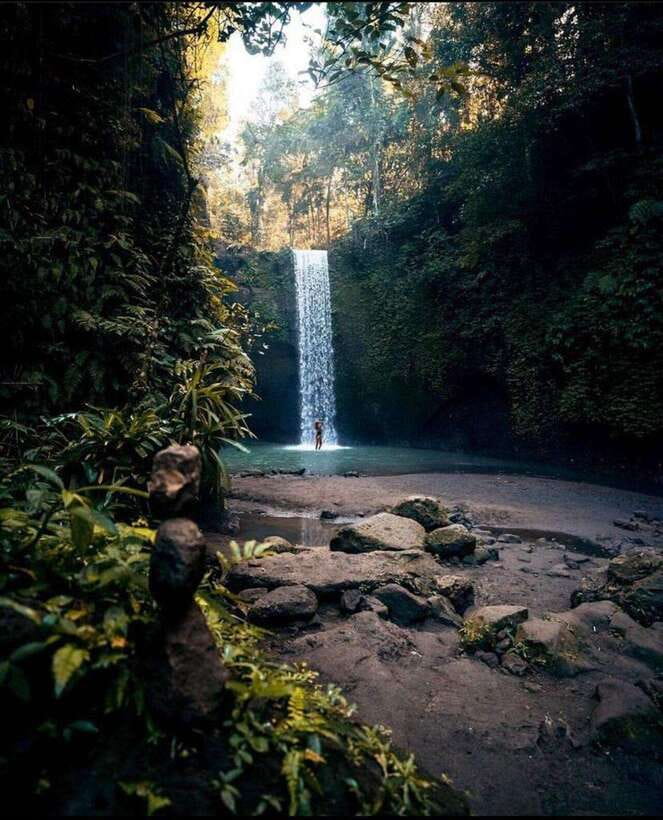
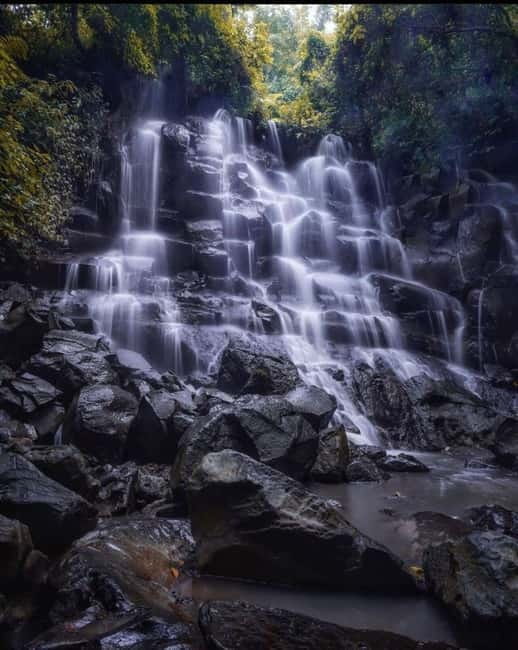
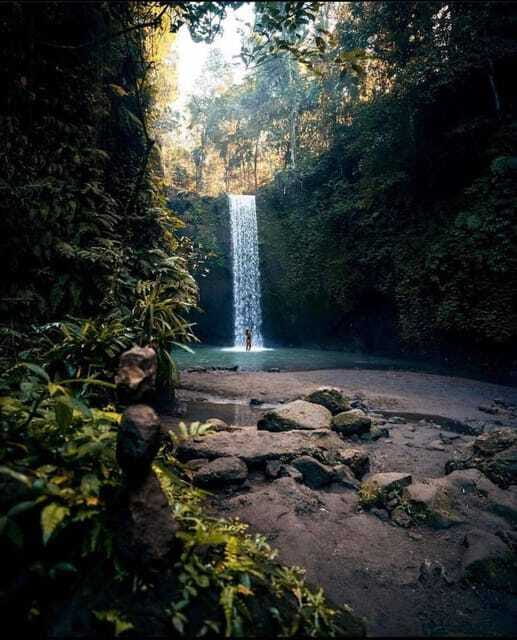
Kanto Lampo is the most physical and refreshing stop. The waterfall is on the south side of Ubud, and you can approach the falling water closely enough to feel the spray.
That direct contact is the point. This is not just a viewpoint where you stop for a quick picture from a platform. You get the chance to enjoy the water and the sound of the falls at close range.
Conditions around a waterfall can be wet, so sensible footwear and care on slippery surfaces are important. The supplied information does not specify changing facilities, walking distance, or swimming rules, so ask your guide before entering the water or climbing onto rocks.
One guide, Tarisa, is praised for taking time at three waterfall spots and explaining what you were seeing. This particular experience is advertised with Kanto Lampo as a key stop, so do not assume that every booking includes three separate waterfalls. Confirm the exact plan if that detail matters to you.
I like the waterfall portion because it breaks up the cultural and sightseeing stops. After the Monkey Forest, you get a chance to slow down, enjoy natural water, and take photographs that feel less formal than the usual temple or rice-field image.
Reading the green steps of Tegalalang Rice Terrace
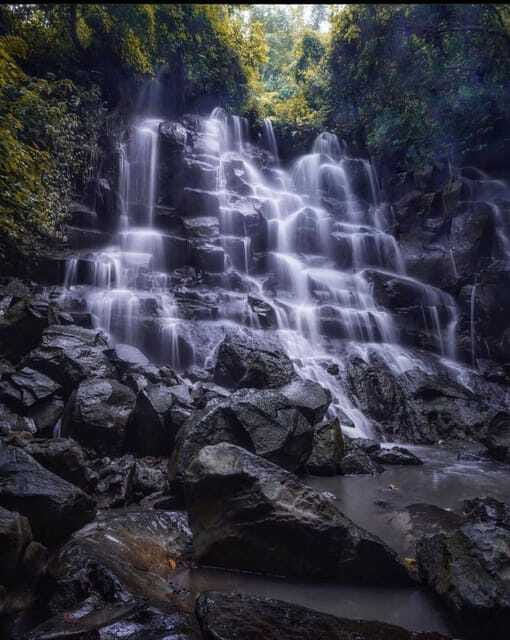
Tegalalang gives you the classic Bali countryside view: rice fields arranged in stepped terraces, with coconut palms and green agricultural land around them.
The value here is visual, but it also helps you understand how much work sits behind the postcard image. These fields are shaped for farming, not simply placed for photographs. The terraces show how Balinese rural life uses sloping ground to grow rice.
Do not expect a museum-style explanation unless your guide provides one. The experience centers on seeing the terraces and taking in the setting. A guide who talks about daily life can make this stop much more meaningful, and one area that could be stronger is cultural explanation in English. One guide received praise for kindness and attention but had difficulty communicating in English, leaving less room to discuss Balinese life and customs.
The terraces can also be a quick stop if you are trying to fit every location into the day. I would tell your guide if you want time to look beyond the main photo points. The flexible approach described for Reval and other guides is useful here, especially if you would rather enjoy the view than hurry to the next stop.
More Temple and Waterfall Tours in Ubud
- From Bali: Saraswati Temple, Monkey Forest, Ubud Waterfalls
★ 4.9 · 263 reviews - Ubud: Rice Terraces, Water Temple, & Waterfalls Private Tour
★ 5.0 · 44 reviews - Bali: Rice terrace, Waterfall, and water Temple Day Tour
★ 5.0 · 10 reviews - Bali ubud : monkey forest, waterfall , temple
★ 3.4 · 8 reviews
Understanding Tirta Empul’s holy spring
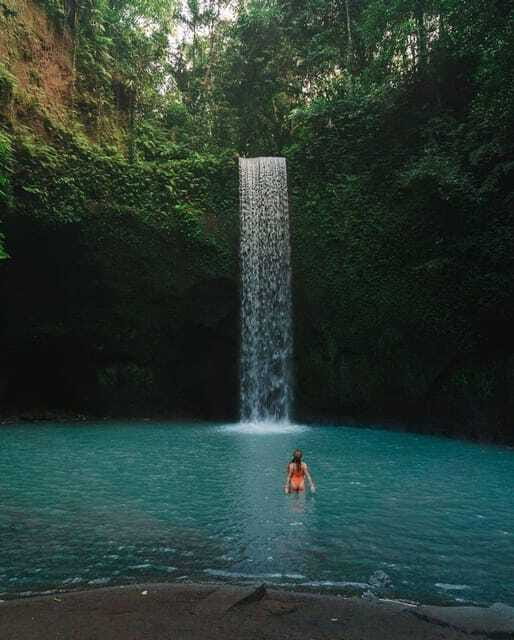
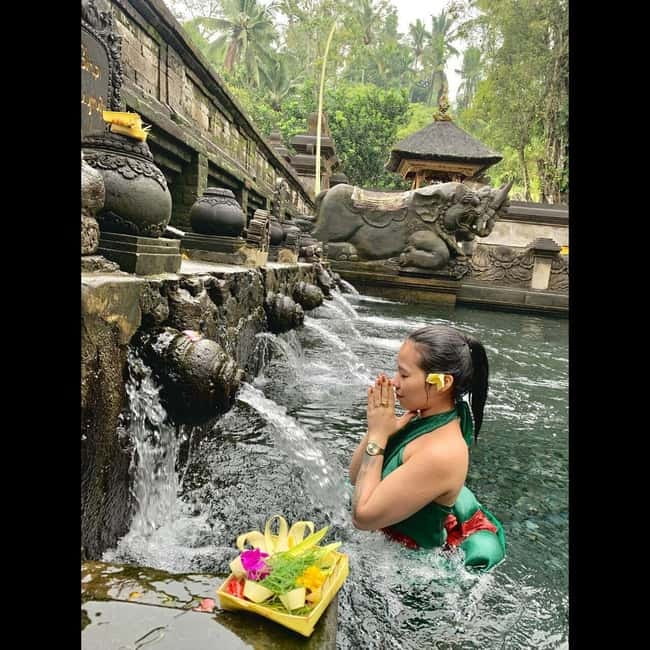
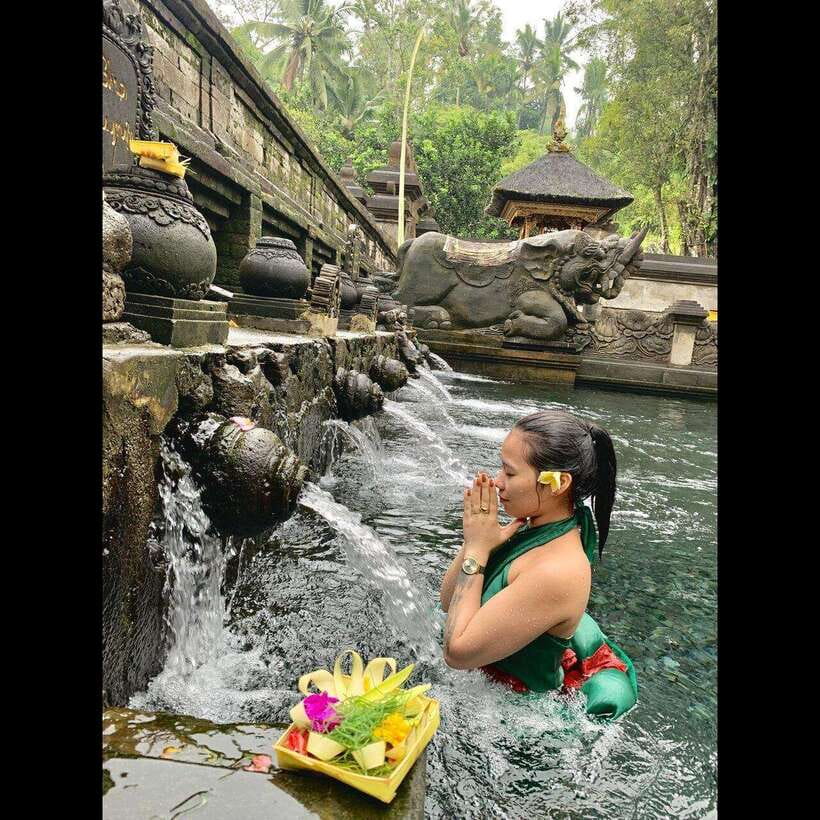
Tirta Empul Temple, near Tampaksiring in the village of Manukaya, brings a different kind of Bali experience. It is a holy spring water temple used by Balinese Hindus for ritual purification.
This is the stop where respectful behavior matters most. You are not simply visiting an old building. The water and temple remain connected to religious practice, so watch what people are doing and follow local instructions.
The temple adds context to the rest of the day. The Monkey Forest shows sacred space among trees, while Tirta Empul shows how water can play a central role in Hindu ritual. Together, they give you a better sense of Bali than a schedule made only of scenic viewpoints.
The information provided does not state whether ritual bathing is included or permitted as part of this experience. Do not assume that you will take part. Ask your guide about proper dress, photography, and which areas are open to you.
This is also the place where a good English-speaking guide can make the greatest difference. Without explanation, you may see pools and fountains but miss why the spring matters. The tour has received high marks for attentive guides, yet language ability is not identical across every guide. If temple context is important to you, mention that when booking or at pickup.
Coffee, tea, and a taste of plantation life
The coffee plantation visit rounds out the day with a chance to learn about coffee, tea, cocoa, and other plantation products. You can see different types of coffee and tea and take part in tasting.
This stop is more than a drink break. It gives you a look at how local crops are presented and prepared for visitors. The tasting also makes a practical souvenir stop if you find a coffee or tea you enjoy.
The experience is described as included, and one account specifically notes coffee and tea tasting along with explanations of coffee and cocoa cultivation. Do not expect a full agricultural course, but you should have enough time to sample products and ask questions.
Plantation visits can vary in how commercial they feel. The best approach is to enjoy the tasting, listen to the explanation, and decide for yourself if anything is worth buying. Personal expenses are not included, so set your own budget rather than feeling obliged to purchase products.
Why the $23 price can work well
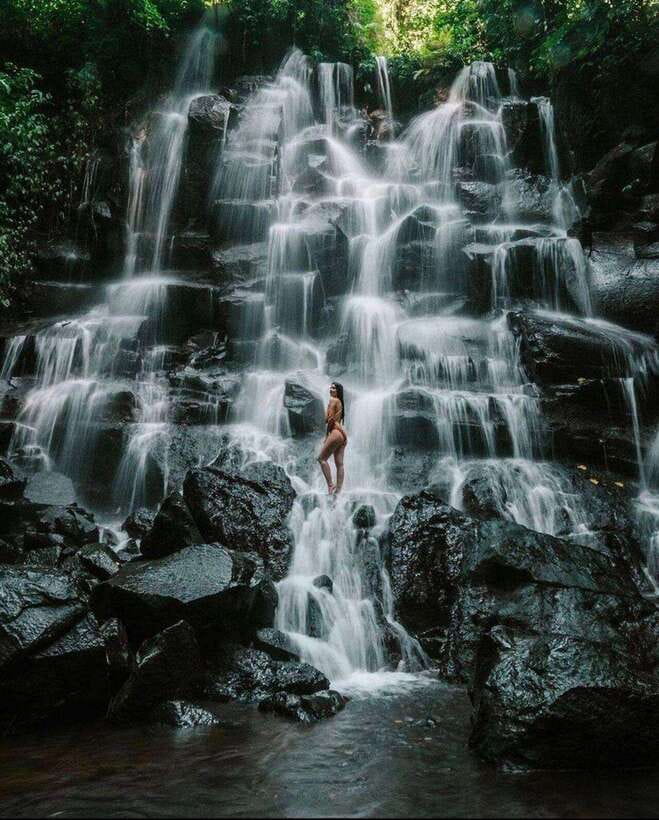
At $23 per person, this is priced as an accessible way to cover several Ubud sights in one outing. The value comes mainly from combining transport, entrance fees when the selected option includes them, bottled water, and a guide.
Buying separate transport to each site would take more planning, particularly if you are staying outside Ubud. The pickup area is broad, covering Ubud as well as Kuta, Seminyak, Canggu, Nusa Dua, and Sanur. That makes the price more useful for people who do not already have a private driver.
Check the booking option carefully because the included entrance fees are tied to the selected option. Lunch is not included, and you should also allow money for personal purchases at the coffee plantation or elsewhere.
The low price means you should not expect a private luxury tour with unlimited time at every stop. The strongest part of the value is convenience and variety. You get a ready-made day with several major sights, rather than paying separately for each transfer.
The tour has a 4.9 rating from 14 reviews, with most scores at five out of five. The clearest praised qualities are friendly service, flexibility, relaxed driving, photography help, and the ability to spend enough time at the waterfall. The one repeated caution is not about scenery or organization. It is the possibility of limited English explanation with some guides.
Guides, flexibility, and the human side of the day
The guide can shape this experience more than the exact order of the stops. Laden is praised for being attentive, Reval for changing the schedule and taking photographs, Bossreyy for explaining the day with a smile, and Tarisa for friendly guidance at the waterfalls.
Those details point to a service style that is personal rather than rigid. You may be able to adjust how long you spend at a place, especially if you communicate clearly. The tour also appears to suit people who value help with photos and a relaxed pace.
At the same time, guide quality is not identical from one booking to another. English and cultural explanation may be stronger with some guides than others. If you want detailed information about Hindu practices, farming, or daily life, ask questions directly and tell your guide that cultural context matters to you.
The driving was described as relaxed, which is important on a day with several stops. You will spend time in the vehicle, and a calm driver makes the transfers easier. The exact duration is not provided, so do not plan another fixed activity immediately afterward.
Who should book this Ubud tour?
I would choose this for a first visit to Bali when you want a broad sample of Ubud without arranging several separate trips. It suits couples, families, and small groups who want nature, culture, photographs, and tasting in one package.
It is also a good fit if you are staying in Kuta, Seminyak, Canggu, Nusa Dua, or Sanur and want hotel pickup rather than finding your own way inland. The included bottled water is a small but welcome touch on a day with outdoor stops.
You may want a different plan if your priority is a long temple visit, serious hiking, or quiet time in the rice fields. The schedule covers a lot, and lunch is not included. People over 95 are specifically excluded from the activity, and anyone with mobility concerns should ask the provider about the walking and wet conditions because the available information does not give detailed accessibility notes.
You can reserve now and pay later, which keeps plans flexible. Cancellation is allowed up to 24 hours in advance for a full refund, according to the provided conditions.
My verdict: a strong-value introduction to Ubud
I would book this tour if I wanted to see the main Ubud sights in one convenient day for $23. The mix is its strongest feature: monkeys, waterfall spray, rice terraces, a living temple, and coffee tasting give you far more variety than a single attraction visit.
Book with realistic expectations. You are paying for range and convenience, not a slow private study of Balinese culture. Ask for cultural explanations, confirm which entrance fees are included in your chosen option, and tell the guide where you want extra time.
If your guide is as flexible as Reval, attentive as Laden, cheerful as Bossreyy, or informative at the waterfalls like Tarisa, the day can feel personal despite its packed route. For an affordable first look at Ubud and the countryside around it, this is an easy choice.
FAQ
Where does the tour take place?
The tour explores Ubud and nearby countryside in Bali, including the Monkey Forest, Kanto Lampo Waterfall, Tegalalang Rice Terrace, Tirta Empul Temple, and a coffee plantation.
Is hotel pickup included?
Yes. Hotel pickup and drop-off are included from selected locations in Ubud, Kuta, Seminyak, Canggu, Nusa Dua, and Sanur.
How much does the experience cost?
The listed price is $23 per person.
Are entrance fees included?
All entrance fees are included if you select the option that includes them. Check the specific option when booking.
Is lunch included?
No. Lunch is not included in the price.
Is bottled water provided?
Yes. Bottled water is included.
What languages are available?
The available languages are English and Indonesian.
Can I reserve now and pay later?
Yes. The reserve and pay later option allows you to book without paying anything today.
What is the cancellation policy?
You can cancel up to 24 hours in advance for a full refund.
Is the tour suitable for people over 95?
No. The activity is not suitable for people over 95.
More Rice Terrace and Temple Tours in Ubud
- Full-Day Tour to Water Temples and UNESCO Rice Terraces in Bali
★ 5.0 · 2,539 reviews - Ubud: Water Temple, Rice Terrace, and Waterfalls Tour
★ 5.0 · 5 reviews - Bali: Tirta empul Temple, Rice terrace and Waterfall
★ 5.0 · 5 reviews - Ubud Monkey Forest, Temple, Rice Terrace and Waterfall Tour
★ 5.0 · 5 reviews
More Monkey Forest Temple Tours in Ubud
- Ubud: Monkey Forest, Jungle Swing, Rice Terrace, and Water Temple
★ 5.0 · 7,160 reviews - Gorilla Cave ATV Bali Ubud, Monkey Forest, Temple, and Lunch
★ 5.0 · 295 reviews - BALI :Sanctuary Monkey forest, rice terrace Water temple
★ 4.9 · 14 reviews - Best Watefalls, Monkey Forest, Temple and Rice terrace
★ 5.0 · 11 reviews
Temple visits we reviewed lately in Ubud
- Private ubud tour Rice teracce, temple & Secret waterfall★ 3.7 · 3 reviews
- Ubud: Water Temple, Rice Terrace, and Waterfalls Tour★ 5.0 · 5 reviews
- Cretya Ubud, Rice Terrace, Temple & Waterfall Day Tour★ 5.0 · 4 reviews
- Best Watefalls, Monkey Forest, Temple and Rice terrace★ 5.0 · 11 reviews
- Bali: Uluwatu Temple, Kecak Dance, and Jimbaran Dinner Tour★ 5.0 · 5 reviews
- Bali: Tirta empul Temple, Rice terrace and Waterfall★ 5.0 · 5 reviews
- Bali ubud : monkey forest, waterfall , temple★ 3.4 · 8 reviews
- BALI :Sanctuary Monkey forest, rice terrace Water temple★ 4.9 · 14 reviews
Ubud Temple Tours, compared.
Ubud: Monkey Forest, Jungle Swing, Rice Terrace, and Water Temple
Read our review →
Ubud: Waterfalls, Water Temple & Rice Terraces Private Tour
Read our review →
Full-Day Tour to Water Temples and UNESCO Rice Terraces in Bali
Read our review →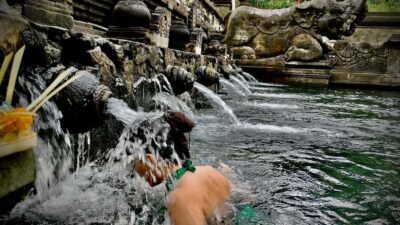
Tirta Empul: Temple Tour with Optional Spiritual Cleansing
Read our review →

Ubud Tour with Monkey Forest Waterfalls Temples and More
Read our review →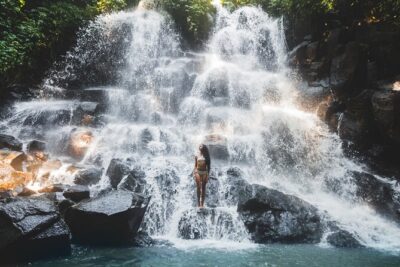
Ubud Top Attractions: Waterfalls, Temples and Rice Terraces
Read our review →