
Review · INDIA
Mahabalipuram and Kanchipuram Private Caves & Temples Tour
Mahabalipuram gives you some of South India’s finest stonework in one compact setting: a Shore Temple beside the sea, chariots carved from single rocks, and huge reliefs filled with gods, animals, and old stories. Then the tour takes you inland to Kanchipuram, where temple courtyards and towering gateways show how later dynasties kept testing the limits of stone.
I like the private car and hotel pickup, especially when you are based in Chennai and want to cover two important towns in one day. I also like the chance to have a guide explain Hindu stories and sculpture details, something that makes these monuments far more interesting than a quick walk past them. The main caution is inconsistent temple access and guiding: some foreign visitors may not be allowed inside certain shrines, and guide quality can vary.
Key points at a glance
- See Mahabalipuram’s Shore Temple and Five Rathas, two of Tamil Nadu’s most important Pallava-era sites.
- Study extraordinary rock carving, including the large relief near Arjuna’s Penance.
- Visit Kanchipuram, a major Hindu pilgrimage city known for its temples and silk saris.
- Travel privately from Chennai, with an air-conditioned vehicle, driver, guide, and hotel pickup included.
- Expect a flexible temple order, since Kanchipuram temples close from noon to 4 p.m.
- Check the shopping and lunch arrangements, since personal purchases and lunch are not included in the price.
Why this day trip works from Chennai
For $115 per person, you get an eight-hour private tour, an English-speaking guide, entrance fees listed in the itinerary, hotel pickup and drop-off within Chennai, an air-conditioned vehicle, and taxes and service charges. That price buys ease rather than the cheapest possible day out.
You could arrange a driver and separate guides for less. One experienced participant judged that a self-arranged version could cost under a quarter of the tour price. That is a fair warning if you are traveling on a tight budget or are comfortable arranging transport yourself.
Still, the private format has real value. You do not need to negotiate a taxi, work out the order of two widely separated towns, or find someone to explain the carvings. On a business trip or a short Chennai stay, that saved effort may matter more than the extra cost.
Your driver collects you from your hotel lobby and returns you there. The tour lasts eight hours, so it is a full day with a lot of driving and walking packed into the schedule. Ask for the starting time when you book, since it can change depending on availability and the order of the stops.
More South Indian Temple Tours in India:
- Full-Day Private Tour to the Kanchipuram Temples from Chennai
★ 5.0 · 73 reviews - World heritage site of Belur & Halebid with temple sculptures
★ 5.0 · 24 reviews - Mahabalipuram Temple and Beach Day Tour from Chennai
★ 5.0 · 14 reviews
Mahabalipuram’s stone stories
Mahabalipuram, also called Mamallapuram, is best known for art from the 7th and 8th centuries. The Pallava rulers used the town as a place to experiment with rock-cut architecture, free-standing temples, and large sculpted scenes.
You are not simply looking at old buildings. You are looking at different ways of turning stone into architecture. Some monuments were cut directly from rock. Others were assembled as temples, with carefully shaped walls, shrines, columns, and figures.
The strongest part of the visit is the explanation. A guide can point out how a sculpture was made, identify figures, and explain the Hindu ideas behind the scenes. Shiva, one of the Mahabalipuram guides, received especially strong praise for being funny, clear, and willing to explain a point again when needed.
That help matters at Arjuna’s Penance, a huge open-air relief. The carving includes human figures, animals, and a cleft in the rock that may represent the descent of the Ganges. The scene has several layers of meaning, and it is easy to miss the small figures if you only take a quick photograph.
You will also see evidence of unfinished or attempted rock cutting. This is not a live demonstration of artisans cutting stone, despite what the tour wording might suggest. It is more accurate to expect old marks and traces that show how the builders worked.
The Shore Temple beside the sea
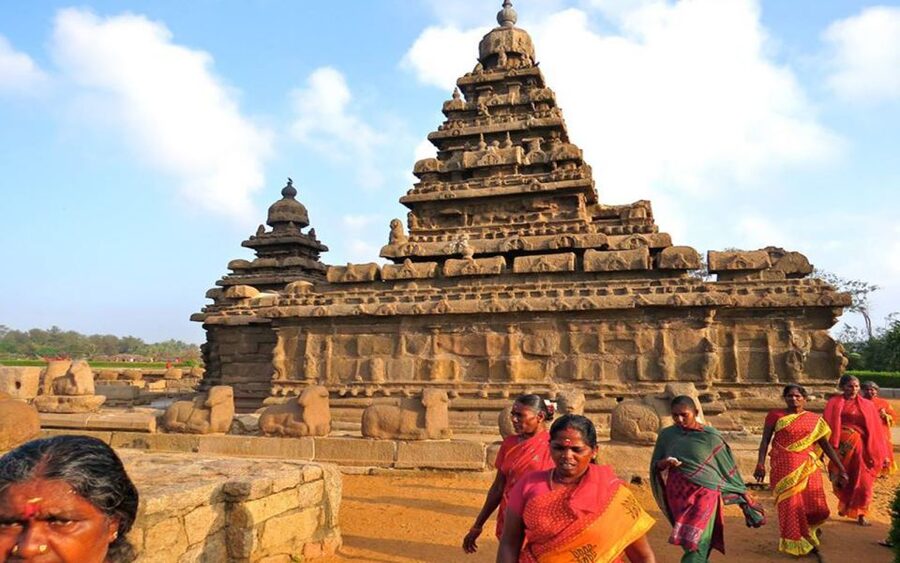
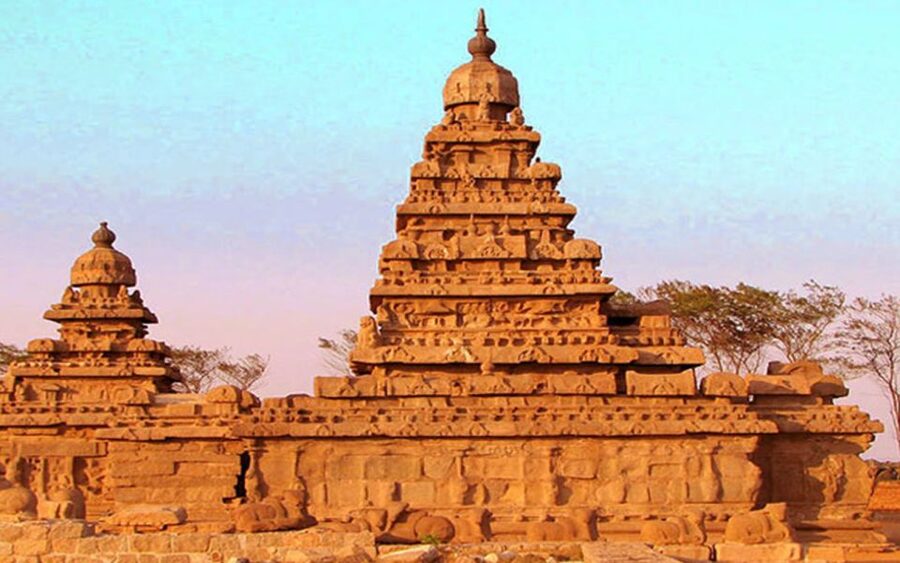
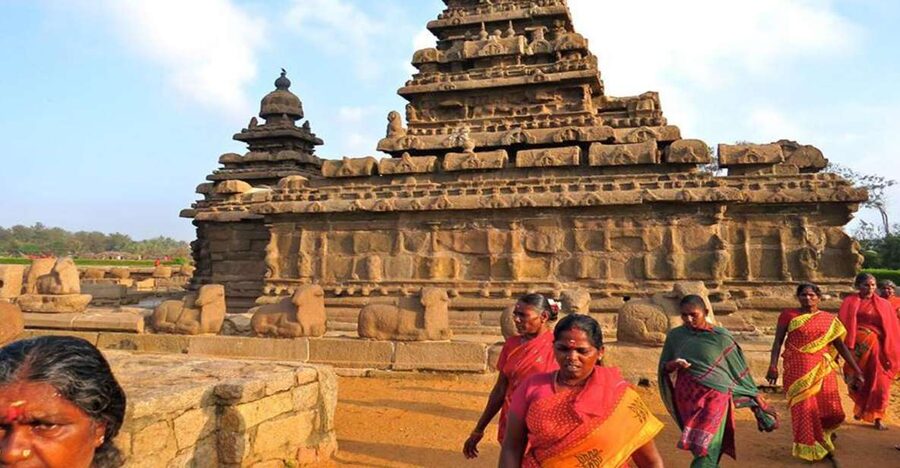
The Shore Temple is the visual star of Mahabalipuram. Built in the 7th century, it sits within maintained gardens near the coast, with its stone forms shaped by the town’s long connection to the sea.
The temple is not enormous, but its setting gives it force. The ocean-side position, compact towers, and weathered surfaces make it easy to understand why this is the image many people associate with Mahabalipuram.
Take time to look at the outer details rather than rushing straight to the main view. Sea air and age have affected the stone, yet the carved figures and temple outline remain impressive. Late afternoon light can be beautiful here, and one visitor specifically found the Shore Temple especially striking when lit by the setting sun.
You should also keep expectations sensible. This is a historic monument, not a fully active temple experience for every visitor. Access rules can differ for foreign visitors and non-Hindus. One participant was not allowed inside some temples, and that restriction was not the operator’s fault. Your guide can still explain the exterior and help you understand what you are seeing.
The Five Rathas and Pallava experiments
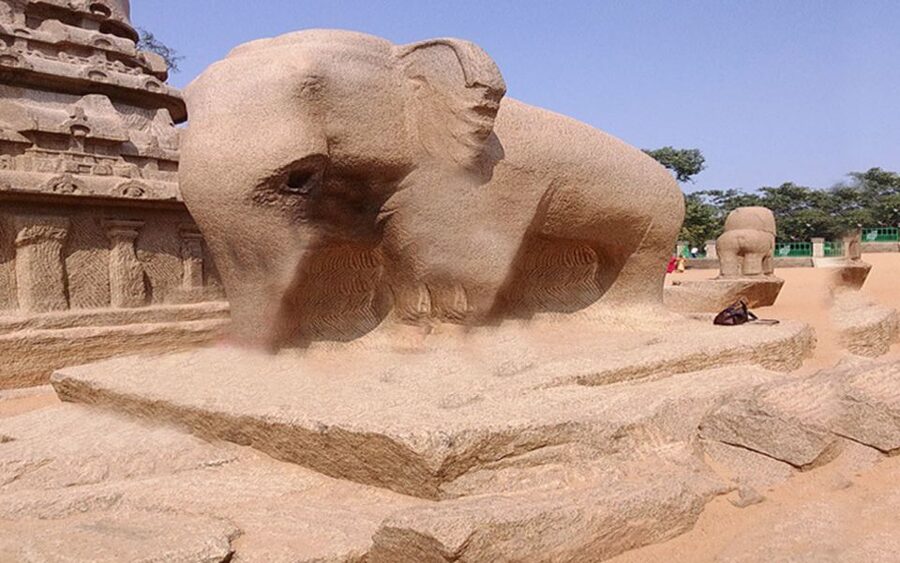
The Five Rathas, or Pancha Rathas, are another essential Mahabalipuram stop. These 7th-century monuments look like stone chariots, but they are actually shrines carved from single blocks of rock.
Each ratha has a different form. Together they show the Pallava builders trying out temple shapes, roof designs, columns, and decorative details. You can see how architects were testing ideas in stone before similar forms appeared in later buildings.
This is a good place to ask your guide direct questions. Why does one shrine look different from another? Which parts copy wooden or earlier building styles? How did the sculptors work around the rock’s natural shape? A strong guide turns these monuments from a set of unusual stone buildings into a lesson in design.
The site also helps explain why Mahabalipuram is valuable even if you have already seen Indian temples elsewhere. Here, you can compare several architectural ideas in a small area. You are seeing not only finished worship spaces, but also the imagination and trial behind them.
More Temple Tours around India:
- New Delhi: Akshardham Temple Tour with Water and Light Show
★ 4.8 · 313 reviews - Old Delhi Food-Spice Market-Temples Tour Soon Featured on NETFLIX
★ 5.0 · 304 reviews - Private Guided Spiritual Walk in Banganga Hindu Temples
★ 5.0 · 271 reviews - Taj Mahal Sunrise with Lord Shiva Temple:- All Inclusive
★ 5.0 · 207 reviews
Lunch between the two temple towns
After Mahabalipuram, the tour stops for lunch before continuing to Kanchipuram. Lunch is not included in the $115 price, so plan to pay separately.
The restaurant choice can affect the cost. A non-vegetarian lunch at Banbino Beach restaurant in Mahabalipuram was described as tasty, with particularly good shrimp, but also on the expensive side. If you want to keep spending under control, ask clearly about the menu and prices before ordering.
One guide took a participant to eat seafood by the ocean, which suited the coastal setting. That can be a pleasant break after the first group of monuments, but you should not assume that a particular restaurant or meal is guaranteed. The supplied details support a lunch stop, not a fixed included menu.
Use lunch as a practical pause. You have another major temple town ahead, and Kanchipuram can involve large courtyards and plenty of walking. Eat enough, drink water, and confirm the remaining plan with your guide before setting off.
Kanchipuram, the city of a thousand temples
Kanchipuram is known as the golden city of a thousand temples and is counted among India’s seven sacred cities. It has served as an important religious and political center, with different ruling dynasties leaving their mark on the buildings.
The temples here feel different from Mahabalipuram. Mahabalipuram is about concentrated stone carving and early architectural experiments. Kanchipuram is about working temple complexes, large gateways, enclosed courtyards, shrines, columns, and layers of religious use.
The planned stops include Kailasanatha Temple, Vaikunda Perumal Temple, Kamakshi Amman Temple, and Ekambareswara Temple. In practice, the exact number of interiors you see may change. One participant expected five temples but entered only two, while the guide explained that spending more time at one major temple could be more useful than rushing through several similar sites.
That is a reasonable approach, but the change should be explained clearly at the start. Kanchipuram temples close from noon to 4 p.m., so the driving order may be reversed. One participant was surprised to begin in Kanchipuram instead of Mahabalipuram, but the earlier visit made sense because of the midday closure.
The Kanchipuram temples in context
Kailasanatha Temple is associated with Shiva and is noted for its early stone architecture and carved detail. It offers a chance to compare Kanchipuram’s temple style with the monuments you saw in Mahabalipuram.
Vaikunda Perumal Temple is dedicated to Vishnu. Its inclusion gives the day a wider view of Hindu traditions rather than focusing on one deity or one architectural pattern.
Kamakshi Amman Temple is an important shrine connected with the goddess Kamakshi. Because it is an active religious site, entry rules may be stricter than at an archaeological monument. Dress and conduct matter, and your guide should tell you what is permitted before you approach the inner areas.
Ekambareswara Temple is a major Shiva temple with a broad complex and a cool stone floor. One participant particularly enjoyed walking through its interior while learning about Hindu beliefs and the meaning of the carvings. A guide may also be able to help you reach areas that would be difficult to find or enter on your own, though access is never guaranteed.
The best way to approach Kanchipuram is with patience. Temple visits are not just a checklist. You may spend time in a gateway, courtyard, or shrine area while your guide explains the symbols and rituals. If you are determined to enter every listed temple, confirm that expectation before departure.
Silk shopping and the commercial side of the day
Kanchipuram is famous for silk and cotton saris. Shopping is part of the appeal for some people, especially if you want a textile connected to the town rather than a generic souvenir.
It can also be the most awkward part of the tour. One poor experience involved pressure to buy from shops connected with the guide, followed by visible annoyance when no purchase was made. You should feel free to say no, and you should ask whether a stop is optional before entering a shop.
The tour can be good value without buying anything. If you want silk, compare prices and ask about the fabric, weave, and care instructions. If you do not want to shop, state that plainly at the start. A private tour should give you more control, not less.
The guide makes the difference
The strongest praise for this experience goes to the guides. Shiva was singled out for his humor, effort, and ability to explain Mahabalipuram clearly. Other guide experiences were also described as excellent, with patient explanations when a point was not understood.
But the standard is not completely consistent. One guide accompanying the Kanchipuram portion spoke very little English, which made it hard to learn much about the temples. Since the tour is sold with an English-speaking guide, ask at the beginning for a guide who can explain both towns well.
You can improve the day by asking focused questions. Ask about the difference between rock-cut and structural temples. Ask which figures you are looking at. Ask why the tour order has changed. A good guide should welcome these questions and make the visit feel like a conversation rather than a parade of stops.
The driver matters, too. Ram Kumar received warm praise for handling the driving well. Since you spend much of the day on the road, a calm driver and a clean, air-conditioned vehicle are more than small comforts.
Who should book this private tour?
I would recommend it to you if you have only one free day from Chennai and want to see both Mahabalipuram and Kanchipuram without arranging separate transport. It also suits you if temple symbolism, sculpture, and architectural detail matter more than finding the lowest price.
It works well for a private couple, family, or small group that wants a flexible pace. You can ask to linger at the Shore Temple, spend more time at a major Kanchipuram complex, or reduce shopping time.
I would be more cautious if you are on a strict budget, want guaranteed access to temple interiors, or dislike shopping stops. The $115 price includes convenience and a private guide, but it does not include lunch or personal purchases. You should also accept that the listed temple sequence and number of interior visits may change.
Cancellation is flexible up to 24 hours before the tour for a full refund, and you can reserve now and pay later. Those terms help if your Chennai plans are still moving, but they do not solve the main question: how much do you value private transport and explanation?
Final verdict: a strong day with two conditions
Book this tour if you want an easy, guided introduction to two of Tamil Nadu’s major temple towns. Mahabalipuram is the clear visual highlight, with the Shore Temple, Five Rathas, and huge relief carvings. Kanchipuram adds active religious architecture, sacred sites, and the option to shop for local textiles.
Before you go, confirm the guide’s English ability, ask which temples are likely to be open, and make clear that shopping is optional. If those points are handled well, the private format can make a demanding eight-hour day far more rewarding. If price matters most, arrange a driver and separate guides yourself.
FAQ
How long does the Mahabalipuram and Kanchipuram tour last?
The tour lasts eight hours, including transport from Chennai, sightseeing, a lunch stop, and the return to your hotel.
Is hotel pickup included?
Yes. Pickup and drop-off are available at hotels within Chennai. The driver reports to your hotel lobby for collection.
Is lunch included in the tour price?
No. Lunch is not included, and you must pay for your meal and any personal expenses separately.
Which language does the guide speak?
The tour includes a live English-speaking guide. Guide quality and English fluency can vary, so you may wish to confirm this when booking.
Can foreign visitors enter all the temples?
Not necessarily. Some temples may restrict entry for foreign visitors or non-Hindus. Access can also vary by temple and religious rules.
Can I cancel the tour for a full refund?
Yes. You can cancel up to 24 hours in advance for a full refund. You can also reserve the tour and pay later.
Temple visits we reviewed lately in India
- Same Day Tour Of Kumbhalgarh Fort & Ranakpur Jain Temple★ 4.7 · 12 reviews
- Rishikesh: Kunjapuri Temple Sunrise Trek★ 5.0 · 5 reviews
- Private Full-Day Jaipur Guided Tour with Monkey Temple★ 5.0 · 11 reviews
- Amritsar : Golden Temple and Jallianwala Bagh Private Tour★ 5.0 · 16 reviews
- Old Delhi Temples and Spice Market Tour★ 5.0 · 5 reviews
- Night Ceremony at Madurai Meenakshi Amman Temple Tour★ 4.2 · 4 reviews
- New Delhi: Akshardham Temple Light Show with Custom Add-Ons★ 4.8 · 125 reviews
- New Delhi: Lotus Temple Private Tour with Skip-the-Line★ 5.0 · 5 reviews
India Temple Tours, compared.
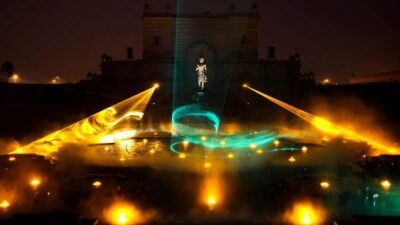
New Delhi: Akshardham Temple Tour with Water and Light Show
Read our review →
Old Delhi Food-Spice Market-Temples Tour Soon Featured on NETFLIX
Read our review →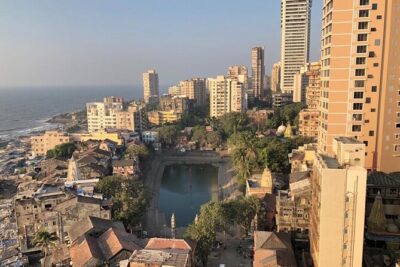
Private Guided Spiritual Walk in Banganga Hindu Temples
Read our review →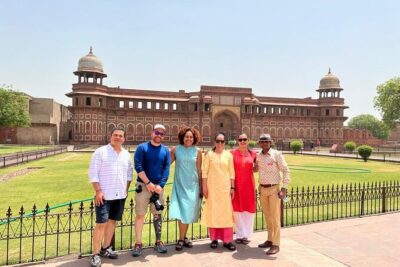
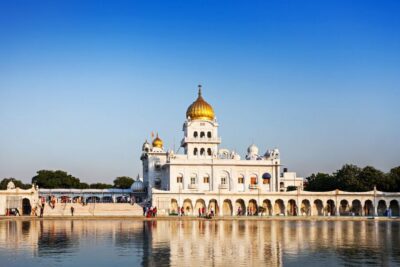
Old Delhi Temples and Spiritual Sites Private 6-Hour Tour
Read our review →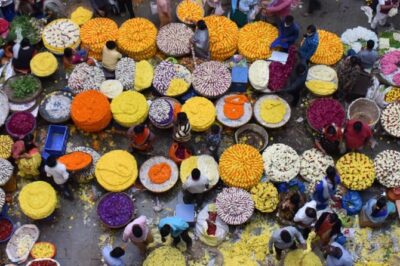
Tipu Palace + Koté Vishnu + Fort + KR Market + Jain Temple = Bengaluru Pété Walk
Read our review →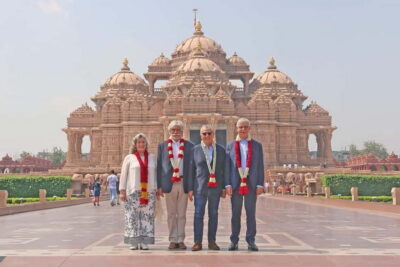
New Delhi: Akshardham Temple Light Show with Custom Add-Ons
Read our review →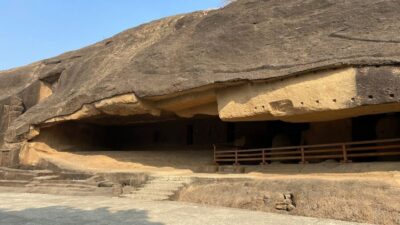
Mumbai: Kanheri Caves and The Golden Pagoda Temple
Read our review →This tour also ranks in