
Review · GREECE
Kalabaka: Meteora Small-Group Hiking Tour w/ Monastery Visit
Meteora is best understood on foot, where narrow paths lead beneath towering sandstone cliffs, past old hermitages, and up toward monasteries that seem pinned to the rock. This five-hour morning tour combines that walking experience with a visit to Great Meteoron or Varlaam, two of the area’s six Eastern Orthodox monasteries.
I like the route’s mix of scenery and stories. You see ruined monasteries, caves, local plants, and unusual climbing traditions instead of only stopping at roadside viewpoints. I also like the guides’ personal touch: Christos, Evan, Dimitris, Chris, and others are praised for adjusting the pace and explaining history, geology, wildlife, and local myths. The drawback is simple: this is a real hike, with rocky ground, uphill walking, and a steep descent from the monastery.
Key points to know before booking
- A walking route through Meteora’s older paths: See Dupiani Hermitage, Pantokratoros, Ypapanti, and St. Dimitrios rather than viewing the rocks only from a vehicle.
- One monastery visit included in the route: The stop is usually Great Meteoron or Varlaam, with about an hour to explore.
- Guides make the difference: Christos, Evan, Dimitris, Chris, and Vangelis are among the guides associated with especially strong tours, though the assigned guide can vary.
- Mostly moderate, not effortless: The route suits people with some walking experience, but steep steps, uneven rock, and the descent require care.
- Good value at $35: Pickup, drop-off, a mountain guide, map, and water are included, but monastery admission costs €5 per person per monastery.
- Dress and shoes matter: Bring closed-toe shoes with grip, a hat, snacks, cash, and clothing that follows monastery rules.
Why Meteora makes more sense on foot
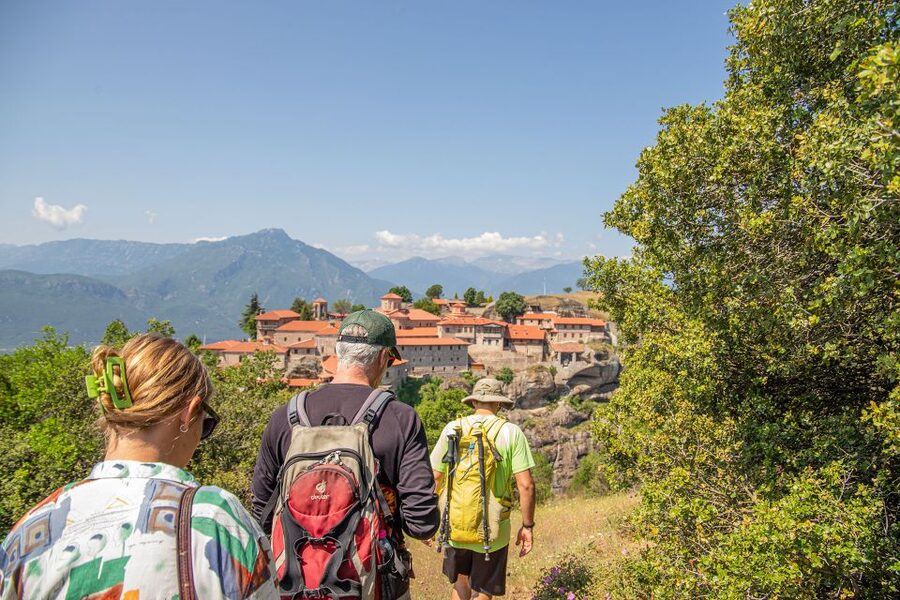
From a road or coach, Meteora can look like a collection of giant stone towers with monasteries balanced on top. Walking gives you time to notice the strange grooves in the sandstone, the small caves, the changing views, and the way the cliffs rise above the villages.
This route begins in Kastraki, the village below the rocks, after a short transfer from Kalabaka. Kastraki Square is a useful starting point because the path quickly leaves ordinary village streets and enters the rougher terrain around Dupiani.
The walking is not a technical climb, and the route is described by many past participants as manageable for beginners. Still, manageable does not mean flat. You will walk for several hours, deal with uneven paths, and meet steeper sections near the monasteries. Your guide can set a sensible pace, and walking poles may be available, but you should arrive ready to walk rather than treat this as a sightseeing bus with a short stroll.
The morning timing helps. Several parts of the route are shaded, and an early start is more pleasant than walking the same hills in the strongest afternoon heat. In warm weather, carry the suggested water and snacks even though one bottle of water is supplied.
More Meteora Monastery Tours in Greece:
- Meteora Sunset with Monastery & Hermit Caves Tour in Small Group
★ 5.0 · 706 reviews - Meteora Small Group Hiking tour with Transfer and Monastery Visit
★ 5.0 · 484 reviews - Meteora: Sunset Small Size Tour with Monastery & Caves visit
★ 4.9 · 171 reviews
From Kalabaka to Kastraki and Dupiani
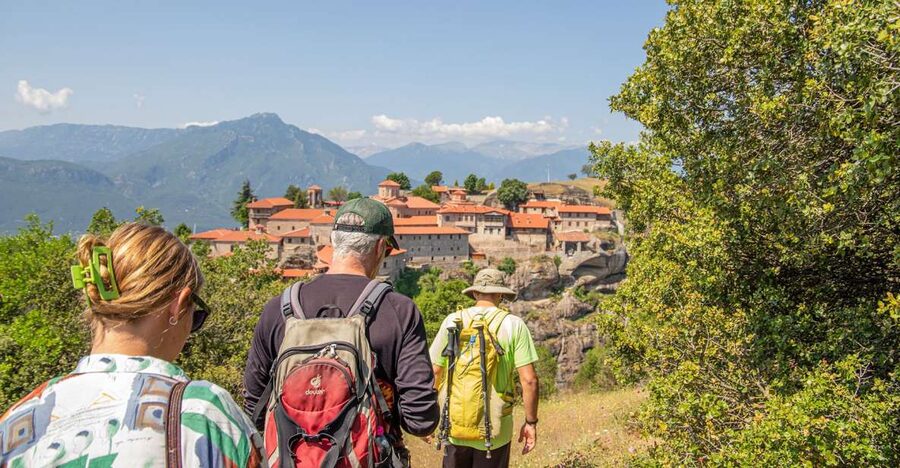
Pickup is included from a long list of Kalabaka and Kastraki hotels and guesthouses. The transfer to the hiking area takes about 10 minutes, followed by the main walking portion.
At Kastraki Square, the guide introduces the route and begins toward Dupiani Hermitage. This early section gives you a feel for the area’s religious past. Meteora was not simply a place where monasteries were built on high rocks for dramatic views. Hermits sought isolated ledges and caves for prayer, and later monastic communities developed in these difficult-to-reach places.
Dupiani is also a good place to look up and orient yourself. The rock formations are not all alike. Some are broad and rounded, while others rise in narrow columns or show weathered bands and grooves. Your guide can point out the local plants, animals, and geology as you walk, so the scenery becomes more than a backdrop for photographs.
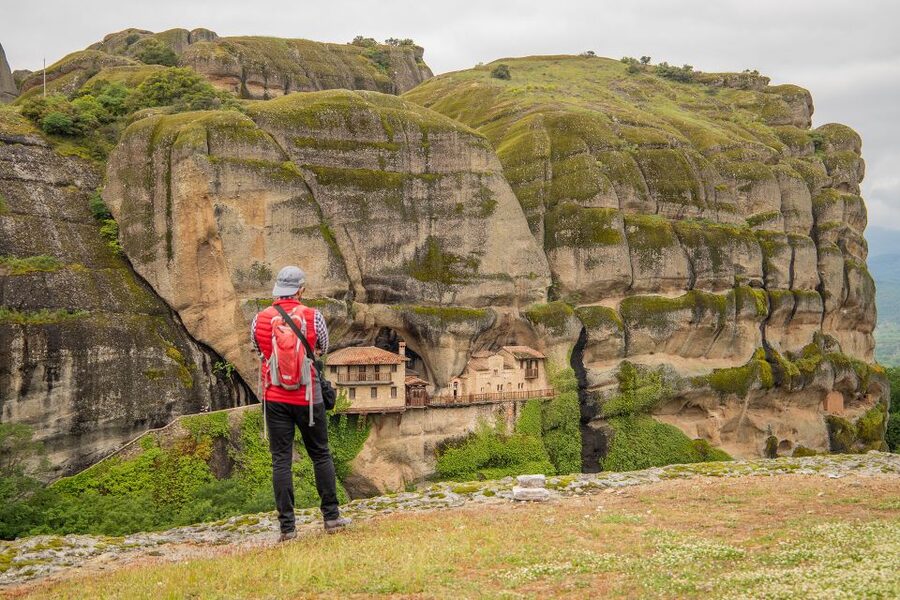
The path passes below the ruined Pantokratoros Monastery on the north side of Dupiani Rock. This is one of the tour’s strengths. You do not just enter a famous monastery and leave; you also see traces of places that have fallen into ruin and learn how the wider religious network once worked.
Ypapanti and St. Dimitrios: the quieter history lesson
The trail continues to Ypapanti Monastery and the ruins of St. Dimitrios. Ypapanti is built into the rock, making it a particularly useful stop for understanding how monks used the cliffs themselves as shelter and defense.
St. Dimitrios carries a darker chapter of local history. The monastery was destroyed by the Ottomans in 1808 during a local uprising. The remains are not polished or restored in the way a major attraction might be, but that is precisely why the stop matters. You see how much of Meteora’s story survives as fragments, rough walls, and paths rather than complete buildings.
This portion also helps break up the ascent. Guides commonly mix commentary with rest stops, and past participants have singled out the explanations of plants, animals, local customs, and old stories. Christos, Evan, and Chris have all been praised for making the walk interesting without turning every pause into a lecture.
You might see turtles or lizards along the way, but wildlife sightings are not guaranteed. The reliable part is the chance to learn about the local fauna and flora as you move through their habitat.
The climb toward Great Meteoron and Varlaam
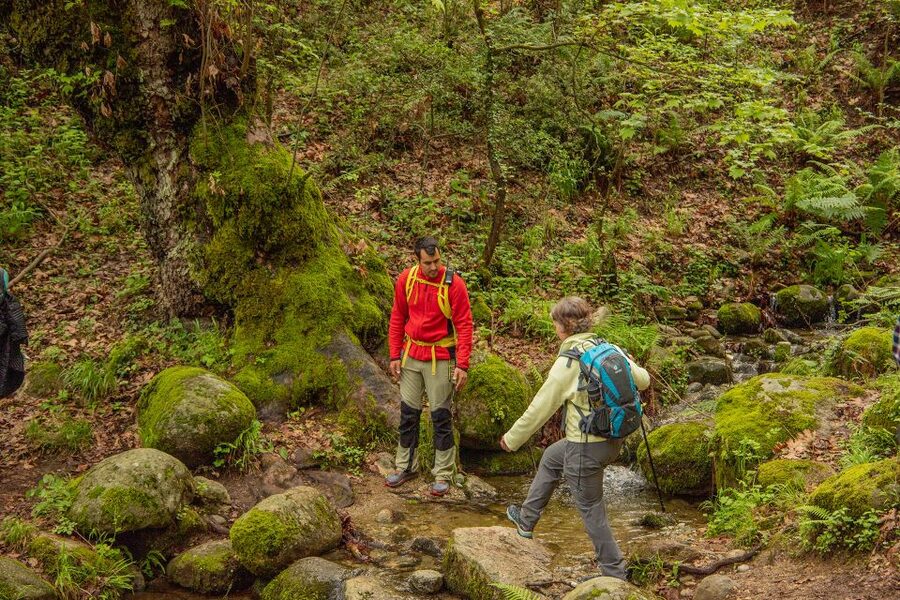
After Ypapanti and St. Dimitrios, the trail heads toward the two major monasteries named for this experience: Great Meteoron and Varlaam. The exact monastery visit can depend on the day’s plan, but the route is designed to include one of them.
Great Meteoron is the largest and best-known of the six remaining Eastern Orthodox monasteries in Meteora. Varlaam is another major monastery perched high above the valley. Both are part of the Meteora UNESCO World Heritage Site, and both give you the essential experience of entering a working historic religious complex rather than seeing it only from below.
The approach is one of the most rewarding parts of the hike. You earn the view through the old paths, then arrive above the surrounding rocks with a stronger sense of how hard these monasteries once were to reach. The route also supplies viewpoints that a direct coach visit can miss.
This is where the physical demands become clearer. The walking may feel moderate for an active adult, but heat, age, asthma, or limited fitness can change the experience. A past participant with asthma still found the tour enjoyable, while others in their seventies completed it with a careful pace. That does not make the route suitable for everyone. People with heart problems, mobility impairments, very low fitness, or serious vision limitations should choose a different way to see Meteora.
More temple hikes and treks in Greece:
- Meteora: Hiking Tour with Local Guide and Monastery Visit
★ 4.8 · 20 reviews - Amorgos: Guided Hike of the Panagia Hozoviotissa Monastery
★ 5.0 · 3 reviews - From Barcelona: Montserrat Monastery, Easy Hike, Cable Car
★ 4.9 · 1,021 reviews - From Barcelona: Montserrat Monastery & Scenic Mountain Hike
★ 4.9 · 978 reviews
What you actually get inside the monastery
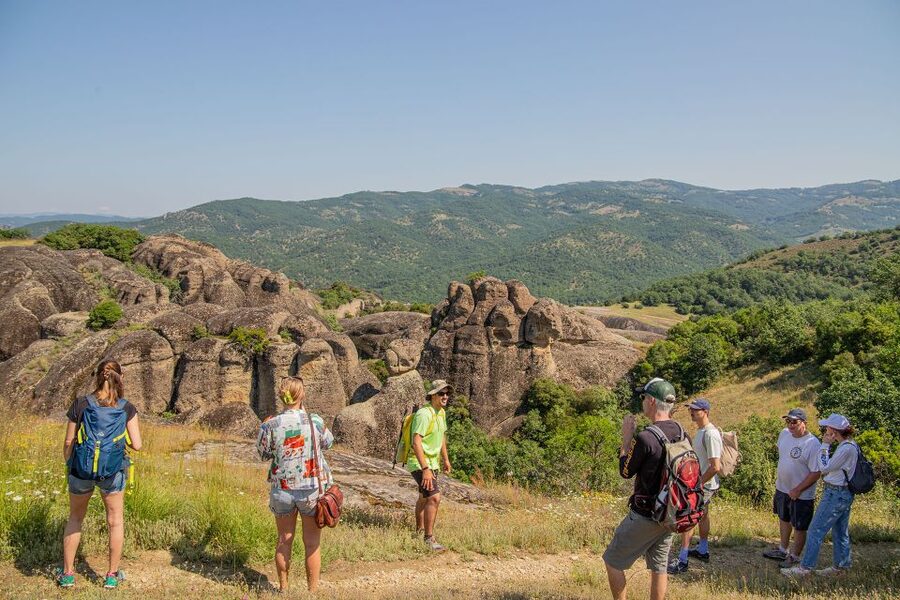
The monastery visit lasts about an hour. You have time to tour the grounds and look at the buildings, views, and religious spaces at your own pace.
The mountain guide accompanies the route but is not the guide inside the monastery. That distinction matters. You receive background and practical pointers from the hiking guide, but the monastery portion is self-guided, and a separate official guide inside is not included.
Entry costs €5 per person per monastery and is not included in the $35 tour price. Bring cash. If your route includes only one monastery, budget for one admission fee. Do not assume the low tour price covers every ticket.
Dress respectfully. Sleeveless shirts are listed as not allowed, so bring a shirt that covers your shoulders. Comfortable clothing is useful for the hike, but monastery access rules take priority. Closed-toe walking shoes or sneakers with non-slip soles are required. Sandals and flip-flops are specifically unsuitable.
The descent to St. George the Madilas
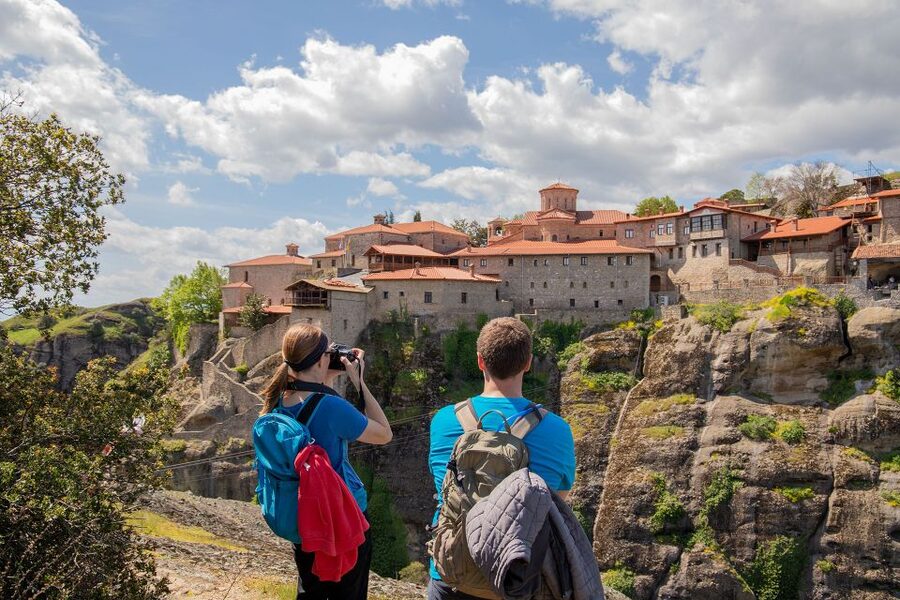
After the monastery visit, the route continues down from Varlaam toward St. George the Madilas. This section gives you a different view of the rock walls and a closer look at one of Meteora’s most unusual local traditions.
St. George the Madilas is associated with local children who climb the rock using only a rope to leave offerings to St. George. You are not being asked to copy this climb. The stop is about seeing the place and hearing the story, which adds a living local custom to the tour’s older monastic history.
The descent is also the section to take seriously. Going downhill over rock and steps can be harder on knees and balance than walking uphill. Trail shoes or sturdy sneakers with good grip are a much better choice than casual fashion shoes. If you use walking poles, this is where they may be especially useful.
The tour then returns to the vehicle for the drive back to Kalabaka, roughly 15 minutes. Total time is about five hours, usually covering a morning from around 8:30 to 1:30 when that start time is available.
The guides are the main reason this tour works
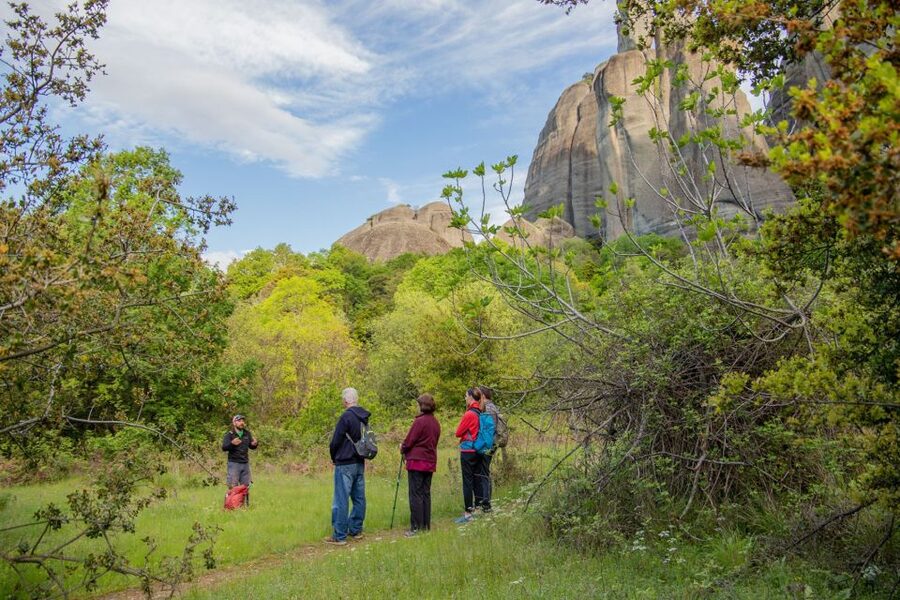
The route is impressive on its own, but the guide shapes the day. Christos, Evan, Dimitris, Chris, Vangelis, and other local guides have been praised for clear English, humor, flexibility, and strong knowledge of the area.
The best guide behavior here is practical. A good guide points out where to look, answers questions, watches the group on uneven ground, and slows down when someone needs a rest. Past tours have included people with different fitness levels, and the pace was adjusted rather than forced.
The commentary also goes beyond monastery dates. Expect explanations of geology, local plants and animals, myths, climbing stories, and the history of the area. That wider view makes the walk feel connected to modern Meteora, not just to a list of religious buildings.
You should not expect the exact same guide every time. The company has used several guides, and names may vary by departure. What you can reasonably expect is an English-speaking mountain guide, but not a private guide dedicated only to your party.
Is $35 a good value?
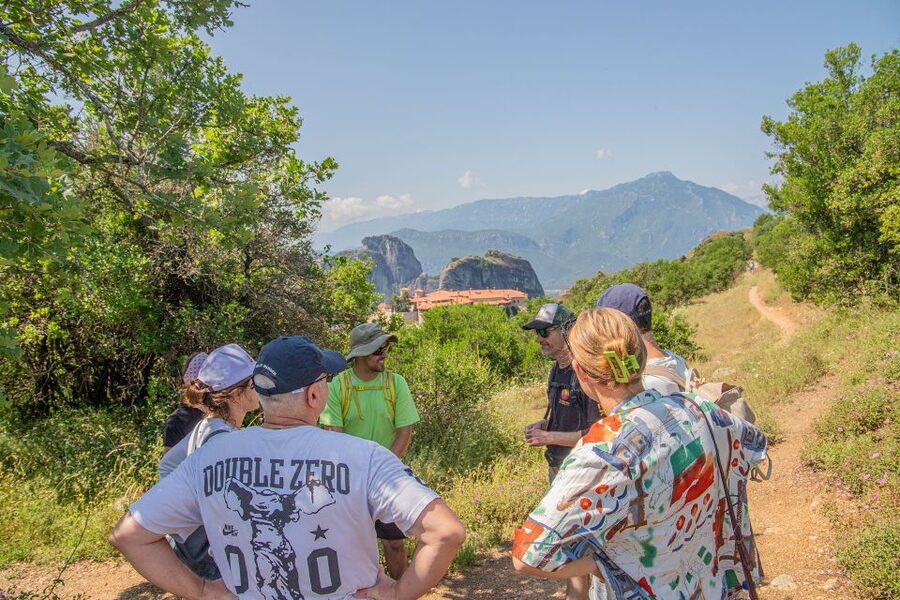
At $35 per person, this is a strong value if you want both movement and interpretation. The fee includes pickup and drop-off, a mountain guide, a map, and a bottle of water. It also saves you the trouble of finding the older paths around the rocks, which can be difficult without local knowledge.
The monastery admission is extra at €5 per person per monastery. Food and other drinks are not included, so bring snacks and enough water for your own comfort. The supplied bottle is useful, but it should not be your only plan on a warm day.
A bus-based Meteora visit may be easier on your legs, but it will not give you the same close look at the rock formations, ruined religious sites, and less obvious paths. A self-guided hike may cost less in guiding fees, but you lose the local stories, route-finding, safety checks, and help with pacing.
The rating is 4.9 from 205 ratings, and that matches the tour’s strongest features: excellent guides, smooth pickup, memorable views, and good use of a half-day. The value is less convincing if you dislike hiking or mainly want long, quiet visits inside several monasteries. This tour visits one monastery, not all six.
Who should book this Meteora hike?
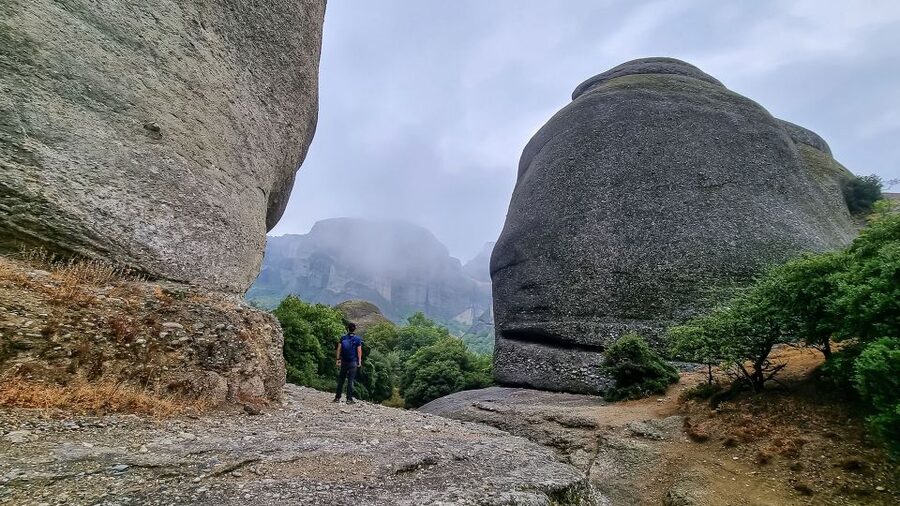
I would choose this for an active couple, a solo visitor who wants company, or a family with older children who can handle a half-day on uneven paths. The stated minimum age is seven, and one past family brought children aged nine, eleven, and thirteen. Still, every child is different, and the rocky descent deserves an honest assessment.
It is also a good first introduction to Meteora. You get the famous monastery views, but you also see caves, ruins, old paths, and natural features. If you plan to stay longer, this tour can give you useful orientation before visiting more monasteries independently.
I would hesitate if you have a heart condition, major mobility limits, poor fitness, or difficulty seeing uneven terrain. The tour is not suitable for those conditions. I would also avoid it if your idea of sightseeing means staying mostly in a vehicle.
For clothing, wear hiking boots, trail shoes, or closed-toe sneakers with grip. Add a hat, comfortable clothes, snacks, cash, and a shoulder-covering layer. Canceling is flexible up to 24 hours before departure for a full refund, and reserve-now-pay-later booking is available.
Should you book it?
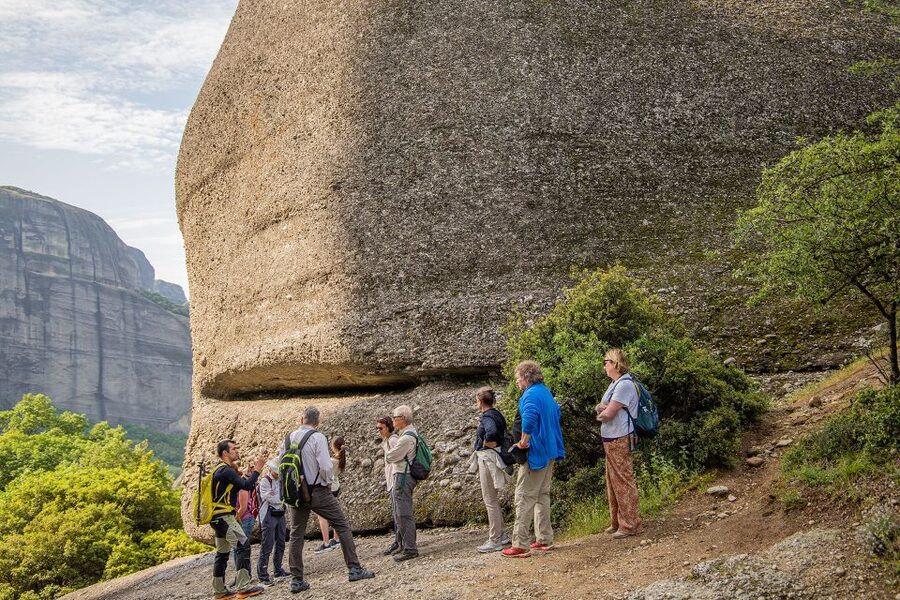
Book this tour if you want Meteora to feel like a place rather than a series of photographs from a coach window. The combination of Dupiani, Ypapanti, St. Dimitrios, one major monastery, and St. George the Madilas gives you a broad half-day with strong views and plenty of local context.
Skip it if steep ground, heat, or a long descent would make the day stressful. For everyone else who can walk for several hours, this is one of the better-value ways to meet Meteora, especially because the guides bring the rocks, monasteries, plants, myths, and history together in one route.
FAQ
How long does the Meteora hiking tour last?
The tour lasts five hours, including transportation from Kalabaka and the return transfer.
Where does the tour start?
Pickup is available in Kalabaka from the listed hotels and guesthouses. The hike itself begins at Kastraki Square.
Is transportation included?
Yes. Pickup and drop-off are included, with an approximately 10-minute transfer to the hiking area and about 15 minutes back to Kalabaka.
Which monastery will I visit?
The tour visits either Great Meteoron or Varlaam. The route information also describes Great Meteoron as the monastery visit, so check the departure details if visiting one specific monastery matters to you.
How many monasteries are included?
The tour includes entry to one monastery. Great Meteoron and Varlaam are two of the six Eastern Orthodox monasteries in the Meteora area.
How much does monastery entry cost?
Entry costs €5 per person per monastery and is not included in the tour price.
Is the tour suitable for beginners?
The route is often manageable for beginners who are comfortable walking, but it includes uphill sections, rocky ground, steep steps, and a challenging descent. It is not suitable for people with low fitness, mobility impairments, heart problems, or visual impairments.
What should I wear?
Wear comfortable walking shoes, such as boots or closed-toe sneakers with non-slip soles. Sandals and flip-flops are not allowed. Bring clothing that covers your shoulders because sleeveless shirts are not permitted.
Is the tour offered in English?
Yes. The tour includes a live English-speaking mountain guide.
What does the $35 price include?
The price includes pickup and drop-off, a mountain guide, a map, and a bottle of water. Food, unspecified drinks, and monastery admission are extra.
Temple visits we reviewed lately in Greece
- Rethymno: Melidoni Cave and Arkadi Monastery Half-Day Trip★ 4.3 · 120 reviews
- Rethymno: e-Bike tour to Arkadi monastery★ 4.7 · 7 reviews
- Private tour Athens, Cape Sounio, Temple Poseidon, Riviera★ 5.0 · 4 reviews
- Private Rib Cruise to Poseidon Temple at Sounio Cape★ 5.0 · 8 reviews
- Patmos Guide Tour to St. John Monastery, Cave of Apocalypse★ 4.2 · 4 reviews
- Mykonos: Highlights Tour with Panagia Tourliani Monastery★ 4.9 · 140 reviews
- Kastraki: Meteora Morning Horse Riding with Monastery Visit★ 5.0 · 27 reviews
- Meteora: Hiking Tour with Local Guide and Monastery Visit★ 4.8 · 20 reviews
Greece Temple Tours, compared.
Athens: Cape Sounion & Poseidon Temple Sunset Half-Day Trip
Read our review →
Athens: Cape Sounio & Poseidon Temple Trip with Audio Guide
Read our review →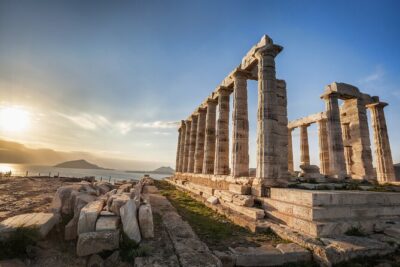
Cape Sounion and Temple of Poseidon Half-Day Small-Group Tour from Athens
Read our review →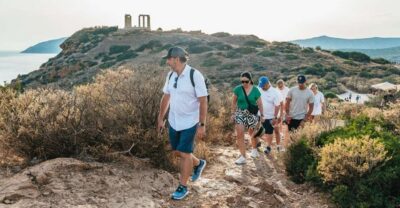
Cape Sounion & Temple of Poseidon: Small Group Tour
Read our review →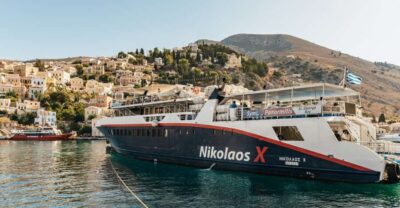
Rhodes: Symi Island & Panormitis Monastery Day Trip by Boat
Read our review →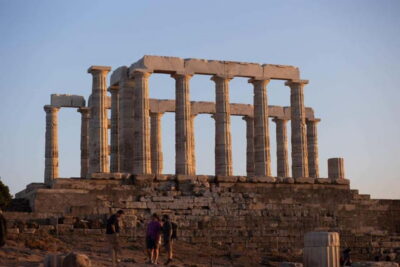
Athens: Cape Sounion & Temple of Poseidon Sunset Experience
Read our review →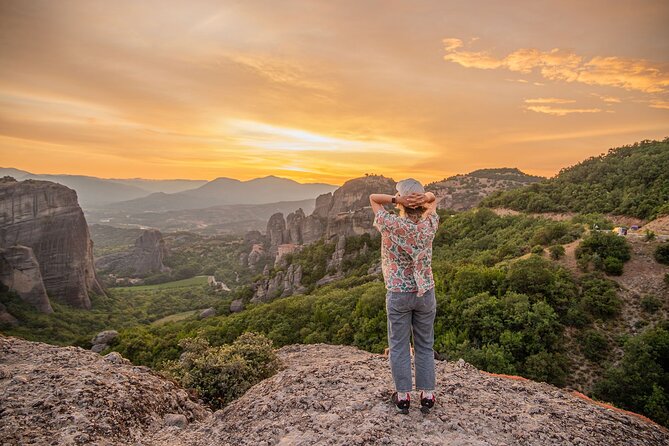
Meteora Sunset with Monastery & Hermit Caves Tour in Small Group
Read our review →
Athens Half Day Tour, Acropolis, Parthenon, Temple of Olympian Zeus & Hephaistus
Read our review →This tour also ranks in