
Review · CHIANG RAI
From Chiang Rai 3 Temples & Golden Triangle &Tea Plantation
Chiang Rai’s White Temple is the star of this full-day outing, but the day keeps changing mood. You move from a gleaming modern Buddhist artwork to the richly colored Blue Temple, the strange Black House, the Golden Triangle, a tea plantation, and a Karen Hilltribe Village. It is a lot of ground, but that variety is the appeal.
I like the small group capped at 10 people and the private English-speaking guide, which should make the long day easier to manage. I also like that lunch, water, air-conditioned transport, and city pickup are included. The drawback is just as clear: entrance fees are not included, and the schedule may feel rushed, especially at the Black House and along the Mekong.
Key points to know before booking
- White Temple first: Wat Rong Khun is a modern work of art, not an ancient temple.
- Three very different art stops: The White Temple, Blue Temple, and Black House each offer a distinct style and atmosphere.
- Long northern Thailand day: You leave Chiang Rai in the morning and return in the evening.
- Golden Triangle plus tea country: The route combines famous border scenery with a tea plantation visit.
- Extra cash is essential: Standard entrance fees are not included in the tour price.
- Best for active sightseers: The schedule is not suitable for wheelchair users or people over 70.
Why this Chiang Rai day trip works
This is not a quiet temple tour. It is a broad look at the sights around Chiang Rai, with art, religion, border history, highland culture, and tea production all packed into one day.
That variety makes the trip useful if you have limited time in northern Thailand. Instead of arranging separate rides to each stop, you travel by air-conditioned minibus with an English-speaking guide. The group limit of 10 is small enough to keep the day more personal than a large coach trip, while still keeping the price reasonable.
The advertised price is $43 per group of up to one person, so check the booking page carefully to confirm the final cost for your party. At that rate, the included transport, private guide, Thai buffet lunch, drinking water, and accident insurance add real value. Still, the price does not cover standard admission fees, souvenirs, or tips. Bring cash from the start.
The tour begins with pickup within roughly 5 to 6 kilometers of central Chiang Rai. If you are staying farther out, contact the operator before booking. Pickup and return in the evening make this easy to fit into a Chiang Rai stay, but the full-day format means you should not plan another major activity afterward.
More White Temple and Blue Temple Tours in Chiang Rai:
- From Chiang Mai: Chiang Rai Temples and Golden Triangle Tour
★ 4.5 · 1,770 reviews - From Chiang Rai: Famous Temples and Golden Triangle Day Tour
★ 4.7 · 115 reviews - Chiang Rai: 3 Temples and Golden Triangle 1 Day Tour
★ 4.8 · 37 reviews
Wat Rong Khun, Chiang Rai’s White Temple
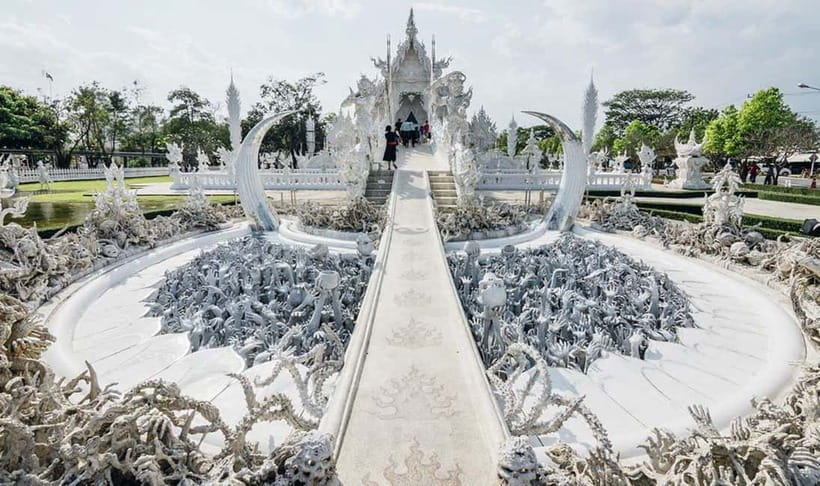
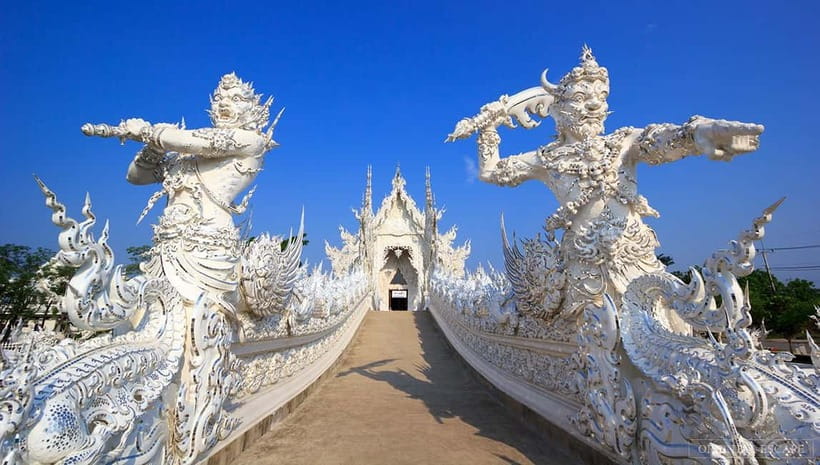
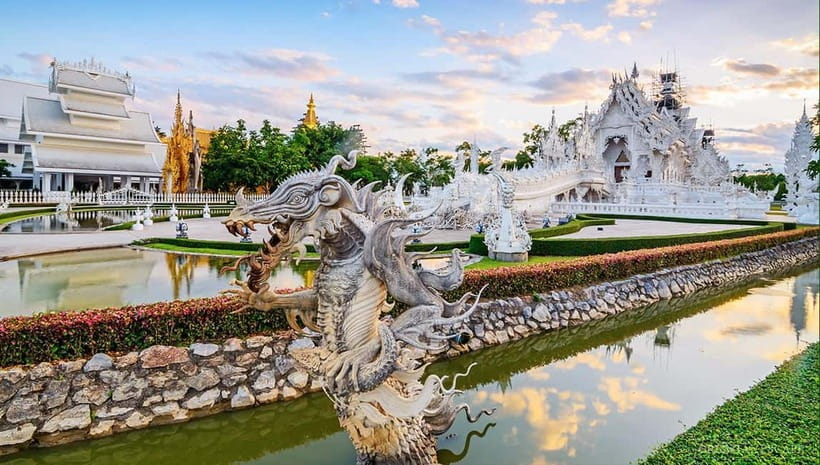
The White Temple, also called Wat Rong Khun, is the day’s most distinctive stop. It is a modern structure created by Thai artist Chalermchai Kositpipat, rather than a centuries-old temple preserved from an earlier period.
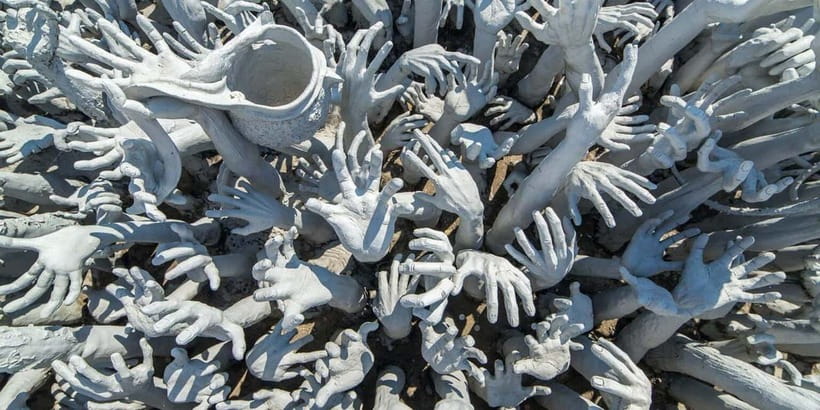
That difference matters. You are not visiting only for traditional religious architecture. You are looking at a large-scale artistic project shaped by Buddhist ideas, symbolism, and the artist’s imagination. The white surfaces and mirrored details give the complex a sharp, almost otherworldly appearance.
The temple is often compared with a Thai answer to the Taj Mahal, but it is better to approach it on its own terms. The appeal comes from the unusual combination of religious imagery and contemporary art. Your guide can help explain what you are seeing, especially if this is your first visit to a modern Thai temple.
Allow yourself time to look closely rather than treating the stop as a quick photo break. The details are part of the experience. At the same time, remember that this is a popular attraction, so the area may feel busy and the visit is likely to follow the group schedule.
Dress respectfully for the temple stops. A hat and sunscreen are useful in the open areas, but you should also choose clothing suitable for visiting Buddhist sites.
The Blue Temple and its powerful color
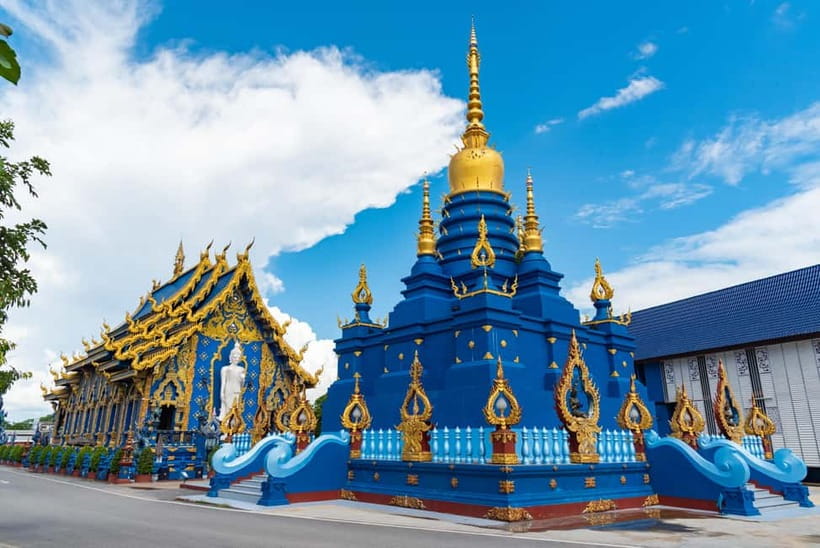
The Blue Temple gives the day a completely different feel. Its Thai name is Wat Rong Suea Ten, and its design uses strong blue tones, gold details, and Buddhist imagery to create a dramatic interior and exterior.
I like the way this stop follows the White Temple. The first is pale, reflective, and filled with unusual symbolic touches. The second uses color and traditional religious forms to create a more direct, forceful atmosphere. Together, they show how Chiang Rai’s temple scene can connect Buddhist traditions with newer artistic ideas.
You may find the Blue Temple easier to appreciate than the White Temple because its purpose feels more recognizable. It is still highly decorative, but it reads more clearly as a working Buddhist temple. Take a moment to observe the details rather than rushing straight through for photographs.
The tour description does not specify how long you spend at each temple. Since this is a full route with several later stops, your guide will control the timing. If you care most about temple art, tell the guide early in the day that you would like enough time at the White and Blue temples.
The Black House is art, not a temple
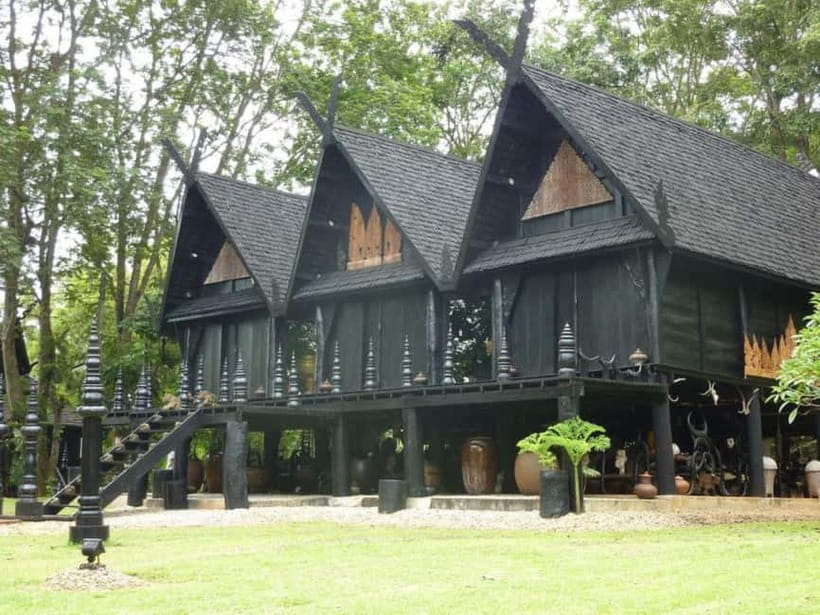
The Black House, or Baan Dam Museum, is the odd one out. Despite its popular nickname, it is not really a temple. It is a museum and art complex associated with Thai artist Thawan Duchanee.
Expect dark buildings, unusual objects, and a mood that is more mysterious than devotional. This stop will appeal most if you enjoy contemporary art, symbolism, and places that refuse to look like standard tourist attractions. It can also feel strange or unsettling, so it is not automatically a favorite for everyone.
The practical issue is time. The full route includes the Golden Triangle, tea plantation, Karen Hilltribe Village, and Opium Museum, so the Black House competes with several other stops. I would pay attention to the clock here. One useful adjustment would be less time at the Black House and more time by the Mekong at the Golden Triangle, especially if river scenery and border history interest you more than art.
That is also why this tour works better for curious sightseers than for people who want a slow, deeply focused museum visit. You will see a lot, but you will not have unlimited time at every location.
More Temple Tours around Chiang Rai:
- Chiang Rai: Iconic Temples & 7 Major Sites—River View Buffet
★ 4.9 · 692 reviews - Chiang Rai: White, Blue, Red Temples, Long Neck Tour
★ 4.8 · 652 reviews - Chiang Rai: Half Day Tour – 3 Famous Temples & Lalita Cafe’
★ 5.0 · 79 reviews - Chiang Rai: 3 Temples, Long Neck Village & Lalitta Café
★ 4.7 · 63 reviews
The Golden Triangle and the Mekong
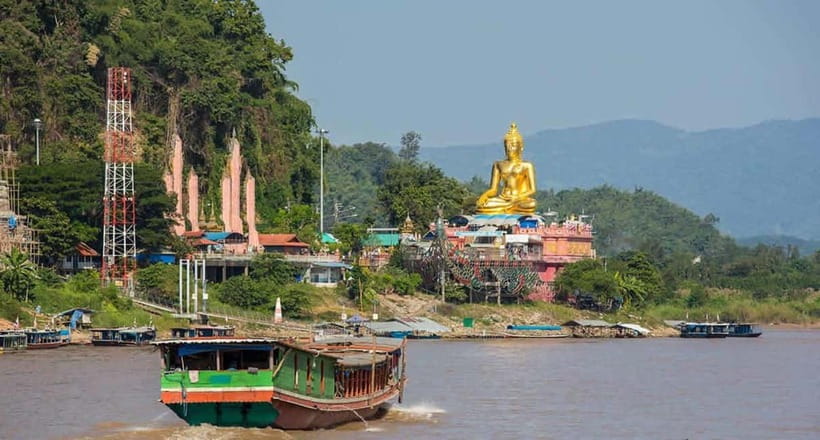
Later, the route reaches the Golden Triangle, the area where Thailand meets Laos and Myanmar. The meeting of borders and the Mekong River gives this part of the day a different character from Chiang Rai’s artistic temples.
Here, the attraction is not one building. It is the sense of place and the border setting. You can look across the Mekong and think about how trade, travel, and regional politics have shaped northern Thailand. The setting also provides a welcome change after several indoor and architectural stops.
The schedule may offer less time here than you would prefer. If the Golden Triangle is your main reason for booking, tell your guide. One of the clearest practical lessons from this itinerary is that every added stop reduces the time available at the others.
The Golden Triangle is also a good point to use your camera, but keep the day moving. You still have the tea plantation, Karen village, and museum ahead. The route is ambitious, so the best approach is to enjoy each stop without expecting a long independent visit.
Tea plantation views and a taste of the highlands
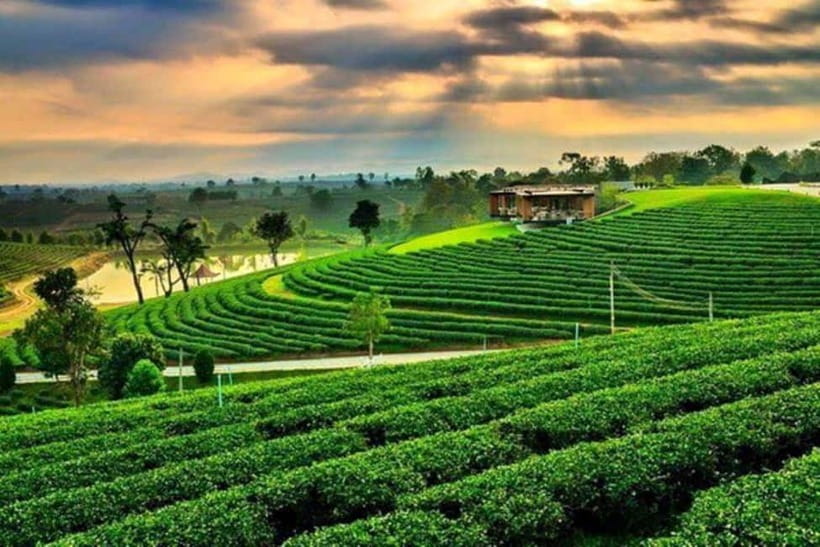
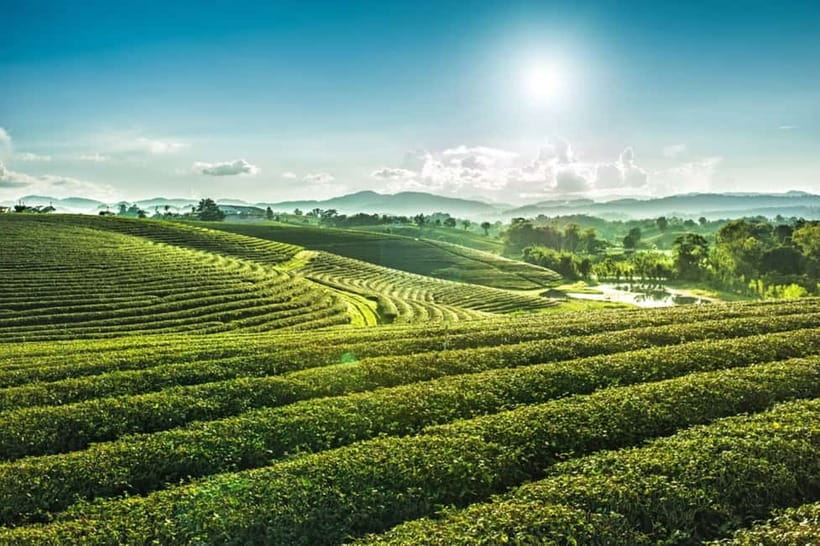
The tea plantation adds another useful layer to the day. After temples and border scenery, you see an agricultural side of the region. The visit gives you a chance to look at the cultivated hills and learn how tea fits into local life.
The supplied details do not specify the plantation name, tea tasting arrangements, or the exact amount of time spent there. Do not book this expecting a long tea-focused workshop unless the operator confirms that separately. Think of it as a scenic and cultural stop within a larger northern Thailand tour.
This is where comfortable clothing and sun protection matter. Bring the recommended hat and sunscreen, and keep drinking water with you. The tour includes water, which is helpful on a warm day, but you should still arrive prepared for outdoor walking.
Karen Hilltribe Village: approach with respect
The Karen Hilltribe Village is another stop where the guide’s explanation matters. You visit a community associated with the Karen people and get a glimpse of a cultural setting that differs from the urban center of Chiang Rai.
Approach this part of the day respectfully. Listen before taking photographs, follow local guidance, and remember that a village is a lived-in place, not only a sightseeing stop. The information provided does not spell out the exact activities or whether any shopping is involved, so ask your guide what is appropriate when you arrive.
This stop may be especially meaningful if you want more than temples and viewpoints. It also adds cultural variety to the day, though the short schedule may limit how much you learn. A private English-speaking guide should help put the visit into context, but you should not expect a long research-style presentation.
The Opium Museum and the limits of a packed route
The Opium Museum gives the Golden Triangle some historical context. The region is strongly associated with the opium trade, and the museum addresses that difficult subject rather than presenting the border only as a scenic photo stop.
You may find the museum worthwhile if you want background on the area. It helps connect the Golden Triangle’s name with the forces that shaped it. On the other hand, the museum is not the strongest part of the day for everyone. If your interests lean toward scenery, temples, or village life, you might prefer more time at another stop.
That choice is worth discussing with the guide. One useful suggestion is to skip the Opium Museum if you would rather spend additional time elsewhere, particularly near the Mekong. Since the tour is private in the sense of having a dedicated guide but still uses a small group format, you may have some room to express your priorities.
Do not assume that every stop is equally important. The best day will come from deciding in advance which three or four places matter most to you.
Lunch, transport, and the small-group setup
A Thai buffet lunch is included, along with drinking water. Vegetarian food can be provided on request, and you should tell the guide about allergies or other dietary restrictions before the tour begins.
The air-conditioned minibus is a practical feature, not a luxury extra. Northern Thailand can be hot, and you will spend much of the day moving between separate attractions. Air conditioning gives you a place to cool down between stops.
Pickup and drop-off are free within the stated city area, described as roughly 5 kilometers from central Chiang Rai or within 6 kilometers of the city center. The two figures are slightly different, so contact the operator if your hotel sits near the boundary. If you stay outside Chiang Rai, ask about arrangements before paying.
The group is limited to 10 participants. That size should make it easier to hear the guide and ask questions than on a large bus. It also means the pace may be influenced by other people’s interests. You should be ready for a shared schedule rather than a fully flexible private car itinerary.
What the $43 price really includes
At $43 for a group of up to one person, the price looks attractive, but you need to calculate the full day rather than the headline rate alone.
Included are:
- Pickup and return within the stated Chiang Rai city area
- Air-conditioned minibus transport
- Private English-speaking guide
- Thai buffet lunch
- Drinking water
- Travel accident insurance
Not included are all standard entrance fees, personal purchases, souvenirs, and tips. Bring enough cash for admissions and small expenses. The exact total will depend on the fees charged at the sites on your date, and those amounts are not provided here.
The value is strongest if you want convenience. Organizing a vehicle and guide for the temples, Golden Triangle, tea plantation, village, and museum separately could take more time and planning. The value is weaker if you only want the White Temple and Blue Temple, since the long route includes several stops you may care about less.
Free cancellation up to 24 hours before departure and the option to reserve now and pay later also reduce booking risk. The activity lasts one full day, with departure from Chiang Rai and return in the evening.
Who should book this Chiang Rai tour?
I would recommend it to you if you want to see many sides of Chiang Rai in one day and do not mind a full schedule. It suits first-time visitors, art fans, people interested in the Golden Triangle, and anyone who prefers a guide and arranged transport over independent route planning.
It is also a good match if your priorities include both the famous temples and the wider region. The White Temple alone is not the whole story here. The Blue Temple, Black House, tea plantation, village, and Mekong border area create a much broader picture.
I would hesitate if you want slow photography time, long museum visits, or a relaxed day with no fixed pace. The route covers a lot, and the Black House, Opium Museum, and Golden Triangle may compete for your attention. It is also not suitable for wheelchair users or people over 70, according to the activity conditions.
Bring a hat, sunscreen, cash for entrance fees, and modest clothing for the temples. Leave alcohol and drugs at home, and pets are not allowed.
My booking verdict
Book this tour if your main goal is variety and convenience. You get Chiang Rai’s most unusual temples, a border-region visit, tea country, a Karen village, lunch, transport, and an English-speaking guide in one day.
Skip it if you want to focus deeply on just one or two sights. In that case, a shorter custom tour may serve you better. If you do book, tell the guide early whether you prefer extra time at the Mekong, the temples, or the cultural stops. That small conversation could make the packed schedule feel much more personal.
FAQ
How long does the tour last?
The activity lasts one full day. Pickup is in Chiang Rai, and you return to Chiang Rai in the evening.
Where does pickup take place?
Free pickup and drop-off are available within roughly 5 to 6 kilometers of central Chiang Rai. Contact the operator if you stay outside the city or near the pickup boundary.
Are entrance fees included?
No. Standard entrance fees for the temples and other places are not included. Bring cash to pay these costs during the day.
Is lunch included?
Yes. A Thai buffet lunch is included, along with drinking water.
Can vegetarian food be provided?
Yes. Vegetarian food can be arranged if you inform the tour guide. You should also report allergies or other dietary restrictions.
What language does the guide speak?
The tour includes a live English-speaking guide.
How large is the group?
The group is limited to 10 participants.
Is transport air-conditioned?
Yes. Transportation is by air-conditioned minibus with a driver.
Is hotel pickup available outside Chiang Rai?
The included pickup area is within the stated city-center distance. If you stay outside Chiang Rai, contact the operator for more information.
Is the tour suitable for wheelchair users?
No. The activity is listed as unsuitable for wheelchair users. It is also listed as unsuitable for people over 70 years old.
What should I bring?
Bring a hat and sunscreen. You should also carry cash for standard entrance fees and personal expenses.
Can I cancel the booking?
Yes. You can cancel up to 24 hours in advance for a full refund. You can also reserve now and pay later.
Temple visits we reviewed lately in Chiang Rai
- Private trip Chiang Rai Day trip, White Temple, Blue temple★ 4.8 · 13 reviews
- From Chiang Mai: Day Trip Chiang Rai White, Blue, Red Temple★ 5.0 · 4 reviews
- From Chiang Mai : 3 Temples & Golden Triangle with Lunch★ 4.5 · 17 reviews
- ChiangRai:Full Package!Temples,Long Neck,The Golden Triangle★ 4.7 · 9 reviews
- Chiang Rai: Temple Treasures & Popular Sightseeings (Buffet)★ 4.7 · 10 reviews
- Chiangrai : Half Day Tour 3 Famous Temples / (Private tour)★ 5.0 · 4 reviews
- Chiang Rai:Photos of traditional Thai costumes,White Temple★ 4.9 · 26 reviews
- Chiang Rai White & Blue & Huay Pla Kang Temple& Lalitta Cafe★ 5.0 · 8 reviews
Chiang Rai Temple Tours, compared.
From Chiang Mai: Chiang Rai Temples and Golden Triangle Tour
Read our review →
Chiang Rai: Iconic Temples & 7 Major Sites—River View Buffet
Read our review →
Chiang Rai: White, Blue, Red Temples, Long Neck Tour
Read our review →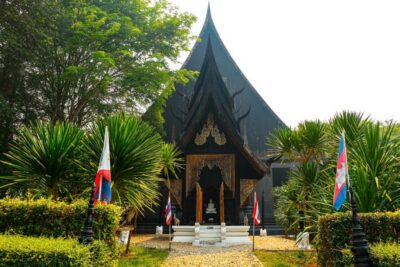
From Chiang Rai: Famous Temples and Golden Triangle Day Tour
Read our review →
Chiang Rai: Half Day Tour – 3 Famous Temples & Lalita Cafe’
Read our review →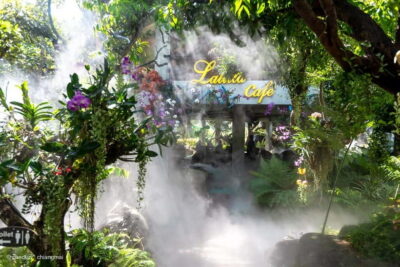
Chiang Rai: 3 Temples, Long Neck Village & Lalitta Café
Read our review →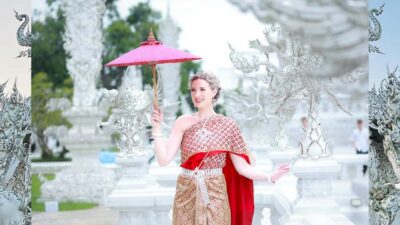
Chiang Rai:Photos of traditional Thai costumes,White Temple
Read our review →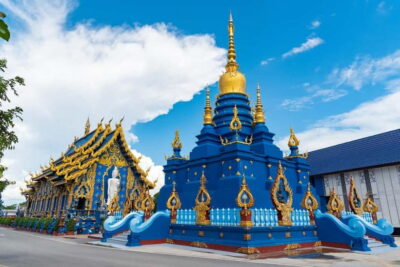
Chiang Mai to Chiang Rai: 3 Temples & Hot Springs & Pickup
Read our review →This tour also ranks in