
Review · GREECE
Amorgos: Guided Hike of the Panagia Hozoviotissa Monastery
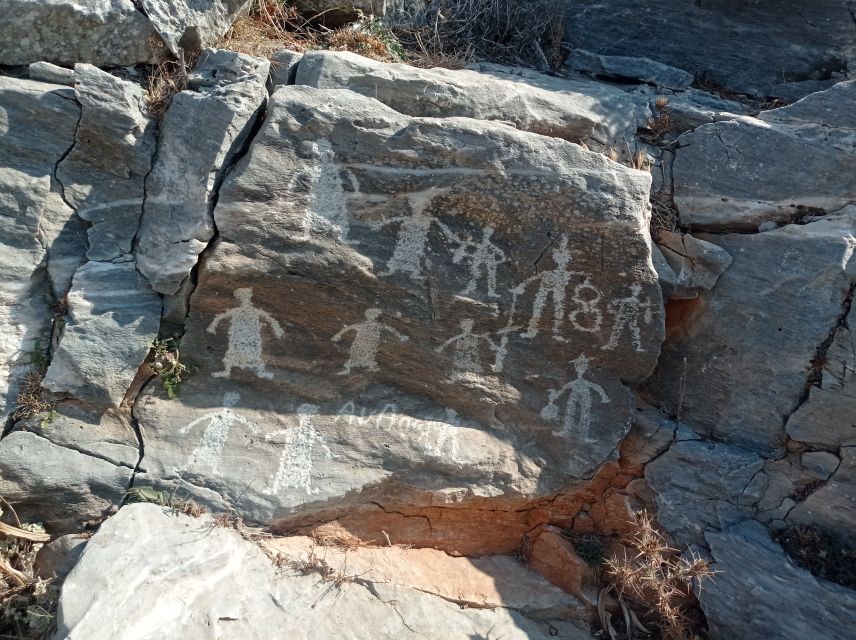
The best part of this Amorgos hike is the way it links wild mountain paths with living culture. You follow an old trading route from Aegiali Bay, pass the dry-stone remains of Asfontylitis, then reach Panagia Hozoviotissa, the white monastery clinging to the cliffs above the sea.
I like the mix of walking and local detail, especially the visit to Kapsala, where monks once lived in natural caves. I also like the guide-led pace: Dimitris has shown a knack for adapting the day to your rhythm and interests. The main caution is simple: this is a real mountain hike, not a gentle stroll, and the monastery requires suitable clothing.
Key points to know before booking
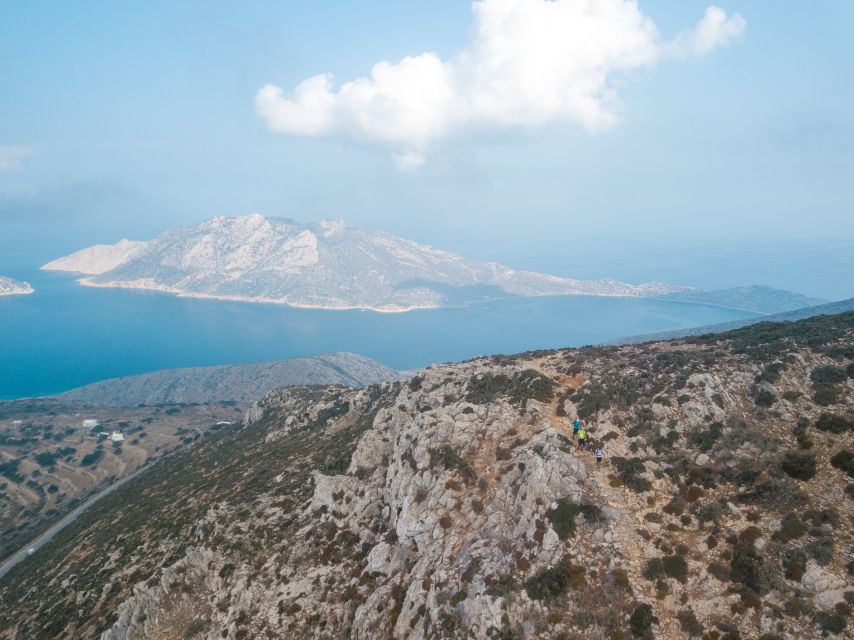
- Ancient route from Aegiali Bay: Walk a historic trading path from the port area toward Hozoviotissa.
- Asfontylitis settlement: Explore abandoned stone buildings and the dry-stone walls of an old rural village.
- Kapsala monk caves: See the natural caves connected with the island’s early monastic life.
- Hozoviotissa visit: Enter one of Greece’s oldest monasteries after approaching it on foot.
- Chora finish: Continue into Amorgos’s handsome hill town, with time to stroll and possibly eat.
- A demanding but adjustable day: The hike lasts about eight hours, and the guide can adapt the pace to your needs.
From Aegiali Bay to the old mountain path
This tour begins near the north end of Amorgos, with pickup available from Aegiali, Potamos, Lagada, and Tholaria. You meet at your hotel lobby 15 minutes before the start time, so allow a little time to get ready, fill your water bottle, and put on proper shoes.
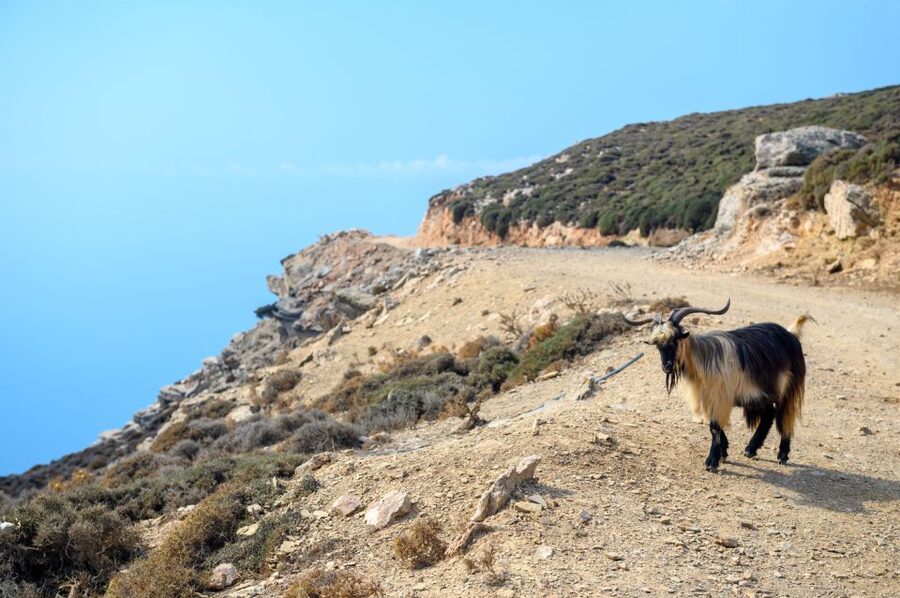
The walk starts from Potamos, the village above Aegiali port. That starting point matters. You are not simply being driven to a viewpoint, taking a few photos, and returning to the coast. You begin in the island’s inhabited north and follow an old route once used for trade.
The path gives the day a sense of purpose. You are moving from one part of Amorgos to another, with the monastery as the goal. The route also lets you see how people once crossed the island before modern roads made the journey easier.
The tour is described as moderate, but you should still expect uneven ground and sustained walking. One German participant found it somewhat tiring and stressed the need for sturdy footwear. That is useful advice. Hiking shoes are not a luxury here, especially if the surface is rough or loose.
Bring water, a hat, and a camera. Amorgos is known for its open views, and this route gives you plenty of reason to stop, catch your breath, and look out over the Aegean.
More temple hikes and treks in Greece:
- Meteora Small Group Hiking tour with Transfer and Monastery Visit
★ 5.0 · 484 reviews - Kalabaka: Meteora Small-Group Hiking Tour w/ Monastery Visit
★ 4.9 · 205 reviews - Meteora: Hiking Tour with Local Guide and Monastery Visit
★ 4.8 · 20 reviews
Asfontylitis and the remains of island life
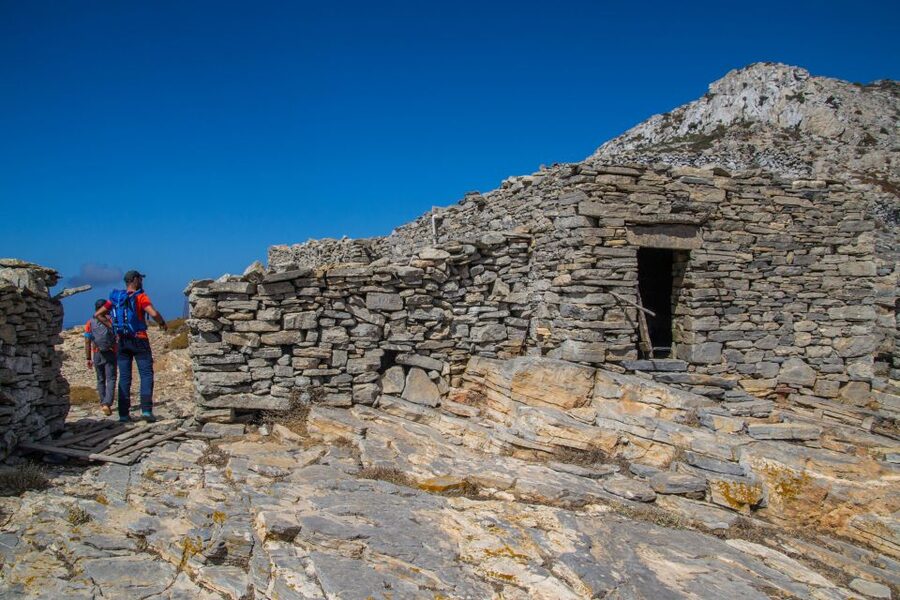
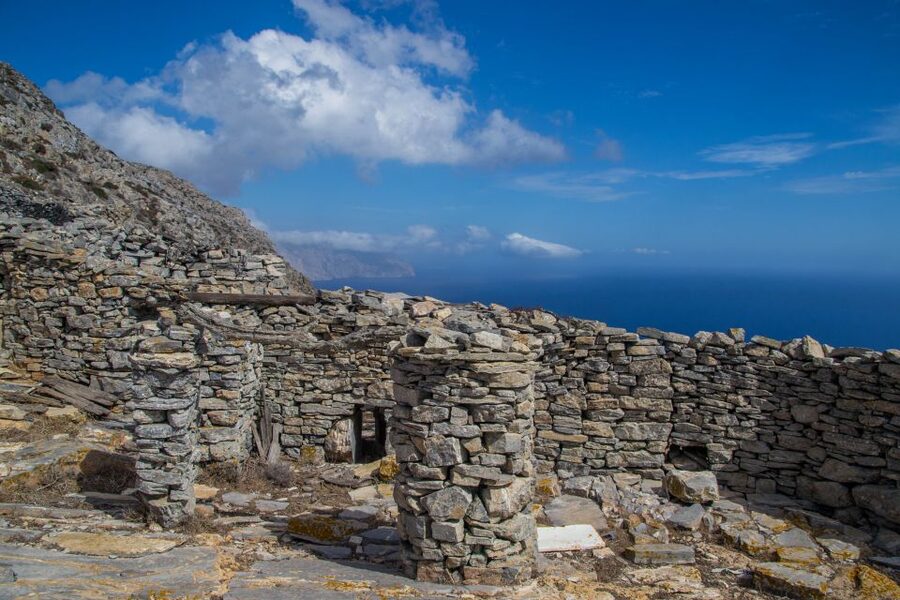
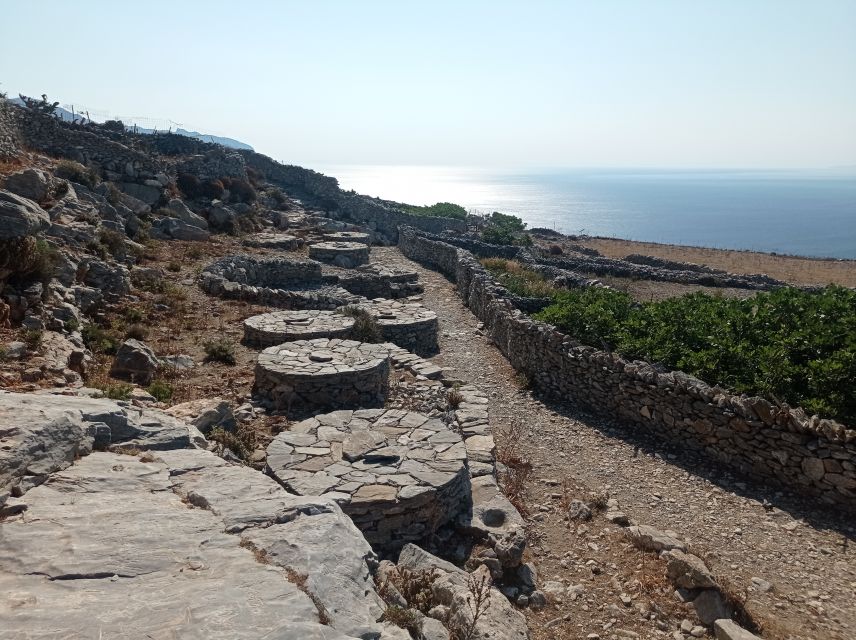
A major stop along the way is Asfontylitis, an abandoned rural settlement marked by dry-stone walls. The place is valuable because it shows a quieter side of Amorgos. Instead of the whitewashed lanes and polished views associated with Chora, you see the practical remains of old island life.
Dry-stone construction uses carefully stacked rocks without mortar. On a dry island with limited soil and water, these walls helped define fields, protect crops, and mark paths. At Asfontylitis, the walls give shape to a settlement that no longer has everyday life in it.
I find stops like this more rewarding than a string of photo points. The stones make the island’s past easier to understand. You can see how much work went into farming, moving animals, and making a home in a dry, mountainous place.
Do not expect a restored open-air museum with a large collection of signs. The attraction is the setting and the remains themselves. Your guide provides the cultural background, points out details, and helps you read the site rather than simply walking past it.
The abandoned quality can also feel stark. There may be little shade and few comforts along this part of the route. Keep your water close, and use the walking breaks to take in the view rather than rushing to the next stop.
Kapsala, where monks found shelter in the cliffs
Kapsala adds another layer to the day. This is the area where monks once lived in natural caves, using the island’s cliffs for shelter and solitude.
The caves connect the walk to the religious story of Amorgos before you reach the main monastery. Their importance is not based on grand architecture. It comes from the tough, simple life they represent. Monks made use of what the mountain offered, and the caves give you a direct sense of how austere that existence could be.
This is also where a guide adds real value. Without context, a cave can look like an empty hollow in the rock. With an explanation of who lived there and why, the stop becomes part of a larger journey toward Hozoviotissa.
The route through Kapsala may feel quiet and exposed. That is part of its appeal, but it also means you need to be ready for a day outside in changing conditions. A hat and water are listed as essentials, and I would treat them that way.
The guide’s role is not just to lead from one point to another. Dimitris, who led at least some departures, was praised for listening closely and adjusting the hike to the participant’s pace and interests. That can make a real difference on a long walking day, especially if you want more explanation at one stop and less at another.
Sea views before Hozoviotissa
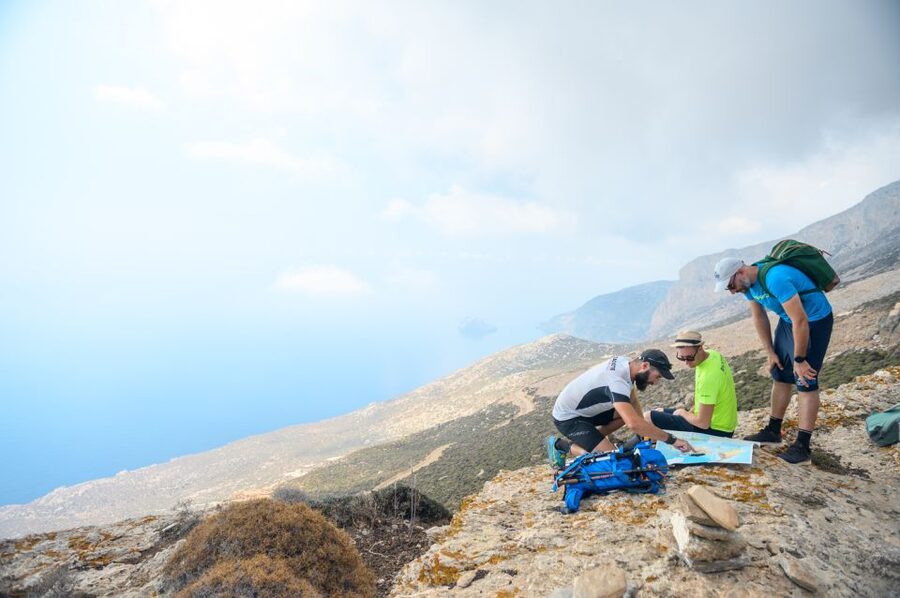
The views are one of the strongest reasons to choose this activity instead of visiting the monastery by road. From the high route, you can look across the Aegean and back toward Chora. The open sea gives the walk breathing room, while the height makes the island feel much larger than it appears from the port.
The timing of the views also matters. You do not get them only at the final stop. The scenery builds through the walk, with repeated chances to pause and take photographs. Your camera will earn its place in your daypack.
There is a tradeoff here. Beautiful mountain routes often expose you to sun, wind, and rough footing. The hike can be peaceful, but peaceful does not mean effortless. If you prefer a short, low-impact outing, this may ask too much of you.
For fit walkers who enjoy a sense of progress, the views help reward the effort. You are not following a generic path. You are approaching the monastery through the same island terrain that shaped its religious life and villages.
More Temple Tours around Greece:
- Athens: Cape Sounion & Poseidon Temple Sunset Half-Day Trip
★ 4.8 · 8,241 reviews - Athens: Cape Sounio & Poseidon Temple Trip with Audio Guide
★ 4.4 · 4,521 reviews - Cape Sounion and Temple of Poseidon Half-Day Small-Group Tour from Athens
★ 4.5 · 3,205 reviews - Cape Sounion & Temple of Poseidon: Small Group Tour
★ 4.7 · 1,945 reviews
Reaching Panagia Hozoviotissa
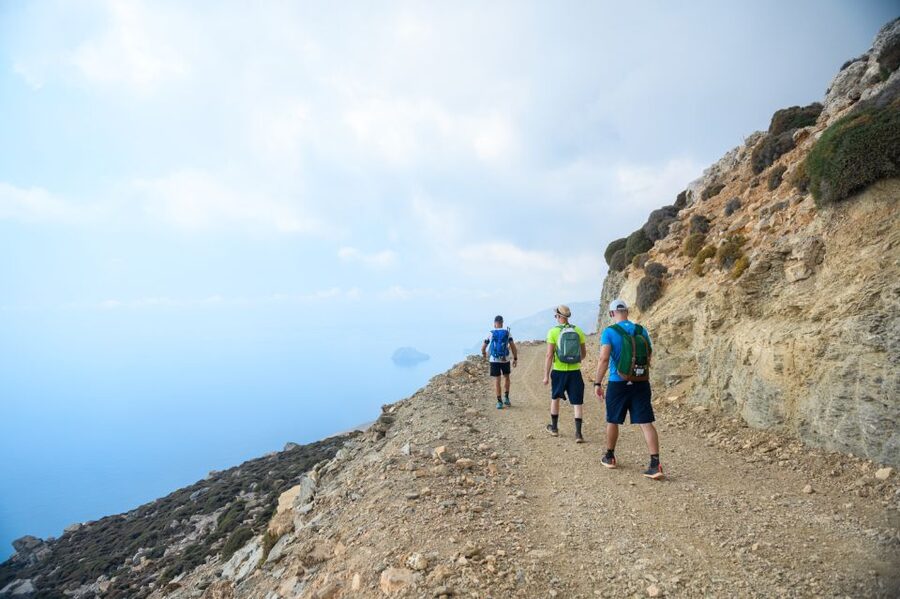
Hozoviotissa is the visual and spiritual focus of the excursion. The monastery is described as the second oldest in Greece, and its position among the cliffs makes the arrival feel earned.
The approach is part of the experience. After hours on the old route, the monastery appears as a dramatic white structure set against the rock and sea. You then enter for a guided visit rather than stopping outside for a quick photograph.
Wear clothing suitable for a religious site. Women should carry or wear a long skirt for entry, and short skirts and sleeveless shirts are not allowed. This is easy to overlook on a hot island day, so pack a light covering before you leave your hotel.
The monastery visit is included, which improves the value of the tour. You are not paying only for transport and a hike. You also have a guide to explain the place and help you handle the entry requirements.
Keep expectations sensible. The information provided does not promise a full private tour of every room or a long formal lecture. What you can count on is a guided visit as part of the route, with cultural background along the way.
The monastery may be the day’s headline, but the buildup is what makes it memorable. Arriving on foot gives the site a stronger connection to the island around it. You have already seen the old settlement, the monk caves, and the mountain paths that lead toward it.
Chora gives the day a pleasant finish
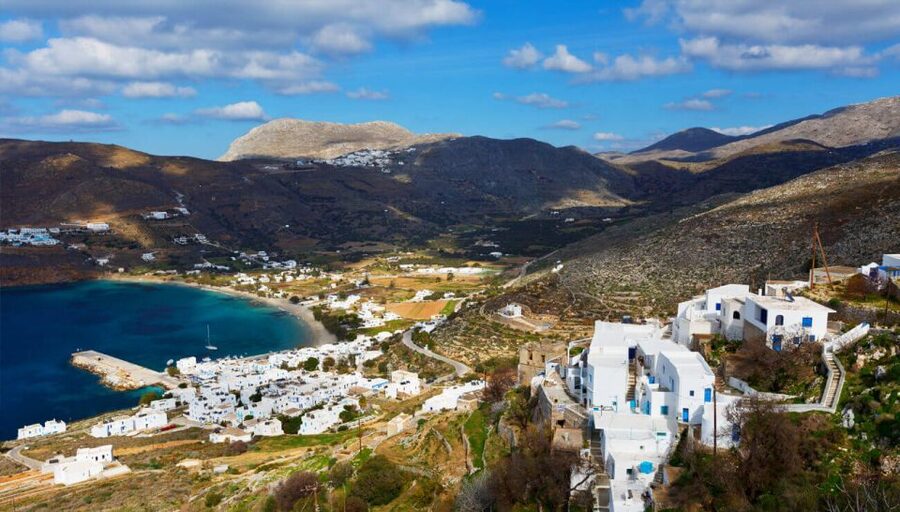
After the monastery, the route continues toward Chora, Amorgos’s inland town. This creates a satisfying end to the outing, since you move from a remote mountain setting into one of the island’s best-known settlements.
You can stroll through the town after the main hike. One departure extended the experience with a visit to Chora and lunch, but lunch is not listed as an included feature, so plan to pay for your own meal.
Chora is a useful final stop because it lets you slow down. After the physical work of the trail, you can enjoy the town at an easier pace. It also gives you a chance to absorb the contrast between the abandoned stone settlement at Asfontylitis and the lived-in streets of modern Amorgos.
The exact amount of free time in Chora is not specified. Ask your guide at the start how the day is likely to unfold, especially if you have dinner plans, a ferry connection, or another booking.
What the $112 price buys you
At $112 per person, this is not the cheapest way to see Hozoviotissa. You are paying for an eight-hour guided outing rather than a simple transfer or a short walking tour.
The value lies in the full route. Your price covers the guided monastery visit, the local guide, and pickup and drop-off from Aegiali, Potamos, Lagada, and Tholaria. You also get access to a trail experience that would be harder to understand on your own, especially at Kapsala and Asfontylitis.
The included transport is most useful if you are staying in the Aegiali area or one of the nearby villages. It removes some of the hassle of arranging your own way to the starting point and back from the finish.
I would consider the price fair for a strong walker who wants a full day of nature and culture. It is less convincing if your main goal is simply to enter the monastery, since a shorter visit may suit you better.
The booking terms add flexibility. You can cancel up to 24 hours before the start for a full refund, and you can reserve now and pay later. Those details are helpful when your Amorgos plans depend on ferries, weather, or changing island schedules.
Who will enjoy this Amorgos hike
This tour suits you if you like walking with a purpose. You will get the most from it if you enjoy old paths, abandoned settlements, religious sites, and long views more than a tightly timed sightseeing circuit.
It is also a good match if you want cultural explanation without giving up time outdoors. The guide speaks English or Greek, and a French-speaking guide may be available on request, depending on availability.
You should be comfortable with a moderate hike lasting much of the day. The activity is not suitable for pregnant women or people with mobility impairments. Pets are not allowed.
Your clothing and footwear will affect your enjoyment. Choose hiking shoes, carry water, and bring a hat. For the monastery, women should have a long skirt available, while everyone should avoid short skirts and sleeveless shirts.
The small number of published ratings is worth noting. The available scores are very strong, with praise focused on Dimitris’s care, his ability to adjust the pace, and the quality of the walking and cultural information. That is encouraging, but it is still sensible to judge the activity by its demands rather than by a perfect score alone.
My call: book it if the walk is part of the point
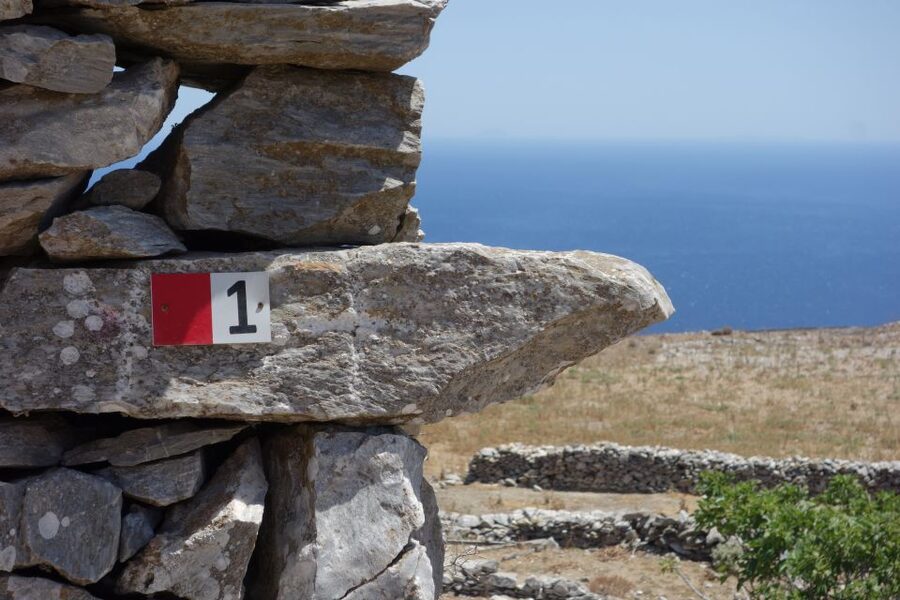
I would book this experience if you want to understand Amorgos through its paths, cliffs, caves, and settlements, not just its postcard views. The combination of Asfontylitis, Kapsala, Hozoviotissa, and Chora gives you a full picture of the island in one day.
I would skip it if you want an easy outing, dislike uneven trails, or have mobility concerns. The eight-hour duration and physical effort are central to the experience.
For everyone else, the strongest reason to go is the approach to Hozoviotissa. You do not simply arrive at the monastery. You walk through the dry hills, pass places tied to farming and monastic life, and reach the shrine with a better sense of why it belongs on this island. That makes the $112 more than an entrance fee. It pays for a guided connection between Amorgos’s past and the ground beneath your feet.
FAQ
How long does the Amorgos monastery hike last?
The activity lasts eight hours.
Where does the hike begin?
The hike departs from Potamos, a village above Aegiali port, and follows an ancient route from Aegiali Bay toward Hozoviotissa Monastery.
Where is pickup available?
Pickup and drop-off are available in Aegiali, Potamos, Lagada, and Tholaria.
What languages does the guide speak?
The tour is offered with an English or Greek-speaking guide. A French-speaking guide may be available on request, subject to availability.
What should I bring?
Bring a hat, camera, hiking shoes, and water.
What clothing is required for the monastery?
Women should wear or carry a long skirt. Short skirts and sleeveless shirts are not allowed.
Is this hike suitable for people with mobility impairments?
No. The activity is not suitable for people with mobility impairments or for pregnant women.
Can I cancel the booking?
Yes. You can cancel up to 24 hours in advance for a full refund, and you can reserve now and pay later.
Temple visits we reviewed lately in Greece
- Rethymno: Melidoni Cave and Arkadi Monastery Half-Day Trip★ 4.3 · 120 reviews
- Rethymno: e-Bike tour to Arkadi monastery★ 4.7 · 7 reviews
- Private tour Athens, Cape Sounio, Temple Poseidon, Riviera★ 5.0 · 4 reviews
- Private Rib Cruise to Poseidon Temple at Sounio Cape★ 5.0 · 8 reviews
- Patmos Guide Tour to St. John Monastery, Cave of Apocalypse★ 4.2 · 4 reviews
- Mykonos: Highlights Tour with Panagia Tourliani Monastery★ 4.9 · 140 reviews
- Kastraki: Meteora Morning Horse Riding with Monastery Visit★ 5.0 · 27 reviews
- Meteora: Hiking Tour with Local Guide and Monastery Visit★ 4.8 · 20 reviews
Greece Temple Tours, compared.
Athens: Cape Sounion & Poseidon Temple Sunset Half-Day Trip
Read our review →
Athens: Cape Sounio & Poseidon Temple Trip with Audio Guide
Read our review →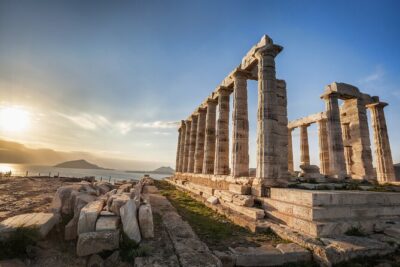
Cape Sounion and Temple of Poseidon Half-Day Small-Group Tour from Athens
Read our review →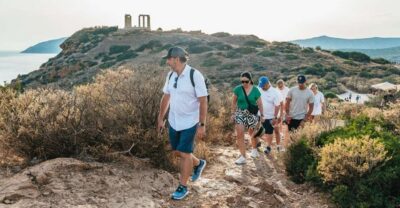
Cape Sounion & Temple of Poseidon: Small Group Tour
Read our review →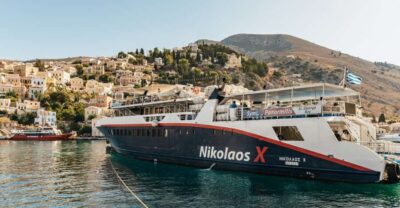
Rhodes: Symi Island & Panormitis Monastery Day Trip by Boat
Read our review →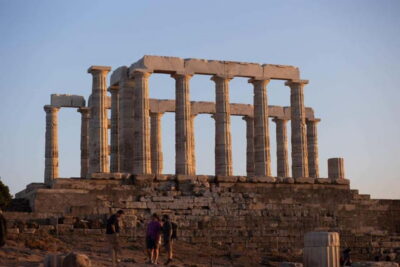
Athens: Cape Sounion & Temple of Poseidon Sunset Experience
Read our review →
Meteora Sunset with Monastery & Hermit Caves Tour in Small Group
Read our review →
Athens Half Day Tour, Acropolis, Parthenon, Temple of Olympian Zeus & Hephaistus
Read our review →This tour also ranks in