
Review · ATHENS
From Athens: Private Anc. Corinth, Temple of Hera, Blue Lake
Corinth gives you an unusually varied day out from Athens: a fortress on a mountain, the streets where Saint Paul preached, a Roman-era commercial center, and a quiet cove where you can swim beside the Temple of Hera. The Isthmus Canal adds a dramatic opening, cutting through the land between the Ionian and Aegean seas.
I like the private format, since you can set a comfortable pace instead of being pushed from ruin to ruin. I also like the mix of archaeology and sea time, especially the chance to walk to Malagavi Lighthouse for views across the Corinthian Gulf.
The main consideration is the guide arrangement. Your driver is well versed in Greek history but is not licensed to enter archaeological sites as a formal guide. Ancient Corinth costs an additional 15 euros per person, and a licensed guide inside the site costs extra if you want fuller explanations.
Key points to know before booking
- Acrocorinth gives you the day’s biggest views: The hilltop fortress has imposing gates, layered defenses, and wide views over the Corinthian region.
- Saint Paul’s Corinth is a real focus: You visit the Agora and Temple of Apollo, not just a roadside viewpoint.
- The day ends with sea time: Ancient Heraion has a cove suitable for swimming, with deep, clear water and rocks for optional cliff-jumping.
- Malagavi Lighthouse adds a rewarding walk: The 1897 stone lighthouse overlooks the Gulf of Corinth and the Isthmus Canal.
- Private transport keeps the day flexible: Pickup and return are provided from an Athens hotel, Airbnb, or port in a modern air-conditioned vehicle.
- The price needs careful calculation: At $281 per person, the private vehicle and personal service are included, but site entry, food, and an optional licensed guide are not.
Why Corinth makes a strong day trip from Athens
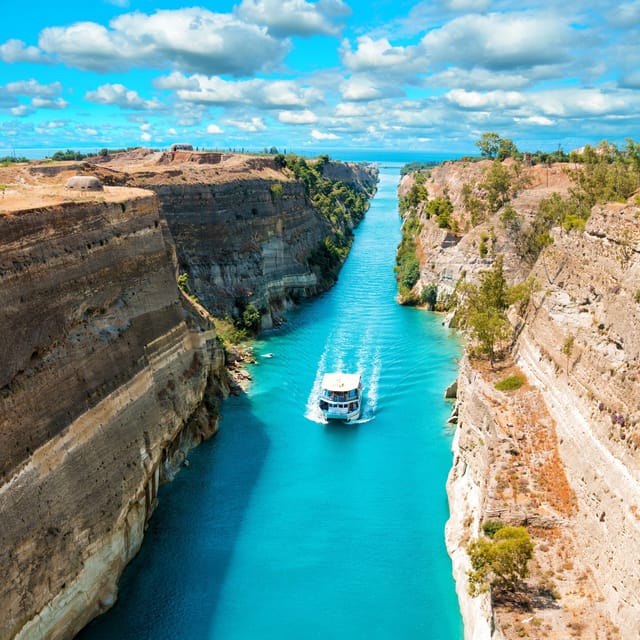
Corinth is close enough to Athens for a full-day visit without an overnight stay, yet it feels like a proper change of scene. The route takes you toward the Peloponnese and the narrow Isthmus of Corinth, where water links the Gulf of Corinth with the Saronic Gulf and gives the area its long-standing strategic value.
I like this trip because it does not reduce Corinth to one pile of stones. You see the military side at Acrocorinth, the civic and religious center at Ancient Corinth, the Christian connection through Saint Paul, and the coastal sanctuary of Hera. Each stop adds a different piece.
The nine-hour schedule is full but not frantic on paper. It allows about 45 minutes at the Corinth canal area, one hour at Acrocorinth, two hours in Ancient Corinth, 90 minutes of free time, and 90 minutes at Heraion. Actual timing can shift with road conditions and your interests, which is one of the useful advantages of having a private vehicle.
More Acropolis and Ancient Greek Temple Tours in Athens:
- Athens: Cape Sounion & Poseidon Temple Sunset Half-Day Trip
★ 4.8 · 8,241 reviews - Athens: Cape Sounio & Poseidon Temple Trip with Audio Guide
★ 4.4 · 4,521 reviews - Cape Sounion and Temple of Poseidon Half-Day Small-Group Tour from Athens
★ 4.5 · 3,205 reviews
The Isthmus Canal sets the scene
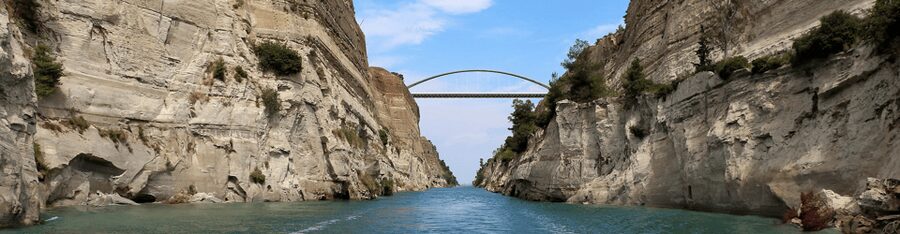
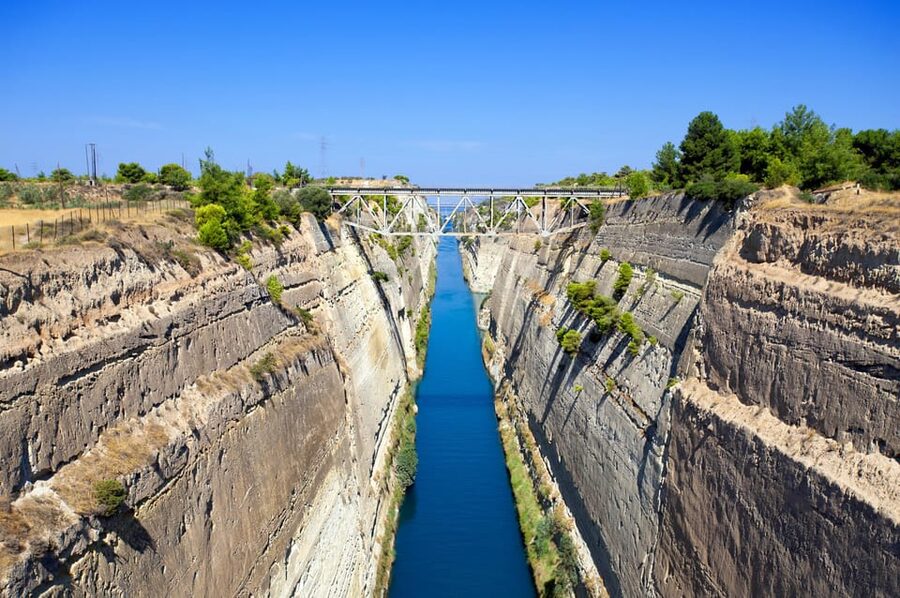
The first major stop is the Corinth area and its canal. The waterway is not ancient, but the location explains why Corinth mattered so much. The narrow strip of land between mainland Greece and the Peloponnese made the city a natural gateway for trade, armies, and travelers.
You get time for photographs and a short break here. The view is more about scale than sightseeing detail: steep canal walls, a narrow band of water, and bridges crossing the cut. It is an easy first stop after leaving Athens, and it helps you understand the geography before you reach the ruins.
Do not expect a long canal cruise or an extended museum visit at this stage. This is a viewpoint and orientation stop. I find that useful because the schedule saves its longer stretches for the archaeological sites.
Acrocorinth: fortress walls above the ancient city
Acrocorinth rises above the plain near Ancient Corinth. The site was used and fortified by several powers, including the Romans and Byzantines, and its walls tell that story better than a short paragraph can. You enter through imposing gates and explore a fortress that was valued for control as much as defense.
The main reward here is the setting. From the citadel, you get broad views over Corinth and the surrounding countryside. The elevated position also makes the importance of the site clear: whoever held Acrocorinth could watch movement across the nearby routes.
Allow about an hour, though your pace will depend on how far you walk and how much time you spend looking from the walls. Comfortable shoes matter, since this is a hilltop fortress rather than a flat museum floor. Uneven paths, slopes, and stone surfaces make this a poor choice for people with mobility impairments.
The driver can explain the historical setting during the visit, but the tour information makes an important distinction: drivers are not licensed to provide formal guiding inside the archaeological sites. If you want detailed interpretation at the gates, buildings, and defensive layers, ask in advance about adding a licensed guide.
Ancient Corinth and the footsteps of Saint Paul
The two-hour visit to Ancient Corinth is the historical heart of the day. Corinth was one of the wealthiest and most important cities in Ancient Greece, and its position helped it grow into a major center of trade and public life.
For Christian history, this is the stop that matters most. Saint Paul lived and preached in Corinth for two years. You can connect familiar New Testament references with an actual civic setting rather than treating the story as something detached from place. The site gives a stronger sense of the city Paul encountered, with its public spaces, religious monuments, and busy urban plan.
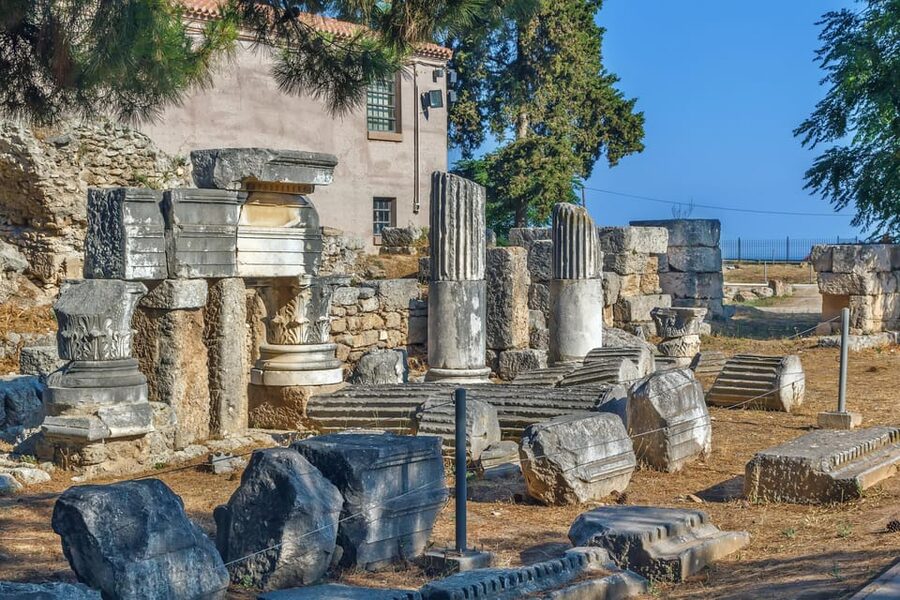
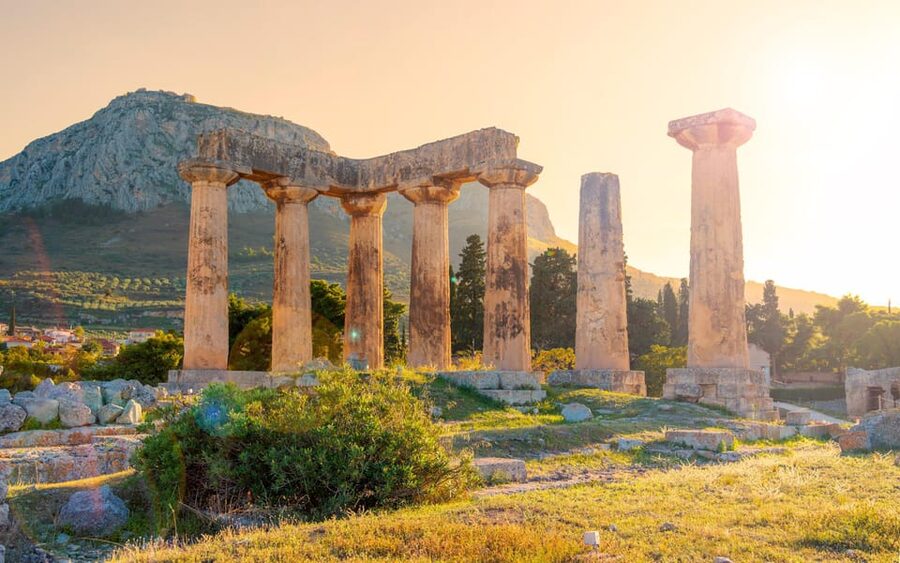
The Agora is one of the main features to see. This broad public area was central to political, commercial, and social life. Nearby, the Temple of Apollo is one of the most memorable remains, with its surviving columns from the pre-Roman period. It is not a complete temple, but the remaining stonework gives the site a firm visual anchor.
The ancient town rewards slow looking. I would resist the temptation to rush through for photographs. Look at the layout of the public area, the relationship between the monuments, and the way the site sits beneath Acrocorinth. The combination of high fortress and low city is one of the tour’s best visual connections.
Entry to Ancient Corinth is not included and costs 15 euros per person. The experience includes skip-the-line ticket service, which helps with access, but skip-the-line service does not mean the entrance fee disappears. Food and drinks are also separate.
More Temple Tours around Athens:
- Cape Sounion & Temple of Poseidon: Small Group Tour
★ 4.7 · 1,945 reviews - Athens: Cape Sounion & Temple of Poseidon Sunset Experience
★ 4.3 · 1,338 reviews - From Athens: Temple of Poseidon & Cape Sounion Half-Day Tour
★ 4.3 · 1,082 reviews - Athens Half Day Tour, Acropolis, Parthenon, Temple of Olympian Zeus & Hephaistus
★ 5.0 · 609 reviews
Build in time for lunch and a slower pace
The schedule gives you 90 minutes of free time around Ancient Corinth. This matters. A private day trip can become tiring when every stop is tightly timed, so a proper break lets you eat, rest, and absorb what you have seen.
Food is not included, and no specific restaurant is promised, so plan to pay separately. The private format may allow you to discuss timing with your driver, but you should not assume that every meal preference or restaurant choice is automatically part of the package.
I like having this pause before Heraion. Ancient sites demand attention, especially in warm weather, and a break keeps the afternoon from turning into a march through ruins. Bring water even though bottled water is supplied in the vehicle.
Ancient Heraion brings archaeology to the sea
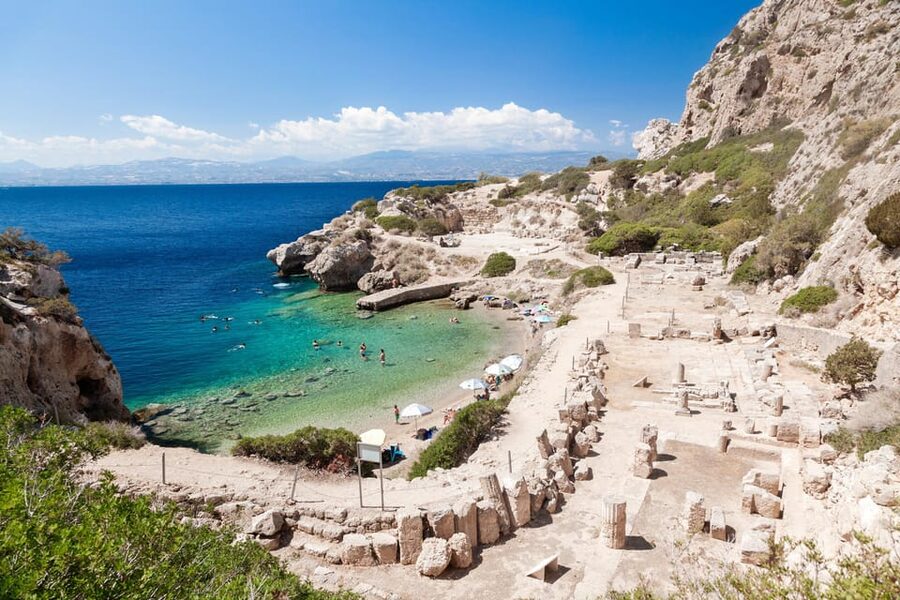
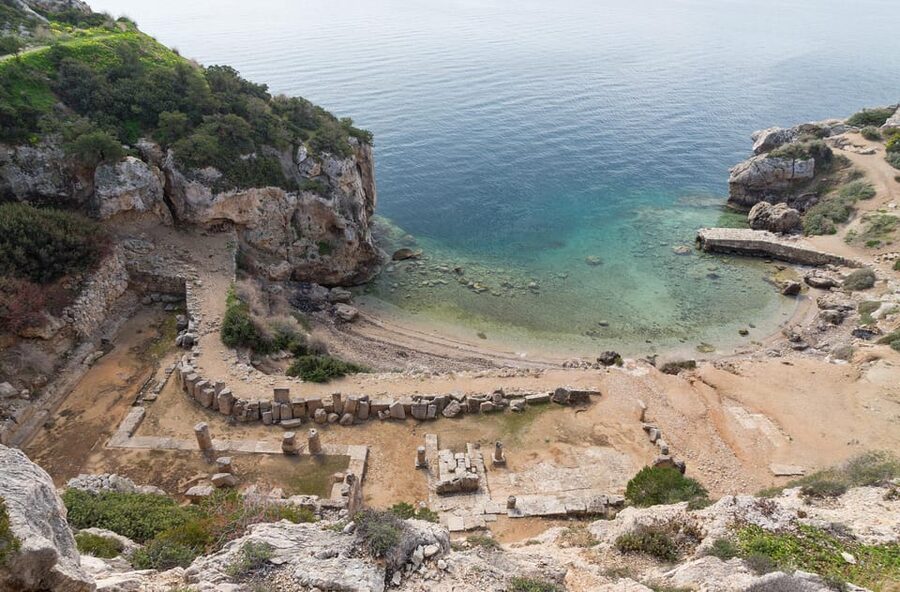
Ancient Heraion, also called the Temple of Hera site, changes the mood completely. Instead of another inland ruin, you reach a sanctuary by a coastal cove. The visit combines the remains of an ancient religious site with time to relax beside the water.
The sanctuary was dedicated to Hera, the goddess associated with marriage and family in Greek mythology. The setting helps explain why ancient sanctuaries were often more than isolated buildings. Their location, views, paths, and relationship with the natural world were part of the experience.
You get about 90 minutes here for a visit, free time, and swimming. The cove is described as deep and clear, and the surrounding rocks offer optional cliff-jumping for people who are confident in the water. That activity is not required, and you should use your own judgment. The tour does not promise lifeguards or swimming equipment, so bring swimwear and a towel and take normal care around the rocks.
This is one of the tour’s strongest features if you want a day that includes more than monuments. You can walk around the sanctuary, take photographs, and cool off without having to plan a separate beach trip.
The timing also has a practical effect. A 90-minute swim stop is long enough to feel worthwhile, but not long enough for a full beach day. If your priority is archaeology, you can spend more time examining the site. If your priority is the water, you may find the stop pleasantly refreshing but brief.
Walking to Malagavi Lighthouse
Above Ancient Heraion, on the western tip of Cape Malagavi, sits Malagavi Lighthouse. Built in 1897, it is one of Greece’s oldest stone lighthouses still in operation. A small path leads upward, and the walk adds another viewpoint without requiring a separate drive.
From the lighthouse, you can look over the Corinthian Gulf, the rugged coast, and the Isthmus Canal. This is a good final visual link to the morning stop. You see the canal from above and understand how close the two bodies of water are.
The path is short but still requires walking over uneven ground. If you are carrying swimming gear, keep your belongings manageable. The lighthouse itself is not presented as an interior museum visit, so think of it as a scenic walk and photo stop.
Private transport and the value of the price
The listed price is $281 per person for a nine-hour private experience. That is not a budget bus excursion, and the total rises once you add the 15-euro Ancient Corinth admission, meals, and possibly a licensed guide.
Still, the value depends on how many people share the vehicle. For a couple, the cost is high, but you are paying for private pickup and return, a personal driver, a modern first-class vehicle, air conditioning, Wi-Fi, and bottled water. For a small family or group, the per-person calculation can look more reasonable than arranging separate taxis, tickets, and transport.
The private setup also has practical value. Pickup is available from an Athens hotel, Airbnb, or port. At an Airbnb, the driver contacts you on arrival at the building entrance. At an airport or port, the driver waits in the arrivals area with a sign showing your name. Airport pickup and drop-off cost extra, so confirm that charge before booking if you are not staying in central Athens.
The driver speaks English or Greek, and the vehicle has Wi-Fi. Guides such as Iannis and Tas have been associated with warm, personal service, humor, and strong knowledge of Greek history. If you are assigned one of them, you can expect the day to feel conversational rather than purely mechanical. Ask ahead if a particular guide matters to you, since the available driver is not guaranteed.
What to bring and who will enjoy this day
Pack light, but do not forget the basics:
- Comfortable walking shoes for Acrocorinth, Ancient Corinth, and the lighthouse path
- Swimwear and a towel for Heraion
- Sun protection and extra drinking water for time outdoors
- A payment method for the site entry, food, and optional extras
I would choose this tour if you want ancient sites but do not want to spend the whole day indoors or on a rigid group bus. It suits couples, families with older children, history fans, and anyone interested in Saint Paul’s connection with Corinth.
It is less suitable if you want a slow beach day, have difficulty with uneven ground, or expect a licensed archaeologist to guide you through every site as part of the standard price. The activity is described as wheelchair accessible, but the separate warning that it is not suitable for people with mobility impairments is important. The hilltop fortress, stone ruins, and rocky coastal paths can be demanding.
Free cancellation is available up to 24 hours before departure, and you can reserve now and pay later. Those terms help if your Athens plans are still shifting, but they do not change the need to check entrance fees, airport charges, and the cost of a licensed site guide.
Should you book this Corinth day trip?
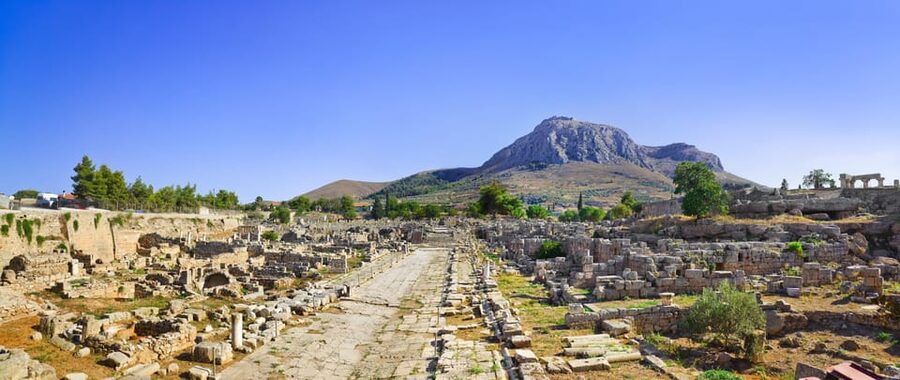
Book it if you want a private history-and-sea day with a strong mix of places: the Isthmus Canal, Acrocorinth, the Agora, the Temple of Apollo, Heraion, and Malagavi Lighthouse. The Saint Paul connection gives Ancient Corinth a clear theme, while the swimming stop keeps the day from feeling like a sequence of ruins.
Before paying, decide how much interpretation you need. If your ideal tour includes detailed explanations inside each archaeological site, add the licensed guide and budget for it. If you are happy with a well-informed driver, independent exploring, and the freedom of private transport, the $281 price can be reasonable, especially for a small group.
I would make this choice for an active day with varied scenery and a flexible feel. I would skip it only if mobility is a concern or if your main goal is a long, unhurried swim.
FAQ
How long does the private Corinth tour last?
The experience lasts about nine hours, including pickup and return to Athens.
What sites are visited during the day?
The route includes the Isthmus Canal area, Acrocorinth, Ancient Corinth, the Agora, the Temple of Apollo, Ancient Heraion, and Malagavi Lighthouse.
Is swimming included at Ancient Heraion?
Yes. The schedule allows about 90 minutes at Heraion for visiting, free time, and swimming. Bring swimwear and a towel.
Is the entrance fee to Ancient Corinth included?
No. Ancient Corinth admission costs 15 euros per person. Food, drinks, and a licensed site guide are also not included.
Does a licensed guide accompany the group inside the sites?
The standard service provides a professional tour driver who is well versed in Greek history but is not licensed to enter sites as a formal guide. A licensed guide can be arranged for an additional cost.
Where can pickup and drop-off take place?
Pickup and drop-off are available from an Athens hotel, Airbnb, or port. Airport pickup and drop-off are available for an additional cost.
Temple visits we reviewed lately in Athens
- Private tour Athens, Cape Sounio, Temple Poseidon, Riviera★ 5.0 · 4 reviews
- Private Rib Cruise to Poseidon Temple at Sounio Cape★ 5.0 · 8 reviews
- From Athens: Temple of Poseidon & Cape Sounio Half-Day Tour★ 4.6 · 6 reviews
- From Athens: Temple of Apollo and Oracle Delphi Day Trip★ 4.3 · 51 reviews
- From Athens: Lake Vouliagmeni Spa & Temple of Poseidon Tour★ 4.6 · 156 reviews
- Athens to Meteora, Day Trip with Local Guide,up to 9 people★ 4.8 · 11 reviews
- From Athens: Cape Sounio and Temple of Poseidon Private Tour★ 4.6 · 33 reviews
- Sounion tour with Official Guide &ticket for Poseidon Temple★ 4.1 · 202 reviews
Athens Temple Tours, compared.
Athens: Cape Sounion & Poseidon Temple Sunset Half-Day Trip
Read our review →
Athens: Cape Sounio & Poseidon Temple Trip with Audio Guide
Read our review →
Cape Sounion and Temple of Poseidon Half-Day Small-Group Tour from Athens
Read our review →
Cape Sounion & Temple of Poseidon: Small Group Tour
Read our review →
Athens: Cape Sounion & Temple of Poseidon Sunset Experience
Read our review →
Athens Half Day Tour, Acropolis, Parthenon, Temple of Olympian Zeus & Hephaistus
Read our review →
Afternoon English Tour: Sounion with Temple of Poseidon Ticket
Read our review →
Lake Vouliagmeni Thermal Spa And Temple Of Poseidon Private Full Day Tour
Read our review →This tour also ranks in