
Review · CHIANG RAI
7 Wonders of Chiang Rai: Temples, Tea, and Golden Triangle
Chiang Rai’s best sights make an unusual single-day mix: dazzling temples, an unsettling art collection, tea fields, hill-tribe culture, and the once-notorious Golden Triangle. The White Temple and Blue Temple provide the visual fireworks, while the Black House and House of Opium add darker historical and artistic layers.
I like the efficient route and the small-group limit of 10, which should make a long day easier than a large coach outing. I also like that lunch, drinking water, city pickup, and an English-speaking guide are included. The main drawback is the pace: you leave Chiang Rai around 8:00 to 8:30 AM and return around 6:30 to 7:00 PM, with several entrance fees extra.
Key points to know before booking
- White Temple murals mix Buddhism with modern pop culture, making this more than a quick photo stop.
- The Blue Temple takes a different mood, with dark blue walls, gold details, and a calm white Buddha.
- Baan Dam, the Black House, is deliberately strange and thought-provoking, using bones, horns, and animal skins in its art.
- Choui Fong Tea Plantation provides the day’s quietest pause, with tea fields, drinks, desserts, and hill views.
- The Golden Triangle and House of Opium Museum explain a difficult past, rather than treating the border meeting point as a simple photo opportunity.
- The advertised price is $41 per person, but budget another 530 baht for all listed admission fees if you enter every paid site.
Why this Chiang Rai day trip works
Chiang Rai is spread out, and its major sights do not fit neatly into one compact walking route. This tour solves that problem with hotel pickup in Chiang Rai city, a van transfer between stops, and a return to the same meeting area at the end of the day.
The plan is ambitious. You see seven major stops, eat lunch, and spend much of the day on the road. That makes this a useful introduction if your time in northern Thailand is short, but it is not the right choice if you want long, unhurried visits at every site.
The small group matters here. With no more than 10 participants, getting in and out of the van should be simpler, and the guide can give more direct explanations than on a full-size bus. The guide speaks English, and the day is planned with an experienced, good-humored guide according to the supplied feedback. No guide name is provided, so do not book this expecting a particular individual.
The $41 price is fair for a full day of transport, guiding, lunch, drinking water, and travel insurance. The listed entrance charges add up to 530 baht per person: 100 baht for the White Temple, 80 baht for the Black House, 300 baht for the Long Neck Karen Village, and 50 baht for the House of Opium Museum.
You can skip any attraction and its admission fee. That flexibility is useful, though the schedule is built around the full collection of stops. If you pay to enter everything, carry cash as well as a card.
More White Temple and Blue Temple Tours in Chiang Rai:
- From Chiang Mai: Chiang Rai Temples and Golden Triangle Tour
★ 4.5 · 1,770 reviews - From Chiang Rai: Famous Temples and Golden Triangle Day Tour
★ 4.7 · 115 reviews - Chiang Rai: 3 Temples and Golden Triangle 1 Day Tour
★ 4.8 · 37 reviews
Wat Rong Khun, Chiang Rai’s White Temple
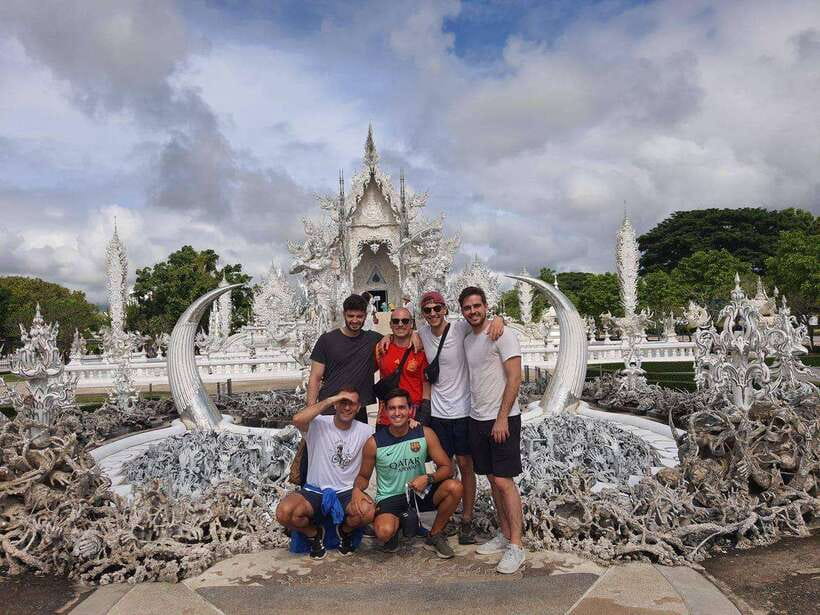
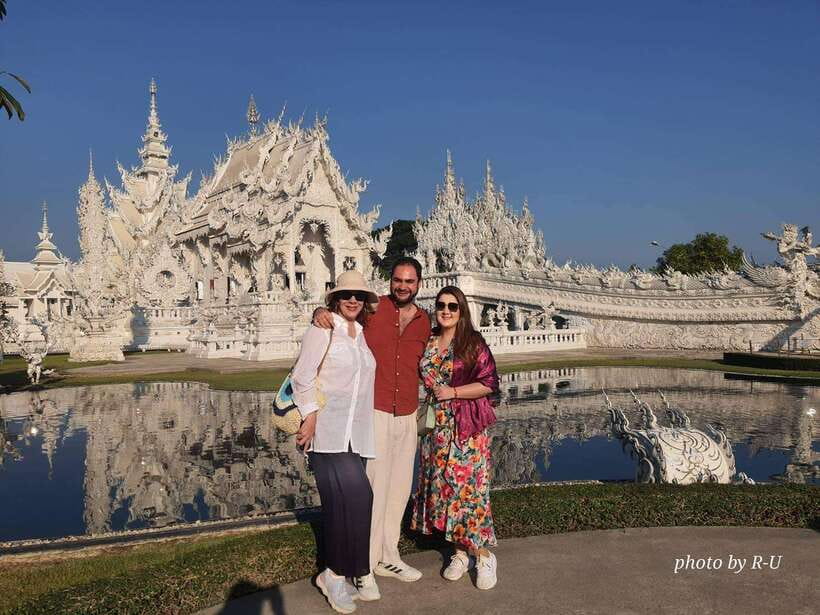
The first major stop is Wat Rong Khun, usually called the White Temple. You have about an hour here, including a guided visit and time for photographs.
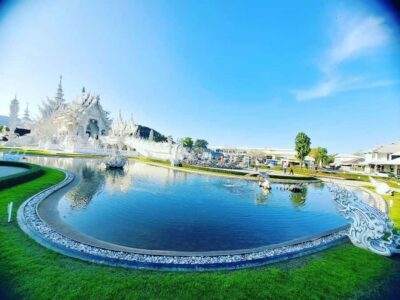
The temple was created by Thai artist Chalermchai Kositpipat. Its white surfaces and mirrored glass catch the sun, giving the buildings a sharp, almost sparkling appearance. The effect is striking, but the appeal is not only visual. The design uses Buddhist ideas about purity and spiritual progress, expressed through modern artwork rather than the muted style of an old monastery.
Inside, the murals combine Buddhist themes with modern references and pop culture images. That mixture can surprise you. Instead of seeing a quiet historical temple filled only with traditional figures, you encounter a contemporary artist’s interpretation of religion and society.
Your guide can help explain what you are seeing, which is valuable because the symbolism is not always obvious from a quick walk around. You will also have time to take photographs, though the schedule does not allow for a slow study of every detail.
The 100-baht entrance fee is not included. If you care most about architecture and modern Thai art, this is one of the day’s essential paid stops.
Wat Rong Suea Ten, the Blue Temple
The Blue Temple, or Wat Rong Suea Ten, follows with a shorter 30-minute visit. Its name means Dancing Tiger, linked to local stories about tigers that once lived in the area.
Where the White Temple is pale and reflective, the Blue Temple is saturated with blue tones and gold accents. The architecture draws on modern versions of Lanna design, connecting the building to northern Thailand while giving it a strong contemporary look.
Inside, a large white Buddha provides the center of the room. Detailed murals surround it, and the blue-and-gold color scheme continues throughout the interior. This stop is shorter, but it offers a welcome change of mood after the White Temple.
I like the contrast between these first two sites. You can compare two recent Thai religious art projects rather than seeing a string of similar old temples. The Blue Temple is also easier to take in at a glance, which helps on a tightly timed day.
Bring comfortable shoes and a camera. The tour includes sightseeing and photographs, and the polished surfaces and strong colors make this one of the most attractive stops for pictures.
Baan Dam, the Black House
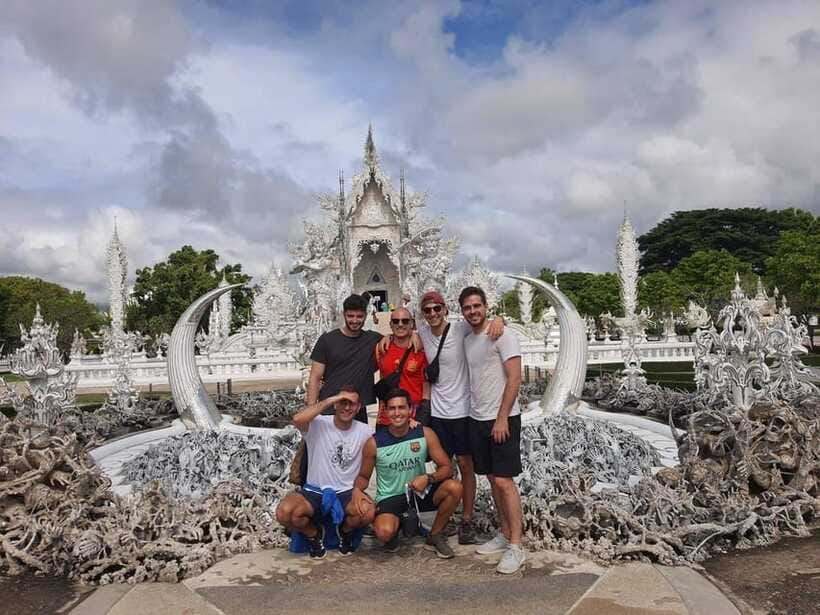
Baan Dam Museum, known as the Black House, gives the day its sharpest turn. You have about an hour for the visit.
Artist Thawan Duchanee created this collection of buildings and artworks. It is not a conventional temple and is not intended to feel light or cheerful. Animal bones, horns, skins, and dark wooden structures explore death, mortality, and the less comfortable side of existence.
Some people will find the display fascinating. Others may find it unsettling or too theatrical. That is part of the point. The Black House asks you to think about the relationship between life and death instead of offering only beautiful buildings and peaceful religious images.
The 80-baht entrance charge is separate. I consider it worthwhile if you enjoy unusual art and want a stronger sense of northern Thailand’s modern creative scene. If you prefer only traditional architecture, this is the stop you are most likely to skip.
You get a full hour, so the visit should not feel rushed in the same way as the Blue Temple. Pay attention to the contrast: the White Temple uses brightness and mirrored surfaces, while Baan Dam uses shadow, natural materials, and a much heavier mood.
More Temple Tours around Chiang Rai:
- Chiang Rai: Iconic Temples & 7 Major Sites—River View Buffet
★ 4.9 · 692 reviews - Chiang Rai: White, Blue, Red Temples, Long Neck Tour
★ 4.8 · 652 reviews - Chiang Rai: Half Day Tour – 3 Famous Temples & Lalita Cafe’
★ 5.0 · 79 reviews - Chiang Rai: 3 Temples, Long Neck Village & Lalitta Café
★ 4.7 · 63 reviews
Meeting the Long Neck Karen community
The tour then visits a traditional Long Neck Karen village for about 45 minutes. You can learn about daily life, see weaving, and look at handmade souvenirs.
The women’s brass neck rings are the feature most often associated with this community. The rings create the appearance of a longer neck and are linked to beauty and cultural identity. A short visit gives you a basic introduction, but it cannot explain every part of the community’s background in such a limited time.
Approach this stop with respect. Ask your guide for context, listen carefully, and remember that you are entering a living community rather than a museum display. Buying a handmade item is optional, but it can provide direct support through the village’s craft sales.
The 300-baht admission fee is not included, and this is the largest individual extra charge on the day. You can choose not to enter. That choice may suit you if you have concerns about staged cultural visits or prefer to spend more time at the temples and tea plantation.
The visit is brief, so expect an introduction rather than an extensive cultural program. Still, it adds a human element to a day otherwise focused on monuments, art, and border history.
Lunch at a local restaurant
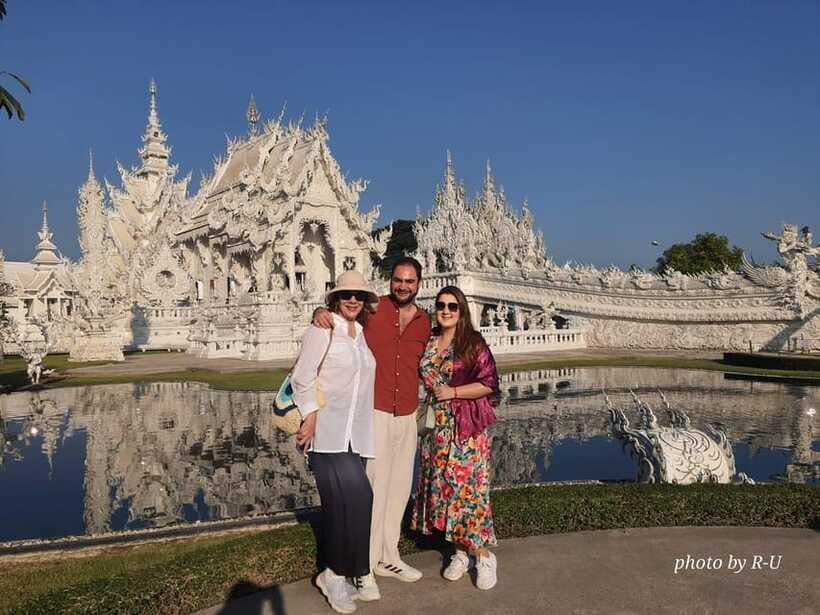
Lunch lasts about 45 minutes at a local restaurant. A Thai buffet is included in the tour price, which makes the day easier to manage and avoids the need to search for food between distant stops.
The supplied information does not specify the exact dishes or restaurant, so you should not book this expecting a particular menu. Think of lunch as a practical refueling stop in a very full schedule.
Drinking water is included as well. You should still bring cash, a card, comfortable shoes, and a camera. Chiang Rai is warm, and a full day of walking and van travel is easier when you stay hydrated.
Choui Fong Tea Plantation
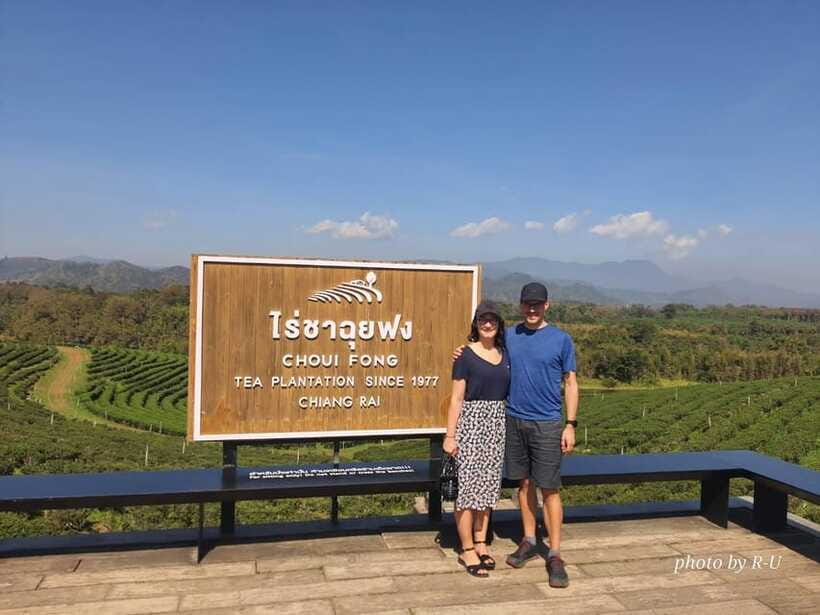
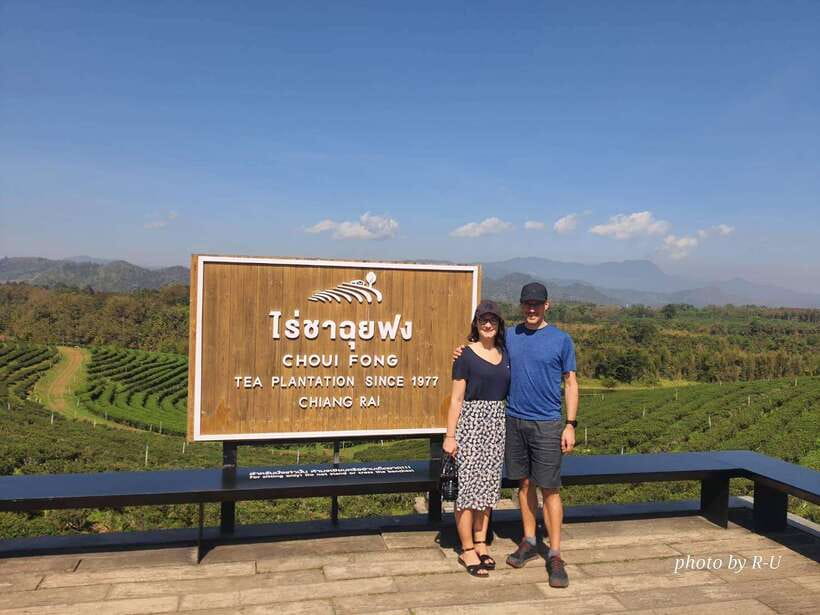
After lunch, the route reaches Choui Fong Tea Plantation for about 40 minutes. The plantation sits among rolling green hills, with neatly trimmed tea fields and broad views.
This is the day’s most restful stop. You can walk through the tea rows, hear about cultivation, and spend free time at the café. Freshly brewed tea and tea-based desserts are available for purchase.
Forty minutes is enough to take photographs, enjoy a drink, and get a sense of the plantation. It is not enough for a long walk through the fields or a slow café visit, so keep your expectations realistic.
I like this stop because it changes the rhythm. After several cultural sites and museum displays, the tea farm gives you open space and a simple activity. It also adds a taste of northern Thailand’s agricultural side without requiring a separate excursion.
The tea plantation is more than a quick refreshment stop, but less than a dedicated tea tour. If you care deeply about tea production, you may want more time than this schedule provides. For most people, it is a pleasant break before the long afternoon route to the border area.
The Golden Triangle at the Mekong and Ruak rivers
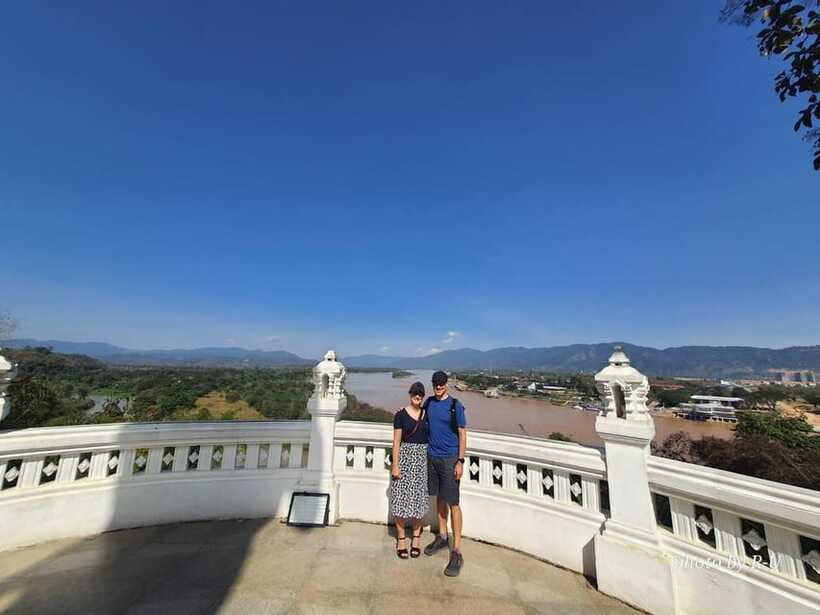
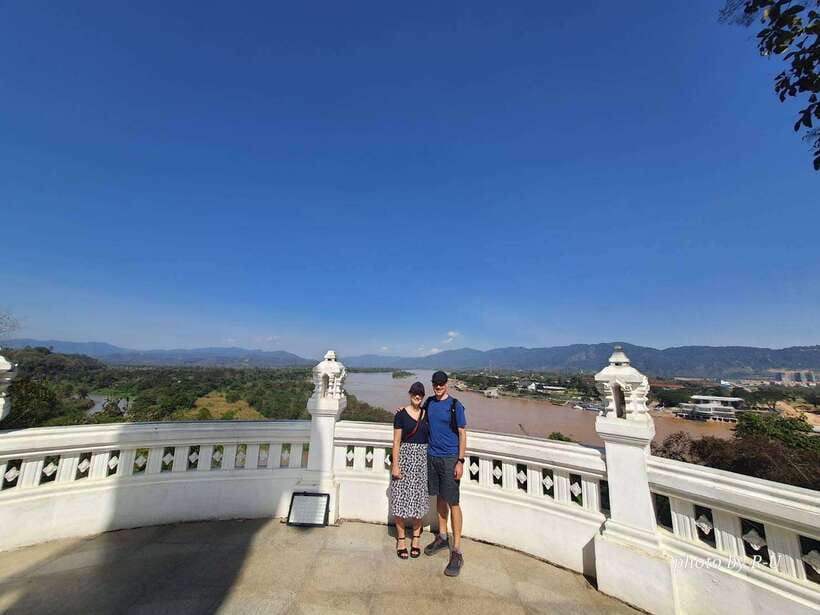
The tour reaches the Golden Triangle for about 30 minutes. Here, Thailand meets Laos and Myanmar at the meeting point of the Mekong and Ruak rivers.
The border setting is the main attraction. You can look across the waterways, take photographs, and hear how the area changed from a center of the opium trade into a more peaceful destination for visitors.
Thirty minutes is enough for the viewpoint and basic explanation. It is not enough for a wide exploration of the region, a long river outing, or a detailed study of all three countries. The stop works best when you treat it as a geographic and historical overview.
The Golden Triangle can be reduced to a quick photo opportunity, but the guide’s explanation gives it more meaning. The location sits within a larger story about trade, smuggling, local communities, and efforts to control the opium economy.
Do not expect to cross into Laos or Myanmar on this tour. The visit is on the Thai side, and the schedule focuses on views, information, and free time.
The House of Opium Museum
The final major sight is the House of Opium Museum, near the Golden Triangle. You have about 40 minutes to walk through its displays, shop, and hear about the regional opium trade.
The museum includes opium pipes, tools, and exhibits about cultivation and smuggling. It also explains the impact on local communities and wider attempts to stop the trade. This gives useful context to the Golden Triangle visit, turning a scenic border stop into a lesson about a difficult period in Southeast Asian history.
The museum is smaller than a large national institution, but that can make it manageable during a busy day. You can see the main objects and explanations without needing several hours.
Admission costs 50 baht, not included in the tour price. I would pay it if you want the Golden Triangle to make sense beyond the photograph. If you are tired by this point, you can skip the museum, but doing so removes much of the historical substance from the final part of the tour.
The long ride back to Chiang Rai
After the House of Opium Museum, the van ride back to Chiang Rai takes about 80 minutes. The day ends at the same meeting area, usually between 6:30 and 7:00 PM.
That return time matters if you have evening plans. It is not sensible to arrange a same-day return to Chiang Mai, since the tour may finish late and traffic can add uncertainty. Plan to sleep in Chiang Rai or continue your journey the following day.
Pickup is available from hotels within 3 kilometers of Chiang Rai city center. You should wait in your hotel lobby between 8:00 and 8:30 AM and be ready for the vehicle during that window.
The tour is not suitable for babies under one year or people over 80, and the supplied restrictions also list people over 95. Baby strollers and bicycles are not allowed. The information does not give detailed mobility guidance, so contact the operator if you need specific assistance with walking or vehicle access.
Who should book this tour?
Book this tour if you want a broad first look at Chiang Rai and prefer having transport, lunch, and a guide arranged for you. It suits people who enjoy variety and do not mind a full day with several short visits.
It is especially useful if you want to compare the White Temple, Blue Temple, and Black House in one outing. The three places have very different moods, and seeing them together gives you a better sense of contemporary northern Thai art than visiting only one temple.
The tour also works for anyone interested in the Golden Triangle but unsure how to combine it with Chiang Rai’s city sights. The tea plantation and opium museum prevent the day from becoming a simple temple circuit.
You may want another plan if you dislike early starts, long van rides, optional admission fees, or tightly timed stops. Families with very young babies cannot join, and anyone planning to return to Chiang Mai that evening should avoid this schedule.
Is the $41 price good value?
Yes, provided you count the extra fees before booking. At $41 per person, the package covers city pickup and drop-off, transport, an English-speaking guide, Thai buffet lunch, drinking water, and travel insurance.
Entering every paid attraction adds 530 baht. That brings the practical cost above the advertised base price, but it remains reasonable for transport across a wide area and a full day of guiding.
The value is strongest for first-time visitors without their own vehicle. Independent touring may offer more freedom, but you would need to arrange transport, navigation, meals, timing, and the distant Golden Triangle route yourself.
Should you book the 7 Wonders of Chiang Rai?
Book it if you want an efficient, varied day and can handle a schedule that runs from morning until early evening. The strongest parts are the contrast between the three art sites, the peaceful tea plantation, and the useful connection between the Golden Triangle and House of Opium Museum.
Go in knowing that this is an overview, not a slow cultural study. Pay the extra fees for the White Temple, Black House, and House of Opium Museum if those subjects interest you, and think carefully about the Long Neck Karen village before deciding whether to enter.
For $41, the tour offers a practical way to cover a large part of Chiang Rai Province. If your priority is variety, easy transport, and a small group, I would book it. If your priority is lingering at each temple or spending a full day at one cultural site, choose a slower itinerary instead.
FAQ
How long does the tour last?
It is a full-day tour. Pickup takes place between 8:00 and 8:30 AM, and the tour usually returns to Chiang Rai between 6:30 and 7:00 PM.
Where is pickup available?
Pickup and drop-off are available from hotels within 3 kilometers of Chiang Rai city center. You should wait in your hotel lobby during the pickup window.
Are entrance fees included?
No. The listed fees are 100 baht for Wat Rong Khun, 80 baht for Baan Dam Museum, 300 baht for the Long Neck Karen Village, and 50 baht for the House of Opium Museum. You may choose whether to enter each attraction.
Is lunch included?
Yes. A Thai lunch buffet and drinking water are included in the tour price.
How large is the group?
The tour is limited to 10 participants and includes an English-speaking live guide.
Can I return to Chiang Mai after the tour?
The tour is not recommended for a same-day return to Chiang Mai because it ends around 6:30 to 7:00 PM and may finish quite late.
Temple visits we reviewed lately in Chiang Rai
- Private trip Chiang Rai Day trip, White Temple, Blue temple★ 4.8 · 13 reviews
- From Chiang Mai: Day Trip Chiang Rai White, Blue, Red Temple★ 5.0 · 4 reviews
- From Chiang Rai 3 Temples & Golden Triangle &Tea Plantation★ 4.8 · 20 reviews
- From Chiang Mai : 3 Temples & Golden Triangle with Lunch★ 4.5 · 17 reviews
- ChiangRai:Full Package!Temples,Long Neck,The Golden Triangle★ 4.7 · 9 reviews
- Chiang Rai: Temple Treasures & Popular Sightseeings (Buffet)★ 4.7 · 10 reviews
- Chiangrai : Half Day Tour 3 Famous Temples / (Private tour)★ 5.0 · 4 reviews
- Chiang Rai:Photos of traditional Thai costumes,White Temple★ 4.9 · 26 reviews
Chiang Rai Temple Tours, compared.
From Chiang Mai: Chiang Rai Temples and Golden Triangle Tour
Read our review →
Chiang Rai: Iconic Temples & 7 Major Sites—River View Buffet
Read our review →
Chiang Rai: White, Blue, Red Temples, Long Neck Tour
Read our review →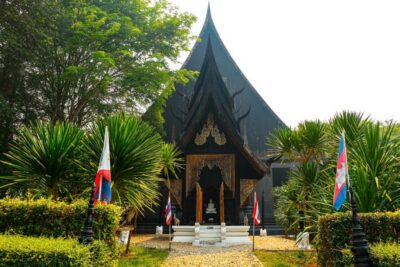
From Chiang Rai: Famous Temples and Golden Triangle Day Tour
Read our review →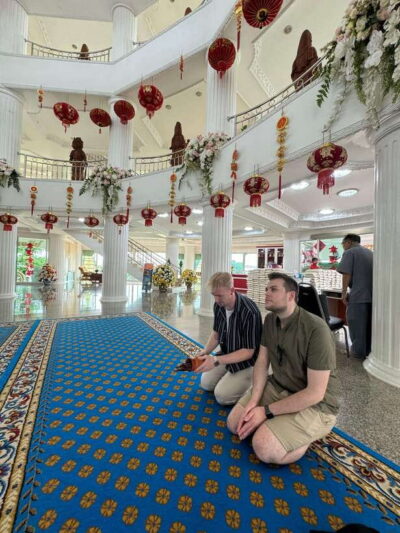
Chiang Rai: Half Day Tour – 3 Famous Temples & Lalita Cafe’
Read our review →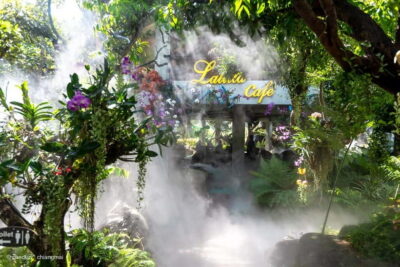
Chiang Rai: 3 Temples, Long Neck Village & Lalitta Café
Read our review →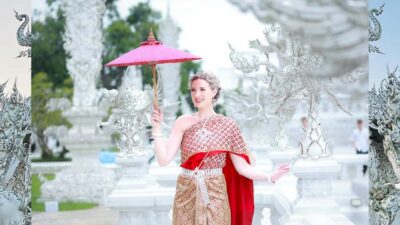
Chiang Rai:Photos of traditional Thai costumes,White Temple
Read our review →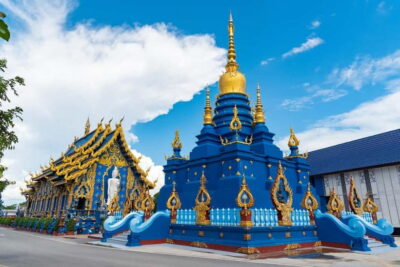
Chiang Mai to Chiang Rai: 3 Temples & Hot Springs & Pickup
Read our review →This tour also ranks in